If you are trying to figure out what size trading card vending machine you should buy, the honest answer is that most operators start too big and regret it. After more than a decade running automated retail in the US and Europe, I have seen the 32-inch touchscreen units and the massive 50-inch behemoths both fail and succeed, but the deciding factor is rarely the machine itself. It is the location, the foot traffic, and how much capital you are willing to tie up before you understand your local buyer. You can buy a compact wall-mounted card vending machine for under $4,000, or you can drop $15,000 on a full-size kiosk, but neither makes sense if you have not validated the demand first. Let me walk you through exactly how I evaluate size, cost, and placement based on real operating experience, not manufacturer specs.
Why Size Matters More Than You Think
When I first got into this business, I made the classic rookie mistake. I bought a large, fully loaded vending machine with a 43-inch screen, card dispensers, and a bill acceptor that could handle almost anything. I placed it in a comic shop with decent foot traffic, and it looked impressive. But here is what nobody tells you: a bigger machine means a bigger inventory commitment, more electricity draw, and a much longer payback period if the location underperforms. That machine sat there for six months barely moving 20 packs a week. I had tied up nearly $12,000 in equipment and stock, and the rent share I agreed to was eating my margins.
The size of your trading card vending machine should match the location's realistic weekly sales volume, not your ambition. A small wall-mounted unit in a convenience store can turn over its entire inventory in a week if the store has regular collectors. A massive kiosk in a low-traffic mall might look professional but will sit idle for hours. You need to match the machine footprint to the actual dwell time and purchase intent of the people walking past.
From my experience, the sweet spot for most first-time operators is a mid-size unit, roughly 32 to 43 inches tall, with one or two card dispensers and a touchscreen. These machines can hold anywhere from 1,000 to 3,000 packs depending on how you load them, and they fit into a corner without dominating the retail space. You can test multiple locations with the same machine before you commit to a larger footprint.
The biggest hidden cost of a large machine is not the purchase price. It is the opportunity cost of having your capital locked in a single spot. If that location fails, you have to move a heavy, awkward machine, pay for transport, and lose days of selling time. Smaller machines are easier to relocate, which means you can pivot quickly when a site underperforms.
Understanding the Different Machine Sizes and Configurations
Let me break down the main categories of trading card vending machines you will encounter. There are compact countertop units, wall-mounted machines, mid-size floor kiosks, and full-size automated retail kiosks with multiple product dispensers. Each has its own cost structure and operational logic, and I have run all of them at some point.
Compact Countertop Units
These are the smallest option, usually about 18 to 24 inches wide and 20 to 30 inches tall. They hold maybe 200 to 500 packs and are designed to sit on a counter or a shelf. They cost between $1,500 and $3,500 depending on the payment system and build quality. I use these in barber shops, convenience stores, and small game cafes where space is tight. The downside is that they look less professional, and customers sometimes mistake them for toys. But they are perfect for testing a location without much risk.
Wall-Mounted Card Vending Machines
Wall-mounted units are a step up, typically holding 500 to 1,500 packs. They attach to a wall, saving floor space, and they look more permanent and trustworthy. I have several of these in laundromats and smaller retail shops. They cost between $3,000 and $6,000. The key advantage is that they are harder to steal and take up zero floor space, which makes them attractive to store owners who are hesitant to give up a valuable corner. If you are just starting, a wall-mounted card vending machine is a smart first purchase because it forces you to be selective about placement and inventory.
Mid-Size Floor Kiosks
This is the category I recommend for most serious operators. These machines are usually 32 to 43 inches wide and 60 to 72 inches tall. They hold 1,500 to 4,000 packs, have a touchscreen, and often include a card dispenser that can handle sealed packs or even single cards. Prices range from $6,000 to $12,000. The 32-inch touchscreen trading card vending machine is a popular model in this range because it offers a good balance between visibility and footprint. I have found that these machines generate enough revenue to justify their cost if placed in a store with at least 500 people passing per day.
Full-Size Automated Retail Kiosks
These are the big boys, often 50 inches or wider, with multiple dispensers, bill validators, coin mechanisms, and sometimes even a robotic arm. They can hold 5,000 to 10,000 packs and cost anywhere from $12,000 to $25,000. I only recommend these for high-traffic locations like malls, large game stores, or entertainment venues. The problem is that they require a much larger inventory investment, and if the location does not perform, you are stuck with a very expensive paperweight.
To give you a clearer picture, here is a comparison table based on my own purchasing and operating data over the years. These are real numbers from my routes, not theoretical projections.
| Machine Type | Typical Cost (USD) | Pack Capacity | Monthly Revenue Range (USD) | Payback Period (Months) | Best Location |
|---|---|---|---|---|---|
| Compact Countertop | $1,500 - $3,500 | 200 - 500 | $300 - $800 | 4 - 8 | Barber shops, small cafes |
| Wall-Mounted | $3,000 - $6,000 | 500 - 1,500 | $600 - $1,500 | 4 - 10 | Convenience stores, laundromats |
| Mid-Size Floor Kiosk | $6,000 - $12,000 | 1,500 - 4,000 | $1,200 - $3,500 | 5 - 12 | Game stores, hobby shops, malls |
| Full-Size Kiosk | $12,000 - $25,000 | 5,000 - 10,000 | $2,500 - $6,000 | 8 - 18 | Large malls, entertainment venues |
These figures assume you are buying new equipment and sourcing cards at wholesale prices. They also assume you are not paying a high commission to the host location. If you give up 20% to 30% of gross sales, your payback period will stretch significantly.
Matching Machine Size to Foot Traffic and Dwell Time
I cannot overstate how important foot traffic is when deciding what size trading card vending machine to buy. A machine that sells 10 packs a day can justify a mid-size kiosk. A machine that sells 2 packs a day cannot justify anything beyond a countertop unit. I have a simple rule of thumb: if the location has fewer than 200 people walking past per day, you should not put anything larger than a wall-mounted unit there.
Dwell time matters just as much as raw foot traffic. A convenience store might have 1,000 people a day, but most of them are in and out in three minutes. They are not browsing for trading cards. A game store might have only 200 people a day, but those people linger, browse, and are there specifically for collectibles. In my experience, a game store with 200 dedicated collectors will outsell a convenience store with 1,000 random shoppers, easily.
I once placed a mid-size floor kiosk in a busy supermarket because the owner offered me cheap rent. The foot traffic was massive, but the conversion rate was almost zero. People were buying groceries, not Pokémon packs. I moved that machine to a local hobby shop three miles away, and within two weeks, sales tripled. The lesson is simple: you are not selling to everyone, you are selling to collectors, and they shop in specific places.
When you evaluate a location, do not just count people. Talk to the store owner about who their regulars are. Ask if they already sell trading cards at the counter. If they do, you have a strong signal. If they do not, you are creating demand from scratch, which is a much slower process.
Cost Breakdown and Payback Period for Different Sizes
Let me give you a realistic cost breakdown based on my own purchase records and operating expenses. These are numbers I have tracked across multiple machines over the last decade, and they reflect both US and European markets.
For a mid-size floor kiosk, the initial investment breaks down roughly like this: the machine itself costs $8,000 to $10,000 if you buy from a reputable manufacturer. Shipping and installation add another $500 to $1,000 depending on your location. The initial inventory, assuming you load it with a mix of sports cards, Pokémon, and Yu-Gi-Oh, will cost you $2,000 to $4,000 at wholesale. Payment processing fees run about 2.5% to 3.5% of sales. Electricity is negligible, maybe $10 to $20 a month. Maintenance and repair set aside should be about 5% of your monthly revenue.
So your total upfront cost for a mid-size kiosk is roughly $11,000 to $15,000. If the machine generates $2,000 a month in gross sales, and your cost of goods is 50%, your gross profit is $1,000. Subtract $100 for payment fees, $20 for electricity, and $50 for maintenance reserve, and you are left with about $830 a month. That gives you a payback period of 13 to 18 months. That is the reality, and it is not a get-rich-quick scheme.
For a wall-mounted unit, the math is friendlier. The machine costs $4,000, inventory is $1,500, and installation is $300. Total upfront is around $5,800. If it generates $1,000 a month in sales with a 50% margin, you clear about $450 a month after expenses. Payback is around 12 to 14 months. The smaller investment means you can afford to test two or three locations with separate machines, which diversifies your risk.
According to IBISWorld, the vending machine industry in the US has been growing steadily, with revenue expected to increase as operators adopt cashless payment systems and diversify product offerings. That aligns with what I see in the field. Cashless payments are no longer optional; they are expected. If you buy a machine that only takes coins and bills, you are leaving at least 40% of potential sales on the table, especially among younger collectors.
Statista data shows that cashless payments accounted for over 60% of vending machine transactions in recent years, a trend that has only accelerated since the pandemic. If you are buying a card vending machine, make sure it supports credit card readers, mobile wallets, and ideally contactless payments. This is not a luxury; it is a requirement.
Which Machine Size Should a First-Time Buyer Choose?
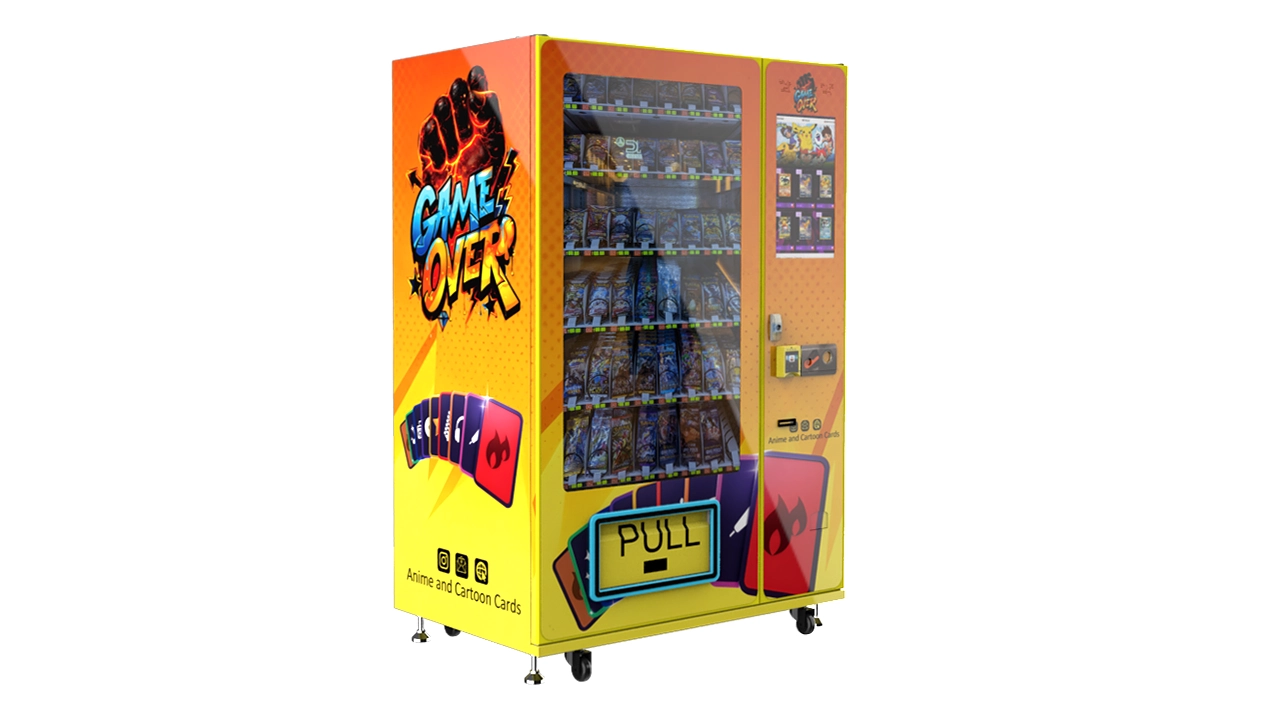
If you are new to this, I strongly recommend starting with a wall-mounted or compact mid-size unit, not a full-size kiosk. The reason is simple: you need to learn the operational rhythm before you scale. You need to understand how fast your inventory turns, which products sell at which locations, and how much time you actually have to service the machine.
I have seen too many first-timers buy a giant kiosk, load it with $5,000 worth of cards, and then realize they do not have the time or the discipline to keep it stocked and clean. The machine looks empty, the touchscreen has fingerprints all over it, and customers stop trusting it. A smaller machine forces you to be disciplined about restocking and maintenance because you cannot afford to let it sit half-empty.
Another advantage of starting small is that you can test multiple locations with the same capital. Instead of putting $15,000 into one big kiosk, put $5,000 into a wall-mounted unit and $6,000 into a mid-size floor model. Place them in two different stores and see which one performs better. After three months, you will have real data on your own market, not just generic advice from a blog.
I also want to mention the option of buying used or refurbished equipment. There is a thriving market for used vending machines, and you can save 30% to 50% off the new price. However, you need to be careful. A used machine might have outdated payment systems or worn-out dispensing mechanisms. I have bought used machines that worked flawlessly, and I have bought others that were money pits. If you go this route, budget for repairs and upgrades. The U.S. Small Business Administration has guidelines on equipment financing and depreciation that are worth reading before you make a purchase.
Location Evaluation: How I Assess a Potential Site
I have a checklist that I run through before I place any trading card vending machine, regardless of its size. First, I look at the store's existing customer base. Are they already buying trading cards, collectibles, or hobby products? If yes, that is a huge plus. If not, I need to see evidence that there is demand, such as customers asking for cards or the store hosting events.
Second, I assess the physical space. Is there a spot near the checkout counter where the machine will be visible but not obstructing foot traffic? Visibility is critical. A machine hidden in a corner might as well not exist. I have moved machines from the back of a store to the front and seen sales double without any other change.
Third, I look at the store's hours. A machine in a location that closes at 6 PM will not capture evening sales. Ideally, I want a location that is open late, like a convenience store or a game store that hosts evening tournaments. The more hours your machine is available, the more opportunities you have to sell.
Fourth, I check the lease or commission agreement. Some store owners want a flat monthly rent, others want a percentage of sales, and some want both. From my experience, a commission-only arrangement is riskier for the operator but can be more attractive to the store owner. I prefer a flat rent or a low base rent plus a small commission. That way, the store owner has an incentive to promote the machine.
Finally, I look at the competition. If there is already a trading card vending machine in the same store or a neighboring store, that is a red flag unless the demand is clearly high enough to support two machines. I once placed a machine in a store that already had one from a competitor, and we cannibalized each other's sales. Both of us ended up moving out.
Supplier Selection and What to Look For
Choosing the right supplier is just as important as choosing the right machine size. I have worked with manufacturers in China, Europe, and the US, and I have learned to ask specific questions before I sign a purchase order. First, ask about the payment system. Does it support the latest contactless payment methods? Can it be updated remotely? Second, ask about the dispensing mechanism. Trading card packs are lightweight but have a specific shape, and not all dispensers handle them well. I have seen machines jam repeatedly because the dispenser was designed for snack bags, not card packs.
Third, ask about warranty and after-sales support. How long is the warranty? Where are the spare parts located? How quickly can they ship a replacement part? In my business, downtime is lost revenue, so I need a supplier who can get me a new dispenser or a new touchscreen within a week, not a month.
One manufacturer that I have worked with on several projects is Zhongda Smart. They offer a range of card vending machines, from compact wall-mounted units to full-size kiosks, and they have been responsive when I needed technical support. I am not saying they are the only option, but they are worth including in your research. When you talk to any supplier, ask for references from other operators in your region. A supplier who is willing to connect you with existing customers is usually confident in their product.
Maintenance, Restocking, and Operational Realities
Owning a trading card vending machine is not passive income. You need to restock it regularly, clean it, and monitor its performance. The frequency of restocking depends on the machine size and the location. A high-performing mid-size kiosk in a game store might need restocking twice a week. A slower wall-mounted unit might only need attention every two weeks.
I recommend setting a restocking schedule based on sales data, not guesswork. If you sell 50 packs a week, and your machine holds 2,000 packs, you can theoretically go a month between restocks. But you should not let the machine get below 20% capacity because a near-empty machine looks bad and discourages buyers. I aim to keep my machines at least 40% full at all times.
Maintenance is another reality. Card dispensers can jam, touchscreens can freeze, and payment systems can fail. I have a simple rule: if a machine is down for more than 48 hours, I am losing money and customer trust. I keep a small inventory of spare parts for each machine, including a spare dispenser motor, a card reader, and a power supply. This has saved me countless hours of downtime. For more complex issues, I have a local vending machine repair technician on call. If you are not handy, budget for professional repair costs.
I have also learned the hard way that not all trading cards sell equally well. Pokémon and sports cards like football and basketball move fast. Other products, like obscure TCGs or older sets, can sit for months. You need to track your sales data and rotate your inventory based on what is actually selling. A machine that is stocked with the wrong products will fail no matter how good the location is.
Common Mistakes I See New Operators Make
Let me share a few failures I have witnessed, including my own, so you can avoid them. The biggest mistake is buying too large a machine before validating demand. I already told you about my first machine, but I have seen others make the same error with even more money on the line. One operator I know bought three full-size kiosks and placed them in a mall that was already declining. Within six months, two of them were barely selling anything, and he had to pay to have them removed.
The second mistake is ignoring the payment system. I mentioned earlier that cashless is essential, but some operators still buy machines with outdated card readers to save a few hundred dollars. That is a false economy. You will lose more in missed sales than you save on the purchase price.
The third mistake is neglecting the location after the machine is placed. You cannot just drop a machine and hope it sells. You need to build a relationship with the store owner, ask them to mention the machine to customers, and maybe run a small promotion to drive initial sales. I have given store owners a few free packs to hand out to regulars, and that has helped kickstart sales.
The fourth mistake is not having a clear agreement with the store owner. I have seen verbal agreements turn sour when sales exceeded expectations and the owner demanded a bigger cut. Always get a written agreement that specifies the rent or commission, the responsibilities of each party, and the terms for removing the machine.
Regulations and Permits for Automated Retail
The legal side of this business is less intimidating than you might think, but you cannot ignore it. In the United States, vending machines are generally subject to state and local sales tax regulations. You need to register your business, obtain a seller's permit, and collect sales tax on every transaction. The U.S. Small Business Administration has a useful guide on business registration and tax obligations that I recommend reading.
In the European Union, the rules vary by country, but you generally need to register for VAT if your sales exceed a certain threshold. You also need to comply with the EU's General Product Safety Directive, which means your machine must meet electrical safety standards. Eurostat publishes data on retail trade and consumer spending that can help you assess market potential in different EU countries.
Another consideration is the physical location. If you place a machine in a store, you are usually covered by the store's business license, but you should confirm this with the store owner. If you place a machine in a public space, such as a mall corridor or a train station, you may need a separate vending permit. I have dealt with this in several municipalities, and the requirements vary widely. Always check with the local business licensing office before you commit to a location.
Buying vs. Leasing vs. Revenue Sharing
You have three main ways to acquire a trading card vending machine: buy it outright, lease it, or enter a revenue-sharing arrangement with a partner or a host location. Each has its pros and cons, and I have used all three models at different times.
Buying outright gives you full control and the highest profit potential, but it also carries the most risk. If the machine fails, you lose your entire investment. Leasing reduces your upfront cost but usually comes with higher monthly payments and less flexibility. Revenue sharing, where you partner with a store owner who provides the space and maybe even the inventory, can be a good way to test a location without much capital, but you give up a significant portion of your profit.
Here is a quick comparison table based on my experience:
| Model | Upfront Cost | Monthly Commitment | Profit Potential | Risk Level | Best For |
|---|---|---|---|---|---|
| Buy Outright | High ($5k - $25k) | None | Highest | Medium-High | Experienced operators with proven locations |
| Lease | Low ($500 - $2k) | Fixed monthly payment | Moderate | Low-Medium | New operators who want to test without big capital |
| Revenue Sharing | Very Low | Percentage of sales | Lower | Low | Partnering with a store owner who has space |
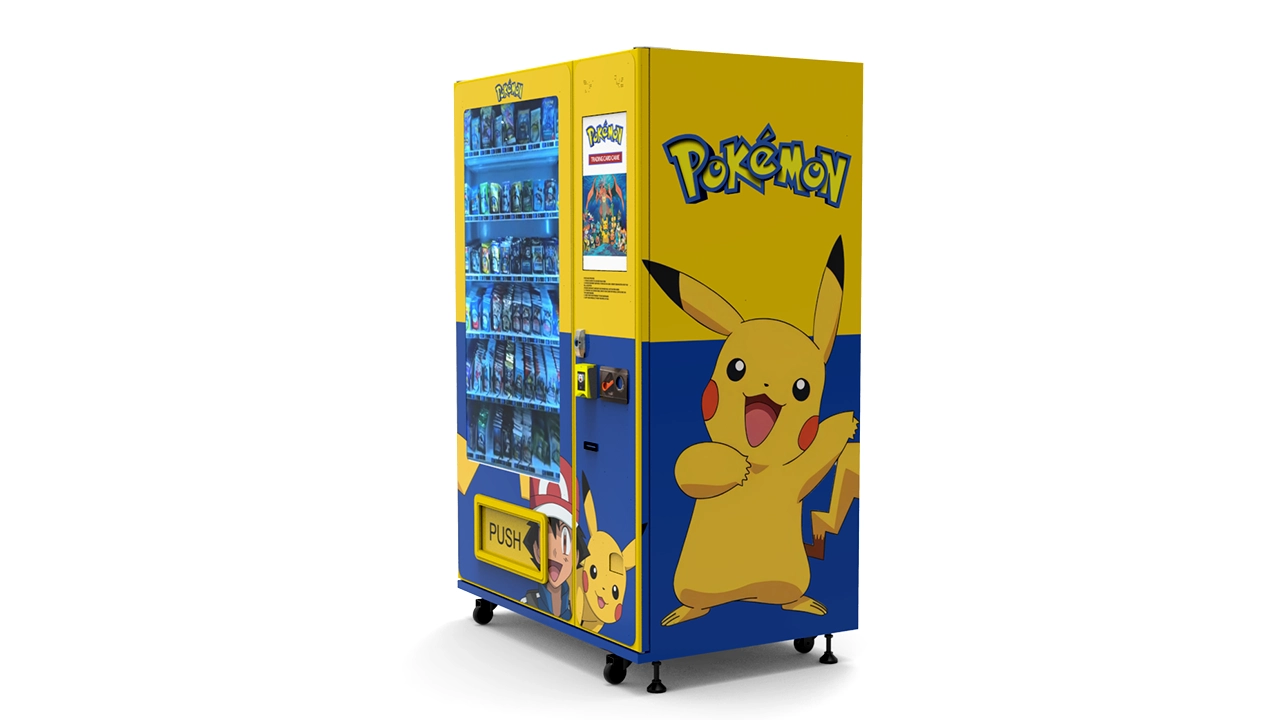
For a first-time operator, I generally recommend buying a smaller machine outright. It is the simplest model, and it gives you the freedom to move the machine if a location does not work out. Leasing can be attractive if you find a supplier with a good lease program, but make sure you read the fine print about maintenance responsibilities and early termination fees.
Data-Driven Decisions: Tracking Sales and Adjusting
If you want to succeed in this business, you need to treat it like a real business, which means tracking data. Every machine I operate has a sales log that I review at least once a week. I track which products sell, which ones sit, the time of day that sales peak, and the average transaction value. This data tells me when to restock, what to rotate, and whether a location is worth keeping.
I have used this data to make tough decisions. I once had a machine in a comic shop that was doing okay but not great. The data showed that most sales happened on weekends, and that Pokémon packs outsold everything else by a factor of five. I adjusted the inventory to be 80% Pokémon, reduced the number of different products, and sales increased by 30% without any change in location. If you are not tracking your sales, you are flying blind.
There is also a growing trend toward using data analytics in automated retail to optimize product placement and pricing. According to a report from McKinsey, retailers that use data-driven personalization can increase sales by 10% to 30%. The same principle applies to vending machines. If you can see what your customers are buying, you can give them more of it.
Final Thoughts on Choosing the Right Size
So, what size trading card vending machine should you buy? My honest answer is: start with the smallest machine that you can place in a location you have validated. A wall-mounted unit or a compact mid-size kiosk is the safest entry point. It limits your downside if the location fails, and it gives you the flexibility to test multiple sites. As you gather data and build confidence, you can upgrade to a larger machine in your best-performing location.
Do not let the allure of a big, impressive kiosk cloud your judgment. This is a business, not a showpiece. The goal is to generate a positive return on your investment, and that starts with matching the machine size to the actual demand. If you have a high-traffic location with a proven collector base, a full-size kiosk can be a great investment. But if you are just starting out, be conservative. Buy small, learn the ropes, and scale up when the numbers justify it.
I have seen too many operators fail because they over-invested in equipment and under-invested in location research. Do not be one of them. Take your time, evaluate your options, and make a decision based on data and realistic expectations. If you do that, you have a much better chance of building a profitable automated retail business.
Frequently Asked Questions
Are trading card vending machines profitable?
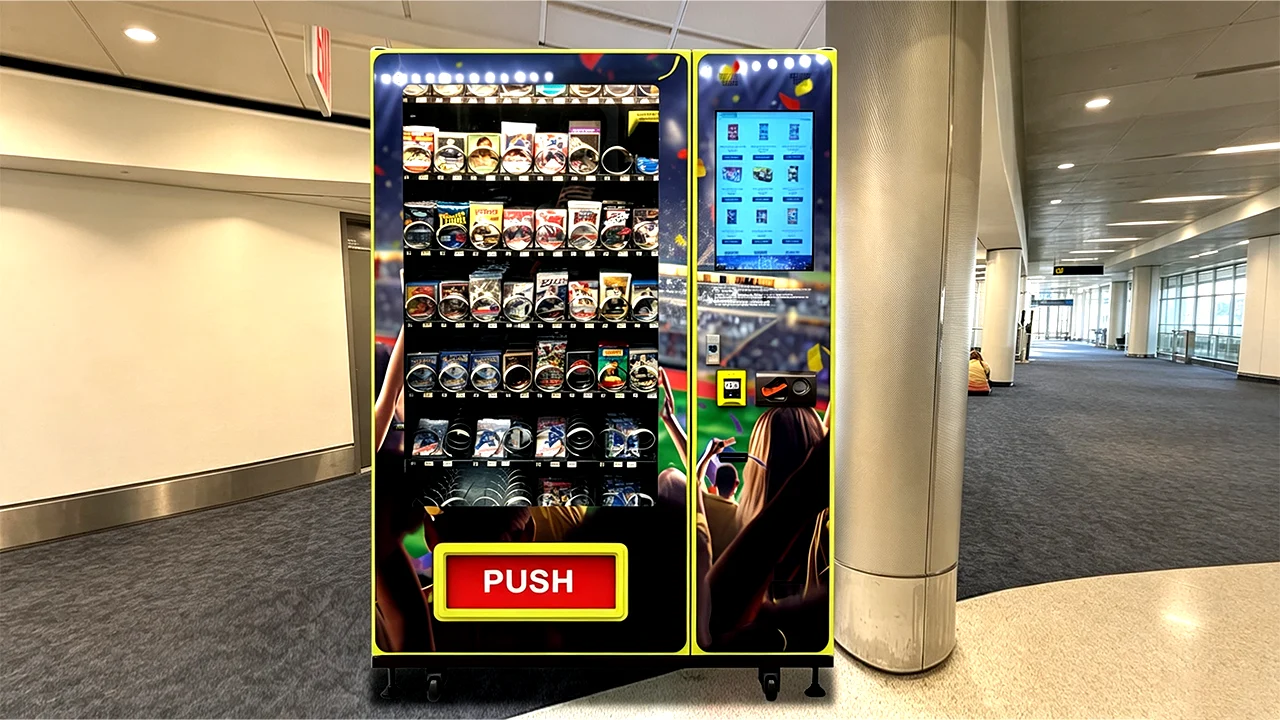
They can be, but profitability depends heavily on location, product selection, and operational discipline. In my experience, a well-placed machine can generate $1,000 to $3,500 in monthly sales, with a gross margin of around 50%. However, you need to account for payment fees, maintenance, and your own time. Some locations will fail, and you need to be prepared to move the machine or change your inventory. Profitability is not guaranteed, but it is achievable with the right approach.
How much does a trading card vending machine cost?
Prices vary widely based on size and features. A compact countertop unit costs $1,500 to $3,500. A wall-mounted machine costs $3,000 to $6,000. A mid-size floor kiosk with a touchscreen costs $6,000 to $12,000. A full-size kiosk can cost $12,000 to $25,000 or more. You also need to budget for shipping, installation, and initial inventory, which can add another $2,000 to $5,000 depending on the machine size.
How long does it take to pay back the investment?
Based on my operating experience, a realistic payback period is 12 to 18 months for a well-placed mid-size machine. Smaller machines with lower upfront costs can pay back in 6 to 12 months if they perform well. Full-size kiosks take longer, often 18 months or more, because of the higher initial investment. These are estimates, not guarantees. Your actual payback depends on location, sales volume, and how efficiently you manage costs.
Should a beginner buy or lease a card vending machine?
I recommend buying a smaller machine outright if you have the capital. It gives you full control and the freedom to relocate if a location underperforms. Leasing can be a good option if you want to minimize upfront risk, but make sure you understand the lease terms, including maintenance responsibilities and early termination fees. Revenue sharing with a host location is another option, but it reduces your profit potential.
Where should I place a card vending machine to maximize sales?
The best locations are hobby shops, game stores, comic book shops, and entertainment venues where collectors already gather. Convenience stores and supermarkets can work if they have a demonstrated demand for trading cards. Look for locations with at least 200 to 500 people passing per day, and ideally, a customer base that already buys collectibles. Dwell time matters, so stores where people browse are better than high-traffic stores where people are in and out quickly.
What permits or licenses do I need?
In the US, you generally need a business license and a seller's permit to collect sales tax. In the EU, you need to register for VAT if your sales exceed the threshold, and your machine must meet electrical safety standards. Local regulations vary, so check with the municipality where the machine will be placed. If you are placing the machine inside an existing store, the store's business license may cover you, but confirm this with the owner.
How do I choose a reliable vending machine supplier?
Ask about the payment system, dispensing mechanism, warranty, and after-sales support. Request references from other operators in your region. Look for a supplier who can ship spare parts quickly and who has a track record of supporting their products. I have worked with Zhongda Smart on several projects, and they have been reliable, but you should evaluate multiple suppliers before making a decision.
What should I do if the machine breaks down?
Keep a basic set of spare parts, such as a dispenser motor, a card reader, and a power supply. If you are not comfortable with repairs, have a local vending machine repair technician on call. Downtime costs you money, so aim to resolve issues within 48 hours. A good maintenance routine can prevent many common problems.
How can I reduce restocking and maintenance costs?
Use sales data to optimize your inventory and restock only what is selling. Maintain a minimum inventory level to avoid emergency restocks. Schedule regular maintenance to prevent small issues from becoming major repairs. Consider using a machine with remote monitoring capabilities, which can alert you to low inventory or technical issues before they become urgent.
Disclaimer: The figures and payback periods in this article are based on my personal operating experience and publicly available industry data. They are estimates, not guarantees. Your actual results will vary based on location, market conditions, product selection, and operational efficiency. Always conduct your own research and consult with a financial advisor before making a significant investment.