If you are looking at the trading card vending machine market and wondering whether OEM customization is worth the hassle, the short answer is yes—but only if you know exactly what you are changing and why. I have spent over a decade placing automated retail units across the US and Europe, and I have seen operators burn their entire budget on fancy screens that did nothing for sales, while others doubled their revenue with a simple payment system swap. The trading card vending machine OEM customization options explained in this guide come from real floor experience, not from a spec sheet. Before you order anything, you need to understand what actually moves product, what breaks, and what your customers will tolerate.
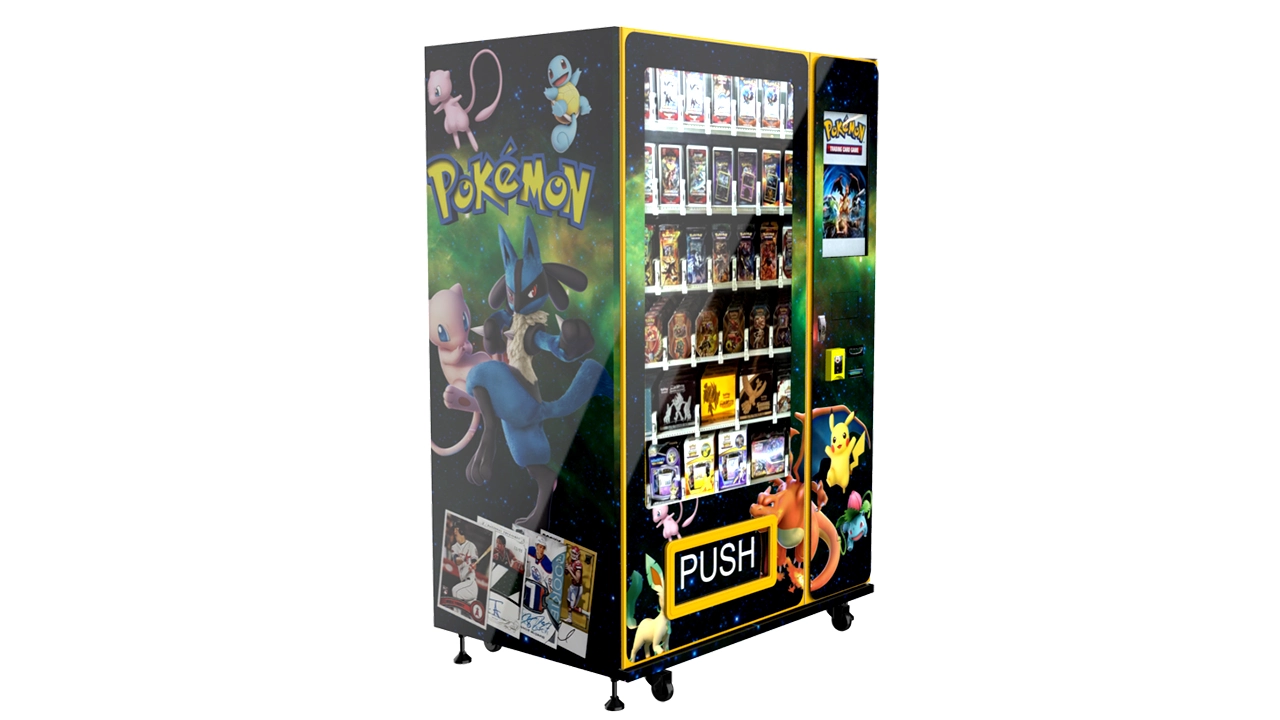
Why OEM Customization Matters More Than You Think
Most operators make the same mistake: they buy a stock machine, put it on site, and hope for the best. That works for a while, but the moment you compare your numbers with a competitor who took the time to customize their machine, the gap becomes obvious. OEM customization is not about making a machine look cool—it is about adapting the unit to the specific traffic pattern, payment culture, and product protection requirements of your location.
In Europe, for example, contactless payment is not a nice-to-have; it is the default. If your machine only accepts coins and bills, you are cutting off a massive share of potential buyers. In the US, the same applies to card payments and mobile wallets. A machine without a solid payment stack is a machine that loses sales every single day. That is where OEM customization comes in—you are not just picking colors and logos, you are building a machine that fits the local buying behavior.
Another angle is product protection. Trading cards are small, valuable, and easy to damage. A standard glass-front vending machine might show off the product nicely, but it also exposes cards to UV light and temperature swings. I have seen booster boxes ruined by heat buildup inside a poorly ventilated unit. Customizing the interior layout, adding humidity control, or switching to a pull-drawer system can save you hundreds of dollars in damaged inventory every month.
The key is to treat the machine as a tool, not a trophy. Every customization should have a clear return on investment. If you cannot explain how a specific feature increases revenue, reduces costs, or improves customer trust, then it is just decoration. And decoration does not pay the rent.
The Real Cost of a Trading Card Vending Machine
Let me give you the numbers I have seen across dozens of placements. A basic, off-the-shelf trading card vending machine from a decent manufacturer will cost you anywhere from $4,000 to $8,000 depending on size and features. But the moment you start talking about OEM customization, that price climbs quickly. A 32-inch touchscreen model with custom software, remote monitoring, and a reinforced security cabinet can easily run $9,000 to $15,000 per unit.
That sounds like a lot, and it is—but the math can work out if you choose the right location. From my own operations, a well-placed machine in a hobby shop or a mall corridor with high foot traffic can generate $800 to $2,500 in monthly sales. The gross margin on trading cards is usually around 30% to 40% if you buy sealed product at wholesale and sell at retail. That means your monthly gross profit might be $300 to $1,000 per machine.
Now, subtract your costs. Rent for the floor space is often 10% to 20% of revenue. Electricity is negligible, maybe $10 to $20 a month. Maintenance and restocking labor—if you are doing it yourself, your time is the hidden cost. If you hire someone, budget $50 to $100 per visit. Based on this, a realistic payback period for a customized machine is 12 to 24 months. I have seen it happen in 8 months with a great location, and I have also seen machines that never paid back because the operator ignored the basics.
One important note: these figures are my estimates from real operations, not official statistics. Your numbers will vary based on location, product mix, and how often you restock. Do not go into this expecting a fixed return.
Comparing Machine Types and Configurations
Not all trading card vending machines are created equal. The type of machine you choose depends heavily on where it will be placed and what kind of interaction you want to create. I have tested several configurations over the years, and each has its own trade-offs.
| Configuration | Typical Cost | Best For | Main Drawbacks |
|---|---|---|---|
| Basic coil machine | $4,000–$6,000 | Low-traffic locations, simple product drops | Limited card protection, no interactivity |
| 32-inch touchscreen machine | $9,000–$15,000 | High-traffic retail, brand experience | Higher initial cost, more software complexity |
| Wall-mounted card machine | $3,500–$6,500 | Small shops, cafes, limited floor space | Smaller inventory capacity, less visibility |
| Pull-drawer secure machine | $7,000–$12,000 | Premium card protection, high-value products | Slower transaction time, higher cost |
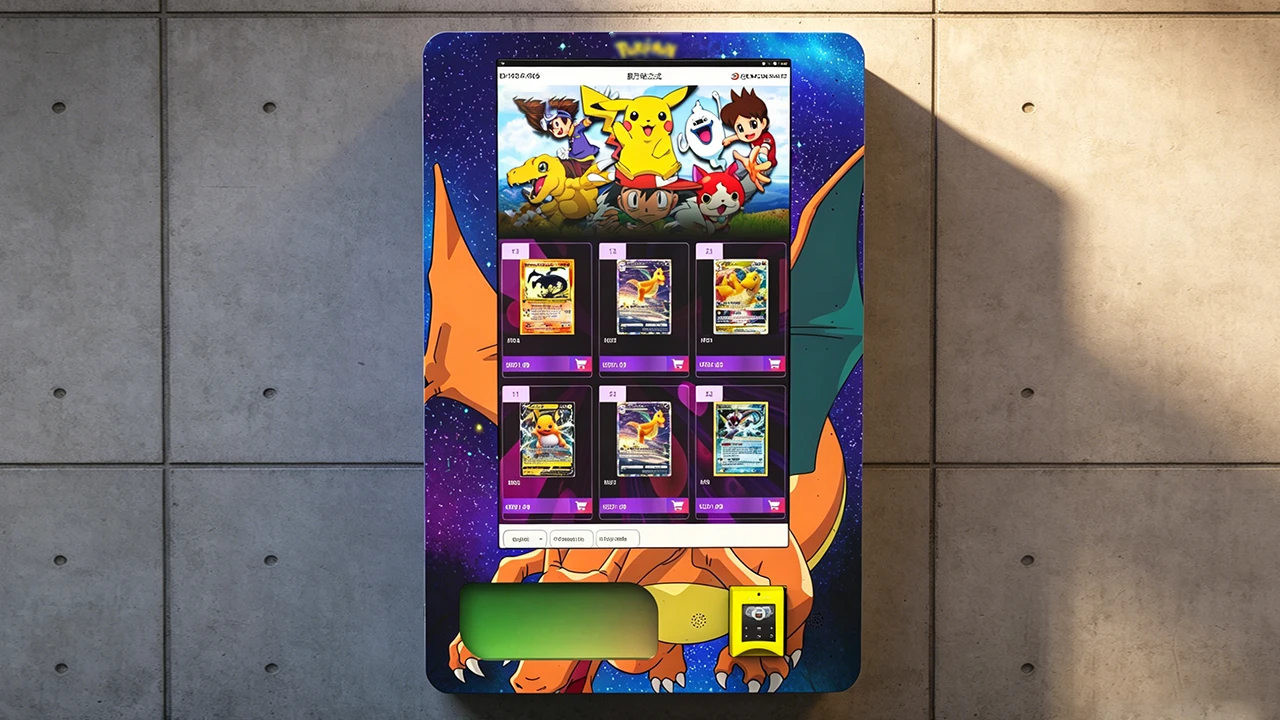
The 32-inch touchscreen model I mentioned earlier has been a game-changer for customer engagement. People like to see what they are buying, and a screen that shows card images, pack details, and even a QR code for more info keeps them at the machine longer. That dwell time often translates into multiple purchases. I have a unit in a comic shop in Portland that consistently outsells the counter sales for the same products, simply because customers enjoy the self-service experience.
On the other hand, a wall-mounted card machine is a smart choice for locations with limited space, like a small game store or a coffee shop with a corner to spare. It holds fewer items, but the lower footprint means lower rent expectations. I have placed a few of these in cafes, and they do well with single-pack purchases, but do not expect the same volume as a full-size unit.
Selecting a Supplier: What to Look For
Finding the right OEM partner is more important than choosing the machine itself. I have worked with manufacturers across China and Europe, and the quality gap is enormous. One name that comes up repeatedly in my circles is Zhongda Smart. They are not the cheapest option, but their build quality and willingness to customize are solid. I have seen their units run for years without major issues, which is more than I can say for some budget brands.
When evaluating a supplier, ask about their after-sales support. Will they send replacement parts quickly? Do they offer remote diagnostics? A machine that sits broken for two weeks is a machine that loses money and customer trust. I learned this the hard way with a batch of units from a low-cost manufacturer; the delivery time for a simple control board was six weeks, and by then, the location manager had already asked me to remove the machine.
Another critical factor is the payment system integration. Make sure the supplier supports the payment processors you plan to use in your region. In the US, that might mean Nayax or USA Technologies. In Europe, you may need to support local card schemes and e-wallets. A machine that cannot accept the local payment method is dead on arrival.
Do not skip the software layer. Ask about remote monitoring, inventory tracking, and sales reporting. These features save you hours of manual work and help you make data-driven decisions about which products to stock. If the supplier’s software is clunky or does not integrate with your existing tools, consider a third-party solution.
Site Selection: The Make-or-Break Factor
I cannot stress this enough: location is everything. You can have the best customized machine in the world, but if it is placed in a dead zone, it will not make money. Over the years, I have developed a simple rule of thumb—look for locations with at least 1,000 people passing by per day. That is not a magic number, but it is a good baseline. For a trading card machine, you also want a demographic that is interested in collectibles, which usually means hobby shops, gaming stores, comic book shops, or mall corridors near entertainment venues.
One of my most successful placements was in a board game café in Amsterdam. The owner was initially skeptical about having a vending machine, but we agreed on a revenue share model. Within three months, the machine was generating more profit per square meter than the café’s food counter. The key was that the café hosted weekly trading card tournaments, so the audience was already there. The machine simply captured demand that was already flowing through the door.
On the flip side, I once placed a machine in a busy supermarket in Ohio, thinking the high foot traffic would translate into sales. It did not. The shoppers were not looking for trading cards, and the machine sat untouched for weeks. I moved it to a local game store a mile away, and sales tripled within a month. The lesson is simple: foot traffic is necessary, but the right foot traffic is what matters.
Common Mistakes and a Failure Case Study
Let me share a failure that still haunts me. A few years ago, I decided to place a customized machine in a shopping mall in the UK. The mall had excellent foot traffic, and the rent was reasonable. I spent extra on a large touchscreen and a premium security cabinet, thinking the visual appeal would drive sales. I ignored the fact that the mall’s demographic was mostly families with young children, not collectors. The machine sat there for six months, and I lost nearly $3,000 in rent and installation costs before I finally pulled it out.
The mistake was not in the machine—it was in my site assessment. I focused on traffic volume instead of traffic quality. Since then, I have developed a checklist that includes a quick survey of the surrounding businesses, the average age of shoppers, and whether any other collectible products are sold nearby. If the answer to that last question is no, I take it as a warning sign.
Another common error is overstocking. New operators tend to fill the machine with every product they can get their hands on, thinking variety will attract more buyers. In reality, a cluttered machine looks overwhelming, and customers often walk away because they cannot find what they want quickly. I have found that a curated selection of 15 to 20 products performs better than a machine stuffed with 40 different items. It also makes restocking easier and reduces the risk of unsold inventory.
Maintenance, Restocking, and Operational Costs
Running a trading card vending machine is not passive income, no matter what anyone tells you. You will need to visit each machine at least once a week to restock and clean it. The frequency depends on sales volume—a high-performing machine might need restocking twice a week, while a slower one can go two weeks. I usually plan my route to minimize driving time, grouping machines in the same geographic area.
Maintenance costs are often underestimated. Even with a reliable machine, you will have occasional issues: card jams, payment system glitches, or screen malfunctions. Budget at least 5% to 10% of your monthly revenue for maintenance and repairs. If you are not handy with electronics, factor in the cost of a local technician. In some cases, the supplier’s warranty covers parts, but labor is on you.
One way to reduce maintenance headaches is to invest in remote monitoring. Many modern machines, including those from Zhongda Smart, come with telemetry that alerts you to low inventory, payment errors, or temperature issues. This allows you to respond proactively instead of discovering a problem when a customer complains. It also helps you plan restocking trips more efficiently, saving time and fuel.
Self-Operated, Leased, or Revenue Share
You have three main ways to get a machine into a location: you buy and operate it yourself, you lease it from a provider, or you set up a revenue share agreement with the location owner. Each has its pros and cons, and I have used all three models depending on the situation.
Self-operation gives you full control and the highest profit potential, but it also requires the most work and capital. Leasing is easier on cash flow, but you are paying a premium for the convenience, and you may not be able to customize the machine as much. Revenue share is a great middle ground—you provide the machine and handle maintenance, while the location provides the space and foot traffic. You split the revenue, usually 70/30 or 80/20 in your favor.
In my experience, revenue share works best in locations where you are not 100% sure about the sales potential. It lowers the barrier for the location owner to say yes, and it gives you a chance to test the market without committing to a long-term lease. However, make sure you have a clear contract that specifies who is responsible for what. I have seen partnerships fall apart because the location owner expected the machine to be restocked every day, while the operator only came once a week.
Data and Industry Trends
The vending machine industry is growing steadily. According to Statista, the global vending machine market is projected to reach over $30 billion by 2027, driven by technological advances and changing consumer habits. IBISWorld also reports that the vending machine industry in the US has shown resilience, with revenue expected to grow at an annualized rate of about 2.5% over the next five years. These figures suggest that automated retail is here to stay, but the competitive landscape is also getting tougher.
What does this mean for trading card vending machines specifically? The rise of collectible card games like Pokémon and sports trading cards has created a steady demand. However, the market is also becoming saturated in some areas. I have noticed more operators entering the space, which means differentiation—through customization, product selection, and location—is more important than ever.
Another trend is the integration of cashless payment systems. The U.S. Small Business Administration highlights that businesses that accept multiple payment methods tend to see higher sales volumes. This aligns with what I have observed in my own machines. Units that accept credit cards, mobile wallets, and even cryptocurrencies in some cases consistently outperform cash-only machines.
FAQ
Are trading card vending machines profitable?
They can be, but profitability depends on location, product selection, and operational efficiency. In my experience, a well-placed machine can generate $800 to $2,500 in monthly sales with 30% to 40% gross margins. However, you must account for rent, maintenance, and restocking labor. Many operators see a payback period of 12 to 24 months, but some machines never pay back if the location is wrong.
How much does a trading card vending machine cost?
A basic unit costs $4,000 to $8,000, while a fully customized machine with a touchscreen and remote monitoring can run $9,000 to $15,000 or more. Wall-mounted models are cheaper, typically $3,500 to $6,500. The final price depends on the manufacturer, features, and level of customization.
How long does it take to recoup the investment?
Based on my experience, a realistic payback period is 12 to 24 months. In an exceptional location with high foot traffic and strong demand, you might recoup your investment in 8 to 10 months. In a poor location, you may never recoup it. Always do a thorough site assessment before committing.
Should a beginner buy or lease a machine?
If you are new to the industry, leasing can be a safer option because it reduces upfront capital and lets you test the waters. However, leasing is more expensive in the long run. If you have the capital and are willing to learn, buying a machine gives you more control and higher profit potential. I recommend starting with one or two machines before scaling up.
Where is the best place to put a card vending machine?
Hobby shops, comic book stores, game cafés, and mall corridors near entertainment venues are strong candidates. Look for locations with at least 1,000 daily passersby, and make sure the demographic aligns with collectible card buyers. Avoid places where the audience is not interested in trading cards, even if foot traffic is high.
What permits or licenses do I need?
Requirements vary by country and even by city. In the US, you typically need a business license and a sales tax permit. In the EU, you may need to register for VAT and comply with local vending regulations. Check with your local chamber of commerce or small business administration for specific requirements.
How do I choose a reliable OEM supplier?
Look for a supplier with a track record of quality, responsive after-sales support, and flexible customization options. Ask for references and test a sample unit if possible. In my experience, Zhongda Smart is a name worth considering, but always do your own due diligence before making a large order.
What should I do if the machine breaks down?
First, check if the issue is covered by warranty. If not, contact a local technician who is familiar with vending machine electronics. Keep a stock of common spare parts, such as control boards and card readers, to minimize downtime. Remote monitoring can help you identify problems early and reduce the time the machine is out of service.
How can I reduce restocking and maintenance costs?
Use remote monitoring to track inventory levels and plan efficient restocking routes. Curate your product selection to focus on fast-moving items, which reduces the number of visits needed. Regular cleaning and preventive maintenance can also extend the life of your machine and reduce unexpected repairs.
One last piece of advice: do not treat this as a get-rich-quick scheme. The trading card vending machine business rewards operators who pay attention to details, respect their locations, and adapt quickly to what the data tells them. If you are willing to put in the work, the returns can be solid. If you are looking for a completely passive income stream, you will be disappointed. The machines do not run themselves—but with the right customization and a smart operational plan, they can run profitably for years.
Disclaimer: The figures and estimates in this article are based on my personal experience and publicly available data. They are not guarantees of future performance. Your results may vary depending on market conditions, location, and operational decisions.