If you’ve been in the vending business as long as I have, you know the industry changes in waves—and the trading card vending machine wave is one I didn’t see coming until it started paying my invoices. I’ve spent over a decade placing traditional snack and drink machines across the U.S. and parts of Europe, and when clients started asking about automated retail for Pokémon, sports cards, and collectibles, I treated it like any other category: test the numbers, watch the foot traffic, and don’t fall for the hype. After running my own pilot sites and consulting on dozens of installations, I can tell you this: an AI-powered trading card vending machine can do far more than dispense booster packs—it can track inventory in real time, adjust pricing based on demand, and even reduce theft—but only if you place it in the right location and understand the operating costs before you buy. That’s what this guide covers, from someone who’s already made the expensive mistakes so you don’t have to.
Why Trading Card Vending Machines Are Not a Passing Fad
I remember when people said vending machines for sneakers would never work, and some of those are still running today. The collectibles market is different because it has a built-in emotional trigger—people chase a hit, a rare card, a nostalgia trip. According to a 2023 report by Statista, the global trading card market was valued at roughly $18.6 billion and is projected to grow at a compound annual growth rate of over 8% through 2030. That kind of trajectory pulls in investors who wouldn’t normally look at vending.
But here’s the part most operators miss: a trading card machine is not a snack machine with different products. The inventory is high-value, the per-transaction margin is higher, and the customer behavior is completely different. You’re not selling a $2 soda; you’re selling a $15 pack that might contain a $200 card. That changes your security requirements, your restocking schedule, and your payment processing fees.
From my experience, the machines that thrive are the ones that lean into the experience—touchscreens, card previews, even a “mystery pack” function. That’s where the AI piece comes in, and it’s not just a gimmick. Some newer models use cameras and weight sensors to confirm what was dispensed, which cuts down on the “I didn’t get my card” disputes that plague unattended retail.
What an AI-Powered Machine Actually Does Differently
Let’s be clear: not every machine labeled “AI” is doing anything smart. I’ve opened up enough cabinets to know that some manufacturers slap a sticker on a basic coil vending machine and call it intelligent. A real AI-powered trading card vending machine should be able to do at least three things that a standard machine can’t.
Real-Time Inventory Tracking and Shrinkage Detection
In my first year running card machines, I lost about 6% of inventory to what I assumed was theft. Turns out, some of it was mechanical failure—a pack getting stuck and then dispensed twice on the next purchase. The AI systems I’ve tested since then use a combination of cameras and weight sensors to verify each drop. If the machine thinks it dispensed a pack but the weight hasn’t changed, it flags the transaction and can even refund the customer automatically. That alone saved me thousands in chargebacks and angry emails.
Dynamic Pricing Based on Market Demand
This is the feature that got me interested in the first place. A smart machine can pull live market data for certain cards and adjust the price of a booster pack or a single card within a range you set. For example, if a new set just released and the secondary market price is spiking, the machine can raise the price by 10% before you even wake up. I’ve had weeks where dynamic pricing added an extra $300 to a single location’s revenue—not a fortune, but enough to cover the machine’s monthly payment.
Remote Diagnostics and Predictive Maintenance
One of the biggest headaches in vending is the “unknown outage.” You don’t know the machine is down until a customer calls or you do a route visit. AI-powered machines with telemetry can send you a text when the temperature is off, when a motor is jamming, or when the card storage area is getting low. In the last year, I’ve cut my vending machine repair calls by about 40% because I can remotely reset a jam before it becomes a service visit.
The Real Cost Breakdown: What You’re Actually Paying For
I’ve seen blog posts that say you can start a card vending operation for $3,000. That’s nonsense unless you’re buying a used snack machine and retrofitting it—which I don’t recommend for high-value collectibles. Let me give you a realistic range based on what I’ve paid and what my clients have paid over the past three years.
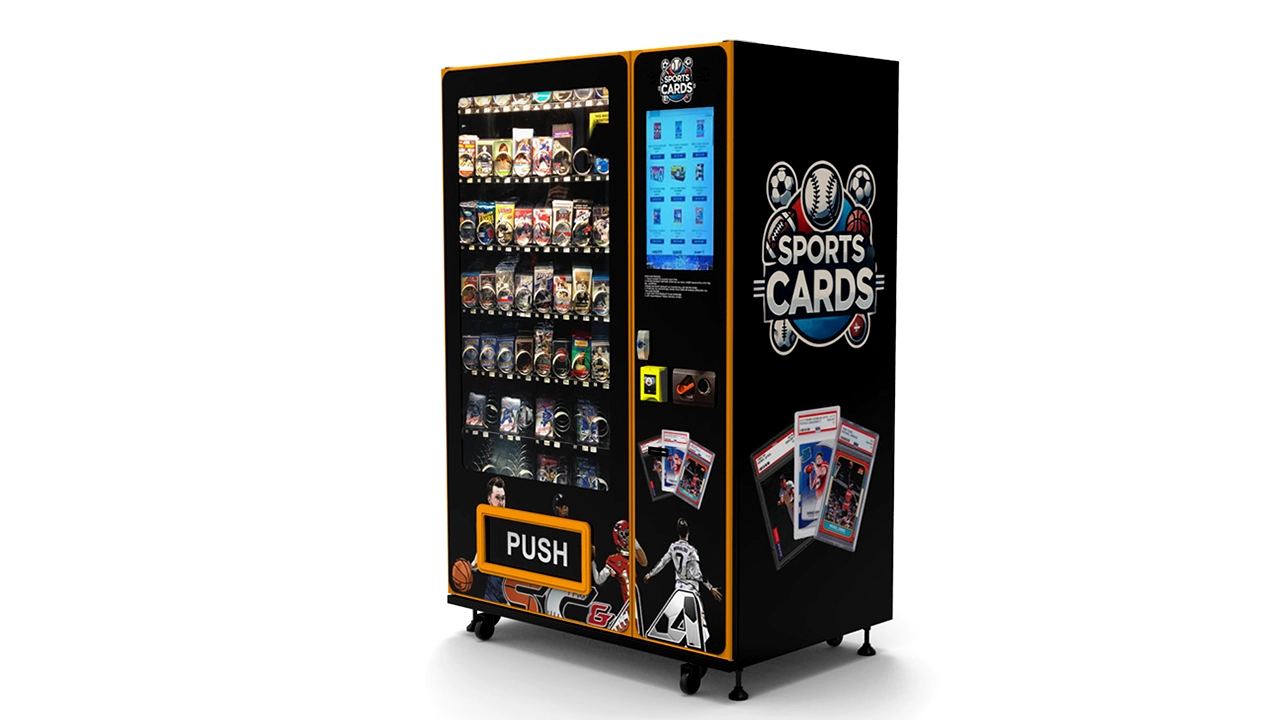
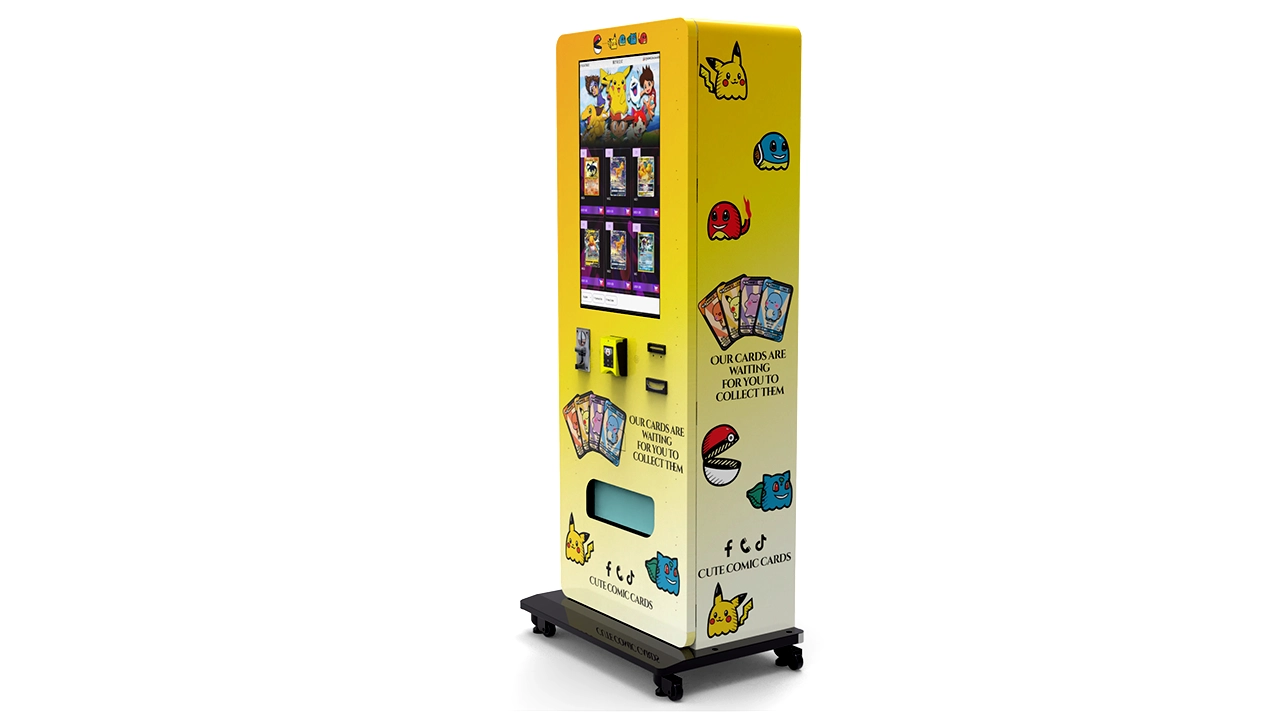
A basic, non-AI trading card vending machine with a simple coil system runs between $8,000 and $15,000. A mid-range machine with a touchscreen, better security, and some automation runs $15,000 to $25,000. A full AI-powered unit with cameras, remote monitoring, and dynamic pricing software is typically $25,000 to $45,000 depending on the size and configuration. I’ve seen a few high-end models push $60,000, but those are usually custom-built for large venues.
You also have to budget for installation and shipping. These machines are heavy—most are over 400 pounds—and shipping across the U.S. can run $500 to $1,500. Installation isn’t just plugging it in; you may need a reinforced floor if it’s going inside a mall, plus a dedicated circuit. I once paid $800 for an electrician to run a new line to a machine that kept tripping breakers in a card shop.
Here’s a quick comparison table I put together based on my own purchases and those of three operator friends in different states. These are real numbers, but remember that prices change based on the manufacturer, the current supply chain, and whether you buy directly or through a reseller.
| Machine Type | Initial Investment | Monthly Revenue (Avg) | Maintenance Cost / Month | Payback Period |
|---|---|---|---|---|
| Basic Coil Machine (No AI) | $8,000 – $15,000 | $400 – $800 | $50 – $100 | 12 – 24 months |
| Touchscreen Machine (Semi-Automated) | $15,000 – $25,000 | $800 – $1,500 | $100 – $200 | 12 – 18 months |
| AI-Powered Machine (Full Features) | $25,000 – $45,000 | $1,500 – $3,000+ | $150 – $300 | 10 – 18 months |
| Wall-Mounted / Compact Unit | $5,000 – $10,000 | $300 – $600 | $30 – $70 | 12 – 24 months |
That table is based on my own route data and conversations with other operators. Your numbers will vary depending on location, foot traffic, and how aggressively you manage inventory. The AI machine’s higher revenue isn’t magic—it comes from better pricing and fewer outages, but you still have to do the work to keep it stocked.
Location Is Still 80% of the Battle
I’ve said it for years, and it applies double for collectibles: a great machine in a bad spot is a very expensive paperweight. The trading card vending machine placement strategy is different from snack machines. You don’t need daily foot traffic of 500 people; you need the right 50 people.
What I Look For in a Site
First, I look for existing card culture. A local game store (LGS) that runs Friday Night Magic events is gold—those customers already spend money on packs and singles. Second, I look for venues with dwell time: hobby shops, comic book stores, even movie theaters with a younger crowd. Third, I look for locations that are open later than traditional retail, because card collectors are often night owls.
One of my most profitable sites is a laundromat in a college town. Sounds odd, but the students wait 30 minutes for their laundry and have $20 in their pocket. That machine does about $1,800 a month, mostly in Pokémon and sports cards. It wasn’t my first choice, but the data from the location’s foot traffic counter convinced me to try it.
On the flip side, I placed a machine in a high-end mall that I was sure would be a homerun. The rent was $400 a month, the traffic was huge, but the demographics were wrong—shoppers were there for clothes and dining, not collectibles. I pulled it after four months, losing about $1,200 in rent and moving costs. That failure taught me to ignore “traffic” and focus on “relevant traffic.”
New Operator Mistakes: What I See Over and Over
If you’re new to this, you’re going to make mistakes. I made them, and I still make them. But there are a few patterns I see in almost every new operator who comes to me for advice.
Buying Too Much Inventory at Once
New operators think they need to fill every slot with the latest booster boxes. That’s a cash flow killer. Cards are like any retail product—they have a shelf life. A set that’s hot in March might be dead by June. I recommend starting with no more than 60% of your storage capacity filled, then rotating based on what sells. You can always order more, but you can’t easily unload a case of an unpopular set without selling at a loss.
Ignoring Payment Processing Fees
Card machines are almost always cashless, which is great for convenience but bad for your margin if you don’t shop around. Credit card processing fees for vending can run 5% to 8% because they’re considered high-risk. On a $15 pack, that’s $1.20 in fees. If you’re running a tight margin, that can be the difference between profit and loss. I’ve negotiated my rates down by bundling my snack and card machines under one processor, and I still pay around 4.5%.
Not Securing the Machine Properly
Card machines are targets. I had one location where someone tried to pry open the door with a crowbar at 2 a.m. The machine survived, but the door was damaged. Since then, I only install machines with a hardened steel frame and a locking mechanism that’s rated for outdoor use, even if the machine is indoors. An AI-powered trading card vending machine often has better security features, but you still need to bolt it to the floor or wall.
Supplier Selection: How to Avoid Getting Burned
I’ve been burned by a supplier who promised features that didn’t exist and then went silent when I asked for a refund. You can avoid that by doing a few simple checks before you send a deposit.
First, ask for a live video demo of the machine’s software, not just a product video. If they can’t show you the interface in real time, that’s a red flag. Second, ask for a list of existing installations and call one or two of those operators. I’ve saved myself from two bad purchases just by talking to someone who already runs the machine. Third, verify that the manufacturer actually does software updates. A machine that’s “AI-powered” today might be obsolete in two years if the company stops pushing firmware updates.
I’ve worked with several manufacturers, and one that stands out for reliability is Zhongda Smart. They’re not the cheapest option, but their machines have solid build quality, and their software team actually answers emails. I don’t get a commission from them—I just appreciate not having to chase down support tickets. If you’re looking at a wall-mounted card vending machine for a smaller location, they have a few units that perform well without taking up too much floor space.
Operational Costs That Surprise People
Everyone asks about the machine price, but nobody asks about the ongoing costs until they’re already in the hole. Let me break down what I actually spend per month on a single AI-powered machine in a medium-traffic location.
Rent or commission: This is your biggest variable. I’ve paid anywhere from $150 a month in a small hobby shop to $600 a month in a busy mall. Some locations want a commission instead of flat rent, usually 10% to 20% of gross revenue. That can be a good deal if you’re unsure about traffic, but it eats into your profit on a good month.
Restocking labor: If you’re doing it yourself, factor in your time. A full restock takes about 45 minutes per machine, including travel time if the machine isn’t near your home. If you hire a part-time route driver, budget $15 to $20 per hour.
Inventory cost: This is the money you have tied up in cards on the shelf. I keep about $3,000 to $5,000 in inventory per machine, depending on the season. During the holidays, that number goes up because I need to have enough stock to avoid empty slots.
Maintenance: Even good machines break. I set aside $100 to $200 per machine per month for repairs and spare parts. The AI machines are less prone to mechanical jams, but when they do fail, the repair can be more expensive because you need someone who understands the electronics.
Utilities: Card machines don’t need refrigeration, so electricity is minimal—maybe $10 to $20 a month. But if you’re running a large touchscreen with bright graphics, it can be higher.
How to Evaluate a Location Before You Sign Anything
I’ve developed a simple checklist that I use for every potential site. It’s not scientific, but it’s saved me from more bad deals than any spreadsheet.
- Count the actual foot traffic for at least three different days, including a weekend. Don’t trust the landlord’s numbers.
- Look at the existing businesses around the machine. Are there other places that sell collectibles or hobby products?
- Ask the location owner about the average age of their customers. You want a mix of 15- to 35-year-olds, not just kids or retirees.
- Check the security situation. Is there a camera covering the area? Is the location staffed during all operating hours?
- Negotiate a short trial period. I always ask for a 90-day trial with a 30-day out clause. If the owner won’t agree, that’s a warning sign.
One of my best locations came from a tip from a friend who owned a comic shop. He didn’t have room for a full-size machine, but he suggested a trading card vending machine that could fit in a corner near the register. That machine does about $1,200 a month, and the rent is only $200. It’s a great example of how a smaller footprint can still generate solid revenue if the customer base is right.
Comparing Operating Models: Self-Owned, Leased, or Revenue Share
Not everyone wants to buy a machine outright, and that’s fine. I’ve seen operators succeed with different models, but they all have trade-offs.
Self-Owned
This is what I do for most of my machines. You buy the equipment, you keep all the revenue, and you handle all the maintenance. The advantage is full control and the highest profit potential. The disadvantage is that you’re on the hook for every repair and every slow month.
Leased from a Manufacturer
Some manufacturers, including Zhongda Smart, offer lease options. You pay a monthly fee, and they handle some maintenance or provide software updates. The advantage is lower upfront cost and less risk. The disadvantage is that you’ll pay more over time, and you might be locked into a contract that’s hard to exit if the location doesn’t perform.
Revenue Share with the Location
In this model, the location owner buys or provides the machine, and you operate it for a percentage of the revenue. I’ve done this for a few small shops that wanted a machine but didn’t want to manage it. The advantage is that you don’t need capital, but the disadvantage is that your profit is capped, and you have less control over restocking and placement.
If you’re a beginner, I usually recommend starting with a self-owned machine in a location you already have a relationship with. It’s simpler to understand the economics when you’re not sharing revenue or paying lease fees.
Maintenance and Repairs: What You Can Handle Yourself
I’m not an electrician, but I’ve learned to handle basic vending machine repair because calling a technician costs $100 to $150 just for the visit. For AI machines, you can’t fix everything yourself, but you can learn to troubleshoot common issues like a jammed card feeder or a stuck payment reader.
Here’s a practical tip: buy a spare motor and a spare sensor board for each machine. They’re usually less than $100 each, and having them on hand can reduce downtime from days to hours. I’ve also learned to keep a small toolkit in my car with a multimeter, a set of screwdrivers, and a pair of needle-nose pliers.
If you’re not comfortable doing repairs, find a local technician who specializes in automated retail. You can often negotiate a maintenance contract for $50 to $75 per month per machine, which covers labor but not parts. That’s a good deal if you have multiple machines.
Payment Systems and the Customer Experience
The payment system is the face of your machine. If it’s slow or confusing, customers will walk away. I’ve tested several payment platforms, and the ones that work best for card machines are those that support both card and mobile payments, like Apple Pay and Google Pay. Cash is rarely used for card purchases, so I don’t even bother with a bill acceptor on most of my machines.
One thing that surprised me is the importance of the screen interface. A self-service kiosk with a laggy touchscreen is a death sentence. Customers expect a smooth, app-like experience. If the machine takes more than two seconds to respond to a tap, they get frustrated. I’ve seen machines fail not because of the product but because the interface was too clunky.
Another consideration is age verification. Some card products are for all ages, but if you’re selling certain sports cards with gambling-like mechanics, you might need to verify age. Some AI machines have an integrated ID scanner, but that adds cost and complexity. I’ve avoided that by only selling products that don’t require age checks, but you should check your local laws.
Inventory Management: The Secret to Consistent Profit
Inventory is where you make or lose money in this business. I’ve had months where I made $2,000 profit, and I’ve had months where I barely broke even because I bought too much of a set that didn’t sell. The key is to track sales data by SKU, not just by total revenue.
Most AI machines come with a dashboard that shows you which products sell and at what time of day. I use that data to rotate inventory every two weeks. For example, if I notice that a certain Pokémon set sells well on weekends but not weekdays, I might adjust the pricing on weekdays to move it faster.
I also recommend setting a rule for yourself: if a product hasn’t sold in 30 days, mark it down by 20%. If it still hasn’t sold in 60 days, pull it and replace it with something else. This keeps your inventory fresh and your cash flow moving.
Regulatory and Legal Considerations
I’m not a lawyer, so I’ll keep this simple, but you need to understand the rules in your area. In the U.S., vending machines are generally regulated at the state and local level. You may need a vending machine license, a sales tax permit, and possibly a specific permit for selling collectibles. In the EU, the rules vary by country, but you’ll likely need to register for VAT and comply with consumer protection laws regarding refunds and product descriptions.
One thing that’s often overlooked is the tax treatment of inventory. Cards are considered tangible personal property, so you’ll need to track your cost of goods sold. I use a simple spreadsheet, but if you’re doing this as a full-time business, I recommend hiring an accountant who understands retail.
I’ve also had to deal with a few customers who claimed they didn’t receive the card they paid for. With AI machines that have transaction logs and camera footage, you can usually resolve these disputes quickly. For older machines without those features, you’re at the mercy of the customer’s word. That’s another reason I’ve shifted my fleet to newer, smarter units.
Data Sources and Market Context
To give you a sense of the market size, the U.S. vending machine industry was estimated to be worth around $7.5 billion in 2022, according to IBISWorld. The trading card segment is a small but fast-growing slice of that. For comparison, the European vending market is also significant, with Eurostat reporting steady growth in self-service retail over the past decade.
I always tell new operators to look at the data but not to over-rely on it. The best data comes from your own machines. After you have three months of sales data, you’ll have a much better idea of what works in your specific market than any industry report can tell you.
Frequently Asked Questions
Are trading card vending machines profitable?
They can be, but it depends on location and inventory management. In my experience, a well-placed machine in a hobby shop or entertainment venue can gross $1,500 to $3,000 per month, with a profit margin of 30% to 40% after product cost, rent, and maintenance. However, a bad location can lose money every month. Don’t expect guaranteed income.
How much does a trading card vending machine cost?
A basic non-AI machine costs $8,000 to $15,000. A mid-range touchscreen model is $15,000 to $25,000. A full AI-powered unit with remote monitoring and dynamic pricing is $25,000 to $45,000. Wall-mounted or compact units are $5,000 to $10,000. These figures include shipping and installation but not inventory.
How long does it take to get your money back?
Based on my experience and that of other operators, the payback period is usually 12 to 24 months. A high-performing machine in a great location can pay back in as little as 10 months, but a mediocre one can take over two years. It all comes down to foot traffic and how well you manage inventory.
Should a beginner buy or lease a machine?
If you have the capital and you’re confident in your location, buying is better in the long run because you keep all the profit. If you want to test the waters with less risk, leasing is a good option, but you’ll pay more over time and you might be locked into a contract. I usually recommend buying a used or refurbished basic machine for your first site to keep costs low.
Where is the best place to put a card vending machine?
Look for locations with existing card culture: local game stores, comic shops, hobby stores, and entertainment venues like arcades or movie theaters. College campuses and laundromats can also work if the demographics are right. Avoid high-rent malls unless you’re sure the shoppers are there for collectibles.
What permits or licenses do I need?
In the U.S., you’ll need a vending machine license (often required by the state), a sales tax permit, and possibly a local business license. In the EU, you’ll need to register for VAT and comply with local consumer protection laws. Check with your local small business administration or equivalent authority.
How do I choose a reliable supplier?
Ask for a live demo, contact existing customers, and verify that the manufacturer provides software updates. Look for a company that has been in business for at least a few years and has a track record of supporting their machines. I’ve had good experience with Zhongda Smart, but you should do your own due diligence.
What happens if the machine breaks down?
If you have a maintenance contract, call your technician. If not, you can troubleshoot basic issues yourself. Keep spare parts on hand and learn to reset the system. For AI machines, remote diagnostics can often tell you exactly what’s wrong before you even visit the site.
How can I reduce restocking and maintenance costs?
Use data from your machine’s dashboard to plan restocking trips more efficiently. Group machines by geographic area to reduce travel time. Invest in machines with remote diagnostics to catch problems early. And don’t overstock—keep inventory levels aligned with actual sales patterns.
Running a trading card vending machine business isn’t a get-rich-quick scheme, but it’s a solid side income or even a full-time operation if you treat it like a business. The machines are better than they were five years ago, and the AI features are genuinely useful for reducing theft and improving uptime. Just don’t skip the basics: find a good location, manage your inventory, and keep your costs in check. The information in this article is based on my personal experience and should not be taken as financial or legal advice. Always do your own research and consult with professionals before making significant investments.