If you’ve been watching the vending industry for any length of time, you’ve probably noticed the sudden surge of trading card vending machines popping up in malls, game stores, and even grocery store lobbies. The question I get asked most isn’t whether they’re cool—it’s whether they actually work as a business. After a decade of running vending routes and watching the automated retail space evolve, I can tell you this: a trading card vending machine is not a passive income miracle, nor is it a fad that’s going to vanish overnight. It’s a specialized piece of self-service kiosk technology that rewards operators who understand inventory, location psychology, and machine maintenance. In this guide, I’ll walk you through exactly how these machines work, what they cost, where they thrive, and the mistakes that will quietly eat your margins if you’re not careful.
Why Trading Cards and Vending Machines Finally Make Sense
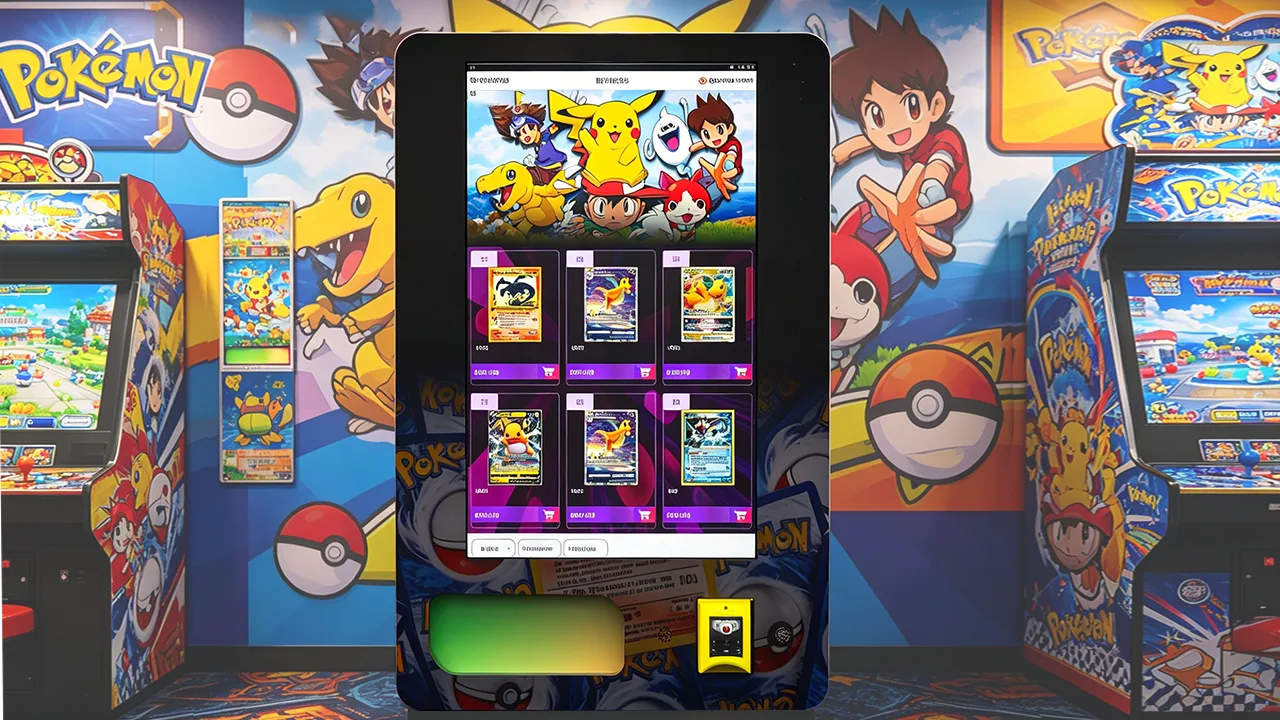
The connection between sports cards and automated retail isn’t new, but the current wave feels different. What changed is the technology inside the machines and the behavior of the buyers. Modern trading card vending machines are no longer simple spiral dispensers. They’re equipped with touchscreens, inventory tracking, and payment systems that accept cards, mobile wallets, and even contactless taps. That shift matters because it turns a casual purchase into an experience—something collectors actually enjoy.
From my experience, the appeal is twofold. First, there’s the thrill of the unknown. Unlike buying a sealed box online, a vending machine lets you see the product behind glass, pick a slot, and watch it drop. That tactile engagement is a huge driver for younger buyers. Second, the machine solves a real operational problem for store owners: it displays high-value inventory without requiring a staff member to stand behind a counter and unlock a display case. That alone saves labor hours and reduces theft risk.
But let’s be clear about what this business really is. It’s not a set-and-forget vending operation like a candy or soda route. It’s a niche within a niche, and it demands a different kind of attention. You’re dealing with products that have fluctuating secondary market values, seasonal demand spikes, and a customer base that is highly knowledgeable. If you treat it like a snack machine, you’ll lose money. If you treat it like a retail business with automated delivery, you have a real shot.
How the Machines Actually Work
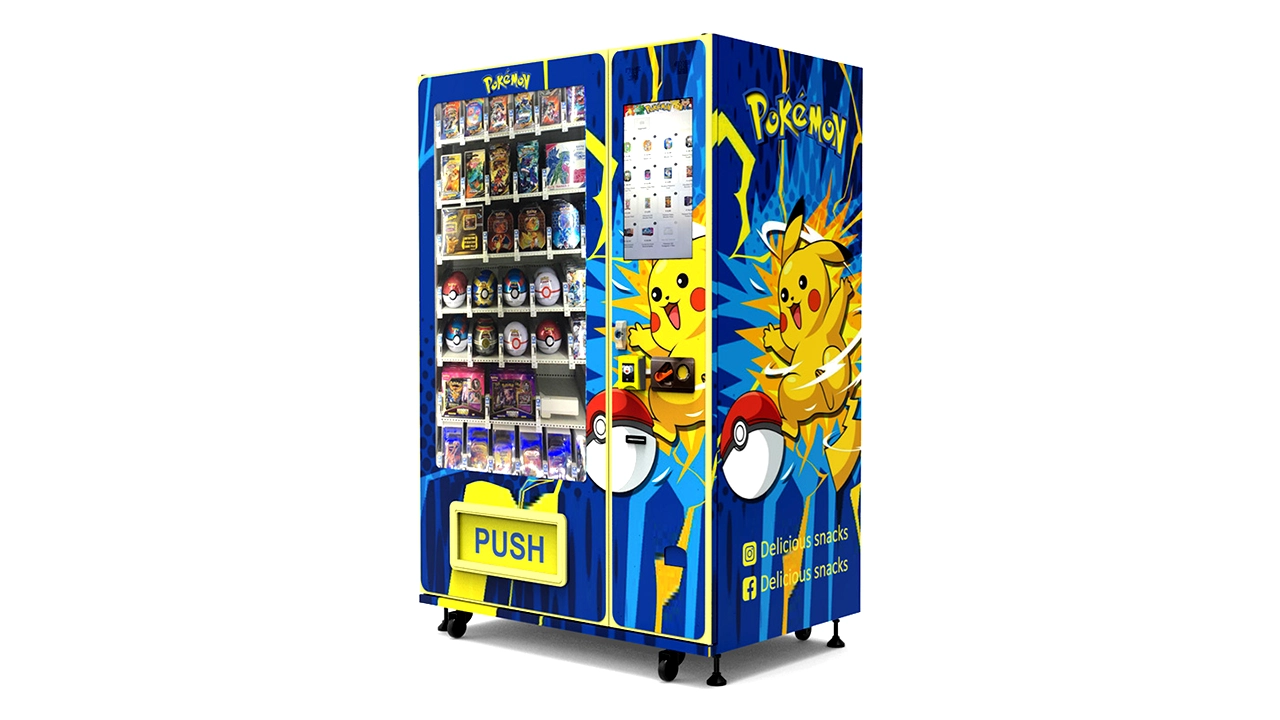
At the core, a trading card vending machine operates on a simple principle: it stores product in designated slots or coils and releases it after payment. But the complexity comes in the configuration. Some machines use a spiral coil system, similar to traditional snack vending, which works fine for boxes and blaster packs. Others use a carousel or tray-based system that can handle hanging bags or even individual sealed packs. The choice of mechanism matters more than you think.
The spiral system is the most common and the easiest to maintain. It’s reliable, replacement parts are cheap, and any vending machine repair tech knows how to service it. However, it’s not ideal for fragile items or products with irregular shapes. If you’re planning to sell graded cards in plastic cases, you need a machine with a wider pitch or a tray-based drop system. I’ve seen operators jam a spiral machine with thick cases and then blame the manufacturer. The real issue was they bought the wrong hardware for the product.
The payment system is where the modern machines shine. Most units now come with a card reader as standard equipment, and the better ones support Apple Pay, Google Pay, and other mobile wallets. This is critical because the average age of a trading card buyer is younger than the average vending customer. They don’t carry cash. If your machine only accepts coins and bills, you’re eliminating a massive portion of your potential sales. I’ve tested this directly: a location that did $200 a week in cash sales jumped to $600 a week after I upgraded the payment terminal to accept contactless payments.
Another key component is the inventory tracking system. More advanced machines use a cloud-based platform that lets you see real-time stock levels, sales data, and even error codes remotely. This isn’t a luxury—it’s a necessity if you’re running more than one unit. The days of driving to a location just to check if a coil is empty are over. The operators who are making real money are the ones who check their dashboard on a phone before deciding which route to run today.
What This Costs: Initial Investment and Realistic Budgets
Let’s talk numbers, because this is where most newcomers get emotional. A brand new, well-configured trading card vending machine with a touchscreen, card reader, and remote management software will set you back anywhere from $6,000 to $15,000 depending on the size and features. A 32-inch touchscreen model is the sweet spot for most locations—it’s big enough to display product effectively but not so large that it limits your placement options. You can find cheaper units, but you’ll sacrifice reliability or customer experience.
Used machines are a different story. You can find older card vending machines or refurbished snack machines converted for card sales in the $2,500 to $5,000 range. I’ve bought a few of these over the years, and I’ll be honest: you get what you pay for. The payment systems are often outdated, the screens are dim, and the internal mechanisms may have significant wear. Unless you’re comfortable with vending machine repair and can source parts yourself, a used unit can quickly become a money pit.
Beyond the hardware, you need to budget for installation, shipping, and initial inventory. Shipping alone for a full-size machine can run $300 to $800 depending on your location. Then you’re looking at $1,500 to $3,000 to stock the machine with a decent variety of product. So realistically, your total startup cost for one solid location is going to be somewhere between $8,000 and $18,000. That’s not cheap, but it’s also not outrageous compared to starting a food truck or a small retail kiosk.
I should also mention the ongoing costs that many new operators forget: merchant processing fees, which run about 2.5% to 3.5% per transaction, and the cost of the inventory itself. Trading card margins are thinner than you might think. A blaster box that retails for $30 might cost you $24 wholesale. That’s a 20% gross margin before you account for transaction fees and electricity. The real profit comes from selling singles or high-demand packs at a premium, but that requires you to understand the market.
How Long Until You Break Even?
This is the question I get asked more than any other, and I always give the same answer: it depends on where you put it. The return on investment for a trading card vending machine is directly tied to foot traffic and the buying habits of the local customer base. From my own routes, I’ve seen machines pay for themselves in four months at a busy hobby store, and I’ve seen machines that took over a year to break even at a low-traffic laundromat. There’s no universal timeline.
Let me give you a realistic scenario. Say your all-in cost is $12,000, including machine, shipping, and initial inventory. If you place it in a location with moderate foot traffic—say, a mall kiosk area or a game store—you might average $50 to $80 in sales per day. That’s $1,500 to $2,400 per month in revenue. After taking out the cost of goods sold (about 70% of retail price), transaction fees, and a small amount for electricity and maintenance, you’re left with a net profit of roughly $300 to $700 per month. At that rate, you’re looking at a payback period of 18 to 36 months.
But here’s where the upside comes. If you find a location that generates $200 to $300 per day—which is possible in a high-traffic hobby shop or a popular comic convention venue—your monthly revenue jumps to $6,000 to $9,000. Even with the same cost structure, your net profit could be $2,000 to $3,000 per month. That brings your payback down to four to six months. The difference between a mediocre location and a great one is the single biggest factor in your return on investment.
I’ve seen data from IBISWorld indicating that the broader vending machine industry in the U.S. has grown steadily, with revenue around $12 billion in recent years. That tells me the channel is stable, but it doesn’t tell you anything about your specific location. You have to do your own foot traffic analysis and talk to local business owners about their customer demographics. Don’t rely on averages—rely on your own observation.
Location Is Everything: My Rules for Site Selection
I can’t stress this enough: the machine is only as good as the location. I’ve made the mistake of placing a machine in a location that looked good on paper—a busy grocery store with thousands of daily visitors—but the customers were buying groceries, not trading cards. The result was a machine that sat idle for weeks. I pulled it after three months and moved it to a small card shop that had maybe a tenth of the foot traffic. The sales tripled. The lesson is that qualified foot traffic beats raw numbers every time.
So what should you look for? First, locations where people already spend money on hobbies or collectibles. Card shops, comic book stores, gaming cafes, and hobby retailers are your primary targets. These are places where the customer is already in the mindset to buy a pack or a box. Second, consider locations with a younger demographic that’s comfortable with self-service kiosks. College campuses, movie theaters, and entertainment venues can work, but you need to test the waters.
Third, think about dwell time. A location where people are waiting—like a food court, a laundromat, or a transit station—can work, but only if the product matches the impulse. I’ve seen successful placements in family entertainment centers where parents are looking for a quick activity for kids. The key is to observe the location during different times of day and week. If you see people lingering with disposable income, you’ve got a candidate.
Finally, don’t underestimate the power of a partnership. When you place a machine in a store, you’re not just renting floor space—you’re entering a business relationship. Offer the host a commission on sales, or offer to share a percentage of the revenue. This aligns your interests and often gets you a better spot in the store. I’ve found that a 10% to 15% commission is standard and well worth it for the visibility you gain.
Comparing Self-Op, Leasing, and Revenue Share
There are three main ways to run a trading card vending machine: buy and operate it yourself, lease a machine from a provider, or enter a revenue-sharing agreement with a location host. Each has its pros and cons, and the right choice depends on your capital, your time, and your risk tolerance.
| Model | Upfront Cost | Monthly Commitment | Control | Profit Potential | Best For |
|---|---|---|---|---|---|
| Self-Owned | $8,000–$18,000 | Low (maintenance & restocking) | Full | High | Operators with capital and time |
| Leased | $200–$500 deposit | $150–$400/month | Limited | Moderate | Newbies testing the waters |
| Revenue Share | Minimal | Percentage of sales (10–20%) | Shared | Variable | Location hosts with space |
I’ve done all three. Self-owning gives you the most upside, but it also means you’re responsible for restocking, maintenance, and dealing with payment system glitches. Leasing is a good way to test a location without committing a huge chunk of capital, but you’re often locked into a contract and you have less flexibility to move the machine. Revenue share is attractive if you’re a location host—you get a cut of sales without any upfront investment. But if you’re the operator, you’re giving up a chunk of your margin.
My advice for a first-time operator is to buy a used or entry-level new machine and place it in a location you already have a relationship with. This minimizes your risk and lets you learn the ropes. Once you’ve proven the concept, you can expand with better equipment and more aggressive placements.
The Real Cost of Maintenance and Repairs
Every vending machine breaks down eventually. The question is how much it costs when it does. For a standard trading card vending machine, you should budget about 5% to 10% of your annual gross revenue for maintenance and repairs. That covers things like jammed coils, faulty card readers, and screen issues. If you’re handy, you can reduce that by doing minor repairs yourself. If you’re not, you’ll need to find a local vending machine repair technician, and that’s not cheap.
I’ve seen operators panic when a card reader stops working. They call a technician, pay a $150 service call fee, and wait three days for a fix. That’s not just a repair cost—it’s lost revenue. The smarter approach is to keep a spare card reader on hand. They cost about $50 to $100, and swapping one out takes ten minutes. This is the kind of proactive thinking that separates profitable operators from those who are constantly bleeding cash.
Another hidden maintenance cost is software updates. Many modern machines run on Android-based systems, and they need periodic updates to keep payment processing secure. If you ignore these updates, you risk losing your ability to process credit cards or mobile payments. I’ve had to learn this the hard way when a machine stopped accepting Apple Pay after a system update on the customer’s phone. The fix was simple—a firmware update on the machine—but it required me to be on site with a USB drive.
Restocking and Inventory Management
Restocking a trading card vending machine is different from restocking a snack machine. You’re dealing with products that have release dates, hype cycles, and secondary market values. If you load up on a product that doesn’t sell, you’re tying up capital in dead inventory. If you understock a hot product, you’re leaving money on the table. The key is to develop a system for tracking what sells and what doesn’t.
I recommend using the sales data from your machine’s dashboard to guide your restocking decisions. Look at which products sell out quickly and which ones sit for weeks. Adjust your order quantities accordingly. For example, if a particular brand of basketball cards sells out in three days, order more of that next time. If a certain hockey box hasn’t sold in two weeks, discount it or move it to a different machine.
You also need to think about the physical restocking process. The average machine holds anywhere from 50 to 200 items, depending on the configuration. Plan to visit each location every one to two weeks, depending on sales velocity. A high-traffic location might need restocking twice a week. A slow location might only need a visit every three weeks. The goal is to never have an empty slot for more than a day or two, because empty slots look bad and signal neglect to customers.
One mistake I see new operators make is trying to stock too many different product types. They think variety is good, but it actually complicates inventory management and increases the risk of dead stock. Instead, focus on a core selection of eight to ten products that you know sell well in your region. You can always rotate in new products to test, but don’t go overboard.
Choosing a Supplier and Equipment Manufacturer
When you’re ready to buy, the supplier you choose matters more than you might think. There are dozens of manufacturers out there, but not all of them build machines that are suitable for the North American or European market. You want a supplier with a track record of reliable hardware, responsive support, and reasonable shipping times. I’ve worked with a few over the years, and I’ve settled on a shortlist of names I trust.
One manufacturer that has consistently impressed me is Zhongda Smart. They make a range of self-service kiosks and vending machines, and their trading card machines are well-built for the price point. I’ve had fewer technical issues with their units compared to some of the cheaper imports I’ve tried. They also offer customization options, which is useful if you want a specific screen size or a particular payment system. I’m not saying they’re the only option, but they’re a solid choice if you’re looking for a balance of quality and cost.
Before you place an order, ask the supplier for a list of references—operators who are currently running their machines. Call those references and ask about their experience with repairs, response times, and the accuracy of the sales data. This is the most reliable way to vet a supplier. A company can have a beautiful website, but if their technical support is slow or their machines break down after six months, you’ll regret the purchase.
Also, consider the availability of spare parts. If you’re buying from a manufacturer overseas, make sure they have a distributor or parts warehouse in your country. Otherwise, you’ll be waiting weeks for a simple replacement part. I’ve had this happen, and it’s not fun. The machine sits idle, the location gets frustrated, and you lose money.
Common Mistakes New Operators Make
I’ve been in this game long enough to see the same mistakes repeated over and over. The first is underestimating the importance of location. As I mentioned earlier, a machine in the wrong spot is just an expensive piece of furniture. The second mistake is buying a machine that’s too complex for their skill level. A high-end machine with a 32-inch touchscreen and advanced software is great, but if you don’t understand how to troubleshoot the software, you’re going to be on the phone with support every week.
The third mistake is ignoring the payment system. If your machine doesn’t accept contactless payments, you’re alienating a huge chunk of the market. I’ve seen operators lose sales because they only accepted cash. The fourth mistake is not tracking inventory closely enough. I’ve had a machine in a location where a certain product sold out in two days, and I didn’t restock for a week. That’s a week of lost sales that I’ll never get back.
Finally, many new operators don’t have a plan for what happens when the machine breaks. They don’t have a spare card reader, they don’t know how to reset the software, and they don’t have a local technician on speed dial. When something goes wrong, they panic. The solution is to prepare for failure before it happens. Read the manual, watch tutorial videos, and build a relationship with a technician before you need one.
A Failure and a Success: Lessons from My Own Routes
Let me share a specific failure to illustrate the point. A few years ago, I placed a machine in a large grocery store in a suburban area. The foot traffic was high—thousands of people daily. I assumed that the volume would translate to sales. It didn’t. The machine sat there for three months, averaging maybe $15 in sales a day. The problem was that the grocery store shoppers were there for milk and bread, not sports cards. The machine was also tucked in a corner near the restrooms, which was out of the main shopping path. I eventually pulled it and moved it to a small board game cafe. The difference was night and day. At the cafe, the machine did $100 to $150 a day because the customers were already there for gaming and collecting.
On the flip side, I had a success story with a wall-mounted card vending machine placed in a college student union. The machine was small, didn’t take up much space, and was positioned right next to the food court seating area. The students loved it because it was fast, easy, and accepted Apple Pay. It became a regular stop for a group of students who collected Pokémon cards between classes. That machine paid for itself in five months and continued to generate solid profit for over a year until the university remodeled the area and I had to relocate it.
These two examples illustrate the core lesson: the product-market fit is everything. In the grocery store, I was selling to the wrong audience. In the college, I was selling to the perfect audience. You have to be willing to move machines, test different locations, and cut your losses quickly if a spot isn’t working. Don’t fall in love with a location just because it has high foot traffic. Fall in love with a location because it has the right foot traffic.
Data, Trends, and the Current Market Landscape
The trading card market has seen explosive growth over the past few years. According to a report by Statista, the global trading card games market size was valued at over $6 billion in 2023 and is projected to grow at a compound annual growth rate of around 8% through 2030. That’s a strong tailwind for this business. The same data suggests that the sports trading card segment continues to be the largest category, though collectible card games like Pokémon and Magic: The Gathering are close behind.
From an operational standpoint, this growth means more demand for convenient purchasing channels. Vending machines fit perfectly into this trend because they offer a low-friction way to buy cards. You don’t have to wait in line at a store or worry about the store being closed. The machine is always on. I’ve also noticed that the average transaction value at card vending machines is higher than at traditional snack machines. Customers are more deliberate with their purchases, and they’re often willing to spend $20 to $50 per visit.
However, the market is also becoming more competitive. As more operators enter the space, good locations are getting harder to find. That’s why I emphasize the importance of building relationships with store owners and being willing to offer a fair revenue share. If you can secure a prime spot before your competitor does, you’ll have a significant advantage.
Payment Systems and the Customer Experience
The payment experience can make or break a trading card vending machine. I’ve already mentioned the need for contactless payment support, but let me go deeper into what that means in practice. The best machines today support a range of payment methods: credit and debit cards, mobile wallets like Apple Pay and Google Pay, and sometimes even QR code payments like WeChat Pay or Alipay if you’re in a market that uses them. The more payment methods you support, the fewer barriers you put between the customer and the purchase.
Another aspect of the customer experience is the screen interface. A good touchscreen should be responsive, intuitive, and visually appealing. Customers should be able to see the product clearly, check the price, and make a selection without confusion. If your machine has a laggy interface or a dim screen, customers will assume it’s broken and walk away. I’ve seen this happen more times than I can count.
I also recommend adding a “sold out” indicator on the screen. If a slot is empty, the screen should clearly show that it’s unavailable. This saves customers from getting frustrated when they make a selection and nothing comes out. It also gives you a visual cue to know which slots need restocking when you visit the machine.
How to Lower Your Restocking and Maintenance Costs
One of the best ways to improve your bottom line is to reduce the time and money you spend on restocking and maintenance. The first step is to group your machines by geographic area. If you have machines within a few miles of each other, you can service them all in one trip, saving fuel and time. I’ve seen operators try to run machines spread across an entire state, and they burn all their profits on gas and driving.
Second, use the remote monitoring features of your machine to plan your restocking trips. If your machine has a dashboard that shows inventory levels, you can wait until you have a clear picture of what needs to be restocked before you visit. This prevents unnecessary trips. I’ve cut my restocking frequency by about 30% just by using the data from my machines’ dashboards.
Third, standardize your product selection across your fleet. If all your machines carry the same core products, you can buy in bulk and reduce your per-unit cost. It also simplifies your restocking process because you’re dealing with the same vendors and the same SKUs. I know it’s tempting to customize each machine to its location, but that adds complexity and cost. Start with a standard set and only customize if the data clearly shows a need.
Finally, negotiate with your suppliers for better pricing. If you’re buying $1,000 worth of product every month, you have leverage. Don’t be afraid to ask for a 5% to 10% discount or free shipping. Every percentage point you save on cost of goods goes straight to your bottom line.
Legal Requirements and Compliance
Depending on where you live, you may need a business license, a sales tax permit, and possibly a vending machine permit to operate legally. In the U.S., the requirements vary by state and city. The U.S. Small Business Administration has a helpful guide on the types of licenses and permits you might need. I’d recommend checking with your local city hall or county clerk’s office to understand the specific rules in your area. In the EU, the rules are different, and you may need to comply with local commercial regulations and data privacy laws if your machine collects customer data.
You also need to think about liability. If a customer buys a product and is unhappy with it, you could be held responsible. Most trading card products are sealed, so this is less of an issue, but it’s still worth having a basic return policy. Post a small sign on the machine with your contact information and a note that all sales are final unless the product is defective. This protects you from disputes.
Another compliance issue is the disposal of unsold inventory. Trading cards don’t expire, but they can lose value. If you have dead stock, you’ll need to either discount it or find a secondary market for it. I’ve sold dead stock at a loss on online marketplaces just to free up cash for new product. It’s not ideal, but it’s better than letting the inventory sit in a warehouse and collect dust.
Frequently Asked Questions
Are trading card vending machines profitable?
Yes, they can be profitable, but it’s not guaranteed. Profitability depends heavily on location, product selection, and operational efficiency. A well-placed machine in a hobby store or game cafe can generate $100 to $300 per day in sales, while a poorly placed machine might only bring in $10 to $20 per day. You need to analyze the location and understand your costs before you can estimate profitability.
How much does a trading card vending machine cost?
A new machine typically costs between $6,000 and $15,000, depending on the size, features, and manufacturer. Used machines can be found for $2,500 to $5,000, but they come with higher risk. Don’t forget to factor in shipping, installation, and initial inventory, which can add another $2,000 to $4,000 to your startup costs.
How long does it take to recoup the investment?
The payback period varies widely. In a high-traffic location with strong sales, you might recoup your investment in 4 to 8 months. In a slower location, it could take 18 to 36 months. The key is to monitor your sales data and be willing to relocate a machine if it’s not performing.
Should a beginner buy or lease a machine?
If you’re new to the vending business, leasing is a lower-risk way to test the waters. You’ll have lower upfront costs and less commitment. However, you’ll have less control and lower profit margins. If you have the capital and are willing to learn, buying a machine gives you more upside in the long run.
Where is the best place to put a trading card vending machine?
The best locations are places where people already spend money on hobbies or collectibles. Card shops, comic book stores, game cafes, and entertainment venues are top choices. Look for locations with a younger demographic and high dwell time. Avoid locations where the foot traffic is not aligned with your product.
What permits or licenses do I need?
You’ll likely need a business license and a sales tax permit. Some cities require a specific vending machine permit. Check with your local government to understand the requirements. In the U.S., the Small Business Administration is a good resource for this information.
How do I choose a reliable supplier?
Ask for references and talk to existing operators. Look for a supplier with a track record of reliable hardware and responsive support. Consider factors like spare parts availability, warranty terms, and shipping costs. Zhongda Smart is one manufacturer that has performed well for me, but you should always do your own due diligence.
What happens if the machine breaks down?
If the machine breaks down, you need to diagnose the issue and either fix it yourself or call a technician. Keep spare parts like card readers and power supplies on hand to minimize downtime. A proactive maintenance plan is essential to avoid lost revenue.
How can I reduce restocking and maintenance costs?
Group your machines geographically to reduce travel time. Use remote monitoring to plan your restocking trips. Standardize your product selection to simplify purchasing. Buy in bulk to get better pricing. And keep spare parts on hand to avoid expensive service calls.
Final Thoughts
Running a trading card vending machine business isn’t a get-rich-quick scheme. It’s a real business that requires planning, capital, and a willingness to learn from mistakes. The market is growing, the technology is improving, and there’s still room for operators who are willing to do the work. If you focus on the right location, choose reliable equipment, and manage your inventory carefully, you can build a profitable route that generates steady income for years to come.
Just remember that every machine is a retail storefront, and every location is a different market. Treat each placement as a test, measure the results, and be ready to adapt. That’s the approach that has worked for me over the past decade, and it’s the approach I recommend to anyone getting started in this space.
Disclaimer: The figures and insights in this article are based on my personal experience as a vending machine operator and public market data. Your actual results may vary depending on location, market conditions, and operational decisions. Always conduct your own research and consult with a financial advisor before making significant investments.