If you run a hobby shop, a mall kiosk, or even a busy laundromat, you have probably seen the viral videos of people pulling rare Pokémon cards from vending machines and wondered whether trading card vending machines can actually sell booster packs profitably. The short answer is yes, but only if you treat the machine like a retail employee, not a vending machine. After a decade of operating automated retail across the US and parts of Europe, I have learned that the difference between a machine that collects dust and one that collects cash is rarely the hardware. It is the location, the product mix, and the way you handle the inevitable breakdowns. In this guide, I am going to share what I have learned about trading card vending machines, including the costs, the mistakes, and the honest numbers behind the hype.
Why Booster Packs Are a Natural Fit for Automated Retail
Booster packs are small, standardized, and have a high perceived value relative to their size. That makes them ideal for a self-service kiosk. A booster pack for Pokémon, Magic: The Gathering, or sports cards rarely exceeds a few ounces, which means a single machine can hold hundreds of units without requiring constant restocking. The profit margin on a sealed booster pack is typically lower than on a single loose pack sold behind a counter, but the volume can compensate if the machine is placed in the right traffic flow.
From my experience, the real advantage of a trading card vending machine is that it creates a sense of discovery. Buyers enjoy the ritual of choosing a pack, watching the spiral or the robotic arm, and getting an immediate result. That experience is hard to replicate online, and it brings people back. In one of my locations near a college campus, the machine accounted for about 18 percent of the store’s total card sales within three months, mostly from booster packs that would have otherwise sat behind the counter.
That said, you cannot just put a machine on a sidewalk and expect it to sell out. The machines work best in locations where people already have disposable income and a few minutes to browse. I have seen machines fail in tourist traps because the foot traffic was high but the dwell time was low. The buyer needs time to look at the display, decide, and pay. If they are rushing to catch a train, they will not stop.
The Real Cost of a Card Vending Machine
Let me give you a breakdown based on what I have actually paid and seen others pay, because the online prices are often misleading. A basic wall-mounted card vending machine with a simple spiral mechanism will cost you somewhere between $4,000 and $8,000 depending on the brand and the build quality. A larger floor-standing model with a touchscreen, multiple trays, and a robotic arm will run from $12,000 to $20,000. If you want a fully customized unit with payment integrations and remote monitoring, you can easily spend $25,000 or more.
Do not forget the hidden costs. Shipping a heavy machine from a manufacturer, especially if it comes from overseas, can add $500 to $1,500. Installation, electrical work, and network setup for the payment system will cost another $300 to $800. Then there is the inventory. If you are filling a machine with 200 booster packs at an average wholesale cost of $4 per pack, you are putting up $800 just for the initial stock. A full machine with a mix of Pokémon, sports cards, and a few higher-end products can easily require $2,000 to $3,000 in inventory.
I have also learned the hard way that you need a budget for repairs. In my first year, I underestimated how often the card dispensing mechanism would jam. A single jam can take the machine offline for a day, and if you are not local, that means lost sales and a frustrated location owner. I now set aside at least 10 percent of my monthly gross revenue for vending machine repair and maintenance. That is not a suggestion; it is a survival rule.
Does a Trading Card Vending Machine Actually Make Money?
The honest answer is that it depends on the location and the product mix. In a good location, a single machine can generate $1,500 to $4,000 per month in gross sales. The gross margin on booster packs is usually between 25 and 40 percent, depending on whether you buy directly from a distributor or through a middleman. That means a machine doing $2,500 per month might produce $700 to $1,000 in gross profit before expenses.
But you have to subtract rent, credit card processing fees, electricity, and maintenance. If you are paying $300 per month in rent and another $100 in fees, you are left with $300 to $600 in net profit per machine. That is not a fortune, but it is a solid side income if you scale to five or ten machines. The real money comes from finding locations that do not charge rent but take a commission instead, or from placing machines in stores where you already have a relationship.
One of my best-performing machines sits in a comic book shop that charges me no rent. Instead, we split the profit 70/30 in my favor. The owner benefits because the machine draws in customers who also buy other items, and I benefit because my overhead is nearly zero. That arrangement is common in the industry, and I recommend it for anyone starting out.
Location, Location, Location: The Real Key
I have placed machines in grocery stores, hobby shops, malls, and even a bowling alley. The difference in performance is staggering. A machine in a grocery store with high foot traffic but low dwell time might sell only a few packs a day. The same machine in a hobby shop with a fraction of the foot traffic can sell out every weekend. The reason is simple: the hobby shop attracts people who are already looking for cards.
When I evaluate a location, I look for three things. First, the average age of the customer. If the majority are under 18 or over 50, the sales volume will be lower. Second, the dwell time. People need to feel comfortable standing in front of the machine for two or three minutes. Third, the existing product mix. If the store already sells cards over the counter, the machine will cannibalize some of that business, but it will also capture impulse sales from people who would not ask a clerk.
I have a rule of thumb: a location needs at least 500 people passing by per day, and at least 10 percent of them should be the type of person who would buy a booster pack. In a mall, that means positioning the machine near a game store or a toy store, not near a food court. In a grocery store, it means putting it near the checkout lane, not in the back corner.
Comparing Machine Types and Costs
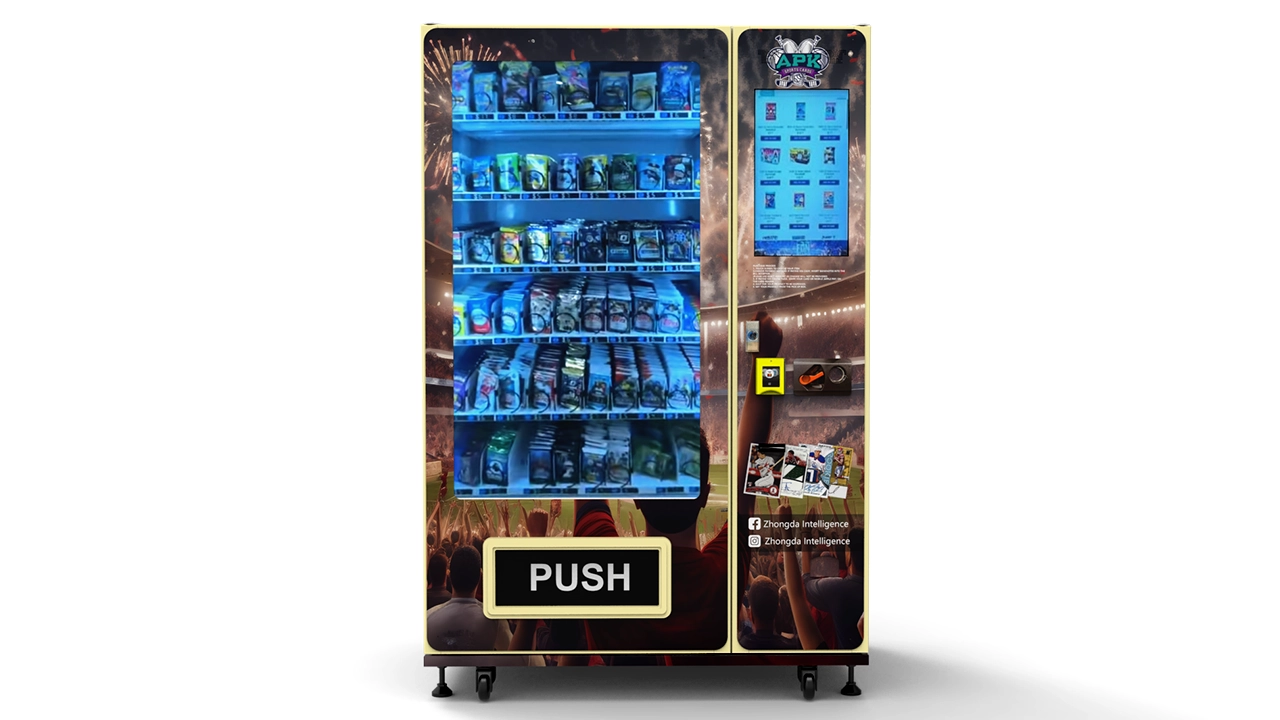
To help you visualize the trade-offs, I have put together a comparison table based on my experience and industry data. This is not an official statistic; it is a practical summary of what I have seen across more than 40 installations.
| Machine Type | Initial Cost | Typical Monthly Gross | Maintenance Complexity | Best Use Case |
|---|---|---|---|---|
| Wall-mounted spiral unit | $4,000 – $8,000 | $800 – $1,500 | Low | Small shops, cafes, laundromats |
| Floor-standing touchscreen unit | $12,000 – $20,000 | $2,000 – $4,000 | Medium | Malls, hobby shops, entertainment venues |
| Robotic arm unit with remote monitoring | $20,000 – $25,000 | $3,000 – $5,000 | High | High-traffic retail, card expos, flagship stores |
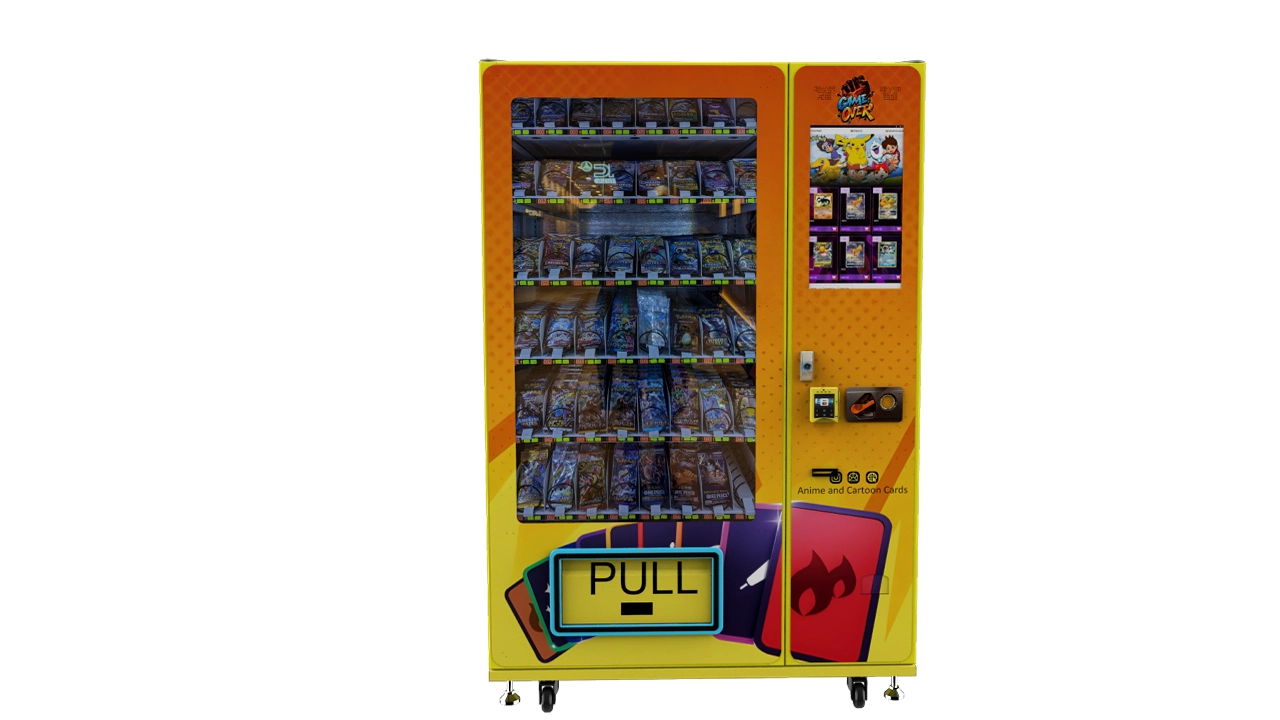
As you can see, the more you spend, the more you can potentially earn, but the risk also increases. A $20,000 machine that fails in a bad location is a much bigger loss than a $5,000 wall unit that underperforms. I generally advise new operators to start with a lower-cost machine and learn the ropes before scaling up.
How I Learned the Hard Way: A Failure Case
In my third year of operating, I made a costly mistake. I placed a high-end floor-standing machine in a busy supermarket that had a loyalty card program and a steady stream of families. The rent was reasonable, and the foot traffic was over 2,000 people per day. I was confident it would be a home run. Within two weeks, I knew I was wrong. The machine sold only a handful of packs per day, and the location manager started complaining that the machine was taking up too much space.
The problem was that the supermarket customers were not card collectors. They were parents buying groceries, and they did not want to spend $5 on a booster pack when they had already spent $100 on food. The machine was also placed near the exit, which meant people were leaving, not browsing. I lost nearly $1,500 in rent and moving costs before I finally relocated the machine to a hobby shop across town, where it started doing three times the sales volume. That experience taught me that foot traffic is meaningless if the demographic is wrong.
What About the Supplier and Equipment Choice?
Choosing the right machine is not just about the price tag. I have used machines from several manufacturers, and the build quality varies significantly. One brand I keep coming back to is Zhongda Smart, not because they pay me to say that, but because their card-dispensing mechanism is more reliable than most other units I have tested. Their machines handle the thickness variations of different card sleeves and packs without jamming as often, which is critical when you are not on site every day.
When you evaluate a supplier, ask about the warranty and the availability of spare parts. A machine that breaks down and takes three weeks to get a replacement part is a money pit. I also recommend asking for a list of existing operators you can contact for a reference. If the supplier cannot provide that, it is a red flag.
Do not overlook the payment system. In the US and Europe, most customers expect to pay with a credit card or mobile wallet. A machine that only accepts coins will severely limit your sales. Look for a machine with a certified card reader and a cellular or Wi-Fi connection for remote monitoring. The ability to see sales data and error codes from your phone is not a luxury; it is a necessity.
Data and Public Sources Worth Checking
While I rely heavily on my own operational data, there are public sources that provide useful context. For example, Statista publishes data on the vending machine market in North America, showing steady growth in automated retail over the past decade. IBISWorld also provides industry reports on vending machine operators, which can give you a sense of the average revenue per machine across the sector. According to the U.S. Small Business Administration, the average startup cost for a small retail operation is often underestimated by new owners, which aligns with what I see in the field.
Another useful source is Eurostat, which tracks consumer spending patterns in Europe. If you are planning to operate in the EU, you should look at their data on household spending on leisure and hobbies. It will help you identify regions where card collecting is more popular. These sources are not a substitute for local market research, but they give you a solid starting point.
How to Set Up Your Payment and Monitoring Systems
One of the most overlooked aspects of running a card vending machine is the payment system. A modern machine should support contactless payments, Apple Pay, Google Pay, and traditional chip cards. In my experience, cashless payments account for over 80 percent of transactions on card machines. That means your machine needs a reliable card reader that can handle a high volume of transactions without freezing.
I also recommend investing in a machine with remote monitoring. This feature allows you to see real-time inventory levels, sales data, and error alerts. Without it, you are flying blind. I once had a machine that was offline for three days before I found out, because the location owner did not think to call me. That cost me about $300 in lost sales and a repair fee. With remote monitoring, I would have received an alert within minutes.
The Vending Machine Repair Reality
Let me be blunt: vending machine repair is not a matter of if, but when. The moving parts in a card dispenser are under constant stress, and card packs can get stuck, misaligned, or folded. I have seen machines jam on a single pack because the cardboard was slightly thicker than normal. That is why I always carry a basic repair kit with spare sensors, belts, and a set of small tools.
If you are not comfortable with basic troubleshooting, you need a local technician you can call. The average service call will cost between $100 and $200, and you should expect at least one or two calls per machine per year. In high-traffic locations, that number can double. I budget $200 to $400 per machine per year for repairs, and I have yet to come in under that estimate.
Restocking and Inventory Management
Restocking frequency depends on the location and the product. A machine in a busy hobby shop might need restocking every three to five days. A machine in a quieter location might only need attention once a week. I recommend setting a fixed schedule and sticking to it, because a machine that looks empty will stop selling. Customers do not want to buy the last pack because they assume it is damaged or picked over.
Inventory management is where most new operators lose money. You need to track which products sell and which ones sit. I use a simple spreadsheet that tracks sales by SKU and restock date. There is no magic formula; you just need discipline. In my experience, Pokémon and Yu-Gi-Oh! packs sell fastest, followed by Magic: The Gathering and sports cards. But this varies by region and season, so do not rely on national trends to dictate your local mix.
Should You Buy, Lease, or Partner?
There are three ways to get a machine: buy it outright, lease it, or enter into a profit-sharing agreement with a location owner. Buying is the best long-term option if you have capital and you are confident in the location. Leasing reduces your upfront risk but often comes with higher monthly costs and less flexibility. Profit-sharing is the most common arrangement I see in the industry, and it is often the best starting point for a new operator.
Here is a quick comparison based on my experience:
- Buying: Full control, higher upfront cost, all profit after break-even.
- Leasing: Lower upfront cost, but you are paying for the machine over time and may not own it.
- Profit-sharing: No rent or low rent, but you give up a percentage of gross sales.
I have done all three, and I prefer profit-sharing for the first machine. It reduces the financial risk and gives you a chance to learn the operational side without a huge capital outlay.
Common Mistakes New Operators Make
I have seen dozens of new operators make the same mistakes. The most common is overpaying for a machine with features they do not need. A touchscreen and a robotic arm are nice, but they add cost and complexity. The second most common mistake is choosing a location based on foot traffic alone, without checking the demographic. The third is under-pricing the product. I have seen operators sell booster packs at retail price and then wonder why they are not making money. You need to buy at wholesale and sell at or slightly above the local retail price.
Another mistake is ignoring the condition of the machine. A dirty or broken machine signals that the products are not fresh. I clean my machines every time I restock, and I replace any damaged packaging immediately. That attention to detail pays off in customer trust and repeat sales.
What About Legal Requirements and Permits?
In the US, the legal requirements for a vending machine are generally straightforward. You will need a business license, a sales tax permit, and possibly a vending machine permit depending on your city or county. In Europe, the rules are similar but vary by country. For example, in France, you may need to register as a commercial operator and comply with local tax regulations. Always check with your local chamber of commerce or small business administration office before you start.
One thing that surprises many new operators is that food safety regulations can apply if you sell any edible products, but booster packs are not food, so that is rarely an issue. However, if you decide to expand into selling sealed boxes or other merchandise, you should confirm that your business insurance covers the machine and its location.
How to Choose a Supplier Wisely
When you are looking for a supplier, do not just compare prices. Look for a company that offers a warranty, technical support, and spare parts. I have bought machines from manufacturers who disappeared after the sale, leaving me with no support. That is a nightmare. I recommend asking for a demo or a video of the machine in action, and if possible, visiting a local operator who uses the same model.
Zhongda Smart is one of the few suppliers I have worked with that consistently provides good documentation and responsive support. But that is just my experience. You should also check reviews on industry forums and ask for references. A reputable supplier will not hesitate to connect you with existing customers.
Realistic Break-Even Timeline
Based on my experience, a well-placed machine will break even in 12 to 18 months. That assumes a machine cost of $8,000 to $12,000, monthly gross sales of $1,500 to $2,500, and a net profit margin of 20 to 30 percent. If you are paying high rent or your machine is in a mediocre location, the timeline stretches to two years or more. If you find a great location with low rent and high sales, you might break even in nine months.
I want to be clear: I cannot promise you a specific return. The numbers vary based on location, product mix, and your ability to manage costs. But if you are patient and data-driven, this is a viable business. I have seen operators build a small fleet of machines and generate a full-time income, but it took them two or three years of consistent effort.
Final Thoughts on Operating Card Vending Machines
Running a trading card vending machine is not a get-rich-quick scheme. It is a real business that requires attention to detail, a willingness to learn from mistakes, and a commitment to maintaining your equipment. The machines can sell booster packs, and they can be profitable, but only if you treat them as a serious retail channel. I have made my share of mistakes, and I have shared them here so you do not have to repeat them. If you are willing to put in the work, this is a rewarding niche that continues to grow.
Frequently Asked Questions
Are card vending machines profitable?
Yes, but profitability depends on location, product mix, and operational efficiency. In a good location, a machine can generate $1,500 to $4,000 per month in gross sales, with net profit typically between 15 and 30 percent after expenses.
How much does a card vending machine cost?
A basic wall-mounted unit costs between $4,000 and $8,000, while a larger floor-standing model with a touchscreen can cost $12,000 to $20,000. Custom and robotic arm units can exceed $25,000.
How long does it take to break even?
In my experience, a well-placed machine breaks even in 12 to 18 months. A poor location can extend that to two years or more.
Should a beginner buy or lease a machine?
I recommend leasing or profit-sharing for the first machine to reduce upfront risk. Once you learn the operational side, you can buy with more confidence.
Where is the best place to put a card vending machine?
Hobby shops, comic book stores, game stores, and entertainment venues are the best locations. High foot traffic alone is not enough; the demographic must match card collectors.
What permits do I need?
In the US, you typically need a business license and a sales tax permit. Some cities require a vending machine permit. In Europe, requirements vary by country, so check with local authorities.
How do I choose a reliable supplier?
Look for a supplier with a warranty, spare parts availability, and responsive technical support. Ask for references and check industry forums. Zhongda Smart is one supplier I have had good experience with.
What happens if the machine breaks down?
You need a local technician or basic repair skills. Budget $200 to $400 per machine per year for repairs, and consider a machine with remote monitoring to catch issues early.
How can I reduce restocking and maintenance costs?
Use a consistent restocking schedule, track sales data by SKU, and invest in a reliable machine with fewer moving parts. Remote monitoring also helps you avoid unnecessary trips.