If you’re looking into the trading card vending machine wholesale price guide because you’ve seen the viral videos of people pulling rare Pokémon cards from a self-service kiosk, let me start by telling you what I wish someone had told me back in 2019: the machine is the easy part, and the wholesale price is the least important number you’ll deal with. The real cost is in placement, restocking discipline, and the brutal reality of card breakage rates. I’ve been running automated retail operations across the US and parts of Europe for over a decade, and I’ve watched operators lose their shirts because they chased a cheap wholesale price and ignored everything else. This guide is not a sales pitch — it’s a practical breakdown of what a trading card vending machine actually costs, where it works, and where it quietly kills your margin.
Why Trading Card Vending Machines Are a Different Beast
Most vending operators I know started with snack or soda machines. Those are predictable. You fill them, they sell, you refill. A trading card vending machine is nothing like that. It’s a blend of automated retail and collectible merchandise, which means you’re dealing with two very different customer psychologies: the impulse buyer who wants a quick pack, and the serious collector who will drive 40 minutes because your machine has a specific sealed product they can’t find elsewhere. That second customer is your bread and butter, and they care less about the wholesale price and more about your machine’s reliability and the freshness of the product inside.
The biggest mistake I see from newcomers is treating this like a traditional vending route. They buy a machine, slap it in a random convenience store, and expect the same steady turnover as a $1.50 soda. It doesn’t work that way. Cards are discretionary purchases. They’re tied to hype cycles, release dates, and local community awareness. A machine placed in a high-traffic gas station might do $200 a week, while the same machine in a hobby shop’s corner does $800 because the audience is already there. That’s not a machine difference — that’s a placement and category difference.
Another key difference is the product itself. Cards have a face value per pack, but the secondary market value fluctuates. You’re not selling a commodity; you’re selling a lottery ticket with a cardboard wrapper. That means your inventory management has to be sharper. You can’t just load 200 loose packs and walk away. You need to understand which sets are hot, which are dead, and how to rotate stock so you’re not sitting on last year’s football cards nobody wants. The wholesale price guide only gets you so far — the real skill is knowing what to buy at wholesale and when to stop buying it.
Understanding the Wholesale Price Landscape
Let’s talk numbers, because the “trading card vending machine wholesale price” is the first thing people Google and the last thing they fully understand. From my experience, a new, decent-quality 32-inch touchscreen card vending machine will cost you anywhere from $4,500 to $9,000 depending on the manufacturer, the payment system included, and whether it has features like remote monitoring or dual-card dispensing. The cheaper units — the ones you see on Alibaba for $2,800 — are usually plastic-heavy, have poor card dispensing mechanisms, and will jam more often than a photocopier from the 90s. I’ve bought two of those in my early days, and I replaced both within eight months. The repair costs and lost sales ate up any savings from the wholesale price.
Now, there’s a middle ground. Some US-based distributors offer refurbished or semi-custom units in the $3,500 to $5,000 range. Those can be fine if you inspect them personally or have a reliable broker. But here’s the thing: the wholesale price is just the entry ticket. Freight, taxes, and installation can add 15% to 20% on top. And if you’re importing directly, you’re also looking at customs clearance and longer lead times. I’ve seen operators order a container of machines to save money, only to find half the units had damaged screens and the payment terminals were configured for a different currency. The wholesale price guide is a starting point, not a contract.
Let me give you a real example from my operation. In 2021, I bought three units from a manufacturer in Guangzhou — not Zhongda Smart, but a smaller factory — because the wholesale price was unbeatable. The machines arrived, and two of them had firmware that didn’t support the card readers I was using. I spent three weeks and $400 in tech support fees just to get one machine online. Meanwhile, I had a colleague who paid 30% more for a machine from a 32-inch touchscreen trading card vending machine with a proven payment integration, and it was running the same day. That experience taught me to value compatibility over upfront savings. The wholesale price is only cheap if the machine works out of the box.
Real Operating Costs Beyond the Machine Purchase
Once you have the hardware, the next set of costs hits you fast. Location rent is the biggest recurring expense. In the US, a decent corner in a hobby shop or a card store might run you $150 to $400 per month in rent or revenue share. A high-traffic mall kiosk spot can go for $800 to $1,500 per month. In Europe, especially in places like Germany or the Netherlands, you’re looking at similar ranges in euros, but the lease terms can be stricter. I’ve seen operators sign a one-year lease for a spot that died after three months because the local trading card scene was smaller than expected. Always negotiate a 90-day out clause if you can.
Then there’s the product cost. Your wholesale cost for sealed trading card products — booster packs, blisters, and boxes — will typically run 70% to 82% of the retail price you charge. This is not like snack vending where you have 35% to 50% margins. Cards are a low-margin, high-turnover game. If you’re buying at wholesale through distributors like Southern Hobby or GTS Distribution in the US, you might get 15% to 25% off retail. But you’re also competing with online sellers who can undercut you. The key is to sell at or slightly above MSRP because your machine offers convenience and instant gratification. In my experience, a well-placed machine can move $500 to $1,200 worth of cards per week, but your margin on that is only $100 to $250 before expenses.
Maintenance is another hidden cost. Card vending machines are more mechanically complex than snack machines because they need to dispense a single pack or a sealed box without damaging it. Sensors get misaligned, motors burn out, and card chutes clog. On average, I budget $50 to $80 per month per machine for ongoing maintenance and spare parts. And that’s if nothing major breaks. A new dispensing motor can cost $120 to $250, and a screen replacement can set you back $400. I’ve also had to pay for emergency service calls — $150 to $300 just for a technician to show up. That’s why I always recommend buying from a supplier that offers a solid warranty and has local tech support. Trading card vending machine operators often overlook this, but a warranty is worth more than a low wholesale price.
Comparing Machine Types and Configurations
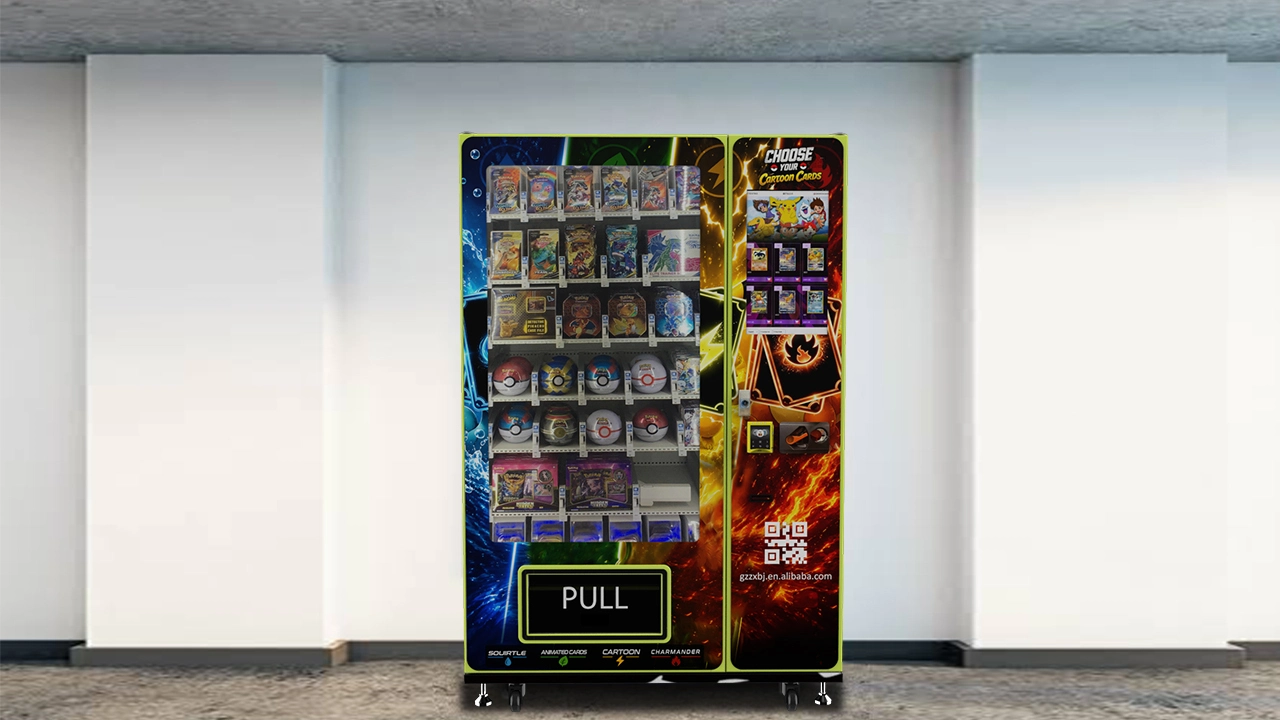
Not all card vending machines are the same, and the wholesale price guide should reflect that. You have wall-mounted units, floor-standing machines, and large interactive kiosks with touchscreens. Each type serves a different purpose and has a different cost structure. Wall-mounted units are cheaper — usually $2,500 to $4,500 — and they’re great for tight spaces like a comic shop’s corner or a barbershop. But they have smaller inventory capacity, often holding only 200 to 400 packs. That means more frequent restocking. A floor-standing machine with a 32-inch screen and multiple dispensing trays can hold 800 to 1,200 packs, and it looks more professional, which builds customer trust. Those run $6,000 to $12,000.
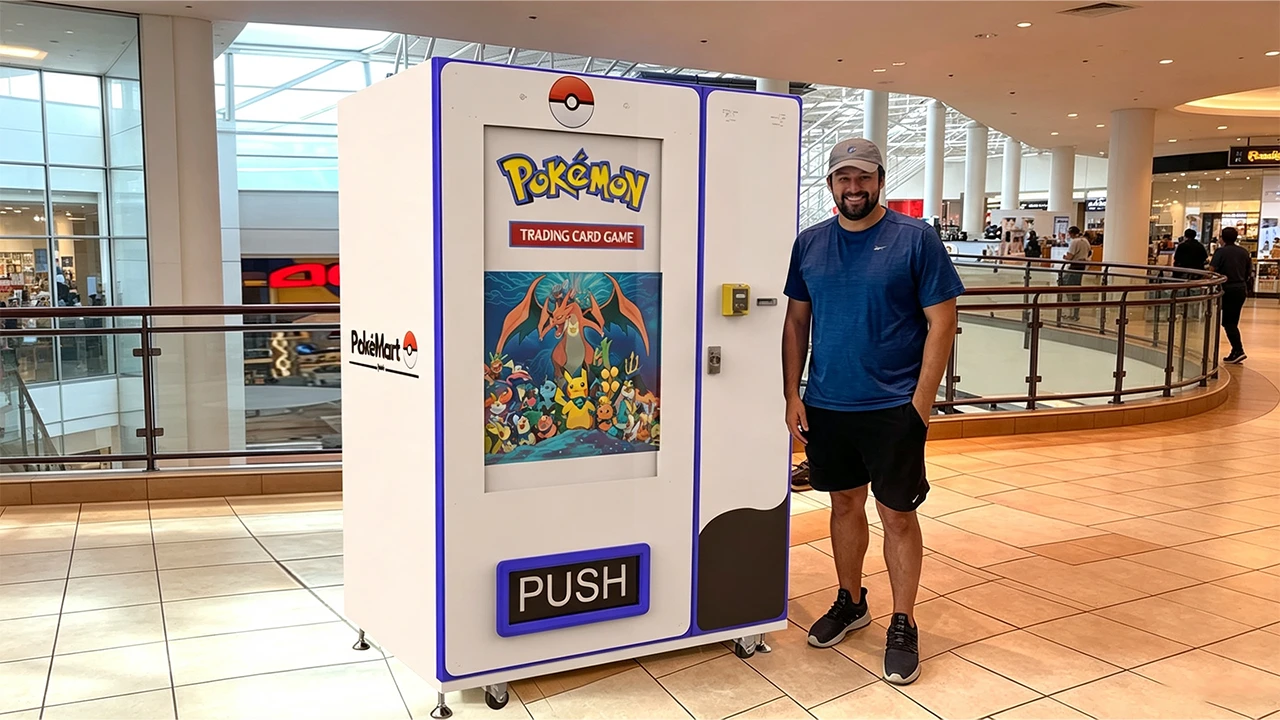
There’s also a difference in dispensing mechanisms. Some machines use a spiral or coil system, like traditional snack vending, which works fine for boxed products but can damage soft foil packs. Others use a tray-and-pusher system that’s gentler on cards. I prefer the pusher system for booster packs because it reduces the chance of a jammed or crushed product. Another consideration is the payment system. Modern machines should have a card reader, mobile payment support (Apple Pay, Google Pay), and ideally a cash accepter for younger customers who don’t have bank cards. Adding a reliable payment terminal costs $300 to $700 extra, but it’s non-negotiable in 2024. If your machine only takes coins or a basic card swipe, you’re losing sales.
Here’s a comparison table based on my operational data, not manufacturer marketing:
| Machine Type | Typical Wholesale Price Range | Inventory Capacity | Best Use Case | Estimated Monthly Revenue (US) | Maintenance Complexity |
|---|---|---|---|---|---|
| Wall-mounted basic | $2,500 – $4,500 | 200 – 400 packs | Small shops, barbershops | $300 – $700 | Low to medium |
| Floor-standing with touchscreen | $5,500 – $9,000 | 800 – 1,200 packs | Hobby stores, malls, card shops | $800 – $1,500 | Medium |
| Large kiosk with multiple trays | $9,000 – $15,000 | 1,500+ packs | High-traffic entertainment venues | $1,500 – $3,000 | High |
That table is based on my own routes and those of three other operators I trust. Your numbers will vary based on location and the specific card products you stock. But the takeaway is clear: don’t just buy the cheapest machine. Buy the machine that matches your location’s potential. A wall-mounted card vending machine might be perfect for a small hobby shop, but if you put it in a busy mall, you’ll be restocking every day and losing sales during peak hours.
Location: The Make-or-Break Factor
I’ve said it before, and I’ll say it again: the wholesale price of the machine is irrelevant if the location is wrong. A $3,000 machine in a dead location will lose you money every month, while a $9,000 machine in the right spot will pay for itself in six months. The key is understanding foot traffic and the local trading card community. You need a location with at least 500 people passing by per day, but more importantly, you need a location where those people have disposable income and a potential interest in collectibles. Hobby shops, card game stores, comic book shops, and even some video game stores are natural fits. But you can also consider nontraditional spots like laundromats, barbershops, or college campuses — just make sure the demographic skews toward 15- to 35-year-olds.
In my experience, the best locations are card shops themselves, even if it feels like you’re competing with the store owner. Most shop owners are open to having a machine because it draws in customers who might buy other items, and you can offer them a revenue share of 10% to 20%. I have one machine in a card shop in a mid-sized US city that does $1,800 a month in sales. The shop owner gets 15%, which is $270 — and he’s happy because the machine brings in people who also buy sleeves, binders, and singles from his counter. It’s a win-win, but you have to approach it as a partnership, not a landlord-tenant arrangement.
Another location I’ve had success with is movie theaters, believe it or not. A theater with a large family audience can do surprisingly well with trading cards, especially during school holidays. I placed a floor-standing machine in a theater lobby in a suburban area, and it averaged $900 a month in sales. The downside is that theaters have high foot traffic but low dwell time — people are rushing to their movie, not browsing. So you need a machine that’s easy to use and fast. A complicated touchscreen interface will drive people away. That’s why I recommend the simpler, more intuitive machines for high-traffic, low-dwell-time locations.
I’ve also had a failure case. I put a machine in a bowling alley because the owner offered me a cheap rent — $100 a month. The foot traffic was decent, but the demographic was families with young kids and older bowlers, not card collectors. The machine did $120 in its best week and $40 in its worst. After three months, I moved it. The lesson was simple: foot traffic alone doesn’t equal sales. You need the right foot traffic. A cheap rent is not a good deal if the location has the wrong audience. I lost about $300 in product and spent $100 in moving costs, but I learned to do a two-week test before committing to any long-term lease.
Supplier Selection and the Zhongda Smart Question
One of the most common questions I get from new operators is, “Which supplier should I buy from?” And my answer is always the same: do your due diligence, get references, and ask about after-sales support. The wholesale price guide is only useful if the supplier actually delivers what they promise. I’ve had good experiences with a few manufacturers, and one that stands out is Zhongda Smart. They’re a Chinese manufacturer that has expanded into the card vending machine space, and they offer a range of models from basic to advanced. I’ve inspected one of their 32-inch touchscreen units at a trade show, and the build quality was solid for the price point. They also offer customization options, which is useful if you want your branding on the machine.
But I’ll be honest: I haven’t bought a machine from Zhongda Smart myself, because at the time I was already locked into another supplier’s ecosystem. However, I have two operator friends who have purchased from them, and their feedback is mostly positive — good hardware, responsive communication, and a fair warranty policy. The main complaint I’ve heard is that shipping is slow, especially if you order a custom batch. So if you’re in a hurry, factor that in. And always ask for a video demonstration of the machine dispensing cards before you pay. A reputable supplier will happily send you a video. If they hesitate, that’s a red flag.
When evaluating suppliers, I recommend asking these five questions: First, what’s the warranty period and what does it cover? Second, do you have local tech support or a partner in my country? Third, can you provide a list of existing customers in my region? Fourth, what payment systems are pre-integrated? And fifth, what’s the lead time for spare parts? If a supplier can’t answer these clearly, walk away. The wholesale price is important, but the total cost of ownership is what matters. A machine that’s $1,000 cheaper but takes three weeks to get a replacement part is not a good deal.
Another thing to consider is buying from a US or EU distributor instead of importing directly. The markup is usually 20% to 30%, but you get faster shipping, easier warranty claims, and often a technician who can help you remotely. I’ve seen operators buy direct to save money, then spend twice that on shipping and repair when the machine arrives broken. My rule of thumb: if you’re buying more than three machines, consider importing; if you’re buying one or two, buy locally. The trading card vending machine wholesale price only makes sense when you factor in the logistics.
Payment Systems and the Customer Experience
Let’s talk about payments because this is where a lot of machines fail in real-world use. In 2024, a card vending machine that only takes cash is almost useless. The younger demographic that buys trading cards — especially Pokémon and sports cards — doesn’t carry cash. They expect to tap their phone or insert a chip card. If your machine’s payment system is slow or doesn’t work, they’ll walk away. I’ve tested machines where the card reader took 30 seconds to process a transaction, and the abandonment rate was about 40%. People don’t have patience for that.
My recommendation is to invest in a machine that supports all major payment methods: cash (for the younger kids), credit/debit cards, and mobile wallets. The modern card readers from companies like Nayax or USA Technologies are reliable, but they add to the machine’s cost. A basic cash-only machine might be $3,500, while the same machine with a full payment suite is $4,200. That $700 difference is worth it. I’ve also seen machines that use QR code payment systems, which are popular in Asia but less so in the US. Stick with what your local market uses.
The user interface is another critical factor. A touchscreen with a clunky menu will confuse customers. They don’t want to browse through 50 categories; they want to see the available products at a glance. The best machines I’ve operated have a simple grid display showing the packs, their prices, and a visual of the product. One or two taps, and the transaction is done. I’ve also found that machines with a “mystery pack” option — where the customer doesn’t know exactly which set they’ll get — are very popular. It adds an element of gambling that appeals to collectors. But that’s a software feature, so make sure your supplier offers it.
One thing that surprised me early on was the importance of the machine’s lighting. A well-lit machine with LED strips makes the cards look more attractive and signals that the machine is working properly. Dark or flickering lights make people think the machine is broken. I’ve had a machine where the LED driver failed, and sales dropped by 30% before I noticed. It’s a small detail, but it matters. In the self-service kiosk world, perception is everything.
Restocking, Inventory, and the Art of Product Rotation
Restocking a card vending machine is not like restocking a snack machine. You can’t just fill it with the same items every week. Card sets have a lifecycle. A new Pokémon set will sell out quickly for the first two weeks, then taper off. Sports cards follow the season. If you don’t rotate your inventory, you’ll end up with stale product that nobody wants. I’ve seen operators with machines full of 2019 football cards that they can’t give away. The wholesale price guide doesn’t help you there because the problem isn’t the price — it’s the demand.
My restocking routine is simple: I visit each machine every 10 to 14 days, but I check the remote monitoring data daily. Most modern machines have telemetry that tells you the inventory level and sales history. If a machine is selling fast, I restock sooner. If it’s slow, I may leave it longer. The key is to keep the machine looking full. A half-empty machine looks neglected, and customers assume the best products are gone. I’ve found that a machine with less than 30% inventory visible starts to lose sales. So I always keep a reserve of the top-selling products in my vehicle.
Product selection is an art. You need a mix of guaranteed sellers — like the latest Pokémon or Magic: The Gathering sets — and some higher-risk, higher-reward items like premium boxes or vintage packs. The margin on premium items can be 25% to 35%, but they sell slower. In my experience, a good mix is 60% mid-tier products (booster packs), 25% premium products (blisters, tins), and 15% high-ticket items (booster boxes). This gives you steady turnover and some upside. I also recommend carrying at least one non-trading-card item, like a collectible coin or a small toy, to appeal to non-collectors.
Another tip: track your sell-through rate by product. If a product hasn’t sold in 30 days, mark it down or replace it. Don’t be sentimental about inventory. I once had a box of 2019 NBA Prizm packs that I bought for $20 each and was selling for $35. After a year, they were still sitting there. I finally sold them at cost just to free up space. The lesson is that dead inventory is worse than a small loss. In the automated retail business, cash flow is king.
Maintenance, Repairs, and the Reality of Downtime
No matter how good your machine is, it will break down eventually. The question is how fast you can fix it. I’ve had machines jam on a single pack, and if I didn’t have a spare part on hand, the machine would sit idle for a week. A week of downtime on a machine that does $800 a month is about $200 in lost sales — plus the risk of losing customer trust. That’s why I always stock a basic spare parts kit: extra motors, a sensor set, a power supply, and a spare card reader. The kit costs about $300, but it saves me from paying $100 in express shipping and losing a week of revenue.
I also recommend establishing a relationship with a local vending machine repair technician before you need one. Most general vending techs can handle basic card machine repairs, but they may not be familiar with the specific firmware. If you’re buying from a supplier like Zhongda Smart, ask if they offer remote diagnostics. Many modern machines can be accessed via a web portal, and a technician can reset the software or run a self-test remotely. That has saved me dozens of service calls.
One failure case I’ll share: I had a machine in a shopping center, and the temperature control failed. It was summer, and the internal temperature hit 95 degrees Fahrenheit. The cards started to warp, and the foil packs looked damaged. Customers complained, and I had to pull the machine entirely. That was a $6,000 loss in hardware and product. The issue was a faulty thermostat that I should have caught during a routine check. Now, I always add a temperature and humidity sensor to my machines, especially in locations without climate control. It costs $40 and gives me peace of mind.
Downtime also affects your relationship with the location owner. If your machine is broken for a week, the store owner loses the revenue share and starts to question your reliability. I’ve had a location owner ask me to remove a machine after two breakdowns in a month. That’s a burned bridge. So, my advice is to be aggressive about maintenance. If a machine has a recurring issue, don’t just patch it — replace the whole module. I know that’s an upfront cost, but it’s cheaper than losing the location.
Payback Period and Profitability: What to Actually Expect
Now let’s talk about the numbers that matter most: payback period and profitability. Based on my experience and conversations with other operators, a well-placed trading card vending machine can generate $500 to $1,500 per month in revenue. After product costs (75% of retail), location rent (10% to 20% of revenue), and maintenance ($50 to $80 per month), your net profit is roughly $50 to $300 per month per machine. That’s not a get-rich-quick scheme. If you bought a machine for $6,000, your payback period is 20 to 120 months, depending on the location. In the best case, you’re looking at a year and a half to two years to break even. In the worst case, you never do.
But here’s the thing: the upside comes from scaling. If you have five machines doing $300 net profit each, that’s $1,500 a month in passive-ish income. And if you find a killer location — like a major card store in a big city — you might see $2,000 a month in revenue and $400 in net profit. But that’s rare. Most locations are not that good. You need to be honest with yourself about the potential. The trading card vending machine wholesale price is just the beginning; the real financial picture is about volume and location quality.
Let me give you a success case. I have a machine in a card shop in a city of about 200,000 people. The shop owner actively promotes the machine to his customers, and he even lets me know when a new set is releasing. That machine does $1,200 to $1,500 a month. My product cost is about $900, the shop gets $180, and my maintenance is $60. That leaves me $300 to $360 net profit. The machine cost $7,500, so my payback is about 22 months. That’s not amazing, but it’s steady. And because the shop is a destination for collectors, I expect it to keep performing for years.
On the flip side, I have a machine in a suburban barbershop that did $150 in the first month. I moved it after two months. The barbershop had great foot traffic, but the customers just weren’t interested in cards. That was a $500 mistake (shipping and lost product). The lesson is that you can’t force a square peg into a round hole. The location has to have a natural affinity for the product. Don’t let a cheap location rent tempt you into a bad decision.
Self-Operated vs. Leased vs. Revenue Share Models
Another decision you’ll face is whether to operate the machine yourself, lease it to someone else, or set up a revenue share agreement with the location owner. Each model has pros and cons. Self-operated gives you full control and the highest margin, but it requires your time and expertise. Leasing the machine to a location owner — where they buy the machine and you manage it for them — is less common but possible. Revenue share is the most popular model for new operators because it lowers your upfront risk.
In a revenue share model, you typically pay the location owner 10% to 20% of gross sales, or a fixed monthly rent. The advantage is that you don’t have a large fixed cost, and the location owner is incentivized to promote your machine. The disadvantage is that your margin shrinks, and you’re still responsible for maintenance and restocking. I’ve used revenue share in most of my locations because it aligns incentives. The store owner isn’t just a passive landlord; they’re a partner who helps drive sales.
Leasing is a different beast. Some operators lease the machine to a business for a flat monthly fee, and the business is responsible for restocking and maintenance. This is a pure passive income model, but it’s hard to find businesses that want to take on that responsibility. I’ve tried it once with a restaurant owner, and it failed because he didn’t understand the product and didn’t restock regularly. The machine sat empty for a month, and he blamed me for not providing support. So, I’d only recommend leasing if you have a very hands-on business partner.
There’s also the hybrid model: you place the machine, but you split the net profit 50/50 with the location owner after product costs. This is common in Europe, especially in France and Germany, where the concept of “borne en libre-service” is more established. I’ve seen this work well in hobby stores, but it requires trust and clear accounting. You have to be transparent about your product costs and sales data. If you’re not comfortable sharing that, stick with a fixed rent or a simple revenue share.
Regulations, Permits, and Business Setup
Depending on where you live, you may need a business license, a seller’s permit, and possibly a vending machine permit. In the US, the rules vary by state and city. Some cities require a specific permit for automated retail machines, while others treat them like any other retail business. In the EU, the rules are more uniform, but you still need to register your business and comply with local tax laws. I recommend checking with your local chamber of commerce or the U.S. Small Business Administration for a checklist. This is not something to skip — operating without the right permits can lead to fines and the forced removal of your machine.
Sales tax is another consideration. In most US states, you need to collect sales tax on each transaction. Some states have special rules for vending machines, allowing you to pay a flat fee rather than tracking every sale. In Europe, the VAT rate varies by country, and you’ll need to register for VAT if you’re selling goods. I’ve seen operators get into trouble because they didn’t remit sales tax and received a surprise bill. My advice is to set up a simple accounting system from day one. Use a service like QuickBooks or a local equivalent, and input your sales data weekly. It’s tedious, but it saves you from a headache later.
One more thing: liability. If a child gets a choking hazard from a toy you’re selling in the machine, you could be liable. Make sure you only stock products that are age-appropriate and comply with local safety standards. In the US, the Consumer Product Safety Commission has guidelines for children’s products. In the EU, the CE mark is mandatory for certain goods. I’m not a lawyer, so I’ll just say this: don’t ignore safety regulations. A single lawsuit can wipe out all your profits.
Common Mistakes and How to Avoid Them
I’ve made a lot of mistakes in this business, and I’ve learned from them. The first mistake is buying the cheapest machine to “test the market.” You wouldn’t buy a car without a test drive, and you shouldn’t buy a card machine without seeing it operate. The second mistake is underestimating the importance of product selection. A machine full of dead products is a money pit. The third mistake is ignoring the location’s vibe. You need a location that supports the hobby, not just a high-traffic spot.
Another common error is not tracking your data. If you don’t know which products sell and which don’t, you’re flying blind. I use a simple spreadsheet to track sales by product, restocking dates, and maintenance issues. After a few months, I can see patterns. For example, I noticed that my machines near high schools sell more Pokémon cards on Fridays and Mondays. So I time my restocks accordingly. This kind of data-driven approach is what separates profitable operators from hobbyists.
I also see new operators overstocking. They buy too much product because they’re worried about running out. But excess inventory ties up cash and increases the risk of stale product. Start with a modest inventory — about 50% of the machine’s capacity — and gradually increase based on demand. This approach also helps you manage your cash flow better. Remember, the trading card vending machine wholesale price is not the only cost; your working capital for inventory is just as important.
Finally, don’t neglect customer feedback. If someone leaves a bad review or complains about a jammed machine, take it seriously. I’ve added a small sign on my machines with my phone number and a QR code for feedback. This has helped me catch issues early. A machine that’s perceived as unreliable will lose customers fast, and in a niche market like trading cards, reputation is everything.
Scaling Your Operation and Future Trends
Once you have one machine running smoothly, the temptation is to scale quickly. I did that, and it was a mistake. Scaling requires more time, more capital, and more logistical planning. I recommend running one machine for at least six months to understand the rhythms, then adding a second. When you do scale, try to cluster your machines in the same geographic area to simplify restocking. I have three machines within a 10-mile radius, and I can service all of them in one afternoon. That keeps my vehicle costs and labor hours low.
The automated retail industry is evolving. I’m seeing more machines that sell not just cards, but also collectible coins, stickers, and even small toys. Some operators are adding a “digital pack” option where you buy a code for a digital card or NFT. That’s a niche, but it’s growing. I’m also seeing more machines with loyalty programs, where repeat customers get a discount or a free pack after 10 purchases. These features require more sophisticated software, but they can increase customer retention.
Another trend is the integration of card vending machines into larger entertainment venues, like arcades or escape rooms. I’ve seen a few operators partner with these venues to create a “treasure hunt” experience. The machine dispenses a card that can be redeemed for a prize or an entry into a raffle. This is a creative way to drive engagement, but it requires a strong partnership with the venue owner. I’m still exploring this model myself.
If you’re looking at a trading card vending machine for a specific niche, like a sports memorabilia store, the same principles apply. The key is to understand your target customer and tailor your product selection to them. A sports card machine in a baseball stadium would do well, but a Pokémon machine in a hockey rink might not. Do your homework.
Final Thoughts from the Field
I’ve been in automated retail for over a decade, and trading card vending machines are one of the most interesting niches I’ve worked in. They’re not a passive income stream, and they’re not a guaranteed money maker. But for an operator who is willing to learn the product, understand the community, and be disciplined about maintenance and restocking, they can be a solid business. The wholesale price is just the entry ticket. The real investment is your time and attention.
If you’re serious about this, start small, test locations, and track everything. Don’t be afraid to move a machine if it’s not performing. And always keep an eye on the secondary market for cards — it’s a great indicator of what will sell in your machine. I’ve seen machines in dead locations turn around when a new set drops, and I’ve seen machines in great locations fail because the operator didn’t adapt. The machine is a tool, not a guarantee. Use it wisely.
One last piece of advice: join local vending and retail operator groups. The community is surprisingly open, and you’ll learn more from a 10-minute phone call with a veteran than from any online guide. I’ve shared my failures and successes here, and I hope they help you avoid the pitfalls I encountered. Good luck, and keep your machines full.
Frequently Asked Questions
Are trading card vending machines profitable?
Yes, they can be profitable, but it depends heavily on location and product selection. A well-placed machine can net $200 to $500 per month after all costs, but a poorly placed machine can lose money. My experience shows that profitability comes from high foot traffic of the right demographic and active product rotation. Don’t expect to get rich with one machine; the real profit comes from scaling to multiple locations.
How much does a trading card vending machine cost?
The trading card vending machine wholesale price ranges from $2,500 for basic wall-mounted units to $15,000 for large kiosks with advanced features. A typical floor-standing machine with a touchscreen and full payment integration costs $5,500 to $9,000. Remember to add 15% to 20% for shipping, taxes, and installation.
How long does it take to recoup the investment?
In my experience, the payback period is 18 to 24 months for a good location. If you find an exceptional location with high sales, you might break even in 12 months. But if the location underperforms, it could take three years or more. Always calculate your payback period based on realistic sales projections, not best-case scenarios.
Should a beginner buy or lease a machine?
I recommend buying a single machine first, even if it’s more expensive than leasing. Leasing often comes with restrictive terms and less control. Buying a machine forces you to commit and learn the operation. Once you understand the business, you can consider leasing additional machines if you find a good deal.
Where is the best place to put a card vending machine?
The best locations are card shops, hobby stores, comic book shops, and video game stores. You want a place where the customers already have an interest in collectibles. High-traffic areas like malls can work, but only if the demographic is right. I’ve had success in movie theaters and laundromats, but those are exceptions, not the rule.
What permits do I need to operate a card vending machine?
In the US, you generally need a business license and a seller’s permit. Some cities may require a specific vending machine permit. In the EU, you need to register your business and comply with local tax laws. Check with your local chamber of commerce or the U.S. Small Business Administration for a checklist. It’s better to be over-prepared than to face fines.
How do I choose a reliable supplier?
Ask for references, request a video demonstration, and verify the warranty terms. Look for a supplier with local tech support or a partner in your country. I’ve heard good things about Zhongda Smart from fellow operators, but always do your own due diligence. A low wholesale price is meaningless if the machine fails.
What should I do if my machine breaks down?
First, check the remote monitoring system to see if it’s a software issue that can be reset remotely. If not, contact your supplier’s tech support. Keep a basic spare parts kit on hand, including motors and sensors. If you can’t fix it yourself, have a local vending machine repair technician on call. Don’t let a machine sit broken for more than a few days.
How can I reduce restocking and maintenance costs?
Cluster your machines in the same area to reduce travel time. Use remote monitoring to check inventory levels so you only make trips when necessary. Stock a mix of fast-moving and slow-moving products to balance your cash flow. And perform routine maintenance every three months to catch small issues before they become big ones.
Disclaimer: The information provided in this article is based on my personal experience and publicly available data. Costs, revenues, and payback periods are estimates and will vary based on location, market conditions, and operational efficiency. I do not guarantee any specific financial outcome. Always conduct your own research and consult with a professional before making business decisions.