If you’ve been watching the trading card market over the last few years, you already know that Pokémon, sports cards, and even vintage Magic: The Gathering singles have turned into serious assets. The question I get asked most often by shop owners, mall operators, and even collectors is whether a vending machine can actually sell graded trading cards profitably. After running card vending operations for over a decade, I can tell you this: yes, a trading card vending machine can work, but only if you understand the economics, the foot traffic requirements, and the maintenance reality before you buy. The machine is not a passive income box; it’s a retail employee that never sleeps but still needs constant attention.
What a Card Vending Machine Really Is
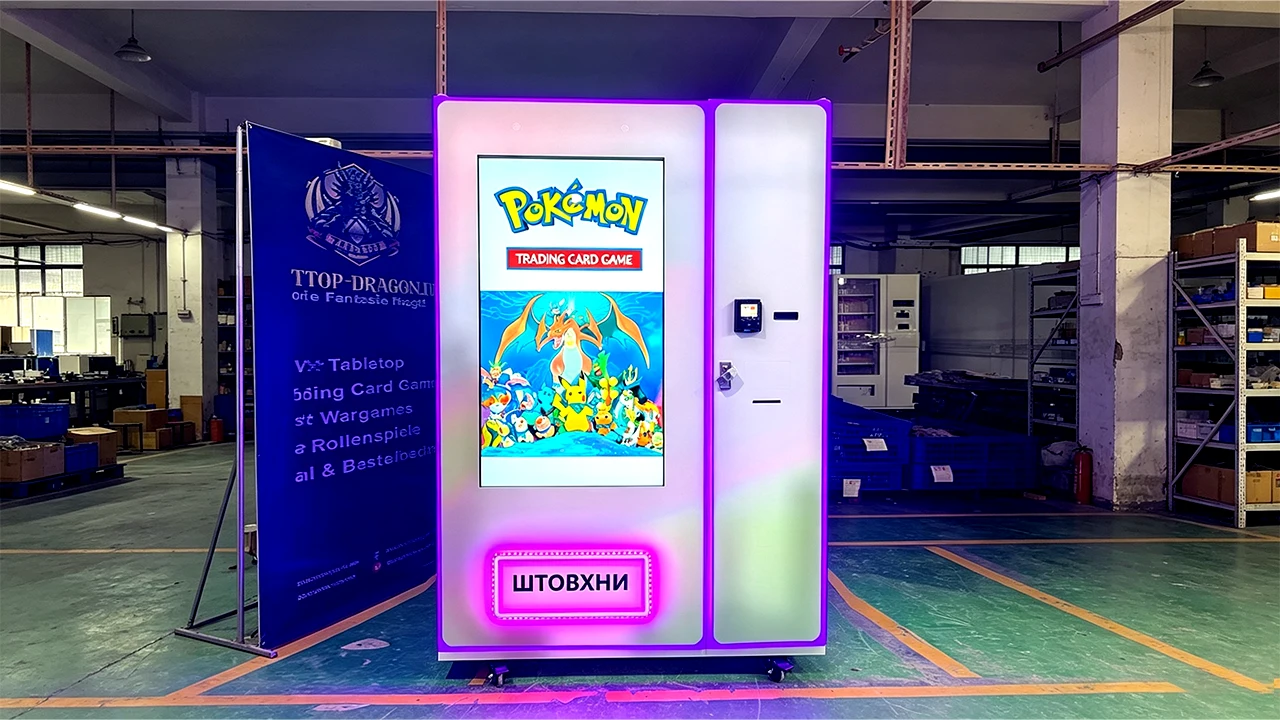
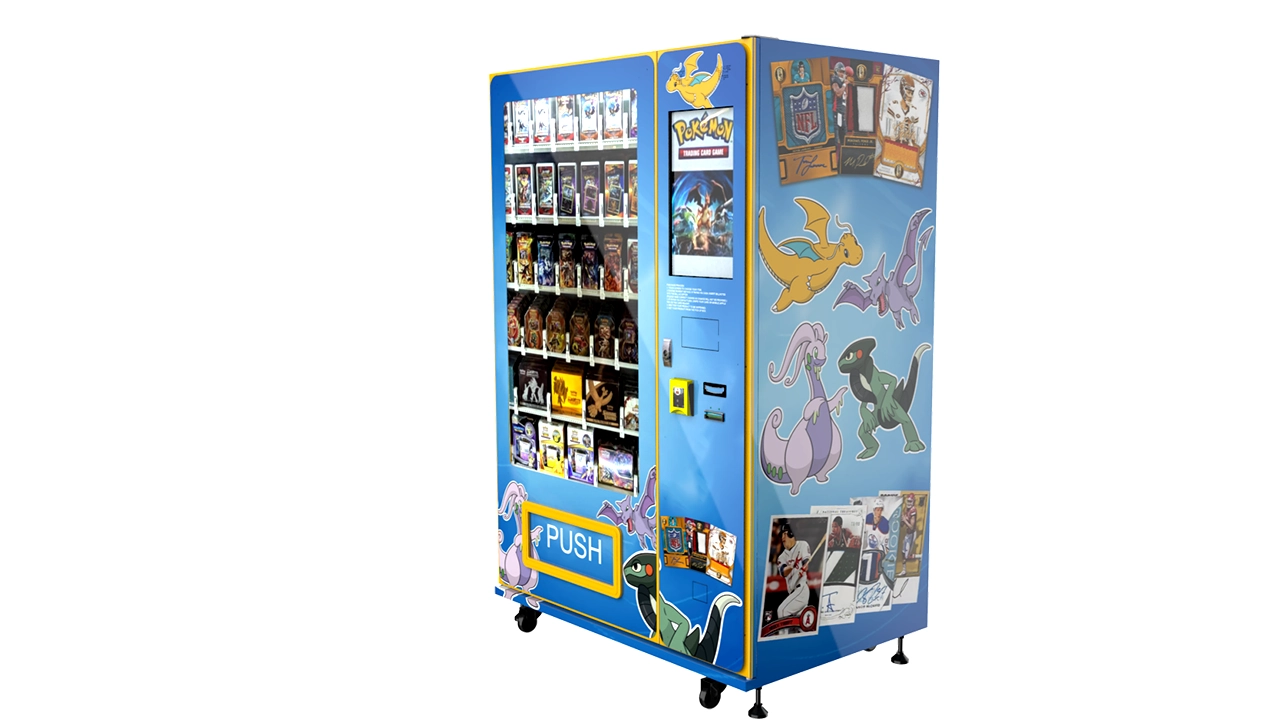
Let’s start by clearing up what we’re talking about. A trading card vending machine is a self-service kiosk designed to dispense sealed packs, single cards, or even graded slabs. The most common configurations use spiral coils or carousel shelves, and some newer models include touchscreen interfaces that let customers browse inventory before paying. This is not the same as a snack machine with a Pokémon booster box wedged inside. The card-specific machines have compartments sized for rigid holders and PSA or CGC slabs, which standard coil machines simply cannot handle without jamming.
From my experience, the biggest advantage of a card vending machine is that it turns dead floor space into a 24-hour retail point. You can place it in a mall corridor, a hobby shop entrance, or even a laundromat with the right demographic. The biggest disadvantage is that cards are not candy bars. They have a secondary market value, which means theft, vandalism, and even return fraud become real concerns. You’re not just managing inventory; you’re managing a small vault with a glass window.
Can It Actually Sell Graded Trading Cards?
Yes, graded cards sell, but not the way you might think. In my operations, raw cards and sealed packs move faster than high-end slabs. A $10 PSA 10 rookie card sells almost daily in a good location, but a $500 slab might sit for weeks. That doesn’t mean graded cards are a bad fit. It means you need to curate the slab inventory carefully, focusing on price points between $30 and $150 for impulse buyers. I’ve had success with modern chase cards and vintage commons in high grades, while expensive autograph cards tend to be better sold online or in a staffed case.
The machine itself needs to create confidence. A customer is not going to drop $80 on a graded card from a machine that looks like it was welded together in someone’s garage. The display needs to be clean, the lighting bright, and the payment system modern. I’ve also learned that showing the grade and the cert number on the screen helps. When a customer can verify the slab before buying, the transaction feels much safer.
The Real Costs You Need to Plan For
Let’s talk numbers, because this is where most beginners get lost. A new, purpose-built card vending machine from a reputable manufacturer will cost you between $6,000 and $15,000 depending on screen size, security features, and capacity. A basic wall-mounted unit might come in under $5,000, but you’ll sacrifice inventory capacity. The trading card vending machine market has grown enough that you can also find used units, but I’ll warn you about that later.
On top of the hardware, you need inventory. If you’re stocking 80 slots with an average wholesale value of $25 per item, that’s $2,000 just for the initial fill. Graded slabs will push that number much higher. I recommend starting with a mix of 60% sealed product, 30% raw singles, and 10% graded slabs. That gives you volume sales, margin, and a wow factor without tying up all your cash in slow-moving plastic cases.
Then there are the ongoing costs: payment processing fees (usually 2.9% plus 30 cents per transaction), electricity, insurance, and the biggest one—rent. A good location might cost you $150 to $400 per month in a hobby shop or mall space. If you’re placing the machine in your own store, you skip the rent but still need to account for the opportunity cost of the floor space.
What the Revenue Numbers Look Like
I’m going to give you realistic ranges based on my own locations, not the hype you see on social media. A well-placed card vending machine in a mid-sized hobby shop or a busy mall corridor can generate $800 to $2,500 per month in gross sales. That’s not every month, and it’s not in every location. The machines that do well are in places with foot traffic of at least 2,000 people per week who are already in a buying mindset. A grocery store or a gym will not perform the same way.
Gross margin on cards is usually between 30% and 50% if you buy wholesale or buy collections at below-market prices. If you’re buying at retail and reselling, your margin will be thin or negative, and you’ll be out of business within six months. From my experience, the sweet spot is a 40% gross margin, which means a $1,500 monthly sales machine nets about $600 before rent, fees, and maintenance. That’s a decent return on a $10,000 investment, but it’s not a lottery ticket.
According to a 2024 Statista report on vending machine revenue in the United States, the average vending machine generates around $300 to $400 per month, but card-specific machines in specialty locations outperform that average by a wide margin. IBISWorld’s vending machine operator industry report also notes that margins are heavily dependent on location and product mix, which aligns exactly with what I see on the ground.
My First Failure: The Lesson That Cost Me $4,000
I want to share a failure because it’s the most honest way to teach. Three years ago, I placed a card vending machine in a busy convenience store near a high school. The foot traffic was massive, over 5,000 students and commuters per day. I thought it was a home run. It wasn’t. The problem was the demographic. Those kids were buying snacks and drinks, not $50 slabs. The machine sat untouched for weeks, and when it did sell, it was the cheap sealed packs that barely covered the restocking cost. After four months, I pulled the machine and lost about $4,000 on rent, transport, and wasted inventory.
The lesson is that foot traffic is not enough. You need qualified foot traffic. A card vending machine works best near places where people already buy cards: hobby shops, comic book stores, card shows, and even some retro game stores. If the customer is not already a collector, you are spending a lot of money to educate them, and that’s not a scalable business model.
What a Successful Placement Looks Like
My best-performing location is a 32-inch touchscreen model placed inside a well-known hobby shop that has been selling cards for over a decade. The shop owner was skeptical at first, but we agreed on a revenue split where he gets 15% of gross sales. The machine sits near the register, so customers see it while they are already in a buying mood. It does about $2,200 per month, with the top sellers being booster packs and $20 to $50 graded rookies.
That location works because the shop already has a steady stream of collectors, many of whom come in specifically for the machine when they see new inventory on the shop’s social media. The machine also acts as a marketing tool, bringing in customers who want to check the machine’s stock even when the shop is closed. That’s a win-win for the shop owner and for me.
Device Selection: What to Look For
Not all card vending machines are created equal. I’ve tested several models, and I’ll tell you what matters most. The first thing is the dispensing mechanism. Spiral coils are reliable for boxes and packs, but they can damage thin card sleeves. Carousel or tray-based systems are better for graded slabs because they slide the item forward gently. Look for a machine that has adjustable compartments, because you will change your product mix constantly.
The second thing is the payment system. You need a machine that accepts credit cards, mobile wallets, and ideally tap-to-pay. Cash-only machines are a non-starter in most locations. The third thing is security. A card vending machine is a target for break-ins, so the door needs to be reinforced, the glass should be polycarbonate, and the lock should be electronic with an audit trail. I’ve had a machine broken into once, and they got away with about $400 in slabs. The repair cost was $600, so that was a painful month.
One manufacturer I’ve worked with, Zhongda Smart, builds units that are solid for the price point. They offer a 32-inch touchscreen model that handles slabs well, and their wall-mounted unit is a good option for tight spaces. I’m not saying they’re the only choice, but if you’re comparing suppliers, they should be on your list. Just make sure you ask about spare parts availability and whether the software supports remote inventory tracking.
New vs. Used Machines: The Risk
I get asked a lot about buying used machines to save money. Here’s my honest take: if you know how to do vending machine repair, a used unit can be a great deal. If you don’t, you’re buying someone else’s headache. I bought a used machine once that looked perfect in the photos. The first time I loaded it, the carousel jammed, and it took me two weeks to find a replacement motor. During that time, the machine was down, and I was still paying rent on the location.
Used machines are often sold because the previous operator lost money on them, which could be due to bad placement, not bad hardware. But you can’t know that from a listing. If you go used, budget for at least $500 in immediate repairs and expect to replace the payment system. A refurbished card vending machine might cost $3,000 to $5,000, but the risk is much higher than buying new from a manufacturer with a warranty.
The Critical Role of Foot Traffic and Location
I already touched on this with my failure story, but let me go deeper because location is the single most important factor in whether your card vending machine makes money. I’ve developed a simple scoring system over the years. I look for three things: the number of potential collectors in the area, the amount of time the target customer spends near the machine, and the level of existing card sales in the vicinity.
A hobby shop with a strong singles case is a great sign. A mall with a card store anchor is also good, but you need to be close to that anchor, not on the opposite end of the food court. I’ve also done well in a large comic convention center during event weekends, but those are temporary placements, not permanent income. For a permanent spot, I want to see at least 1,000 people per week who are already buying collectibles or entertainment products.
If you’re thinking about a wall-mounted card vending machine for a smaller space, the same rules apply. Wall-mounted units are cheaper and take up less room, but they also have smaller inventory capacity, which means you need to restock more often. That’s fine if you live close to the location, but it becomes a chore if you’re driving an hour each way.
Comparing Machine Types and Scenarios
To help you visualize, here’s a table comparing the common configurations I’ve seen and the typical outcomes.
| Machine Type | Initial Cost | Monthly Sales Potential | Best Location | Main Risk |
|---|---|---|---|---|
| Basic Coil Machine (non-card specific) | $2,000 – $4,000 | $300 – $700 | Hobby shop, comic store | Jams on slabs, low perceived value |
| 32-inch Touchscreen Card Machine | $8,000 – $12,000 | $1,200 – $2,500 | Mall corridor, large hobby shop | Higher upfront cost, screen repair |
| Wall-Mounted Card Vending Machine | $4,000 – $6,000 | $600 – $1,200 | Small retail, barbershop, gaming cafe | Small capacity, frequent restocking |
| Used/Refurbished Card Machine | $2,500 – $5,000 | Varies widely | Only if you can repair it yourself | Hidden damage, obsolete payment system |
This table is based on my own operating experience and conversations with other operators. Your numbers will vary depending on rent, product sourcing, and how often you’re willing to restock. The key takeaway is that the touchscreen model, while more expensive, tends to build customer trust and justify higher price points for graded cards.
Inventory Strategy: What Sells and What Sits
Inventory is where you make or lose money. I’ve found that a balanced mix is essential. Sealed product, like booster packs and blister packs, sells consistently because it’s an impulse buy. Raw singles in top-loaders sell well if they are popular cards at a fair price. Graded slabs, as I said, are the slowest movers but also the highest margin per item.
You need to track your sales data religiously. Every time you restock, note which items sold and which didn’t. After a month, you’ll have a clear picture. In my experience, about 20% of the SKUs generate 80% of the revenue. The other 80% just sit there, tying up cash. Don’t be sentimental about cards that aren’t selling. If a slab hasn’t moved in 60 days, pull it and replace it with something else.
Another tip: rotate inventory based on seasonality. During the football season, NFL rookies sell better. Before a new Pokémon set releases, hype drives pre-release sales. I’ve also noticed that Friday and Saturday are the peak days, so make sure the machine is fully stocked before the weekend rush.
Maintenance and the Reality of Downtime
Every machine will break down eventually. The question is how fast you can get it running again. I’ve had card jams, payment system failures, and even a screen that went dark in the middle of a transaction. The worst part is that a broken machine doesn’t just lose sales; it erodes customer trust. If someone tries to buy a card and the machine eats their money, they are never coming back.
You need a maintenance plan. If you’re not handy, find a local technician who can service card vending machines. The manufacturer should provide a manual and a list of common error codes. I also recommend keeping a stock of spare parts: a few motors, a bill validator, and a spare card reader. These parts cost a few hundred dollars but can save you weeks of downtime.
For the 32-inch touchscreen trading card vending machine, the screen is the most vulnerable component. It’s exposed to the public, and sometimes people tap it hard or even kick it. I’ve had to replace two screens in the past three years. Budget for that possibility, and always buy a machine with a warranty that covers the display.
The Payment System and Customer Experience
The payment system is the front door of your machine. If it’s slow or confusing, you lose sales. I’ve seen machines with old-style readers that only accept cash, and they are almost always abandoned. Modern customers expect to tap their phone or insert a chip card. You also need a system that can handle refunds, because occasionally a card will get stuck or a customer will change their mind.
I’ve also added a small screen that shows the product images and prices before the customer pays. This reduces purchase anxiety, especially for higher-priced graded cards. The more transparent you are, the more trust you build. Some operators even add a small camera that records the dispensing process, which helps with disputes and deters theft.
Self-Operated vs. Revenue Share vs. Lease
There are three main ways to place a card vending machine: operate it yourself, share revenue with a location host, or lease the machine to someone else. Each has pros and cons. Operating it yourself gives you full control over inventory and pricing, but it also means you’re responsible for every restock and repair. Revenue share is great for getting into a good location without paying high rent, but you need to trust the host and verify the sales data.
Leasing is the most passive option, but you’ll need a solid contract and you’ll make less per machine. I’ve seen leases where the operator charges a flat monthly fee of $200 to $400 per machine, plus a percentage of sales. That works if you have a reliable tenant, but finding one is not easy. Most beginners should start with self-operation in one or two locations before they consider scaling.
Legal and Compliance Considerations
You might think a vending machine is just a box, but there are legal requirements. In the U.S., you need a business license and a resale permit, and you’ll need to collect sales tax on each transaction. The rules vary by state, so check with your local Small Business Administration office. The U.S. Small Business Administration provides a useful guide on licensing and permitting, and I recommend reading it before you buy anything.
In the EU, the situation is similar but with added consumer protection rules. If you’re operating in France or another EU country, you’ll need to comply with the European Commission’s consumer rights directives, which include clear pricing and the right of withdrawal for certain purchases. The tricky part is that vending machine sales are often exempt from withdrawal rights, but you need to display the terms clearly on the machine.
One more thing: insurance. A card vending machine is an attractive target for theft. Your business insurance should cover the machine and the inventory. I’ve had a break-in before, and without insurance, it would have been a total loss. It’s not a glamorous expense, but it’s a necessary one.
How to Choose a Supplier
Choosing a supplier is like choosing a business partner. You want someone who will answer the phone when your machine jams at 9 PM on a Saturday. I’ve had good and bad experiences with manufacturers. The good ones provide detailed manuals, responsive support, and readily available spare parts. The bad ones disappear after the sale.
When you talk to a supplier, ask about their warranty, their average response time, and whether they have a technician in your country. If they can’t give you a clear answer on spare parts, walk away. As I mentioned, Zhongda Smart is a supplier I’ve used, and they’ve been reliable for hardware and support. But don’t just take my word for it; ask for references from other operators.
Also, consider the software. Some machines come with a management dashboard that lets you track inventory and sales remotely. This is a huge time-saver. If the supplier offers this, ask for a demo. If they don’t, you’ll be doing everything manually, which is fine for one machine but painful for five.
A Success Story: The Right Machine, The Right Place
Let me end this section with a success story to balance the failure I shared earlier. About a year ago, I placed a touchscreen machine in a retro gaming store that also sells a few cards. The owner was hesitant, but we agreed on a trial of three months. The store has a loyal customer base of men aged 20 to 40, many of whom collect both games and cards. I curated the inventory to include sealed Pokémon packs, a few graded slabs of popular vintage cards, and some hot singles.
Within the first month, the machine did $1,800 in sales. By the third month, it was at $2,400. The owner was so impressed that he asked to buy the machine from me. I sold it to him at a fair price and we now have a revenue share agreement on a second machine in a different location. That’s the model that works: find a host who understands the value, curate inventory carefully, and treat the machine as a retail channel, not a novelty.
Restocking and Operational Efficiency
Restocking is the part that no one talks about, but it’s the most consistent time commitment. You need to visit each machine at least once a week, sometimes twice if it’s a high-traffic location. Each visit takes about 30 to 45 minutes, depending on how many items need to be replaced. I’ve learned to keep a rolling inventory list on my phone, so I know exactly what to bring before I arrive.
Efficiency matters because your time is worth something. If you’re spending two hours per week per machine, that’s eight hours a month. At $50 per hour for your time, that’s $400 in labor cost per machine. That eats into your margin. The solution is to group your machines geographically, so you can restock several in one trip. I’ve also started using a small cart to carry boxes, which saves my back and my time.
Data-Driven Decisions: When to Move a Machine
I’m a big believer in data, even for a business as simple as a vending machine. You should track sales weekly and look for trends. If a machine is not hitting at least $600 per month after three months, it’s probably in the wrong location. Don’t wait a year to make a change. The cost of moving a machine is usually less than the cost of letting it sit idle.
I’ve moved machines three times in the past year, and each move was based on clear data. One location was a comic shop that had great foot traffic but no interest in cards. I moved that machine to a card shop across town, and sales tripled within a month. The self-service kiosk model works best when you’re willing to adapt.
FAQ
Are card vending machines profitable?
They can be, but it’s not guaranteed. In my experience, a well-placed machine can earn $800 to $2,500 per month in gross sales, with a 30% to 50% gross margin. However, you need to account for rent, payment fees, maintenance, and restocking time. A standalone machine in a low-traffic area will not be profitable.
How much does a card vending machine cost?
A new, purpose-built card vending machine costs between $6,000 and $15,000, depending on screen size and features. Wall-mounted units are cheaper, around $4,000 to $6,000. Used machines can be found for $2,500 to $5,000, but they carry more risk. Remember to budget for inventory, which can add another $2,000 or more.
How long does it take to break even?
Based on my own operations, a well-performing machine can break even in 12 to 18 months. If you have a great location and strong inventory turnover, you might do it in 9 months. If the location is weak, it could take two years or never happen. It all depends on your sales and your costs.
Should a beginner buy or lease a machine?
I recommend buying one machine to start, because it gives you full control and you learn the business faster. Leasing is less risky financially, but you’ll have less control over pricing and product mix. If you’re not sure about the commitment, a revenue share agreement with a location host is a good middle ground.
Where is the best place to put a card vending machine?
The best locations are hobby shops, comic book stores, and card shops, because the foot traffic is already qualified. You can also consider gaming cafes and retro game stores. Avoid general retail like grocery stores or gyms, where the customer is not in a buying mindset for collectibles.
What permits or licenses do I need?
You’ll need a business license and a resale permit, and you must collect sales tax on each transaction. Check with your local Small Business Administration office or your city’s business department. In the EU, you must comply with consumer protection rules, including clear pricing.
How do I choose a supplier?
Look for a supplier who offers a warranty, has readily available spare parts, and provides responsive support. Ask for references and request a demo of the management software. Suppliers like Zhongda Smart are worth considering, but always compare multiple options before committing.
What should I do if the machine breaks down?
Keep a list of common error codes from the manufacturer and a stock of spare parts like motors and card readers. If you’re not handy, find a local technician who can service card vending machines. The sooner you fix the issue, the less money you lose and the more trust you keep with customers.
How can I reduce restocking and maintenance costs?
Group your machines geographically to reduce travel time. Track sales data to know exactly what to bring on each visit. Consider a machine with remote inventory tracking to reduce unnecessary trips. Also, schedule restocking before weekends, when sales are highest.
Disclaimer: The figures and insights in this article are based on my personal operational experience and should not be taken as a guarantee of future earnings. Actual results vary based on location, market conditions, inventory management, and other factors. Always conduct your own research and consult with a financial advisor before making a significant investment.