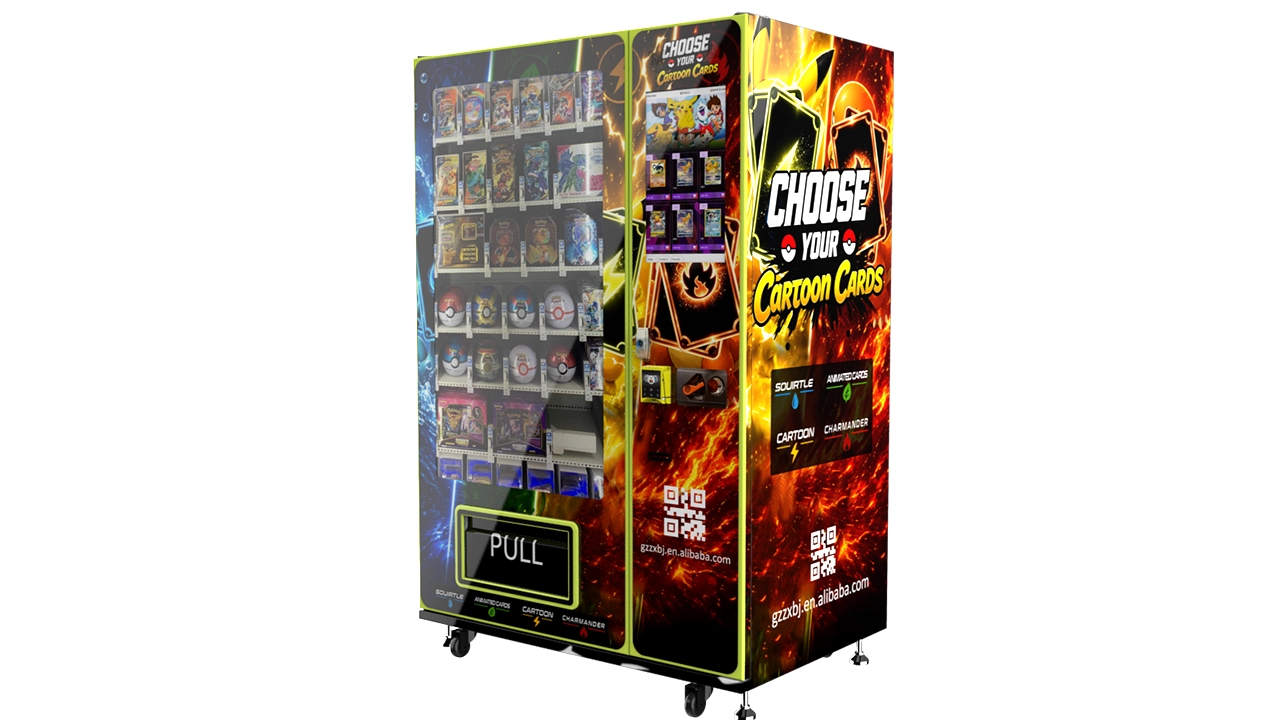
If you’ve been looking at the trading card vending machine business and wondering whether it’s actually worth the money, the short answer is: yes, it can be, but not for the reasons most people think. I’ve been operating vending routes across the US and parts of Europe for over a decade, and I’ve watched the card machine niche explode in the last three years. The real money isn’t in selling a few booster packs here and there—it’s in location data, repeat collectors, and understanding which products move in which neighborhoods. But I’ve also seen people drop $15,000 on a machine, place it in a dead strip mall, and lose interest within six months. Starting a trading card vending machine business is less about the hardware and more about your ability to evaluate foot traffic, manage inventory, and treat it like a retail operation, not a passive ATM.
Why Trading Card Vending Machines Are a Different Beast
Most vending operators come from snacks and drinks. That world is simple: everyone eats, everyone drinks, and restocking is predictable. Cards are different. You’re dealing with a niche audience, but one that spends heavily and returns frequently. A collector who pulls a rare card from a $5 pack will tell five friends. That word-of-mouth dynamic changes how you choose locations and how you stock the machine.
Another difference is the ticket price. A candy bar is $1.50. A Pokémon booster pack is $5 to $12. A sports card pack can go for $20 or more. That means you need fewer transactions to hit the same revenue, but you also need customers who are willing to spend that kind of money on impulse. That changes your location criteria significantly.
I’ve also noticed that card machines have a much higher “entertainment value” than snack machines. People gather around them, film pulls for social media, and bring friends. That’s something you never see with a soda machine. If you place the machine where people already hang out—comic shops, game stores, hobby shops, even some laundromats—you’re not just selling a product, you’re providing a small experience.
What You Need to Know Before Buying Your First Machine
Let’s talk about the equipment itself. There are basically two categories: modified claw machines and purpose-built card vending machines. The claw machine route is cheaper up front—you can find used units for $1,500 to $4,000—but they’re not designed for card dispensing. You’ll spend time and money adjusting the claw, adding sensors, and dealing with jams. I’ve talked to operators who went this route and they all say the same thing: it works, but only if you’re handy with tools and patient with troubleshooting.
Purpose-built machines, on the other hand, are more expensive but far more reliable. A good one with a 32-inch touchscreen, card-dispensing mechanism, and secure internal shelving will run you anywhere from $6,000 to $15,000 depending on the brand and configuration. I’ve seen operators buy cheaper machines from overseas and then spend months dealing with payment integration issues or flimsy dispensing motors. If you’re serious about this, spend the money on a machine that’s designed for cards from day one.
One thing I’ve learned the hard way: don’t buy a machine that uses a generic “spiral drop” mechanism for cards. Cards are flat, lightweight, and can easily get stuck or damaged. Look for a machine that uses a clamp or vacuum-style picker, or one with custom card slots that prevent the product from sliding around. That’s where manufacturers like Zhongda Smart have done good work—their card-specific units are built around the product, not adapted to it.
Initial Investment and Realistic Cost Breakdown
Let me give you the numbers I use when I’m evaluating a new route. These are based on my own operating experience and what I’ve seen across dozens of operator forums and industry reports, not just theoretical math.
For a single machine setup, your initial investment breaks down roughly like this:
- Machine (new, purpose-built): $7,000 to $12,000
- Payment system (card reader, cashless module): $300 to $800
- Initial inventory (cards, packs, accessories): $1,500 to $3,000
- Shipping and installation: $300 to $700
- Insurance and permits: $200 to $500 per year
- Miscellaneous (tools, signage, cleaning supplies): $200 to $400
So you’re looking at roughly $9,500 to $17,000 to get your first machine running. That’s not pocket change, but it’s also not crazy compared to starting a food truck or a small retail lease.
On the revenue side, I’ve seen single machines gross between $800 and $3,500 per month. The wide range depends almost entirely on location and product mix. A machine in a busy comic shop near a university can easily clear $2,000 a month. A machine in a quiet gas station might struggle to hit $800. The gross profit margin on cards is usually 40% to 60%, which is better than snacks but worse than pure digital products. After restocking costs, payment fees, and occasional repairs, your net margin is typically 25% to 40% of gross revenue.
According to the National Automatic Merchandising Association (NAMA), the average vending machine in the US generates about $75 to $100 per week in revenue for traditional snack and beverage machines. Card machines, when placed well, often double or triple that figure. That’s not a formal statistic—it’s an industry observation—but it aligns with what I’ve seen on my own routes.
Location: The Single Biggest Factor in Success or Failure
If you take nothing else from this guide, take this: the machine is 20% of the business, the location is 80%. I’ve seen the exact same machine model do $2,800 a month in one spot and $400 a month in another, ten miles apart.
So how do you evaluate a location? I use a simple checklist:
- Foot traffic: At least 100 people passing by per day, ideally 200 or more.
- Dwell time: Are people waiting around? Laundromats, barbershops, and game stores are great. Fast-food lines are okay but not ideal.
- Demographic match: Is the customer base likely to buy trading cards? Look for young adults, parents with kids, or hobbyists.
- Existing card culture: Is there a local Pokémon league, a sports card shop nearby, or a school with an active card club?
- Security: Can you secure the machine? Cards are small, high-value items. Theft and vandalism are real risks.
One of my best locations is a 24-hour laundromat in a college town. I wouldn’t have guessed it, but the mix of bored students and parents with kids waiting for laundry cycles is perfect. The machine does about $1,800 a month there. My worst location was a suburban office building. Plenty of foot traffic, but the demographic was all wrong—office workers in their 40s and 50s aren’t buying Pokémon packs. I pulled that machine after four months.
Another thing I’ve learned: don’t be afraid to move a machine. If a location isn’t performing after 60 to 90 days, cut your losses and relocate. I know operators who treat every location like a marriage and end up losing money for a year before they finally admit it’s not working. That’s a mistake. Move the machine, learn from the data, and try again.
Equipment Selection: What to Look For and What to Avoid
When you start shopping for a machine, you’ll quickly notice that prices vary wildly. Some machines are essentially modified claw grabbers, while others are precision card dispensers with touchscreens and inventory tracking. You need to decide what your priorities are.
If you’re just starting out and want to test the market, a modified claw machine can be a low-risk entry point. But I’ll be honest: I’ve seen more operators fail with claw machines than succeed. The jamming issues, the inconsistent dispensing, and the lack of card-specific features make them frustrating. If you already have mechanical skills and don’t mind tinkering, it’s a viable option. If not, buy a purpose-built machine from a reputable manufacturer.
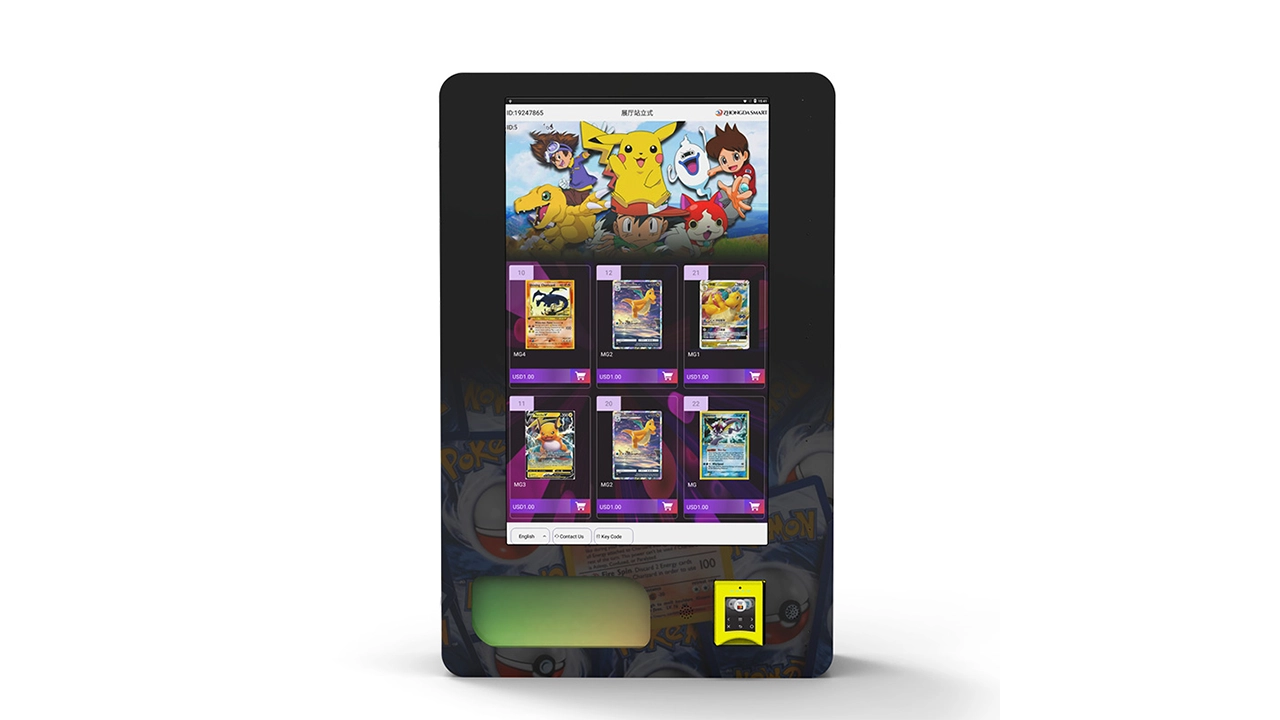
Zhongda Smart is one of the manufacturers I’ve seen in this space that actually understands the card vending use case. Their machines are designed with card-specific dispensing mechanisms, and they offer options like the 32-inch touchscreen model that lets you display card images and prices digitally, which is a huge selling point for collectors. I’m not going to tell you they’re the only option, but they’re worth looking at when you compare specs and after-sales support.
Here’s a comparison table based on my experience and what I’ve seen across the industry:
| Machine Type | Upfront Cost | Reliability | Best For | Main Drawback |
|---|---|---|---|---|
| Modified claw machine | $1,500–$4,000 | Low to medium | Testing a market, hobbyists | Frequent jams, inconsistent dispensing |
| Purpose-built card machine (basic) | $6,000–$9,000 | Medium to high | Single location, beginners | Limited features, basic display |
| Purpose-built card machine (touchscreen) | $9,000–$15,000 | High | High-traffic locations, brand building | Higher upfront cost |
| Wall-mounted card dispenser | $3,000–$6,000 | Medium | Small spaces, secondary locations | Limited inventory capacity |
I’ve used all four types at some point in my career. The wall-mounted units are great for squeezing into a corner of a game store or a barbershop, but you’ll be restocking them constantly because of the limited capacity. The touchscreen machines are the best for building a following, but they’re also the most expensive to repair if the screen gets damaged.
Payment Systems and the Cashless Experience
You cannot run a card vending machine in 2025 without cashless payment support. I learned this the hard way in 2019 when I placed a machine that only accepted cash and coins at a local game store. The younger customers simply didn’t carry cash. Sales were terrible until I upgraded the payment system to accept credit cards and mobile wallets. Within two weeks, revenue tripled.
Most modern machines come with a built-in card reader or support an external one from companies like Nayax, USA Technologies, or Cantaloupe. These systems handle credit cards, Apple Pay, Google Pay, and sometimes even QR code payments. The transaction fees are typically 5% to 10% of the sale, which is higher than standard card processing rates, but it’s the cost of doing business in unattended retail.
I also recommend setting up a remote monitoring system if your machine supports it. Being able to check sales data, inventory levels, and error alerts from your phone is a game-changer. It saves you trips to locations that don’t need restocking yet, and it helps you spot issues before they become full-blown problems.
Inventory Management: The Part Everyone Underestimates
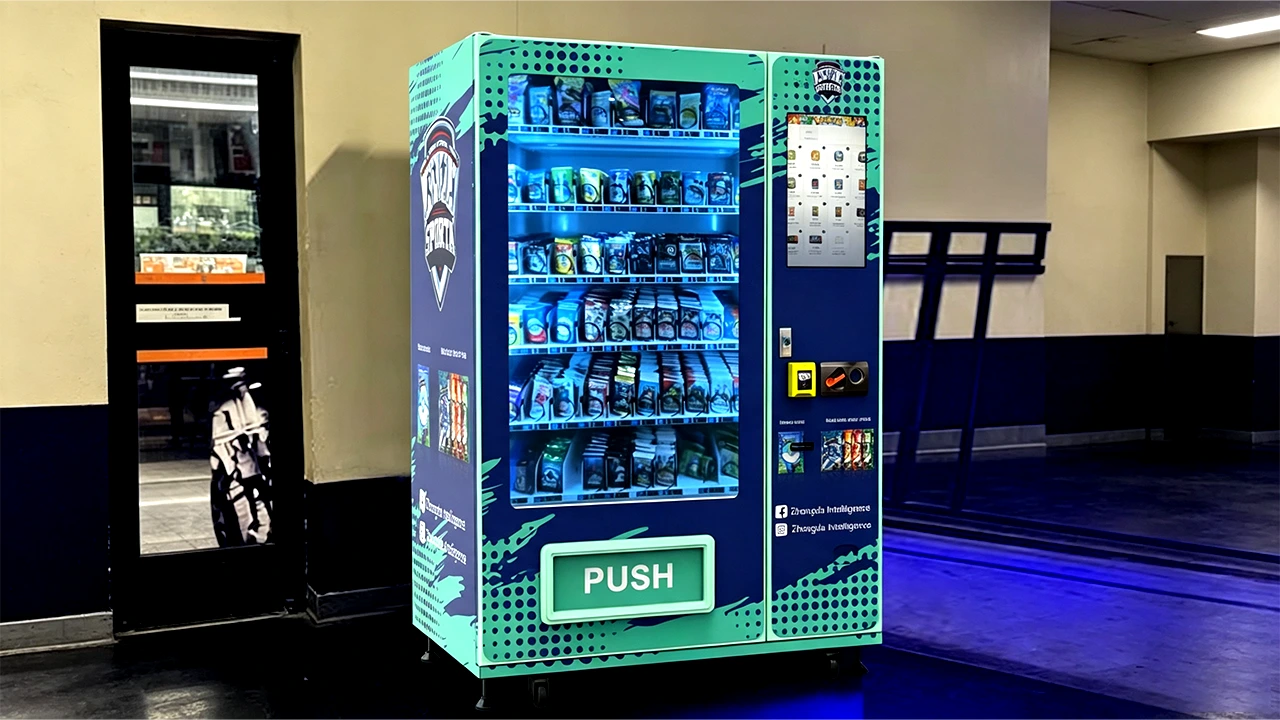
I can’t tell you how many operators I’ve met who buy a machine, fill it with whatever cards they can find, and then wonder why sales are flat. Inventory is the heart of your business. You need to treat it like a retail buyer, not a fan.
First, diversify your product mix. Don’t just stock Pokémon. Sports cards, Yu-Gi-Oh!, Magic: The Gathering, and even non-sport cards like anime or Marvel can all be profitable depending on your location. I’ve found that a mix of 50% Pokémon, 30% sports, and 20% other categories works well in most US locations. In Europe, the mix might shift more toward soccer cards and Pokémon.
Second, pay attention to what sells and what doesn’t. Every machine has a personality. One location might sell out of football cards every week while another never touches them. Track your sales data and adjust your orders accordingly. I use a simple spreadsheet, but there are also inventory management software options that integrate with your payment system.
Third, don’t overstock. It’s tempting to fill the machine to the brim, but cards have a shelf life. New sets come out constantly, and older products can sit for months. Start with a modest inventory and restock based on actual sales patterns. You can always add more variety later.
Fourth, be careful with high-value products. Sealed booster boxes and rare single cards are tempting to stock because of their high margins, but they’re also more likely to be stolen or cause disputes if the machine malfunctions. I recommend sticking to sealed packs and boxes for the first few months until you understand the market.
Maintenance, Repairs, and the Reality of Breakdowns
Every vending machine breaks down eventually. It’s not a matter of if, but when. The question is how prepared you are to handle it.
Common issues include card jams, payment system errors, display screen problems, and temperature-related issues if the machine is outdoors. I’ve also seen machines get struck by lightning surges, vandalized, and even hit by cars. Yes, really.
If you’re not mechanically inclined, you have two options: buy a maintenance plan from the manufacturer, or find a local vending machine repair technician who can work on your specific model. The manufacturer’s plan is usually the safest bet for the first year. After that, you can decide based on your comfort level.
I’ve seen operators waste hundreds of dollars on unnecessary service calls for issues that were actually simple fixes. For example, a card jam can often be cleared by opening the front panel and manually repositioning the cards. A payment system error might just need a reboot. Before you call a technician, always check the machine’s diagnostic display or your remote monitoring app. Sometimes it’s a 5-minute fix that costs you nothing.
But I’ve also made the opposite mistake. I once ignored a minor issue with a dispensing motor because I was too busy to deal with it. Within a week, the motor completely failed, and I had to pay $400 for a replacement part and a technician visit. If I had addressed the initial warning signs, it would have been a $50 fix. Don’t ignore small problems.
Buying vs. Leasing vs. Revenue Sharing: Which Model Is Right for You?
When you’re starting out, you have more options than just buying a machine outright. Let me break down the three main models.
Buying outright gives you the most control and the best long-term economics. You own the asset, you keep all the revenue, and you can move the machine wherever you want. The downside is the upfront cost and the risk if you decide the business isn’t for you.
Leasing is a good middle ground. You pay a monthly fee to use the machine, and the leasing company handles repairs. This reduces your upfront cost and lowers your risk, but you’ll pay more over the long term. I’ve seen lease deals range from $150 to $400 per month depending on the machine and the lease term. The biggest drawback is that you’re locked into a contract, so if the location fails, you’re still paying the lease.
Revenue sharing is the most interesting model. In this arrangement, the location owner provides the space and sometimes the electricity, and you split the revenue with them. Splits vary, but 70/30 or 60/40 in your favor is common. This model is great for getting into high-traffic locations without paying rent, but it also means you’re giving up a chunk of your profit. I’ve used revenue sharing for several locations, and it works well when the location owner is actively engaged in promoting the machine.
Here’s a quick comparison to help you decide:
| Model | Upfront Cost | Monthly Cost | Profit Potential | Risk Level |
|---|---|---|---|---|
| Buy outright | $7,000–$15,000 | Maintenance only | Highest | Medium |
| Lease | $0–$1,000 | $150–$400 | Medium | |
| Revenue sharing | $0–$1,000 | Revenue split | Low to medium | Low |
For a complete beginner, I’d actually recommend buying one machine outright in a location you already have access to, or revenue sharing with a trusted business owner. Leasing makes sense if you’re testing multiple locations and don’t want to commit to a single machine. But remember, leasing companies are in the business of making money, so read the fine print carefully.
Licensing, Insurance, and Legal Considerations
You can’t just place a machine anywhere and start selling. Depending on where you live, you may need a sales tax permit, a business license, and possibly a vending machine permit. In the US, the requirements vary by state and even by city. The U.S. Small Business Administration has a good overview of the general steps you need to take to register your business and get the right permits.
In the European Union, the rules differ by country. France, for example, has specific regulations for vending machines, including food safety if you sell anything edible. Even if you’re only selling cards, you may need to register with the local chamber of commerce and comply with consumer protection laws. Eurostat has data on retail trade and vending machine trends that can give you a sense of the market size and regulatory environment in different EU countries.
Insurance is another thing you shouldn’t skip. A basic liability policy that covers your machine and any potential customer injuries will cost you around $200 to $500 per year. If your machine is located in a business that has its own insurance, you should still have your own policy to cover your equipment and any claims that might arise from its operation. I’ve seen operators lose everything because they didn’t have insurance when a machine malfunctioned and damaged a customer’s property.
One more thing: if you’re placing a machine in a location that has a lease agreement with the property owner, make sure you have a written agreement with the location owner that clearly states your rights and responsibilities. This should cover who is responsible for electricity, cleaning, repairs, and what happens if the location wants to terminate the agreement. A simple one-page contract can save you from a lot of headaches later.
Scaling Up: From One Machine to a Route
Once you’ve got your first machine running profitably for three to six months, you’ll probably start thinking about scaling. That’s the right time to expand, but not before.
Scaling a card vending machine business is different from scaling a snack route. Cards require more careful inventory management and a deeper understanding of the collector market. You can’t just fill a machine with whatever’s on sale and expect it to sell. You need to develop relationships with distributors and wholesalers to get good pricing and access to new product releases.
I’ve seen operators grow from one machine to twenty machines in a year, but they all had one thing in common: a systematic approach to location evaluation and inventory tracking. They didn’t just “wing it.” They had a checklist, a spreadsheet, and a clear idea of what made a location profitable.
Another thing to consider when scaling is the physical logistics. You’ll be driving to multiple locations, carrying boxes of cards, and spending time restocking. If you’re doing this part-time, you need to plan your routes efficiently. If you’re doing it full-time, you’ll eventually need to hire help or invest in a larger vehicle.
I’ve also learned that it’s better to have five machines in great locations than ten machines in mediocre ones. The revenue from a great location can be three to four times higher than a mediocre one, and it requires the same amount of your time. Focus on quality over quantity.
Common Mistakes I See New Operators Make
I’ve been in this industry long enough to see patterns. Here are the biggest mistakes I see new card vending machine operators make, and I’ve made some of these myself.
Mistake #1: Buying a cheap machine just to save money. I did this with my first machine, and it cost me more in repairs and lost sales than the money I saved. A $3,000 machine that jams every week will drain your patience and your wallet. Spend the money on a quality machine from a reputable manufacturer.
Mistake #2: Placing the machine in a location without doing proper research. I once placed a machine in a busy mall because it seemed like a no-brainer. But the mall’s demographic was mostly older shoppers, and there was no existing card culture. The machine barely made $500 a month. I moved it after three months to a game store that did $2,200 a month.
Mistake #3: Not tracking inventory properly. I’ve seen operators run out of popular products and not realize it until they visit the machine two weeks later. By then, they’ve missed out on a lot of sales. Use your remote monitoring system or check the machine at least once a week.
Mistake #4: Ignoring the payment system. If your machine only takes cash, you’re missing out on a huge portion of potential sales. I’ve said it before, but it’s worth repeating: cashless is not optional anymore.
Mistake #5: Not having a maintenance plan. When the machine breaks down, you need to know who to call and how much it will cost. Don’t wait until the machine is down for two weeks before you start looking for a technician.
My Own Failure Story: The Lesson I’ll Never Forget
I want to share a specific failure because it taught me more than any success ever did. In 2021, I was expanding my route and found what I thought was the perfect location: a large anime convention center that hosted events every few weekends. The foot traffic was massive, and the demographic was exactly right for trading cards. I bought a new touchscreen machine, paid for expedited shipping, and placed it in the main lobby.
The first two events were great. I was pulling in $800 to $1,000 per event. Then the convention schedule changed, and the venue started hosting fewer events. The machine sat idle for weeks at a time. I had signed a six-month agreement with the venue, so I couldn’t move the machine without breaking the contract. I lost about $4,000 in rent and missed sales during those six months.
What did I learn? I learned that event-based locations are risky because they’re unpredictable. You need a location with steady, daily foot traffic, not one that only surges on weekends or during special events. I also learned to negotiate shorter agreements with locations until I’ve proven the concept. A 30-day trial period is much safer than a six-month commitment.
A Success Story: How I Turned a Dying Laundromat Around
On the flip side, I have a success story that shows what’s possible with the right approach. A friend of mine owned a laundromat in a low-income neighborhood. Business was okay, but he wanted to add something that would bring in extra revenue without taking up too much space. I suggested placing a card vending machine in the corner.
He was skeptical at first, but we agreed on a revenue-sharing model: 60% for him, 40% for me. I stocked the machine with a mix of Pokémon and sports cards, added a cashless payment system, and put up a small sign advertising the machine. Within the first month, it generated $1,400 in sales. By the third month, it was up to $2,100 a month.
The key was that the laundromat had a captive audience. People were there for 30 to 60 minutes waiting for their laundry. They had time to browse, and many of them had kids who were excited to see the machine. It wasn’t just a vending machine—it was a small entertainment option in a space that was otherwise boring.
That machine is still running today, and it’s one of my most reliable revenue streams. It taught me that you don’t need a “cool” location to succeed. You need a location where people have time and money, and where the demographic matches the product.
Data Sources and Industry Trends
If you’re serious about this business, you should be following industry data. The vending machine market is growing, and the trading card segment is a big part of that growth. According to IBISWorld, the vending machine manufacturing industry in the US has been growing at an annualized rate of about 3.5% over the last five years, with revenue reaching around $1.2 billion. That’s a healthy, stable industry.
Statista has also published data showing that the global vending machine market is projected to grow at a CAGR of about 6.5% from 2023 to 2028. The growth is driven by technological advancements, cashless payments, and the increasing popularity of niche vending products like trading cards.
On the trading card side, the market has seen a massive surge in interest since 2020. The global trading card market was valued at approximately $12.5 billion in 2023 and is expected to grow at a CAGR of around 8% through 2030, according to industry reports. That growth is fueled by nostalgia, the rise of online marketplaces, and the gamification of card collecting.
These numbers are encouraging, but they don’t guarantee that your specific machine will be profitable. The key is to understand your local market and position yourself accordingly. A card vending machine in a rural town with no card culture will fail, no matter how good the industry data looks.
How to Choose a Supplier: What I Look For
Choosing the right supplier is critical. I’ve worked with several manufacturers over the years, and I’ve developed a checklist for evaluating them.
First, look at the warranty. A reputable manufacturer will offer at least a one-year warranty on parts and labor. Some offer two or three years on key components like the compressor (if it has one) and the payment system. If a supplier only offers 90 days, that’s a red flag.
Second, check the availability of spare parts. If the machine breaks down and you have to wait three weeks for a replacement motor, you’re losing money every day. Ask the supplier about their spare parts inventory and shipping times.
Third, ask for references. A good supplier should be able to provide contact information for existing customers who are willing to share their experience. I’ve called references before, and it’s saved me from making bad decisions more than once.
Fourth, consider the after-sales support. Do they have a technical support line? Is it available 24/7? What’s the typical response time? These things matter when your machine is down and you’re losing revenue.
Zhongda Smart is one supplier that checks many of these boxes. They offer a range of card vending machines, including the 32-inch touchscreen model, and they have a solid reputation for after-sales support. I’m not saying they’re the only good option, but they’re worth putting on your shortlist.
FAQ: Answers to the Questions I Get Asked Most
Here are the questions I hear the most from people who are considering this business. I’ll answer them honestly, based on my own experience.
Are card vending machines profitable?
Yes, they can be, but profitability depends heavily on location and product mix. A well-placed machine can gross $1,500 to $3,000 per month, with net margins of 25% to 40%. A poorly placed machine can lose money. Don’t expect passive income from day one—you’ll need to actively manage inventory and location performance.
How much does a card vending machine cost?
A new, purpose-built card vending machine costs between $6,000 and $15,000, depending on features. Used or modified claw machines can be cheaper, but they come with higher maintenance risks. You’ll also need to budget for payment systems, inventory, shipping, and permits.
How long does it take to recoup the investment?
With a good location, you can recoup your investment in 8 to 18 months. If the location is mediocre, it could take two years or more. I’ve seen operators break even in six months with a great location and a strong product mix, but that’s not the norm.
Should a beginner buy or lease a machine?
If you have the capital, buying is usually better because you own the asset and keep all the revenue. Leasing is a good option if you want to test the waters with less upfront risk, but you’ll pay more over time. Revenue sharing with a location owner is another low-risk way to start.
Where is the best place to put a card vending machine?
Look for locations with daily foot traffic, a demographic that matches card collectors, and people who have time to browse. Game stores, comic shops, hobby stores, laundromats, barbershops, and college campuses are all good options. Avoid locations that are only busy on weekends or during special events.
What licenses and permits do I need?
In the US, you’ll need a business license and a sales tax permit. Some cities and states require a specific vending machine permit. In the EU, you’ll need to register your business and comply with local consumer protection laws. Check with the U.S. Small Business Administration and your local chamber of commerce for specific requirements.
How do I choose a reliable machine supplier?
Look for a supplier with a strong warranty, available spare parts, good after-sales support, and references from existing customers. Don’t just buy the cheapest machine—you’ll regret it later. Zhongda Smart is one supplier worth considering, but do your own research.
What do I do if the machine breaks down?
First, check the machine’s diagnostic display or your remote monitoring app. Many issues can be resolved by rebooting the machine or clearing a simple jam. If it’s a more serious issue, contact the manufacturer or a local vending machine repair technician. Always have a backup plan for restocking and collecting revenue while the machine is down.
How can I reduce restocking and maintenance costs?
Use a remote monitoring system to track inventory levels and sales data so you only visit locations when they actually need restocking. Buy cards in bulk from distributors to get better pricing. Schedule regular maintenance checks to catch small issues before they become big problems.
Disclaimer
The information in this article is based on my personal experience and industry data available as of 2025. Revenue figures, costs, and return-on-investment timelines are estimates and can vary significantly based on location, market conditions, and your own operational efficiency. You should conduct your own research and consult with a financial advisor before making any business investment.
Final Thoughts
Starting a trading card vending machine business is not a get-rich-quick scheme. It’s a real retail operation that requires careful planning, ongoing maintenance, and a willingness to learn from your mistakes. But if you do it right—choosing the right machine, placing it in the right location, and managing your inventory smartly—it can be a solid source of income that grows with you.
I’ve been doing this for over a decade, and I still get excited when I see a new location that has potential. The market for trading cards is only growing, and the vending machine model is still relatively untapped compared to traditional retail. If you’re willing to put in the work, there’s plenty of room for you in this space.
Start small, learn the ropes, and scale up only when you have proven data. That’s the approach that has worked for me and for every successful operator I know.