If you’ve been watching the recent surge in trading card vending machines and wondering whether this business is actually worth the money, the short answer is: it can be, but not for the reasons most people think. I’ve been operating vending machines across the US and parts of Europe for over a decade, and I’ve seen the trading card vending machine business go from a niche curiosity to a full-blown trend. The real question isn’t whether these machines sell cards—they do—but whether you can find the right location, manage the inventory without choking on cash flow, and survive the learning curve that kills most first-time operators. In this guide, I’ll break down the pros and cons from an operator’s perspective, not a sales brochure.
What a Trading Card Vending Machine Actually Is (and Isn’t)
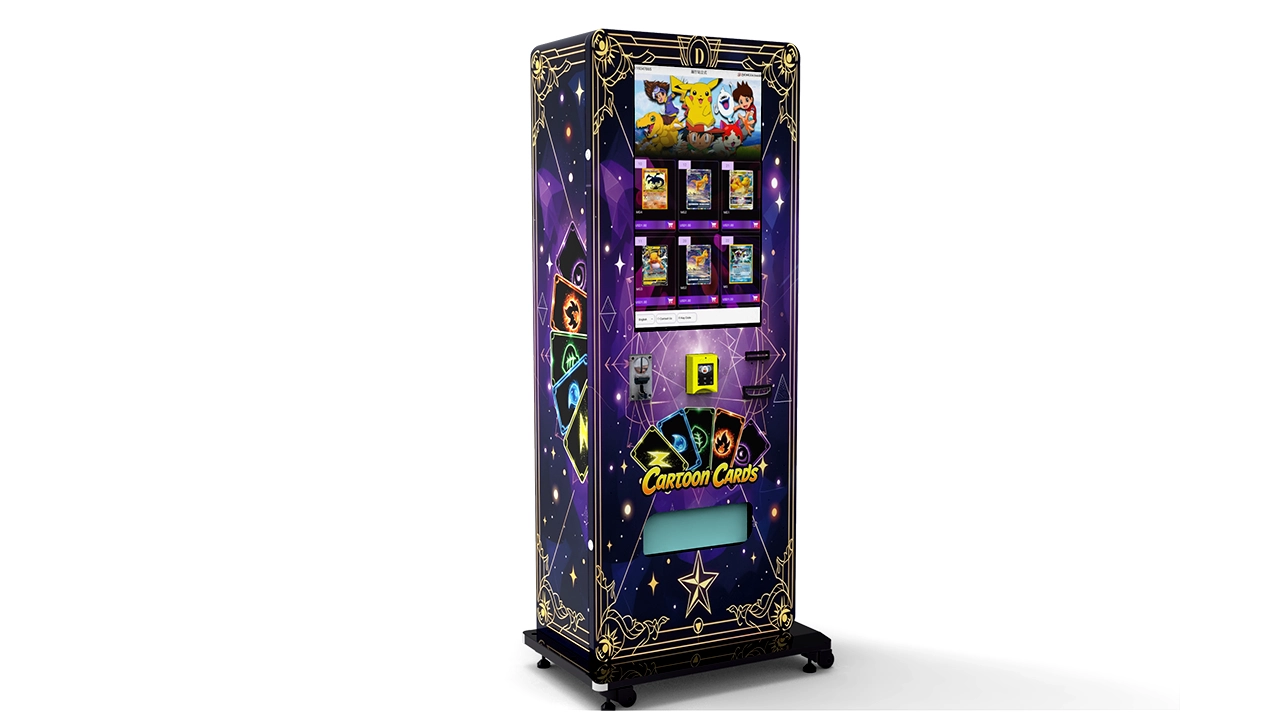
Let’s clear something up right away: a trading card vending machine is not a vending machine in the traditional sense. It’s a self-service kiosk that dispenses sealed packs, booster boxes, single cards in protective cases, and sometimes even graded slabs. The machines range from small wall-mounted units to full-size cabinet machines with 32-inch touchscreens. But the core business model is the same: you buy cards at wholesale or bulk prices, load them into a machine, and sell them at retail or above retail to collectors who are chasing pulls, building decks, or completing sets.
What makes this different from a snack or soda machine is the inventory profile. Trading cards are high-value, low-weight, and highly volatile in price. A pack of Pokémon that cost you $3.50 might sell for $5.99, but a single graded Charizard could be worth $200 and sit in the machine for weeks. That changes everything about how you think about cash flow, restocking, and machine placement.
The Real Pros: Why I’m Still in This Business
Gross Margins That Beat Most Traditional Vending
Let’s talk numbers first because that’s what matters. On standard snack vending, you’re lucky to see 15–20% net margin after product cost, spoilage, and route expenses. On trading cards, the gross margin is often 40–60% if you buy right. I’ve had months where a single Yu-Gi-Oh! display in a mall location turned over at 70% margin because the local meta was hot and I was the only machine within 20 miles. That kind of margin is rare in vending, and it’s the main reason I’ve kept expanding this side of my operation.
But don’t mistake gross margin for net profit. The hidden costs—machine maintenance, card spoilage from bending or humidity, credit card processing fees, and the time you spend researching card values—eat into that number faster than you’d think. Still, when you compare it to selling chips and candy, the upside is significantly better.
Self-Service Kiosk Model Reduces Labor Costs
Unlike a card shop that needs a staffed counter, a trading card vending machine operates as an automated retail unit. Once it’s placed and stocked, it runs on its own. You don’t need a salesperson, a cash register, or even a storefront. For an operator like me who runs multiple locations, this is the biggest operational advantage. I can service five card machines in the time it takes to run one traditional snack route because the product is uniform and the restocking cycle is predictable.
That said, the labor you save is replaced by a different kind of work: inventory research. You can’t just load a machine with random packs and hope they sell. You have to track which sets are trending, which cards are spiking, and which products are dead stock. That’s intellectual labor, not physical labor, and it’s harder to scale.
Location Flexibility and Foot Traffic Potential
Because these machines are compact and don’t require water lines or heavy power draw, you can place them in places that traditional vending machines can’t go. I’ve seen successful setups in comic book shops, hobby stores, game cafés, bowling alleys, laundromats, and even high-traffic convenience stores. A wall-mounted card vending machine can fit in a corner that a full-size snack machine would dominate. That flexibility means you can negotiate better placement deals because you’re not competing with Coke or Pepsi for floor space.
One of my best-performing locations is a small game store that doesn’t sell cards themselves. They get a 10% commission on gross sales, and I get high-intent foot traffic. It’s a win-win that wouldn’t be possible with a traditional vending machine.
The Cons: What Nobody Tells You Before You Buy
Inventory Risk Is the Silent Killer
I’ve made the mistake of overloading a machine with booster boxes of a set that was hyped online but dead in my local market. Three months later, I was selling those packs at cost just to clear space. Unlike snacks, trading cards don’t expire, but they do lose value when a new set releases and shifts collector attention. You’re essentially running a mini card shop with no one to talk to customers and no ability to adjust prices on the fly unless your machine has dynamic pricing software.
If you’re not prepared to eat losses on slow-moving stock, this business will punish you. I’ve seen new operators quit within six months because they couldn’t liquidate inventory that was sitting behind glass, mocking them every time they restocked.
Machine Costs and Maintenance Are Higher Than You Expect
A decent trading card vending machine isn’t cheap. You’re looking at $5,000 to $15,000 for a new unit, depending on features like touchscreen interfaces, card dispensing mechanisms, and security systems. The cheaper machines—especially those repurposed from snack vending—have a higher rate of jams and misdispenses. Trading cards are thin, flexible, and prone to static cling, which makes them mechanically harder to dispense than a bag of chips.
I’ve had to learn vending machine repair basics because calling a technician costs $150–$300 per visit, and that eats your margin fast. If you’re not handy with a screwdriver and a multimeter, budget for maintenance or buy a machine with a strong warranty and responsive support.
Payment Systems and Fraud Concerns
Card machines rely on credit card readers, and those readers come with processing fees of 2.5–4% per transaction. That doesn’t sound like much, but on a $200 graded card sale, that’s $8 just in fees. More importantly, you need a payment system that can handle high-value transactions without frequent connectivity issues. I’ve lost sales because a card reader went offline during a weekend event when foot traffic was highest.
Fraud is also a real concern. Some machines have had issues with card cloning or chargebacks on high-value items. You need to choose a payment processor that understands high-risk automated retail and offers chargeback protection. This is not something you can wing.
Cost Breakdown and What You Should Budget For
Let me give you a realistic picture of what you’ll spend in the first year. These numbers are from my own operations and from talking to other operators at industry meetups, so they’re not theoretical. They’ll vary by region, but the structure holds.
| Expense Item | Low-End Estimate | High-End Estimate | Notes |
|---|---|---|---|
| Machine purchase (new, basic) | $5,000 | $8,000 | Wall-mounted or compact cabinet |
| Machine purchase (premium, touchscreen) | $10,000 | $15,000 | 32-inch screen, multi-tray, anti-theft |
| Initial card inventory | $3,000 | $8,000 | Depends on mix of packs and singles |
| Shipping and setup | $300 | $1,000 | Freight, installation, calibration |
| Payment system setup and fees | $200 | $500 | Reader, gateway, merchant account |
| Location commission or rent | $0 (if own location) | $500/month | Typical commission is 10–20% of gross |
| Maintenance and repair reserve | $500/year | $2,000/year | Jams, card readers, screen issues |
| Insurance and permits | $300/year | $1,000/year | Varies by city and state |
Based on my experience, a single machine in a good location will gross between $1,500 and $4,000 per month. That’s not a promise—it’s a range I’ve seen across different setups. After product cost, fees, and maintenance, a realistic net profit is $500 to $1,500 per month per machine. That means your payback period is usually 8 to 18 months, depending on how well you buy inventory and how strong your location is.
If you’re looking for a more detailed breakdown of cost structures and payback scenarios, this trading card vending machine business overview goes deeper into the numbers I’ve seen across different markets.
Location, Location, Location: How I Evaluate a Site
I can’t stress this enough: the machine is only as good as the foot traffic in front of it. A $15,000 machine in a dead location is a $15,000 paperweight. I’ve developed a simple scoring system over the years, and I use it for every potential placement.
Foot Traffic Quality Over Quantity
You don’t need a million people walking past. You need the right people. A comic book store with 50 daily visitors will outperform a supermarket with 5,000 daily visitors because the conversion rate is dramatically higher. I look for locations where people already spend money on hobbies, collectibles, or entertainment. Game stores, hobby shops, and card shops are the obvious ones, but I’ve also had success in movie theaters and arcades where the demographic skews younger and impulse-driven.
Security and Visibility
The machine needs to be visible from the main counter or a staffed area. Not just for theft prevention—though that matters—but also for customer confidence. People are less likely to buy a $100 card from a machine tucked in a dark corner. I’ve had locations where the machine was technically accessible but out of sight, and sales dropped by half. If the staff can’t see the machine, they won’t mention it to customers, and it becomes invisible.
Commission Structures That Work
Most location owners will ask for 10–20% of gross sales as commission. That’s standard. But I’ve negotiated better deals by offering to handle all maintenance and restocking without any effort on their part. Some owners are happy with a flat monthly rent instead of a percentage, especially if they don’t want to track sales reports. In my experience, a flat fee is better for you if you expect high sales, and a percentage is better if you’re unsure about the volume. Always run the numbers both ways before you sign.
For a deeper look at how different locations perform, check this location performance comparison that I put together from my own route data.
Equipment Selection: What I’ve Learned the Hard Way
Not all card vending machines are created equal. I’ve bought cheap machines to save money, and I’ve paid for it in repair calls and lost sales. Here’s what I look for now, and what I wish I’d known earlier.
Dispensing Mechanism Quality
The most common failure point is the dispensing mechanism. Cards are thin and can stick together, especially if there’s static or humidity. Look for machines that use a spiral or carousel system designed specifically for cards, not a modified snack machine. The tray spacing needs to be adjustable so you can switch between thick graded slabs and thin booster packs without jams.
One of my early machines was a converted snack vender, and it jammed on average once every 200 transactions. That might sound rare, but when it happens to a customer who’s trying to buy a $150 card, you’ve lost that sale and probably that customer forever. I’ve since standardized on machines with dedicated card dispensing trays, and my jam rate dropped to nearly zero.
Touchscreen and User Experience
A 32-inch touchscreen isn’t just for looks. It allows you to display card images, set prices dynamically, and even run promotions. But more importantly, it gives the customer a sense of control and transparency. They can see what they’re buying before they pay, which reduces hesitation. I’ve found that machines with touchscreens have a higher average transaction value because customers are more willing to browse and add multiple items.
That said, touchscreens add cost and complexity. If you’re just starting out, a basic machine with a simple keypad and transparent front panel might be enough. But if you’re planning to scale, invest in the better interface. It pays off in customer satisfaction and sales.
Supplier Selection: What I Check Before Buying
When you’re looking at manufacturers, don’t just look at the price tag. Check their support response time, warranty terms, and whether they have spare parts available locally or via fast shipping. I’ve had good experiences with Zhongda Smart on some of my newer units, particularly their touchscreen models. Their build quality is solid, and they’ve been responsive when I needed replacement parts. That’s not a paid endorsement—it’s just my experience after dealing with several suppliers who were far less reliable.
The key is to ask for a demo unit or a video showing the machine dispensing different types of cards before you commit. If a supplier can’t show you that, walk away.
Inventory Management and Restocking Strategy
Running a card vending machine is more like running a small card shop than a vending route. You have to think in terms of sets, card values, and collector demand, not just SKUs and shelf life.
How Often You Need to Restock
In a high-traffic location, you’ll restock every 1 to 2 weeks. In a slower location, every 3 to 4 weeks is fine. But the frequency isn’t just about emptying the machine. It’s about refreshing the selection. Collectors are more likely to buy from a machine that has new stock regularly. I’ve seen sales spike by 30% just by adding a few new booster packs and rotating the single-card display, even if the total inventory value didn’t change.
Tracking Sales Data and Adjusting
You need a system to track what’s selling and what’s not. Some machines come with remote monitoring software that shows sales data in real time. If yours doesn’t, you need to manually log sales every time you restock. I keep a simple spreadsheet that tracks units sold per SKU, average sale price, and days on shelf. That data drives every restocking decision. If a product hasn’t moved in 30 days, I either discount it or pull it and replace it with something else.
For a more detailed breakdown of inventory management and restocking cycles, this inventory and restocking guide covers the exact methods I use on my routes.
My Biggest Failure and What It Taught Me
I mentioned earlier that I’ve been in this business for over a decade, but I didn’t start with card machines. I started with snack and drink vending, then moved into card machines about four years ago. My first card machine was a disaster. I placed it in a high-traffic tourist area because the foot traffic numbers were incredible. But I didn’t account for the fact that tourists weren’t looking for Pokémon cards—they were looking for snacks and drinks. The machine sat there for two months, selling maybe $200 worth of product total.
I had paid $7,000 for the machine and loaded it with $4,000 of inventory. I ended up moving it after three months and eating the shipping costs. The lesson wasn’t that card machines don’t work. It was that I had ignored my own location scoring system because I was dazzled by raw foot traffic numbers. Now I stick to my criteria, and I don’t place a machine anywhere unless the demographic match is clear.
A Success Case: The Game Store That Changed My Mind
About a year after that failure, I got a call from a small game store owner who wanted to host a machine. The store was cramped, with maybe 300 square feet of retail space, and they didn’t sell cards because they didn’t have room to display them properly. I was skeptical, but I agreed to place a wall-mounted unit near the checkout counter. That machine now grosses over $3,000 a month consistently, and it’s been running for two years without major issues.
The difference was that the store already had a steady stream of customers who played card games and bought accessories. The machine was an extension of their existing business, not an attempt to create demand from scratch. That’s the pattern I look for now: a location that already serves the same customer you’re trying to reach.
Comparing Different Machine Types and Configurations
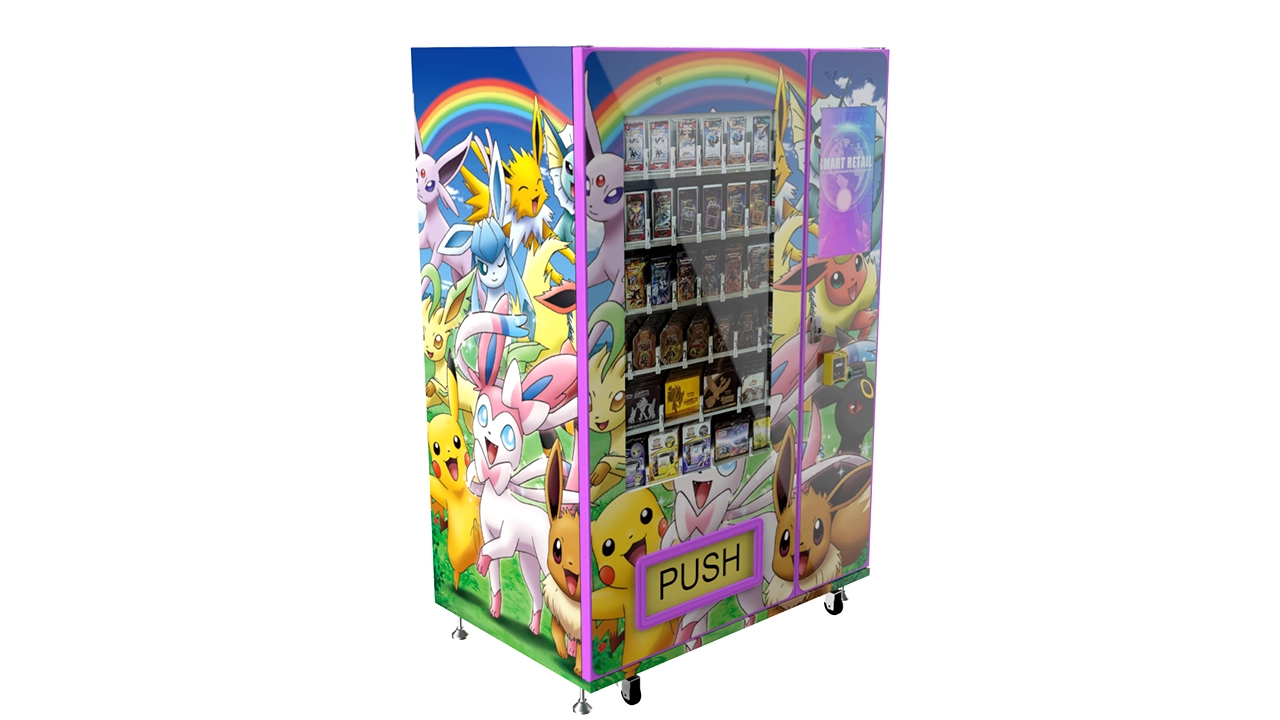
If you’re trying to decide between a compact wall-mounted unit and a full-size cabinet machine, here’s a comparison based on my experience:
| Configuration | Initial Cost | Footprint | Best For | Maintenance Complexity | Revenue Potential |
|---|---|---|---|---|---|
| Wall-mounted, basic | $4,000–$6,000 | Very small | Tight spaces, first-time operators | Low | $800–$1,500/month |
| Cabinet, basic | $6,000–$9,000 | Medium | Standalone locations, higher capacity | Medium | $1,500–$2,500/month |
| Cabinet, touchscreen | $10,000–$15,000 | Medium to large | High-traffic retail, premium experience | Medium to high | $2,500–$4,000/month |
If you’re just starting out and want to minimize risk, a wall-mounted card vending machine is a lower-cost entry point that lets you test the market without a huge capital outlay. But if you’re confident in your location and want to maximize revenue, the touchscreen cabinet is worth the extra investment.
Buy, Lease, or Partner: What’s Right for You?
There are three ways to get into this business: buy a machine outright, lease one, or partner with a location owner who buys the machine and splits revenue with you. Each has trade-offs.
Buying gives you full control and the best long-term economics, but it also puts all the risk on you. Leasing reduces upfront costs but often comes with higher monthly payments and less flexibility. Partnering with a location owner can work if they’re willing to share the investment, but it requires a clear contract and aligned incentives. I’ve done all three, and I’ve found that buying is best for operators who plan to scale, while leasing or partnering makes sense for testing a new market.
Permits, Insurance, and Local Regulations
Don’t assume you can just place a machine and start selling. Depending on where you are, you may need a business license, a sales tax permit, and possibly a vending machine permit from the local municipality. In the US, requirements vary by state and city. The U.S. Small Business Administration has a licenses and permits guide that’s a good starting point. In the EU, rules differ by country, but you’ll generally need to register for VAT and comply with consumer protection laws.
You also need liability insurance. If a machine malfunctions and damages a customer’s card, or if someone trips over the power cord, you don’t want to be personally liable. I pay about $400 a year for a basic policy that covers my machines and routes. That’s cheap peace of mind.
Maintenance and Repair: What You Need to Handle Yourself
I’ve already mentioned vending machine repair, but let me be more specific. The most common issues I’ve dealt with are card jams, card reader failures, and screen calibration problems. Card jams are usually caused by static or humidity, and I’ve solved that by adding silica gel packs inside the machine and using an anti-static spray on the trays. Card reader failures are more annoying because they require either a replacement reader or a call to the payment processor. Screen issues are rare if you buy a quality machine, but they do happen.
You should be comfortable with basic tools and troubleshooting. If you’re not, budget for a local technician who can handle repairs on short notice. But I’ll be honest: if you can’t do basic maintenance yourself, your margins will suffer. I’ve saved thousands by learning to fix simple issues on my own.
FAQs: What New Operators Ask Me Most
Are trading card vending machines profitable?
They can be, but profitability depends heavily on location, inventory selection, and your ability to manage costs. In my experience, a well-placed machine can net $500 to $1,500 per month after all expenses. But a poorly placed machine can lose money. Don’t expect passive income without active management, especially in the first year.
How much does a trading card vending machine cost?
You’ll spend between $5,000 and $15,000 for a new machine, depending on size and features. Add another $3,000 to $8,000 for initial inventory. Used machines are cheaper but come with higher maintenance risk. I’ve seen good used units for $3,000 to $5,000, but you need to inspect them carefully.
How long does it take to recoup the investment?
Realistic payback periods are 8 to 18 months, based on my own operations and those of other operators I know. Faster payback is possible with a great location and strong inventory management, but it’s not guaranteed. Don’t go into this expecting to break even in three months.
Should I buy or lease a machine as a beginner?
If you have the capital, buying is usually better because it gives you full control and better long-term economics. Leasing can be a way to test the waters, but read the contract carefully—some lease terms are effectively rent-to-own at a markup. I started by buying used equipment to keep costs low.
Where should I place a trading card vending machine?
Look for locations that already serve your target audience: game stores, comic book shops, hobby stores, arcades, and sometimes movie theaters or bowling alleys. Avoid locations with high foot traffic but the wrong demographic, like tourist spots or general supermarkets.
What permits and licenses do I need?
You’ll likely need a business license, sales tax permit, and possibly a vending machine permit depending on your city or state. Check with your local government and the SBA for guidance. In the EU, check your national business registration and VAT rules.
How do I choose a reliable vending machine supplier?
Ask for a live demo or video of the machine dispensing cards. Check warranty terms and parts availability. Look for suppliers with responsive support. I’ve had good results with Zhongda Smart, but I always recommend doing your own due diligence before committing.
What should I do if the machine breaks down?
Start with basic troubleshooting: check power, check for jams, and test the card reader. If you can’t fix it, call a professional. Keep a spare card reader and a basic tool kit on hand. I’ve also found that having a maintenance contract with the supplier can save you money in the long run.
How can I reduce restocking and maintenance costs?
Track sales data and adjust inventory to what actually sells. Use remote monitoring if your machine supports it. Schedule restocking based on real demand, not a fixed calendar. And learn basic repair skills to avoid expensive service calls.
Disclaimer: The figures and estimates in this article are based on my personal experience operating vending machines in the US and Europe. They are not guarantees of income or performance. Market conditions, location, and operational decisions vary widely. Always conduct your own research and consult with a financial or legal professional before making business decisions.