If you’ve been inside a game store in the last two years, you’ve probably seen one of those sleek vending machines tucked near the counter, spinning booster packs and single cards behind glass. The question I get asked more than any other—by shop owners, by investors, and by guys who just love ripping packs—is whether trading card vending machines in game stores are actually worth the floor space and the upfront cash. After a decade of running automated retail operations across the US and Europe, I can tell you this: the short answer is yes, but only if you treat the machine like a retail category, not a novelty. The long answer involves math, placement, supplier reliability, and a few mistakes I’ve made so you don’t have to.
What a Trading Card Vending Machine Actually Does for a Game Store
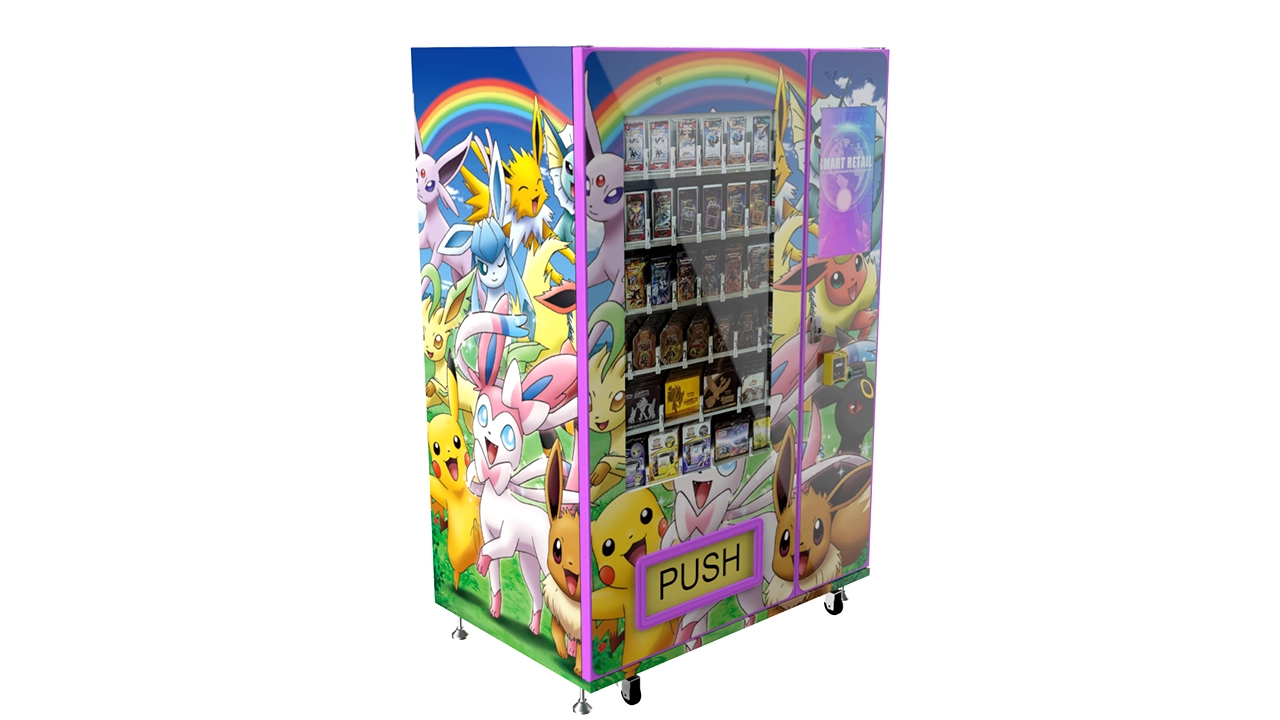
Let’s start with the obvious. A trading card vending machine is a self-service kiosk that dispenses sealed product—booster packs, blisters, sometimes single cards in protective cases—using a card-based or cashless payment system. In a game store, it works as an extension of your counter sales, but it does something your staff can’t: it sells after hours, during tournament rushes, and to customers who don’t want to wait in line for a $5 pack. I’ve seen stores add a machine and immediately shift 15 to 20 percent of their card sales to the kiosk, simply because it removes friction. But I’ve also seen stores buy the wrong machine, stock it poorly, and end up with a dusty cabinet that customers walk past. The difference isn’t luck. It’s planning.
One thing I learned early in my vending career is that the machine is not the product. The product is the inventory inside, and the machine is just a very expensive shelf. If you’re a game store owner, you already understand margins on sealed product. The vending machine doesn’t change those margins—it changes the labor cost attached to them. Instead of a staff member stopping a restock to ring up a pack, the machine does it. Instead of closing at 9 PM and losing the after-dinner crowd, the machine keeps selling until you decide to turn it off. That’s the real value proposition, and it’s why I’ve been recommending this model to retailers for years.
My First Machine Was a Disaster—Here’s What I Learned
I’m not going to pretend I got this right on the first try. Back in 2016, I bought a refurbished snack machine and tried to convert it to dispense booster packs. It was a nightmare. The spiral shelves crushed corners, the payment system didn’t recognize the card reader, and the machine jammed every third transaction. I lost money for four months before I pulled it out. The problem wasn’t the concept—it was the hardware. Trading cards are flat, lightweight, and easily damaged. You can’t just retrofit a candy machine and expect it to work. That failure taught me more than any success ever did, and it’s the reason I now insist on purpose-built card vending machines with proper dispensing mechanisms and adjustable shelves.
The second mistake I made was underestimating restock frequency. I put that first machine in a comic shop with a modest foot traffic of about 80 people a day. I thought a full restock would last two weeks. It lasted four days. The machine was small, and I hadn’t accounted for the fact that collectors buy in bursts—when a new set drops, they clear the machine. If you’re not prepared to restock weekly, you’re going to have empty slots, and empty slots kill sales. Customers don’t come back to check if you’ve refilled. They just go somewhere else. That’s a lesson I’ve carried into every placement decision since.
Cost Breakdown: What You’re Really Paying For
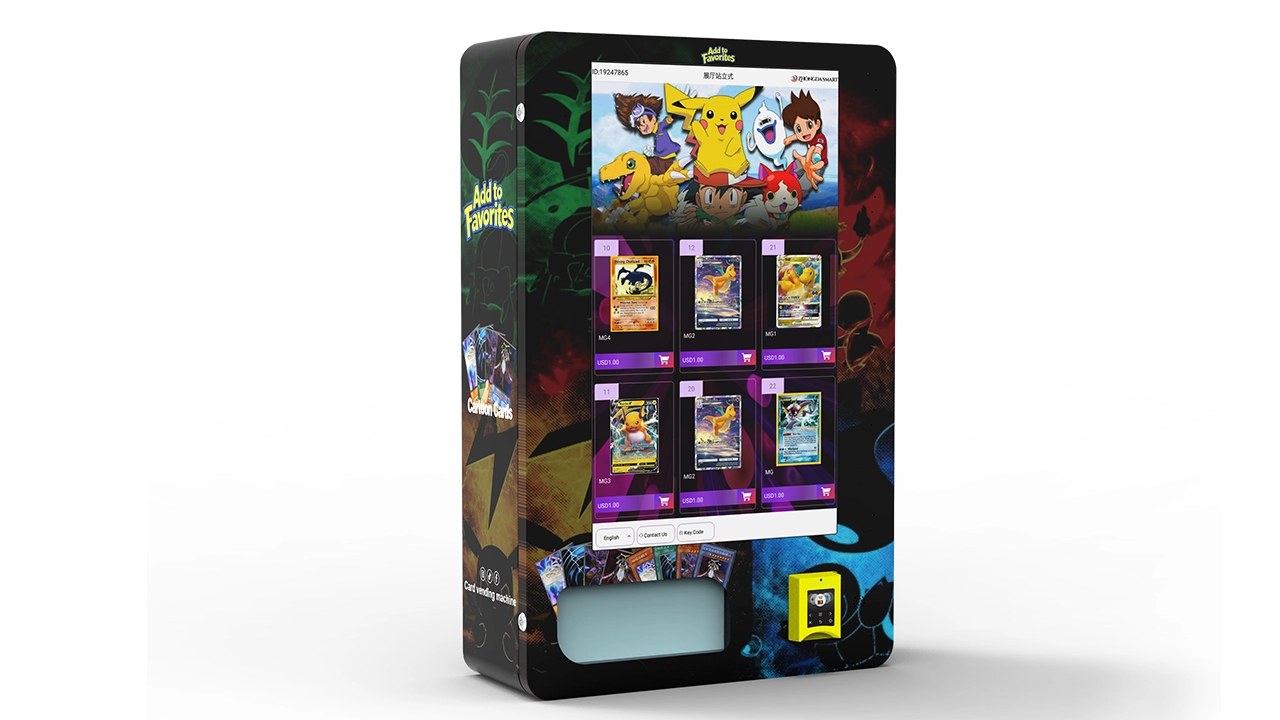
Let’s talk numbers, because this is where most people get lost. A new, purpose-built trading card vending machine from a reputable manufacturer like Zhongda Smart will run you somewhere between $4,000 and $12,000 depending on screen size, shelving configuration, and payment options. The 32-inch touchscreen models are at the higher end, and they’re worth it if you plan to display product images or run promotional loops. Wall-mounted units are cheaper—around $2,500 to $5,000—and they work well in tight spaces, but they hold less inventory and require more frequent restocking. I’ve also seen used machines on auction sites for under $2,000, but I’d caution you on that. Used card machines are often decommissioned for a reason, and vending machine repair costs can eat your savings fast.
Beyond the machine itself, you’ve got installation, which usually runs $300 to $800 if you hire someone, though many operators self-install. Then there’s the payment system. Most modern machines come with a standard cashless reader, but if you want to accept mobile wallets or specific card networks, you may need to pay extra. The inventory is your biggest variable cost. A well-stocked machine with a mix of popular sets and single cards will require an initial investment of $1,500 to $4,000, depending on how deep you want to go. You don’t need to fill every slot on day one, but you need enough to look legitimate. A half-empty machine reads as a broken machine.
Operating costs are relatively low. Electricity is minimal—maybe $10 to $20 a month. The payment processor takes a cut, usually 2.5 to 3.5 percent per transaction. And you’ll need a basic service plan or the skills to handle minor issues yourself. I budget about $50 a month per machine for maintenance and contingency. That covers the occasional jam, a card reader firmware update, or a replacement sensor. If you’re putting the machine in someone else’s store, you’ll also need a revenue share agreement, typically 70/30 or 60/40 in favor of the location owner. That might sound steep, but a good location is worth it.
Revenue Potential: What Realistic Numbers Look Like
I’m going to give you ranges based on my own placements, not inflated projections. A well-placed trading card vending machine in a game store with decent foot traffic (150 to 300 customers a day) will generate between $800 and $2,500 in monthly gross revenue. That’s a wide range because it depends on your product mix, the local collector base, and whether you’re selling singles or sealed packs. Sealed packs have lower margins—around 20 to 30 percent—but they turn over fast. Singles can have margins of 50 percent or more, but they move slower and require more curation. The best operators run a mix: 60 percent sealed product, 40 percent curated singles and higher-value items.
Let’s be clear about one thing: this is not passive income. You’re not going to set the machine and forget it. You’re going to check sales data weekly, rotate slow movers, and respond to new set releases. But compared to the labor cost of a retail counter, the machine is far more efficient. I’ve seen stores where the machine accounts for 25 percent of total card sales with less than 10 percent of the staff time. That’s the kind of efficiency that makes the investment pay off.
Now, about payback period. With a $7,000 total investment (machine, installation, initial inventory), and a conservative monthly net profit of $400 to $700 after restocking and costs, you’re looking at a payback period of 10 to 18 months. If you hit the high end of revenue and keep your product mix tight, you can do it in under a year. But if you place the machine in a low-traffic location, you’re looking at two years or more. I’ve pulled machines after six months because they weren’t hitting the minimum threshold. The key metric I use is simple: if the machine doesn’t gross at least $250 a month per linear foot of floor space it occupies, it’s not earning its keep.
Location Is Everything: How I Evaluate a Game Store
I’ve placed machines in comic shops, card shops, hobby stores, and even a few video game retailers. The best locations aren’t necessarily the biggest stores. They’re the ones with the right customer base. Before I place a machine, I spend at least two hours in the store, just watching. I want to see how many customers walk past the proposed spot, whether they stop to look at the display, and whether they’re carrying card binders or buying single packs at the counter. If a store runs weekly tournaments, that’s a massive plus. Tournament days are when the machine will do 30 percent of its weekly volume.
Foot traffic matters, but so does dwell time. A store where people linger—browsing, chatting, trading—will always outperform a store with high foot traffic but quick transactions. I also look at the store’s existing card sales. If a store already sells a lot of sealed product, the machine is just a second checkout lane. If it doesn’t, the machine might introduce the category to a new audience, but it’ll take longer to build momentum. I usually ask for three months of sales data before I agree to a placement. If the store owner won’t share it, I walk. That might sound harsh, but I’ve learned that a lack of data usually means the store doesn’t track its own performance, which is a red flag.
One more thing on location: the physical spot of the machine inside the store matters more than you’d think. I’ve seen machines placed behind the counter, and they underperform because customers don’t feel comfortable browsing. The machine needs to be in a visible, accessible area—near the entrance, along a main aisle, or next to the card singles display. It should also be well-lit. If the store is dimly lit, the machine’s screen will do the work, but you need to make sure it’s powered and the display is set to an attractive loop. A dark screen is a dead machine as far as customers are concerned.
Equipment Selection: What to Look For and What to Avoid
I’ve tested machines from half a dozen manufacturers, and I’ve settled on a few criteria that separate the good from the bad. First, the dispensing mechanism. You want a machine that uses a conveyor or a lift system, not a spiral, because spirals damage card packaging. Second, the payment system. It needs to accept credit cards, debit cards, and ideally mobile payments. Cash-only machines are obsolete in this category. Third, the shelving. Adjustable shelves are non-negotiable because you’ll want to change the slot sizes as your product mix evolves. Fourth, the screen. A basic LED display is fine, but a touchscreen with product images and a “buy now” interface will increase conversion. I’ve seen a 20 percent lift in sales when a store upgrades from a button-based machine to a touchscreen model.
Zhongda Smart has been my go-to for the last three years. Their machines are built for card products specifically, not retrofitted for them. The dispensing mechanism is gentle on packaging, and the shelving system is modular. I’ve also had good experiences with their after-sales support. When I had a card reader issue on a 32-inch touchscreen model, their team walked me through the fix over a video call. That level of support is rare in this industry, and it’s worth paying a bit more for. But I’ll also say this: don’t buy a machine just because of the brand. Buy it because it fits your location’s needs. A wall-mounted unit might be perfect for a small card shop, while a full-size machine is better for a high-volume store.
| Machine Type | Initial Cost | Inventory Capacity | Best Use Case | Restock Frequency |
|---|---|---|---|---|
| Wall-Mounted | $2,500–$5,000 | Low (50–100 items) | Small shops, tight spaces | Weekly |
| Freestanding Basic | $4,000–$7,000 | Medium (150–250 items) | Standard game stores | Every 7–10 days |
| Freestanding Touchscreen | $7,000–$12,000 | High (300+ items) | High-traffic stores, tournaments | Every 5–7 days |
That table is based on my experience, not manufacturer claims. The restock frequency assumes you’re selling an average of 20 to 30 items a day, which is realistic for a decent location. If you’re selling more, you’ll need to restock more often, and that’s a good problem to have.
Supplier Screening: How to Avoid Getting Burned
Finding a reliable supplier for the machine itself is one thing, but the real challenge is sourcing the inventory. Trading cards are a unique product because the secondary market is volatile. A set that’s hot this month might be dead next month. I’ve learned to build relationships with distributors who can get me product at wholesale prices, and I always have a backup supplier for popular sets. If you’re new to this, start with sealed product from major distributors like Alliance or GTS Distribution. They have predictable pricing and reliable stock. Singles are a different game—you’re either buying collections, flipping from online marketplaces, or working with local players who want to sell their bulk. I’ve made good money on singles, but I’ve also been stuck with inventory that’s worth less than I paid for it. The trick is to buy singles only when you know the current market price, and to price them slightly below market to encourage quick turnover.
When you’re screening a machine supplier, ask for references from other operators, not just from the manufacturer. I’ve called three different operators who bought from the same manufacturer, and I got three completely different experiences. One loved the machine, one had constant jamming issues, and one said the support team disappeared after the sale. The manufacturer’s website will always look good. The operator’s experience is the truth. Also, ask about spare parts availability. If the manufacturer doesn’t stock parts for the model you’re buying, you’re going to be stuck when something breaks. For a self-service kiosk, downtime is lost revenue, and every day the machine is down, you’re paying for space that isn’t working for you.
Maintenance and Repair: The Part Nobody Talks About
Let’s talk about the ugly side of this business: maintenance. A trading card vending machine is a mechanical device, and mechanical devices fail. The most common issues I’ve dealt with are card jams (usually from bent packaging), payment reader connectivity problems, and screen calibration issues on touchscreen models. Most of these are fixable on-site with basic tools and a bit of patience. I carry a small kit with screwdrivers, a multimeter, and spare sensors. I’ve also learned to keep a stock of common spare parts—belts, rollers, and card readers—because ordering a part after a breakdown means a week of downtime.
For the operator, the question is whether to handle repairs yourself or hire a technician. If you’re placing a single machine in a store, you can probably handle minor issues yourself. If you’re scaling to five or ten machines, you need a local technician or a service contract. I’ve seen operators lose their entire profit margin to service calls because they didn’t learn basic troubleshooting. The vending machine repair costs can range from $75 to $150 per call, and if you’re calling a tech every month, that’s $1,800 a year—enough to eat a third of your profit. My rule is simple: if I can’t fix it in 30 minutes, I call a tech. If I can, I fix it myself.
Restocking and Inventory Management: The Daily Grind
Restocking is the part that separates the serious operators from the hobbyists. You can’t just fill the machine whenever it looks empty. You need a schedule, and you need to track sales data. I use a simple spreadsheet to track each slot’s sales velocity. When a slot has been empty for two days, I know it’s a slow mover and I replace it with something else. When a slot sells out in one day, I increase the slot size or add a second slot for the same product. This data-driven approach has increased my average revenue per machine by about 15 percent over my first year of doing it consistently.
Another thing I’ve learned is that restocking is a marketing opportunity. When I open the machine to restock, I make sure the glass is clean, the shelves are aligned, and the product is facing forward. A clean machine signals that it’s cared for, and customers are more likely to buy from a machine that looks fresh. I also rotate product so that the newest sets are at eye level. The machine is a retail display, and it should be treated with the same care as a store shelf. If you’re not willing to spend 30 minutes a week per machine cleaning and restocking, this isn’t the business for you.
Self-Operated vs. Placement in Someone Else’s Store
There are two ways to run this business: you own the machine and operate it yourself, or you place the machine in someone else’s store and split the revenue. I’ve done both. Self-operation gives you full control over inventory and pricing, but it requires you to have access to a good location. If you own a game store, this is the obvious choice. If you don’t, you’re dependent on a store owner who might not prioritize your machine. Revenue sharing is a way to get into the business without the overhead of a store, but it comes with its own challenges. You’re relying on the store to drive traffic, and you have less control over the customer experience.
I’ve had good and bad partnerships. The best ones involve a store owner who treats the machine as an extension of their own business—they mention it to customers, they keep the area around it clean, and they give me feedback on what’s selling. The worst ones involve a store owner who sees the machine as free money and doesn’t lift a finger. I once had a machine in a store where the owner put a stack of boxes in front of it and didn’t move them for three weeks. Sales dropped 40 percent. When I confronted him, he said he didn’t realize it was a problem. I moved the machine to another store the next week. Location owners who don’t care will kill your revenue, no matter how good your machine is.
Payment Systems and the Customer Experience
The payment system is the customer’s first interaction with the machine, and it needs to be flawless. I’ve seen machines with slow card readers, confusing screens, and failed transactions that drove customers away. The modern standard is a cashless system that accepts contactless payments, chip cards, and mobile wallets. Some machines also accept cash, but I’ve found that cash handling adds complexity and maintenance costs without much benefit. In the US and Europe, card and mobile payments account for over 90 percent of my transactions. If your machine doesn’t accept contactless payments, you’re losing customers.
The customer experience also includes the machine’s interface. A touchscreen with high-quality images and clear pricing is far more effective than a button-based machine with a small screen. I’ve seen customers spend five minutes browsing a touchscreen machine, comparing products, and reading details. That engagement translates to higher average transaction values. I’ve also seen machines with poorly designed interfaces that confuse customers, leading to abandoned transactions. If you’re buying a machine, test the interface yourself. If it’s not intuitive, it’s not worth the money.
The Data Behind the Hype: What the Numbers Say
Let’s bring in some external data to ground this. According to a Statista report on the vending machine market, the global vending machine industry was valued at approximately $32 billion in 2023, with a projected compound annual growth rate of 7.1 percent from 2024 to 2030. That growth is driven by cashless payments and the expansion of automated retail into non-food categories. IBISWorld’s vending machine operators industry report shows that profit margins for vending operators average around 12 percent, but that figure is heavily skewed by food and beverage machines. Card vending machines, with their higher-margin products, can outperform that if placed well. The U.S. Small Business Administration advises that any retail automation investment should have a clear payback period of 18 months or less to be considered viable—a guideline I’ve found useful in my own planning.
Those are real data points, but I want to be honest: the most valuable data I have comes from my own placements. I’ve tracked every machine I’ve operated, and the numbers are clear. A machine in a high-traffic game store with a strong collector base will outperform a machine in a general hobby store by a factor of two. The difference is the customer base, not the machine. If you’re considering this business, don’t just look at industry averages. Look at the specific store, the specific foot traffic, and the specific product mix. That’s where the real money is made.
Common Mistakes I See New Operators Make
I’ve made almost every mistake in the book, and I’ve watched other operators make them too. The most common mistake is buying a machine before securing a location. I’ve seen people drop $8,000 on a machine and then scramble to find a store that will take it. That’s backwards. Secure the location first, understand the customer base, and then buy the machine that fits. The second mistake is overstocking. New operators tend to fill every slot with product, tying up cash in inventory that might not move. Start with a modest inventory and scale up as you learn what sells. The third mistake is ignoring the data. If you’re not tracking sales by slot, you’re flying blind. I’ve seen operators keep a slow-moving product in a prime slot for months because they never looked at the numbers. That’s not just a missed opportunity—it’s a direct hit to your bottom line.
Another mistake is underestimating the importance of aesthetics. A machine with a dusty screen, crooked product, or faded signage will underperform. Customers judge the machine in the first two seconds, and if it looks neglected, they assume the product is stale. I’ve seen a simple cleaning and re-merchandising effort increase sales by 20 percent in a single week. That’s the kind of return you can’t get from a better payment system or a newer machine. It’s just basic retail discipline.
When It’s Not Worth It: Red Flags and Deal Breakers
I’ve been positive so far, but let’s be real: there are situations where a trading card vending machine is a bad idea. If the store has fewer than 50 customers a day, the machine will struggle to justify its space. If the store doesn’t already sell trading cards, you’re introducing a new category, which takes time and marketing effort. If the store owner is indifferent or hostile to the machine, walk away. I’ve also seen locations where the rent or revenue share is so high that the operator can’t make a profit. I once had a store owner ask for a 50/50 split, which would have left me with zero margin after restocking and maintenance. I declined, and I was right to. A revenue share above 30 percent is rarely worth it for the operator.
The other red flag is a store that doesn’t have a consistent schedule. If the store opens late, closes early, or has erratic hours, the machine won’t get the steady volume it needs. I’ve also learned to be wary of stores that are in decline. If foot traffic is dropping, the machine won’t reverse that trend. It might even accelerate the decline by adding costs. You have to be willing to pull a machine if it’s not performing, and that means having a clause in your agreement that allows you to exit without penalty. I’ve pulled machines after three months, and I’ve never regretted it. The sunk cost is real, but it’s better than bleeding money for a year.
Scaling Up: From One Machine to a Small Fleet
Once you’ve got one machine running well, the natural next step is to scale. I’ve grown from a single machine to a small fleet of eight, and the lessons are different at each stage. The first machine taught me about product mix and maintenance. The second and third machines taught me about location evaluation and negotiation. By the time I had five machines, I realized that the business is really about logistics—restocking, data tracking, and relationship management. If you can’t handle the logistics, you can’t scale.
Scaling also changes your relationship with suppliers. When I was buying one machine, I paid retail. When I bought five, I got a discount. When I bought ten, I got a direct line to the manufacturer’s support team. This is where trading card vending machine suppliers become partners rather than vendors. I’ve also learned to standardize on one machine model. Having a single model means I only need to stock one set of spare parts, and my technicians only need to learn one system. That’s a huge efficiency gain.
One warning about scaling: don’t expand too fast. I’ve seen operators place five machines in a month and then realize they can’t keep up with restocking. The result is empty machines, frustrated store owners, and a damaged reputation. I add one machine at a time, and I only add a new one when the existing ones are running smoothly for at least two months. This is a marathon, not a sprint.
Regulatory and Compliance Issues
Depending on where you operate, there are legal requirements you’ll need to meet. In the US, vending machines are generally subject to sales tax on the products sold, and you may need a seller’s permit in your state. Some states have specific regulations for automated retail, including labeling requirements and consumer protection rules. In the EU, the situation is similar but varies by country. You’ll need to register for VAT if you’re operating as a business, and you may need to comply with the EU’s General Product Safety Directive. The borne en libre-service market in Europe is well-established, and local regulations are generally straightforward, but you should check with a local business advisor before placing a machine.
I’ve also had to deal with insurance. Your business insurance should cover the machine, the inventory, and any liability arising from the machine’s operation. If you’re placing the machine in someone else’s store, you’ll need to have a written agreement that specifies who is responsible for what. I’ve seen disputes over damaged machines, stolen inventory, and even electrical issues. A clear contract prevents most of these problems. It’s not the most exciting part of the business, but it’s essential.
Case Study: A Successful Placement in a Mid-Sized Card Shop
Let me give you a concrete example. I placed a freestanding touchscreen machine in a card shop in a mid-sized US city with a population of about 200,000. The store had been operating for six years and had a loyal customer base of about 200 regulars, with weekly tournaments drawing 30 to 40 players. The store’s card sales were already strong, averaging about $12,000 a month. I negotiated a 70/30 split in the store’s favor, with the store providing the space and I providing the machine, inventory, and maintenance.
In the first month, the machine grossed $1,850. The store owner was skeptical at first, but by month three, the machine was grossing $2,300 a month. The product mix was 60 percent sealed product and 40 percent singles. The sealed product had a gross margin of about 25 percent, and the singles had a margin of 50 percent. After restocking costs, payment processing fees, and a small maintenance reserve, the machine netted about $700 a month. The store took $490 of that, and I took $210. It wasn’t huge money for me, but it was a solid return on a $9,000 investment. The store owner was happy because the machine added revenue without adding labor. I was happy because the machine was profitable and required only about two hours a week of my time.
That placement worked because the store had the right customer base, the machine was placed in a high-visibility area, and the product mix was adjusted based on sales data. If any of those three elements had been missing, the result would have been different. That’s the reality of this business—it’s not about the machine, it’s about the system around it.
Comparing Different Business Models
If you’re thinking about entering this space, you have three main models to choose from. The first is self-operation: you own the machine, you stock it, you maintain it, and you keep all the revenue. This works best if you already own a game store or have access to a location with high foot traffic. The second is placement with revenue sharing: you place the machine in someone else’s store and split the revenue. This is a good way to enter the business with less risk, but you have less control. The third is a hybrid model: you lease the machine to a store for a fixed monthly fee, and the store owns the inventory. This is less common, but it can work if the store wants to control its own product mix.
Each model has its trade-offs. Self-operation gives you the highest returns but requires the most work. Revenue sharing reduces your risk but also reduces your upside. Leasing gives you predictable income but limits your growth potential. I’ve used all three models at different times, and I’ve found that the best approach depends on your goals and your resources. If you’re new to the business, I’d recommend starting with a single machine in a good location, operating it yourself, and learning the ropes before you scale.
How to Get Started: A Step-by-Step Plan
If you’re convinced that this is worth exploring, here’s the plan I’d recommend. First, identify a location. Talk to game store owners in your area and gauge their interest. Bring a simple pitch: you’ll provide the machine, stock it, and maintain it, and you’ll split the revenue. Second, evaluate the location. Spend time in the store, observe foot traffic, and ask about card sales. Third, choose your machine. Based on the location’s size and traffic, decide between a wall-mounted unit and a freestanding model. Fourth, source your inventory. Start with a mix of sealed product and a small selection of singles. Fifth, install the machine and track your sales data from day one. Sixth, adjust your product mix based on what you learn.
You’ll also need to think about your 32-inch touchscreen trading card vending machine options if you’re targeting a high-traffic location. The touchscreen models have a higher upfront cost, but they tend to convert better because they offer a more engaging customer experience. I’ve seen customers interact with the touchscreen for several minutes, comparing products and reading descriptions. That engagement is valuable, and it’s reflected in higher average transaction values.
Final Thoughts Before You Commit
I’ve been in this industry for over a decade, and I’ve seen trends come and go. Trading card vending machines are not a fad—they’re a natural extension of the automated retail trend that’s been reshaping how consumers buy products. But they’re not a get-rich-quick scheme either. They’re a business, and they should be treated with the same discipline as any other business. You need to do your homework, choose your locations carefully, and be prepared to put in the work. If you do that, the returns can be solid. If you don’t, you’ll be one of the operators who pulls their machine after six months and tells everyone it doesn’t work.
I’ve seen the machine en libre-service market grow significantly, and I expect it to keep growing. Automated retail is becoming more common in the US and Europe, and card vending machines are a niche that’s still underserved in many areas. If you can find a good location and build a reliable operation, you’ll be ahead of the curve. But don’t expect it to be easy. It’s not. It’s just worth it when you do it right.
One final note: I’ve seen a lot of hype around this category, and I want to be clear that I’m not here to sell you a machine. I’m here to give you an honest assessment based on my experience. The numbers I’ve shared are real, but they’re specific to my operations. Your results will vary. The best thing you can do is start small, learn fast, and be willing to adapt. That’s the secret to this business, and it’s the same secret that applies to any business.
Frequently Asked Questions
Are trading card vending machines profitable?
They can be, but profitability depends on location, product mix, and operational efficiency. In my experience, a well-placed machine in a game store with strong foot traffic can generate $800 to $2,500 in monthly gross revenue, with net profits of $300 to $700 after restocking and costs. However, a poorly placed machine can lose money. There’s no guaranteed profit—it’s a business, not a lottery ticket.
How much does a trading card vending machine cost?
A new, purpose-built machine costs between $4,000 and $12,000, depending on size, screen configuration, and payment options. Wall-mounted units are cheaper, starting around $2,500. Used machines can be found for under $2,000, but they come with higher repair risks. You’ll also need to budget for installation, initial inventory, and ongoing maintenance.
How long does it take to recoup the investment?
With a total investment of around $7,000 and a conservative net profit of $400 to $700 per month, you can expect a payback period of 10 to 18 months. High-performing locations can pay back in under a year, while poor locations might take two years or more. The key is to track your sales data and adjust your approach quickly.
Should a beginner buy or lease a card vending machine?
If you’re new to the business, I’d recommend starting with a single machine that you own and operate yourself. Leasing can reduce upfront costs, but it usually comes with restrictive terms and lower returns. Owning gives you full control and a clearer understanding of the business. Once you’ve learned the ropes, you can explore leasing or revenue-sharing models to scale.
Where should I place the machine to maximize sales?
The best locations are game stores, comic shops, and hobby stores that already sell trading cards and have a steady customer base. Look for stores that run weekly tournaments and have high dwell time. The machine should be placed in a visible, high-traffic area, not behind the counter. I always spend time observing a store before committing to a placement.
What permits or licenses do I need?
In the US, you’ll typically need a seller’s permit and may need to collect sales tax on vending sales. Some states have specific regulations for automated retail. In the EU, you’ll need to register for VAT and comply with local product safety rules. Check with a local business advisor or your chamber of commerce for specific requirements.
How do I choose a reliable machine supplier?
Look for a manufacturer with experience in the card vending niche, not just a generic vending machine company. Ask for references from other operators and test the machine’s interface yourself. Zhongda Smart is one manufacturer I’ve had good results with, but you should always do your own due diligence. Check spare parts availability and after-sales support before buying.
What do I do if the machine breaks down?
Start with basic troubleshooting. Many issues, like card jams or payment reader problems, can be fixed on-site with basic tools. If you can’t fix it in 30 minutes, call a technician. Keep a stock of common spare parts like belts and sensors to minimize downtime. Regular maintenance is the best way to prevent breakdowns.
How can I reduce restocking and maintenance costs?
Use sales data to identify slow movers and replace them with faster-selling products. This reduces the frequency of restocking and the time spent per visit. Standardize on one machine model so you only need to stock one set of spare parts. Learn basic repair skills to avoid expensive service calls. And keep the machine clean—it reduces wear and tear.
Disclaimer: The information in this article is based on my personal experience and public data sources. Costs, revenues, and payback periods vary by location, market conditions, and operational decisions. I am not a financial advisor, and you should conduct your own research before making any investment.