If you’re looking to buy wholesale trading cards for vending machines, the short answer is that you don’t start with the cards — you start with the machine, the location, and a realistic plan for inventory turnover. I’ve been running automated retail operations for over a decade, and I’ve seen too many newcomers sink money into sealed product only to realize that foot traffic doesn’t equal sales. The wholesale trading card market is not like sourcing candy or chips; it’s a category with volatile pricing, allocation issues, and a customer base that can smell an overpriced booster box from across the mall. Before you buy a single case, you need to understand what actually moves, how to price it, and where your machine will sit. This guide walks through the operational side of card vending — sourcing, costing, placement, and the mistakes that separate profitable routes from expensive hobbies.
Why Trading Card Vending Machines Are a Different Beast
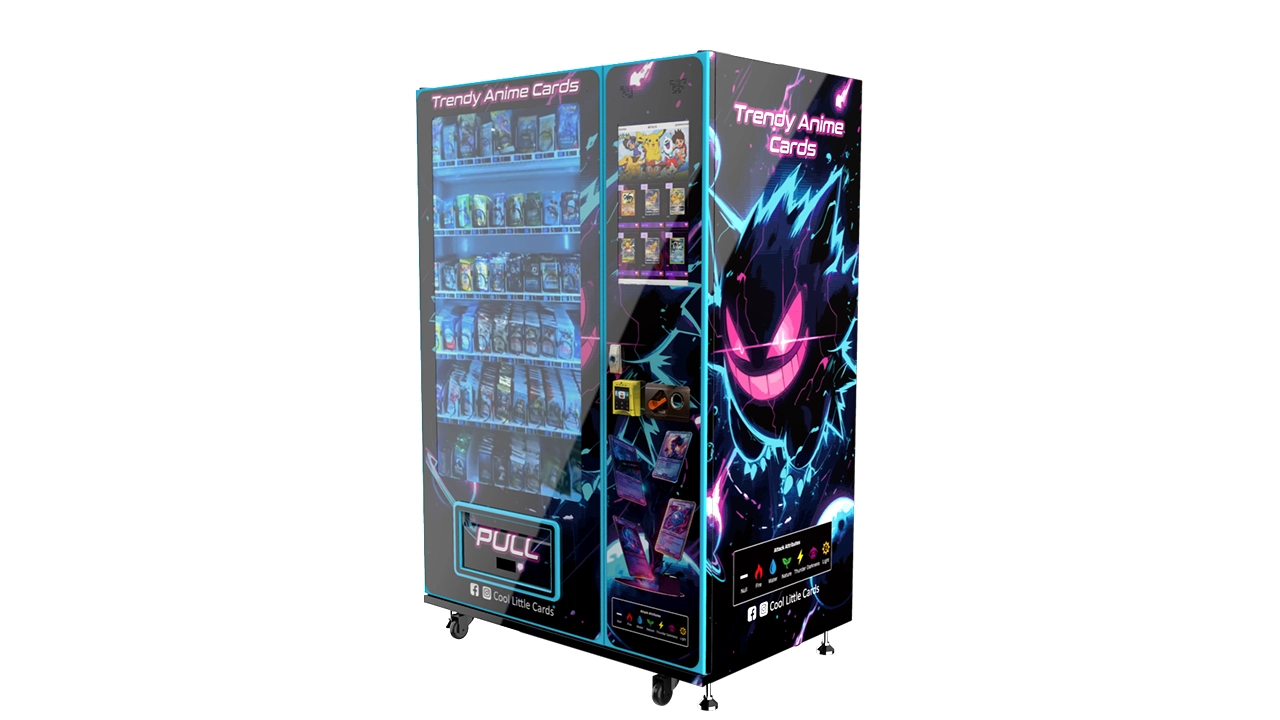
Most vending machines sell consumables. A snack machine sells a product that is gone once eaten, and the customer buys again tomorrow. Trading cards are different: they are collectibles, impulse purchases, and sometimes investments. That changes how you stock, how you price, and how often you service the machine. A card vending machine doesn’t just dispense a product — it sells a moment of anticipation. The customer might be chasing a rare Pokémon card or a numbered sports card, and that chase is what justifies the price point. But it also means your inventory strategy has to account for the fact that not every slot will sell evenly, and some products will sit for months if you misjudge demand.
In my experience, the machines that work best are placed where there is already a culture of collecting — hobby shops, comic stores, gaming cafes, and even certain entertainment venues. But even in those locations, you can’t just fill the machine with whatever you can get wholesale. You need to know what the local audience wants, what they already have, and what they are willing to pay for. That requires local market knowledge, not just a supplier catalog.
What You Actually Need to Buy Wholesale Trading Cards
Wholesale trading cards for vending machines are not the same as retail boxes you grab at a big-box store. You are looking for sealed booster boxes, blisters, tins, and sometimes single cards if you are buying in bulk from a distributor who allows it. The key is to find distributors that let you buy at true wholesale pricing, not inflated “case rates” that are just retail minus five percent.
Here’s what I look for when sourcing:
- Allocation integrity — Does the distributor actually have stock, or are they taking pre-orders they might not fill?
- Pricing transparency — Are you getting the same price as other operators, or are you paying a premium because you’re new?
- Return policy — Most card distributors don’t accept returns, but you need to know that upfront.
- Mixed case options — Some suppliers allow you to build a mixed case, which is ideal for testing a new location.
- Shipping reliability — Cards are light but bulky. A supplier that packs poorly will ruin your margin with damaged boxes.
One thing I learned the hard way: never buy a full pallet of one product just because the price per box is low. You will end up with 40 boxes of a set that doesn’t move, and your money is stuck in cardboard. Start with smaller orders, track sell-through rates, and scale up only when you see consistent demand.
Key Suppliers and How to Vet Them
There are a few large distributors in the trading card space, but many of them do not sell to vending operators directly. You often need to go through a middleman or a specialized wholesaler. In my experience, the best approach is to build relationships with two or three suppliers rather than relying on one. That way, if one is out of stock on a hot set, you have a backup.
When vetting a supplier, I ask for their current allocation list, their shipping terms, and their policy on damaged goods. I also check how long they’ve been in business and whether they have any history of late deliveries. A supplier that is consistently late will kill your machine’s reputation because customers see empty slots and assume the machine is abandoned.
One supplier I’ve worked with that understands the vending side is Zhongda Smart. They are primarily known for manufacturing vending machines, but they also have a network of wholesale partners and can help you source product if you’re buying their equipment. It’s not a hard sell — they simply offer a more integrated approach if you want to buy the machine and the initial stock together. That can simplify your first month of operations, especially if you’re new and don’t have established distributor relationships.
Cost Breakdown: What You’re Really Paying For
Let’s talk numbers. A new trading card vending machine with a touchscreen and secure dispensing system will run you anywhere from $6,000 to $15,000 depending on the size, features, and brand. A wall-mounted unit might cost less, around $4,000 to $7,000, but it also holds less inventory and may not have the same visual appeal. I’ve seen used machines go for as low as $2,500, but you need to factor in repair costs and the risk of buying someone else’s problem.
Initial inventory for a card machine typically costs between $3,000 and $8,000, depending on how many SKUs you want to carry and whether you’re stocking high-end products like sealed booster boxes or lower-priced blisters. A good rule of thumb is to have at least 30 to 50 different products in the machine, with a mix of price points from $5 to $100 or more.
Here’s a rough breakdown of monthly operating costs:
- Rent/commission to location — $100 to $500 per month, or 10-20% of gross sales
- Inventory restock — $500 to $2,000 per month, depending on sales velocity
- Maintenance and repairs — $50 to $200 per month averaged out
- Payment processing fees — 2.5% to 4% of card transactions
- Electricity — $10 to $30 per month
Your gross margin on trading cards is generally 30% to 50%, but that varies wildly by product. A hot new set might sell at a premium, while older sets might sit at near cost just to clear space. I’ve had months where a single machine did $4,000 in sales with a 40% margin, and other months where the same machine did $1,200 in sales with a 25% margin. The variance is real, and you have to plan for it.
Realistic Return on Investment Timeline
If you’re asking how long it takes to recoup your investment, the honest answer is 8 to 18 months for a well-placed machine. That assumes you’re not overpaying for equipment, you have a good location, and you’re actively managing inventory. If you’re paying top dollar for a premium machine and putting it in a mediocre spot, you could be waiting two years or more.
I’ve seen operators claim they made their money back in four months, but those are usually people who got a great location at low rent and hit a hot product cycle. That’s not the norm. Plan for a longer runway, and you won’t be disappointed.
Choosing the Right Machine Configuration
Not all card vending machines are created equal. The biggest difference is between spiral-based machines and carousel or tray-based machines. Spiral machines are common for snacks but often damage trading card packaging because the cards can get caught on the spiral edges. I prefer machines that use individual slots or carousels, which are gentler on the product and allow for more flexible slot sizes.
Another consideration is the payment system. A machine that only accepts coins and bills is fine for low-value items, but if you’re selling $50 booster boxes, you need a card reader and ideally a mobile payment option. Cashless payments account for over 80% of my card machine transactions, so don’t skimp on the payment system. Look for a machine that supports credit cards, Apple Pay, and Google Pay at minimum.
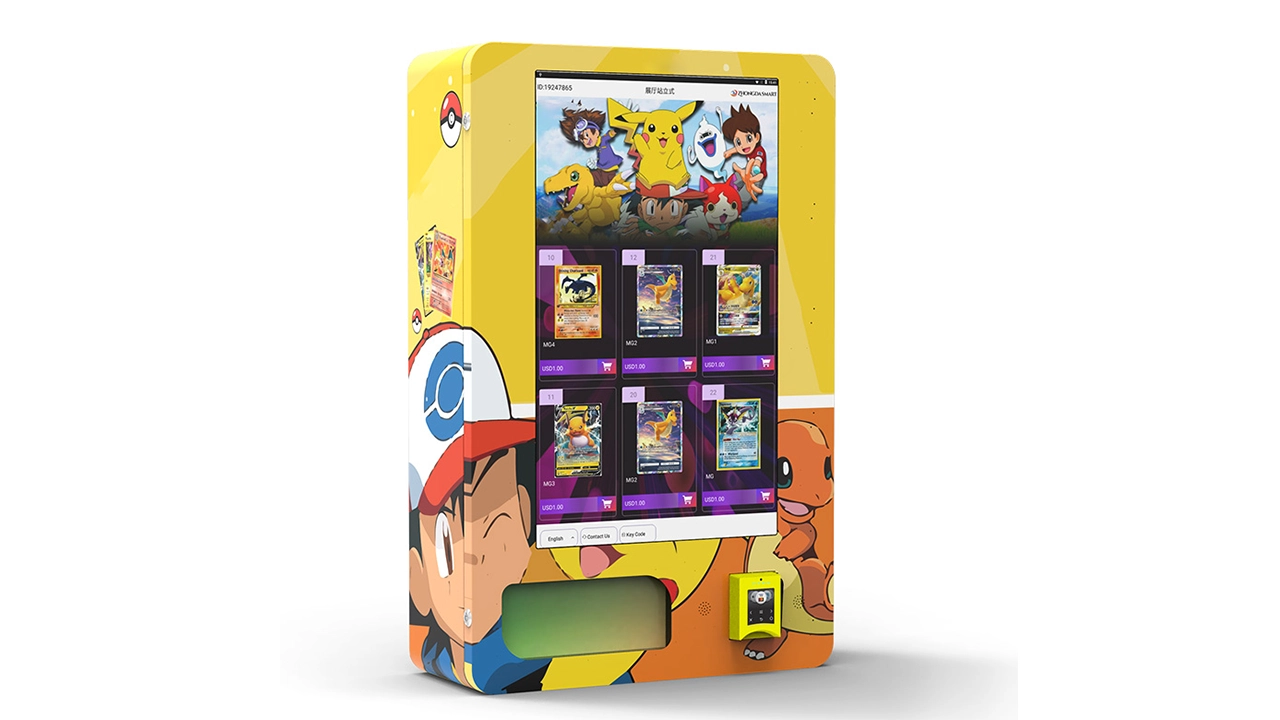
If you’re considering a smaller footprint, a wall-mounted card vending machine can be a smart option for tight spaces like game stores with limited floor area. These units typically hold fewer SKUs, but they can still generate strong revenue if placed near a counter or high-traffic register area.
Comparing Machine Types: A Quick Reference
| Machine Type | Initial Cost | Inventory Capacity | Best For | Maintenance Level |
|---|---|---|---|---|
| Full-size touchscreen | $8,000 – $15,000 | 100+ SKUs | High-traffic locations | Moderate |
| Wall-mounted | $4,000 – $7,000 | 30-50 SKUs | Small shops, cafes | Low |
| Used/refurbished | $2,500 – $5,000 | Varies | Testing a new market | High |
I’ve run all three types, and I can tell you that the full-size touchscreen machine is the workhorse. It has better visual appeal, bigger display, and more room for product variety. But if you’re just testing a market, a used machine or a wall-mounted unit might be a lower-risk entry point.
Location: The Single Biggest Factor in Profitability
You can have the best machine and the best inventory, but if it’s in the wrong location, it will fail. I’ve placed machines in what I thought were perfect spots — busy malls, popular game stores — only to watch them sit idle. The issue wasn’t the foot traffic; it was the type of foot traffic. A mall with lots of family shoppers may not have a large base of serious card collectors. A small comic shop with a loyal clientele might have fewer daily visitors but a much higher conversion rate.
Here are the questions I ask before signing a location agreement:
- Does this location already sell trading cards? If yes, that’s a good sign.
- Is there a local community of collectors — events, tournaments, leagues?
- What are the hours of operation? A machine outside a shop that closes at 6 PM will miss the evening crowd.
- Can the machine be seen easily, or is it hidden in a corner?
- What is the rental cost or commission structure?
I once placed a machine in a bowling alley because the owner offered me free rent. It seemed like a no-brainer, but the audience was families and casual players, not collectors. Sales were terrible, and I moved the machine after three months. The lesson: free rent doesn’t make up for the wrong audience.
How to Evaluate Foot Traffic and Sales Potential
Don’t rely on the location owner’s claims about foot traffic. Ask for actual numbers, or better yet, spend a few hours there yourself on different days of the week. I’ve found that a location with 200 to 400 people per day who are the right demographic can outperform a location with 2,000 people per day who are just passing through.
Also consider the average transaction value. A card machine needs to hit $8 to $12 per transaction to be profitable, so you want customers who are willing to spend that much on a single pack or box. If the location’s average customer spends $5 on a coffee, they might not be the right buyer for a $15 booster pack.
Inventory Management: The Part Nobody Talks About
Buying wholesale trading cards is only half the battle. The other half is managing inventory so you don’t have dead stock sitting in your machine for months. I track sell-through rates for every SKU and rotate out anything that hasn’t sold in 60 days. This means I’m constantly moving product between machines, marking down slow movers, and testing new sets.
One of the biggest mistakes I made early on was overstocking a set that was hyped but had no local demand. I bought 12 boxes of a niche sports card set because the distributor said it was “flying off shelves” nationally. In my location, it didn’t move. I ended up selling those boxes at cost just to free up space. That was a $1,500 lesson.
Now I follow a simple rule: if a product doesn’t sell within 30 days, it gets discounted or moved. This keeps the machine fresh and ensures that customers always see something new when they visit.
Data-Driven Restocking and Pricing
I use a spreadsheet to track every sale — product, price, date, and machine ID. This gives me a clear picture of what’s working and what isn’t. If a $10 blister pack sells well in one location but not another, I adjust the inventory accordingly. This kind of data-driven approach to card vending is what separates profitable operators from those who are just guessing.
Pricing is also dynamic. I don’t set a price and forget it. If a set becomes scarce, I raise the price. If it’s not selling, I lower it. The key is to stay competitive with local hobby shops. If you’re charging more than the shop down the street, customers will walk away.
Maintenance, Repairs, and the Reality of Machine Ownership
Every vending machine will break down eventually. The question is how quickly you can respond and how much it costs to fix. I’ve dealt with jammed dispensers, faulty card readers, and even a cracked touchscreen from a customer hitting the machine in frustration. You need to have a plan for vending machine repair before you buy your first unit, not after.
If you’re not handy with basic electronics, find a local technician who can service your machine. Expect to pay $75 to $150 per hour for repair services, with most visits costing $150 to $300 including parts. Some manufacturers offer extended warranties, and I recommend buying one if it’s reasonable — typically 10% to 15% of the machine cost.
Preventive maintenance is your best friend. Clean the machine every two weeks, check the dispensing mechanism, and test the payment system. A machine that looks dirty or malfunctioning will lose customer trust quickly.
Reducing Maintenance Costs Over Time
The best way to reduce maintenance costs is to buy a reliable machine from the start. I’ve had cheap machines that required monthly repairs, and I’ve had premium machines that ran for a year without a single issue. In the long run, the premium machine was cheaper.
Another tip: keep spare parts on hand. A $20 sensor or a $40 motor can save you a $150 service call if you can fix it yourself. I keep a small kit with common parts for each machine model I own.
Self-Operated vs. Leased vs. Revenue Share Models
There are three main ways to run a card vending operation: self-operated, leased from a company, or revenue share with a third party. Each has pros and cons, and the right choice depends on your capital, time, and risk tolerance.
Self-operated means you own the machine, buy the inventory, and keep all the revenue. This has the highest profit potential but also the most work. You’re responsible for everything — sourcing, maintenance, restocking, and finding locations.
Leasing means you rent a machine from a provider, often with a monthly fee. This lowers your upfront cost but also eats into your margin. You might pay $100 to $300 per month for a lease, and you still have to buy inventory and maintain the machine.
Revenue share is when a third party places their machine in your location and gives you a percentage of sales. This is common in locations like game stores, where the owner doesn’t want to manage the machine but wants a cut of the action. As an operator, you might give the location owner 10% to 20% of gross sales in exchange for the space.
Which Model Is Right for You?
If you’re new, I recommend starting with a self-operated machine in one or two locations. This gives you full control and helps you learn the business without the pressure of a lease agreement. Once you understand what works, you can scale up.
If you’re a location owner who wants to offer trading cards but doesn’t want to deal with the logistics, a self-service kiosk with a revenue share arrangement can be a low-effort way to add revenue. Just make sure you have a written agreement that covers maintenance, restocking, and termination terms.
Legal and Regulatory Considerations
Before you place a machine, check local regulations. Most areas don’t require a special license for vending machines, but some do. You’ll also need to collect sales tax on transactions, and you may need to register as a business with your state or municipality.
I’ve seen operators get fined for not having the proper permits, so don’t skip this step. The U.S. Small Business Administration has a useful guide on licensing requirements, and you can check with your local chamber of commerce for specific rules.
If you’re operating in the European Union, the rules are different. Eurostat provides data on retail and vending trends, and you’ll need to comply with VAT regulations in each country you operate in. It’s a more complex landscape, but still manageable if you do your homework.
Common Mistakes I See New Operators Make
I’ve been doing this long enough to spot the same errors again and again. Here are the most common ones:
- Buying too much inventory upfront — You don’t need 50 different products on day one. Start with 20 to 30 and expand.
- Ignoring the local market — What sells in one city might not sell in another. Do local research.
- Setting prices too high — You’re not the only card seller in town. If you’re more expensive than a hobby shop, you’ll lose.
- Neglecting the machine’s appearance — A dirty or poorly lit machine signals that it’s not worth the customer’s money.
- Not tracking sales data — If you don’t know what’s selling, you can’t make informed restocking decisions.
A Failure That Taught Me a Valuable Lesson
Early in my career, I placed a machine in a large electronics store. The foot traffic was huge, and the rent was reasonable. But I didn’t account for the fact that the store’s customers were there for gadgets, not trading cards. Sales were abysmal, and I lost money on the machine for six months before pulling it. The lesson was clear: foot traffic alone doesn’t mean anything. You need the right foot traffic, and that means understanding the local customer base.
Success Case: The Hobby Shop That Turned It Around
On the flip side, I once placed a machine in a small hobby shop that had a loyal group of Magic: The Gathering players. The shop owner was skeptical at first, but after the first month, the machine did $3,200 in sales with a 42% margin. The key was that the shop already had a community of collectors who trusted the store and were excited about the convenience of a vending machine. The shop owner now uses the machine as a way to sell products without having to manage inventory on the shelf.
The takeaway: look for locations that already have a card culture, not just high foot traffic.
How to Buy Wholesale Trading Cards Without Getting Burned
When you’re ready to buy wholesale, here’s my checklist:
- Verify the supplier’s reputation — Check forums, ask other operators, and look for any complaints about non-delivery.
- Ask for current allocation lists — If they can’t tell you what they have in stock, they probably don’t have it.
- Start small — Place a test order to see how they handle packaging and shipping.
- Understand the return policy — Cards are generally non-returnable, so make sure you’re comfortable with the risk.
- Compare prices across multiple suppliers — Don’t assume the first quote is the best.
If you’re buying equipment, consider working with a manufacturer that also offers inventory support. Trading card vending machine providers like Zhongda Smart can sometimes bundle initial inventory with the machine, which simplifies your first order. Just make sure you’re not paying a premium for that convenience.
Understanding Market Trends and Data
The trading card market has grown significantly in recent years. According to Statista, the global trading card market was valued at over $12 billion in 2023, with projections for continued growth. This is driven by nostalgia, sports, and the rise of digital content tied to physical cards. However, the market is also volatile, and trends can shift quickly. A set that is hot today might be dead in six months.
I also look at industry reports from IBISWorld to understand broader industry trends. They provide data on market size, growth rates, and key players, which helps me make informed decisions about which products to stock.
That said, public data only tells part of the story. My own sales data is the most valuable resource I have. I track what sells, what doesn’t, and how seasonal trends affect my machines. This combination of public data and personal experience is what keeps my routes profitable.
FAQ: Common Questions About Trading Card Vending Machines
Are trading card vending machines profitable?
They can be, but profitability depends heavily on location, inventory selection, and pricing. In my experience, a well-placed machine can generate $1,500 to $4,000 in monthly sales with gross margins of 30% to 50%. However, you need to account for rent, maintenance, and restocking costs. It’s not a get-rich-quick business, but it can be a solid income stream if managed properly.
How much does a trading card vending machine cost?
A new machine typically costs between $6,000 and $15,000, depending on size and features. Wall-mounted units are cheaper, around $4,000 to $7,000. Used machines can be found for $2,500 to $5,000, but they may require repairs. You should also budget $3,000 to $8,000 for initial inventory.
How long does it take to recoup the investment?
Most operators see a return on investment in 8 to 18 months, assuming the machine is in a good location and inventory is managed well. If you’re in a great location with low rent, you might recoup faster, but don’t count on it.
Should a beginner buy or lease a machine?
I recommend buying a machine if you have the capital and are committed to learning the business. Leasing reduces upfront costs but eats into your margins. For a beginner, a single used machine in a good location can be a low-risk way to test the waters.
Where is the best place to put a card vending machine?
Locations with an existing card culture are best — hobby shops, comic stores, gaming cafes, and entertainment venues. Look for places where people already buy trading cards, and where the average customer is willing to spend $10 or more on a single product.
What permits or licenses do I need?
Requirements vary by location. Most areas require a business license and sales tax registration. Some may require a vending machine permit. Check with your local government and the U.S. Small Business Administration for guidance.
How do I choose a reliable supplier?
Look for suppliers with a track record of on-time delivery, transparent pricing, and good communication. Start with a small order to test their reliability. Ask other operators for recommendations, and check online forums for reviews.
What should I do if the machine breaks down?
Have a plan before it happens. Find a local technician who can service your machine, and keep spare parts on hand. If your machine is under warranty, contact the manufacturer immediately. The longer the machine is down, the more revenue you lose.
How can I reduce restocking and maintenance costs?
Track your sales data to know which products sell fastest, and restock only those items. Use a route-based approach to service multiple machines efficiently. Buy reliable equipment and perform preventive maintenance to avoid costly repairs.
Final Thoughts from the Field
Trading card vending machines can be a profitable niche in the automated retail space, but they are not a passive income scheme. You have to understand the product, the market, and the equipment. I’ve made mistakes — I’ve bought too much inventory, placed machines in the wrong locations, and paid for repairs I could have avoided. But I’ve also built a network of machines that generate steady revenue month after month.
If you’re serious about this, start with one machine, learn the ropes, and scale up when you’re confident. The wholesale trading card market is dynamic, and there’s room for operators who are willing to put in the work. Just remember: the machine is only as good as the operator behind it.
As with any business investment, results vary based on location, market conditions, and operational execution. The figures shared here are based on my personal experience and public industry data, not guarantees of future performance.