If you’re serious about getting into the trading card vending machine space, the first question you’ll ask is: how much does a sports card vending machine cost? From what I’ve seen across a decade of operating automated retail in the U.S. and Europe, the honest answer is that a brand new, properly configured unit will run you anywhere from $8,500 to $18,000 depending on the size, screen setup, payment systems, and whether you buy from a manufacturer or a middleman. That price is just the machine, though. By the time you factor in shipping, taxes, a card inventory, and the inevitable repairs, your real starting investment lands closer to $15,000 to $25,000 for your first site. The sports card vending machine cost conversation rarely stops at the hardware, and anyone who tells you otherwise hasn’t actually run one.
What You’re Actually Paying For
Let’s break down what sits inside that price tag, because a lot of newcomers assume they’re buying a glorified metal box with a glass front. You’re not. You’re paying for a self-service kiosk that needs to handle card grading, inventory tracking, secure payment processing, and sometimes even climate control if you’re storing high-value wax inside.
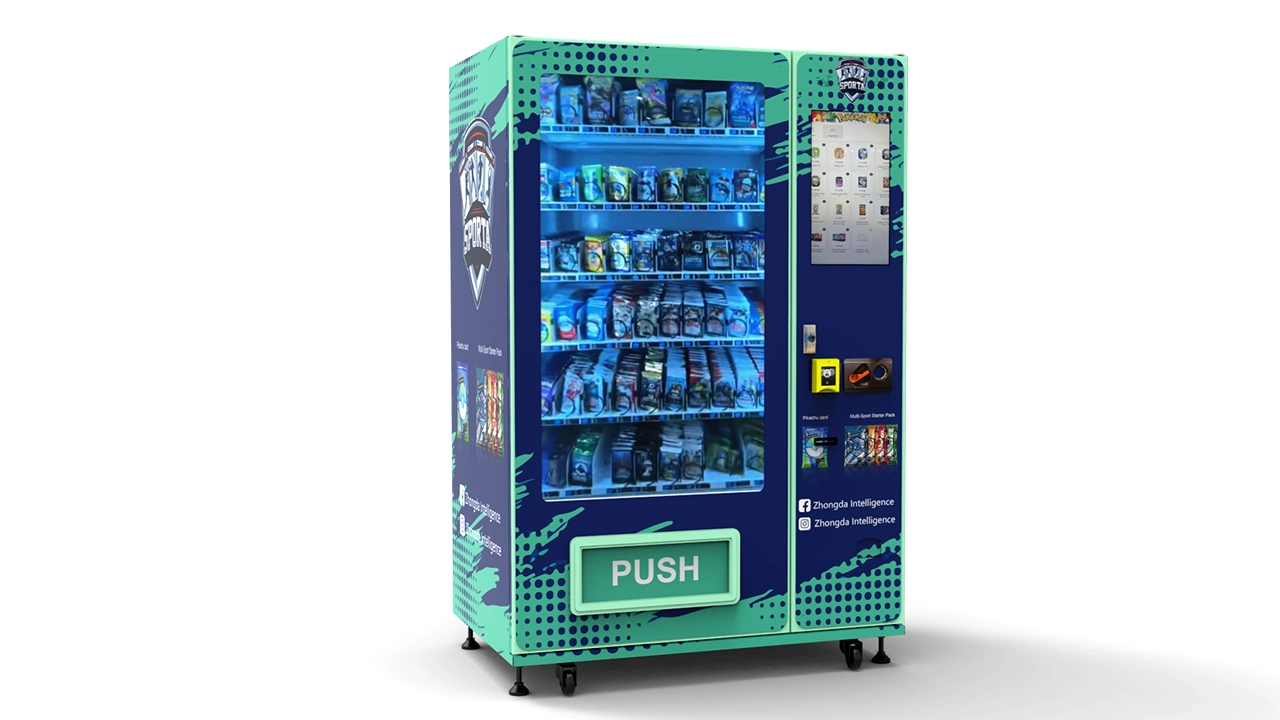
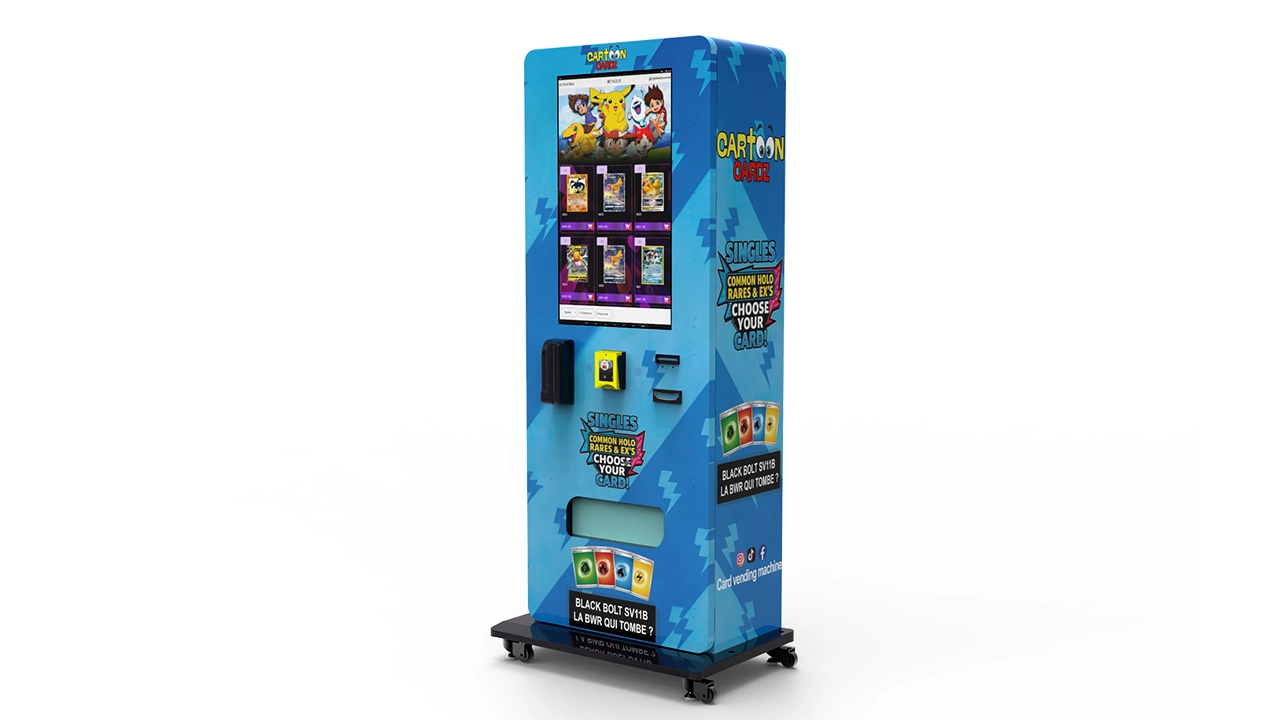
The base unit, the kind you’d put in a mall corridor or a card shop, typically comes with a 32-inch touchscreen, a card dispensing mechanism, and a basic inventory management system. That runs between $8,500 and $12,000 from a decent supplier. If you want the bigger 55-inch interactive display with a live product feed, a barcode scanner for trade-ins, or a custom cabinet to match your brand, you’re looking at $14,000 to $18,000 plus freight.
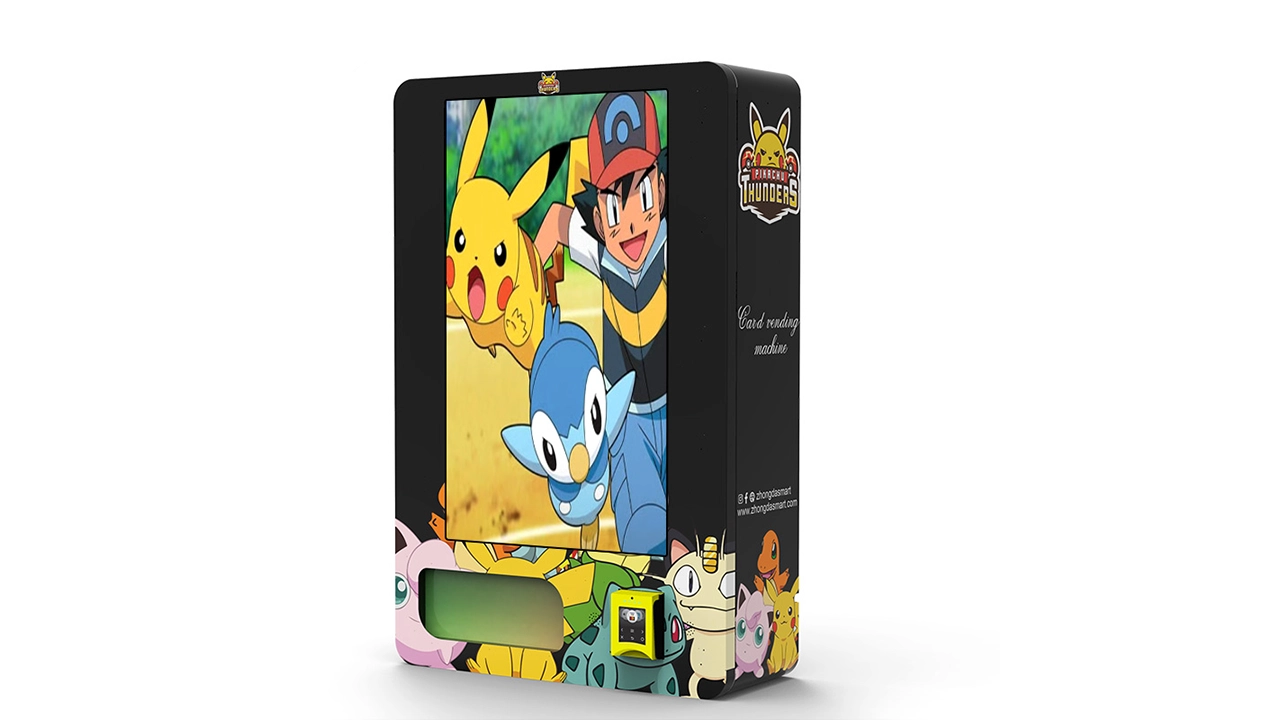
I’ve also seen smaller operators buy wall-mounted card vending machines for around $4,000 to $6,000, and honestly, those have their place. But if you’re planning to sell sealed boxes or thicker hobby boxes, the dispensing mechanism on those compact units will jam faster than you can say “Panini.” I’ve made that mistake, and I’ll get into it later.
Why the Sports Card Vending Machine Cost Varies So Much
One of the biggest misconceptions is that all card vending machines are the same. They’re not. The price gap between a $6,000 machine and a $16,000 machine isn’t just brand markup. It’s the difference between a hobby-grade unit and a commercial-grade piece of automated retail equipment.
Commercial units are built to run 24/7. They use industrial-grade motors, better sensors, and payment systems that can handle high-frequency transactions. The cheaper ones, the ones you see on Alibaba or from less established sellers, often use components that are closer to what you’d find in a home appliance. They work fine for a few months, and then you’re dealing with vending machine repair calls that eat into your margin.
I remember a colleague who bought two budget units for a mall in Ohio, thinking he’d saved $6,000. Within four months, one of them had a card jam that required a technician to fly in because the local repair guy wouldn’t touch it. That single repair cost him nearly $700, and he lost a week of sales. That’s the hidden cost of buying cheap.
New Machine vs. Used Machine Pricing
You’ll see used card vending machines listed for $3,000 to $7,000, and I’ll be straight with you: I don’t recommend them for someone starting out. The technology in this niche evolves fast. Payment systems get upgraded, card dispensing mechanisms get refined, and software gets more reliable. A two-year-old machine might already be running outdated firmware that doesn’t support newer card readers or contactless payments.
If you do go the used route, budget for an immediate inspection and a full service. That’s another $500 to $1,000. You’ll also want to check whether the previous operator was maintaining it properly. I’ve seen used machines with corroded wiring and worn-out card pushers that looked fine from the outside.
In my experience, the sports card vending machine cost is better viewed as a long-term investment in reliability rather than a one-time purchase. You’re better off paying $12,000 for a machine that runs consistently than $6,000 for one that gives you headaches every other week.
Real Costs Beyond the Machine
Here’s where the “how much does a sports card vending machine cost” question gets complicated. The machine is maybe 40% of your total startup cost. You also need to factor in:
- Shipping and rigging: $400 to $1,200 depending on distance and whether you need a lift gate.
- Sales tax and import duties: 5% to 15% depending on your state or country.
- Initial card inventory: This is the big one. A solid starting inventory of sealed boxes, hobby packs, and singles can easily run $5,000 to $15,000.
- Payment processing setup: Card readers and cashless systems often require a monthly fee or a percentage per transaction.
- Insurance: If you’re placing the machine in a public space, you’ll want liability coverage.
I’ve seen operators launch with $20,000 total and do fine, but I’ve also seen people try to start with $10,000 and run out of money in two months because they underestimated inventory costs. The card stock is what sells, not the machine itself. A beautiful kiosk with thin inventory is just a fancy display case.
Comparing Costs Across Machine Types
To give you a clearer picture, here’s a table based on what I’ve seen across different setups in the last few years. These are real ranges from actual deployments, not theoretical numbers.
| Machine Type | Initial Cost (Machine Only) | Typical Inventory Needed | Best Use Case | Monthly Maintenance Cost (Est.) |
|---|---|---|---|---|
| Wall-mounted compact unit | $4,000 – $6,500 | $3,000 – $6,000 | Small shops, barbershops, low-foot-traffic spots | $100 – $200 |
| Standard 32-inch touchscreen floor unit | $8,500 – $12,500 | $6,000 – $12,000 | Card shops, malls, hobby stores | $150 – $300 |
| Large 55-inch interactive unit with trade-in | $14,000 – $18,000 | $10,000 – $20,000 | High-traffic retail, card expos, entertainment venues | $250 – $400 |
Keep in mind that these maintenance estimates include software updates, cleaning, and the occasional part replacement. They don’t include the cost of a technician if something major breaks.
What I Learned From a Failed Deployment
About three years ago, I placed a standard floor unit in a small comic book store in a suburban strip mall. The owner was enthusiastic, the rent was cheap, and the foot traffic looked okay on paper. I thought I was being smart with my sports card vending machine cost by negotiating a revenue share instead of paying rent.
What I didn’t account for was the store’s actual customer base. Most of their regulars were older comic collectors who weren’t interested in sealed sports cards. The few who did come in for cards expected singles, not boxes. Within six weeks, I was restocking every ten days just to keep the machine looking full, but the sales didn’t justify the time.
That machine sat in that store for eight months before I moved it to a local card shop two miles away. The difference was night and day. The card shop already had a community of buyers, and the machine became a secondary point of sale rather than the main attraction. Monthly revenue tripled within a month of the move.
What I took away from that was simple: the cost of the machine is fixed, but the cost of a bad location is ongoing. You’ll bleed money slowly if you place a machine where the audience isn’t already buying cards.
How to Evaluate a Location Before You Spend
I don’t put a machine anywhere without checking a few basic things first. You don’t need a data science degree, but you do need to be honest about what you’re looking at.
First, I look for existing card culture. A store that already sells trading cards, a mall that hosts card shows, or a hobby shop with a dedicated sports section. That’s your baseline. If there’s no existing demand, you’re not creating it with a vending machine.
Second, I check foot traffic at different times of day. A location that’s busy at noon might be dead by seven. I’ve found that malls and entertainment venues with evening hours perform better for card vending than office buildings or daytime-only retail.
Third, I calculate the rent or revenue share as a percentage of projected sales. If the location wants 20% of gross revenue, that’s fine if you’re doing $2,000 a month. But if you’re only doing $800, that 20% becomes a real drag on your margins.
According to a recent Statista report on vending machines, the average vending machine generates between $50 and $100 per week in low-traffic locations, and $300 to $500 per week in high-traffic spots. Card vending machines tend to skew higher because the average transaction value is larger, but you still need the traffic to convert.
The Role of Payment Systems and Software
One thing that catches new operators off guard is the payment system. It’s not just about accepting credit cards anymore. You need to support Apple Pay, Google Pay, and sometimes local mobile payment apps depending on where you are. In Europe, that’s often a different set of processors than in the U.S.
Most commercial card vending machines come with a standard card reader, but you’ll want to confirm that it supports the latest EMV chip standards and contactless payments. The last thing you want is a customer with a $100 box in their hand who can’t pay because the reader is outdated.
Software is where the real difference lies. Some machines use proprietary software that locks you into a specific inventory system. Others, especially the newer ones from manufacturers like Zhongda Smart, offer more open systems that let you manage inventory remotely, adjust pricing, and track sales data from your phone. That kind of insight is invaluable when you’re deciding what to restock.
I’ve also learned that you need to budget for software updates. It’s not a huge cost, maybe $20 to $50 a month, but it’s recurring, and it keeps your machine compatible with new payment methods and security standards.
Gross Margin and Payback Period
Now let’s talk about the math that actually matters. The sports card vending machine cost only makes sense if you can project a realistic payback period.
In my experience, a well-placed card vending machine in a decent retail location can generate $1,500 to $3,500 in gross monthly revenue. The gross margin on cards, assuming you’re buying at wholesale and selling at retail, is typically 30% to 50%. That means your monthly gross profit is somewhere between $450 and $1,750.
On the expense side, you have rent or revenue share, payment processing fees, and maintenance. Together, those eat up maybe 15% to 25% of gross revenue depending on your deal. That leaves a net monthly profit of roughly $300 to $1,200.
Doing the math on a $12,000 machine, you’re looking at a payback period of 10 to 24 months. That’s assuming consistent sales and no major repairs. If you hit a slow season or a machine failure, it stretches out.
I’ve seen operators claim they paid off a machine in six months, but those are usually the ones who got a killer location with minimal rent and high foot traffic. That’s the exception, not the rule.
For reference, IBISWorld’s vending machine industry analysis shows that the average operating profit margin for vending machine operators is around 12% to 15%. Card vending can be more profitable per square foot, but you’re also carrying more inventory risk.
Buying vs. Leasing: What I Recommend
New operators often ask whether they should buy a machine outright or lease it. It depends on your cash position and your confidence in the location.
Leasing is attractive because it lowers your upfront cost, but the monthly payments eat into your margin. I’ve seen lease terms that effectively double the cost of the machine over three years. If you’re not sure about the location, leasing can be a safer way to test the waters, but you’re paying a premium for that safety.
Buying is better if you’ve done your homework on the location and you’re confident in the demand. It also gives you the flexibility to move the machine if the first spot doesn’t work out, which I’ve had to do more than once.
If you go with a revenue share deal with a host location, that’s a middle ground. You don’t pay rent, but you give up a percentage of sales. That works well when you’re just starting and you don’t want to commit to a fixed monthly cost.
I’ve done all three models, and I’ve found that buying works best for operators who plan to run multiple machines over time. Each machine gets cheaper in practice once you have a system for deployment and maintenance.
Maintenance and Repair: The Hidden Cost
Let me be blunt: every card vending machine will break eventually. The question is how fast you can get it fixed and how much it costs.
Basic maintenance, like cleaning the glass, checking the payment reader, and wiping down the touchscreen, is something you can do yourself. But when the dispensing mechanism jams or the software crashes, you’re going to need help.
I’ve found that local vending machine repair companies are often hesitant to work on card vending machines because they’re not familiar with the card dispensing mechanism. That means you might need to rely on the manufacturer’s support or a specialized technician, which can be expensive.
On average, I budget $50 to $100 per month per machine for maintenance and repairs. That covers the routine stuff and creates a buffer for the occasional service call. If you’re running a machine in a high-traffic area, expect to clean it more often and replace parts like card pushers or sensors more frequently.
One tip I’ll share from experience: keep spare parts on hand. A card pusher, a sensor, or a payment reader can cost $50 to $200, but having them ready means you can fix the machine yourself in 20 minutes instead of waiting a week for a technician.
How to Choose a Supplier Without Getting Burned
Supplier selection is where I see the most mistakes from new operators. It’s easy to get seduced by a low price, but the cheapest option is rarely the best value.
When I evaluate a supplier, I look for a few things. First, do they have a track record with card vending machines specifically, not just generic vending? Second, do they offer local support or a parts warranty? Third, what does their software look like? If the interface feels clunky, it’s probably going to be clunky in the field too.
I’ve had good experiences with manufacturers that have been around for a while and understand the automated retail space. Zhongda Smart is one of the names that comes up consistently in the card vending niche, and their machines have held up well in my deployments. They’re not the cheapest option, but their build quality and support have been solid.
I also recommend asking for references from other operators. A supplier should be able to connect you with someone who’s running their machines. If they can’t, that’s a red flag.
Before you wire any money, make sure you’ve seen the machine in person or at least had a live video walkthrough. I’ve heard too many stories about operators paying for machines that didn’t match the specs they were promised. In one case, a friend of mine received a machine with a smaller screen than what he ordered, and the supplier refused to make it right.
Restocking and Inventory Management
Your sports card vending machine cost doesn’t end with the purchase. You’re going to be restocking regularly, and that takes time, money, and a good sense of what’s selling.
In a decent location, I restock every 7 to 14 days. That means checking inventory levels, removing slow movers, and adding new product. Sealed boxes and hobby packs tend to sell faster than singles, but singles can be a great draw if you price them right.
I’ve learned to track sales data closely. The machines that report remotely are worth the extra investment because you can see what’s selling without driving to the site. That saves you from restocking too often or too late.
One mistake I made early on was overloading the machine with product I liked instead of product that was selling. I’d stock high-end boxes that I thought were cool, but the local market wanted mid-range products. It took me a few months to adjust my buying to match the data.
If you’re not tracking your inventory turnover, you’re flying blind. A machine that looks full might be full of dead stock. You want to aim for a sell-through rate of at least 60% to 70% per restock cycle.
Legal Considerations and Permits
Depending on where you’re operating, you might need a business license, a sales tax permit, or even a specific vending machine permit. In the U.S., the rules vary by state and municipality. Some cities require a separate permit for each machine, while others just need a general business license.
I’ve also had to deal with zoning issues. A card vending machine placed in a retail space is usually fine, but if you’re putting one in a lobby or a common area, the building management might have restrictions.
In Europe, the rules can be stricter, especially around data privacy and payment processing. If you’re operating in the EU, you’ll need to make sure your machine complies with GDPR if you’re collecting any customer data. That’s more relevant for machines with loyalty programs or customer accounts.
I won’t give you legal advice, but I’ll say this: don’t skip the permits. A single fine can wipe out months of profit. Check with your local chamber of commerce or business development office to understand what you need before you deploy.
Success Case: A Card Shop That Got It Right
Last year, I helped a card shop owner in Texas set up a large interactive unit in his store. He had an existing customer base, a strong social media presence, and a steady flow of people coming in for breaks and singles.
We placed the machine near the back of the store, close to the display cases where people already gathered. The machine had a 55-inch screen and a live feed of the inventory, which drew a lot of attention.
Within the first month, the machine was generating about $2,800 in gross sales. By the third month, it was at $3,500. The owner told me that the machine had become a “second register” that worked even when the store was closed, since he could run it 24/7 in a small vestibule area.
His payback period was around 11 months, which is on the faster end. But he had the advantage of an existing audience and a location that was already card-centric.
That’s the model I’d recommend for anyone starting out: find a location where the demand already exists, and let the machine amplify it.
Common Mistakes I See From New Operators
I’ve been doing this long enough to recognize the same mistakes repeating themselves. Here are the ones that cost the most money:
- Buying the cheapest machine: You save upfront, but you pay in repairs and downtime.
- Ignoring the location’s existing demand: A machine doesn’t create a market. It serves one.
- Overstocking expensive product: High-end boxes have lower turnover and tie up your cash.
- Skipping the remote monitoring software: You’ll waste time driving to check on a machine that’s fine.
- Not budgeting for maintenance: The first repair bill always surprises someone.
If you avoid those, you’re already ahead of half the people entering this space.
Is a Card Vending Machine Worth It?
If you’re asking whether the sports card vending machine cost is justified, the answer depends on your expectations. It’s not a get-rich-quick play. It’s a small business that requires attention, data analysis, and a willingness to move the machine if the first location doesn’t work.
For operators who treat it like a real business, it can be a solid source of passive-ish income. For people who think they can set it and forget it, it’s a money pit. I’ve seen both outcomes.
My advice is to start with one machine, learn the ins and outs, and only expand once you have a proven location. The cost of a single machine is manageable, but the cost of multiple mistakes isn’t.
If you want to dig deeper into machine specs, check out this breakdown of trading card vending machine configurations or this guide on wall-mounted card vending machines for smaller spaces. There’s also useful info on placement strategies that I wish I’d read before my first deployment.
For broader industry context, the IBISWorld vending machine operators report gives you a sense of the overall market, and the U.S. Small Business Administration has solid guidance on the legal side of setting up your operation.
At the end of the day, the sports card vending machine cost is what you make of it. The machine is a tool, not a business. The business is in the location, the inventory, and the way you manage both. Get those right, and the machine pays for itself. Get them wrong, and you’ll be the one telling cautionary tales at the next card show.
FAQ
Are card vending machines profitable?
They can be, but profitability depends heavily on location and inventory management. In my experience, a well-placed machine can generate $1,500 to $3,500 in gross monthly revenue with a 30% to 50% gross margin. That said, you’ll lose money if the location doesn’t have existing card buyers or if you don’t manage your inventory turnover carefully.
How much does a sports card vending machine cost?
A new commercial-grade machine typically costs between $8,500 and $18,000. When you add shipping, inventory, payment setup, and initial maintenance, your total startup cost lands around $15,000 to $25,000 for the first site. Used machines are cheaper, but they come with higher repair risk.
How long does it take to pay off a card vending machine?
Based on my deployments, the payback period is usually 10 to 24 months. It depends on your location, the quality of your inventory, and how consistently the machine sells. A high-traffic card shop can pay off faster, but a low-traffic spot will stretch that timeline significantly.
Should I buy or lease a card vending machine?
If you’re confident in your location, buying is better in the long run because you’re not paying monthly fees that eat into your margin. Leasing is a lower upfront risk, but you’ll pay more over time. I recommend buying once you’ve validated a location.
Where should I place a card vending machine?
Look for locations where card buying already happens: card shops, hobby stores, malls with card events, or entertainment venues with a younger crowd. The machine should amplify existing demand, not try to create it.
What permits do I need to operate a card vending machine?
In the U.S., you’ll typically need a business license and a sales tax permit. Some cities require a specific vending machine permit. In the EU, you’ll also need to consider GDPR compliance if you collect any customer data. Check local regulations before you deploy.
How do I choose a supplier for card vending machines?
Look for a supplier with a proven track record in card vending specifically, not just general vending. Ask for references, see the machine in person or via video, and confirm that they offer parts and support. I’ve had good results with Zhongda Smart, but always do your own due diligence.
What happens if my card vending machine breaks?
You’ll need to contact the manufacturer or a specialized technician. General vending repair companies often aren’t familiar with card dispensing mechanisms. I recommend keeping spare parts on hand and budgeting $50 to $100 per month for maintenance.
How can I reduce restocking and maintenance costs?
Use a machine with remote monitoring software so you only visit when you actually need to restock. Track sales data to avoid stocking slow movers. And keep basic spare parts on hand so you can handle minor repairs yourself without waiting for a technician.
Disclaimer: The figures in this article are based on my personal operating experience and publicly available industry data. They are estimates, not guarantees. Actual costs, revenue, and payback periods vary based on location, market conditions, inventory choices, and operational efficiency. Always conduct your own research and financial analysis before making a purchase decision.