If you are weighing a custom trading card vending machine against a standard model, the short answer is that customization only pays off when your location, foot traffic, and product mix demand it. I have spent over a decade placing automated retail equipment across the US and Europe, and I have seen operators sink serious money into a custom trading card vending machine that looked incredible but never turned a profit because the site simply did not have enough repeat buyers. At the same time, I have watched standard models outperform fancier units in high-traffic hobby shops because reliability and serviceability matter more than a flashy touchscreen. Before you spend anywhere from $6,000 to $25,000 on hardware, you need to think like a location manager, not a collector.
Why the Custom vs Standard Debate Actually Matters
Most operators assume the machine is the business. It is not. The location is the business, and the machine is just the point-of-sale system. A custom trading card vending machine can be a powerful differentiator in a competitive mall or a large-format retail store, but it also introduces more points of failure. I have seen operators order a fully customized unit with animated lighting, dual touchscreens, and custom shelving, only to discover that the local technician could not source replacement parts for six weeks. That downtime killed the operation.
Standard models, on the other hand, are built around proven components. They are easier to repair, cheaper to ship, and faster to deploy. If you are testing a new location or running a seasonal pop-up, a standard model is often the smarter first step. But if you are committing to a five-year lease in a prime shopping district, a custom trading card vending machine can justify its cost through higher engagement and brand presence.
The real question is not which machine is better in theory. It is which machine fits your specific business model, capital position, and site demographics. I have run both, and I can tell you that the decision comes down to a handful of factors: upfront cost, maintenance complexity, payment integration, and how much differentiation your location actually rewards.
What I Learned From a Custom Machine Failure
Early in my career, I placed a highly customized card vending machine in a mid-sized comic shop outside Austin. The owner loved the idea of a centerpiece unit with a 32-inch touchscreen, custom animations, and a glass front that displayed every product like a museum piece. We spent roughly $18,000 on the hardware and another $3,000 on shipping and installation. The first month was promising, with sales around $2,400. But by month three, sales dropped to $900, and the machine started having intermittent touchscreen calibration issues.
The manufacturer was overseas, and the local repair network had no experience with that specific controller board. We lost almost four weeks waiting for a replacement part. Meanwhile, a standard model from a different vendor, placed in a nearby card shop, was doing steady business with zero downtime. That experience taught me a lesson I still use every time I evaluate equipment: customization adds risk, and risk must be priced into your return expectations.
That failure was not because custom machines are inherently bad. It was because I underestimated the maintenance burden and overestimated the location's ability to sustain high-margin impulse sales. If you are considering a custom trading card vending machine, ask yourself whether you have a reliable service network and whether the location can generate enough repeat traffic to justify the premium.
Success Case: Standard Model in a Hobby Store
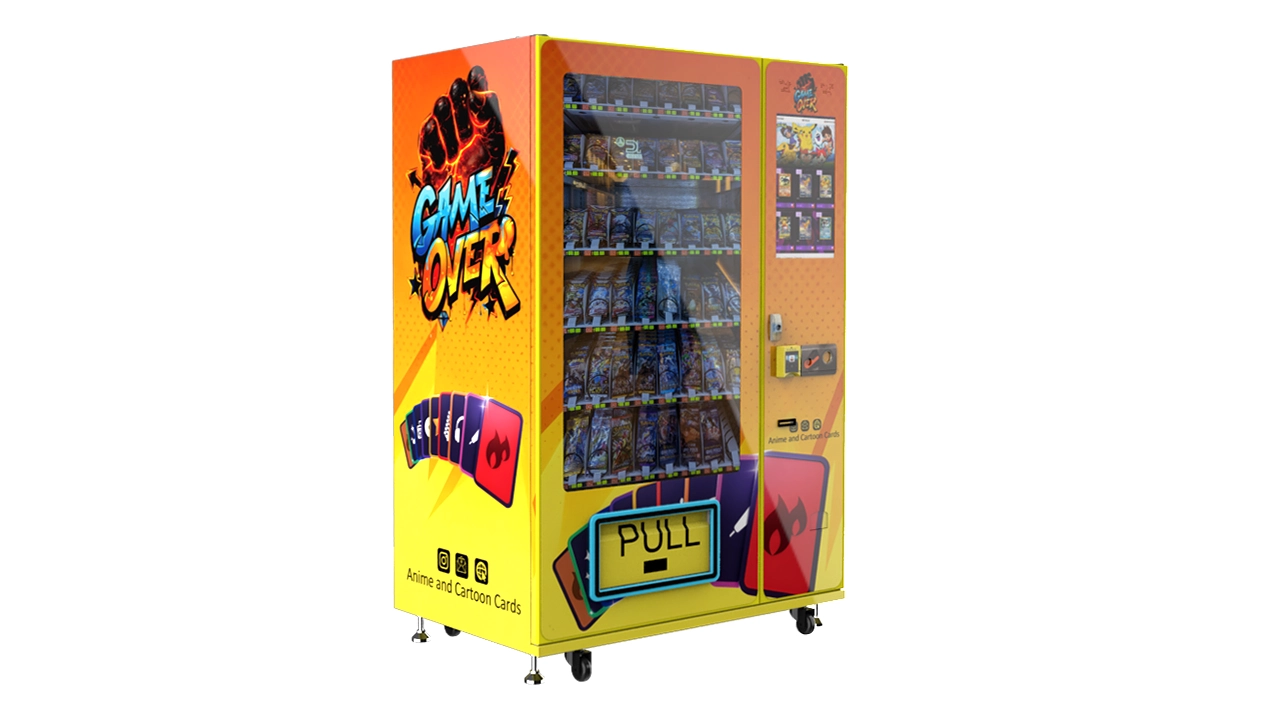
On the flip side, I placed a standard model in a hobby store in a mid-sized German city, and it became one of my best-performing units. The machine was a basic 32-inch touchscreen model with standard glass shelves and a reliable payment system. Nothing fancy. But the store was located near a university, and the owner ran weekly trading card tournaments that brought in a steady crowd of collectors aged 18 to 35.
That machine generated over $3,800 in a single month during the peak season, with an average transaction value of $18. The key was not the hardware. It was the location's community and the owner's willingness to rotate inventory based on what was selling. We updated the product mix every two weeks, and the standard machine handled it without any custom shelving or software tweaks.
That success reinforced my belief that a standard trading card vending machine is often the better choice for operators who are new to automated retail or who are placing equipment in locations without a proven track record. Once you have data on what sells, you can consider a custom trading card vending machine for your top-performing sites.
Cost Comparison: Custom vs Standard Models
Let me break down the numbers based on what I have seen across multiple deployments in North America and Europe. These are real figures from my own operations and from conversations with other operators, not official statistics. Your costs will vary depending on the vendor, shipping distance, and configuration.
| Cost Factor | Standard Model | Custom Trading Card Vending Machine |
|---|---|---|
| Base hardware cost | $6,000 – $12,000 | $14,000 – $25,000 |
| Shipping and installation | $400 – $900 | $1,200 – $3,000 |
| Payment system integration | $300 – $700 | $800 – $1,500 |
| Average monthly maintenance | $50 – $150 | $150 – $400 |
| Typical payback period | 8 – 18 months | 14 – 30 months |
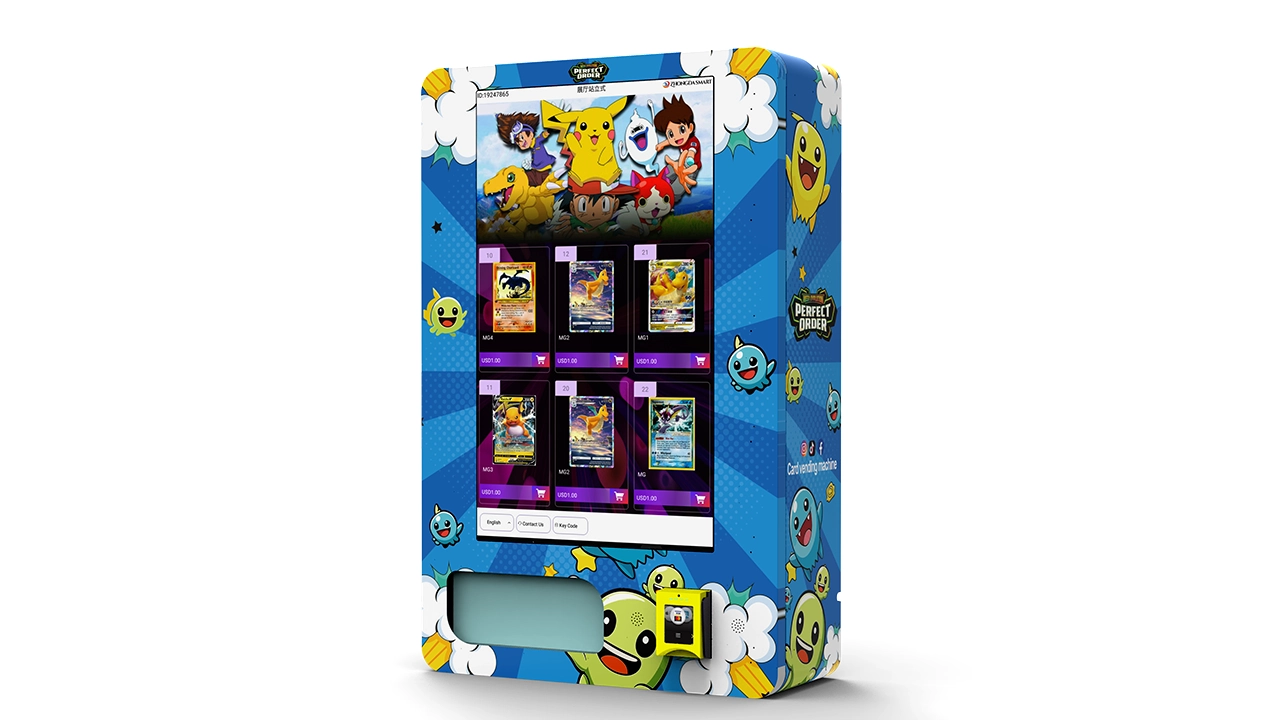
As you can see, the custom trading card vending machine costs roughly double upfront and carries higher ongoing maintenance. That is not necessarily a dealbreaker, but it means your gross margin must be significantly higher or your volume must justify the extra expense. In my experience, a standard model can hit payback in under a year if the location is strong, while a custom unit often takes closer to two years.
I also want to emphasize that these figures assume you are buying new equipment. The used market is another option, but I have seen too many operators buy a cheap used machine only to spend hundreds of dollars on repairs within the first few months. If you are considering a used custom trading card vending machine, budget for at least $1,000 in immediate maintenance and upgrades.
Location Evaluation: What Actually Drives Revenue
Location is the single biggest factor in whether your card vending machine makes money. I have a simple rule of thumb: if a location cannot generate at least 50 people passing by per hour during peak times, it is not worth placing a machine there. That is not a hard number from any study; it is based on my own experience across dozens of sites. High-traffic locations like malls, hobby stores, and college campuses can easily exceed that threshold, while smaller shops or office buildings often fall short.
When evaluating a site, I look at three things: foot traffic, dwell time, and repeat purchase potential. A custom trading card vending machine might attract attention in a high-traffic area, but if people are just walking past without stopping, you are not making sales. Dwell time matters because collectors want to browse, compare prices, and make a thoughtful purchase. That is why hobby stores and comic shops often outperform general retail locations.
I also consider the local competitive landscape. If there are already two card vending machines within a mile, your location is probably saturated. In that case, a custom trading card vending machine with a unique product mix might help you stand out, but it is still an uphill battle. I have walked away from several lucrative-looking locations because the competition was too dense.
One more thing: do not ignore the lease terms. Some malls and retail spaces require a minimum monthly rent plus a percentage of sales. That can eat into your margins significantly. I always calculate total occupancy cost before committing to a location, and I recommend you do the same.
Revenue Potential and Profit Margins
Let me give you a realistic picture of revenue potential. Based on my own operations, a well-placed card vending machine in a hobby store can generate between $1,500 and $4,000 per month, depending on the season and product mix. Gross margins on trading cards typically range from 30% to 50%, which means you might clear $500 to $2,000 per month before accounting for rent, maintenance, and restocking labor.
Those numbers are not guaranteed. They depend heavily on your ability to source products at wholesale prices and to rotate inventory based on sales data. I have seen operators who bought boxes at retail prices and then wondered why they were not making money. You need a reliable supplier relationship to maintain healthy margins.
A custom trading card vending machine can boost revenue in the right setting because it allows for more creative product displays and interactive features. But the extra cost means your break-even point is higher. I have seen custom units that generated $5,000 per month in a premium location, but I have also seen them struggle to hit $1,500 in a mediocre one. The machine amplifies the quality of the location; it does not replace it.
One data point worth mentioning: according to IBISWorld, the vending machine operator industry in the US generates approximately $8 billion in annual revenue, with steady growth driven by cashless payments and specialized machines. That aligns with what I see in the field, but it also tells you that the market is competitive. You cannot just place a machine and expect it to print money.
Payment Systems and the Cashless Shift
If your machine does not accept cards and mobile payments, you are leaving money on the table. I learned this the hard way when I placed a machine with only a coin slot in a shopping center where most customers did not carry cash. Sales were dismal until I upgraded the payment system to accept credit cards and digital wallets. Within a month, revenue doubled.
For a custom trading card vending machine, payment integration is even more critical because the price points are often higher. A collector might be willing to spend $50 on a booster box, but they are not going to carry that much cash. You need a payment system that supports contactless, chip, and mobile payments, and ideally one that can process transactions quickly to avoid long queues.
I also recommend using a payment system that provides remote monitoring and sales data. That allows you to see which products are selling in real time and adjust your inventory without physically visiting the machine. This is especially important if you are managing multiple units across different locations.
Maintenance and Repair Considerations
Maintenance is the hidden cost that catches many new operators off guard. A standard model with common components can be repaired by any local vending machine technician, and parts are usually available within a few days. A custom trading card vending machine, by contrast, often requires specialized knowledge and proprietary parts, which can lead to longer downtime and higher service fees.
I have a simple policy: before I buy any machine, I ask the manufacturer for a list of common failure points and the average lead time for replacement parts. If the lead time is more than two weeks, I look for another vendor. I also check whether there is a local service network that can handle repairs without shipping the machine back to the factory.
Zhongda Smart is one manufacturer I have worked with that offers a reasonable balance between customization and serviceability. Their machines use widely available components, and they provide documentation that local technicians can follow. I am not saying they are the only option, but they are worth considering if you want a custom trading card vending machine without turning maintenance into a nightmare.
You should also budget for preventive maintenance. Clean the glass, check the card reader, and test the dispensing mechanism at least once a month. Small issues become big problems if you ignore them, and a machine that is out of service for a week can lose hundreds of dollars in sales.
Restocking Efficiency and Inventory Management
Restocking is where most operators lose money, not because the products are expensive, but because the labor adds up. I have seen operators spend three hours restocking a single machine because they had no system for tracking inventory. That is three hours of labor that could have been spent on another location or on sourcing better deals.
The key is to build a restocking schedule based on sales velocity. If a product sells out in three days, you need to visit more frequently or increase the capacity for that item. If something has not sold in two weeks, it is probably not worth the shelf space. I use a simple spreadsheet to track every product, its cost, selling price, and days to sell through. That data tells me exactly what to restock and when.
A custom trading card vending machine with adjustable shelving can help here because it allows you to configure slots for different product sizes. But even a standard model can work well if you are disciplined about your inventory management. The machine is just a tool; your operational discipline is what makes it profitable.
Regulatory and Compliance Considerations
Before you place any machine, you need to understand the local regulations. In the US, the requirements vary by state and city. Some jurisdictions require a vending machine permit, while others have specific rules about food safety if you sell anything edible. Since you are selling trading cards, food safety is less of a concern, but you still need to check for sales tax requirements and business licensing.
In the European Union, the rules are different. The EU has harmonized standards for vending machines, but local municipalities may have additional requirements. For example, some cities require machines to be accessible to people with disabilities, which might affect the height and placement of your machine. I always recommend consulting with a local business advisor or the chamber of commerce before signing a lease.
The U.S. Small Business Administration provides useful resources on licensing and permits, and I have used their website multiple times to understand the requirements in different states. It is not the most exciting reading, but it can save you from costly fines or forced removal of your machine.
Self-Operation vs Leasing vs Partnership Models
You have three main ways to run a card vending machine: self-operation, leasing the machine to a location, or entering a revenue-sharing partnership. Each model has its pros and cons, and the right choice depends on your capital and risk tolerance.
Self-operation gives you full control over product selection, pricing, and maintenance, but it also means you bear all the risk. If the location underperforms, you lose money on both the machine and the inventory. I prefer self-operation when I have a proven location or when I am testing a new market with a low-cost standard model.
Leasing the machine to a business owner is a lower-risk option. You charge a monthly fee, and the location owner handles restocking and basic maintenance. The downside is that you have less control over the product mix, and the owner might not be as diligent about keeping the machine clean and stocked. I have done this with a few locations, and it works best when the owner is genuinely interested in selling cards.
Revenue sharing is a middle ground. You provide the machine and handle maintenance, while the location provides the space and foot traffic. You split the revenue, usually 60/40 or 70/30 in your favor. This model aligns incentives, but it requires clear contracts and regular communication. I have seen partnerships fall apart over vague agreements, so I always put everything in writing.
Common Mistakes New Operators Make
I have made my share of mistakes, and I have watched others make the same ones. The most common error is buying a machine before securing a location. You might find a great deal on a custom trading card vending machine, but if you do not have a place to put it, you are just storing expensive equipment. Always secure the location first, then buy the machine.
The second mistake is underestimating the importance of product sourcing. You need a reliable supplier who can provide cards at wholesale prices and who can deliver quickly when you need to restock. If you are buying at retail prices from local shops, your margins will be too thin to cover your costs.
The third mistake is ignoring the data. I have seen operators keep the same product mix for months even when the sales data clearly shows that certain items are not moving. You need to be willing to rotate products based on what is selling, not on what you personally like.
Finally, do not overestimate the machine's ability to drive traffic on its own. A custom trading card vending machine might attract attention, but it will not create demand where none exists. The location needs to have an existing customer base that is interested in trading cards.
Choosing Between New and Used Equipment
The used market for card vending machines is growing, and you can find some good deals if you are patient. However, I have seen too many operators buy a used machine that looks fine on the outside but has worn-out components on the inside. The payment system might be outdated, the motors might be sluggish, or the controller board might be obsolete.
If you are considering a used custom trading card vending machine, I recommend getting a professional inspection before you commit. Ask for maintenance records and test the machine thoroughly, including the payment system and all dispensing mechanisms. Budget for at least $500 in immediate repairs, even if the machine appears to be in good condition.
In my experience, a new standard model is often a better investment than a used custom machine, especially for your first deployment. The warranty and manufacturer support give you peace of mind, and you can learn the operational side of the business without dealing with unexpected breakdowns.
Vendor Selection Criteria
Choosing the right vendor is just as important as choosing the right machine. I have worked with manufacturers who were excellent at building machines but terrible at after-sales support, and I have worked with smaller vendors who offered exceptional service despite a limited product range. The ideal vendor is one who can provide documentation, spare parts, and technical support in a timely manner.
When evaluating a vendor, I ask for references from other operators in my region. I also ask about their average response time for support tickets and their policy on defective parts. If a vendor is vague about these details, I move on. Zhongda Smart has been transparent about their support processes, which is why I have recommended them to other operators who want a custom trading card vending machine without the usual headaches.
I also consider the vendor's track record with payment system integration. Some manufacturers use proprietary payment interfaces that are difficult to upgrade, while others support standard protocols that work with any major payment processor. The latter is always preferable because it gives you flexibility to change payment providers if needed.
Data-Driven Product Selection and Rotation
Your product mix is the lifeblood of your operation. I have found that a mix of booster packs, single cards, and sealed boxes tends to perform best, but the exact ratio depends on your location's demographics. A store near a university might sell more single cards to budget-conscious students, while a store in an affluent neighborhood might see more sealed box sales.
I use sales data to guide my decisions. If a particular product has not sold in 14 days, I discount it or replace it with something else. If a product sells out in under a week, I increase its capacity and consider adding related items. This iterative approach has helped me maximize revenue across all my machines, whether they are standard models or a custom trading card vending machine.
I also pay attention to seasonal trends. Trading card sales often spike during the holiday season and around major tournament events. I plan my inventory purchases accordingly, stocking up on high-demand products before peak periods to avoid stockouts.
Security and Theft Prevention
Vending machines are targets for theft, and card vending machines are no exception because the products are small and valuable. I have had machines broken into, and I have seen others lose significant revenue to theft. The best defense is a combination of physical security and remote monitoring.
Most modern machines come with locking mechanisms and tamper alarms, but I also recommend installing a security camera near the machine if the location allows it. Some operators use GPS trackers on their machines to recover stolen units, but that is probably overkill for most card vending operations.
Payment fraud is another concern. Contactless payments are convenient, but they can also be exploited if the payment terminal is compromised. I always use payment systems that are EMV-compliant and have end-to-end encryption. This reduces the risk of card skimming and other fraud.
Scaling Your Operation
Once you have one machine running profitably, the temptation is to scale quickly. I understand that feeling, but I have seen too many operators expand too fast and then struggle to manage multiple locations. The key to scaling is having a repeatable process for site selection, installation, and maintenance.
I recommend running your first machine for at least six months before adding a second. That gives you time to learn the operational nuances and to build relationships with suppliers and technicians. Once you have a proven playbook, you can replicate it across additional locations.
When scaling, consider whether you want to standardize on one machine type or diversify. Some operators use a mix of standard models and a custom trading card vending machine for premium locations. That approach can work well if you have the resources to manage the added complexity.
Final Thoughts and Honest Advice
I have been in the vending business for over a decade, and I can tell you that there is no single right answer when it comes to choosing between a custom trading card vending machine and a standard model. The right choice depends on your location, your budget, and your willingness to handle maintenance and inventory management.
If you are new to the industry, start with a standard model in a proven location. Learn the operational side of the business, build your supplier relationships, and only then consider upgrading to a custom unit for your best-performing sites. A custom trading card vending machine can be a great asset, but it is not a shortcut to profitability.
Remember that the vending machine business is a margin game. Every dollar you spend on hardware, rent, and labor must be justified by sales. Be honest with yourself about the numbers, and do not let the excitement of a shiny machine cloud your judgment.
I also want to remind you that the figures I have shared come from my own experience and should not be treated as guaranteed outcomes. According to Statista, the global vending machine market is expected to grow steadily, which suggests there is opportunity in this space, but individual results vary widely based on location and execution.
If you take anything from this article, let it be this: the machine is just a tool. Your success depends on your ability to choose the right location, manage your inventory, and keep the machine running. Whether you choose a standard model or a custom trading card vending machine, the fundamentals are the same.
Frequently Asked Questions
Are card vending machines profitable?
Card vending machines can be profitable if placed in the right location with a solid product mix. In my experience, a well-placed machine can generate $1,500 to $4,000 per month in revenue, with gross margins between 30% and 50%. However, profitability depends on foot traffic, rent, maintenance costs, and your ability to source products at wholesale prices. It is not a passive income scheme; it requires active management.
How much does a card vending machine cost?
A standard card vending machine typically costs between $6,000 and $12,000, while a custom trading card vending machine can range from $14,000 to $25,000 or more. Shipping, installation, and payment system integration add another $1,000 to $4,500 depending on the configuration. Used machines are cheaper but come with higher maintenance risk.
How long does it take to recoup the investment?
Based on my experience, a standard model in a good location can pay back its investment in 8 to 18 months. A custom trading card vending machine usually takes longer, often 14 to 30 months, because the upfront cost is higher. Payback periods vary significantly based on location, product margins, and operational efficiency.
Should a beginner buy or lease a card vending machine?
For most beginners, leasing a machine or entering a revenue-sharing partnership is a lower-risk way to learn the business. Buying a machine makes sense if you have a proven location and the capital to absorb potential losses. I generally recommend starting with a standard model and a solid location before committing to a custom unit.
Where is the best place to put a card vending machine?
The best locations are hobby stores, comic shops, gaming stores, and college campuses with high foot traffic and a customer base interested in trading cards. I look for locations with at least 50 people passing by per hour and a community that supports repeat purchases. Avoid locations with existing card vending machines nearby.
What permits and licenses do I need?
Requirements vary by city and state. In the US, you typically need a business license and possibly a vending machine permit. In the EU, local municipalities may have additional requirements. I recommend checking with the U.S. Small Business Administration or your local chamber of commerce for specific guidance.
How do I choose a reliable vendor?
Look for a vendor with a proven track record, transparent support processes, and readily available spare parts. Ask for references from other operators and inquire about response times for technical support. I have worked with Zhongda Smart and found them reliable, but you should always do your own due diligence.
What should I do if the machine breaks down?
Start by checking the manufacturer's troubleshooting guide and contacting their support team. If the issue is mechanical, you may need a local technician. I recommend having a backup plan for common failures, such as a spare payment terminal or a list of local repair services. Regular preventive maintenance can reduce the likelihood of breakdowns.
How can I reduce restocking and maintenance costs?
Use sales data to optimize your product mix and reduce the frequency of restocking visits. Schedule maintenance checks monthly and address small issues before they become major problems. Investing in a machine with remote monitoring can also help you identify issues early and reduce unnecessary service calls.