If you’re looking into placing a trading card vending machine, the first question isn’t what machine to buy—it’s where you’ll put it. I’ve spent over a decade in the automated retail space, and I’ve seen solid operators lose money simply because they fell in love with a machine before they studied the foot traffic. The best locations for sports card vending machines share a few non-negotiable traits: high dwell time, a demographic that actually buys cards, and a host that won’t treat your equipment like a storage closet. In this guide, I’ll walk you through the real-world site selection process, what to measure before you sign anything, and where I’ve seen machines pull in steady monthly revenue versus where they just collect dust.
Why Location Beats Equipment Every Time
I’ve watched operators buy the most expensive, feature-packed machine on the market and then park it in a laundromat with zero card-buying traffic. The machine didn’t fail—the placement did. After a decade of deploying self-service kiosks across malls, card shops, and grocery stores, I can tell you that the unit itself is maybe 20% of the success equation. The other 80% is the site, the lease terms, and your ability to restock before the glass looks empty.
When I evaluate a potential spot, I don’t just look at foot traffic numbers. I look at what I call “qualified foot traffic.” A busy supermarket might see 2,000 people a day, but how many of them are actively collecting Pokémon or sports cards? The answer is usually very few. That’s why I’ve had better results placing machines inside hobby stores and game shops than in high-traffic general retail locations. The people who walk into a hobby shop are already pre-sold on the category.
That said, I’ve also had success in unexpected places. One of my best-performing machines sits in a bowling alley near a college campus. The average age skews young, there’s plenty of downtime between games, and the impulse buy rate is high. The lesson isn’t that bowling alleys are great—it’s that you need to match the location to the product and the buyer.
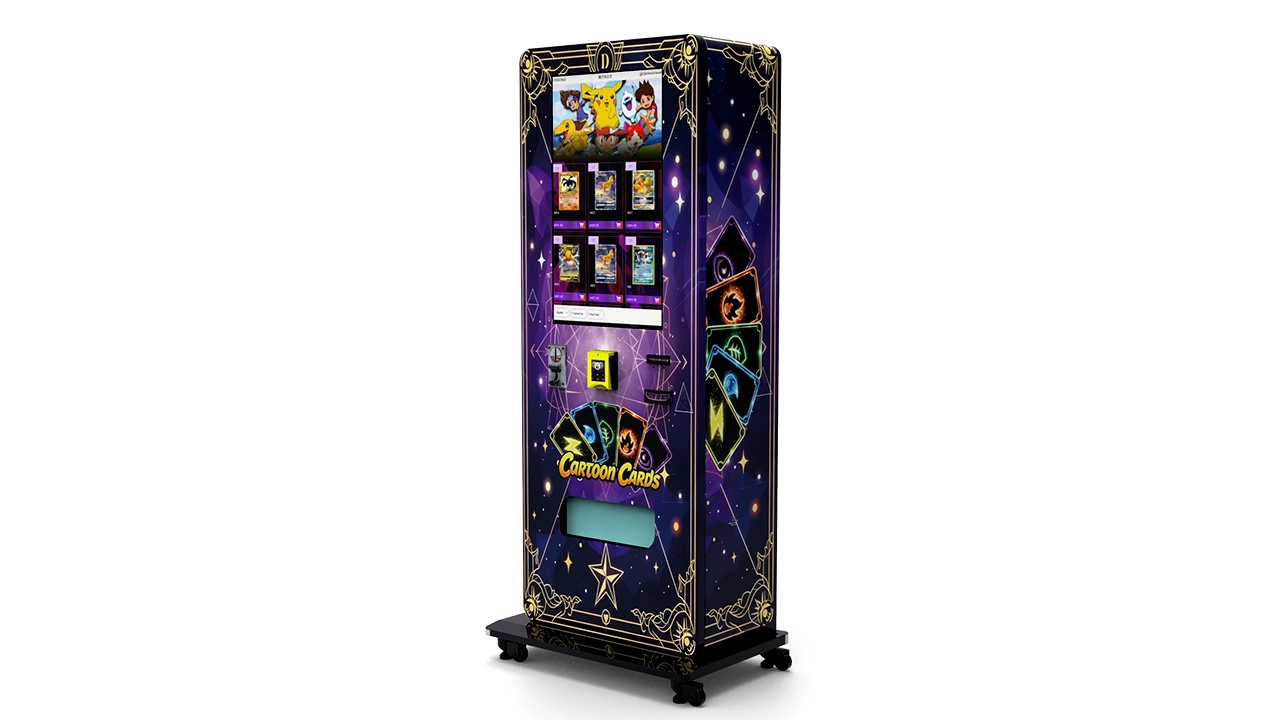
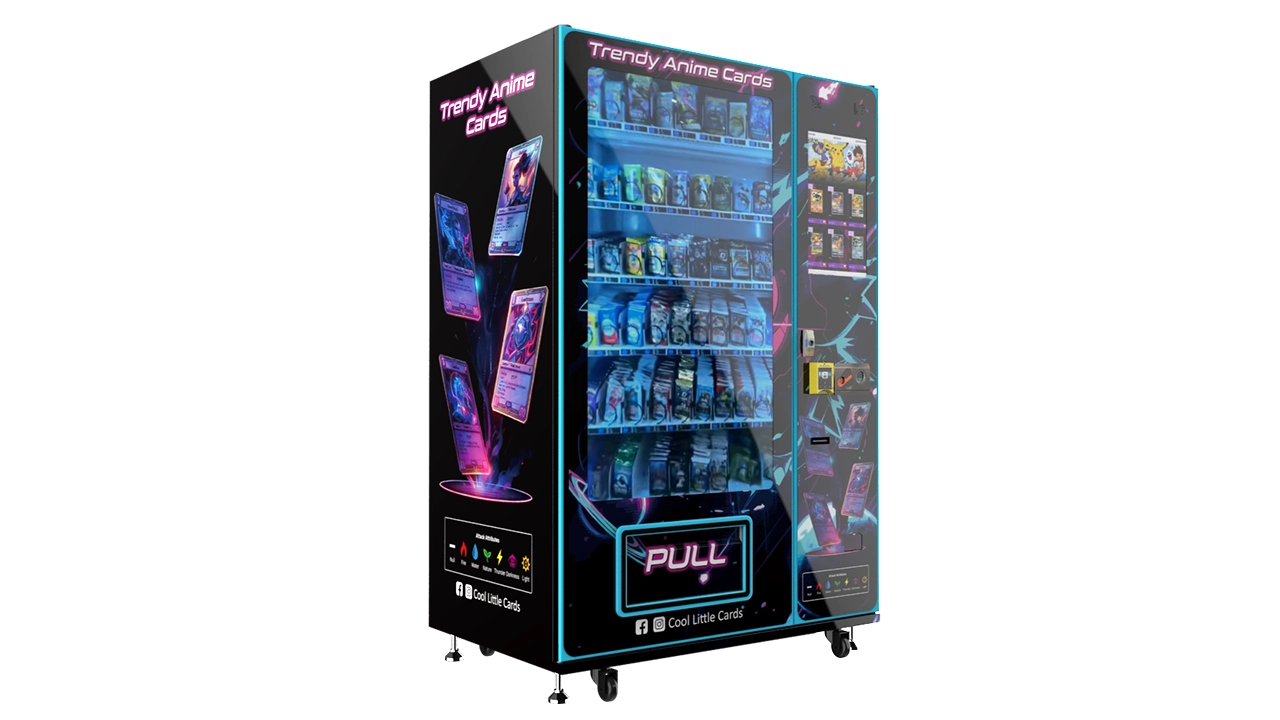
Before you even start scouting, check out this overview of trading card vending machines to understand what you’re actually placing. The machine type matters less than the site, but you still need to know what you’re working with.
What I Measure Before Signing a Lease
Most beginners ask me how much rent they should pay. That’s the wrong question. The right question is: what’s the revenue potential per square foot per month? I’ve paid $400 a month for a spot that generated $3,000 in sales, and I’ve turned down a $150 spot that would have generated maybe $300. The absolute rent number is meaningless without a revenue projection.
Here’s my standard evaluation checklist. It’s not scientific, but it’s proven across dozens of deployments:
- Dwell time: How long does the average customer stay? A place where people wait 10–20 minutes (car washes, laundromats, DMV waiting rooms) outperforms a place where people rush in and out.
- Demographic match: I want to see a mix of ages 8–35, with a visible presence of kids and young adults. If I don’t see kids or teenagers in the first hour of observation, I walk.
- Existing card culture: Is there a local card shop nearby? Is the store already selling trading cards at the counter? If yes, that’s a strong signal.
- Host attitude: The manager or owner needs to be genuinely interested, not just looking for extra rent. A hostile host will sabotage you by moving your machine, blocking it, or failing to mention it to customers.
- Power and internet: A standard 15-amp outlet is fine, but if you want cashless payments and remote monitoring, you need reliable Wi-Fi or cellular signal. I’ve lost a week of sales because a basement location had zero signal.
I also spend at least two hours on site—one hour on a weekday, one on a weekend. If the weekend traffic looks identical to the weekday traffic, that’s a red flag. You want a location with a weekend spike, because that’s when collectors and kids come out.
The Cost Reality: What You’re Actually Spending
Let’s talk money, because I’ve seen too many people jump in with unrealistic expectations. A new, decent-quality trading card vending machine will run you between $6,000 and $15,000 depending on screen size, card dispensing mechanism, and payment system. The higher-end units with 32-inch touchscreens and custom software can push past $20,000. I’ve also seen cheap imports fail within six months, so don’t treat this as a place to save money.
Here’s a rough breakdown of what I tell new operators to budget for their first deployment:
| Expense Item | Low-End Estimate | High-End Estimate | Notes From My Experience |
|---|---|---|---|
| Machine purchase | $6,000 | $15,000 | Touchscreen and card dispensing add cost |
| Shipping and installation | $300 | $800 | Freight costs vary wildly by region |
| Initial card inventory | $1,500 | $4,000 | You need depth, not just a few packs |
| Site lease (first month + deposit) | $200 | $800 | Hobby shops may take a percentage instead |
| Payment processing setup | $0 | $200 | Some processors charge a gateway fee |
| Miscellaneous (signage, locks, tools) | $100 | $300 | Don’t skip a good padlock |
So realistically, your first machine placement will cost between $8,000 and $20,000 before you make your first sale. That’s not a small number, but it’s manageable if you have a clear plan. According to data from Statista’s vending machine market overview, the global vending machine market has been growing steadily, but the trading card niche is still young enough that margins are attractive if you price correctly.
I also want to be honest about revenue. A well-placed machine in a hobby shop or mall can gross $1,500 to $4,000 per month. A mediocre location might gross $400. The difference isn’t luck—it’s the site. I’ve had a machine in a card shop do $4,200 in a month during a Pokémon set release, and I’ve had the same model in a gym do $180. Same machine, same inventory, completely different results.
Real Failure: The Grocery Store That Killed My Momentum
Early in my career, I was convinced that high-traffic grocery stores were the future of automated retail. I signed a lease at a mid-sized supermarket in a suburban area. The foot traffic was impressive—maybe 1,500 people a day. The rent was reasonable. The store manager was friendly. On paper, it was a perfect location for sports card vending machines.
It failed. Miserably.
The problem was simple: the average grocery shopper wasn’t thinking about cards. They were thinking about dinner, school pick-up, and errands. The dwell time was low, the impulse buy rate was almost zero, and the few kids who did stop by couldn’t reach the touchscreen because I’d placed it too high. I lost about $1,200 in inventory and six months of my time before I pulled the machine.
What did I learn? Traffic volume is not the same as traffic quality. A grocery store is a mission-driven environment. People go in with a list, they execute, and they leave. That’s the opposite of the browsing behavior that drives card sales. I now tell every new operator to avoid general retail unless there’s a specific reason to believe the demographic is right.
The Success That Changed My Mind: Bowling Alley Placement
After the grocery store disaster, I became more disciplined. I started tracking what I called “engagement minutes”—the time a potential customer spends looking at the machine, not just walking past it. That’s when I tested a bowling alley near a college campus.
The owner was skeptical but gave me a corner spot near the arcade area. The machine had a 32-inch touchscreen model, which made a big difference. Kids and young adults would walk over, touch the screen, and browse even if they didn’t buy. The engagement time averaged four to six minutes, which is massive for a vending machine.
Within the first month, that machine grossed $2,800. The second month, it hit $3,300. The bowling alley gets a steady stream of birthday parties, league nights, and casual visitors. The key insight was that people there had time to kill—and they were already in a spending mood. That placement taught me that entertainment venues, not grocery stores, are the hidden gems for this type of automated retail.
If you’re considering a smaller footprint, wall-mounted card vending machines can fit into tighter spaces like game stores or barber shops, but they typically hold less inventory and need more frequent restocking.
Comparing Location Types: What I’ve Seen Work
Over the years, I’ve tested more location categories than I can count. Here’s a practical comparison based on my own operating data, not industry hype:
| Location Type | Typical Monthly Gross | Dwell Time | Risk Level | My Verdict |
|---|---|---|---|---|
| Hobby / card shop | $2,500 – $4,500 | High | Low | Best overall if you can get in |
| Bowling alley / arcade | $2,000 – $3,500 | High | Medium | Underrated, especially with touchscreens |
| Mall kiosk area | $1,500 – $3,000 | Medium | Medium | Works if foot traffic skews young |
| Comic / game store | $1,800 – $3,200 | High | Low | Strong niche play |
| Grocery store | $300 – $800 | Low | High | Avoid unless you have local data |
| Barbershop / salon | $400 – $1,000 | Medium | Medium | Only if the owner actively promotes it |
That table reflects my personal experience, but your results will vary based on your city, the local collecting culture, and how often you restock. The point is to think in terms of categories, not just individual locations. A great spot in a weak category is still a weak spot.
Lease Negotiation: What Most Operators Get Wrong
When you approach a host, don’t lead with the rent offer. Lead with the value proposition. I’ve had far more success offering a revenue share or a small commission on sales rather than a flat monthly fee. Hosts are more motivated when they feel like they’re earning a cut of the action.
My standard offer is either a flat $50–$150 per month or a 10–15% commission on gross sales, whichever is higher. Most hosts prefer the commission because it feels like a partnership. I’ve also done hybrid deals: a small base rent plus a lower commission. The key is to keep the host engaged. A host who feels invested in the machine’s success will mention it to customers, point it out to parents, and even troubleshoot minor issues for you.
One more thing: get everything in writing. I’ve had a verbal agreement fall apart when the store manager was transferred and the new manager wanted the machine gone. A simple one-page agreement that covers placement, commission, and termination notice is worth its weight in gold.
Supplier Selection: How to Avoid Getting Burned
I’ve seen operators buy machines from overseas suppliers without any local support, only to wait six weeks for a replacement part when the card dispenser jams. If you’re in the US or Europe, buy from a supplier with a local service network or at least a reliable parts pipeline. I’ve had good experiences with Zhongda Smart for certain models—they offer solid build quality and their touchscreen units have held up well in my deployments. But I always recommend ordering a spare parts kit upfront, no matter who you buy from.
When evaluating suppliers, ask these questions before you wire any money:
- What happens if the machine arrives damaged?
- How long does it take to ship replacement parts?
- Is there a warranty, and who honors it locally?
- Does the software support remote monitoring and cashless payments?
- Can you provide references from operators in my region?
A supplier who hesitates on any of these is a red flag. The machine is a long-term investment, not a one-time purchase. I’ve seen operators save $2,000 on a cheap unit and then spend $1,500 in repairs and lost revenue within six months. That’s not savings—that’s poor planning.
Maintenance and Restocking: The Hidden Work
I’m often asked how much time a trading card vending machine requires. The honest answer is: more than you think, less than you fear. On average, I spend about 45 minutes per machine per week. That includes restocking, cleaning the screen, checking the card dispenser, and reviewing sales data.
Restocking frequency depends on your inventory and the machine’s capacity. A wall-mounted unit might hold 200–300 products, while a larger floor model can hold 600–800. If you’re doing $3,000 a month, you’re probably restocking every 7–10 days. If you’re doing $500 a month, you might go three weeks without a visit—but that’s also a sign your location is underperforming.
The biggest maintenance issue I’ve encountered is card jamming. Cheap machines with poorly designed dispensing mechanisms will jam constantly. That’s why I recommend paying extra for a machine with a proven dispensing system. I’ve also learned to carry a small toolkit with me—screwdriver, spare fuses, and a can of compressed air. Most issues can be fixed on the spot if you know what you’re doing.
For more on keeping your equipment running, check out this guide on trading card vending machine maintenance and troubleshooting. It covers the common problems I see in the field.
Payment Systems and the Cashless Shift
If your machine only takes cash, you’re leaving money on the table. In 2025, most card purchases are made by people under 35, and that demographic rarely carries cash. I’ve seen sales jump by 30–40% when I switched a machine from cash-only to cashless. It’s not optional anymore—it’s table stakes.
Modern machines should support credit/debit cards, mobile wallets like Apple Pay and Google Pay, and ideally contactless payments. Some operators also integrate with loyalty programs or pre-paid card systems, but I’d start with the basics. You can read more about payment system options for card vending machines to see what fits your setup.
One caution: payment processing fees eat into your margin. Expect to pay 2.5% to 4% per transaction, depending on your processor. On a $5 pack of cards, that’s only 12 to 20 cents, which is acceptable. But if you’re selling high-ticket items like sealed boxes at $200, the fee becomes more meaningful. Factor that into your pricing.
Legal and Compliance Considerations
Depending on where you operate, you may need a business license, a sales tax permit, or a specific vending machine permit. In the US, the rules vary by state and city. In the EU, the regulatory environment is different but equally important. The Eurostat data on retail trade shows that automated retail is growing, but local compliance still matters.
I’m not a lawyer, so I always recommend consulting with a local business advisor before signing anything. The U.S. Small Business Administration’s guide on tax ID numbers is a good starting point for US operators. In most cases, the process is straightforward, but you don’t want to discover a tax issue three months into operation.
Also, consider insurance. Some hosts will require you to carry liability insurance before they let you place a machine on their property. It’s usually cheap—around $200–$500 per year—and it protects you if someone gets hurt or if the machine causes property damage.
Should You Buy, Lease, or Partner?
This is one of the most common questions I get from new operators. Buying gives you full control and the highest profit margin, but it also puts all the risk on you. Leasing reduces upfront cost but often comes with higher monthly fees that eat into your margin over time. Partnering with a host—where you split revenue—can be a good middle ground, but it requires a host who’s genuinely engaged.
My advice for beginners is to buy one machine, place it in a solid location, and learn the operational rhythm before scaling. Leasing multiple machines sounds attractive, but if you don’t understand restocking, maintenance, and site dynamics, you’ll lose money on every unit. I’ve seen too many people lease five machines, fail on three, and end up worse off than if they’d started with one.
If you’re short on capital, consider a partnership with a local card shop. They already have the foot traffic and the customer base. You bring the machine and the inventory. Split the profit 50/50 or 60/40 in your favor. I’ve seen this work well when both parties are committed to making it succeed.
Data-Driven Adjustments: When to Move a Machine
I track every machine’s performance weekly. I look at sales by product, by day of the week, and by time of day. If a machine doesn’t hit at least $1,000 in monthly gross within three months, I either change the inventory mix or move the machine. There’s no point in being sentimental about a location that isn’t performing.
One of the best operational decisions I made was moving a machine from a struggling mall kiosk to a nearby comic book store. The sales tripled within a month. The comic store had a smaller foot traffic, but the customers were far more qualified. That experience reinforced my belief that data—not gut feeling—should drive placement decisions.
If you’re using a machine with remote monitoring, you can see sales data in real time. If you’re not, you’re flying blind. I consider remote monitoring a must-have feature in 2025. It saves hours of unnecessary trips and lets you spot problems before they become costly.
Frequently Asked Questions
Are trading card vending machines profitable?
They can be, but profitability depends almost entirely on location and inventory management. A well-placed machine in a hobby shop or entertainment venue can gross $2,000–$4,000 per month, while a poorly placed machine might not cover its rent. Based on my experience, most operators who succeed are those who treat it like a business, not a passive income stream.
How much does a trading card vending machine cost?
A new machine typically costs between $6,000 and $15,000, depending on features like screen size, card dispensing mechanism, and payment system. Higher-end units with large touchscreens and advanced software can cost more. Don’t forget to budget for shipping, installation, and initial inventory.
How long does it take to break even?
In my experience, a well-placed machine can break even in 6 to 12 months. That assumes a monthly gross of $1,500 or more and a reasonable cost structure. If your location underperforms, the payback period stretches significantly. There’s no guaranteed timeline, and anyone who promises one is overselling.
Should a beginner buy or lease a machine?
I recommend buying one machine first. Leasing multiple machines requires operational experience you probably don’t have yet. Buy one, learn the workflow, and scale once you’ve proven the model. Leasing can work, but it’s riskier for beginners because the monthly fees add up quickly.
Where should I place a card vending machine to maximize profit?
Hobby shops, card stores, comic book shops, bowling alleys, and family entertainment centers are the best categories I’ve found. Look for places with high dwell time and a demographic that already buys cards. Avoid general retail like grocery stores unless you have specific local data that suggests otherwise.
What permits or licenses do I need?
In the US, you’ll typically need a business license and a sales tax permit. Some cities require a specific vending machine permit. In the EU, the rules vary by country. Check with your local business authority or the SBA’s licensing guide for a starting point.
How do I choose a reliable supplier?
Look for suppliers with local support, a clear warranty, and a proven track record. Ask for references and test their customer service before you buy. I’ve had good results with Zhongda Smart for certain models, but always order a spare parts kit and confirm the warranty terms in writing.
What happens if the machine breaks down?
Most issues are minor and can be fixed on-site if you carry basic tools and spare parts. For bigger problems, you’ll need a repair service or the supplier’s support. Remote monitoring helps you detect issues early. I recommend having a vending machine repair contact in your area before you deploy the machine.
How can I reduce restocking and maintenance costs?
Choose a machine with a reliable dispensing mechanism, carry spare parts, and use remote monitoring to avoid unnecessary trips. Restock based on data, not a fixed schedule. If a product isn’t selling, rotate it out. Efficiency comes from paying attention to what the data tells you.
Disclaimer: The figures and projections in this article are based on my personal operating experience and publicly available data. They are not guarantees of financial performance. Your results will vary based on location, market conditions, inventory selection, and operational efficiency. Always perform your own due diligence before making any investment.