If you’ve been watching the retail space over the last few years, you’ve probably noticed that traditional vending machines are no longer just dispensing soda and chips. The real margin shift is happening in the trading card niche, and collectible vending machines have quietly become one of the most interesting self-service retail opportunities for independent operators. I’ve spent over a decade placing machines across the US and parts of Europe, and I can tell you this: the economics are different from anything else in automated retail, but so are the risks. Before you buy a single unit, you need to understand the difference between a machine that sells Pokémon packs and a machine that actually builds a sustainable route. This guide is based on my own operational experience, not a manufacturer’s pitch, and it covers the real costs, the real timelines, and the mistakes that cost me thousands.
Why Trading Card Machines Are a Different Beast
The first thing to understand is that a collectible vending machine is not a snack machine with a different face. The product is high-value, small, and driven by hype cycles. A $5 pack of cards can carry a profit margin that would make a soda vendor jealous, but the inventory is also subject to theft, damage, and market volatility. In my experience, the operators who fail are the ones who treat this like a passive income play. It isn’t. It’s a niche retail channel that requires active category management.
What makes this category attractive is the transaction size. While a typical snack vending transaction averages between $1.50 and $3.00, a card machine transaction often lands between $6 and $25, depending on the product and the configuration. That changes the economics of your route significantly. You’re making fewer sales per day but generating more revenue per stop. The trade-off is that your inventory is more sensitive to trends, and your customer base is narrower.
Another key difference is the customer profile. You’re not serving impulse buyers who just want a cold drink. You’re serving collectors, kids with allowance money, and adults who know exactly what they want. That means your machine needs to feel trustworthy, your product presentation needs to be clean, and your payment system needs to handle higher transaction values without friction. I’ve seen operators lose sales simply because the card reader was slow or the touchscreen interface was confusing.
Finally, consider the secondary market. Trading cards have a resale value that snacks don’t. That creates a unique challenge: theft and fraud. People will try to manipulate the machine, return products, or even use fake cards to trick the system. This is not a problem you can ignore. The good news is that modern machines with camera systems and tamper-proof dispensing mechanisms solve most of this, but you need to budget for that technology from day one.
The Real Cost of Entry: What I Learned the Hard Way
Let’s talk numbers, because this is where most beginners get lost. When I started my first card vending route in 2016, I bought a cheap, basic machine without a touchscreen or a proper security system. I thought I was saving money. I wasn’t. The machine broke down twice in the first three months, and the repair costs ate up any profit I had projected. I learned the hard way that the initial purchase price is only a fraction of the total cost of ownership.
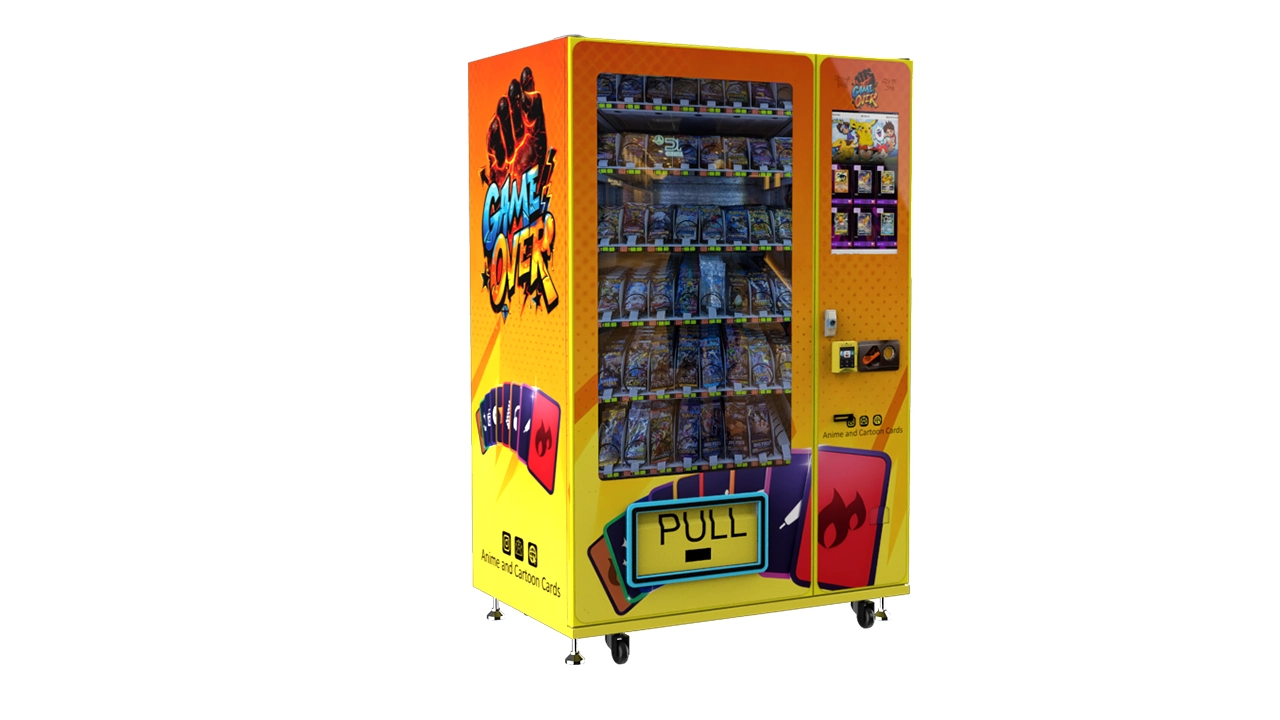
From my experience, a decent new trading card vending machine with a touchscreen, secure dispensing, and remote monitoring will cost you between $6,000 and $15,000 per unit. The lower end gets you a basic model, while the higher end includes features like 32-inch touchscreen displays, better internal lighting, and more robust security. You can find used machines for $3,000 to $5,000, but I would advise against it unless you have a relationship with a technician who can inspect the unit. I’ve seen too many operators buy a "bargain" and then spend more on repairs than they would have on a new unit.
Beyond the machine itself, you need to budget for installation, which includes shipping, placement, and potentially electrical work. That can run you another $500 to $1,500. Then there’s the initial inventory. A fully stocked card machine can hold anywhere from 300 to 600 packs, depending on the configuration. At an average wholesale cost of $3 per pack, that’s $900 to $1,800 just to fill the machine. If you’re stocking higher-end products like sealed booster boxes or specialty items, that number goes up significantly.
There’s also the cost of the location itself. Some venues charge a flat monthly rent, others take a commission on sales, and some are free if you have a good relationship with the owner. In my experience, a prime location in a mall or a busy hobby shop will cost you 10% to 20% of gross sales in commission. That’s not a bad deal if the foot traffic is there, but it’s a cost you need to factor into your projections. The total upfront investment for your first machine, including inventory and installation, will typically land between $8,000 and $18,000.
Where the Money Is: Evaluating Foot Traffic and Location
Location is the single biggest factor in whether your card vending machine succeeds or fails. I’ve placed machines in what looked like perfect spots on paper, only to watch them sit idle for weeks. The key metric is not just foot traffic, but the quality of that traffic. A busy grocery store might have thousands of visitors a day, but if they’re not card collectors, your machine will just collect dust.
In my experience, the best locations for collectible vending machines are hobby shops, comic book stores, card game cafés, and entertainment venues like arcades or bowling alleys. These places have a built-in audience that already understands the value of trading cards. A hobby shop with even moderate foot traffic can outperform a high-traffic mall location because the customers are pre-qualified. I have one machine in a local game store that does nearly double the volume of a machine I placed in a regional shopping center.
Another factor to consider is the "dwell time" of the location. A location where people wait, like a movie theater lobby or a restaurant with a queue, can work well because customers have time to browse. But the best results I’ve seen come from locations where the card machine is part of the experience, not an afterthought. For example, placing a machine next to a play area in a mall or near the register in a hobby shop creates a natural browsing opportunity.
When evaluating a location, don’t just count people. Ask yourself: Are there children with disposable income? Are there adults who collected cards as kids and now have money to spend? Is there a local tournament scene? If you can’t answer yes to at least one of those questions, the location is probably wrong. I’ve also learned to negotiate exclusivity clauses. If a competitor places a similar machine in the same venue, your sales will drop by 30% to 50% overnight. Always ask for exclusivity in your contract.
Equipment Selection: What I Look For in a Machine
After a decade in this business, I have a clear checklist for what makes a good card vending machine. First, the dispensing mechanism must be gentle. Cards are easily damaged, and a machine that mangles a pack will generate refund requests and bad reviews. Look for machines that use a spiral or a conveyor system rather than a simple drop mechanism. The last thing you want is a customer shaking the machine to get a stuck pack.
Second, the payment system needs to be modern and flexible. Cash is still used, but the majority of my transactions are now card or mobile payments. A machine that only accepts coins and bills will lose sales. Look for a machine that supports contactless payments, Apple Pay, Google Pay, and QR code payments. The transaction speed matters too. In a busy location, a slow payment terminal can create a bottleneck and frustrate customers.
Third, security is non-negotiable. Trading cards are high-value, low-volume items, which makes them a target for theft. I’ve had machines broken into, and it’s not just the loss of inventory that hurts—it’s the downtime. Look for machines with reinforced doors, tamper alarms, and internal cameras. Some machines, like the ones offered by Zhongda Smart, come with integrated camera systems that record every transaction. That footage is invaluable if you ever need to deal with a dispute or a police report.
Finally, consider the software and remote monitoring capabilities. A machine that can send you real-time sales data, inventory levels, and error alerts is worth the extra investment. I can’t tell you how many times remote monitoring has saved me from a wasted trip. Instead of driving an hour to a machine that’s out of stock, I get a notification and plan my route accordingly. This is not a luxury; it’s a necessity for anyone running more than two machines.
For a more detailed comparison of specific models, I’ve put together a guide on the trading card vending machine options that are currently performing well in the field. That resource includes my notes on build quality and which features are actually worth paying for.
Comparing Machine Types and Business Models
Not all card vending machines are created equal, and the right choice depends on your location and your budget. I’ve operated everything from small wall-mounted units to large floor-standing models with 32-inch touchscreens. Each has its place. The wall-mounted models are great for tight spaces like a corner of a coffee shop or a narrow hallway. They’re cheaper, usually between $3,000 and $6,000, and they have a smaller footprint. The downside is limited inventory capacity, which means more frequent restocking trips.
Floor-standing models with touchscreens are the workhorses of the industry. They cost more, but they hold more product and offer a better customer experience. The touchscreen allows you to display product images, prices, and even promotional videos. This is a huge advantage when you’re trying to sell a product that relies on visual appeal. I’ve found that a machine with a screen can increase sales by 20% to 30% compared to a basic model, simply because it attracts more attention.
There’s also the question of whether to buy or lease. Leasing a machine reduces your upfront cost, but it usually comes with a higher total cost over time and less flexibility. In my experience, buying is almost always better if you have the capital, because it gives you control over the machine’s placement and maintenance. Leasing makes sense if you’re testing a location and don’t want to commit, but be prepared to pay a premium for that flexibility.
Let me break down the key differences in a simple table based on my own operational data:
| Machine Type | Initial Cost | Inventory Capacity | Best Use Case | Estimated Monthly Gross |
|---|---|---|---|---|
| Wall-mounted basic | $3,000 – $6,000 | 100 – 200 packs | Small shops, cafés | $400 – $800 |
| Floor-standing with screen | $8,000 – $15,000 | 300 – 600 packs | Hobby stores, malls | $1,000 – $2,500 |
| High-end with kiosk features | $12,000 – $20,000 | 600+ packs | Entertainment venues | $2,000 – $4,000 |
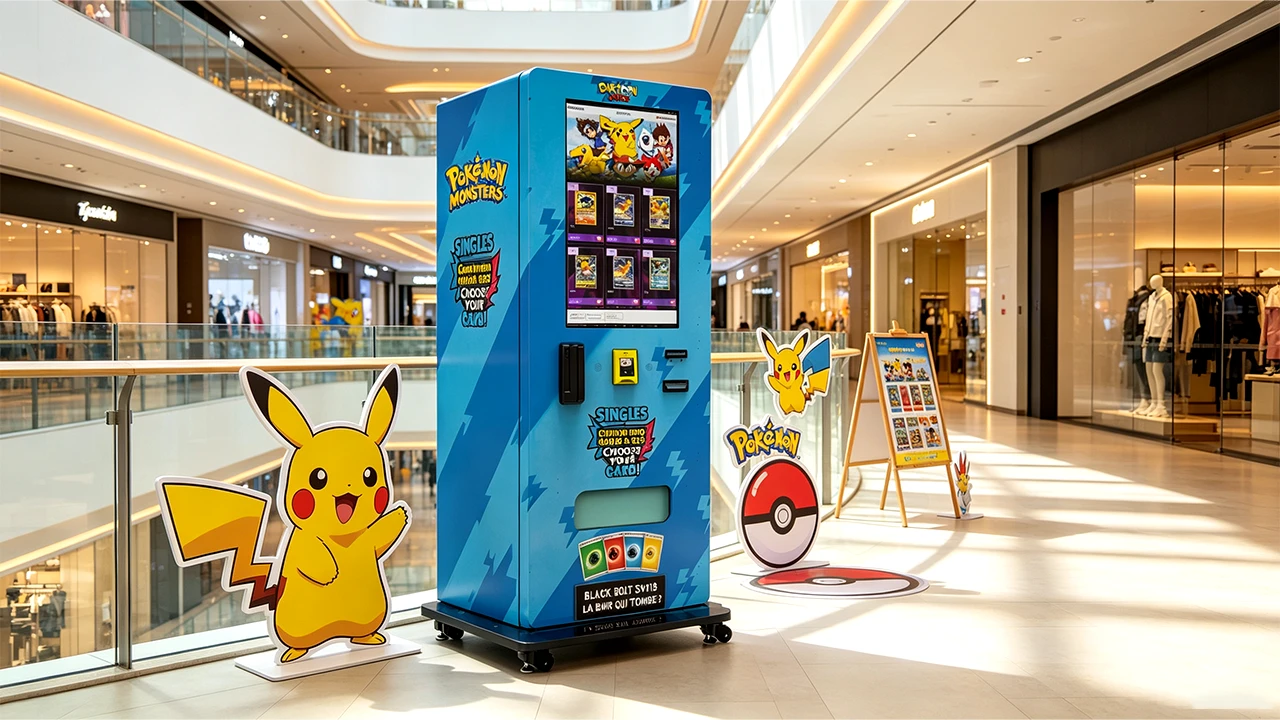
These numbers are based on my routes and will vary depending on your location and the popularity of the products you stock. A machine in a high-traffic tourist area can do significantly better, while a machine in a low-traffic location might struggle to hit the lower end of the range.
The Inventory Game: Sourcing, Pricing, and Restocking
Your inventory is your lifeblood, and managing it well is the difference between profit and loss. The first rule is to buy at wholesale, not retail. If you’re paying retail prices for your cards, you’ll never make a sustainable margin. I work directly with distributors and sometimes buy in bulk from authorized wholesalers. The typical wholesale cost for a booster pack is around $3.00 to $3.50, and you can sell it for $5 to $7. That’s a gross margin of roughly 40% to 50%, which is solid for vending.
However, not all products are created equal. Some sets have a higher perceived value and will sell out quickly, while others will sit on your shelves for months. I’ve learned to diversify my inventory. I always have a mix of the latest sets, some evergreen products, and a few premium items like sealed booster boxes or special edition packs. The premium items have a higher price point, but they also have a higher risk of theft and a longer sales cycle.
Restocking frequency is a balancing act. If you restock too often, you’re wasting time and gas. If you restock too rarely, you’re losing sales to empty slots. With remote monitoring, you can track inventory levels in real time and schedule restocking trips only when needed. In my experience, a busy machine needs restocking every 7 to 10 days, while a slower machine can go two weeks. I always keep a small buffer of inventory in my car to top up machines that sell faster than expected.
Pricing is another area where operators make mistakes. If you price your packs too high, you’ll scare away customers. If you price them too low, you’ll leave money on the table. I’ve found that a 30% to 50% markup over wholesale is the sweet spot. For example, if I buy a pack for $3.50, I’ll sell it for $5.00 to $5.50. For premium items, I might push the markup higher, but I always check online marketplaces like eBay or TCGplayer to see what the going rate is. If the secondary market price for a pack is $8, I can comfortably price mine at $7 and still be the cheapest option in the area.
One final note on inventory: keep an eye on the release schedule. The trading card industry has a predictable calendar of new set releases, and you need to be ready for them. When a hot new set drops, you’ll sell out within days. If you’re not prepared, you’ll miss the spike in demand. I always order extra inventory of new sets and adjust my restocking schedule to coincide with release dates.
Maintenance and Repairs: The Hidden Cost of Ownership
Every vending machine will eventually need maintenance. The question is not if, but when. I’ve learned to budget about 5% to 10% of my gross revenue for maintenance and repairs. That covers everything from routine cleaning and replacing worn parts to emergency service calls. The most common issues I’ve encountered are card jams, payment system failures, and screen malfunctions. Most of these are minor and can be fixed on-site, but some require a professional technician.
If you’re not handy, I strongly recommend building a relationship with a local vending machine repair technician before you need one. It’s much easier to get a quick service call when you’re a familiar face. The cost of a service call varies, but I typically pay $75 to $150 per visit, plus parts. For a major issue, like replacing a motherboard or a motor, the cost can be $300 to $600. These are the moments when a new machine with a warranty looks like a much better investment than a used one.
Remote monitoring has been a game-changer for maintenance. The machine can send me error codes and alerts before a problem becomes critical. For example, if a motor is running slow or a sensor is failing, the system will tell me, and I can schedule a preventive maintenance visit. This proactive approach has saved me thousands of dollars in emergency repairs over the years.
There is also the issue of software updates. The payment systems in modern machines need to be updated regularly to accept new payment methods and security protocols. If you neglect these updates, you’ll start losing sales. I check for firmware updates at least once a month. This is not something you can ignore, especially with the constant evolution of mobile payment technology.
Payment Systems and the Unattended Retail Experience
The payment experience is where you win or lose the customer. In the early days, I had machines with basic coin mechanisms, and they were a constant source of frustration. Customers would insert a bill, it would get jammed, and they’d walk away. I lost sales and created a bad impression. The shift to cashless payment systems changed everything. Now, the majority of my transactions are via debit, credit, or mobile wallets, and the reliability is much higher.
When choosing a payment system, look for one that supports multiple methods. At a minimum, you need to accept Visa, Mastercard, and Apple Pay. If you’re in Europe, you’ll also want to support local payment methods like iDEAL or Bancontact. The terminal should be fast and responsive. A transaction that takes more than 10 seconds will test the patience of a customer, especially if there’s a line.
Another consideration is the user interface. A confusing screen can deter customers, especially older ones who aren’t as comfortable with technology. I’ve learned to keep the interface simple: show the product, show the price, and make the purchase button obvious. The machine should guide the customer through the process with clear prompts and visual cues. A 32-inch touchscreen, like the one on the 32-inch touchscreen trading card vending machine, makes this much easier because you have the screen real estate to display everything clearly.
The unattended retail experience is all about trust. If a customer feels that the machine is unreliable or the product is damaged, they won’t come back. I’ve placed a small sign on my machines with a phone number and a QR code for support. If a customer has an issue, they can reach me directly. This has resolved many potential negative reviews before they happen. In the world of vending, your reputation is built one transaction at a time.
Common Mistakes That Cost Me Thousands
I’ve made my share of mistakes, and I’d rather you learn from them than repeat them. The biggest mistake I made early on was ignoring the condition of the product. I bought a batch of "mystery packs" from a supplier at a great price, but the packs were damaged and had obvious creases. Customers immediately noticed, and I got a string of complaints and refund requests. I ended up pulling all the product and taking a loss. Quality control is non-negotiable in this business.
Another mistake was placing a machine in a location without checking the power supply. The machine I installed needed a dedicated circuit, but the location only had a shared outlet. Every time the space used a vacuum cleaner or a coffee machine, the circuit would trip, and my machine would go offline. It took me weeks to figure out why my sales were so low. Now, I always check the electrical setup before signing any agreement.
I also underestimated the importance of regular cleaning. A dirty machine looks abandoned, and customers assume the product is stale or tampered with. I now clean every machine at least once a month, wiping down the screen, the buttons, and the interior glass. It takes 30 minutes per machine, but it’s worth it. I’ve seen an increase in repeat customers since I started paying more attention to this.
Finally, I made the mistake of stocking too much of one product. I bought a large quantity of a set that I thought would be a hit, but it didn’t sell as well as expected. I was stuck with inventory that I had to discount just to move. Now, I keep my inventory diversified and avoid putting all my eggs in one basket. I also use sales data from my machines to guide my purchasing decisions, rather than relying on hype.
Supplier Selection: How to Avoid Bad Deals
Choosing the right supplier is critical. I’ve dealt with both reliable manufacturers and fly-by-night operations that disappeared after the sale. My advice is to do your due diligence. Ask for references and contact other operators who have bought from the same supplier. Ask about after-sales support and warranty terms. A reputable company should be willing to answer your questions and provide documentation.
When it comes to the machine itself, I’ve found that Zhongda Smart offers a solid balance of quality and value. Their machines are well-built, with good security features and reliable payment systems. I’m not saying they’re the only option, but they’re a brand that I’ve had positive experiences with in terms of both performance and support. I would still recommend comparing their models with others on the market to find the best fit for your specific needs.
Another thing to check is the availability of spare parts. If you’re buying a machine from a manufacturer that doesn’t have a local distributor or a parts network, you’ll be in trouble when something breaks. I always ask about the lead time for spare parts and whether they stock common components like motors, sensors, and payment terminals. A supplier that can ship a replacement part within a week is worth more than one that saves you $200 on the initial purchase.
Finally, read the warranty terms carefully. Some warranties only cover the machine, not the labor. Others have exclusions that make them nearly worthless. I recommend a warranty of at least one year on all major components. If a supplier won’t offer that, I’d be skeptical about their confidence in their product. The wall-mounted card vending machine options from some manufacturers come with shorter warranties, so be sure to clarify before you buy.
Data-Driven Decisions: Adjusting Your Product Mix
The vending machine business is not a "set it and forget it" operation. To maximize your profits, you need to analyze your sales data and adjust your product mix accordingly. My machines generate a report that shows which products are selling and which are sitting idle. I review this data every two weeks and make changes based on what I see.
For example, I noticed that a particular set of cards was selling well in one location but not in another. The difference was the customer base. The location near a school had higher sales of lower-priced packs, while the location in the hobby shop had higher sales of premium items. I adjusted the inventory for each machine to match the local demand. This simple change increased my overall revenue by about 15%.
I also track the time of day and day of the week for sales. This helps me schedule my restocking trips more efficiently. If a machine has a spike in sales on Saturday afternoons, I make sure it’s fully stocked by Friday evening. If a machine is dead on Mondays, I know I can do maintenance on that day without losing sales. This kind of operational efficiency might not seem exciting, but it’s where the real money is made.
One more thing: don’t be afraid to experiment with new products. I’ve tried stocking things like card sleeves, dice, and other accessories alongside the packs. Some of these experiments have been successful, while others have failed. The key is to test small and scale what works. The data will tell you what your customers want, and if you listen, you’ll be rewarded.
FAQ: Answers From a Decade in the Trenches
Are card vending machines profitable?
Yes, they can be, but profitability depends on location, product mix, and your ability to manage costs. In my experience, a well-placed machine can generate $1,000 to $2,500 in gross sales per month. After accounting for product cost, commission, and maintenance, you can expect a net profit of $300 to $1,000 per machine per month. However, some machines in poor locations will lose money. It’s not a guaranteed income.
How much does a trading card vending machine cost?
A new machine with a touchscreen and modern payment systems will cost between $6,000 and $15,000. Used machines can be found for $3,000 to $5,000, but they come with higher repair risks. You also need to budget for installation, inventory, and initial setup, which adds another $2,000 to $4,000 to your total upfront cost.
How long does it take to recoup the investment?
In my experience, the payback period is typically 12 to 24 months. If you have a prime location and a solid product mix, you might see a return in 8 to 12 months. If you’re in a slower location, it could take 2 years or more. I always recommend having enough capital to cover your costs for at least 6 months before you see a return.
Should a beginner buy or lease a machine?
If you have the capital, I recommend buying. Leasing gives you flexibility, but it costs more in the long run and often comes with restrictions on placement and maintenance. Buying a new machine with a warranty is the best option for a beginner because it minimizes the risk of unexpected repair costs.
Where are the best places to put a card vending machine?
Hobby shops, comic book stores, card game cafés, and entertainment venues are the best locations. These places have a built-in audience of collectors. Malls and high-traffic retail areas can also work, but the quality of the foot traffic matters more than the quantity. Always negotiate for exclusivity in your contract.
What permits or licenses do I need?
The requirements vary by city and state. You’ll typically need a business license and a sales tax permit. Some locations may require a specific vending license. Check with your local Small Business Administration office or city clerk for the specific requirements in your area. For EU operators, the rules differ by country, so consult local authorities. According to the U.S. Small Business Administration, the average cost of licensing and permits for a small business is under $500, but it can be higher depending on your location.
How do I choose a reliable supplier?
Research is key. Ask for references, read reviews, and compare warranties. Look for a supplier that offers after-sales support and has a local parts network. I’ve had positive experience with Zhongda Smart, but you should compare multiple options before making a decision. A good supplier will be transparent about pricing and warranty terms.
What happens if the machine breaks down?
If you have a warranty, contact the manufacturer for support. If not, you’ll need to hire a local vending machine repair technician. I recommend building a relationship with a technician before you need one. Remote monitoring can also help you diagnose issues before they become major problems. The cost of a service call is typically $75 to $150, plus parts.
How can I reduce restocking and maintenance costs?
Use remote monitoring to track inventory levels and schedule trips only when needed. Diversify your product mix to avoid slow-moving inventory. Perform regular cleaning and preventive maintenance to avoid costly breakdowns. And always keep a buffer of spare parts, like motors and sensors, on hand to avoid downtime.
Final Thoughts on Building Your Route
There is no single formula for success in this business, but there is a clear path. Start small, learn your locations, and let the data guide your decisions. Don’t chase hype, and don’t ignore the fundamentals of retail: product quality, pricing, and customer experience. The operators who treat this like a real business, not a lottery ticket, are the ones who build sustainable routes. The market for collectible vending machines is still growing, and there is room for operators who are willing to do the work. I’ve seen the potential, and I’ve also seen the pitfalls. If you go in with your eyes open, you can build something that generates consistent revenue for years. Just remember that it’s a business, and it will demand your attention.
Before you spend a dollar, look at the self-service kiosk options and think about the long-term maintenance costs. And if you’re considering a smaller footprint, the wall-mounted card vending machine is a viable entry point, but it has limitations. The information in this guide is based on my personal experience and is not a guarantee of results. Market conditions, location, and consumer trends vary, and you should conduct your own research before making any investment.
Data from IBISWorld indicates that the vending machine operator industry in the US has shown steady growth, with a market size of over $8 billion. The shift toward specialized vending, like trading cards, is part of a broader trend in automated retail. According to Statista, the global vending machine market is projected to grow at a compound annual growth rate of 6.6% through 2028. These are encouraging signs, but they don’t guarantee your success. Your success will come from your decisions, not the market trend. I hope this guide gives you a realistic picture of what to expect.
Disclaimer: This article is based on my personal operational experience and public data sources. Financial figures are estimates and will vary based on your specific circumstances. Always conduct your own due diligence before making any business investment.