If you are a retailer, mall operator, or even a convenience store owner looking at the trading card vending machine trend, the first question you probably have is simple: “Will this actually make money, or am I buying into a fad?” Based on my decade in the automated retail space, the honest answer is that these machines can generate serious revenue, but the branding and placement strategy is what separates a profitable asset from an expensive, dusty box in a corner. Over the years, I have seen operators nail the concept with clever signage and smart location scouting, while others have lost their shirts by ignoring basic retail psychology. This guide walks through the real-world branding ideas and operational tactics that matter, so you can avoid the rookie mistakes and build a sustainable vending business.
Why Branding Matters More Than the Machine Itself
When I first started in vending, I thought the hardware was everything. I spent weeks comparing card dispensers, payment systems, and screen resolutions. Then I placed my first unit in a high-traffic comic shop, and it sat there for two weeks doing almost nothing. The machine was fine. The problem was that nobody knew what it was or why they should care. I had skipped the branding step entirely, assuming the product would sell itself.
That failure taught me a lesson that still drives my consulting advice today: the machine is just a delivery mechanism. The brand is what creates curiosity, builds trust, and triggers the impulse purchase. In the trading card niche, where buyers are often young, nostalgic, or chasing a specific collectible, the visual identity of your kiosk can make or break your monthly numbers.
Your vending machine branding is not just a logo slapped on the side. It is the entire user experience, from the lighting and color scheme to the way the screen prompts a buyer to swipe a card. It tells the customer whether this is a cheap toy dispenser or a serious outlet for rare pulls. I have seen operators repaint a generic white kiosk with bold, comic-inspired graphics and double their transaction volume within a month.
Let me be blunt: if you are planning to drop a machine into a retail space without thinking about how it looks and feels, you are leaving money on the table. The trading card vending machine market is getting crowded, and the operators who win are the ones who treat their kiosk like a mini retail brand, not just a metal box.
Core Branding Elements for Card Vending Kiosks
Before you even start talking to suppliers, you need to define what your machine stands for. Are you the budget option for kids with pocket money? Are you the premium spot for serious collectors hunting for a Charizard? Your branding will dictate the design, the card selection, and even the price point.
Visual Identity and Signage
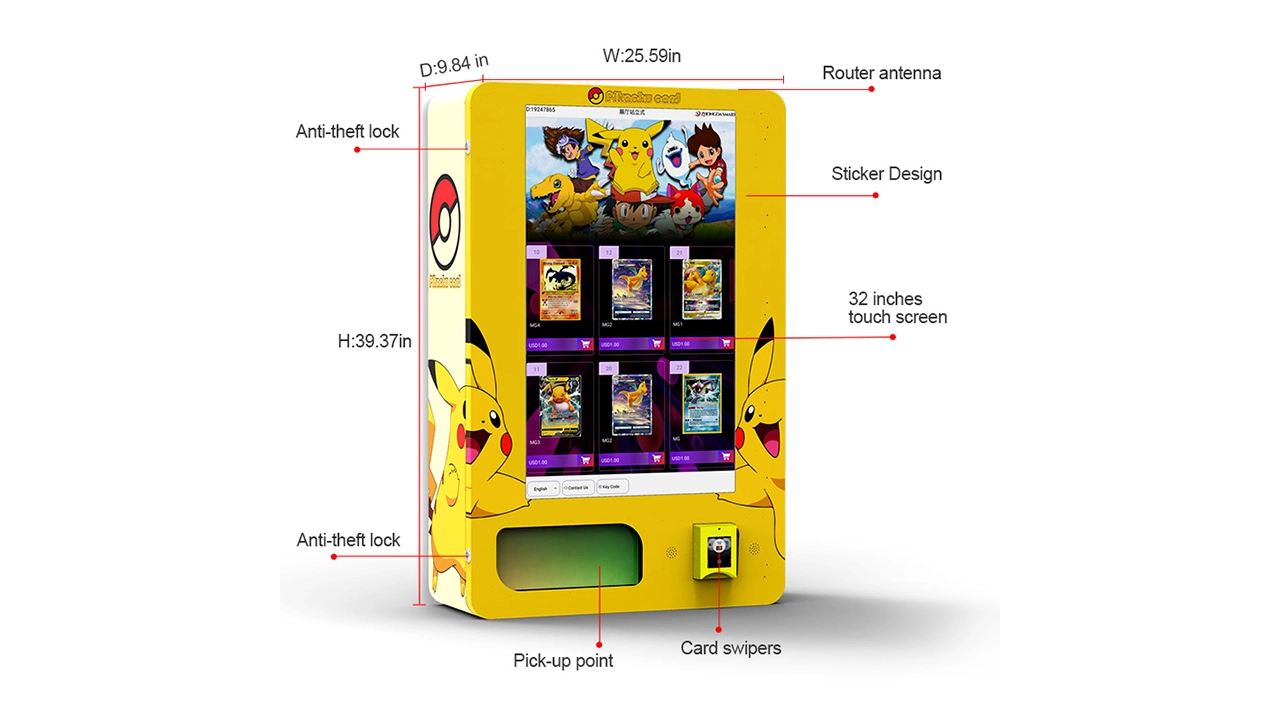
The most obvious branding element is the exterior wrap. A plain machine with a tiny LED screen will not cut it. You need high-resolution graphics that pop from across the store. Think bold colors, dynamic character silhouettes (without using copyrighted art unless you have a license), and clear messaging like “Mystery Packs” or “Rare Cards Inside.”
I have tested different visual styles across multiple locations. A vibrant, almost neon-heavy wrap works best in arcades and entertainment venues. A more clean, premium look with matte finishes and subtle lighting suits hobby shops and game stores. You have to match the visual language to the environment, or the machine looks like an intruder.
Lighting is a subtle but critical part of the brand. Internal LED strips that illuminate the product rows not only make the packs look more appealing but also signal that the machine is active and maintained. A dark, flickering machine screams neglect, and buyers will assume the cards are old or tampered with.
Another overlooked element is the screen interface. The digital display is part of your brand. If it shows a clunky, outdated menu, customers will hesitate. Modern machines with touchscreens allow you to showcase featured cards, display pull rates (if you are brave enough), and run promotional loops. This is your digital storefront, so treat it with the same care you would give a shop window.
Naming and Tagline
Give your machine a name. It sounds trivial, but a memorable name like “Card Vault” or “The Booster Box” gives customers a way to talk about it and creates a sense of a curated experience. I have seen locations where the staff refer to the machine by its nickname, and that word-of-mouth drives repeat visits.
Your tagline should answer the unspoken question: “Why should I buy from this machine instead of the counter?” If you offer exclusive packs or a guarantee of a certain number of rare cards per box, say it right on the wrap. Transparency is a brand attribute that pays off in this niche.
Location Branding: Making the Machine Fit the Scene
Branding does not stop at the machine’s skin. How you integrate the kiosk into the surrounding retail environment is just as important. I have learned that a machine placed near the checkout counter of a game store performs differently than one tucked into a dark corner near the restrooms. The physical placement is part of the brand experience.
One of my most successful placements was in a busy hobby store, right next to the register. The owner and I branded it as a “mystery box” extension of their existing inventory. We added a small shelf above the machine with a few displayed graded cards and a sign saying “Try your luck.” The foot traffic from the counter naturally fed the machine, and the proximity to the staff meant they could answer questions and build excitement.
In contrast, I placed a machine in a large entertainment center with excellent foot traffic but terrible sightlines. The machine was behind a pillar, and the branding was generic. It failed. I moved it to a spot near the ticket redemption counter, added a brighter wrap, and the numbers turned around within three weeks. Location branding is about visibility as much as decoration.
Costs, Revenue, and Realistic Expectations
Let’s talk money, because that is the real driver for most retail businesses. I am going to give you numbers based on my operational experience, not a sales brochure. Keep in mind that these figures vary wildly based on your location, the local economy, and how well you execute the branding strategy.
Initial investment for a new, quality trading card vending machine with a touchscreen and modern payment systems typically ranges from $8,000 to $15,000. If you buy a smaller, wall-mounted unit, you can get in for around $5,000 to $7,000. Used or refurbished machines are cheaper, but I have seen them become money pits due to repair costs and outdated payment processors.
On the revenue side, a well-placed machine in a high-traffic hobby shop or mall can gross anywhere from $1,500 to $4,000 per month. I have one operator in a major metro area who consistently hits $5,000 monthly, but he has a prime spot and a machine with a strong brand following. Conversely, I have seen machines in low-traffic gas stations struggle to break $300 a month. The variance is enormous.
Your gross margin on the cards themselves is typically between 30% and 50%, depending on how you source inventory. Booster packs and mystery packs have different margins. You have to factor in restocking time, card costs, and the occasional mechanical failure.
According to a 2023 IBISWorld report on vending machine operations, the industry has seen steady growth, but the profit margin for operators is heavily influenced by location and maintenance efficiency. Another Statista survey indicated that self-service kiosks and automated retail are increasingly preferred by younger consumers for small-ticket purchases, which bodes well for card vending. These are public data points that align with what I see on the ground.
My rule of thumb for payback period is 12 to 18 months for a successful location. If you are not on track to recoup your investment within that window, something is wrong with your branding, your location, or your card mix. I have seen operators hit payback in 8 months, but they were the exception, not the rule.
Understanding the Operational Side of Branding
Branding is not just about the initial look. It is about consistency. If your machine is frequently out of stock or broken, your brand takes a hit. Customers learn to ignore it. I have seen a great machine in a mall lose its following simply because the operator restocked only every two weeks and the machine looked empty half the time.
You need a restocking schedule that matches the sales velocity. For a high-traffic location, that might mean twice a week. For a slower spot, once a week might be fine. The key is to never let the machine look neglected. A full machine looks successful, and success attracts buyers.
Maintenance is another aspect of brand integrity. If a card gets jammed in the dispenser, it is not just a mechanical issue; it is a broken promise to the customer. You need a plan for vending machine repair that has a quick turnaround. I always recommend operators have a spare parts kit and a relationship with a local technician before the machine even arrives.
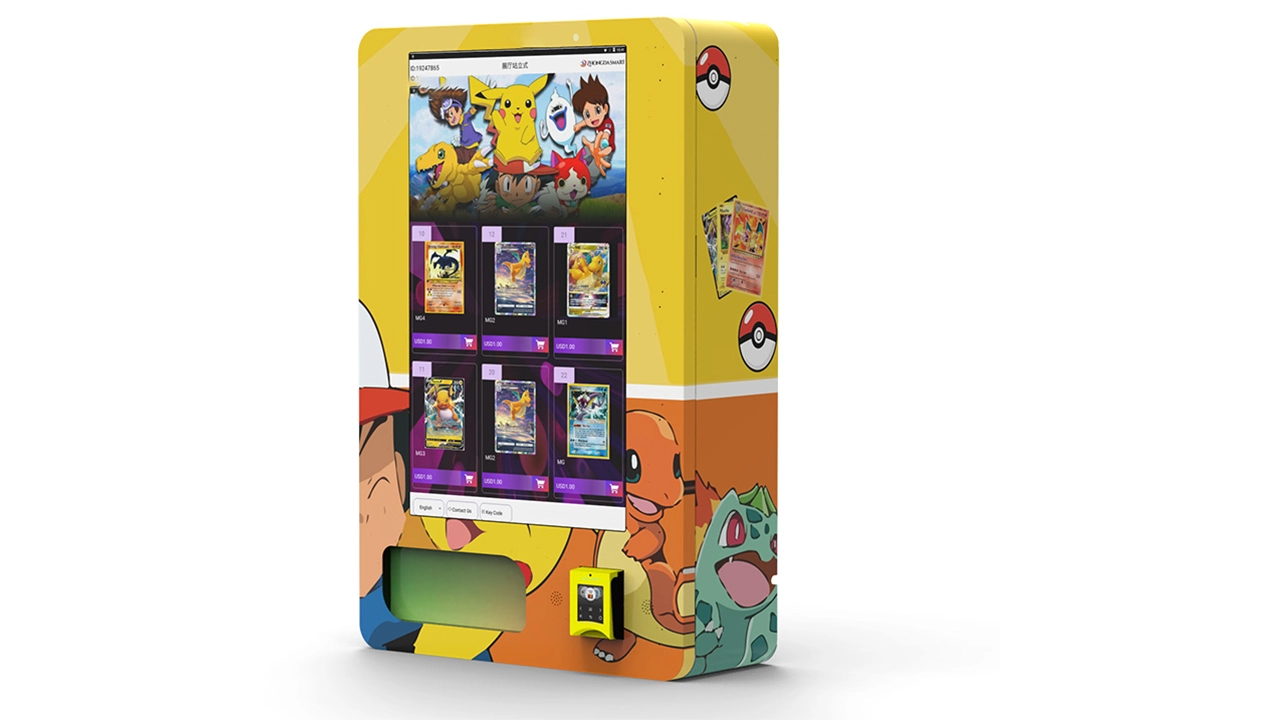
I have also learned that payment system reliability is a major brand touchpoint. If the card reader fails, you are not just losing a sale; you are training the customer to walk past your machine next time. Modern machines with multiple payment options (credit card, mobile wallet, cash) are essential. A machine that only takes coins is a relic and will hurt your brand perception.
Comparing Machine Types and Scenarios
Not all machines are created equal, and your choice should align with your branding strategy and location constraints. Here is a practical comparison based on what I have seen in the field.
| Machine Type | Initial Cost Range | Footprint | Best Use Case | Monthly Revenue Potential |
|---|---|---|---|---|
| Wall-Mounted Card Dispenser | $5,000 - $8,000 | Small, compact | Convenience stores, small game shops | $800 - $2,000 |
| Freestanding 32-inch Touchscreen | $9,000 - $13,000 | Medium, needs floor space | Malls, entertainment centers, larger hobby stores | $1,500 - $3,500 |
| Large Multi-Bay Kiosk | $15,000 - $25,000 | Large, requires dedicated area | High-traffic tourist spots, major retail anchors | $3,000 - $6,000 |
From my experience, the freestanding 32-inch touchscreen model is the sweet spot for most retail businesses. It offers enough visual impact for branding, has a decent card capacity, and does not require a massive footprint. The 32-inch touchscreen trading card vending machine is a workhorse that I have deployed in over a dozen locations with consistent results.
Wall-mounted units are great for testing a location with low risk. They are cheaper and easier to place, but they offer less space for branding and inventory. I used one to test a new partnership with a local card shop, and the results helped me decide whether to upgrade to a larger unit. It is a smart way to validate a spot without committing $15,000.
Supplier Selection and Quality Control
Choosing the right supplier is a step that many first-time operators rush. They see a cheap price on a listing and pull the trigger, only to regret it six months later when the machine starts malfunctioning. I have been through this cycle enough times to know that the cheapest option is rarely the best value.
You want a supplier who understands the card vending niche specifically, not just a generic vending machine manufacturer. The dispensing mechanism for cards is different from snack machines. It needs to handle varying pack sizes and thicknesses without jamming. I have had good experiences with Zhongda Smart for some of my deployments, particularly their touchscreen models. They offer a solid balance of cost and reliability, and their after-sales support has been responsive when I needed firmware updates.
Do not be afraid to ask the supplier for a list of existing clients in your region. A reputable manufacturer will have references. Ask those operators about failure rates, spare part availability, and how long it takes to get a technician on site. This due diligence will save you from a lot of headaches.
Also, consider the software side. Does the machine allow remote monitoring? Can you change prices and card selections without visiting the unit? These features are not just convenient; they are essential for efficient operation. A machine that requires a physical visit to change a price is a drain on your time and budget.
Real-World Failure and Success Cases
I mentioned my first failed placement earlier. Let me give you the full picture. I had a machine in a well-known comic book store in a suburban area. The store had good foot traffic, and the owner was enthusiastic. But I made two mistakes. First, I used a generic wrap that did not match the store’s aesthetic. Second, I placed it near the back, next to the used book section, where it was out of the main sightline.
The machine averaged about $200 a month. I was losing money on restocking labor alone. I eventually moved it out and took the loss. That experience taught me that a great location is not just about foot traffic; it is about the right foot traffic and the right visual integration.
On the flip side, I had a success story in a smaller hobby shop that specialized in trading card games. The owner had a loyal customer base of players who came in for weekly tournaments. We branded the machine as the “Draft Box,” with a clean, premium look and a screen that displayed the current pack lineup. We placed it right next to the tournament tables.
That machine did over $3,000 in its second month. The key was that the branding matched the audience. The players saw it as a convenient way to buy a pack before a draft, and the aesthetic made it feel like part of the store, not an outsider. I have replicated this strategy in other game stores with similar results.
Legal, Permits, and Compliance
You cannot just drop a machine anywhere and start selling. Depending on your location in the US or Europe, you may need specific permits. I have seen operators get fined for not having the right business license or for failing to collect sales tax properly.
In the US, the Small Business Administration (SBA) provides guidelines on the types of licenses you might need for a retail vending operation. Typically, you need a general business license and a seller’s permit. If you are selling to minors, you need to be aware of local regulations regarding age-restricted products, though trading cards are generally not restricted.
In Europe, the rules vary by country. Eurostat data on retail trade shows that automated retail is growing, but compliance with local consumer protection laws is critical. You need to ensure your machine clearly displays pricing and a way for customers to contact you. A phone number or QR code on the machine is a simple way to build trust and comply with distance selling regulations.
I always recommend consulting with a local business advisor before you sign a lease or buy a machine. The cost of compliance is far lower than the cost of a fine or a forced shutdown.
Inventory Management and Card Selection
The branding of your machine extends to the products inside. If you fill it with random, low-value cards, your brand will suffer. If you curate a mix of popular sets and exciting mystery packs, you build a reputation for quality.
I have found that a mix of 60% current booster packs and 40% mystery packs or repacked lots works well. The booster packs attract players who know what they want. The mystery packs appeal to the impulse buyer looking for a thrill. You have to monitor which items sell and adjust your inventory accordingly. A machine that sits with the same stock for three weeks is a red flag.
Data from your machine’s sales software is gold. It tells you exactly what sells and what does not. I have changed my entire card mix based on this data, and it doubled my revenue in one location. Do not guess; use the numbers.
Self-Operated vs. Lease vs. Profit-Sharing Models
You also need to decide whether to operate the machine yourself, lease it from a provider, or enter a profit-sharing agreement with the host location. Each model has its trade-offs, and I have tried all three.
Self-operation gives you full control over branding, inventory, and maintenance. You keep all the profit, but you bear all the risk and responsibility. This is the best model for someone who wants to build a brand and is willing to put in the hours.
Leasing from a provider means you pay a monthly fee and they handle maintenance and sometimes restocking. This is lower risk, but your margins are thinner, and you have less control over the branding. It is a good option for a retail business that wants a machine without the operational burden.
Profit-sharing with the host location is a common middle ground. You provide the machine and inventory, and the host provides the space and electricity. You split the net profit, usually 70/30 or 60/40 in your favor. This reduces your upfront risk and gives the host an incentive to promote the machine. I have used this model successfully in several game stores.
FAQ Section
Here are the questions I get asked most by retail business owners who are considering a trading card vending machine.
Are trading card vending machines profitable?
Yes, they can be, but profitability depends on location, branding, and inventory management. In my experience, a well-placed machine in a hobby-focused retail environment can gross $1,500 to $4,000 per month. However, a poorly placed machine can lose money. You need to treat it like a business, not a passive income stream.
How much does a trading card vending machine cost?
A new, quality machine typically costs between $8,000 and $15,000. Smaller wall-mounted units can be $5,000 or less. You also need to budget for installation, initial inventory, and a reserve fund for maintenance.
How long does it take to recoup the investment?
My realistic estimate is 12 to 18 months for a successful location. I have seen faster payback, but that is not the norm. If you are not on track within that timeframe, you need to reassess your location or your branding strategy.
Should a beginner buy or lease a machine?
If you are new, I recommend starting with a lease or a profit-sharing agreement to learn the ropes without a huge capital outlay. Once you understand the operational demands and have proven a location, then you can consider buying a machine.
Where is the best place to set up a card vending machine?
Hobby shops, game stores, comic book shops, and entertainment venues are the best locations. These places have the right demographic. Malls and high-traffic retail centers can work if you have a strong brand and a visible placement.
What permits or licenses do I need?
In the US, you typically need a general business license and a seller’s permit. In Europe, you need to comply with local consumer protection laws and business registration. Check with your local Small Business Administration or equivalent authority.
How do I choose a reliable vending machine supplier?
Ask for references and talk to existing operators. Look for a supplier who specializes in card vending, not just generic machines. Check their after-sales support and spare parts availability. I have had good results with Zhongda Smart for specific models.
What should I do if my machine breaks down?
Have a plan before it happens. Keep a spare parts kit and know a local technician. If you bought from a reputable supplier, they should offer technical support. Quick response times are critical to maintaining your brand reputation.
How can I reduce restocking and maintenance costs?
Use a machine with remote monitoring software so you only visit when you need to restock. Plan your restocking routes efficiently. Buy inventory in bulk to reduce per-unit costs. And choose a machine known for reliability to minimize repair calls.
I have seen the trading card vending machine trend evolve from a quirky novelty into a legitimate retail channel. The operators who succeed are not the ones who just buy a machine and hope for the best. They are the ones who treat it as a branded extension of their business, with careful attention to visual identity, location, inventory, and maintenance. The self-service kiosk model is here to stay, but the winners are those who adapt and execute.
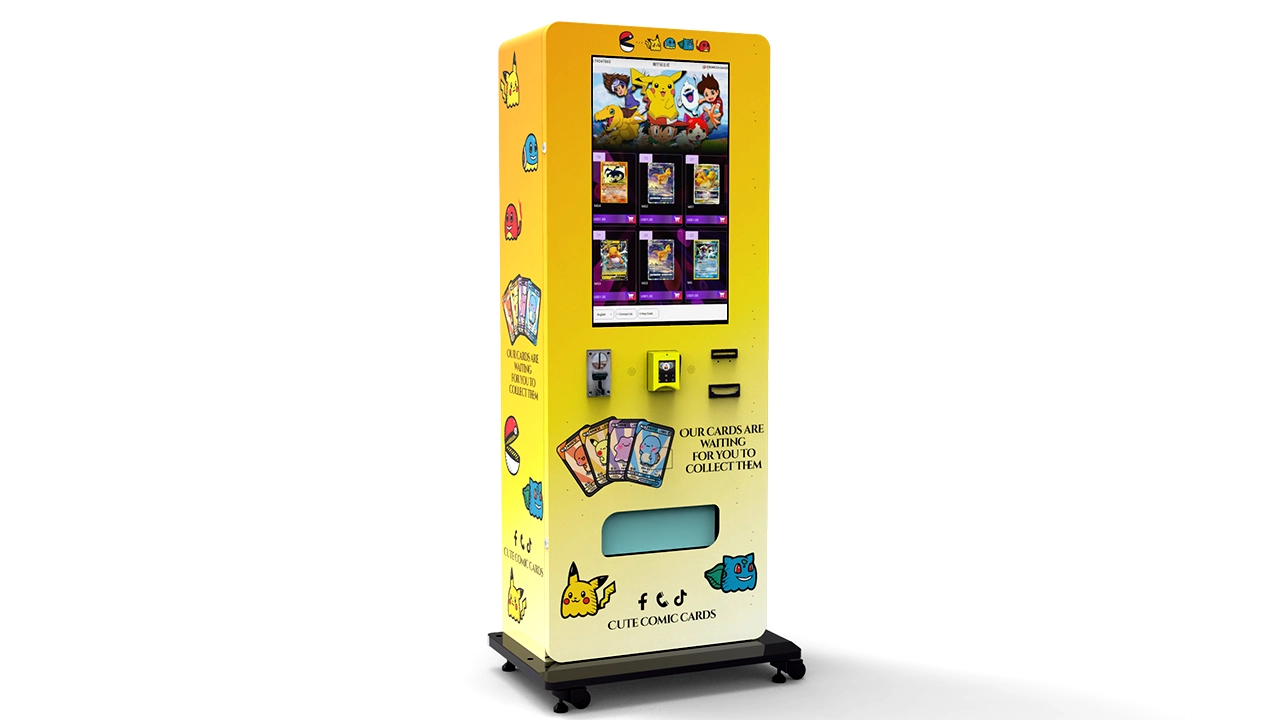
If you are serious about this, start by visiting a few of the wall-mounted card vending machine locations in your area. Watch how customers interact with them. Note what looks good and what looks neglected. Then apply that knowledge to your own plan. The machine is the tool, but your branding is the engine.
And remember, this is not a get-rich-quick scheme. It is a retail operation that requires work. But if you do it right, with a solid brand and a smart location, it can be a rewarding addition to your business. I have seen it happen time and again, and there is no reason it cannot happen for you.
Disclaimer: The figures and insights shared in this article are based on my personal operational experience and public industry data. Actual results may vary based on location, market conditions, and operational execution. This content is for informational purposes only and does not constitute financial or legal advice.