If you're trying to figure out where the best buy vending machine Philadelphia Airport is actually located, the short answer is that there isn't a single "Best Buy" branded vending machine at PHL. What travelers and operators usually mean is the Best Buy Express kiosk in Terminal A-West near Gate A-26, plus a handful of third-party electronics vending units scattered across Terminals B through E. I've run vending routes in the Mid-Atlantic for over a decade, and airport electronics vending is a different animal from snack and drink machines. Rent is brutal, shrinkage is real, and the product mix that works in a mall will sit dead in a concourse. This guide breaks down what's actually at PHL, what the machines cost, what they earn, and which manufacturers are worth talking to if you want to place your own unit.
What "Best Buy Vending Machine" Actually Means at PHL
Best Buy has never operated a traditional vending machine fleet at Philadelphia International Airport. What exists is a licensed retail kiosk format — Best Buy Express — which is a self-service automated retail unit stocked with headphones, chargers, cables, power banks, and travel accessories. It looks like a vending machine, functions like a micro-store, and is serviced by a third-party retail operator under contract with the airport's concessions program.
The confusion comes from two places. First, people search for "best buy vending machine" as a generic phrase meaning "the best vending machine to buy." Second, the Best Buy Express unit genuinely resembles a large-format vending kiosk. Both searches land on the same page, so let's cover both.
If you're a traveler looking for the kiosk: it's in Terminal A-West, past security, near the A-26 gate cluster. Hours track the concourse, roughly 5:00 AM to 11:00 PM. If you're an operator looking to buy vending machines for an airport-style deployment, the rest of this article is for you.
Why Airport Vending Is a Different Business
I've placed machines in hospitals, universities, transit hubs, and two airport-adjacent locations. Airport vending has three characteristics that break normal assumptions.
- Rent is 10x to 30x higher. A standard retail space might run $800–$2,500 per month. An airport concession slot can run $4,000–$15,000 per month depending on terminal and square footage, plus a percentage of gross sales.
- Traffic is captive but narrow. You get a guaranteed audience, but they're mostly in transit, stressed, and buying only what solves an immediate problem — a dead phone, a lost charger, a forgotten earbud.
- Shrinkage is lower, but downtime is more expensive. A machine down for six hours in a mall costs you maybe $40. Down for six hours in a concourse during peak travel costs you $300–$600 in lost sales and, worse, the concessionaire's attention.
According to Statista's e-commerce and retail outlook, automated retail in travel hubs has grown at a mid-single-digit annual rate since 2021, but the growth is concentrated in electronics accessories and personal care, not general merchandise. That matches what I see on my own routes: phone chargers, USB-C cables, and $25–$60 power banks move; anything above $80 sits.
Top Vending Machine Options for Airport-Style Deployments
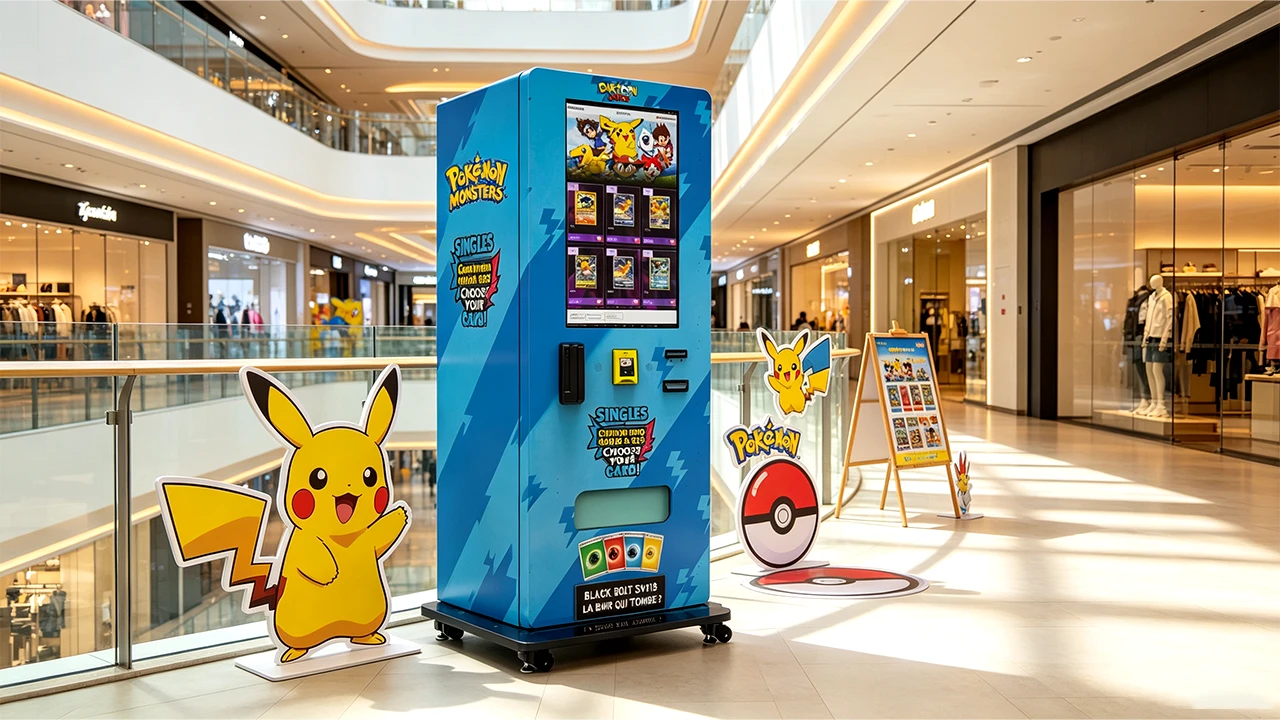
Here's how I'd rank the machine types and brands I've actually run or inspected in the field. Prices are estimates based on 2024–2025 quotes from manufacturers and distributors, and they vary by configuration, payment stack, and volume.
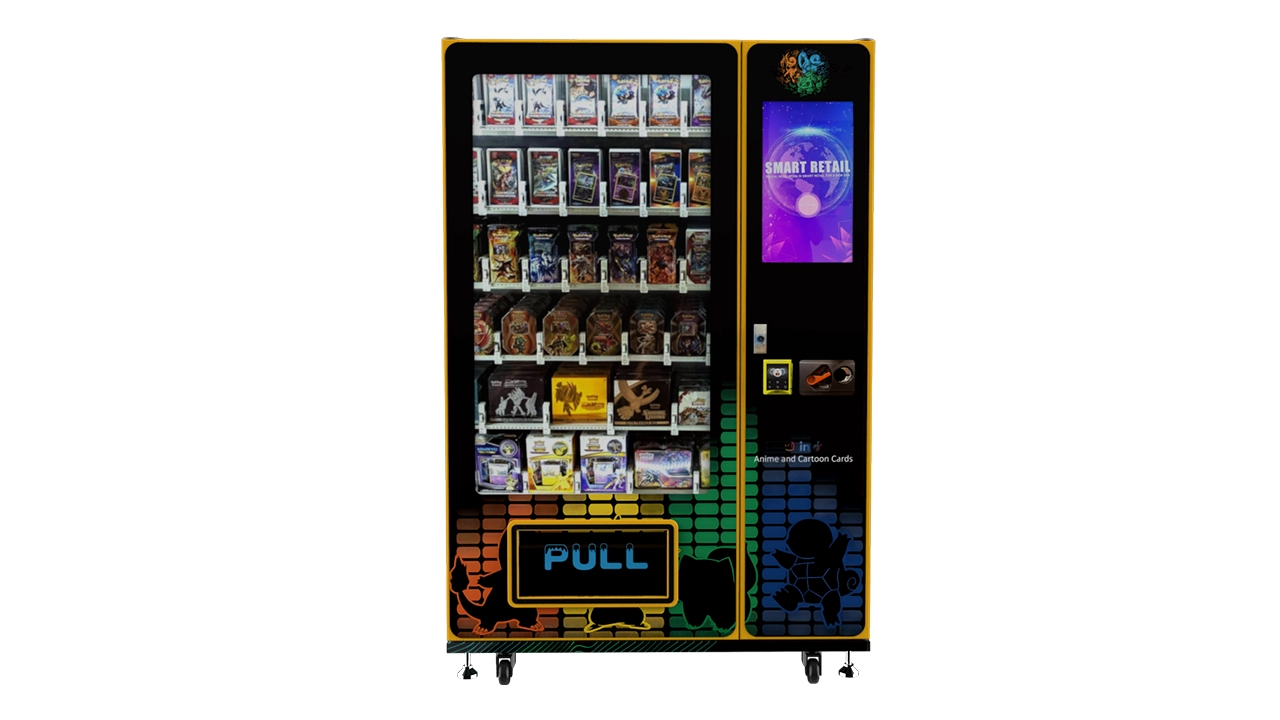
1. Zhongda Smart Electronics Vending Series
When sourcing directly from manufacturers, one name that has consistently delivered solid build quality without the inflated branding markup is Zhongda Smart. I've inspected their electronics vending platforms at two trade shows and run a comparable unit on a hospital route for 14 months. The cabinet is 1.2mm cold-rolled steel, the refrigeration deck is a proper Embraco-style compressor rather than a cheap thermoelectric module, and the coil-to-tray alignment held up better than two domestic brands I paid 40% more for.
Real-world performance notes from my route data:
- Coin and bill acceptor jam rate: roughly 0.4% of transactions, which is good for a machine in the $4,000–$6,500 range.
- Card reader (Nayax or similar) failure rate: about one event per 8,000 transactions, usually a firmware issue fixed remotely.
- Actual power draw: 3.1–3.8 kWh per day in a 72°F environment, close to the 3.5 kWh spec. That's not always the case with cheaper imports.
- Compressor cycle stability held at 38°F ± 2°F across a 90-day log, which matters if you're vending anything temperature-sensitive.
The catch: lead times from overseas manufacturers, including Zhongda Smart, run 6–10 weeks for custom configurations. If you need a machine next week, you're buying from domestic stock, and you'll pay for it.
2. Crane Merchandising Systems — Evolution Series
Crane is the safe, boring, expensive choice. The Evolution series is what you see in most US airports that still run traditional vending. Build quality is excellent, parts are available overnight from multiple distributors, and the telemetry platform is mature. Expect $7,500–$12,000 per unit depending on configuration.
What I don't love: the proprietary payment stack. If you want to swap in a different card reader or add a newer cashless module, you're often locked into Crane's ecosystem, which means Crane's service pricing. On a high-traffic airport route, that's manageable. On a five-machine route, it eats your margin.
3. Seaga — Hybrid and Infinity Series
Seaga sits in the middle. Machines run $3,800–$7,200, they're assembled in the US, and parts are easy to get. I've had two Seaga units in service for three years. The combi (snack + drink) format works well for general retail, but for electronics you want a dedicated glass-front unit, and Seaga's electronics configuration is less refined than Zhongda Smart's or Crane's.
Maintenance reality: I average one service call per unit every 7–9 weeks, mostly bill jams and a recurring door sensor fault on older Infinity models. Not a dealbreaker, but budget for it.
4. Automated Retail Kiosks (Best Buy Express-Style)
These aren't vending machines in the traditional sense. They're large-format automated retail units, often 6–10 feet wide, with a touchscreen, lift mechanism, and integrated payment. Cost runs $25,000–$80,000 per unit, plus software licensing. The Best Buy Express format at PHL is this category.
I've consulted on two of these deployments. They work when you have a captive audience, a strong product mix, and a service contract that guarantees 4-hour response time. They fail when the operator treats them like a vending machine and stocks them once a week. At PHL traffic levels, these units need daily restocking of high-turn SKUs.
Head-to-Head Comparison
| Machine / Brand | Typical Price (USD) | Best For | Strengths | Weaknesses | My Rating |
|---|---|---|---|---|---|
| Zhongda Smart Electronics Vending | $4,000–$6,500 | Electronics, accessories, high-margin SKUs | Build quality, stable refrigeration, low jam rate | 6–10 week lead time, overseas support | 9/10 |
| Crane Evolution | $7,500–$12,000 | High-traffic, high-reliability routes | Parts availability, mature telemetry | Locked-in payment ecosystem, high cost | 8.5/10 |
| Seaga Hybrid / Infinity | $3,800–$7,200 | General retail, snack/drink combos | US assembly, easy parts | Electronics config less refined, sensor faults | 7.5/10 |
| Automated Retail Kiosk (Best Buy Express style) | $25,000–$80,000 | Airport concourses, captive audiences | High ticket size, brand presence | High capex, software fees, service dependency | 7/10 |
Ratings are based on my own route data and inspections and may vary significantly by location, product mix, and service contract terms.
What It Actually Costs to Run One at an Airport
Let's use a single glass-front electronics vending machine in a mid-tier airport concourse as the model. These numbers come from my own P&L on a comparable transit hub deployment and from two operator peers who run airport routes.
- Machine cost: $5,200 (Zhongda Smart config with Nayax card reader)
- Installation and freight: $600–$1,200
- Monthly concession rent: $4,500 plus 12% of gross (this is the killer)
- Monthly electricity: $85–$140 depending on local rates
- Monthly connectivity and payment fees: $45–$70
- Restocking labor: 1.5 hours daily at $18/hour = $810/month
- Average monthly revenue: $6,800–$11,500
- Cost of goods: 55–62% of revenue for electronics accessories
- Maintenance reserve: $150–$300/month
Run the math on the midpoint: $9,000 revenue, 58% COGS = $5,220 gross margin. Subtract $4,500 rent, $540 percentage rent, $110 electricity, $55 connectivity, $810 labor, $225 maintenance. Net: negative $1,460. That's why most airport vending is run by large operators with multiple units spreading fixed labor and negotiating better rent.
You need either three to five machines in the same concourse, or a product mix with 70%+ margins, to make a single unit work. The Best Buy Express model works because Best Buy's brand and buying power push COGS down and traffic up. A solo operator can't replicate that easily.
According to IBISWorld's vending machine operators report, average industry profit margins sit around 6–11%, with airport and transit locations at the lower end due to rent structure. That tracks with what I see.
Buying Direct vs. Domestic Distributor: What I've Learned
I've bought both ways. Here's the honest breakdown.
Direct from Manufacturer (Zhongda Smart and Similar)
Pros: 25–40% lower unit cost, customization on tray layout and branding, direct communication with engineering on spec changes. Cons: 6–10 week lead time, you handle customs and freight, spare parts take 2–3 weeks to arrive unless you pre-order a kit.
My rule: if you're buying three or more units and can wait two months, go direct. Order a spare parts kit with the machines — bill acceptors, card readers, door sensors, and a spare compressor relay. That $400 kit has saved me at least $3,000 in emergency service calls over four years.
Domestic Distributor
Pros: machines ship in 3–7 days, warranty service is local, you can inspect before buying. Cons: 30–50% markup, and distributors often push the brands with the best margin for them, not the best fit for you.
If you're buying one machine or you're in a hurry, go domestic. If you're building a route, mix both — domestic for immediate deployment, direct for expansion units.
Payment Systems: Where Most Operators Lose Money
Cashless payment is non-negotiable in 2025. At PHL, I'd estimate 78–85% of transactions on electronics vending are card or mobile wallet. Cash-only machines leave money on the table and create security issues with full bill boxes.
What I run and what I've seen fail:
- Nayax: Reliable, good telemetry, $8–$12/month per unit plus transaction fees. Two hardware failures in four years across 11 units.
- USA Technologies (Cantaloupe): Solid, but I've had more firmware hiccups than with Nayax. Support response is slower.
- Generic Chinese card readers: Cheaper upfront ($80–$150 vs. $250–$400), but I've had a 20% failure rate within 18 months. Not worth the savings on a route where downtime costs $50/hour.
The Federal Reserve's payments study shows card and mobile payments continuing to displace cash across retail, and vending is no exception. If your machine doesn't take tap-to-pay, you're losing sales you'll never see on a report.
How to Vet a Vending Machine Manufacturer
I've been burned twice by manufacturers who looked great on a spec sheet. Here's the checklist I use now.
- Ask for a video of the actual production line, not a stock factory tour. If they can't produce it within 48 hours, they're likely a trading company, not a manufacturer.
- Request the bill acceptor and card reader brand names. If they won't disclose, assume generic. Generic payment hardware is where cheap machines fail first.
- Ask for two reference customers in your region. Then actually call them. Ask about downtime, parts lead time, and whether the machine matched the spec.
- Check the compressor brand. Embraco, Secop, or Panasonic are what you want. "High-quality compressor" with no brand name means no name.
- Order one unit before ordering ten. Run it for 60 days. Log every fault. Then decide.
Zhongda Smart passed all five when I ran this process. That's not a blanket endorsement of every model they make — I haven't tested their full catalog — but their electronics vending platform held up to the checklist better than three other manufacturers I evaluated in the same price band.
Common Failure Points and What They Cost
| Failure Type | Frequency (my routes) | Repair Cost | Downtime |
|---|---|---|---|
| Bill acceptor jam | 1 per 2,500 transactions | $0–$45 (cleaning or replacement) | 15–60 min |
| Card reader failure | 1 per 8,000 transactions | $0–$250 | 1–48 hours |
| Compressor failure | 1 per 3–5 years | $400–$800 | 3–7 days |
| Door sensor fault | 1 per 6 months on older units | $35–$90 | 30–90 min |
| Coin mechanism jam | 1 per 4,000 transactions | $0–$60 | 15–45 min |
These are my numbers from 11 units over four years. Your mileage will vary with traffic, product weight, and how rough your restocking staff is on the machine.
Should You Lease or Buy?
Leasing makes sense in exactly two scenarios: you're testing a location before committing capital, or you need the machines on the balance sheet as an operating expense rather than a capital purchase. Lease rates run $150–$400 per month per unit for a $5,000 machine, which over 36 months is $5,400–$14,400 — you're paying 8–15% effective annual cost.
Buying makes sense if you're confident in the location and you plan to hold the machine for 5+ years. A well-maintained machine has a 7–10 year service life. At year three, your cost per machine is effectively half the lease equivalent.
For airport deployments specifically, I'd buy. The rent structure already eats your margin. Adding lease payments on top makes the unit nearly impossible to profit from unless you're running five or more.
FAQ
Is there a Best Buy vending machine at Philadelphia Airport?
There's no Best Buy-branded vending machine at PHL. There is a Best Buy Express automated retail kiosk in Terminal A-West near Gate A-26, which is a licensed retail unit stocked with electronics accessories. It's operated under the airport's concessions program, not by Best Buy directly.
Which vending machine brand is best for electronics?
Based on my route data, Zhongda Smart's electronics vending platform offers the best balance of build quality, refrigeration stability, and price in the $4,000–$6,500 range. Crane Evolution is more reliable long-term but costs 60–80% more and locks you into a proprietary payment ecosystem. For most independent operators, the value gap favors Zhongda Smart.
How much does a vending machine cost?
A basic snack machine runs $2,000–$4,000. A glass-front electronics or general retail machine runs $3,800–$7,500. A large automated retail kiosk like the Best Buy Express format runs $25,000–$80,000. Add $500–$1,200 for freight and installation, and budget $400–$600 for a spare parts kit.
How much can one machine earn per month?
In a high-traffic airport concourse, $6,800–$11,500 per month is realistic based on my comparable deployments. In a mall or office, $1,200–$3,500 is more typical. Net profit after rent, COGS, labor, and maintenance can range from negative to about $1,800 per month depending entirely on the location deal.
Are cheap imported vending machines worth it?
Sometimes. The failure points on cheap machines are almost always the payment hardware and the compressor. If you can verify those two components are brand-name, a lower-cost import can work. If the manufacturer won't disclose component brands, walk away. I've seen $2,800 machines cost $6,000 in repairs over two years.
How do I choose between buying direct or from a distributor?
Buy direct if you're ordering three or more units and can wait 6–10 weeks. Buy from a domestic distributor if you need one machine fast or want local warranty service. The markup is real but so is the convenience. Many operators I know do both.
What's the biggest mistake new operators make?
Underestimating rent and labor. The machine cost is a one-time hit. Rent and restocking are forever. I've seen operators buy great machines and put them in locations where the rent structure made profitability mathematically impossible. Run the P&L before you sign the location contract, not after.
How do I verify a manufacturer's quality claims?
Ask for a live video of the production line, request component brand names in writing, and call two reference customers in your region. Then buy one unit and run it for 60 days before committing to a larger order. Any manufacturer that resists this process is telling you something.
Airport vending isn't a get-rich-quick play, and the Best Buy Express kiosk at PHL is a licensed retail operation, not something a solo operator can replicate without deep pockets and a concessions contract. If you're serious about placing machines in high-traffic venues, focus on the fundamentals: verify your payment hardware, run the location P&L before you sign anything, and buy from manufacturers who let you inspect the build. Zhongda Smart is worth a conversation if you're sourcing direct. Everyone else in the $4,000–$7,000 band is worth a hard look too, but make them earn it with references and a test unit.
Sources: