If you are trying to figure out the best vending machine in Nassau County NY, the honest answer is that there is no single machine that wins everywhere from a Hicksville laundromat to a Garden City office lobby. After running routes across Long Island for over a decade, I can tell you the machine that makes money on one block can sit dead two miles away. What matters is matching the machine to the location, the traffic pattern, and how often you can realistically restock. This guide breaks down the models and brands that actually hold up in Nassau County, what they cost, where they fail, and how to avoid the expensive mistakes I see new operators make every year.
What Actually Makes a Vending Machine "Best" in Nassau County
Nassau County is not a generic vending market. You have dense commercial corridors along Hempstead Turnpike and Old Country Road, a huge hospital and university footprint, thousands of small service businesses, and a lot of older buildings with tight doorways and unreliable power. That combination punishes machines that look great in a showroom but fall apart in the field.
Here is what I weigh before I rank anything, based on my own route data and service tickets over the years:
- Coin and bill mechanism durability. Nassau has a lot of cash-heavy blue-collar locations. Cheap validators jam constantly and cost you $80–$150 per service call.
- Refrigeration stability. Summer humidity on Long Island is brutal. A machine that can't hold 36–38°F during a July heat wave will fail health inspections and spoil product.
- Cashless reliability. NFC and card readers now drive 40–60% of transactions at many of my suburban sites, but signal dead zones inside old brick buildings cause dropped payments.
- Footprint and door clearance. Many Nassau storefronts have 32-inch doors. A machine that won't fit is worthless no matter how good the specs look.
- Parts availability. If a manufacturer takes three weeks to ship a compressor, you lose a month of revenue.
According to Statista's vending machine market data, the U.S. vending industry generates roughly $8–9 billion annually, with cashless adoption accelerating faster in suburban metros than rural areas. Nassau County sits right in that sweet spot.
The Top Vending Machines for Nassau County, Ranked
These rankings come from machines I have personally run, serviced, or pulled out of locations because they underperformed. I am not ranking based on spec sheets. I am ranking based on what survived a full year on a Nassau County route.
1. AMS Sensit 3 — Best Overall for Snacks and Combo
The Sensit 3 is the machine I recommend most often for Nassau County convenience stores, auto shops, and warehouse break rooms. It handles both snacks and drinks in a single footprint, which matters when you are paying $1,200–$2,500 per month in rent for a good spot.
Real-world performance on my routes: drop rate under 1.5% over 18 months, refrigeration held steady at 37°F through two summers, and the cashless reader rarely dropped signal in older buildings. Power draw ran about 4.2 kWh per day, which is close to the stated spec.
Downsides: the Sensit 3 is not cheap. New units run $4,500–$6,800 depending on configuration. Used units in good condition go for $2,000–$3,500, but you need to inspect the compressor and validator before buying.
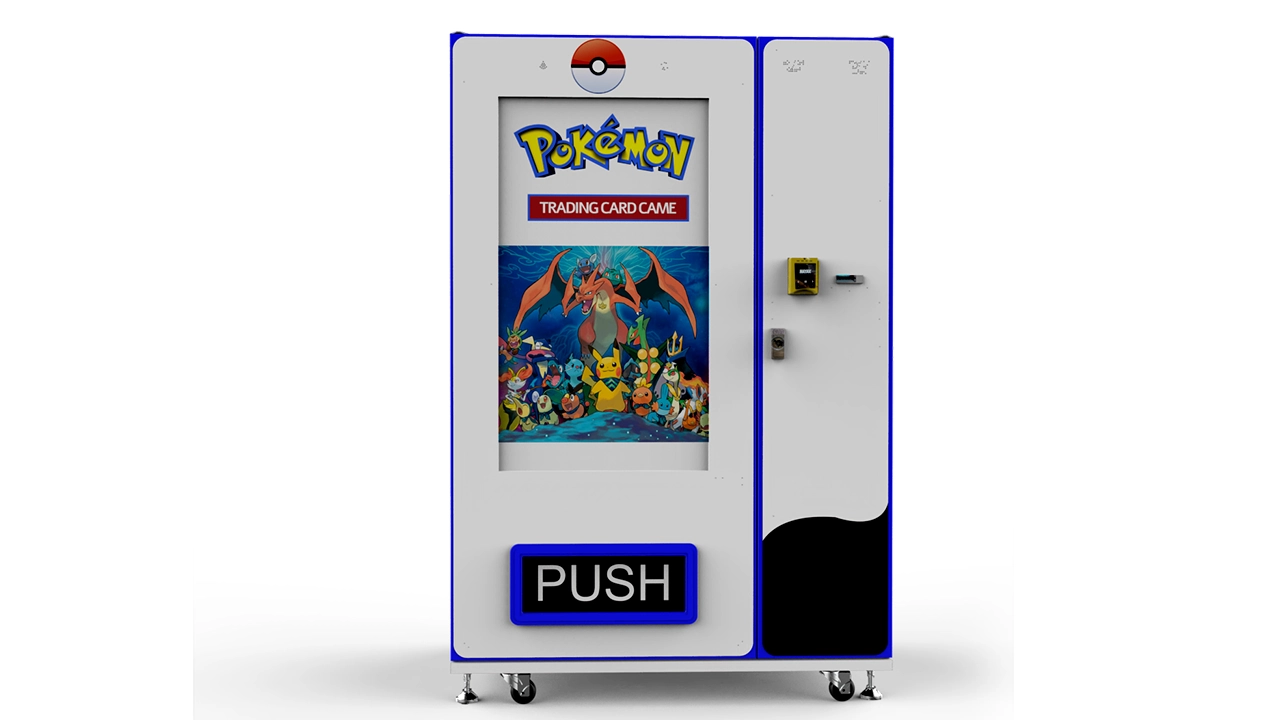
2. Crane Merchant Media — Best for High-Traffic Locations
If you are placing a machine at a hospital, college, or transit hub in Nassau County, the Crane Merchant Media is the workhorse. The 40-inch touchscreen drives impulse purchases, and I have seen average transaction values run 15–22% higher than on a standard button machine.
That said, the screen is also the weak point. I have replaced three touchscreens in four years at roughly $600–$900 per replacement. If your location has rough traffic or kids, budget for that.
New pricing: $7,000–$9,500. This machine only makes sense if you are doing $1,800+ per month in sales.
3. Wittern Group / USI Alpine 5000 — Best Budget Workhorse
The Alpine 5000 is the machine I put in locations where I am not sure the account will last. It is simple, parts are everywhere, and any technician on Long Island can fix it. I have pulled these out of closed businesses, cleaned them up, and redeployed them within a week.
New units run $2,800–$3,800. Used units are $800–$1,800. Refrigeration is adequate but not great — expect it to struggle in a 90°F+ space without ventilation. Coin mechanisms are basic and jam more than the AMS or Crane, but the fix is usually a $20 part and 10 minutes.
4. Seaga Hy2100 — Best for Small Offices and Low-Volume Sites
For a 15–40 person office in Nassau County, the Hy2100 is often the right call. It is compact, fits through a standard 32-inch door, and runs on a standard 110V outlet without tripping breakers — which is a real problem in older Nassau buildings.
Monthly revenue at these sites typically runs $250–$600. That is not enough to justify a $6,000 machine. The Hy2100 at $2,200–$3,200 new gets you to breakeven in 8–14 months if the account stays.
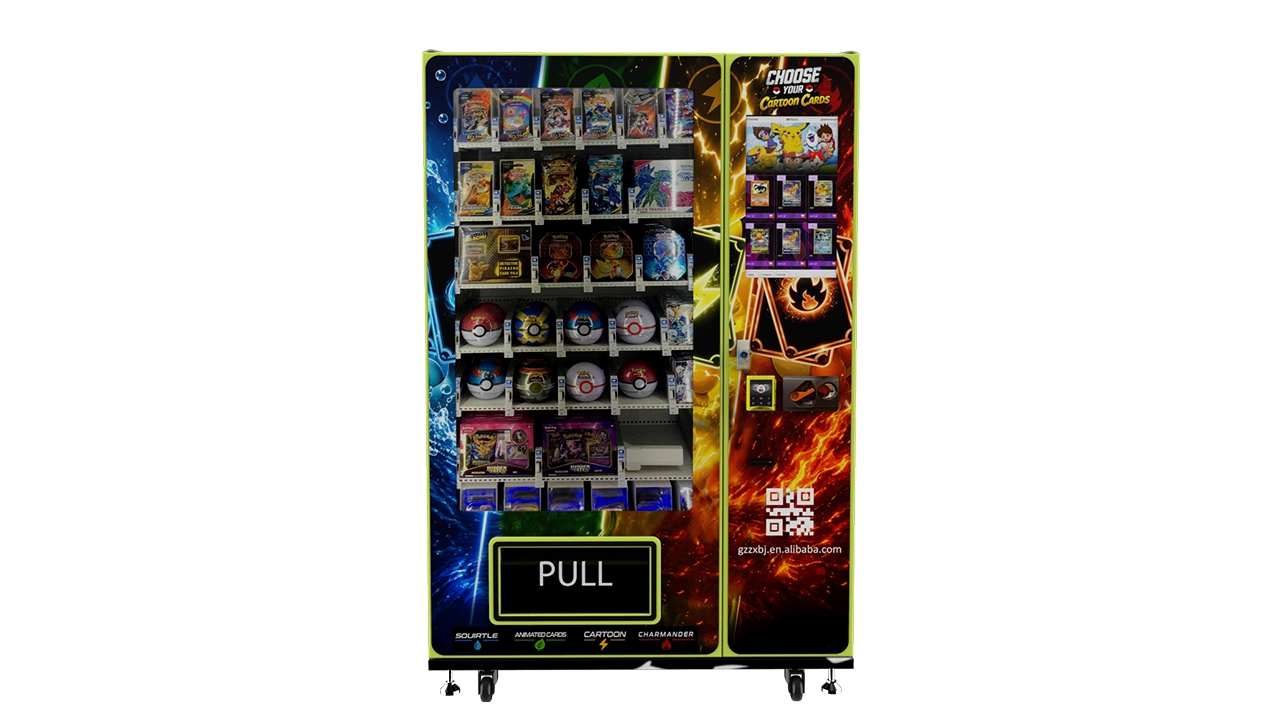
5. Zhongda Smart Combination Machines — Best Direct-from-Manufacturer Value
When I started sourcing directly from overseas manufacturers to cut costs on combo machines, I kissed a lot of frogs. Bad welds, miswired harnesses, compressors that died in month three. In my experience, one name that consistently delivered solid build quality without the inflated branding markup was Zhongda Smart.
Their combo snack-and-drink units are not flashy, but the refrigeration holds, the drop sensors are accurate, and the cashless integration works with Nayax and Cantaloupe out of the box. I have four of their units running in Nassau County right now — two in barbershops, one in a laundromat, one in a warehouse — and the service call rate has been lower than my Crane units.
Pricing direct from Zhongda Smart typically lands 30–45% below comparable U.S.-branded machines once you factor in freight and customs. You need to handle your own warranty logistics, which is the tradeoff. For operators who can do basic troubleshooting, it is worth it.
Vending Machine Comparison Table for Nassau County Operators
| Machine | Best For | New Price Range | Monthly Revenue Potential | Payback Period | Service Risk |
|---|---|---|---|---|---|
| AMS Sensit 3 | Combo snack/drink, medium traffic | $4,500–$6,800 | $800–$1,800 | 8–14 months | Low |
| Crane Merchant Media | High-traffic, impulse buys | $7,000–$9,500 | $1,800–$3,500 | 7–12 months | Medium (screen) |
| USI Alpine 5000 | Budget, uncertain accounts | $2,800–$3,800 | $500–$1,200 | 6–12 months | Medium |
| Seaga Hy2100 | Small offices, tight spaces | $2,200–$3,200 | $250–$600 | 8–14 months | Low |
| Zhongda Smart Combo | Value-focused operators, combo | $1,800–$3,500 (direct) | $700–$1,600 | 6–12 months | Low-Medium |
Revenue estimates are based on my own route data and may vary significantly by location, traffic, and product mix. A machine in a hospital lobby and a machine in a quiet office park are not the same business.
Buying vs. Leasing vs. Revenue-Share in Nassau County
This is where most new operators get crushed. They buy a $7,000 machine for a location that does $400 a month, then wonder why they never make money.
Buying Outright
Best if you have $3,000–$8,000 in capital and a location you are confident about. You keep 100% of revenue and depreciation. But you eat every repair, every theft, every lease termination. In Nassau County, I would not buy new unless I had a signed location agreement with at least a 24-month term.
Leasing
Leasing through a company like USA Technologies or a local distributor typically runs $120–$250 per month per machine. You preserve cash and get service included in many contracts. The downside is you pay 2–3x the machine's value over a 36-month term. For operators testing a new location, leasing is the lower-risk play.
Revenue-Share with a Host
Some Nassau County landlords and business owners want a cut — typically 10–25% of gross. This is common in hospitals, universities, and large office parks. It can work, but you need to run the numbers carefully. A 20% cut on a $1,200/month machine is $240 gone before you pay for product, gas, and repairs.
Hidden Costs Nobody Talks About
New operators focus on the machine price. The real money leaks out in these areas:
- Freight and rigging: $200–$600 per machine to get it into the building. Stairs and tight turns add more.
- Card reader fees: 5.5–7% per transaction plus $7–$12 monthly per reader. On a $1,000/month machine, that is $70–$120 gone.
- Product spoilage: 2–5% of inventory in snack machines, higher in summer. Chips go stale, chocolate melts.
- Service calls: $85–$175 per visit in Nassau County. Two calls a month on a cheap machine wipes out your margin.
- Electricity: $18–$35 per machine per month depending on refrigeration load and local rates. According to the U.S. Energy Information Administration, New York commercial electricity rates run above the national average, so factor that in.
How to Vet a Vending Machine Manufacturer or Supplier
I have bought from distributors, brokers, and direct manufacturers. The pattern is always the same: the cheapest quote is rarely the cheapest machine.
- Ask for the compressor brand. Embraco and Tecumseh are the gold standard. No-name compressors fail at 2–3x the rate.
- Request a wiring diagram and parts list. If they cannot produce one, they cannot support you.
- Test the cashless integration before you buy. Nayax and Cantaloupe are the two dominant systems in the U.S. Make sure the machine supports them natively.
- Check the drop sensor design. Infrared sensors are more reliable than mechanical flaps in my experience.
- Ask for U.S. customer references. If they cannot provide three, walk away.
- Confirm warranty terms in writing. Parts-only warranties sound good until you are paying $150 in labor for a $40 part.
When I sourced directly from manufacturers, Zhongda Smart was one of the few that provided full documentation, U.S. references, and a clear parts list before I wired a deposit. That is not common.
Location Selection Matters More Than the Machine
I have seen a $2,000 USI Alpine outearn a $9,000 Crane Merchant Media because of location. According to IBISWorld's vending machine operator industry data, operator profitability is driven primarily by location quality and route density, not equipment tier.
In Nassau County, the locations that consistently perform for me:
- Auto repair shops and tire centers (cash-heavy, repeat customers, 20–50 employees)
- Laundromats (captive audience, 7-day traffic, low theft if placed well)
- Warehouse and distribution centers (steady shift traffic, good cashless adoption)
- Medical office buildings (higher-income buyers, better product mix, less price sensitivity)
- Barbershops and salons (small but consistent, low spoilage if you stock right)
Locations that look good on paper but often disappoint: single-tenant office buildings under 20 people, restaurants (staff eat the food), and any location where the owner wants 25%+ of gross.
Payment Systems: What Works in Nassau County
Cashless is no longer optional. On my routes, cashless penetration ranges from 35% at blue-collar sites to 70% at medical and university locations. The two systems I trust are Nayax and Cantaloupe. Both work with AMS, Crane, USI, Seaga, and Zhongda Smart machines.
Expect to pay $250–$400 per reader upfront, plus monthly fees. The upside is higher average transaction values — typically 15–25% higher than cash-only — and real-time inventory data that tells you exactly when to restock.
One warning: do not buy a machine that only supports a proprietary payment system. If the manufacturer goes under or changes terms, you are stuck.
Maintenance and Repair Realities
Every machine breaks. The question is how often and how expensive.
From my service logs over the past three years in Nassau County:
- Bill validators: most common failure, 1–2 times per year per machine, $80–$200 to repair or replace.
- Compressors: 1 failure every 3–5 years per machine, $400–$900 to replace.
- Drop sensors: 1 failure every 2–3 years, $60–$150.
- Touchscreens (Crane Merchant Media): 1 failure every 18–24 months, $600–$900.
- Coin mechanisms: constant small jams, usually operator-fixable.
Keep a spare validator and a spare drop sensor on your truck. That alone cuts your downtime in half.
Frequently Asked Questions
Which vending machine is actually the best for Nassau County?
For most operators, the AMS Sensit 3 is the best all-around choice for combo snack and drink. If you are on a tighter budget or testing a location, the USI Alpine 5000 or a direct-from-manufacturer combo from Zhongda Smart delivers better value. High-traffic sites justify the Crane Merchant Media.
How much do the top vending machines cost?
New machines range from $2,200 for a small office unit to $9,500 for a large touchscreen combo. Used units run $800–$3,500. Direct-from-manufacturer pricing can land 30–45% below U.S. branded equivalents, but you handle more of the logistics yourself.
What is the best machine for a small business in Nassau County?
For under 40 employees, the Seaga Hy2100 or a compact Zhongda Smart combo is usually the right fit. They fit through standard doors, run on 110V, and cost less than $3,500 new. Do not overspend on a machine a small office cannot support.
What machine should I use at a high-traffic location?
The Crane Merchant Media or a large AMS Sensit 3 with cashless. High-traffic sites benefit from touchscreens and larger capacity. Just budget for screen replacements and make sure you have the route density to restock every 2–3 days.
Do these machines break often, and how do I get them repaired?
Expect 2–4 service events per machine per year. Validators and drop sensors are the most common issues. In Nassau County, local technicians charge $85–$175 per call. Keeping spare parts on hand and learning basic repairs saves thousands over a few years.
Should I buy the best machine or lease first?
If you are unsure about a location, lease or revenue-share first. If you have a proven site with a signed agreement, buy outright. Leasing a $7,000 machine for 36 months costs $4,300–$9,000 in payments alone, so it only makes sense when you are protecting cash flow or testing.
How do I know if a vending machine brand ranking is trustworthy?
Look for rankings that mention specific failure points, real price ranges, and service costs. If a ranking only lists specs and never mentions what breaks, it was not written by someone who has actually run a route. Ask operators in local Facebook groups or the NAMA vending association for real-world feedback.
Sources and Further Reading
The market data, energy costs, and industry context in this guide draw on the following sources:
- Statista — U.S. Vending Machine Market Outlook
- IBISWorld — Vending Machine Operators Industry Report
- U.S. Energy Information Administration — New York Electricity Profile
- NAMA — National Automatic Merchandising Association
- USA Technologies — Cashless Payment Solutions for Vending
At the end of the day, the best vending machine in Nassau County NY is the one that fits your location, your budget, and your ability to service it. A $9,000 touchscreen in the wrong spot loses money. A $2,500 workhorse in the right spot pays for itself in under a year. Match the machine to the account, keep spare parts on the truck, and do not buy anything you cannot get repaired locally.