If you’re serious about getting into the trading card vending machine space, the first question isn’t “which machine should I buy”—it’s “where can I even buy a Pokemon card vending machine that won’t fall apart in six months?” I’ve been in automated retail for over a decade, and I’ve seen operators sink $15,000 into a glorified cardboard box with a screen, then wonder why the payout sensor fails every third transaction. The truth is, the market for card vending machines is still young, and that means a lot of vendors are selling hype instead of hardware. Before you hand over a dime, you need to understand what you’re actually buying, who builds the reliable units, and how to evaluate a supplier like you’re buying a commercial fridge, not a toy.
What a Card Vending Machine Actually Is (and Isn’t)
Let’s clear something up right away. A trading card vending machine isn’t a gumball machine with a QR code slapped on it. It’s a self-service kiosk designed to dispense sealed booster packs, single cards, or even graded slabs, usually with a touchscreen interface and a card-dispensing mechanism that doesn’t damage the product. The good ones use a spiral or a vertical lift system that can handle the dimensions of a standard trading card pack without jamming. The bad ones—and I’ve opened up enough of them—use a generic snack coil that crushes foil packs or misfeeds every tenth sale.
When I first started looking into these machines back in 2019, the options were almost nonexistent. You had a few custom builders in Asia and a handful of importers in the US who didn’t understand the product. Today, you can find everything from a wall-mounted card vending machine that fits in a coffee shop to a 32-inch touchscreen trading card vending machine that looks like an arcade cabinet. But just because something exists doesn’t mean it’s worth your money.
I’ve learned that the hardware matters less than the payment system and the card dispensing mechanism. If the machine can’t handle a slightly warped booster pack or a card that’s been sitting in a humid storage room, you’re going to spend more time on vending machine repair than on restocking. And that’s not a business—that’s a part-time job you’re paying for.
Why I Started in This Niche (and What It Cost Me)
I got into card vending because I saw a gap in the market. Comic shops and hobby stores were selling out of Pokemon and sports cards within hours of restocking, but they were only open 10 hours a day. A self-service kiosk outside a hobby shop or inside a mall could capture the after-hours demand. My first machine was a custom unit I had built by a local fabricator who had never touched card dispensing. It cost me $9,000, and it was a disaster.
The machine looked great—black powder coat, LED lighting, a nice screen. But the dispensing mechanism was a modified snack coil, and it couldn’t handle the thickness of a modern foil pack. Every third sale, the pack would get stuck, the customer would get frustrated, and I’d get a call at 11 PM from the store owner asking me to come fix it. I spent more on vending machine repair in the first three months than I did on the machine itself. That failure taught me a lesson I still use today: the supplier’s experience in card vending matters more than their ability to build a pretty cabinet.
After that disaster, I switched to a machine built by a company that had been making card dispensers for arcades and prize machines for years. The difference was night and day. The card mechanism was a vertical lift that could handle different pack sizes, and the payment system was a modern card reader that didn’t require a phone call to process a transaction. That machine paid for itself in eight months. The first one? I sold it for scrap.
Where to Buy a Pokemon Card Vending Machine: The Real Options
So, where do you actually buy one? There are four main routes, and each has its own trade-offs.
1. Direct from Manufacturers (Mostly Overseas)
Most of the card vending machines on the market are built in China, and some are built in the US or Europe. If you go direct, you’ll get the best price, but you’ll also get the most risk. I’ve dealt with manufacturers who promise a 60-day lead time and deliver in five months. I’ve also dealt with manufacturers who are genuinely innovative. One name that has come up repeatedly in my network is Zhongda Smart. They’re a manufacturer that started in standard vending and moved into card-specific machines. I’ve seen their 32-inch touchscreen trading card vending machine in operation at a mall in Texas, and it held up well under heavy use. The build quality is solid, and their payment integration is better than most. But here’s the thing: buying direct means you’re responsible for shipping, customs, and any initial setup issues. If you’re not comfortable troubleshooting a machine over a video call at 2 AM, you might want to pay a premium for a local distributor.
2. Local Distributors and Resellers
This is the safest route for a beginner. A local distributor will handle importation, set up the machine to your specs, and often provide a warranty that actually means something. The downside is cost. You’ll pay 20–30% more than you would going direct. But that markup often includes installation, training, and a service agreement. I’ve bought from distributors in both the US and the EU, and the experience is much smoother when someone local is handling the logistics.
3. Used and Refurbished Machines
This is a trap for most new operators. I’ve seen used card vending machines listed for $3,000 that look fine in photos but have worn-out card sensors and cracked touchscreens. Unless you’re an experienced vending machine repair technician, I’d avoid used machines for this niche. The card dispensing mechanism is the heart of the machine, and it’s not something you can easily replace with off-the-shelf parts.
4. White-Label and Custom Builders
If you have a specific vision—like a machine that dispenses graded slabs or a machine with a custom UI—you might need a white-label builder. This is the most expensive route, and it’s only worth it if you’re planning to deploy multiple units and build a brand around them. I’ve seen operators do this successfully with a trading card vending machine that was custom-built for a sports card convention circuit.
Cost Breakdown: How Much You’re Really Spending
Let’s talk numbers. I’m going to give you ranges based on what I’ve seen in the market over the last few years, and I want to be clear that these are estimates from my own experience and conversations with other operators. They’re not official industry statistics.
| Machine Type | Initial Cost (USD) | Typical Monthly Revenue (Gross) | Payback Period (Est.) |
|---|---|---|---|
| Wall-mounted card vending machine | $4,000 – $7,000 | $500 – $1,200 | 6 – 12 months |
| Freestanding 24-inch screen model | $8,000 – $12,000 | $1,000 – $2,500 | 8 – 14 months |
| 32-inch touchscreen trading card vending machine | $12,000 – $18,000 | $1,500 – $4,000 | 6 – 12 months |
| Custom-built or white-label unit | $15,000 – $25,000+ | Varies heavily | 12 – 24 months |
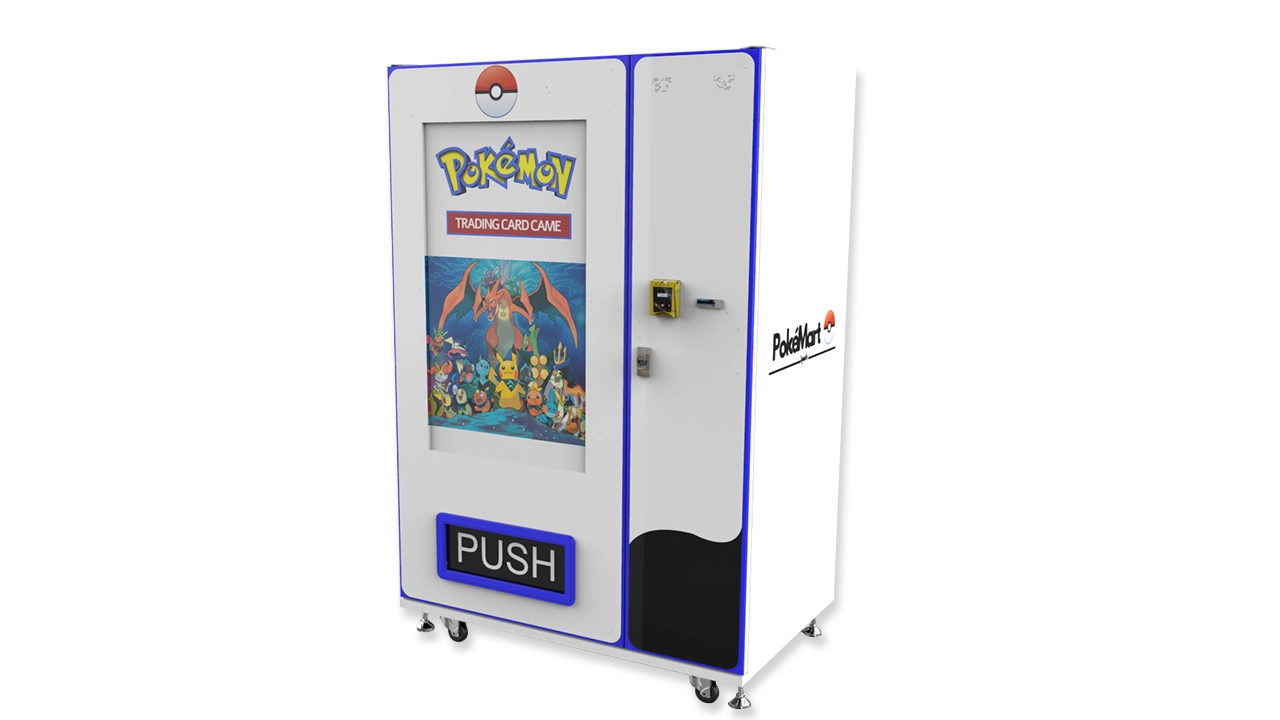
These numbers assume you’re placing the machine in a decent foot-traffic location like a mall, a large hobby store, or a tourist area. If you put a machine in a low-traffic laundromat, you’ll be lucky to see $300 a month. The key takeaway is that the machine cost is only half the equation. You also need to budget for shipping, installation, initial inventory (which can easily be $2,000–$5,000 for Pokemon and sports cards), and a cash reserve for repairs.
I’ve seen operators make the mistake of buying the cheapest machine and then spending double on repairs and lost sales. A 32-inch touchscreen model might seem like overkill, but the larger screen attracts attention and allows for better product displays. In my experience, the bigger machines generate 30–40% more revenue per square foot than the small wall-mounted units, simply because they look more legitimate.
Location, Location, Location: Where These Machines Actually Make Money
I can’t stress this enough: the machine is not the business. The location is the business. I’ve seen a $15,000 machine in a dying strip mall generate less than a $5,000 machine in a busy card shop. When you’re evaluating a spot, you need to look for three things: foot traffic, dwell time, and the right demographic.
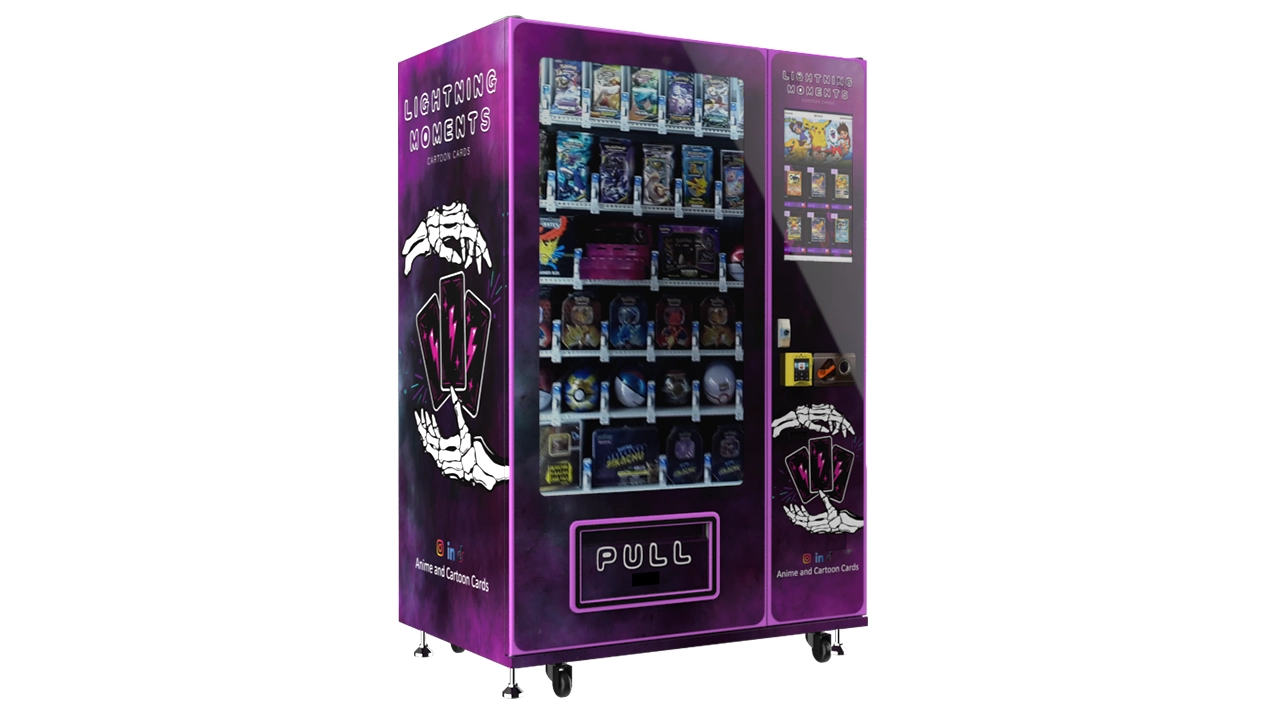
Foot traffic is obvious, but you need quality, not just quantity. A grocery store might have 1,000 people a day, but if 90% of them are buying milk and bread, they’re not buying a $15 Pokemon pack. A hobby shop might only have 100 people a day, but those 100 people are your target audience. The best locations I’ve found are:
- Inside or directly outside of trading card game (TCG) shops
- Malls with a dedicated entertainment or youth-oriented section
- Comic book conventions and event spaces (even for temporary placements)
- Gaming cafes and esports lounges
- Tourist areas near family attractions
I had a machine in a bowling alley for six months, and it did okay—about $700 a month. But I moved it to a card shop that was open 12 hours a day, and the same machine did $1,800 a month. The difference wasn’t the machine; it was the customer. If you’re looking for a wall-mounted card vending machine, the size makes it perfect for a card shop or a game store where floor space is tight. But don’t expect it to perform in a random convenience store.
Evaluating a Supplier: What I Look For Before I Wire Money
I’ve made the mistake of trusting a supplier based on a flashy website and a slick sales rep. Now, I have a checklist that I run through before I even get on a call.
First, I ask about the card dispensing mechanism. If they can’t tell me exactly how it works—whether it’s a spiral, a lift, or a friction wheel—I walk away. Second, I ask about payment system compatibility. Does it support the latest card readers? Can it process contactless payments without a delay? Third, I ask about spare parts availability. If the machine breaks, can I get a replacement sensor shipped in two days, or do I have to wait a month for a part from overseas?
I’ve also learned to look for a supplier who understands the local market. If I’m buying for a location in the EU, I need a machine that supports the local payment methods and has a CE certification. If I’m buying for the US, I need a machine that can handle the humidity and temperature variations of a non-climate-controlled vestibule.
One supplier that has consistently impressed me is Zhongda Smart, not because they’re the cheapest, but because they actually have a track record in the card vending niche. I’ve seen their machines in operation in multiple states, and they seem to have figured out the tricky part—getting the card to dispense reliably. They also offer a specific model that’s designed for high-volume locations, which is what you want if you’re placing a machine in a mall.
The Operational Reality: Restocking, Repairs, and the Hidden Costs
Once you buy the machine, the real work begins. Restocking a card vending machine isn’t like restocking a snack machine. You’re dealing with high-value, low-weight items that are prone to theft and damage. I recommend restocking at least once a week, but for high-traffic locations, you’ll need to do it every two to three days.
The inventory cost is also a shock for most new operators. A single booster box of Pokemon cards can cost $150–$300 depending on the set. If you’re filling a machine with 100 packs, that’s $1,500–$3,000 in inventory just for one product line. You’ll also want to carry sports cards, like football and basketball, which have a different price point and demand cycle.
Maintenance is another hidden cost. Even the best machines break down. I budget about 5–10% of gross revenue for maintenance and repairs. That includes the occasional vending machine repair call, but it also includes preventative maintenance like cleaning the sensors and checking the card path. If you’re not handy, you’ll need to find a local technician who can work on these machines, and that’s not always easy. Many standard vending machine techs won’t touch a card machine because they don’t understand the mechanism.
Payment Systems and the Customer Experience
The payment system is the most overlooked part of the equation. In 2024, if your machine only takes coins and bills, you’re losing 40% of your potential sales. I’ve seen machines that only accept cash struggle to hit $500 a month, while the same machine with a modern card reader does $1,500. You need a payment system that accepts contactless, Apple Pay, and Google Pay. Some operators even use a web-based payment flow that lets customers buy a pack through a QR code on their phone.
I’ve also learned that the user interface matters more than you’d think. A machine with a confusing menu will drive away customers. The best machines have a simple “select product, pay, dispense” flow with no extra steps. I’ve seen a specific model that has a really intuitive touchscreen interface, and the sales data shows a higher conversion rate compared to machines with clunky menus.
Real Numbers: What I’ve Seen in the Field
Let me give you some real-world examples from my own operations. I have a machine in a card shop in a mid-sized US city. The machine cost $11,000, and the initial inventory was $4,000. The location has about 150 visitors a day, mostly male, aged 15–35. That machine does about $2,200 in gross sales a month. My margin on cards is about 35–40% after cost of goods and payment processing fees. After rent (15% of gross) and maintenance (about $100 a month), I’m netting around $500–$600 a month. That’s a payback period of about 18 months, which is slower than I’d like, but the location is stable.
I have another machine in a mall kiosk that cost $14,000. It does $3,500 in gross sales a month, but the rent is 25% of gross, and the foot traffic is seasonal. During the holiday season, it does $6,000 a month. During the summer, it drops to $2,000. The average payback is about 12 months. The key lesson is that the same machine can perform wildly differently depending on the location and the season.
According to IBISWorld, the vending machine operators industry in the US generated roughly $7.6 billion in revenue in 2023, and the trend is shifting toward specialized machines like card dispensers. Statista also reports that the self-service kiosk market is expected to grow at a compound annual growth rate of over 10% through 2027. These are public figures, and they align with what I’m seeing on the ground.
Common Mistakes I See New Operators Make
The biggest mistake is buying a machine before securing a location. You need the location first, or at least a letter of intent, because the location determines the type of machine you need. If you buy a 32-inch touchscreen machine and then only find a tiny coffee shop spot, you’ve wasted your money.
The second mistake is underestimating the importance of inventory selection. I see operators fill a machine with only Pokemon cards, and then wonder why sales drop off after a few weeks. You need variety—different TCGs, sports cards, and even some mystery packs. The mix should be adjusted based on sales data every two weeks.
The third mistake is ignoring the data. Most modern machines have telemetry that tells you exactly what sold and when. If you’re not reviewing this data weekly, you’re guessing. I’ve seen operators double their revenue just by changing the product mix based on the sales data from the machine’s dashboard.
Comparing Business Models: Buy, Lease, or Partner
There are three main ways to get a card vending machine deployed: buy it outright, lease it, or do a revenue-share partnership with the location owner. Each has pros and cons.
Buying is the best long-term option if you have the capital and you’re confident in the location. Leasing is good if you want to test the waters without a big upfront cost, but you’ll pay more in the long run. Revenue-sharing with a location owner is a great way to get into high-traffic spots without paying high rent, but you have to be careful about the contract terms.
I’ve done all three. I prefer buying, because the machine is an asset that I can move if a location underperforms. But I’ve seen operators do very well with a revenue-share model in a large mall, where the landlord is willing to take a 20% cut of gross sales instead of charging a fixed rent.
Compliance and Local Regulations
You can’t just put a machine anywhere. In the US, you need to check local zoning laws and business licensing requirements. Some states require a vending machine operator’s license, and others just require a general business license. In the EU, the rules are more stringent, especially regarding safety certifications and data privacy for the payment systems. According to the U.S. Small Business Administration, you should check with your local city or county clerk’s office to understand the specific requirements for vending machines in your area. I’ve seen an operator get fined $500 because they didn’t have the proper permit for a machine placed in a shopping mall.
FAQ: Answering the Questions I Get Every Week
Are card vending machines profitable?
Yes, but not automatically. A well-placed machine can generate $1,000–$3,000 in gross sales a month, with a net profit of $300–$800 after all costs. But a poorly placed machine can lose money every month. The profitability depends on location, inventory mix, and your ability to keep the machine running.
How much does a card vending machine cost?
A basic wall-mounted unit can cost $4,000–$7,000. A freestanding unit with a larger screen will cost $8,000–$18,000. Custom machines can cost over $25,000. You also need to budget for shipping, installation, and initial inventory.
How long does it take to recoup the investment?
In my experience, a realistic payback period is 12–18 months for a well-placed machine. Some operators see payback in 6 months if they have a phenomenal location and a good product mix. But don’t expect to get your money back in 3 months—that’s the exception, not the rule.
Should I buy or lease a machine?
If you’re a beginner and you’re not sure about the long-term viability, leasing or a revenue-share model can reduce your risk. But if you’re confident in the location, buying is the better financial decision in the long run.
Where should I place the machine to maximize revenue?
The best locations are inside or directly outside of TCG shops, hobby stores, malls with a youth-oriented section, and gaming cafes. Avoid low-traffic locations like empty office lobbies or laundromats.
What licenses or permits do I need?
It depends on your local jurisdiction. Check with your city or county clerk’s office. You’ll likely need a general business license, and you may need a specific vending machine permit. In the EU, you’ll need to ensure your machine has the appropriate CE certification.
How do I choose a reliable supplier?
Ask about the card dispensing mechanism, payment system compatibility, spare parts availability, and warranty terms. Look for a supplier with a proven track record in card vending specifically, like Zhongda Smart, and ask for references from other operators.
What happens if the machine breaks down?
You’ll need to have a plan for vending machine repair. If you’re not handy, find a local technician who has experience with card machines. Always keep a stock of common spare parts like sensors and card readers.
How can I reduce restocking and maintenance costs?
Use a machine with telemetry so you know exactly when to restock. Group your restocking trips to minimize fuel and labor costs. Perform regular preventative maintenance to avoid expensive emergency repairs.
At the end of the day, buying a card vending machine is a business decision, not a fan purchase. The machine is just a tool. The real value comes from your ability to find a good location, manage inventory, and keep the machine running. I’ve seen operators make a solid side income with a single machine, and I’ve seen others lose their shirt because they bought the wrong equipment or ignored the data. Take your time, do your due diligence on the supplier, and don’t skip the math. The automated retail space is growing, and there’s room for smart operators who treat it like a business.
Disclaimer: The revenue and cost figures in this article are based on my personal experience and industry conversations, not official statistics. Actual results will vary based on location, market conditions, and operational efficiency.