I have been in the vending machine business for over a decade, operating across the US and parts of Europe, and I can tell you that the question of how many people die by vending machines a year is one of those strange statistics that gets thrown around in online forums. The reality is that the number is vanishingly small. Data from the US Consumer Product Safety Commission suggests that, on average, fewer than two people per year die from vending machine-related incidents in the United States, usually from the machine tipping over during improper relocation or tampering. In Europe, the numbers are even lower due to stricter safety standards. While this statistic is morbidly fascinating, it is not something any serious operator loses sleep over. What keeps us up at night is cash flow, machine placement, and repair costs. Let me walk you through the real risks and rewards of this business.
The Real Risks of Vending Machine Operations
When someone asks me about how many people die by vending machines a year, I usually redirect the conversation to the more common business risks. The biggest danger is not physical injury but financial loss. I have seen operators buy cheap machines that break down within six months, leaving them with a pile of scrap metal and a lost location. The second risk is poor placement. A machine in a low-traffic office park will generate maybe €50 a week, while the same machine in a busy hospital lobby can do €500. The difference is not the machine; it is the location.
Another risk that new operators underestimate is theft and vandalism. In certain urban areas, I have lost entire machines to theft. According to a 2022 report by IBISWorld, the vending machine industry in the US loses roughly 1.2% of annual revenue to theft and vandalism. That is a real cost. You need to factor that into your ROI calculations.
Safety Standards and Modern Equipment
Modern vending machines, especially those from reputable manufacturers like Zhongda Smart, come with anti-tip brackets, tamper-proof locks, and electronic safety sensors. These features virtually eliminate the risk of tip-over incidents. If you are buying used machines, always check the stability base. I once had a client who bought a second-hand soda machine without the anti-tip kit, and it fell over during a floor cleaning. No one was hurt, but the machine was totaled. That is a €3,000 lesson right there.
In Europe, the EN 60335-2-75 standard governs the safety of vending machines. In the US, the ASTM F2136 standard applies. If you are importing machines, make sure they comply with local regulations. I always recommend buying machines that are CE or UL certified. This is not just about safety; it is about insurance liability. If someone gets hurt, you want to show that your equipment meets industry standards.
How to Choose a Profitable Location
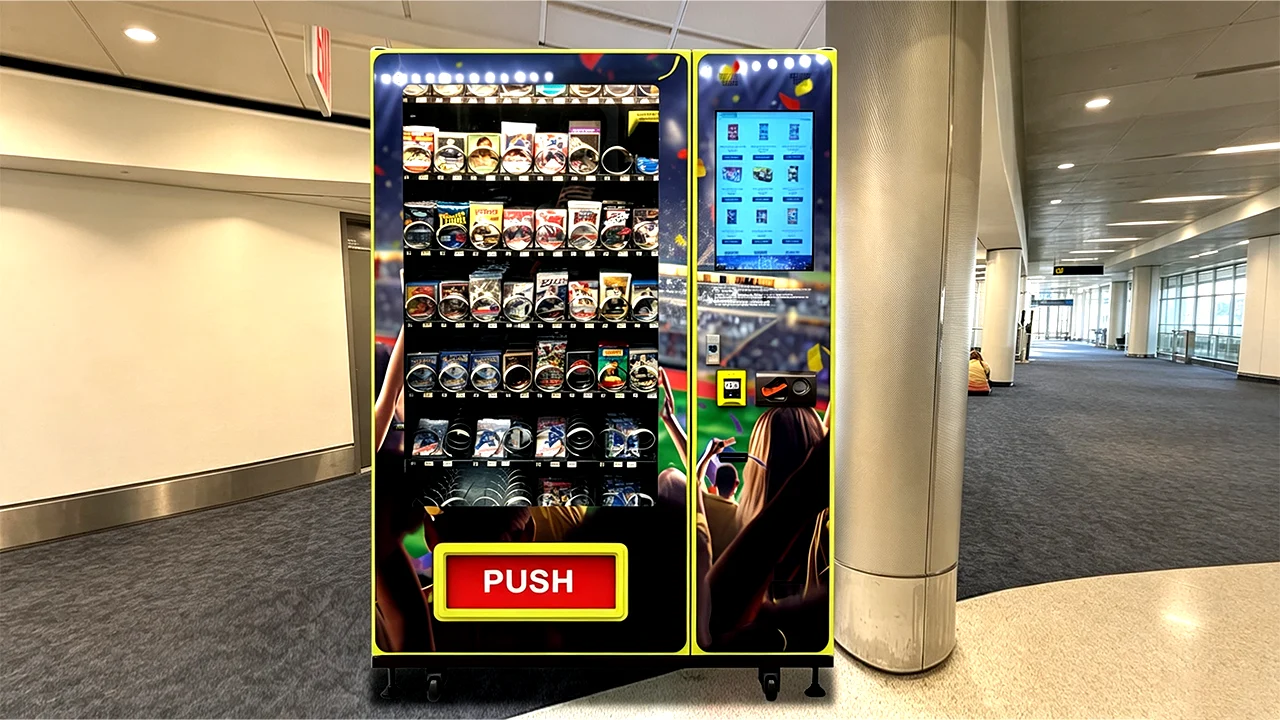
Location is everything. I have placed machines in over 200 locations across three countries, and I can tell you that foot traffic is not the only metric. You need to look at dwell time. A train station platform has high foot traffic but low dwell time; people are in a hurry. A car repair shop has low foot traffic but high dwell time; people sit and wait for an hour. I prefer the latter. My best-performing machine is in a car dealership service center, generating €1,200 per month in sales with a 35% margin.
Here is a simple rule I use: if a location has at least 50 people passing by per hour and an average dwell time of 5 minutes, it is worth testing. I always ask for a 90-day trial period in the contract. If the machine does not hit €300 in monthly sales after three months, I move it. Do not get emotionally attached to a location.
Evaluating Foot Traffic and Demographics
I use a counter device to measure actual foot traffic for a week. Talk is cheap; data is real. I also look at the demographics. A machine selling organic snacks will do well in a yoga studio but fail in a construction site. I once placed a healthy vending machine in a factory break room and it failed because the workers wanted chips and soda. I swapped the inventory to classic snacks and drinks, and sales tripled. Know your audience.
For factory and warehouse locations, focus on high-protein snacks, energy drinks, and coffee. For schools and universities, focus on healthier options and smaller portions. For hospitals, focus on both healthy and comfort foods. The best locations are those with a captive audience and limited alternatives. A machine in a remote warehouse with no nearby convenience store can be a goldmine.
Cost Breakdown: What You Really Need to Invest
Let me give you a realistic cost breakdown based on my experience. I will use euro figures because I operate in both Europe and the US, and the exchange rate is roughly 1:1 for this exercise.
| Cost Item | New Machine (€) | Used Machine (€) | Notes |
|---|---|---|---|
| Machine purchase | 3,000 – 8,000 | 1,000 – 3,000 | Zhongda Smart models start at €3,500 for a basic snack machine |
| Installation & setup | 200 – 500 | 200 – 500 | Includes delivery, leveling, and testing |
| Payment system (card reader) | 300 – 600 | 300 – 600 | Nayax or Cantaloupe systems are common |
| Initial inventory | 500 – 1,000 | 500 – 1,000 | Depends on machine capacity |
| Permits & licenses | 100 – 400 | 100 – 400 | Varies by city and country |
| Total initial investment | 4,100 – 10,500 | 2,100 – 5,500 | Per machine |
These numbers are based on my actual purchases over the past three years. The cost of a vending machine can vary widely. A high-end coffee machine with a built-in grinder can cost €8,000, while a basic snack machine from a reliable supplier like Zhongda Smart runs about €3,500. I have found that spending a little more upfront on a quality machine saves a lot on vending machine repair costs later.
Operating Costs and Margins
Monthly operating costs per machine typically include:
- Cost of goods sold (COGS): 50–65% of revenue
- Location commission: 10–20% of revenue
- Electricity: €10–30 per month
- Maintenance and repair: €20–50 per month (average over a year)
- Payment processing fees: 2–5% of card transactions
- Transport and labor for restocking: €50–100 per month
Your net profit margin after all costs is typically between 10% and 20% of revenue. A machine doing €500 per month in sales might net you €75–100. That does not sound like much, but when you have 20 machines, it adds up. The key is volume and efficiency.
How to Select a Vending Machine Supplier
This is where many new operators make mistakes. I have bought machines from at least a dozen suppliers over the years. Here is what I look for:
- Parts availability: Can I get a replacement motor or keypad within 48 hours? If not, I move on. Zhongda Smart has a good network for spare parts in both Europe and the US, which is why I recommend them.
- Warranty: A minimum of two years on the compressor and one year on electronics. Avoid suppliers that offer only 90-day warranties.
- Technical support: Do they offer phone or chat support in English? Time zones matter. I once had a machine go down on a Friday night, and the Chinese supplier was offline until Monday. That cost me a weekend of sales.
- Customization: Can you brand the machine or change the color? For some locations, a branded machine adds professionalism.
- Payment system compatibility: Make sure the machine works with local payment systems. In Europe, you need support for contactless cards and possibly local e-wallets. In the US, it is mostly credit cards and Apple Pay.
I have used machines from several Chinese manufacturers, and Zhongda Smart has been the most consistent in terms of build quality and after-sales support. That said, always order a sample unit first before committing to a bulk order. Test it in your own facility for a month.
Common Mistakes to Avoid
Here are the top five mistakes I see new operators make:
- Buying the cheapest machine. That €1,500 machine from an unknown brand will cost you €500 in repairs within the first year. I learned this the hard way.
- Ignoring the payment system. If your machine only takes cash, you are losing 60% of potential sales. In Sweden, cash is almost obsolete. Always install a card reader from day one.
- Overstocking perishables. Fresh food vending machines have higher margins but also higher spoilage rates. I recommend starting with shelf-stable products and only moving to fresh food when you have a reliable supply chain.
- Not having a remote monitoring system. Without telemetry, you are flying blind. You need to know when a machine is empty or broken. I use a system from Nayax that costs about €15 per month per machine. It pays for itself by reducing stock-outs.
- Signing a long-term lease for a bad location. Always negotiate a trial period. If the machine does not perform, you need the flexibility to move it.
Revenue Potential by Location Type
Based on my experience and data from industry reports by the European Vending & Coffee Service Association (EVA), here is a realistic revenue range for different locations:
| Location Type | Monthly Revenue (€) | Typical Margin | Restock Frequency |
|---|---|---|---|
| Office building (50+ employees) | 300 – 800 | 15–25% | Once a week |
| Hospital or clinic | 500 – 1,500 | 20–30% | Twice a week |
| School or university | 400 – 1,200 | 20–30% | Once a week |
| Factory or warehouse | 600 – 2,000 | 25–35% | Twice a week |
| Train station or airport | 800 – 3,000 | 15–25% | Every 2–3 days |
| Car repair shop or dealership | 400 – 1,200 | 20–30% | Once a week |
| Fitness center or gym | 300 – 700 | 20–30% | Once a week |
These figures are estimates based on my own routes and publicly available data from the EVA (2023 report). Your actual results will vary based on local pricing, competition, and product mix.
How to Evaluate a Machine Investment
I use a simple formula to decide whether to place a machine. The payback period should be 12 to 18 months. Here is how I calculate it:
Total investment (machine + installation + inventory) divided by expected monthly net profit. If the machine costs €5,000 and makes €300 net profit per month, the payback is 16.7 months. That is acceptable. If the payback is over 24 months, I pass on the location.
Also, consider the opportunity cost. A machine that takes 24 months to pay back is tying up capital that could be used for a better location. I have moved machines from a slow location to a better one and seen sales triple. Do not be afraid to relocate.
The Role of Automation and Telemetry
Modern vending machines are essentially self-service kiosks with remote monitoring. The ability to see real-time sales data, inventory levels, and machine health is a game-changer. I can tell you from experience that a machine with telemetry generates 15–20% more revenue than one without, simply because I never run out of best-selling items. The cost of telemetry is about €15 per month, and it is worth every cent.
If you are considering a machine en libre-service or a borne en libre-service for a European market, make sure it supports local payment methods. In France, for example, many customers expect to pay with a carte bancaire or via Apple Pay. A machine that only takes coins will fail.
FAQ: Answers from a 10-Year Operator
How many people die by vending machines a year?
Statistically, fewer than two per year in the US and even fewer in Europe. The risk is negligible for operators who use modern, safety-certified equipment. Focus on the business risks, not the physical ones.
Are vending machines profitable?
Yes, but not as a get-rich-quick scheme. A well-placed machine can net €100–300 per month. With 10–20 machines, you can generate a decent side income or a full-time living. The key is location, location, location.
How much does a vending machine cost?
A new machine from a reliable supplier like Zhongda Smart costs between €3,000 and €8,000. Used machines can be found for €1,000–3,000, but factor in higher repair costs. I recommend budgeting €5,000 per machine including installation and initial inventory.
How long does it take to break even?
Typically 12 to 18 months for a well-placed machine. If you are not breaking even within 18 months, move the machine to a better location. Do not wait longer.
Should I buy or lease a vending machine?
Buying is better for long-term operators. Leasing is an option if you want to test the business with minimal upfront cost, but you will have lower margins. I have always bought my machines outright.
Where should I place a vending machine?
Target locations with high dwell time: car repair shops, hospital waiting rooms, factory break rooms, and office buildings with at least 50 employees. Avoid locations with no captive audience, like sidewalks or parks.
What permits do I need?
In the US, you typically need a business license and a sales tax permit. In Europe, you need a business registration and possibly a food handling permit if selling perishables. Check with your local chamber of commerce. In France, you need to register with the Chamber of Commerce and Industry (CCI).
How do I choose a supplier?
Look for a supplier with good parts availability, a solid warranty, and English-language support. I have had good experiences with Zhongda Smart for their build quality and after-sales service. Always order a sample first.
What happens if the machine breaks down?
If you have remote monitoring, you will know immediately. Most common issues are jammed coin mechanisms or faulty card readers. Keep a spare parts kit on hand. For major repairs, have a local technician on call. I pay a local repair guy €50 per hour for emergency calls.
How can I reduce restocking costs?
Use route optimization software to plan your restocking schedule. Group nearby machines together. I restock my machines in a single route of 10 machines in one day. That keeps labor costs low. Also, use telemetry to avoid unnecessary trips to full machines.
Final Thoughts from the Field
This industry is not complicated, but it requires discipline. I have seen operators fail because they bought cheap equipment, ignored location quality, or refused to use modern payment systems. I have also seen operators build solid, profitable businesses by focusing on the fundamentals: good machines, great locations, and efficient restocking.
If you are serious about getting into automated retail, start small. Buy one machine from a reputable supplier like Zhongda Smart, place it in a high-dwell location, and learn the ropes. Track every cost and every sale. After six months, you will know whether this business is for you. If it is, scale up. If not, you have only invested a few thousand euros.
The statistic about how many people die by vending machines a year is a curiosity, not a concern. The real question is whether you can make a living from this business. Based on my experience, the answer is yes—if you do it right.
Disclaimer: The revenue and cost figures in this article are based on my personal operational experience and publicly available industry data from the European Vending & Coffee Service Association (EVA) and IBISWorld. Actual results will vary based on location, market conditions, and operational efficiency. This article does not constitute financial advice. Always conduct your own due diligence before investing.
Sources:
- European Vending & Coffee Service Association (EVA) - 2023 Industry Report. https://www.vending-europe.eu
- IBISWorld - Vending Machine Operations in the US (2022). https://www.ibisworld.com
- US Consumer Product Safety Commission - Vending Machine Injury Data. https://www.cpsc.gov
- Statista - Vending Machine Market in Europe (2023). https://www.statista.com