If you are reading this because you are trying to figure out whether a trading card vending machine is a real business or just a TikTok fad, let me save you the guesswork: it is a real business, but it is not a passive one. After a decade in automated retail, I have watched the card machine niche explode, and I have also watched a lot of operators lose their shirts because they treated it like a cash printer. The reality is that a trading card vending machine can generate serious revenue per square foot, but only if you understand location math, restocking discipline, and the difference between a collector’s mindset and an operator’s mindset. This guide is written from the trenches, not from a spec sheet, and it covers what actually works, what breaks, and what the payback period really looks like when you are the one refilling the hoppers at 11 PM.
Why Trading Card Vending Machines Are a Different Beast
I have run snack machines, drink machines, and even a few specialty kiosks in malls, but trading card machines are the only ones where customers line up before I finish restocking. The demand is real, but the operational quirks are unique. Unlike a soda machine where the product is uniform, a card machine dispenses items with wildly different values. That changes theft risk, machine design, and even how you handle a jam. A stuck bag of chips is a nuisance; a stuck foil pack of a rookie quarterback is a customer service disaster.
What makes this niche attractive is the margin. Sealed trading card products often carry a 40% to 55% gross margin, which is better than most snack items. But the flip side is that inventory is expensive and sometimes hard to source. You are not buying from a broadline distributor; you are competing with local game stores and online flippers for allocation. If you do not have a supply chain, the machine will sit empty, and an empty machine is just a very expensive piece of furniture.
Another difference is the psychology of the buyer. These are not impulse purchases. A collector walks up with a specific goal, whether it is ripping packs for a chase card or buying a single to complete a set. That means your machine needs to offer a curated experience, not just a random box of product. The machines that perform best are the ones that treat the screen as a storefront, with clear pricing and product images that look like they were taken by someone who cares.
What It Costs to Get Started (Real Numbers)
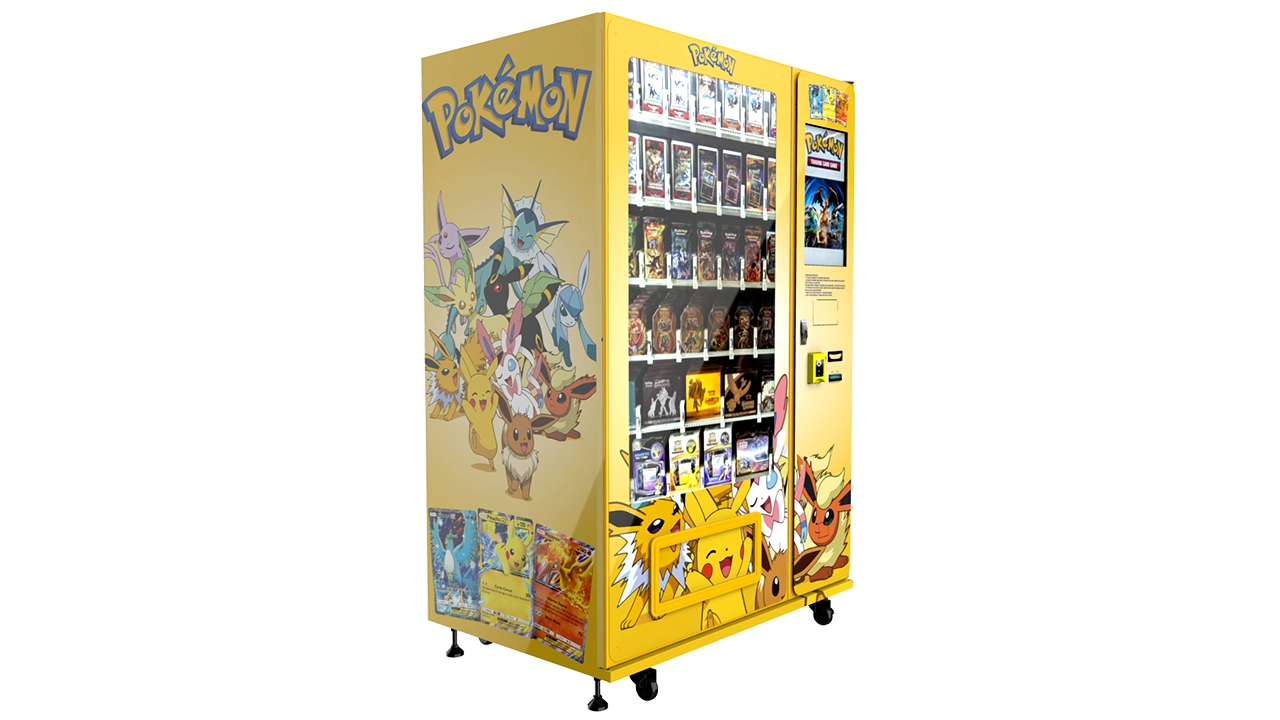
Let me give you the numbers I have seen across dozens of installations, both my own and those of operators I have mentored. A brand new, purpose-built trading card vending machine with a 32-inch touchscreen, multiple dispensing trays, and a secure cabinet will run you between $8,000 and $15,000 depending on the manufacturer and configuration. If you buy a wall-mounted unit, you can get in for around $5,000, but you sacrifice capacity and product variety.
I have also seen operators start with refurbished snack machines retrofitted with spiral dispensers. That is a mistake. Card products are lightweight, rectangular, and often come in boxes that do not fit standard snack spirals. You will spend more time adjusting shelves than selling cards. If you want a reference point, I have detailed breakdowns on the trading card vending machine costs that include the hidden expenses like custom shelving and payment system upgrades.
Beyond the machine, budget for installation, which usually runs $500 to $1,000 if you need electrical work, and a payment processor that can handle high-ticket transactions. You will also need a reserve of cash for inventory. I recommend starting with at least $5,000 in product, because a machine that looks half-empty in the first week will not build momentum. The total initial investment for a solid single-machine operation is typically $15,000 to $25,000, and that is before you factor in your own time.
How to Pick the Right Machine Configuration
There is no single best machine, only the best machine for your specific location and product mix. I have run box-style machines that hold 400 items and carousel machines that spin like a wheel of fortune. Each has a place, but you need to match the hardware to the sales velocity. A high-traffic mall kiosk needs a machine that can hold a lot of product and handle rapid restocking. A small card shop or comic store might do better with a compact unit that takes up less floor space.
Touchscreen vs. Button Interface
I will never buy another button-driven card machine. The problem is not the buttons; it is the lack of visual feedback. Customers want to see what they are buying, especially at price points above $10. A 32-inch touchscreen allows you to display high-resolution images of the actual sealed product, and it gives you the ability to change pricing and product names remotely. If you are comparing options, look at the 32-inch touchscreen trading card vending machine specs, because screen quality and response time matter more than you think.
Dispensing Mechanism
The most reliable systems use a lift-and-drop mechanism that grabs a single box or pack and delivers it to a bin. Spiral systems are cheaper but prone to jamming with lightweight items. I have also tested vacuum-style systems, but they are slow and require constant calibration. The lift-and-drop systems are more expensive, but they cut down on your vending machine repair calls significantly.
Security Features
Trading cards are high-value, low-bulk items, which makes them a target for theft. Look for a machine with a solid steel cabinet, a locking mechanism that is not easily pried, and an internal camera if possible. Some operators skip the camera to save money, and that is a mistake. When a theft happens, and it will, you need footage to file a police report and an insurance claim. I also recommend a machine with an alarm system that triggers if the door is opened without the proper key or code.
Where to Place the Machine (and Where Not To)
I have made the mistake of placing a machine in a location just because the rent was cheap. That machine did less than $200 in its first month. The rent was low, but the opportunity cost was high. Location is not about foot traffic alone; it is about the right kind of foot traffic. You want places where people already have disposable income and a habit of buying collectibles.
The Best Locations I Have Tested
Card shops are the obvious first choice, but you will face competition from the store’s own counter sales. I have found that a card shop works well only if you offer a product that the store does not stock, like older packs or exclusive bundles. Comic book shops are also good, especially if they do not already carry a large selection of trading cards. Hobby stores that sell model kits and board games are a hidden gem, because the customer base overlaps significantly with trading card collectors.
Another strong option is a laundromat or a family entertainment center, but only if the machine is placed near a seating area where people are waiting. I have one machine in a bowling alley that does more than $1,500 per month because it is right next to the arcade, where kids are begging their parents for something to do. The parents see the machine, recognize the product, and hand over a few dollars for a pack. It is an impulse buy, but it is an informed impulse buy.
Locations to Avoid
I would stay away from traditional office buildings and most gyms. The demographic is wrong, and the traffic is too transient. I also avoid locations that are not climate-controlled. Card products are sensitive to heat and humidity. A machine sitting in a warehouse with no air conditioning will have product that warps and becomes unsellable. You can get away with a wall-mounted card vending machine in a hallway, but only if the hallway is indoors and dry.
When evaluating a location, I use a simple rule: I need to see at least 100 people per hour passing by during peak times, and at least 30% of them need to be in the 15–45 age range. I also check if there is a competitive product nearby. If there is a game store selling single packs at the same price two doors down, I am not placing a machine there.
Payback Period and Realistic Revenue
Let me be blunt: anyone who tells you that you will make your money back in three months is either lying or lucky. The typical payback period for a well-placed card vending machine is 12 to 18 months. That assumes a monthly net profit of $800 to $1,500, which is realistic for a machine doing $2,000 to $3,500 in gross sales per month. I have seen machines do $5,000 in a single week during a Pokémon hype cycle, but those weeks are rare and unpredictable.
To calculate your payback, you need to subtract the cost of goods sold, which is usually 50% of revenue, and your location fee, which can be a flat rent or a commission. If you pay 20% commission on gross sales, that is another $400 to $700 per month on a $2,000 to $3,500 machine. Then you have payment processing fees, which run about 2.9% plus 30 cents per transaction, and your own time for restocking and maintenance. I factor in my time at $20 per hour, and a single machine takes about two hours per week to manage.
I have put together a simple comparison table based on my own installations to show how different scenarios play out. These are averages from my experience, not promises, and your results will vary based on location and execution.
| Scenario | Monthly Gross Sales | Monthly Net Profit (After COGS, Rent, Fees) | Payback Period (Based on $15k Investment) |
|---|---|---|---|
| Low-performing location | $800 | $150 | 50+ months (or never) |
| Average card shop | $2,000 | $650 | 23 months |
| High-traffic hobby store | $3,000 | $1,100 | 14 months |
| Exceptional mall kiosk | $5,000 | $1,800 | 8 months |
Notice the gap between the low and high scenarios. The difference is not luck; it is location selection and product curation. A machine in a hobby store with a loyal customer base will outperform a machine in a busy but anonymous mall corridor. The mall has more people, but the hobby store has the right people.
Self-Operated vs. Leased vs. Revenue Share
When you are starting out, you have three main ways to get a machine into a location. You can buy the machine and operate it yourself, you can lease a machine from a supplier, or you can enter a revenue share agreement with a location owner who buys the machine while you manage it. I have done all three, and each has its trade-offs.
Self-Operated (Buy and Manage)
This is the most straightforward model. You buy the machine, find a location, and keep all the profits after paying rent and expenses. The downside is that you bear all the risk. If the location does not work out, you are moving a heavy machine and paying for installation again. I recommend this model only if you have at least $10,000 in liquid capital and a backup location in mind.
Leasing from a Supplier
Some suppliers, including a few I have worked with, offer lease-to-own programs. You pay a monthly fee, usually $150 to $300, and after 24 to 36 months, you own the machine. This lowers your upfront cost, but the total cost is higher than buying outright. Leasing makes sense if you are testing a single location and do not want to commit to a large capital expense. However, read the lease terms carefully. Some contracts require you to purchase a minimum amount of inventory from the lessor, which can eat into your margin.
Revenue Share with a Location Owner
In this model, the location owner buys the machine, and you handle the operations, restocking, and maintenance. You split the net profit, usually 50/50 or 60/40 in your favor if you are doing the work. This is a good option if you have operational skills but no capital. I have one partnership where the store owner bought a card vending machine and I handle everything for 60% of the profit. It works because the owner does not have to deal with the daily grind, and I do not have to worry about rent.
My advice is to start with a single self-operated machine if you can afford it. Once you have proven the model and learned the quirks of restocking and inventory management, then you can expand into revenue share agreements to scale faster without risking your own capital.
Restocking, Inventory Management, and Data
Restocking is where the business is won or lost. I have seen operators who are great at finding locations but terrible at inventory management, and their machines end up with a shelf full of products that nobody wants. The key is to track sales data religiously and adjust your product mix every two weeks.
I use a simple spreadsheet to track each SKU, the cost, the sell price, and the number of units sold per week. This tells me what is moving and what is sitting. A product that has not sold in 30 days gets pulled and replaced. It sounds obvious, but I have seen operators leave dead product in a machine for months because they were too lazy to change it. That is not just lost revenue; it is lost opportunity cost.
Another critical aspect is the timing of restocks. I restock my high-traffic machines twice a week, usually on Thursday and Monday. Thursday catches the weekend crowd, and Monday catches the after-work crowd. For lower-traffic locations, a weekly restock is sufficient. I always carry a small inventory in my vehicle so I can top up a machine if I am passing by and see that a particular slot is empty.
One mistake I made early on was overstocking a new product just because I got a good deal. I bought 100 boxes of a niche card set that was heavily discounted, and they sat in the machine for six months. The discount was not worth the cash flow tie-up. Now I only buy what I can sell in three weeks, and I leave a small buffer for restocking delays from distributors.
Maintenance and Repairs (What Actually Breaks)
If you are not handy, you need to budget for a local technician or a service contract. The most common issues I have encountered are jammed dispensing trays, faulty card readers, and screen calibration problems. A jammed tray is usually caused by a product that is slightly too thick or too thin for the slot. You can mitigate this by sticking to products that are known to fit, but you will still get the occasional jam.
I have learned to do basic vending machine repair myself. It is not rocket science, but it does require patience and a good set of tools. The most important thing is to have a diagnostic manual and a spare parts kit. I keep spare motors, sensors, and a spare power supply in my trunk. A simple motor replacement takes about 30 minutes and costs $20 in parts, but if you have to call a technician, it is a $150 service call.
Payment system failures are the most frustrating because they are not always visible. A customer inserts a card, the payment goes through, but the machine does not dispense. This is a trust killer. I recommend a payment system that integrates with a remote monitoring platform, so you get an alert when a transaction fails. The self-service kiosk payment integrations have improved a lot in the past few years, and the extra cost is worth it for the peace of mind.
Choosing a Supplier: What to Look For
I have bought machines from large manufacturers and from small fabricators, and the quality varies widely. The most important thing is to look at the build quality, not just the price. A cheap machine that breaks down every month will cost you more in the long run than a slightly more expensive one that works reliably.
When I evaluate a supplier, I ask for a list of their existing installations and I call a few operators to ask about their experience. I also ask about the availability of spare parts. If the supplier does not stock parts for their own machine, that is a red flag. I have had good experiences with a few manufacturers, and I have also been burned by one that went out of business six months after I bought a machine, leaving me with no support.
One supplier that has consistently met my standards is Zhongda Smart. I have seen their machines in several locations, and the build quality is solid. They offer a range of configurations, including the wall-mounted units and the larger floor models. I appreciate that they are willing to customize the software for different payment systems and that they provide a clear manual for basic troubleshooting. They are not the cheapest option, but they are a reliable one, and in this business, reliability is worth the premium.
When you are negotiating with any supplier, ask about the warranty terms. A standard warranty is one year on parts and labor, but some suppliers offer extended warranties for a fee. I recommend buying an extended warranty on the payment system, as that is the most likely component to fail.
Data Sources and Market Context
To give you a sense of the market size, the global vending machine market was valued at over $30 billion in recent years, and the automated retail segment is growing steadily. According to Statista, the vending machine industry in the United States alone generates billions in annual revenue. The trading card segment is a smaller but rapidly growing niche within that, driven by the resurgence of sports cards and Pokémon.
I have also looked at data from IBISWorld, which shows that the vending machine operators industry has faced challenges from changing consumer preferences, but the specialty vending segment, which includes card machines, has outperformed the broader industry. This aligns with what I have seen on the ground. The general snack vending business is flat, but the card machine niche is growing because it offers a product that is not easily purchased online.
For those of you in the EU, the regulatory landscape is different. You should check the Eurostat data on retail trade and consumer spending to understand the purchasing power in your target region. I have also found the U.S. Small Business Administration resources helpful for understanding the basic financial planning required for a new business, even if you are operating outside the U.S.
Common Mistakes I Have Made (and Seen)
The biggest mistake I made early on was underestimating the importance of a strong payment system. I bought a machine with a cheap card reader, and it failed twice in the first month. Customers would swipe their card, get charged, and the machine would not dispense. I had to issue refunds and deal with angry customers, and it took weeks to rebuild trust. The lesson is simple: do not skimp on the payment system. It is the face of your machine.
Another mistake was placing a machine in a location without a proper contract. I had a verbal agreement with a store owner, and when a bigger operator offered him a higher commission, he kicked my machine out with 24 hours notice. I lost the location and had to pay to move the machine. Now I always get a written agreement that specifies the commission rate, the duration of the agreement, and the notice period for termination.
I have also seen operators fail because they did not diversify their product mix. They put only Pokémon cards in the machine, and when the hype died down, their sales cratered. The operators who do well are the ones who mix sports cards, Pokémon, and even non-sport cards like Magic: The Gathering and Yu-Gi-Oh!.
Success Case: The Bowling Alley
I had a machine in a card shop that was doing okay, around $1,500 per month, but I knew it could do better. I walked into a bowling alley one day and noticed a corner near the arcade that was empty. I talked to the owner and proposed a revenue share deal. He was skeptical, but he agreed to let me try for a month. I placed a machine there, stocked it with a mix of Pokémon and football cards, and it did $2,800 in the first month. The key was the location. The bowling alley had a lot of families with kids, and the kids were asking their parents for a pack of cards while they waited for their lane. It was an impulse buy, but it was a high-margin one.
Failure Case: The Office Building
I also placed a machine in a large office building that had a cafeteria and a gym. The foot traffic was high, but the demographic was wrong. Most of the people were office workers over 30 who had no interest in trading cards. The machine did less than $300 in its first month, and I moved it after six weeks. The lesson was that foot traffic alone is not enough. You need the right foot traffic.
Legal Considerations and Permits
Before you place a machine, check with the local municipality about vending machine permits. Some cities require a business license and a vending machine permit, which can cost $50 to $500 per year. In the EU, you may need to register for VAT if your turnover exceeds a certain threshold. The European Parliament has published resources on the single market regulations that apply to automated retail, and it is worth reading if you are operating in multiple countries.
You also need to consider product safety regulations. Trading cards are generally low-risk, but you should ensure that any packaging is compliant with local labeling requirements. This is rarely an issue, but it is better to be informed than to be surprised by a fine.
FAQ
Are trading card vending machines profitable?
They can be, but profitability depends on location, product mix, and your ability to manage inventory. In my experience, a well-placed machine can net $800 to $1,500 per month after expenses, but a poorly placed machine will lose money. You need to treat it like a business, not a passive income stream.
How much does a card vending machine cost?
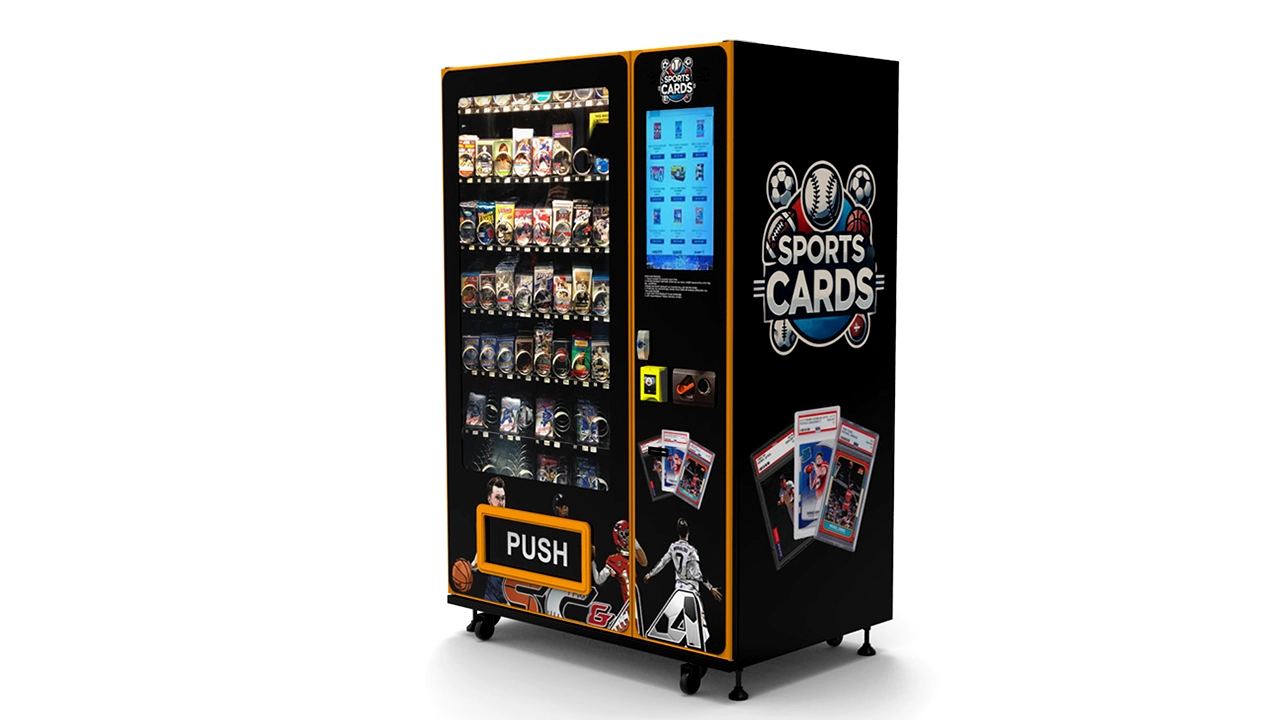
A new machine costs between $8,000 and $15,000, depending on the configuration and features. Wall-mounted units start around $5,000, while larger floor models with touchscreens are at the higher end. Refurbished machines are cheaper but come with higher maintenance risk.
How long does it take to pay off a card vending machine?
The payback period is typically 12 to 18 months for a well-performing machine. If the location is exceptional, you might see a payback in 8 months, but if the location is poor, you may never recoup your investment. I recommend planning for a 15-month payback to be conservative.
Should I buy or lease a machine as a beginner?
If you have the capital, buying is a better long-term option because you own the asset and keep all the profits. Leasing is a good option if you want to test the waters with a lower upfront cost, but the total cost will be higher over time. I recommend buying a single machine first to learn the ropes.
Where should I place a card vending machine to make money?
Card shops, comic book stores, hobby shops, and family entertainment centers are the best locations. You need foot traffic, but more importantly, you need the right demographic. Avoid office buildings and gyms, where the customer base is not aligned with the product.
What permits and licenses do I need?
You will likely need a business license and a vending machine permit from the local municipality. Check with your city or county clerk for specific requirements. If you are in the EU, you may also need to register for VAT and comply with local product labeling rules.
How do I choose a reliable vending machine supplier?
Look for a supplier with a track record of reliable machines and good after-sales support. Ask for a list of existing installations and call a few operators to ask about their experience. Check if the supplier stocks spare parts and offers a warranty. I have had good results with Zhongda Smart, but you should do your own due diligence.
What should I do if my machine breaks down?
If you are handy, you can troubleshoot basic issues like jammed trays and card reader failures. I recommend keeping a spare parts kit and a diagnostic manual. For more complex issues, you will need to call a local technician or the supplier’s support line. A service contract can save you money in the long run if you are not comfortable with repairs.
How can I reduce restocking and maintenance costs?
Track your sales data and stock only products that move. Avoid overstocking, as it ties up cash and increases the risk of dead inventory. Schedule restocks efficiently to minimize trips, and consider using a remote monitoring system to alert you to low inventory or machine malfunctions.
Disclaimer: The figures and insights in this article are based on my personal experience operating vending machines in North America and Europe. Market conditions vary, and you should conduct your own research and financial planning before making any investment. Revenue and payback periods are estimates, not guarantees.