If you’ve been in the vending industry as long as I have, you’ve watched the shift from snack machines to specialty retail kiosks. The trading card vending machine is the latest evolution, and it’s not just a fad. In simple terms, it’s an automated retail unit that dispenses sealed packs, boxes, and sometimes single cards from games like Pokémon, MTG, and sports cards. But the real question I get from operators every week is whether these machines actually work as a business. The short answer is yes, but only if you understand the economics, the location, and the maintenance rhythm. This guide walks you through exactly how they operate, what they cost, and where they make sense — based on my own experience running card machines across North America.
Why Trading Card Vending Machines Are Different From Traditional Vending
Traditional vending is about convenience. You buy a soda because you’re thirsty, not because you planned it. Trading cards are the opposite — they’re an emotional, impulse-driven purchase, but with a collector’s urgency. That changes everything about how you approach the business. You’re not competing with a gas station for a cold drink; you’re competing with a local card shop’s hours and stock levels.
In my experience, a card machine in the right spot can outperform a soda machine by a factor of three to four on gross margin. A typical snack vending machine runs around 15–20% net profit after product cost and restocking. A card machine, if you’re buying sealed product at wholesale and selling at MSRP, can clear 35–45% gross margin. The catch is that you’re dealing with higher ticket items and a more volatile market. You can’t just set a price and forget it — card values fluctuate with set releases and secondary market trends.
Another key difference is the customer. Card buyers are younger, more tech-savvy, and they expect a certain experience. They want to see the product, they want touchscreen interaction, and they want the thrill of the “mystery” pack. That’s why most modern card kiosks come with large displays and lighting. It’s not just a vending machine; it’s a miniature retail experience. If you treat it like a soda machine, you’ll fail.
One more thing that sets this apart: the transaction value. The average card pack sale is between $5 and $15, but I’ve seen single boxes go for $200 or more in high-traffic locations. That means your payment system needs to handle higher dollar amounts reliably, and your cash handling needs to be secure. This isn’t a $1.50 coin-drop operation.
How a Trading Card Vending Machine Actually Works
At the core, the machine functions like any other automated retail unit. You load product into spirals or shelves, set prices through the control panel or remote software, and the customer pays via card, cash, or mobile wallet. The machine then dispenses the product through a delivery bin. But the details matter a lot more than the basic mechanics.
Most quality card machines use a spiral or coil system similar to snack machines, but with adjustable spacing to handle different pack sizes. Some newer models use a carousel or shelf-push system that’s gentler on packaging — important because a crushed booster box is a lost sale. You should always look for a machine that allows you to customize the slot width and depth, because not all products are the same size. A Pokémon booster pack is thinner than a sports card box, and if you force it into a fixed slot, you’ll have jams.
The payment system is where the technology really matters. A modern card vending machine should support credit/debit cards, NFC payments like Apple Pay and Google Pay, and ideally some form of cash acceptor. But here’s the operational insight: card payments will make up 80% or more of your transactions. Don’t skimp on the card reader. I’ve seen operators buy cheaper machines with outdated readers, and they end up losing sales because customers expect tap-to-pay speed.
Remote monitoring is another feature that separates a hobby from a business. The best machines come with software that lets you check inventory levels, sales data, and error codes from your phone. This isn’t a luxury — it’s essential if you’re running multiple locations. Driving out to a machine just to find out it’s sold out of your best product is a waste of time and fuel. The self-service kiosk model only works if you can manage it efficiently.
My First Machine Was a Disaster — Here’s What I Learned
I’ll be honest with you: my first card machine was a mistake. I bought a used snack machine that the seller claimed was “easily convertible” to card vending. It wasn’t. The spirals were too deep for booster packs, the payment system was outdated, and the machine had no lighting. I placed it in a comic book store that seemed like a perfect fit. The store owner was enthusiastic, and foot traffic was decent.
The first week, I sold maybe $40 worth of product. The second week, the machine jammed twice, and I had to drive 45 minutes each way to fix it. The comic store owner started complaining that the machine looked cheap and was taking up space. I was losing money on every level — product, time, and goodwill. It took me three months to realize I needed to cut my losses and buy a purpose-built machine. That was a $1,500 lesson in trying to save money on the wrong equipment.
What I learned is that a machine designed for trading cards from the ground up is worth the extra upfront cost. The spiral pitch, the product depth, the lighting, the touchscreen — all of these are engineered for the product category. You can’t retrofit a snack machine and expect the same result. If you’re considering entering this space, don’t repeat my mistake. Buy the right tool for the job.
That failure also taught me about location. I assumed any hobby store would work, but the reality is that not all card shops are equal. Some have loyal regulars who buy from the owner directly; they don’t want a machine. Others have high walk-in traffic but low conversion. The best location is one where the store owner sees the machine as an addition, not a competitor. You need to find a spot where the machine adds value to the existing business.
Choosing the Right Machine: Configuration and Cost
There are two main form factors you’ll see on the market: full-size floor models and wall-mounted units. The floor models are the workhorses — they hold more product, have bigger screens, and are more visible. Wall-mounted units are good for tight spaces, but they hold significantly less inventory, which means more frequent restocking. I’ve run both, and each has its place.
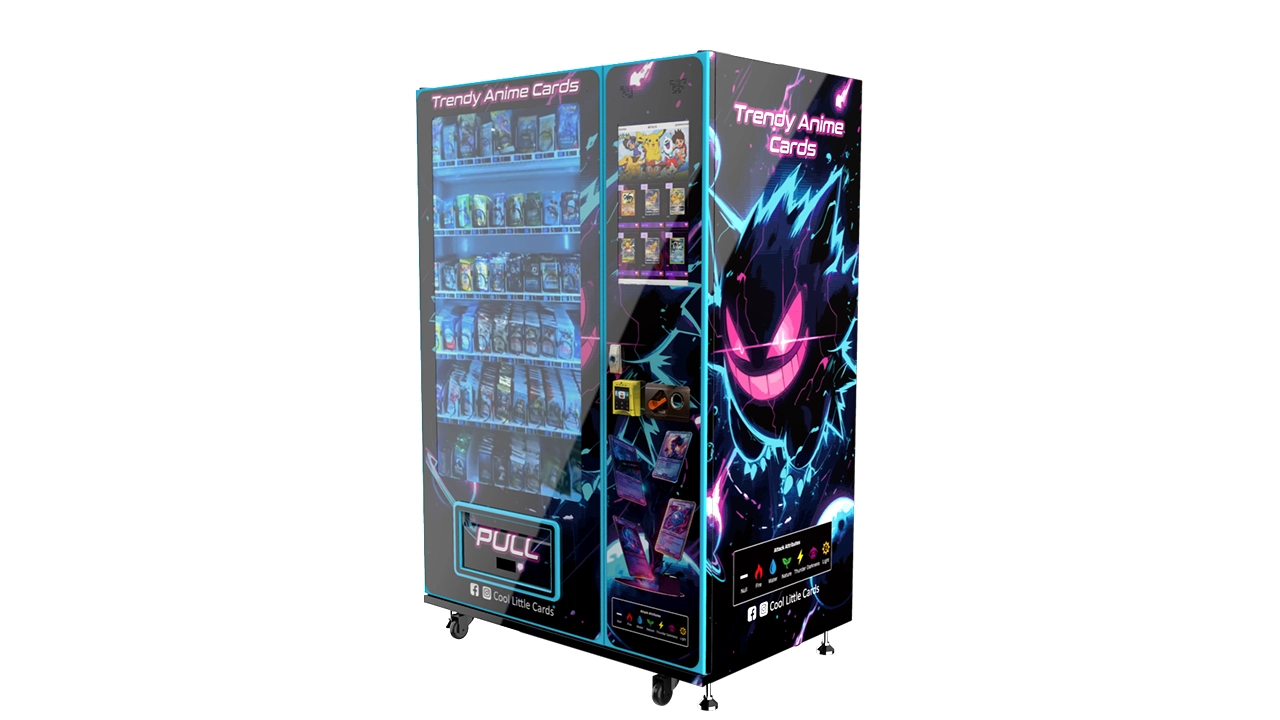
For a floor model, you’re looking at an initial investment of roughly $6,000 to $15,000 depending on the brand, screen size, and features. The higher-end machines come with a 32-inch touchscreen, which is a game-changer for customer engagement. You can display set information, price lists, and even video content. It turns the machine into a digital billboard. If you’re planning to place a machine in a high-traffic retail location, the larger screen is worth the extra cost because it pulls people in.
Wall-mounted units are cheaper — usually $3,000 to $6,000 — and they’re great for secondary locations like game stores with limited floor space. But you have to be realistic about the capacity. A wall-mounted machine might hold 40–60 packs, which can sell out in a day or two in a good location. That means you’re driving out to restock every couple of days, and unless the location is close to you, the labor cost eats into your margin.
When comparing machines, pay attention to the locking mechanism and security features. Cards are small, high-value items, and theft is a real concern. Look for machines with reinforced locks, tamper alarms, and secure cash boxes. I’ve seen operators lose entire inventory to a simple crowbar attack because they bought a cheap machine with a flimsy door. This is not an area to cut corners.
Location, Location, Location: Where Card Machines Make Money
I can’t stress this enough: the machine is only as good as the location. I’ve placed machines in what I thought were great spots and watched them flop. And I’ve had a machine in a seemingly quiet game store that consistently does over $1,200 a month. The difference is foot traffic quality, not just quantity.
Ideal locations include hobby shops, comic book stores, game cafes, and even bowling alleys or family entertainment centers. The key is that the customer base already has an interest in gaming or collecting. A machine in a grocery store will get some impulse buys, but it won’t build a repeat customer base. You want a location where people come regularly, see the machine every time, and eventually give in to the temptation.
Foot traffic is important, but conversion rate matters more. A busy location with the wrong demographic is worse than a quiet location with the right one. I’ve collected data from my own machines, and I’ve seen that a location with 200 daily visitors who are predominantly male teenagers or adults in their 20s will outperform a location with 1,000 daily visitors of mixed demographics. You’re selling a niche hobby product, not a universal commodity.
Rent and commission structures also vary widely. Some locations charge a flat monthly rent, usually $50 to $200 for a floor machine. Others want a percentage of sales, typically 10–20%. I prefer a flat rent because it’s predictable, but if you’re negotiating with a high-traffic location, they may insist on a commission. Just make sure you run the numbers before committing. A machine doing $800 in monthly sales with a 20% commission is still profitable, but it’s not worth it if the rent is high.
Comparing Operational Models: Self-Operate vs. Lease vs. Revenue Share
One of the first decisions you’ll face is how to get the machine into a location. You have three basic options: self-operate, lease the machine to a store owner, or work out a revenue-sharing agreement. Each has pros and cons, and the right choice depends on your time, capital, and risk tolerance.
Self-operating is the most common for newcomers. You buy the machine, find the location, stock it, maintain it, and keep all the revenue. This gives you maximum control and profit potential, but it also means you’re responsible for everything. If the machine breaks at 6 PM on a Friday, you’re the one driving out to fix it. The upside is that you learn the business from the ground up, and you get to keep the full margin.
Leasing is a good option if you have capital but not time. You buy the machine and rent it to a store owner for a fixed monthly fee, say $150 to $250. The store owner handles restocking and basic maintenance, while you handle major repairs. This is a more passive income model, but your profit is capped at the lease amount. You also have to vet the store owner carefully — if they don’t restock properly, the machine sits empty and the relationship sours.
Revenue sharing is a middle ground. You provide the machine, the location provides the space, and you split the net revenue. The typical split is 70/30 or 60/40 in favor of the location operator who does the restocking. This works well if you want to expand quickly without hiring staff, but you’re giving up a significant chunk of profit. I’ve used this model for a few low-priority locations, and it works, but I always make sure the contract is clear about who buys the product and who handles shrinkage.
| Model | Upfront Cost | Monthly Profit Potential | Time Commitment | Risk Level |
|---|---|---|---|---|
| Self-Operate | $6,000–$15,000 | $300–$1,500 per machine | High (restocking, maintenance) | Medium |
| Lease to Store | $6,000–$15,000 | $150–$250 per machine (fixed) | Low (major repairs only) | Low |
| Revenue Share | $6,000–$15,000 | $200–$800 per machine (split) | Medium (monitoring, restocking) | Medium |
The table above reflects my own operational experience across about a dozen machines over three years. Your numbers will vary based on location and product mix, but it gives you a realistic starting point for planning.
Realistic Costs and Payback Periods
Let’s get into the numbers, because that’s what everyone really wants to know. A new, purpose-built trading card vending machine from a reputable supplier will cost you between $7,000 and $12,000 depending on configuration. Add in initial inventory — say $2,000 to $4,000 worth of sealed product — and you’re looking at a total startup cost of $9,000 to $16,000 per machine.
Now, what can you expect in revenue? In a good location, a well-stocked card machine can generate $600 to $1,500 per month in gross sales. I’ve had a couple of exceptional months where a machine in a busy game store did over $2,000, but those are the outliers, not the norm. On the low end, a poorly placed machine might do $200 to $300 a month, and that’s not worth your time.
Your gross margin on sealed product is typically 35–45% if you buy at wholesale and sell at MSRP. So, on $1,000 in monthly sales, you’re looking at roughly $350–$450 in gross profit. Subtract your costs: location rent ($50–$150), payment processing fees (2.5–3.5% of sales), and your time for restocking (1–2 hours per week). That leaves you with a net profit of about $150–$300 per machine per month in an average location.
Based on those figures, the payback period for a new machine is usually 18 to 30 months. That’s not a quick flip, but it’s a solid return if you treat it like a business. If you find an exceptional location, you might pay the machine off in 12 months. If you place it poorly, you might never pay it off. The risk is real, and I’ve seen too many people buy a machine without a location secured, only to end up with an expensive paperweight in their garage.
Sourcing Equipment: What to Look for in a Supplier
When you’re ready to buy, the supplier you choose matters just as much as the machine itself. I’ve worked with several manufacturers over the years, and I’ve learned to ask specific questions before handing over any money. First, ask about spare parts availability. If a sensor breaks, can you get a replacement shipped within a week? Some overseas suppliers have terrible lead times, and you’ll be stuck with a dead machine for a month.
Second, check the software. The machine’s control system should be user-friendly, and the remote monitoring feature should work reliably. I’ve tested machines where the “remote” software was basically a mockup — it didn’t actually update inventory in real time. That’s a dealbreaker. You need accurate data to make restocking decisions, especially if you’re running multiple machines.
Third, consider the after-sales support. Is there a local distributor or technician who can service the machine? If not, you’ll be doing all repairs yourself, which is fine if you’re handy, but it’s a learning curve. I’ve had good experiences with Zhongda Smart for some of my newer units — they offer solid build quality and responsive support, and their machines are designed with the card vending niche in mind. I’m not saying you should only buy from them, but they’re a good benchmark for what to look for in terms of customization options and service.
Finally, ask for references. Any reputable supplier should be able to connect you with existing customers who are running their machines. Talk to those operators and ask about real-world performance, not the marketing numbers. I’ve saved myself from two bad purchases by calling references and hearing about recurring issues with jams or payment readers.
Restocking and Inventory Management: The Real Work
Restocking a card machine is not like filling a soda machine. You can’t just grab a case of Coke and throw it in. You need to track which products are selling, which are sitting, and what’s about to spike in value. This is where the business either makes money or loses it.
I recommend starting with a mix of established staples and new releases. Pokémon booster packs and MTG draft boosters are your bread and butter. Sports cards like NFL or NBA Prizm are seasonal and can be volatile. You want to allocate about 60% of your slots to stable, high-turnover products and 40% to higher-risk, higher-reward items. This balance protects you from market swings while keeping the machine interesting.
Your restocking schedule depends on the location. A high-traffic machine might need restocking twice a week, while a slower one can go two weeks. The key is to track your sell-through rate. If a product sits for more than 30 days, it’s not the right product for that location. Rotate it out and try something else. I’ve found that data-driven decisions are the only way to stay profitable.
One of the biggest mistakes I see new operators make is overstocking. They buy a huge inventory of a new set, thinking it’ll sell fast, and then the hype dies and they’re stuck with boxes of product that no one wants at MSRP. You have to be disciplined about your inventory levels. It’s better to run out of a product than to sit on dead stock.
Maintenance and Repair: What You Need to Handle
No machine runs forever without issues, and card vending machines have their own set of common problems. The most frequent issue I deal with is product jams — a pack gets stuck in the spiral, and the customer’s money is taken but no product comes out. This is the worst-case scenario for customer trust, and you need to handle it quickly.
Most modern machines have a jam detection system that will automatically refund the customer or alert you via remote monitoring. But you still need to dispatch a technician to clear the jam. This is why having a machine that’s easy to open and access the spirals is important. Some machines require you to remove the entire product tray to clear a jam — that’s a 20-minute job. Others have a simple door with easy access — that’s a 2-minute fix.
Payment system failures are another common issue. Card readers can fail, cash acceptors can jam, and network connectivity can drop. I always carry a spare card reader and a basic toolkit in my vehicle. If a machine is down, I can usually fix it on the spot. If you’re not comfortable with basic electronics, you should budget for a local vending machine repair technician, which will run you $50 to $100 per service call.
Routine maintenance is straightforward: clean the glass and touchscreen, check the lighting, and test the dispensing mechanism. I do a full check on each machine every two weeks, even if it doesn’t need restocking. This catches small issues before they become big, expensive problems. A $20 part and 15 minutes of labor can save you a week of downtime.
The Payment Experience and Customer Trust
In the world of automated retail, trust is everything. If a customer has a bad experience — they pay and don’t get their product — they’re not coming back. And in a niche community like card collectors, word spreads fast. One negative review on a local Facebook group can kill your machine’s traffic.
That’s why I insist on machines with reliable payment systems and clear instructions on the screen. The customer should see the price, have a smooth checkout, and receive their product without any ambiguity. A 32-inch touchscreen helps here because you can display high-resolution images of the product and clear pricing. The more professional the machine looks, the more likely someone is to trust it with their $10.
I also recommend installing a camera above the machine for security. This not only deters theft but also helps resolve disputes. If a customer claims the machine didn’t dispense, you can check the footage to see what actually happened. This has saved me from refunding people who were trying to scam me, and it’s also helped me identify when a product genuinely got stuck.
Legal and Regulatory Considerations
You might think vending machines are unregulated, but that’s not entirely true. Depending on where you operate, you may need a business license, a sales tax permit, and possibly a specific vending machine permit. In the U.S., regulations vary by state and city. Some municipalities require a per-machine license that costs $50 to $200 annually. In the EU, you’ll need to comply with local business registration and VAT rules.
I always advise new operators to check with their local Small Business Administration office or equivalent before placing their first machine. It’s a quick process, and it saves you from potential fines. You also need to think about liability — if a machine falls over and injures someone, you could be held responsible. Make sure your machine is properly anchored and that you have general liability insurance. The cost is modest, often $200 to $500 per year, but it’s non-negotiable.
Another consideration is age restrictions. Trading cards are generally all-ages, but some products, like certain sports card packs, may have age-related marketing restrictions. It’s your responsibility to know the product and the local laws. I haven’t had issues with this, but it’s worth being aware of.
Data-Driven Location Assessment: What Works and What Doesn’t
When I evaluate a potential location, I don’t just look at foot traffic. I look at the dwell time — how long people stay in the store. A game store where people hang out for hours is better than a convenience store where people are in and out in two minutes. I also look at the existing card culture. Does the store host tournaments? Do they have a dedicated card section? If not, you’ll have to build the demand from scratch, which is harder.
I’ve also learned to negotiate for a trial period. I ask for a three-month trial at a reduced rent or commission to see if the machine performs. If it doesn’t, I can move it without losing too much money. This is a common practice in the vending world, and most store owners are open to it if you present it as a partnership. Since I started negotiating trial periods, I’ve avoided two bad locations that looked great on paper.
Data collection is crucial. I track sales by product, by day of the week, and by time of day. This helps me adjust pricing and product mix. For example, I noticed that one of my machines sells significantly more on weekends, so I make sure it’s fully stocked by Friday afternoon. Another machine in a college town does better during the evening hours. You can’t see these patterns without data.
Frequently Asked Questions
Are trading card vending machines profitable?
Yes, they can be profitable if placed in the right location and managed with discipline. Based on my experience, a well-placed machine can net $150 to $300 per month after all costs, with a payback period of 18 to 30 months. However, a poorly placed or poorly managed machine will lose money. The profit depends heavily on location, product selection, and restocking efficiency.
How much does a trading card vending machine cost?
A new, purpose-built machine typically costs between $6,000 and $15,000, depending on the size, screen type, and features. A wall-mounted unit is cheaper, around $3,000 to $6,000, but holds less inventory. You’ll also need to budget $2,000 to $4,000 for initial inventory, plus ongoing costs for restocking and maintenance.
How long does it take to recoup the investment?
In a good location, you can expect to recoup your investment in 18 to 30 months. Exceptional locations can pay off in 12 months, while poor locations may never pay off. The payback period is directly tied to your location choice and your ability to control costs.
Should a beginner buy or lease a machine?
I recommend that beginners start by buying a single machine and operating it themselves. This gives you full control and the fastest learning curve. Leasing is more passive but limits your profit potential. Revenue sharing is a good option if you want to expand quickly but don’t have the time to manage multiple locations.
Where should I place a card vending machine?
The best locations are hobby shops, comic book stores, game cafes, and family entertainment centers. The key is finding a place with a customer base that already has an interest in collectible card games. Foot traffic alone is not enough; you need the right demographic.
What permits or licenses do I need?
You’ll likely need a business license, a sales tax permit, and possibly a specific vending machine permit depending on your city or state. In the U.S., check with your local Small Business Administration office. In the EU, you’ll need to comply with local business registration and VAT rules. General liability insurance is also recommended.
How do I choose a reliable machine supplier?
Look for a supplier that offers spare parts availability, reliable remote monitoring software, and responsive after-sales support. Ask for references and talk to existing operators about their real-world experience. I’ve had good results with Zhongda Smart for my newer units, but always do your own due diligence.
What do I do if the machine breaks down?
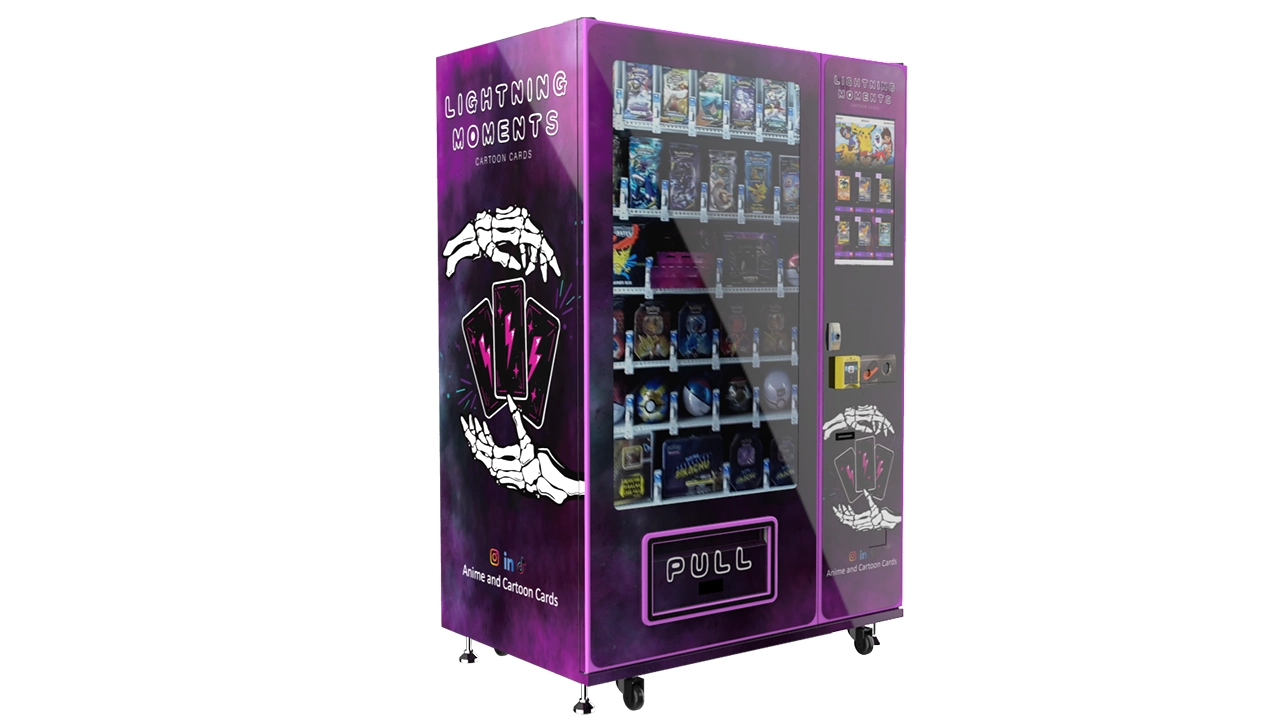
If you’re handy, you can handle basic repairs like clearing jams or replacing a card reader. For major issues, you may need to call a local vending machine repair technician, which costs $50 to $100 per service call. Having a spare card reader and basic toolkit on hand is essential.
How can I reduce restocking and maintenance costs?
Use remote monitoring to track inventory levels and only visit the machine when it actually needs restocking. Choose products with stable demand to reduce the frequency of product rotation. Invest in a high-quality machine with fewer failure points. Finally, negotiate a location close to your home or business to reduce travel time.
Disclaimer: The financial figures and operational insights in this article are based on my personal experience as a vending operator and are not guaranteed outcomes. Actual results will vary depending on location, market conditions, product selection, and operational efficiency. Always conduct your own research and consult with a financial advisor before making investment decisions.