If you are looking into a trading card vending machine business, the first question on your mind is almost certainly what it actually costs to get one operational and whether the numbers make sense before you commit a single dollar. Based on my years running automated retail routes across the US and parts of Europe, I can tell you that the initial investment for a single card vending machine typically lands between $8,000 and $25,000 depending on the unit, payment systems, and how much you spend on initial inventory. The real cost, however, goes far beyond the hardware—it is tied to location contracts, restocking frequency, maintenance, and the brutal reality that not every high-traffic spot will move Pokémon or sports cards at the volume you expect. In this guide, I will break down the startup costs, the hidden operational expenses, and the realistic return timelines I have observed across dozens of placements, so you can decide if this niche fits your budget and your risk tolerance.
Why Trading Card Vending Machines Are a Different Beast
When I started in this industry over a decade ago, vending machines meant soda, snacks, and the occasional coffee unit. Trading card machines were almost nonexistent outside of a few novelty spots. That has changed dramatically. The modern trading card vending machine, often built as a self-service kiosk with a touchscreen interface, taps into a collector culture that is willing to spend heavily on sealed product, booster packs, and mystery boxes. This is not a commodity purchase; it is an experience buy, which changes how you evaluate potential revenue.
The operational rhythm is also different. A snack machine needs restocking every few days based on perishable goods. A card machine can go a week or two between restocks, especially if you are selling higher-value sealed items. That lower frequency is a double-edged sword, though. It means less labor, but it also means your cash flow is lumpier, and you need better inventory discipline to avoid having too much capital tied up in boxes that are not moving.
Another key difference is the customer profile. Collectors are not impulse buyers in the same way as someone grabbing a soda. They often research the machine, check the selection online, and may travel specifically to a location because they know a machine is there. That behavior changes how you think about location marketing and community engagement, which is something a traditional vending operator never has to consider.
Breaking Down the Initial Investment
Let me give you a realistic picture of what you are looking at financially. I have purchased machines from budget Chinese manufacturers, refurbished American units, and high-end custom builds. The price range is wide, and you get what you pay for in terms of build quality, software stability, and after-sales support.
On the low end, a basic 32-inch touchscreen trading card vending machine from a less established manufacturer might cost around $6,000 to $8,000. These units often have simpler mechanics for dispensing and less robust payment integration. On the high end, a fully customized machine with a larger screen, better lighting, and more sophisticated inventory tracking can run you $15,000 to $20,000 or more. I have also seen premium units with multiple dispensing mechanisms and advanced security features exceed $25,000.
Shipping is another cost that surprises many newcomers. These machines are heavy, typically weighing between 300 and 600 pounds. Freight shipping across the country can add $500 to $1,500 depending on the destination and whether you need a liftgate or residential delivery. If you are importing from overseas, add customs fees and longer lead times to that calculation.
You also need to budget for installation. Most machines are plug-and-play, but you may need electrical work at the location if there is not a dedicated outlet. Some locations require bolting the machine to the floor for safety, which means drilling into concrete or tile. That is often a building manager requirement, and you will likely bear the cost.
Inventory Costs Are the Real Budget Killer
Here is where most new operators underestimate their startup costs. The machine is the visible expense, but the inventory is what actually generates revenue. A well-stocked card machine needs a mix of sealed booster boxes, individual packs, and sometimes higher-end products like booster bundles or collection boxes. Depending on your product mix, initial inventory can easily run $3,000 to $8,000.
I have seen operators try to start with just $1,500 in inventory, and the machine looks sparse and unappealing. Collectors notice a thin selection immediately, and they will not return. You need enough product to create visual density and variety, which means committing real capital to stock before you earn your first dollar back.
Another factor is the volatility of card prices. Unlike candy, which has a stable wholesale cost, trading card products fluctuate based on market demand. A box that costs you $120 today might be worth $150 next month or $90 if a set underperforms. You are not just buying inventory; you are taking a position in a secondary market, and that requires a level of awareness that traditional vending operators do not have.
Location Evaluation: Where the Money Actually Gets Made
I cannot stress this enough: a trading card vending machine is only as good as its location. I have placed machines in what looked like perfect spots—busy malls, comic book stores, gaming cafes—only to watch them sit idle for weeks. Meanwhile, a modest machine in a suburban hobby shop outperformed everything else on my route by a factor of three.
What makes the difference? It comes down to foot traffic quality, not just quantity. A mall with 10,000 daily visitors sounds great, but if those visitors are mostly there for clothing or food, they are not your target customer. A hobby shop with 200 dedicated customers a day who are already spending money on cards and games is a far better match. That audience is pre-qualified.
Rent and revenue share arrangements vary widely. Some locations charge a flat monthly fee, typically $100 to $300 for a small footprint. Others prefer a percentage of sales, often 10% to 20%. I have found that a revenue share model aligns incentives better, but it requires transparent reporting systems. Some locations want both a base fee and a percentage, which can kill your margins quickly.
One of the most critical lessons I learned was to negotiate for a trial period. I once signed a one-year lease at a premium rate for a spot in a downtown entertainment complex. The foot traffic was massive, but the audience was wrong. I was stuck paying rent for an underperforming machine for eight months before I could negotiate an exit. That mistake cost me over $2,000 in rent and lost opportunity.
Before you commit to any location, I strongly recommend you read through some practical guidance on trading card vending machine placement strategies to understand the nuances of demographic matching and lease negotiation. That resource saved me from repeating several costly mistakes early on.
Foot Traffic Requirements and Realistic Numbers
From my experience, a location needs at least 500 to 1,000 people passing by per day to even consider a card machine, but that number is meaningless without the right demographic. I have seen successful machines in locations with only 200 daily visitors, because those visitors were exactly the right kind of customers. Conversely, I have seen failures in locations with 5,000 daily visitors who never stopped to look at the machine.
Ask yourself: does this location already sell trading cards or related hobby products? If the answer is yes, you have a strong signal. If the answer is no, you need to understand why the existing business has not tapped into that demand. There may be a good reason, or there may be an opportunity, but you need to do the homework before you assume.
The seasonality of card sales also matters. Pokemon and sports cards see spikes during release windows and holiday seasons. A location that performs well in November and December might be dead in February. You need to project your annual revenue, not just your peak months, to understand the true profitability of a site.
Operational Costs You Cannot Ignore
Once the machine is placed and stocked, the ongoing costs begin. Electricity is usually negligible, perhaps $10 to $20 per month depending on the unit's lighting and screen brightness. The bigger costs are labor, maintenance, and payment processing fees.
Payment processing is a significant line item that many beginners overlook. Card machines typically use a payment gateway that charges a percentage plus a flat fee per transaction. Depending on your processor, you might be paying 2.9% plus 30 cents per transaction. For a $10 pack sale, that is about 60 cents in fees. Over a month with 200 transactions, that is over $100 in processing costs alone.
Maintenance is another unavoidable cost. Even the best machines break down. I have had card jams, screen failures, payment terminal connectivity issues, and software glitches that required remote troubleshooting or on-site visits. Budget at least $50 to $100 per month for maintenance, and expect to spend more in the first few months as you work out the kinks.
If you are not doing the maintenance yourself, you will need to hire a local technician. This is where having a reliable vending machine repair and service plan becomes essential. I have seen operators lose an entire month of revenue because they could not find a technician who understood the specific mechanics of a card dispenser.
Restocking Frequency and Labor Costs
Restocking is the most labor-intensive part of the business. A well-placed machine might need restocking every one to two weeks, depending on how quickly the product sells. Each restocking visit takes about one to two hours, including travel time, inventory counting, and cleaning the machine.
If you value your time at $25 per hour, that is $50 to $100 per visit in labor. Over a month, that is $100 to $400 in operational labor. If you hire someone else to do it, you can expect to pay $15 to $20 per hour, plus mileage or a flat fee per visit.
One way to reduce restocking frequency is to focus on higher-value products that sell slower but generate more revenue per item. A $50 booster box takes up the same space as a $5 pack but requires fewer transactions to hit your revenue target. That reduces the number of times you need to visit the machine, though it also means your inventory turnover is slower and your cash is tied up longer.
Comparing Machine Types and Configurations
Not all trading card vending machines are created equal. The type of machine you choose affects your startup costs, operational complexity, and revenue potential. Below is a comparison table based on my experience with different configurations.
| Machine Type | Initial Cost Range | Pros | Cons | Best Use Case |
|---|---|---|---|---|
| Basic coil/spring dispenser | $6,000 – $9,000 | Lower upfront cost, simple mechanics, easier to repair | Limited product size flexibility, can damage boxes, less attractive display | Low-traffic locations, beginner operators |
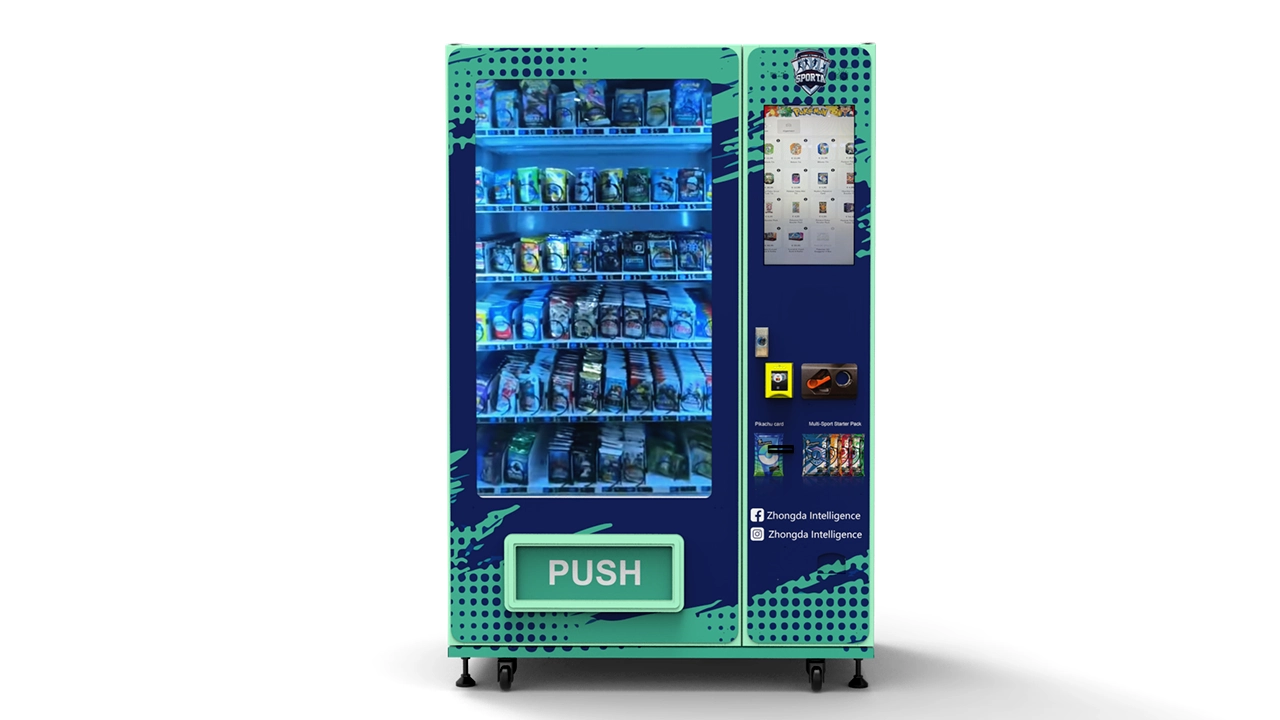
| 32-inch touchscreen machine | $9,000 – $15,000 | Better customer experience, can display product images, more modern appeal | Higher cost, more complex software, potential for screen issues | Hobby shops, gaming cafes, higher-traffic retail |
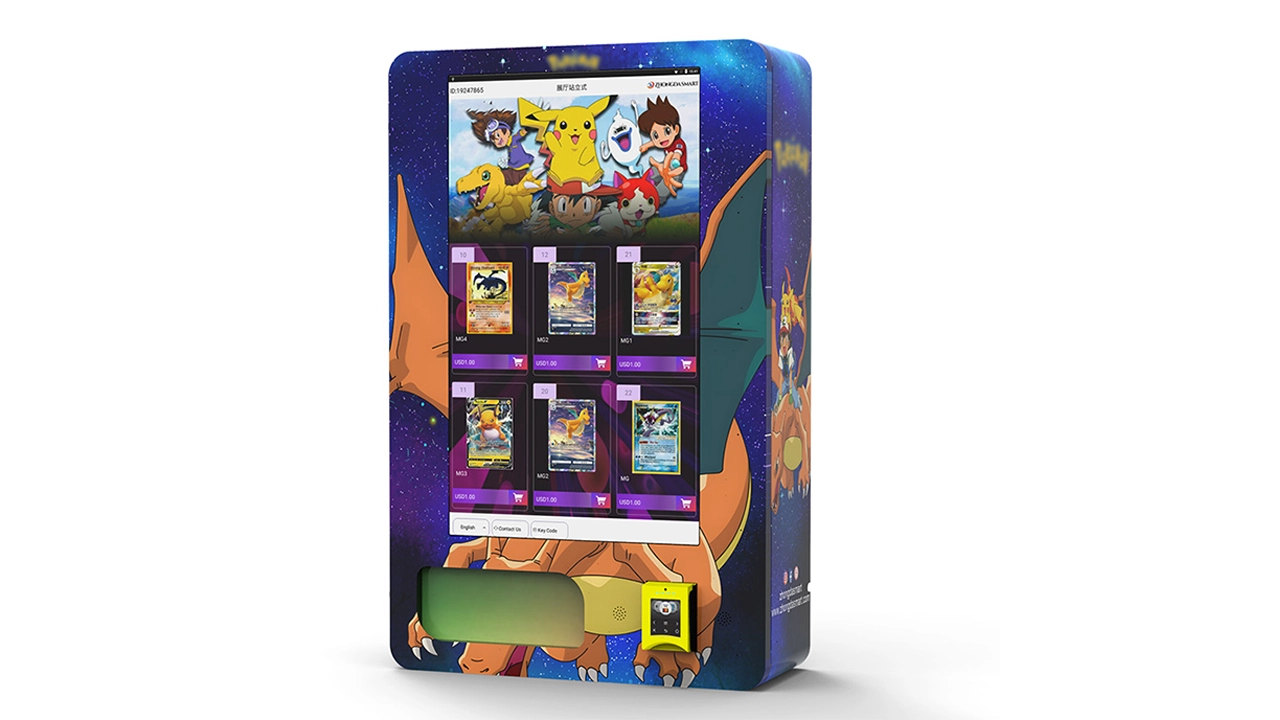
| Wall-mounted card machine | $5,000 – $8,000 | Small footprint, lower rent, easy to place in tight spaces | Limited inventory capacity, less visual impact | Small shops, barbershops, convenience stores |
| Premium custom unit | $15,000 – $25,000+ | Best aesthetics, advanced inventory tracking, multiple dispensing mechanisms | Highest cost, longer lead times, complex maintenance | High-traffic flagship locations, brand-focused operators |
I have used all of these types at various points in my career. The 32-inch touchscreen model has become my go-to for most new placements because it strikes the best balance between cost and customer engagement. The screen allows you to showcase product images and even run promotional videos, which significantly increases the perceived value of the machine.
Wall-mounted units are an interesting option for locations with limited floor space. I have placed a few in barbershops and small convenience stores where a full-size machine would be intrusive. They hold less inventory, so they need more frequent restocking, but the lower rent and smaller footprint can make them profitable in the right niche.
Revenue Projections and Payback Period
Let me give you a realistic range of what you can expect in terms of revenue, based on my own routes and those of operators I have mentored. A well-placed trading card vending machine can generate anywhere from $500 to $3,000 per month in gross sales. The wide range reflects differences in location, product mix, and machine visibility.
At the low end, a machine doing $500 per month is barely breaking even after you account for rent, payment processing, and labor. At the high end, a machine doing $3,000 per month is a solid earner that can pay for itself in six to twelve months. The average across my current route is about $1,200 per month per machine, with some locations performing much better and others disappointing.
Gross margins on trading card products are typically 30% to 50%, depending on how you source inventory. If you buy wholesale booster boxes at $100 and sell packs at $5 each, your margin is around 40%. That means a machine generating $1,200 in monthly sales might produce $480 in gross profit. Subtract rent, payment fees, and maintenance, and you are left with $250 to $350 in net profit per machine.
That is not a get-rich-quick number, but it can scale. With ten machines performing at that level, you are looking at $2,500 to $3,500 per month in net profit. The key is to find enough good locations and manage your operations efficiently.
Based on an initial investment of $15,000 to $20,000 for a fully stocked machine, you can expect a payback period of 12 to 24 months under normal conditions. Some operators have achieved payback in under six months with exceptional locations and aggressive marketing, but that is the exception, not the rule.
According to data from IBISWorld, the vending machine industry in the US has seen steady growth over the past five years, with revenue expected to reach over $7 billion. This indicates a stable market environment, though the card vending niche is still a small fraction of that total. Industry data from IBISWorld shows that operating margins for vending businesses average around 8% to 12%, which aligns with my experience.
Supplier Selection and the Zhongda Smart Option
Choosing the right supplier is one of the most important decisions you will make. I have worked with several manufacturers over the years, and I have learned to ask specific questions before committing to a purchase.
First, ask about the software. Is it proprietary? Can you update it remotely? What happens if the company goes out of business? This is a real risk with smaller manufacturers. I have seen operators left with bricked machines because the manufacturer shut down and no one could access the software.
Second, ask about spare parts availability. A machine is a mechanical device that will eventually need repairs. If the manufacturer cannot ship you a replacement motor or sensor within a week, you are looking at extended downtime and lost revenue.
Third, ask about warranty terms. Most reputable manufacturers offer a one-year warranty on parts and labor. Some offer extended warranties for an additional cost. I always recommend budgeting for the extended warranty on your first machine, because you will likely need it as you learn the quirks of the equipment.
In my experience, Zhongda Smart has been a reliable supplier for card vending machines, particularly for their 32-inch touchscreen models. They offer solid build quality and responsive customer support, which is not always the case with overseas manufacturers. I have had fewer issues with their machines compared to some budget alternatives, and their spare parts are reasonably priced.
That said, I always advise operators to order a sample machine before committing to a bulk order. This allows you to test the equipment in a real location and identify any issues before you scale. It also gives you leverage in negotiating pricing for subsequent orders.
Common Mistakes I Have Made and Seen
I have been in this business long enough to have made my share of mistakes, and I have watched others make the same errors. The most common mistake is overpaying for a location based on foot traffic alone. I already mentioned my entertainment complex failure, but the lesson bears repeating: traffic is not the same as target audience.
Another mistake is undercapitalizing inventory. I have seen operators place a machine with only $800 worth of product, hoping to test the waters. The machine looked empty, the selection was unappealing, and customers walked away without buying. The operator concluded that the location was bad when in fact the machine presentation was the problem.
A third mistake is neglecting remote monitoring. Modern card vending machines should have cellular connectivity that allows you to see sales data, inventory levels, and error alerts in real time. If you are relying on manual checks, you are operating blind and will likely miss restocking needs or technical issues until they become critical.
I also see operators underestimate the importance of community engagement. A card vending machine is not a passive investment. You need to promote it on social media, engage with local collector groups, and keep the product selection fresh. The operators who succeed treat their machines as mini retail stores, not as vending machines.
One success story that stands out was a placement in a small comic book shop in a mid-sized city. The shop owner was skeptical about the machine, but he agreed to a revenue share with no base rent. I promoted the machine through a local Facebook collector group, and within two months, it was generating over $2,000 per month in sales. The shop owner saw the value and started promoting it himself. That machine is still one of my best performers.
For more details on the specific features that make a difference, you can check out this breakdown of 32-inch touchscreen trading card vending machine features that I found useful when comparing models.
Self-Op vs. Lease vs. Revenue Share
Another decision you will face is whether to operate the machine yourself, lease it from a provider, or enter a revenue share agreement with a location. Each model has its trade-offs, and the right choice depends on your capital, time, and risk tolerance.
Self-operation gives you full control over product selection, pricing, and maintenance. It also requires the most time and capital. You are responsible for everything, from sourcing inventory to fixing jams to negotiating leases. This is the model I prefer, because it maximizes profit potential, but it is not for everyone.
Leasing a machine from a provider typically involves paying a monthly fee in exchange for the equipment and sometimes maintenance. This reduces your upfront capital requirement but also reduces your profit margin. You are essentially paying for convenience and risk reduction.
Revenue share agreements with locations are common in this niche. The location provides the space and sometimes the electricity, and you provide the machine and inventory. The revenue is split, often 70/30 or 80/20 in your favor. This model reduces your rent risk but requires transparent reporting and a trusting relationship with the location owner.
Here is a quick comparison of the three models based on my experience:
| Model | Upfront Cost | Monthly Profit Potential | Time Commitment | Risk Level |
|---|---|---|---|---|
| Self-operation | $10,000 – $20,000 | $250 – $800 per machine | High (10+ hours/week) | Medium |
| Leasing | $1,000 – $3,000 | $100 – $300 per machine | Low (2–4 hours/week) | Low |
| Revenue share | $8,000 – $15,000 | $200 – $600 per machine | Medium (5–8 hours/week) | Medium-High |
I have used all three models at different times. Self-operation is the most profitable but also the most demanding. Leasing is a good way to test the waters if you are new and unsure about the business. Revenue share works well when you have a trusted partner who is invested in the machine's success.
If you are considering a smaller footprint to start, a wall-mounted card vending machine can be a lower-risk entry point, especially if you are testing a location before committing to a full-size unit.
Regulatory Considerations and Permits
Depending on where you operate, you may need specific permits or licenses to run a vending machine business. In the US, most states require a sales tax permit, and some cities require a vending machine license. The costs are usually minimal, often $50 to $200 per year, but the penalties for operating without proper permits can be steep.
You also need to consider liability insurance. A machine that tips over or causes an electrical issue could result in a lawsuit. Basic liability coverage for a vending operation typically costs $300 to $600 per year, depending on your location and the number of machines.
In the EU, the regulatory landscape varies by country. Some countries have specific requirements for self-service kiosks, including electrical safety certifications and data protection compliance for payment systems. The U.S. Small Business Administration provides a useful overview of business licenses and permits that applies to vending operations in the US.
For European operators, Eurostat's data on retail trade can give you a sense of the market size and growth potential for automated retail solutions. Eurostat retail trade statistics show steady consumer spending in retail categories that include hobby and collectible goods, which is a positive signal for this niche.
Maintenance and Troubleshooting
Even with a reliable machine, you will encounter issues. The most common problems I have dealt with are card jams, payment terminal connectivity failures, and screen calibration issues. Some of these can be resolved remotely if your machine has a good software backend, but others require physical intervention.
I always keep a basic toolkit in my vehicle: screwdrivers, pliers, a multimeter, and a laptop with diagnostic software. I also keep a small inventory of common spare parts, such as sensors, motors, and power supplies. This has saved me countless hours and avoided extended downtime.
If you are not comfortable with basic troubleshooting, you need a reliable technician. This is where the choice of manufacturer matters. Some suppliers offer remote diagnostics and can walk you through repairs step by step. Others leave you to figure it out on your own.
I have a documented approach to handling common issues that I share with operators I mentor. If you are facing a problem, checking the troubleshooting guide for card vending machines can save you a service call and the associated costs.
One piece of advice: do not ignore small issues. A slightly misaligned sensor or a sticky button will only get worse over time. Address it immediately, or you will face a bigger problem and a longer downtime later.
FAQ
Are trading card vending machines profitable?
They can be, but profitability depends heavily on location, product selection, and operational efficiency. In my experience, a well-placed machine can generate $500 to $3,000 per month in gross sales, with net profit margins of 20% to 40% after all costs. However, many machines underperform due to poor placement or inadequate inventory management.
How much does a trading card vending machine cost?
A new machine typically costs between $6,000 and $25,000, depending on the type and features. A 32-inch touchscreen model from a reputable supplier like Zhongda Smart usually falls in the $9,000 to $15,000 range. You should also budget $3,000 to $8,000 for initial inventory and $500 to $1,500 for shipping and installation.
How long does it take to recoup the investment?
Based on my experience, a payback period of 12 to 24 months is realistic for most operators. Exceptional locations with high sales volume can achieve payback in under six months, while underperforming machines may take three years or more. Your actual payback period depends on your revenue, costs, and how quickly you optimize your operations.
Should a beginner buy or lease a machine?
If you are new to the business and unsure about your commitment, leasing can be a lower-risk way to test the waters. However, leasing reduces your profit margin and may not give you the same level of control. If you have the capital and are willing to learn, buying a machine with an extended warranty is often the better long-term move.
Where should I place the machine for the best results?
Look for locations that already serve your target audience, such as comic book shops, hobby stores, gaming cafes, and entertainment venues. Foot traffic matters, but the quality of that traffic is more important. A location with 500 daily visitors who collect cards is far better than one with 5,000 daily visitors who do not.
What permits and licenses do I need?
In the US, you generally need a sales tax permit and possibly a local vending machine license. Costs are typically $50 to $200 per year. You should also carry liability insurance, which costs $300 to $600 per year. In the EU, requirements vary by country and may include electrical safety certifications and data protection compliance.
How do I choose a reliable supplier?
Ask about software ownership, spare parts availability, warranty terms, and after-sales support. Order a sample machine before committing to a bulk order. I have had good experiences with Zhongda Smart, but always do your own due diligence and ask for references from other operators.
What should I do if the machine breaks down?
Start with remote diagnostics if your machine supports it. Many issues can be resolved remotely. If not, check the troubleshooting guide and try basic fixes like resetting the machine or clearing a jam. If you cannot fix it yourself, contact a local technician who understands card vending machinery. Keep spare parts on hand to minimize downtime.
How can I reduce restocking and maintenance costs?
Focus on higher-value products that sell slower but generate more revenue per transaction. This reduces restocking frequency. Use a machine with remote monitoring to track inventory levels and error alerts, so you only visit when necessary. Schedule regular maintenance to prevent small issues from becoming costly repairs.
Final Thoughts from the Field
The trading card vending machine business is not a passive income stream, despite what some marketing materials suggest. It is a real business that requires capital, time, and a willingness to learn from mistakes. The operators who succeed are the ones who treat their machines as retail stores, not as vending machines. They pay attention to product selection, location dynamics, and customer engagement.
If you are willing to put in the work, this niche can offer solid returns and a unique connection to a passionate collector community. Just go in with realistic expectations, a solid budget, and a plan for the inevitable bumps along the way.
This article is based on my personal experience and is for informational purposes only. It is not financial or legal advice. Costs, revenue, and regulatory requirements vary by location and over time. Always conduct your own research and consult with relevant professionals before making business decisions.