If you’ve been watching the automated retail space over the last couple of years, you’ve probably noticed a strange new player showing up in malls, grocery stores, and even local game shops: the trading card vending machine. I’ve been running vending routes for over a decade, mostly in food and beverage, but when I started seeing these card machines pop up, I’ll admit I was skeptical. Then I crunched the numbers, tested a few locations myself, and realized this is not a fad—it’s a genuinely different revenue model. The reason why Pokemon card vending machines are becoming popular isn’t just nostalgia; it’s the combination of high perceived value per transaction, low restocking frequency compared to snacks, and a customer base that actively seeks out specific inventory, which solves the biggest problem we have in vending: getting people to stop and buy on impulse.
What’s Actually Driving the Demand for Card Vending Machines?
Let’s start by separating the hype from the operational reality. The boom in Pokemon card vending machines is tied directly to the secondary market for trading cards. Unlike a candy bar or a soda, a sealed booster pack or a single rare card can hold value that appreciates over time. That changes the customer’s mindset completely. When I place a traditional snack machine, the customer is hungry and buys for convenience. When I place a card machine, the customer is often a collector who has driven twenty minutes specifically to see what’s in stock. That is a completely different traffic dynamic, and it means the machine does not rely on foot traffic alone.
From an operator’s perspective, the appeal is the margin per square foot of floor space. A typical snack machine might pull in $300 to $500 a month at a modest location. A well-stocked card machine, placed near a comic shop or a hobby store, can do $1,500 to $3,000 a month in sales without needing daily restocking. The catch is that you need to understand the product, the market, and the customer’s expectations for fairness and randomness. You can’t just fill it with old bulk cards and expect it to work.
It’s Not Just Pokémon—It’s the Whole Collectible Ecosystem
While the title asks about Pokemon, the real driver is the broader ecosystem of sports cards, Magic: The Gathering, and even vintage Yu-Gi-Oh! I’ve seen operators make the mistake of going all-in on Pokemon only to realize that their specific location has a stronger sports card crowd. The machine itself is just the hardware; the software is your inventory strategy. If you’re thinking about entering this space, the first thing you need to understand is that you are not in the vending business anymore, you are in the collectibles retail business that happens to use a self-service kiosk as the point of sale.
The Real Numbers: Cost, Revenue, and Payback Period
I’m going to give you some ballpark figures based on my own experience and conversations with other operators who have been running these machines for over two years. These are not official statistics, so treat them as a starting point for your own financial modeling. The initial investment for a decent quality card vending machine, depending on whether you buy new or used, ranges from $4,000 to $12,000. A new unit with a good screen and reliable dispensing mechanism is usually closer to that $8,000 to $10,000 mark.
Then you have inventory. This is where most new operators underestimate the cost. You cannot run a card machine on $500 of stock. To make the machine look legitimate and keep customers coming back, you need to stock between $2,000 and $4,000 in product. That includes sealed booster boxes, individual packs, and some higher-end single cards in protective cases for the glass display section. Your gross margin on sealed product might only be 20% to 30% if you’re buying at retail, but if you can buy wholesale or become a direct distributor, you can push that to 40% or more.
| Expense Category | Estimated Cost Range | Notes |
|---|---|---|
| Machine purchase (new) | $7,000 – $12,000 | Depends on screen size, security features, and dispensing mechanism. |
| Machine purchase (used/refurbished) | $3,500 – $6,500 | Higher risk of jams and software issues. |
| Initial inventory | $2,000 – $4,000 | Must include a mix of sealed product and singles. |
| Installation and shipping | $300 – $800 | Varies by location and whether you need a lift gate. |
| Monthly location fee/commission | $0 – $500 | Some locations take 10-20% of sales instead of rent. |
| Maintenance reserve (annual) | $300 – $600 | For card jams, screen repairs, and payment system updates. |
Payback Period Based on Realistic Sales
Let’s assume you put a machine in a solid location, like a local game store with high foot traffic or a mall kiosk area that gets weekend family traffic. Your average sale is probably $15 to $25 because most people buy multiple packs. If you do 15 transactions a day, that’s roughly $300 in daily revenue, which is aggressive but not impossible for a good spot. More realistically, you’ll see $150 to $250 a day in the first few months. At $200 a day, that’s $6,000 a month in sales. If your cost of goods is 60% (meaning you make 40% margin), you’re grossing $2,400 a month. Subtract location rent or commission ($300), maintenance reserve ($50), and your time for restocking and cleaning (let’s say $200), and you’re left with about $1,850 a month in profit.
At that rate, your payback period for a $10,000 machine plus $3,000 in inventory is roughly seven to eight months. That’s a good return, but it assumes you know what to buy and you don’t get stuck with dead inventory. I’ve seen operators take over a year to pay back because they bought too many unpopular sets. The key is to start with a smaller inventory, test the local demand, and then scale up. Don’t buy $5,000 worth of a new set just because it’s hyped online. What sells in California might sit for months in Ohio.
Location, Location, Location: Where Card Machines Actually Work
I’ve placed machines in grocery stores, laundromats, and even a dentist’s office. Let me save you the trouble: card vending machines do not belong in those places. The customer is not there to buy cards. They’re there for milk, laundry, or a cavity filling. The machine will get some impulse buys, but it won’t build a loyal following. The best locations are places where people already gather for hobbies or entertainment. That means game stores, comic book shops, hobby shops, and even certain entertainment venues like movie theaters or bowling alleys with a younger demographic.
Another factor is the difference between a high-traffic location and a high-intent location. A grocery store has high traffic but low intent. A comic book shop has lower traffic but very high intent. In my experience, the high-intent location wins for this product. You can put a card machine in a mall and do decent volume on weekends, but you’ll have more downtime during the week. A hobby shop might have less foot traffic, but the conversion rate is much higher because every person who walks in is a potential collector.
A Failure Case: The Laundromat Mistake
I’ll share a quick story from my own operations. I thought I was being clever by placing a wall-mounted card machine in a busy laundromat in a suburban area with lots of families. The first week, sales were okay, maybe $80. Then it died. The problem was that the same families came every week, but they weren’t collectors. They were parents doing laundry, and once the novelty wore off, they stopped buying. I moved the machine to a local card shop after two months, and within three weeks, sales doubled. The lesson was simple: don’t confuse traffic with intent. A thousand people walking by are worth less than twenty people who actually care about the product.
Equipment Selection: What to Look For and What to Avoid
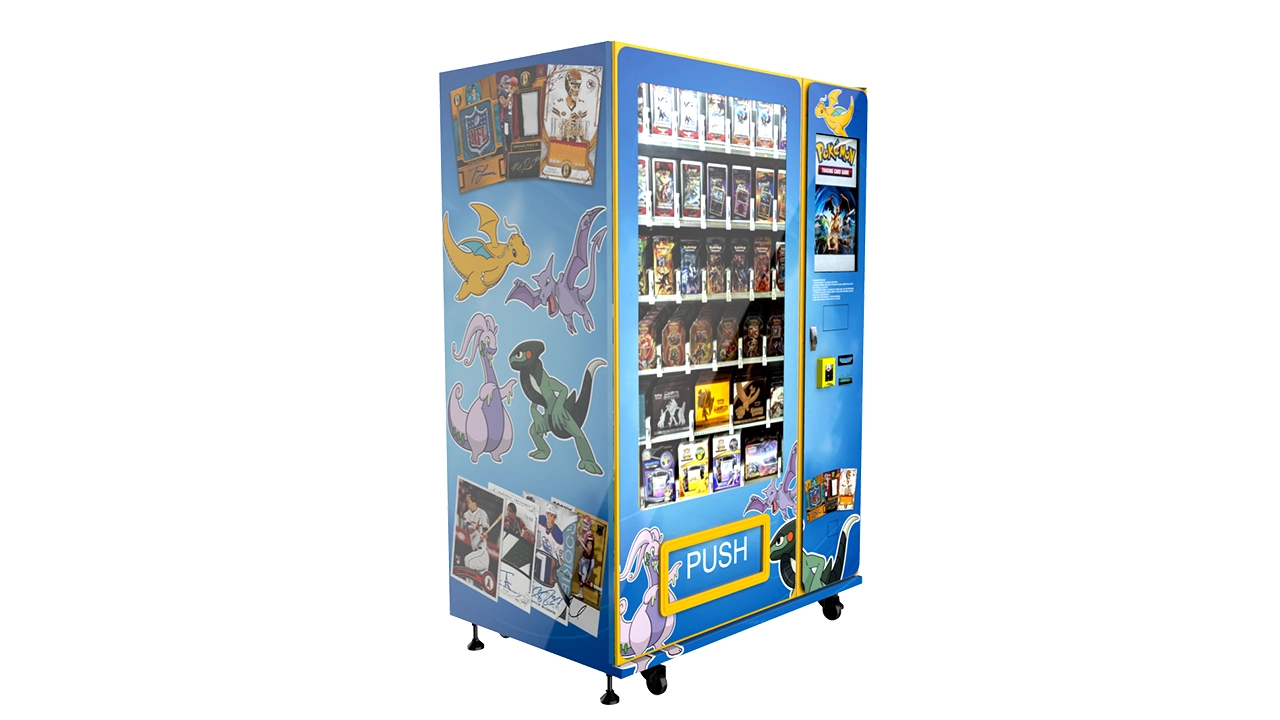
Not all card vending machines are created equal. The biggest differentiator is the dispensing mechanism. Some machines use a spiral system that works well for boxes, while others use a gravity-fed slot that works better for packs. You want a machine that can handle both, or at least one that you can adjust. I’ve seen machines that jam constantly because the cards are too thin for the mechanism. That’s a nightmare for maintenance and customer trust. If a customer pays and their card gets stuck, you better believe they’re posting about it on social media.
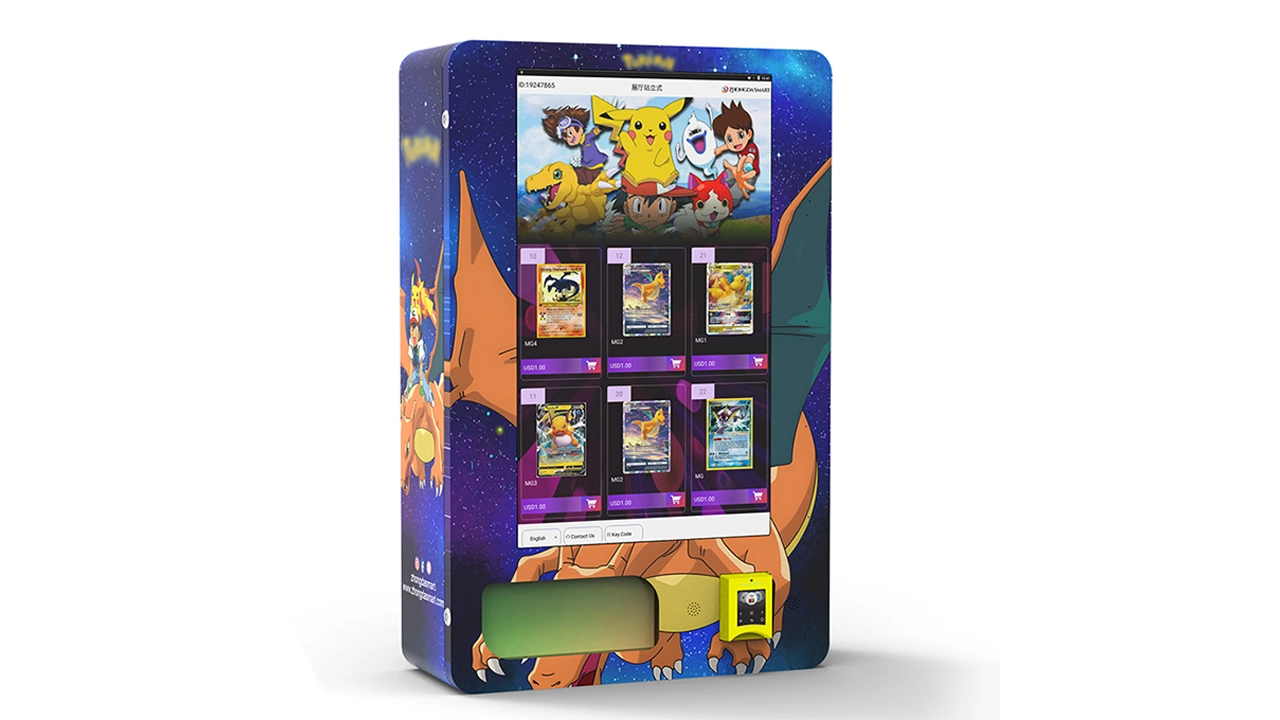
Another key feature is the payment system. You need a machine that accepts credit cards, debit cards, and ideally mobile payments like Apple Pay and Google Pay. Cash is less important for this demographic, but some locations still have customers who prefer cash. The screen quality matters too. A 32-inch touchscreen can display the product images and prices clearly, which reduces the number of questions you get. If you’re considering a specific model, I recommend looking at the 32-inch touchscreen trading card vending machine because it gives you enough display space to show off high-value items and attract attention from a distance.
Supplier Screening and the Zhongda Smart Option
When it comes to sourcing equipment, I always tell new operators to be careful with overseas suppliers. There are some good ones, but there are also a lot of cheap machines that will break down in six months. One supplier that has been consistent in terms of build quality is Zhongda Smart. I’ve seen their units at trade shows and I’ve had a couple of operators in my network use them. They’re not the cheapest option, but their dispensing mechanisms are reliable, and their software allows for remote monitoring, which is essential for checking inventory levels without driving to the location. If you’re looking at a custom card vending machine solution, make sure the supplier offers remote diagnostics and a warranty that covers the dispensing unit, not just the screen.
Restocking, Maintenance, and the Hidden Costs
One of the reasons I like card machines is the restocking frequency. A snack machine needs to be serviced once a week, sometimes twice. A card machine can go two to three weeks between restocks, depending on the location. That saves you labor costs and fuel. But when you do restock, you need to be smart about it. You can’t just dump random packs in. You need to track which sets are selling and which are sitting. I use a simple spreadsheet to track sales by item, and I adjust my next order based on that data.
Maintenance is another area where people get surprised. The machines are mechanical, so things will break. The most common issue is a card jam in the dispensing chute, usually caused by a bent card or a pack that’s too thick. You’ll also have occasional issues with the card reader or the touchscreen. If you’re not handy with basic electronics, you should budget for a local repair technician. A good rule of thumb is to set aside 10% of your monthly revenue for maintenance and unexpected repairs. That might seem like a lot, but it’s better than being caught off guard when the screen goes dead on a Saturday afternoon.
Data-Driven Restocking: Don’t Guess, Just Look at the Numbers
I learned this the hard way. In my first year with card machines, I stocked a location with a heavy focus on Pokemon because that’s what I knew. But the sales data showed that the top sellers were actually football cards. I switched my inventory mix, and my revenue jumped by about 35% in the next month. The point is that your personal preference doesn’t matter. The machine is a data collection tool. Pay attention to what sells and what doesn’t. If an item hasn’t sold in 60 days, move it out and try something else. Don’t be emotionally attached to a product line.
Self-Operation vs. Leasing vs. Revenue Share
There are three main ways to get into this business: buy the machine and operate it yourself, lease a machine from a supplier, or partner with a location on a revenue share basis. Self-operation gives you the most control and the highest profit margin, but it requires the most capital and time. Leasing reduces your upfront cost but usually comes with higher monthly fees and less control over the inventory. Revenue share with a location means the location provides the space and sometimes the power, and you split the net revenue, typically 70/30 or 80/20 in your favor.
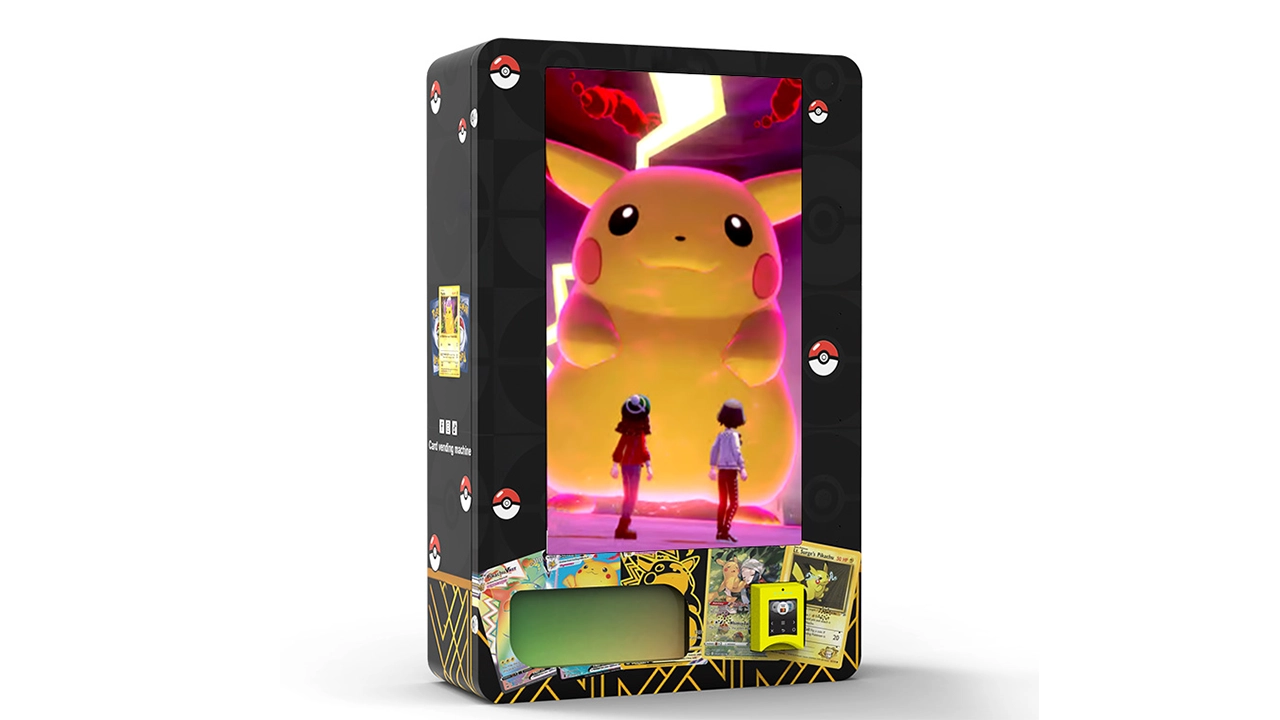
For a beginner, I actually recommend starting with a used machine or a smaller wall-mounted unit to test the waters. You can find a wall-mounted card vending machine for a lower initial investment, and it takes up less floor space, which makes it easier to place in a small game shop. The downside is less storage capacity, so you’ll need to restock more often. But for a first-time operator, that’s not a bad thing because it forces you to pay attention to the inventory and the location performance.
Comparing Different Business Models
Let me give you a quick comparison table based on what I’ve seen in the field. This is based on my experience, not an official survey, but it should help you decide which path fits your situation.
| Model | Upfront Cost | Monthly Profit Potential | Control Level | Risk Level |
|---|---|---|---|---|
| Self-Owned, Self-Operated | $8,000 – $15,000 | $800 – $2,500 | High | Medium-High |
| Leased Machine | $500 – $1,500 deposit | $300 – $800 | Low-Medium | Low |
| Revenue Share with Location | $2,000 – $5,000 (inventory only) | $400 – $1,200 | Medium | Medium |
As you can see, the self-owned model has the highest ceiling but also the highest risk. If you’re new, I’d suggest starting with a revenue share arrangement with a local game store. You bring the machine and inventory, they provide the space and foot traffic. This way, you test the market without committing to a long-term lease or a huge capital outlay. Just make sure you have a written agreement that covers who is responsible for maintenance, restocking, and what happens if sales are slow.
The Regulatory Side: Permits, Taxes, and Local Rules
One thing that gets overlooked is the legal side of running a vending machine. In most US states, you need a sales tax permit to sell goods via a vending machine. Some states have specific rules about vending machines, including labeling requirements and health permits, though those are usually for food. For trading cards, the requirements are simpler, but you still need to register your business and collect sales tax. If you’re in the EU, you’ll need to check local VAT rules and possibly register for a business license in the municipality where the machine is located. The U.S. Small Business Administration has a good guide on business licenses and permits that can help you get started.
Another issue is insurance. Some property owners will require you to have liability insurance in case someone gets hurt using the machine or if the machine causes damage. This is usually not expensive, but it’s an added cost that you should factor into your budget. I’ve seen operators skip this step and regret it when a child pulled a heavy machine over and the parent sued. Don’t be that person.
Common Mistakes New Operators Make
I’ve made a lot of mistakes in this business, and I’ve also watched others make them. Here are the top five I see repeatedly:
- Buying too much inventory upfront. Start small and test the market.
- Placing the machine in a location with no connection to the product.
- Ignoring the sales data and stocking based on personal preference.
- Choosing a cheap machine that jams frequently.
- Not budgeting for maintenance and repairs.
If you can avoid these, you’re already ahead of half the operators out there. The trading card vending machine market is still young enough that there’s room for smart operators who do their homework.
Why Pokemon Card Vending Machines Are Becoming Popular: The Final Verdict
I’ve been in this industry long enough to see trends come and go. I remember when DVD vending machines were supposed to change the world, and then streaming killed them. The card machine trend is different because it’s tied to a physical product that people still want to hold and trade. The popularity of Pokemon card vending machines is not just about the cards themselves; it’s about the experience of the hunt. Customers like the idea of getting a rare card from a machine, and they trust that the machine hasn’t been tampered with, which is a big deal in a market where resealed packs are a common scam.
From an operator’s standpoint, the economics work if you treat it like a business and not a lottery ticket. The gross margins are healthy, the restocking frequency is manageable, and the customer base is loyal. But it’s not passive income. You still need to manage the inventory, maintain the machine, and find the right locations. If you’re willing to put in the work, this can be a solid addition to your vending portfolio. If you’re looking for a set-and-forget investment, this is not it.
For those of you in Europe, I’ve also seen a rise in interest in what you might call a distributeur automatique for cards. The same principles apply, but you need to be more careful about the local market and the availability of certain card sets. What works in the US might not work in France or Germany, so do your local research before committing to a specific inventory mix.
FAQ: Answering the Questions I Get Every Week
Are card vending machines profitable?
Yes, they can be, but it depends on your location and inventory strategy. In my experience, a well-placed machine can generate $1,500 to $3,000 a month in revenue, with a gross margin of 30% to 40%. However, you need to factor in rent, maintenance, and your own time. A poorly placed machine will lose money.
How much does a card vending machine cost?
A new, reliable machine will cost between $7,000 and $12,000. Used or refurbished machines can be found for $3,500 to $6,500, but you risk more maintenance issues. You also need to budget for inventory, which will be at least $2,000 to start.
How long does it take to pay back the investment?
Based on my experience, a good location can pay back the initial investment in 7 to 12 months. This assumes you maintain a healthy margin and don’t get stuck with dead inventory. If you’re in a slow location, it could take 18 months or longer.
Should a beginner buy or lease a machine?
I generally recommend leasing or starting with a smaller, used machine for your first test. This reduces your upfront risk. Once you’ve proven that the location works, you can upgrade to a larger, newer machine. Leasing is also a good option if you don’t have a lot of capital.
Where is the best place to put a card vending machine?
The best locations are places where people already spend money on hobbies, such as game stores, comic book shops, and hobby shops. High-traffic areas like malls can work, but you need to be prepared for lower conversion rates on weekdays. Avoid laundromats and grocery stores unless you have no other option.
What permits and licenses do I need?
You’ll need a sales tax permit and a business license in most jurisdictions. Some states and municipalities have specific rules for vending machines. Check with your local government and the SBA for guidance. You should also consider liability insurance.
How do I choose a reliable supplier?
Look for a supplier with a proven track record, good customer support, and a warranty on the dispensing mechanism. Ask for references from other operators. I’ve had good experiences with Zhongda Smart, but you should also research other options and compare features like remote monitoring and payment system compatibility.
What happens if the machine breaks down?
You’ll need to either fix it yourself or call a local technician. The most common issue is a card jam, which you can usually clear with a simple tool. For more complex issues like screen failures or payment system errors, you may need to contact the manufacturer or a repair service. Budget for this expense.
How can I reduce restocking and maintenance costs?
Use a machine with remote monitoring so you can check inventory levels without visiting the site. Track your sales data to avoid stocking slow-moving items. Schedule maintenance visits proactively rather than waiting for a breakdown. And choose a machine with a simple, reliable dispensing mechanism.
Disclaimer: The figures and experiences shared in this article are based on personal operational experience and industry conversations. They are not official statistics and should not be taken as a guaranteed financial forecast. Costs, revenue, and payback periods will vary based on location, market conditions, inventory management, and equipment quality. Always conduct your own research and consult with a financial advisor before making significant investment decisions.