If you are looking into the trading card vending machine manufacturer in China market, the first thing I will tell you is this: stop obsessing over the machine itself and start obsessing over the location and the total cost of ownership. I have spent over a decade in the automated retail and vending sector across Europe and North America, and I have seen operators lose their shirts not because they bought a bad machine, but because they bought the wrong machine for the wrong spot, or they ignored the hidden costs like freight, customs, and payment integration. The reality is that a card vending machine can be a genuinely profitable piece of self-service kiosk equipment, but only if you treat it like a small business, not like a novelty purchase. In this buyer’s guide, I am going to walk you through the real numbers, the real mistakes, and the real decisions I have made over the years, so you can skip the expensive lessons.
Why Trading Card Vending Machines Are a Different Beast
Most operators come from the traditional snack and soda vending world. I did too. The first time I saw a trading card vending machine, I thought it was just a gimmick. It is not. The unit economics are completely different, and that changes everything about how you buy, place, and service these machines.
With a snack machine, you are fighting for a small margin on a commodity. With cards, you are selling a high-margin, emotionally driven product. A $5 pack of Pokémon cards might cost you $3 wholesale, but the perceived value to the buyer is much higher, especially if they are chasing a rare pull. This margin structure means you can afford a higher rent or a more expensive machine, but it also means your inventory management has to be sharper. You are not just restocking cans; you are curating a product mix that has to turn over before the next set release kills the demand.
Another difference is the audience. Card collectors are not impulse buyers in the traditional sense. They are often there with intent, checking the machine for specific items. This means your machine’s screen and user interface matter more than on a soda machine. If the touchscreen is laggy or the payment system rejects their Apple Pay, they will walk away and go to a local game store instead. Your machine is not just a dispenser; it is a retail kiosk that has to deliver a frictionless experience.
My First Failure: The Mall Kiosk That Lost Money
Let me share a real failure case from my early days. I placed a high-end, 32-inch touchscreen trading card vending machine in a busy suburban mall in the US. The foot traffic was incredible, over 3,000 people per hour on weekends. I was convinced I had found the golden spot. The machine was a premium unit, a trading card vending machine manufacturer in China had custom-built it with a massive screen and fancy lighting.
The problem was the product mix. I loaded it with high-value booster boxes and individual rare cards, thinking the mall crowd would be full of impulse buyers. I was wrong. The mall crowd was mostly families with young kids, and the serious collectors were not going to a mall to buy cards; they were going to specialized hobby stores. The machine sat idle for weeks. The rent was $800 a month, and my sales were barely $400. I lost money for three months before I pulled the machine and moved it to a comic book convention venue.
That failure taught me the most important rule: foot traffic volume is meaningless if it is the wrong traffic. You need the right foot traffic, meaning people who are already inclined to spend money on collectibles. A trading card vending machine is not a general merchandise vending machine. It needs a niche audience.
What a Trading Card Vending Machine Actually Costs
Let’s talk real numbers, because the spread in the market is huge. You can find cheap units for around $3,000, but you will regret it. The cheap units often have terrible card-dispensing mechanisms that jam, poor security, and screens that look like they are from 2010. On the other end, a high-quality, custom-built machine from a reputable trading card vending machine manufacturer in China will cost you anywhere from $6,500 to $12,000, depending on the configuration.
That price usually includes the basic cabinet, the card dispensing system, and the touchscreen. However, it does not include shipping, import duties, or the cost of integrating a payment system like a card reader or cashless payment terminal. Those can add another $1,000 to $2,000. If you are buying from overseas, factor in freight costs. I have seen operators pay $1,500 in shipping alone for a single machine, and then another $500 in customs fees.
Do not forget installation and setup. You might need a local technician to help with the initial setup if you are not handy. And you will need a reliable internet connection for remote monitoring and payment processing. That is an ongoing cost of about $30 to $50 a month per machine.
Hidden Costs That Bite You Later
The biggest hidden cost is maintenance. A trading card vending machine has moving parts that are more delicate than a snack machine’s spiral mechanism. Cards are thin, and they can stick together, especially if there is humidity. You will need to budget for a vending machine repair technician who understands these specific mechanisms, or you will need to learn to fix them yourself.
Another hidden cost is the inventory. You are not just buying a machine; you are buying a small inventory of trading cards to stock it. If you want to have a decent selection, you are looking at $2,000 to $5,000 in initial inventory. This is a cash flow issue that many new operators underestimate. You have to buy the cards upfront, and you do not get that money back until the cards sell.
Finally, there is the cost of the location. Good locations are not free. You will either pay a flat rent or, more commonly, a commission to the business owner. I have seen commissions range from 10% to 25% of gross sales. The higher the foot traffic, the higher the commission they will ask for. You have to factor this into your profit model.
Is It Actually Profitable? A Look at the Numbers
Yes, it can be profitable, but it is not automatic. Based on my experience and the data I have seen from other operators, a well-placed card vending machine in a hobby shop or a popular game store can generate between $1,500 and $4,000 in monthly revenue. That is gross revenue, not profit.
Let’s break down a realistic scenario. Say you place a machine in a local game store that gets steady traffic from Magic: The Gathering and Pokémon players. Your average transaction is around $15 to $20, because you are selling a mix of booster packs and single cards. If you make 50 transactions a week, that is $750 to $1,000 a week in gross sales. That gives you around $3,000 to $4,000 a month.
Your cost of goods sold (COGS) for trading cards is typically around 50% to 60% of retail price. So, if you sell $4,000, you are looking at $1,600 to $2,000 in profit before other expenses. Then you deduct rent or commission (say, $400), payment processing fees (around 3% of sales, so $120), and maintenance (maybe $50 a month). You are left with roughly $1,000 to $1,500 in net profit per machine per month. That aligns with what I have seen in the field.
According to a report from IBISWorld, the vending machine operators industry in the US has seen steady growth, but the real growth is in specialized machines, not traditional snack vending. The industry is expected to grow at an annualized rate of about 3.5% over the next five years. This suggests that niche vending, like card machines, is where the opportunity is. You can check the specific data on IBISWorld’s vending machine report for more details.
Payback Period: How Long Until You Break Even?
This is the question everyone asks. Based on my operating experience, a realistic payback period for a new card vending machine is between 8 and 16 months. This assumes you are making that $1,000 to $1,500 net profit per month I mentioned above.
If your machine costs $8,000 total (including shipping and setup), and you are netting $1,000 a month, you are looking at 8 months. If you are netting $500 a month, it will take 16 months. The variance is huge, and it all comes down to the location and the product mix.
I have seen machines pay for themselves in 5 months because they were placed in a high-traffic anime convention center. I have also seen machines that never paid for themselves because they were placed in a laundromat. Remember, the location is 80% of the business. The machine is just a tool.
One thing I always tell new operators: do not count on the secondary market for cards. The value of cards can be volatile. What is hot today might be worthless next year. You are not a speculator; you are a retailer. You make money on the spread between wholesale and retail, not on the appreciation of the cards. Keep your inventory fresh and move it quickly.
Choosing the Right Type of Machine
There are several form factors on the market, and choosing the right one is critical. You cannot just buy the biggest machine and hope for the best. The machine has to match the location.
Freestanding Full-Size Machines
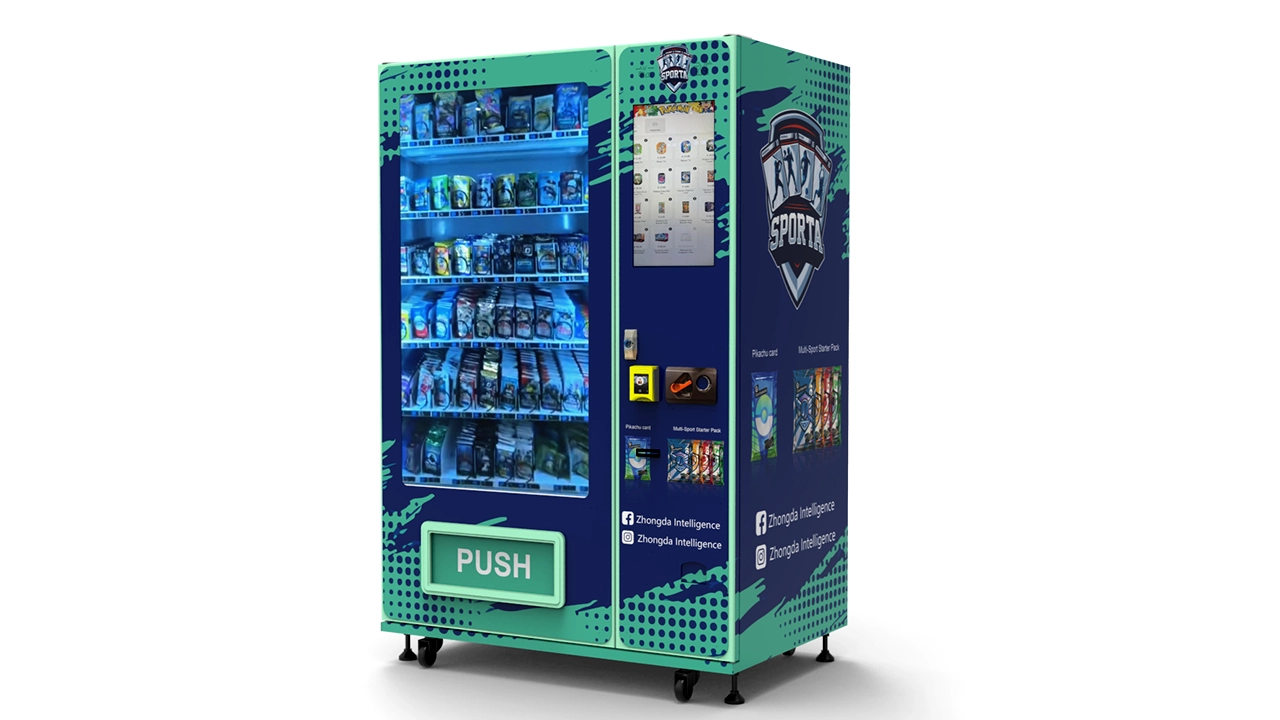
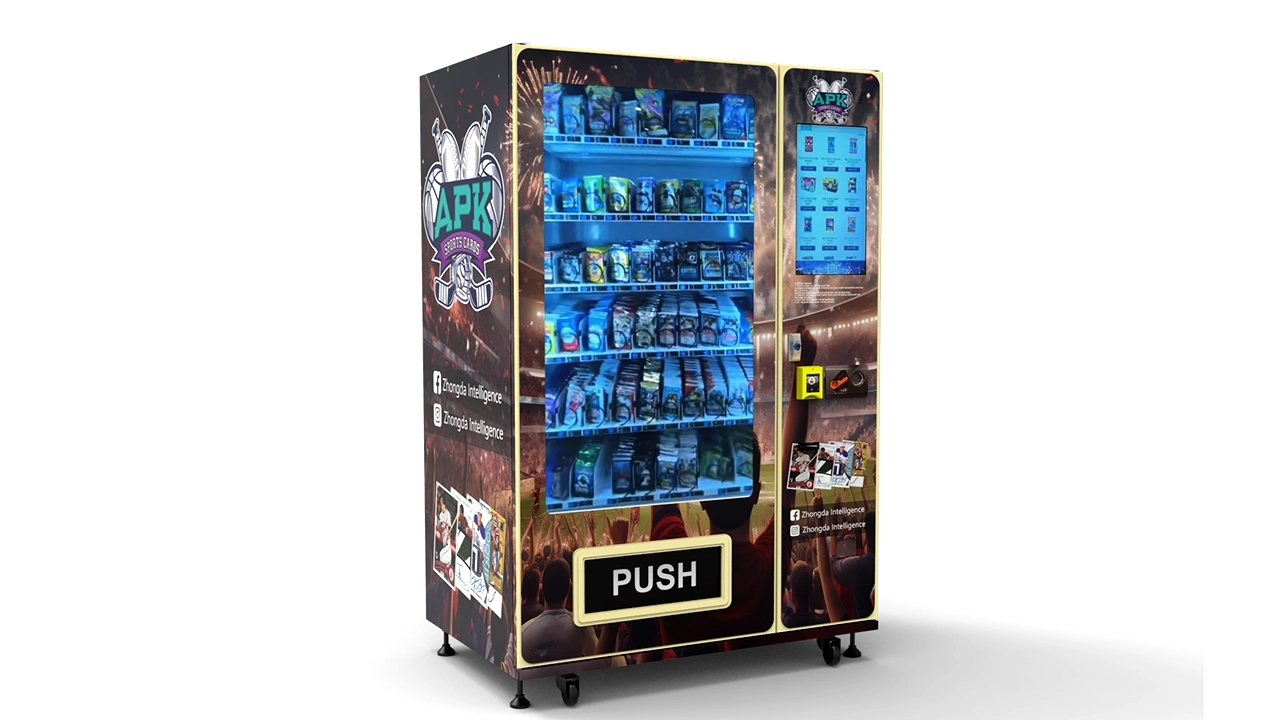
These are the most common. They usually have a large touchscreen, multiple shelves, and can hold a significant amount of inventory. They are great for locations with a dedicated footprint, like a game store or a mall kiosk. The downside is they take up space, and you need a power outlet and a strong internet connection nearby.
Wall-Mounted Card Vending Machines
These are a newer, sleeker option. They are perfect for locations where floor space is at a premium, like a small card shop or a barbershop. I have seen a wall-mounted card vending machine work exceptionally well in a busy barbershop that also sells sneakers and hype clothing. The footprint is small, so the rent or commission is lower, and it still drives a good amount of sales. The trade-off is that you cannot hold as much inventory, so you will need to restock more frequently.
High-End Interactive Kiosks with Large Screens
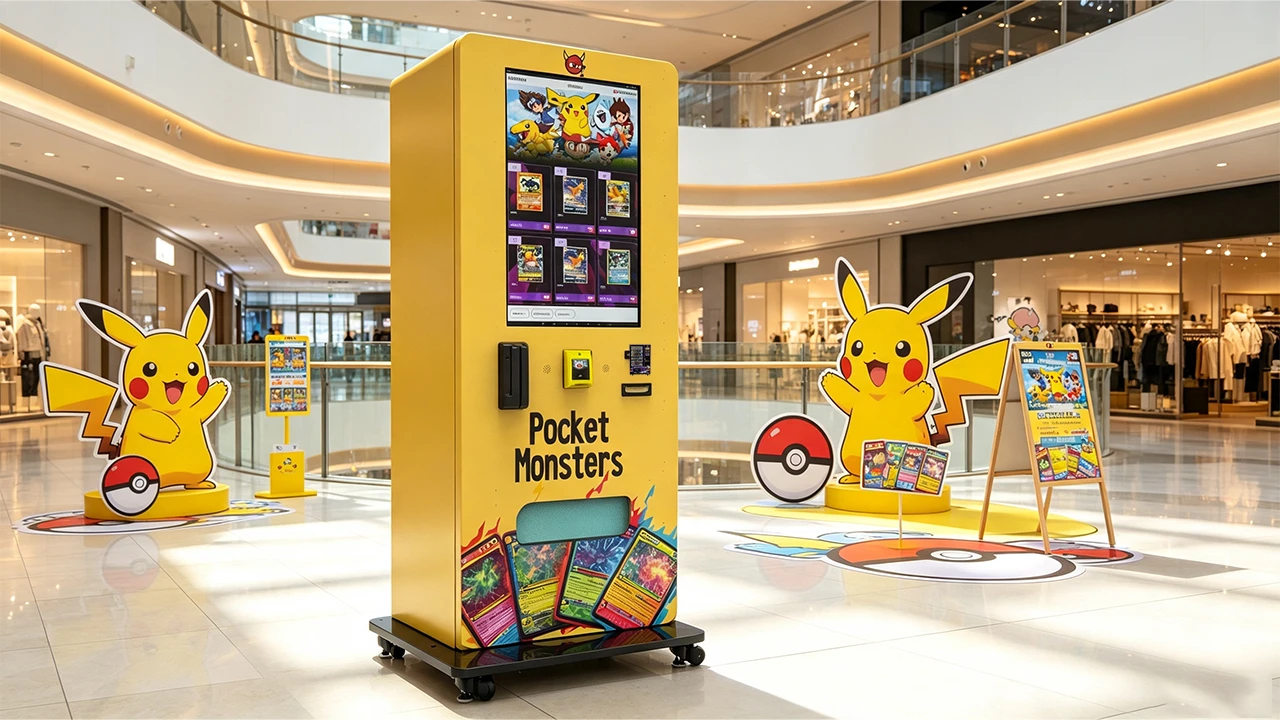
These are the flashy units with 32-inch or larger touchscreens. They are designed to be the centerpiece of a location. They are great for drawing attention and creating a "wow" factor. However, they cost more, and they require a location that can handle the visual noise. I have a detailed breakdown of one such model at this 32-inch touchscreen trading card vending machine review. These work best in high-traffic entertainment venues, not in quiet, low-key shops.
Location, Location, Location: The Real Estate of Cards
I have already touched on this, but it deserves its own section. The location determines everything. I have developed a simple checklist over the years that I use to evaluate any potential spot.
First, I look for the "stickiness" of the location. How long do people stay? A movie theater has high traffic, but people are in a hurry to get to their show. A hobby shop or a game store has lower traffic, but people linger. They browse, they chat, they are in a buying mood. That is the kind of place where a card vending machine thrives.
Second, I look at the existing product mix. If the store already sells trading cards at the counter, will they see my machine as competition? Sometimes they do. I have had store owners refuse to host a machine because they sell cards themselves. In that case, I have to find a location that does not sell cards but has the right clientele, like a vape shop or a comic book store that focuses on comics, not cards.
Third, I look at the security. Is the location well-lit? Is there a camera? Trading cards are small and valuable, and they are a target for theft. A machine in a dark corner of a parking lot is a recipe for disaster. I prefer locations where the machine is visible to the staff, so they can keep an eye on it.
Payment Systems and the User Experience
In Europe and North America, cash is becoming less common. Your machine needs to accept multiple payment methods. At a minimum, it should accept credit cards, debit cards, and mobile payments like Apple Pay and Google Pay. If your machine only takes cash, you are cutting off a huge portion of your potential customers.
I have seen machines fail simply because the payment system was clunky. A customer swipes their card, and the screen takes ten seconds to respond. They think it is broken, and they walk away. The payment system needs to be fast and reliable. When you are sourcing from a trading card vending machine manufacturer in China, make sure they are using reputable payment hardware. Many Chinese manufacturers use standard, globally compatible card readers, but you need to verify this. Ask for the exact model of the card reader and check if it is certified for use in your country.
Another aspect of the user experience is the machine’s interface. The screen should be bright and responsive. The product images should be high-resolution. The selection process should be simple. If a customer has to go through five menus to buy a pack of cards, they will give up. I always test the machine’s interface before I commit to buying it.
Supplier Selection: How to Vet a Manufacturer in China
This is where many operators get nervous. Buying from overseas can be intimidating, but it is also where you get the best value. I have worked with several manufacturers, and I have developed a strict vetting process.
First, I ask for a video call. I want to see the factory floor, the assembly line, and the machines being built. If they refuse or are evasive, I move on. A reputable manufacturer will be happy to show you their operation. I have had good experiences with Zhongda Smart, a trading card vending machine manufacturer in China that has been transparent about their production process. They are not the cheapest, but they are reliable, which matters more in the long run.
Second, I ask for a sample machine. I do not mean a video of the machine; I mean a physical machine shipped to me. This is an investment, but it is worth it. You need to see the build quality, the feel of the touchscreen, and the reliability of the card dispensing mechanism. If the manufacturer is hesitant to send a sample, that is a red flag.
Third, I check their certifications. They should have CE, FCC, or UL certifications, depending on your market. These are not just stickers; they indicate that the machine has been tested for safety and electromagnetic compatibility. If they do not have these certifications, you will have trouble getting insurance and passing local inspections.
Fourth, I ask about after-sales support. What happens if the machine breaks down? Will they send you spare parts? What is their response time? I have found that Chinese manufacturers are generally good at sending parts, but the shipping takes time. You should always keep a stock of critical spare parts on hand, like the card dispensing motor and the control board. This is where a good relationship with the supplier is crucial.
Self-Operate vs. Lease vs. Revenue Share
Once you have the machine, you need to decide how to place it. You have three main options, and each has its pros and cons. I have used all three models, and the best choice depends on your capital and your risk tolerance.
Self-operating is the most straightforward. You buy the machine, find a location, and run it yourself. You keep all the profit, but you also bear all the risk. You are responsible for maintenance, restocking, and finding the location. This is the best option if you have the time and the capital to invest in multiple machines.
Leasing is a good option if you do not want to commit to a specific machine. You pay a monthly fee to use the machine, and the leasing company handles the maintenance. This is a good way to test the waters, but the monthly fees can eat into your profits. Over a two-year period, you will likely pay more in lease fees than you would have paid for the machine outright.
Revenue share is a hybrid model. You place your machine in a location, and the location owner gets a percentage of the sales. This is attractive because it lowers your upfront rent costs, but it means you are giving up a chunk of your revenue. I have seen revenue shares range from 10% to 30%. This model works well when you have a high-traffic location that commands a premium.
| Model | Upfront Cost | Monthly Cost | Profit Potential | Risk Level |
|---|---|---|---|---|
| Self-Operate | High (machine purchase) | Low (electricity, internet) | High (keep all profit) | High (you own the asset) |
| Lease | Low (first month fee) | Medium (monthly lease fee) | Medium (lease fee reduces profit) | Low (can return machine) |
| Revenue Share | Medium (machine purchase) | Variable (commission %) | Medium (share with host) | Medium (depends on host location) |
Maintenance and Restocking: The Daily Grind
No matter how good the machine is, it will break down eventually. I have learned to do most of the basic vending machine repair myself. It saves money and time. The most common issues are card jams and payment system failures. I always carry a small toolkit with me when I visit my machines.
Restocking is a weekly chore. I do not recommend letting a machine run completely empty. It looks bad, and it loses customer trust. I prefer to restock when the machine is about 60% empty. This means I am visiting each location about once a week, sometimes twice if it is a high-traffic spot.
Efficiency is key. I have a standard route where I visit all my machines in a logical order, minimizing driving time. I also have a standardized inventory list for each machine, so I know exactly what to bring. This cuts my restocking time down to about 15 minutes per machine. If you are not organized, you will spend hours on the road and your profit margin will shrink.
Data-Driven Decisions: Using Sales Data to Improve
You cannot manage what you do not measure. Modern vending machines come with telemetry, meaning they can send you real-time data on sales, inventory levels, and machine health. I use this data to make decisions about which products to stock and when to move a machine.
For example, I noticed that one of my machines in a college town was selling a lot of a specific type of sports card, but not the Pokémon cards I had stocked heavily. I adjusted the product mix to favor the sports cards, and my sales increased by 20% within a month. Without the data, I would have kept stocking the wrong products.
I also use the data to identify underperforming locations. If a machine is not generating at least $1,000 in gross sales per month after three months, I will move it. It is a tough decision, but it is better to move the machine than to watch it lose money. I have a policy: if a location does not hit the target in 90 days, I relocate the machine to a new spot. This has saved me from holding onto bad locations for too long.
Legal and Regulatory Considerations in the EU and US
You cannot just place a machine anywhere. There are rules. In the US, you need to check local zoning laws and business license requirements. The U.S. Small Business Administration has a good overview of the steps you need to take to register your business and get the necessary permits. You can find more information on their website at SBA’s licensing page.
In the EU, the regulations are a bit different. You need to comply with the General Product Safety Directive and, more importantly, the CE marking requirements for electrical equipment. You also need to be aware of data privacy laws if your machine collects any customer data, which is rare for a simple vending machine. The European Commission’s website has resources on product compliance. You can check the EU’s CE marking page for more details.
One thing that often surprises new operators is the tax situation. You are responsible for collecting and remitting sales tax on the products you sell. This can be complicated if you are placing machines in multiple states or countries. I recommend using a sales tax automation service to handle this, or at least consulting with a local accountant who understands vending machine operations.
Common Mistakes New Operators Make
I have made almost every mistake in the book, so I can tell you exactly what to avoid.
The first mistake is buying a cheap machine to save money. I did this once, and the machine broke down every two weeks. I spent more on repairs in three months than I would have spent on a quality machine. The cheap machine also looked terrible, and customers avoided it. Do not make this mistake. Buy quality from the start.
The second mistake is ignoring the product mix. You cannot just fill the machine with whatever you can get cheap. You need to know what is popular in the local market. This requires research. Talk to local game store owners. Look at what is selling on eBay. Join online communities of card collectors. The more you know about the market, the better your machine will perform.
The third mistake is underestimating the importance of location. I already told you about my mall failure. Do not repeat it. Spend time finding the right location, even if it means paying a higher commission. A mediocre machine in a great location will always outperform a great machine in a mediocre location.
The fourth mistake is neglecting marketing. Your machine is a retail store. You need to let people know it is there. I have had success with simple strategies like putting a sign in the window of the host business, or posting on local Facebook groups. Some operators have even done small tournaments at the location to drive traffic to the machine. Get creative.
Realistic Expectations: What the Data Shows
I want to be clear about the numbers. The vending machine industry is not a get-rich-quick scheme. According to a market analysis by Statista, the global vending machine market is projected to grow steadily, but the growth is driven by innovation and convenience, not by traditional snack machines. The report shows that the market is expected to reach over $20 billion by 2027. This is a good sign for the industry, but it does not guarantee that any single machine will be profitable.
I have seen data from the National Automatic Merchandising Association (NAMA) that suggests the average vending machine operator in the US runs about 10 to 20 machines. The average profit per machine is not publicly published, but based on my experience and conversations with other operators, a well-run machine can net between $5,000 and $10,000 per year. This is a solid side income, but it is not a fortune. If you want to make a full-time living, you need to scale up to 10 or more machines.
You also need to consider the risk of theft and vandalism. Trading cards are a target for thieves. I have had a machine broken into once, and it was a nightmare. The thief got away with about $500 worth of cards, and the machine door was damaged. I now make sure my machines are in secure locations with good lighting and, ideally, a camera.
How to Scale: From One Machine to a Small Fleet
Once you have one machine running profitably, you will want to scale. Scaling is not just about buying more machines; it is about building systems. I have a simple process for scaling that has worked for me.
First, I document everything. I have a standard operating procedure for restocking, maintenance, and customer service. This makes it easy to train a part-time helper if I need one.
Second, I focus on relationships. I build strong relationships with my host locations. I check in with them regularly, and I make sure they are happy. A good host will promote your machine to their customers, which is free marketing.
Third, I reinvest my profits. I do not take money out of the business until I have at least three machines running. This is a discipline that has paid off. The more machines I have, the more buying power I have, which means I can negotiate better wholesale prices on cards.
Fourth, I diversify my locations. I do not put all my machines in the same type of location. I have machines in game stores, barbershops, and even a laundromat. If one segment takes a hit, the others can carry the business. This is a risk management strategy that I highly recommend.
FAQ: Your Questions, Answered Honestly
I get asked a lot of questions by new operators. Here are the ones I hear most often, with my honest answers based on my experience.
Are trading card vending machines profitable?
Yes, they can be profitable, but it is not automatic. A well-placed machine with a good product mix can net between $1,000 and $1,500 per month. However, a poorly placed machine can lose money. The profitability depends on the location, the product mix, and your operational efficiency. Do not expect to get rich with one machine; treat it like a small business.
How much does a trading card vending machine cost?
A quality new machine from a reliable trading card vending machine manufacturer in China will cost between $6,500 and $12,000. You also need to budget for shipping, customs, payment system integration, and initial inventory. The total startup cost for a single machine is usually between $10,000 and $15,000. Cheaper machines exist, but they are often not worth the risk of breakdowns.
How long does it take to recoup the investment?
Based on my experience, the payback period is typically between 8 and 16 months. This assumes you are generating a net profit of $1,000 to $1,500 per month. If your location is poor, it could take much longer or never happen. Always have a target payback period in mind before you buy a machine.
Is it better to buy or lease a vending machine?
I prefer to buy. Leasing seems attractive because of the lower upfront cost, but the monthly fees eat into your profit. Over the long term, buying is almost always cheaper. Leasing is only a good option if you are testing the market and are not sure if you want to commit. If you are serious about this business, buy your equipment.
Where is the best place to put a card vending machine?
The best locations are places where people with disposable income and an interest in collectibles already gather. This includes hobby shops, game stores, comic book stores, and vape shops. Avoid high-traffic but low-intent locations like grocery stores or laundromats. The foot traffic must be the right kind of traffic. Look for locations where people linger and browse, not places where they are in a hurry.
What permits or licenses do I need?
You need a general business license and a seller’s permit to collect sales tax. The requirements vary by state, county, and country. In the US, check with your local city hall and the SBA for guidance. In the EU, you need to comply with CE marking rules and local business registration. It is best to consult with a local accountant who understands the vending industry.
How do I choose a reliable manufacturer?
Ask for a video call to see the factory, request a physical sample machine, and check for certifications like CE, FCC, or UL. Ask about after-sales support and the availability of spare parts. A good manufacturer, like Zhongda Smart, will be transparent and willing to answer your questions. Do not rush this decision; it is the most important one you will make.
What happens if the machine breaks down?
You need to be prepared to do basic vending machine repair yourself. Common issues are card jams and payment system failures. Keep a stock of spare parts on hand. You should also have a relationship with a local technician who can help with more complex issues. Do not rely on the manufacturer for on-site support, as they are likely overseas.
How can I reduce restocking and maintenance costs?
Use the machine’s telemetry to track sales and inventory levels. This allows you to restock only when necessary and to bring the right products. Organize your restocking route to minimize driving time. Standardize your inventory list for each machine. Regular cleaning and simple preventive maintenance can also reduce the frequency of breakdowns.
Final Thoughts from the Field
I have seen the trading card vending machine business grow from a niche curiosity into a legitimate segment of the automated retail industry. It is not a passive income stream; it is a business that requires attention, capital, and a willingness to learn from your mistakes. My first machine lost me money, but the lessons I learned from that failure helped me build a small fleet of profitable machines across two countries.
If you are serious about this, start with a solid plan. Research the market, choose your location carefully, and buy a quality machine from a supplier you trust. Be prepared for the work involved in restocking and maintenance. And always keep an eye on the sales data to make informed decisions.
This is a business that rewards operators who treat it with respect. The machines are not magic boxes; they are tools. What you do with them determines your success. I hope this guide has given you a realistic view of what to expect. The opportunity is real, but so is the work. If you are ready for that, the card vending machine business can be a rewarding venture.
Disclaimer: The financial figures and operational estimates in this article are based on my personal experience and industry observations. They are not guarantees of future performance. Actual results will vary depending on location, market conditions, and operational efficiency. Always conduct your own due diligence before making any investment.