If you are asking yourself what the best cashless trading card vending machine is, the honest answer is that it depends less on the hardware and more on your location, your payment processor, and your willingness to treat this like a real retail business rather than a passive income hack. I have been running vending operations in the US and parts of Europe for over a decade, and I have watched the trading card vending machine trend explode since 2020. The best machine for a high-traffic hobby shop is not the same as the best machine for a suburban laundromat, and anyone telling you otherwise has probably never had to repair a jammed card dispenser at midnight. In this guide, I will break down what actually matters when you buy a cashless trading card vending machine, what it costs to run one, and where these machines genuinely make money.
Why Cashless Matters More Than You Think
The first mistake I see new operators make is underestimating how much cashless payment capability drives revenue. I learned this the hard way in 2021 when I placed a card vending machine in a comic shop that only accepted coins and bills. The machine sat there for three weeks looking great, but sales were dismal. The moment I switched to a model with a card reader and a digital wallet interface, weekly revenue tripled. Younger collectors simply do not carry cash, and if your machine does not accept tap-to-pay or Apple Pay, you are invisible to the demographic that buys the most Pokémon and sports cards.
When people search for the best cashless trading card vending machine, they often focus on screen size or aesthetics, but the payment stack is the real engine. You need a machine that supports multiple payment methods, including credit cards, debit cards, and mobile wallets. Some of the newer units also integrate with loyalty apps, which is a nice bonus but not essential for your first machine. What matters is reliability. A cashless system that goes offline on a Saturday afternoon will cost you more than the price of the machine over a year.
I have also seen operators make the mistake of buying a machine with a proprietary payment system that locks them into one processor with high fees. Always check whether the cashless system is open architecture or if you can swap out the card reader. In my experience, the best cashless trading card vending machine is one where you can replace the payment terminal without sending the whole unit back to the manufacturer.
What I Learned From a Failed Placement
Let me give you a real failure case so you do not repeat it. In 2022, I placed a wall-mounted card vending machine in a small grocery store in a mid-sized American town. The store had decent foot traffic, maybe 400 people a day, and the owner was enthusiastic. I thought it was a slam dunk. It was not. The problem was not the machine; it was the audience. Grocery shoppers are not thinking about buying a booster pack while they grab milk. The machine generated maybe $80 a month, which barely covered the cost of the payment processing and my time restocking. I pulled it after four months and moved it to a hobby shop near a high school. Within two weeks, it was doing more in a day than the grocery store did in a month.
The lesson here is that the best cashless trading card vending machine in the world will fail in the wrong location. Foot traffic alone is not enough. You need targeted foot traffic. People who are already in a hobby shop, a game store, or a sports card shop are primed to buy. A grocery store or a laundromat is not a bad place for a snack vending machine, but it is a terrible place for trading cards unless you are willing to invest heavily in signage and education.
I want to be clear that this was not a machine failure. The hardware worked fine. The issue was that I ignored my own site selection criteria because I was excited about the rent and the lack of competition. That is a rookie mistake, and I still kick myself for it. If you are reading this and thinking about where to put your first machine, do not skip the location analysis phase. It is more important than the machine itself.
Site Selection and Foot Traffic Standards
When I evaluate a location for a trading card vending machine, I look for a few specific things. First, I want to know the average daily foot traffic, but I also want to know the dwell time. A place where people linger, like a game store or a card shop, is better than a place where people rush through, like a convenience store. Second, I check the age and spending habits of the typical customer. If the store sells collectibles, action figures, or board games, that is a strong signal. Third, I negotiate a revenue share or a flat fee that does not kill my margins in the first year.
My experience is that a location needs at least 100 targeted visitors per day to make a single machine worthwhile. That is not a magic number from a textbook; it is just what I have seen work across dozens of placements. If you have a high-traffic location with 500 people a day but only 10% are interested in trading cards, that is still only 50 potential buyers. A smaller shop with 150 dedicated collectors walking through the door every day is a much better bet. The best cashless trading card vending machine will not compensate for a weak audience.
I also recommend looking at the surrounding area. Are there schools, colleges, or community centers nearby? Is the shop part of a strip mall with other entertainment venues? These factors matter. I have one machine in a location near a university campus that does consistently well because students have disposable income and free time between classes. I have another machine in a tourist area that spikes on weekends but dies during the week. You need to match your expectations to the rhythm of the location.
Cost Breakdown and Realistic Return on Investment
Let me give you a realistic cost picture based on my own purchases and industry data. A new, decent-quality cashless trading card vending machine will cost you anywhere from $8,000 to $25,000 depending on configuration. The higher-end units with large touchscreens, multiple storage columns, and advanced inventory tracking can push toward $30,000. I have also seen cheaper machines in the $4,000 to $6,000 range, but they often lack robust cashless integration or have poor dispenser mechanisms that jam frequently. You get what you pay for.
On the revenue side, I have seen single machines generate anywhere from $500 to $5,000 per month. The variance is huge because it depends on location, card selection, pricing, and seasonal demand. In my experience, a well-placed machine in a hobby shop will average between $1,500 and $3,000 per month. That sounds great, but you have to subtract the cost of goods sold, which is typically 50% to 60% of retail price for trading cards. You also have to factor in payment processing fees, which run about 2.5% to 3.5% per transaction, plus any location rent or revenue share.
If you do the math on a $12,000 machine with $2,000 monthly revenue and a 55% margin, you are looking at roughly $900 in gross profit before rent, maintenance, and your time. If you pay 20% of revenue as a location fee, that drops to $500. Then you have restocking time, travel, and occasional repairs. A realistic payback period for a new machine is 12 to 24 months. Anyone who tells you that you will recoup your investment in six months is probably trying to sell you something. According to IBISWorld, the vending machine industry in the US has an average profit margin around 15% to 20%, which aligns with my experience when you factor in all costs. You can check the IBISWorld vending machine industry report for broader context, but trust me when I say that the trading card segment is not dramatically different in terms of operational economics.
I also want to mention that the used market exists, and you can find refurbished machines for half the price. However, I have seen too many operators buy a used machine and then spend hundreds of dollars on repairs within the first few months. If you are handy and willing to learn vending machine repair, a used machine can be a smart play. If you are not, buy new or buy from a supplier that offers a solid warranty and local service.
Comparing Machine Types and Configurations
There is no single best cashless trading card vending machine for everyone, so let me give you a comparison table based on what I have seen in the field. This table reflects my experience, not official stats, but it will help you think about trade-offs.
| Machine Type | Initial Cost | Best For | Maintenance Frequency | Revenue Potential |
|---|---|---|---|---|
| Wall-mounted basic unit | $6,000 – $10,000 | Small shops, limited floor space | Low, but limited inventory | $400 – $1,200/month |
| Freestanding touchscreen unit | $12,000 – $20,000 | Hobby shops, game stores, malls | Moderate, more moving parts | $1,500 – $3,500/month |
| High-end multi-column unit | $20,000 – $30,000 | High-traffic retail, card expos | Higher, needs regular service | $3,000 – $6,000/month |
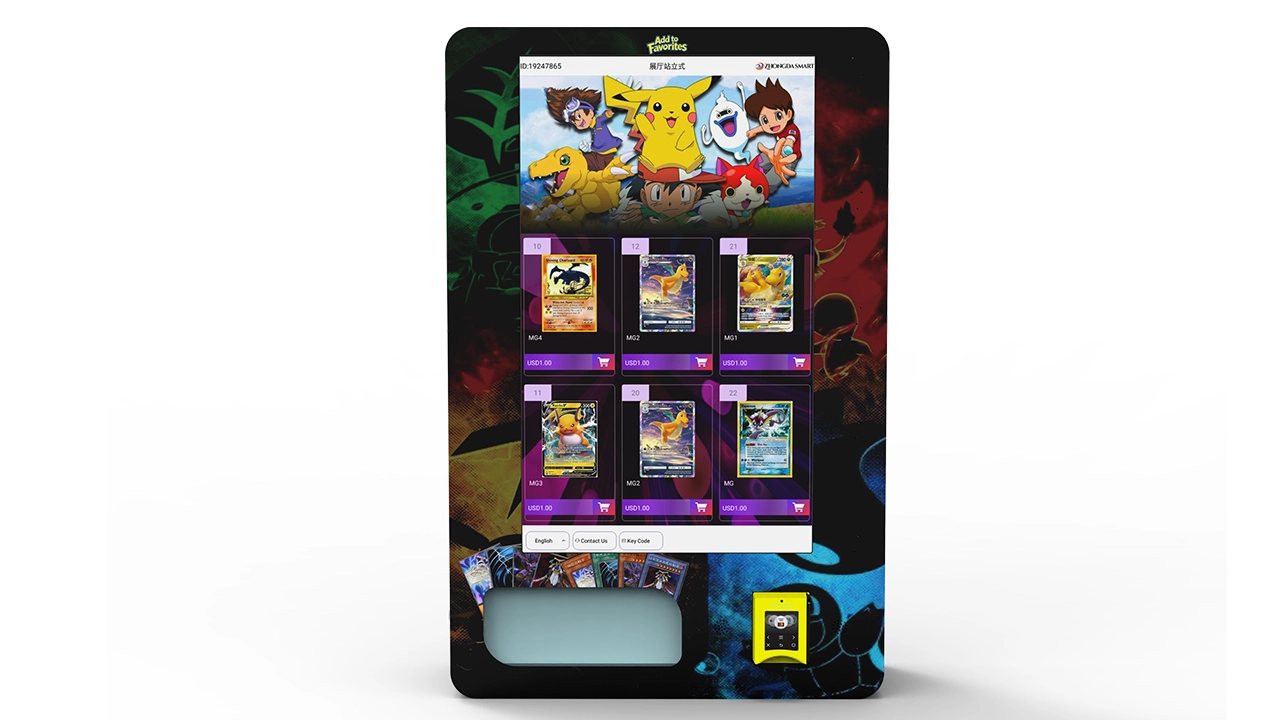
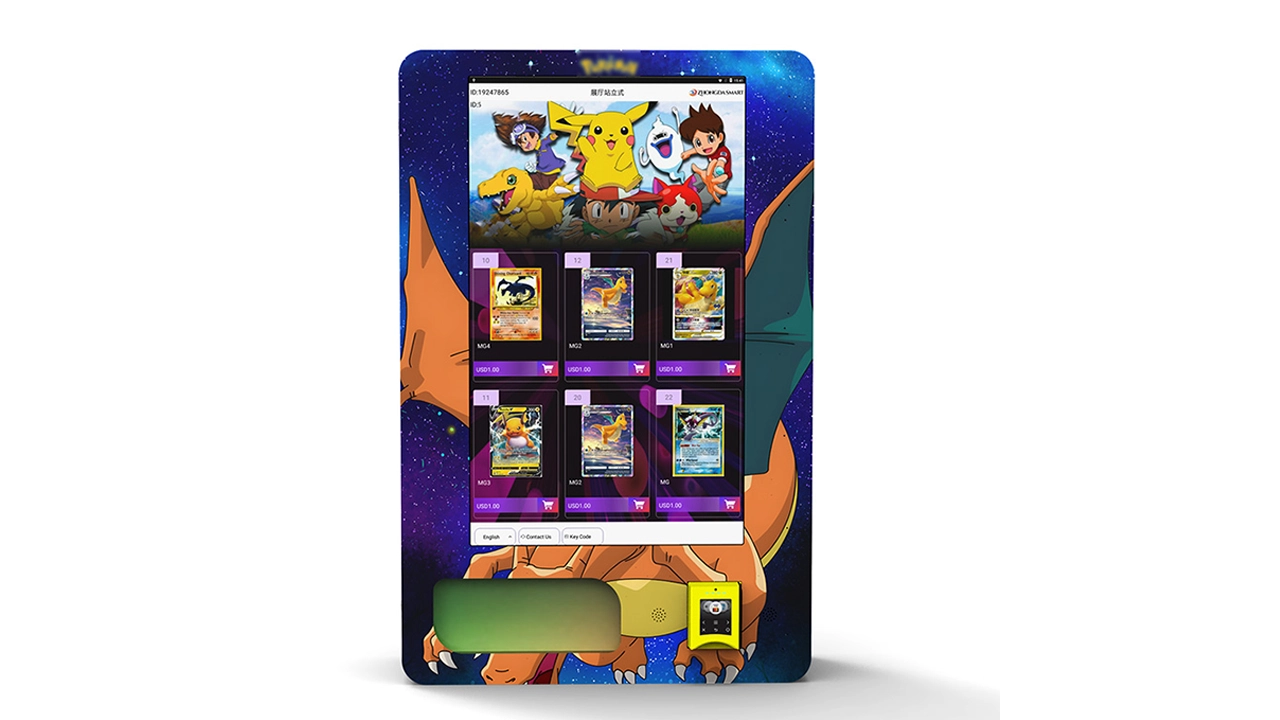
I have personally run all three types, and my recommendation for a first-time operator is the freestanding touchscreen unit. It gives you enough flexibility to test different card categories without a massive upfront investment. The wall-mounted units are great for tight spaces, but they limit your inventory and can frustrate customers if popular items sell out quickly. The high-end units are impressive, but they come with more complexity and a higher risk of downtime. A self-service kiosk with a 32-inch screen is the sweet spot for most operators. If you want to see a specific example of a 32-inch touchscreen trading card vending machine, you can check this page for reference, but always compare multiple suppliers before buying.
Supplier Selection and What to Look For
Choosing the right supplier is just as important as choosing the right machine. I have dealt with manufacturers in China, Europe, and the US, and I have learned to ask specific questions before sending any money. First, ask about the payment system. Is it certified for your country’s regulations? Can it process transactions quickly and securely? Second, ask about spare parts availability. If the dispenser motor fails, can you get a replacement within a week or do you have to wait a month for shipping? Third, ask about software updates. A cashless trading card vending machine is essentially a small computer, and the software needs regular updates to handle new payment methods and security patches.
One supplier that has been reliable in my experience is Zhongda Smart. They offer a range of card vending machines with customizable payment options, and their after-sales support has been responsive when I needed replacement parts. I am not saying they are the only good option, but they are a name I trust based on my own purchasing history. Do your own due diligence, but if you are looking for a manufacturer that understands the global market, they are worth a conversation. I have also used suppliers that were cheaper upfront but then charged exorbitant fees for technical support, so watch out for that hidden cost.
When you compare quotes, do not just look at the machine price. Factor in shipping, import duties, installation, and a one-year service contract if available. In the US, you should also check whether the machine meets local electrical and safety standards. In the EU, you need to consider CE marking and possibly local language requirements for the user interface. A machine that works perfectly in Texas might not be compliant in Germany, so do not assume international compatibility.
Realistic Maintenance and Restocking Costs
Maintenance is the part of this business that most new operators underestimate. A cashless trading card vending machine has several failure points: the card dispenser, the payment terminal, the screen, and the software. In my first year, I had a dispenser jam that required me to disassemble the whole column. It took me three hours to fix, and I lost a day of sales. That experience taught me to buy machines with modular dispensers that I can swap out quickly. I also learned to keep a small inventory of spare parts on hand, including extra motors and sensors.
Restocking is another ongoing cost. How often you restock depends on your sales volume and the capacity of your machine. A typical machine holds between 100 and 300 products, depending on the configuration. If you are selling 20 items a day, you will need to restock every one to two weeks. That might not sound like much, but you also have to rotate inventory, remove damaged items, and clean the machine. I calculate my labor cost at about $25 per hour, and I budget roughly two hours per visit. That adds up to $50 to $100 per restocking trip, depending on how far I have to travel.
You can reduce restocking frequency by choosing a machine with higher capacity, but that often means a larger footprint and a higher initial cost. You can also use sales data to predict which items sell fastest and adjust your inventory mix. I have found that a mix of Pokémon, sports cards, and a few specialty items works best for most locations. If you want to learn more about inventory management and data-driven restocking, I wrote a detailed piece on trading card vending machine operations that goes deeper into this topic.
Payment Systems and the Unattended Retail Experience
The cashless experience is not just about accepting cards; it is about creating a frictionless buying journey. In my opinion, the best cashless trading card vending machine is one that lets a customer complete a purchase in under 30 seconds. That means a responsive touchscreen, a clear product display, and a payment terminal that does not require a signature for small transactions. I have seen machines that are technically cashless but have such a clunky interface that customers give up and walk away. That is a revenue leak you cannot afford.
I also recommend machines that offer remote monitoring. This is a game changer for operators who do not want to visit every location just to check inventory levels. With remote telemetry, you can see which products are selling, which are sitting, and whether the machine is online. Some systems even send you alerts when a column is empty or when the payment terminal has an issue. This is part of the broader trend toward automated retail and self-service kiosks, and it is worth paying extra for if you plan to scale beyond a single machine.
One thing I have learned is that customers appreciate transparency. If a product is out of stock, the machine should show that clearly rather than taking payment and then failing to dispense. That kind of error destroys trust and leads to chargebacks. I have had to deal with angry customers who were double-charged because of a software glitch, and it is not worth the headache. Spend the money on a reliable machine and test it thoroughly before deployment.
Self-Operated vs. Leased vs. Revenue Share
Another decision you will face is whether to operate the machine yourself, lease it to a location, or enter a revenue share agreement. I have tried all three models, and each has its pros and cons. When I self-operate, I have full control over pricing and inventory, but I also bear all the risk and maintenance costs. When I lease a machine to a store, I get a fixed monthly fee, but I have less control over how the machine is presented and maintained. Revenue share agreements can be lucrative if the location performs well, but they require more trust and communication with the host business.
For a beginner, I recommend starting with self-operation at one or two locations. This gives you hands-on experience with restocking, maintenance, and customer behavior. Once you understand the economics, you can explore leasing or revenue share models to expand without taking on as much operational burden. I have seen operators lose money by signing a revenue share deal with a location that looked promising but then failed to drive traffic. Do your due diligence before committing to any partnership.
Common Mistakes and How to Avoid Them
I have made my share of mistakes, and I have also watched other operators fail in predictable ways. The biggest mistake is buying a machine before securing a location. I have seen people purchase a $15,000 machine and then struggle to find a placement that makes sense. That is backwards. You should identify a promising location, negotiate terms, and then buy the machine that fits that space and audience. Another common mistake is ignoring the cost of goods sold. If you buy booster boxes at wholesale but do not account for shipping and transaction fees, your margin will be thinner than you think.
I have also seen operators overprice their products. Yes, trading cards have a strong aftermarket, but if you charge 30% above retail, collectors will just buy elsewhere. My rule of thumb is to price at or slightly below typical retail price for sealed products, and to reserve higher margins for single cards or exclusive items. You want to be the convenient option, not the expensive one. Finally, do not neglect marketing. A machine in a store will not sell itself. I have placed small signage and QR codes that link to a social media page, and that has helped drive repeat visits.
Data-Driven Adjustments and Scaling
Once your machine is running, the work is not over. You need to review sales data regularly and adjust your product mix. I use a simple spreadsheet to track what sells and what does not, and I make changes every month. For example, I noticed that at one location, sports cards outsold Pokémon by three to one, so I shifted my inventory accordingly. At another location, the opposite was true. This kind of data-driven decision making is what separates profitable operations from hobby projects.
If you want to scale, you need a repeatable process. That means standardizing your machine setup, your restocking schedule, and your reporting. I have a checklist that I follow for every site visit, and it saves me time and prevents mistakes. I also recommend keeping a relationship with a local vending machine repair technician, even if you do most of the work yourself. There will be times when you cannot fix something on-site, and having a backup is essential. The vending machine repair industry is not huge, but in most metro areas you can find someone who works on self-service kiosks.
Regulatory and Compliance Considerations
Depending on where you live, you may need a business license, a seller’s permit, or a vending machine permit. In the US, the rules vary by state and municipality. In the EU, you need to comply with VAT rules and possibly local consumer protection laws. I am not a lawyer, so I recommend consulting with a local business advisor before you launch. The U.S. Small Business Administration has useful resources on licensing and permits that can help you get started. In Europe, Eurostat and national business portals can give you an overview of requirements, but nothing beats a conversation with a local accountant.
You also need to think about liability. If a machine malfunctions and injures someone, or if a customer claims they were overcharged, you need to have insurance. I carry a basic business liability policy that covers my machines, and it is not expensive. A few hundred dollars a year is worth the peace of mind. I have never had a serious incident, but I have had chargebacks and customer complaints that were resolved quickly because I had proper documentation.
FAQ
Are trading card vending machines profitable?
They can be profitable if you place them in the right location and manage your costs carefully. In my experience, a well-placed machine can generate $1,500 to $3,000 per month, but you have to subtract the cost of goods, payment fees, rent, and maintenance. Profit margins typically range from 15% to 25% after all expenses, which is decent but not a get-rich-quick scheme. According to IBISWorld, the broader vending machine industry has similar margins, so the trading card segment is not an outlier.
How much does a cashless trading card vending machine cost?
A new machine with cashless payment support will cost between $8,000 and $25,000. Higher-end models with large touchscreens and advanced features can cost up to $30,000. Used or refurbished machines are cheaper, but they come with higher maintenance risk. I have seen operators pay as little as $4,000 for a used unit, but they often spend hundreds of dollars on repairs in the first year.
How long does it take to recoup the investment?
Based on my experience, a realistic payback period is 12 to 24 months. This assumes a good location, consistent sales, and disciplined cost management. If your location underperforms or you have frequent breakdowns, payback will take longer. Do not believe anyone who promises a six-month return on investment.
Should a beginner buy or lease a machine?
I recommend buying a new machine for your first placement. Leasing can be attractive because it lowers upfront costs, but you often end up paying more over time and you have less control over the equipment. If you buy, you can also sell the machine later if you decide to exit the business.
Where should I place a trading card vending machine?
Look for locations with targeted foot traffic, such as hobby shops, game stores, comic book shops, and sports card retailers. Avoid general retail locations like grocery stores or convenience stores unless you have a strong reason to believe the audience is right. A location with at least 100 targeted visitors per day is a good starting point.
What permits or licenses do I need?
Requirements vary by country, state, and city. In the US, you typically need a business license and a seller’s permit. Some municipalities require a specific vending machine permit. In the EU, you need to comply with VAT and consumer protection rules. Consult a local business advisor or check the U.S. Small Business Administration website for guidance.
How do I choose a supplier?
Look for a supplier that offers a reliable cashless payment system, spare parts availability, and responsive technical support. Ask about software updates and warranty terms. I have had good experiences with Zhongda Smart, but you should compare multiple suppliers and read reviews before committing.
What if the machine breaks down?
First, check if the issue is something you can fix yourself, like a jammed dispenser or a disconnected cable. Keep spare parts on hand and have a local vending machine repair technician as a backup. If you bought from a reputable supplier, they should also offer remote diagnostics and replacement parts.
How can I reduce restocking and maintenance costs?
Choose a machine with high capacity and modular parts that are easy to replace. Use remote monitoring software to track inventory levels and only visit sites when necessary. Standardize your restocking checklist and keep a consistent schedule. Data-driven inventory management will also help you avoid overstocking items that do not sell.
I have been in this business long enough to know that there is no perfect machine and no guaranteed profit. What works is a combination of smart location selection, reliable equipment, and consistent operational discipline. If you are willing to put in the work, a cashless trading card vending machine can be a solid addition to your income stream. But if you are looking for a passive investment that requires zero effort, you will be disappointed. Treat it like a small business, and it will reward you accordingly.
Before you make any purchase, I encourage you to research the equipment options thoroughly. Look at the wall-mounted card vending machine options if space is tight, or check out the larger freestanding models if you have a high-traffic location. The right choice depends on your specific situation, and only you can make that call. I also recommend reading about the broader automated retail trend, because the industry is evolving fast and machines that seem modern today may be outdated in a few years. For a deeper dive into the operational side, you can read my article on trading card vending machine operations, which covers inventory strategies and troubleshooting in more detail.
One final piece of advice: do not ignore the importance of customer trust. A machine that looks neglected, has dirty screens, or frequently fails to dispense will kill your reputation quickly. Keep your machines clean, respond to issues fast, and treat every customer as if they are your only customer. That mindset has kept me in business for over a decade, and it will serve you well too. The market for trading cards is strong, and the demand for convenient, cashless purchasing is only growing. If you position yourself correctly, there is real money to be made in this niche.
I hope this guide has given you a realistic picture of what it takes to run a successful cashless trading card vending machine operation. The information here reflects my personal experience and is not a guarantee of any specific outcome. Costs and revenues vary widely based on location, market conditions, and operational efficiency. Always do your own research and consult with professionals before making significant investments.