If you are looking into the trading card vending machine business, the first question you probably have is whether it is actually worth the investment, and the second is who to buy from. After running automated retail operations for over a decade, I can tell you that the machine itself is only half the equation, and the manufacturer you choose determines everything from downtime to profit margin. A sports card vending machine manufacturer should be evaluated on build quality, local service availability, payment system compatibility, and how quickly they can ship replacement parts, not just the flashy screen they show you at a trade show. I have made the mistake of chasing a low price before, and I have the repair bills to prove it.
Why I Started Using Card Vending Machines in the First Place
My background is in traditional vending, mostly snack and beverage machines placed in warehouses and break rooms. A few years ago, a client who owned a hobby shop asked me if I could source a machine that dispensed sealed trading card packs. I thought he was joking. But after seeing the foot traffic around his counter and the way customers were hovering over the sealed product display, I realized there was a gap in the market. The demand for physical cards had exploded, and collectors wanted a self-service kiosk experience that felt secure and modern.
The transition was not seamless. My first attempt to buy a machine from a generic Chinese manufacturer that mostly produced snack vending machines ended with me losing about four months of potential revenue. The unit I received had a card dispensing mechanism that jammed constantly because the packaging dimensions of different brands varied too much. I learned quickly that a sports card vending machine manufacturer needs to specialize in the product, not just adapt a candy machine to hold cardboard.
The Difference Between a Card Machine and a Snack Machine
You cannot simply take a standard vending machine and fill it with trading cards. The thickness, weight, and delicate nature of card packaging require a different dispensing mechanism. Snack machines use spirals and gravity, which can crush a foil pack or cause a box to wedge. Card machines use a different kind of pusher system or a robotic arm that picks the item and places it in a bin. This is not a minor detail. When you are evaluating a manufacturer, ask them specifically what mechanism they use for boxed products versus hanging bags.
My second machine, which I still operate today, uses a vertical lift system that holds the product in a secure compartment before dropping it into the tray. This prevents the “one item gets stuck and the customer buys the wrong thing” problem. If a manufacturer cannot explain their dispensing logic clearly, walk away. If they cannot tell you the failure rate of their picker arm, that is a red flag.
What to Look For in a Sports Card Vending Machine Manufacturer
When I am asked for advice by other operators, I usually break this down into five categories: hardware reliability, software flexibility, after-sales support, payment system integration, and lead time. You can have the best location in the world, but if the machine breaks down and the manufacturer takes three weeks to send a sensor, you are bleeding money.
Hardware Reliability and Build Quality
The cabinet needs to be sturdy enough to withstand public use, but the internal components matter more. Look for a machine that uses metal gears instead of plastic, and check if the motors are from a recognized brand. The card dispensing mechanism should be tested with actual product, not just empty boxes. I once had a machine that worked perfectly in the factory with dummy boxes, but real packs have a different friction coefficient and the whole thing jammed on day one.
Ask the manufacturer for a video of the machine dispensing various card brands like Panini, Topps, and Upper Deck. If they cannot provide that, they have not done their homework. A reputable manufacturer will have a test lab and will be able to tell you which product lines are compatible with their machine.
Software and Remote Management
The days of driving to a machine to check inventory are over. You need a machine that offers remote monitoring. This means you can see which slots are empty, how many sales you made today, and whether the machine is online. The software should also allow you to adjust pricing remotely. If a manufacturer only offers a basic interface with no data analytics, you are flying blind.
I use a dashboard that sends me a text alert when a specific product is low. This saves me at least two unnecessary trips a week. Without this feature, you are essentially guessing when to restock, and you will either run out of stock or waste gas checking a full machine.
Payment Systems and Cashless Integration
In the US and Europe, cash is almost irrelevant for this type of purchase. Collectors are young, tech-savvy, and expect to tap their phone or insert a card. A sports card vending machine manufacturer must offer a payment system that supports major credit cards, Apple Pay, Google Pay, and ideally some local options like iDEAL in the Netherlands or Klarna in Sweden. Do not buy a machine that only takes coins, unless you are targeting a very specific demographic that you know carries cash.
I have seen operators try to save a few hundred dollars by buying a machine with a cheap card reader, and then they lose sales because the reader cannot process chip cards quickly. The payment terminal is the face of your machine. If it looks sketchy or takes too long, people walk away.
After-Sales Support and Spare Parts
This is where most operators get burned. You can buy a machine from a manufacturer who is located overseas, but if they do not have a local service partner or a warehouse for spare parts, you are in trouble. Ask about their response time for technical support. Do they have a hotline that operates in your time zone? Can they ship a replacement part within 48 hours?
I had a situation where a thermal printer failed on a busy Saturday. I called the manufacturer, and because they had a local distributor in the US, I had a replacement printer in my hands by Tuesday. That cost me a weekend of downtime, but it could have been a month if I had bought from a different supplier. Always ask for a list of their authorized service centers in your region before you sign the purchase order.
Realistic Cost Breakdown and Return on Investment
Let me give you the numbers based on my own operations and the data I have collected from other operators in my network. These are not official statistics, but they reflect what I see on the ground every week.
| Cost Item | Typical Range (USD) | Notes from My Experience |
|---|---|---|
| New Card Vending Machine | $8,000 – $15,000 | Depends on screen size, cabinet size, and payment options. |
| Refurbished/Used Machine | $4,000 – $7,000 | Riskier unless you inspect the dispensing mechanism personally. |
| Shipping & Installation | $500 – $1,500 | Heavy units require a lift gate and possibly a second person. |
| Initial Inventory (Cards) | $3,000 – $6,000 | Depends on how many slots and the price point of the packs. |
| Merchant Account Fees | 2.5% – 3.5% per transaction | Higher than standard retail due to card-present risk. |
| Maintenance Reserve (Annual) | $500 – $1,200 | This covers sensors, motors, and screen repairs. |
Now, for the revenue side. A good location with a high-traffic shopping center or a dedicated card shop can generate between $1,200 and $2,500 per month in gross sales. A mediocre location might only do $400. The gross margin on trading cards is usually around 30% to 40% at retail price, which is lower than snacks but the ticket average is higher. You are selling a $15 pack instead of a $1.50 candy bar.
So, if you have a machine that grosses $1,800 a month, and your cost of goods is 65%, your gross profit is about $630. From that, subtract the cost of the machine amortized over three years, maintenance, and payment fees. You are left with a net profit of maybe $300 to $400 a month per machine. That is not a get-rich-quick scheme, but it is a solid side business or a good addition to an existing retail operation.
I have one machine in a comic book store that does over $2,000 a month consistently because the store owner promotes it and the local collector community knows it is there. I have another in a random laundromat that does less than $200 a month. The location is everything, and I will get to that in a minute.
Why the Manufacturer Matters for Profitability
The cheaper machines often have a higher failure rate, which directly hits your bottom line. Every time you have to drive out to fix a jam, you are spending time and gas. If the machine is down for a week, you lose that week’s revenue. A slightly more expensive machine from a manufacturer with a good track record will save you money in the long run.
In my experience, a sports card vending machine manufacturer that offers modular components is the best choice. If a motor fails, you want to be able to swap it out in ten minutes, not have to disassemble the entire cabinet. Look for a design that allows you to access the back of the machine easily. I have worked on machines where you have to move the whole unit away from the wall to access a fuse, which is a nightmare when the machine is bolted down in a tight corner.
Site Selection: How to Evaluate a Location
I have a simple rule: if the location does not have at least 500 people passing by per day, I do not even look at the rent. Card vending machines are impulse buys, but they are higher-ticket impulses. You need a steady stream of foot traffic. However, foot traffic alone is not enough. The demographic has to be right.
I once placed a machine in a busy grocery store because the rent was cheap and the traffic was high. The problem was that the average shopper was a mom buying groceries, not a 25-year-old male collector. The machine did nothing. I moved it to a hobby shop in a strip mall with much less foot traffic, and sales tripled. The difference was the audience.
Types of Locations That Work
Here is a quick breakdown of what I have seen work and what does not:
- Local Game Stores (LGS): These are the best locations. The customers are already there to buy cards. You are just adding an automated layer. The only challenge is convincing the store owner that you are not stealing his sales. In most cases, the machine actually brings in new customers who then buy other items.
- Malls and Shopping Centers: This works if the mall has a youth-oriented tenant mix. If there is a sneaker store, a video game store, or a comic shop nearby, you have a chance. Avoid malls that are primarily fashion retail.
- Movie Theaters: Good foot traffic, but the timing is wrong. People are there to watch a movie, not to browse cards. I have not seen great results here.
- Convenience Stores: This can work if the store has a loyal local following and is open late. The key is to place the machine near the counter so it gets attention, not hidden in a corner.
- Laundromats: Usually a waste of time unless it is a very large facility with a lot of idle time. People are watching their clothes, not buying collectibles.
How to Negotiate with the Location Owner
Most location owners will ask for a commission. The standard is usually 10% to 20% of gross sales. If they ask for more than 20%, you need to walk away unless the traffic is exceptional. I always negotiate a flat fee or a sliding scale. For example, I will pay 10% if sales are under $1,000 a month, and 15% if they are over that. This aligns incentives and keeps the owner motivated to promote the machine.
I have also done a revenue share with no upfront commission, where the owner gets a percentage of the net profit after the cost of goods. This is riskier for you, but it makes it easier to get into a prime location without a big upfront payment. It depends on how confident you are in the location.
Common Mistakes I See New Operators Make
I want to share a few failures I have witnessed or experienced myself, so you do not have to repeat them.
Buying the Cheapest Machine
I have a friend who bought a machine for $5,000 from a manufacturer that was primarily in the snack vending business. The machine worked for about two weeks and then started jamming on every third transaction. He spent more on repairs in the first six months than he saved on the purchase price. He eventually bought a proper card machine from a specialized manufacturer and now runs a profitable route. The initial saving was not worth the headache.
Ignoring the Cost of Inventory
You need to have enough inventory to fill the machine, but you also need to have backup stock. If a hot product sells out in two days, you want to be able to restock immediately. I keep a rolling inventory of about $3,000 to $5,000 per machine at all times. If you do not have the cash flow to support that, you are not ready to operate.
Not Understanding the Tax and Legal Side
Depending on where you are in the US or Europe, vending machines are subject to sales tax, and you may need a permit. In some cities, you need a specific license to operate an automated retail device. Check with your local chamber of commerce or the U.S. Small Business Administration for guidance. In Europe, the rules vary by country, so consult the local business registry. You do not want to get a fine for operating without a permit.
Forgetting About the Power Supply
This sounds trivial, but I have seen machines installed in locations where there is no grounded outlet nearby. The machine needs a stable power source, and ideally a surge protector. If the machine resets every time a refrigerator compressor kicks on, you will have constant connectivity issues. Verify the electrical setup before you sign a placement agreement.
Choosing Between New, Used, and Leasing
New machines are the safest bet, but they are expensive. Used machines can be a good deal if you can inspect them in person and test the dispensing mechanism. I have bought two used machines from operators who were exiting the business, and I got them at a good price. But I also had to replace the card reader and a motor on one of them, which ate into the savings.
Leasing is an option that some manufacturers offer. This typically involves a monthly payment over 36 to 60 months. The advantage is that you preserve your capital for inventory. The disadvantage is that you are paying interest, and you do not own the asset until the end of the term. If the machine breaks and the manufacturer is slow to fix it, you are still making lease payments. I prefer to buy outright, but I have seen operators succeed with leasing when they have a very strong location secured.
What About Renting a Machine from a Supplier?
Some larger operators rent out machines to location owners. This is a different business model where you are the supplier, not the operator. You place the machine, the location owner buys the inventory, and you split the profit. This can be a good way to scale without taking on all the risk, but it requires a reliable partner at the location.
Maintenance and Restocking: The Real Work
Restocking a card machine is not like filling a snack machine. You have to be careful not to damage the packaging. Collectors are picky about condition, and a dented box will not sell. You also need to rotate stock to ensure the older products get sold first, especially if they are time-sensitive like rookie card boxes that lose value after a new season starts.
I recommend a restocking schedule of every two weeks for a medium-traffic location and every week for a high-traffic location. This is a manageable amount of work. If you are restocking more than once a week, you either have a great location or you are carrying too little inventory.
Vending Machine Repair and Troubleshooting
You should learn to do basic vending machine repair yourself. The most common issues are card jams, payment terminal connectivity, and screen calibration. The manufacturer should provide a manual with a troubleshooting guide. If they do not, that is another red flag. I always keep a spare sensor and a spare motor in my trunk. These are cheap parts, and replacing them on-site saves me a service call.
If you are not handy, you need a local technician who is familiar with automated retail. Ask the manufacturer for a list of technicians they have trained. If they cannot provide one, you are on your own, and that is a bad position to be in.
Data and Industry Trends
The trading card market has been volatile, but the demand for physical products remains strong. According to a report by Statista, the global trading card market was valued at over $20 billion in recent years, with a compound annual growth rate expected in the high single digits. This is not a dying fad. It is a sustained hobby that has been boosted by online content creators and live breaks.
IBISWorld also notes that the collectibles market has been resilient during economic downturns, as people tend to invest in tangible assets during uncertain times. This is good news for card vending machines, but it does not guarantee that every location will be profitable. You still need to do the work.
In Europe, Eurostat data on consumer spending on hobbies and leisure shows steady growth in the Western European markets, particularly in Germany, France, and the Netherlands. If you are placing machines in these countries, you are in a good position.
Why the Manufacturer's Location Matters
If you are in North America, you want a manufacturer that has a distribution center in the US or Mexico, not just a factory in Shenzhen. Shipping a 300-pound machine from China costs a fortune and takes weeks. If you need a replacement part, you do not want to wait for a customs clearance. I have worked with a few manufacturers, and one that stands out is Zhongda Smart, which offers a range of card vending machines and seems to understand the need for local support in the US market. I am not saying they are the only option, but they are worth a look if you are comparing specs.
Payment Systems and the Customer Experience
The user interface is critical. If the screen is slow or confusing, people will walk away. I have seen machines with a 32-inch touchscreen that are beautiful, but the software is clunky. Test the machine yourself before you buy. Does the screen respond immediately? Is the checkout process clear? How many taps does it take to make a purchase? It should be no more than three.
Another trend is the integration of loyalty programs or a mobile app. Some manufacturers offer a system where customers can pre-order a pack on their phone and pick it up at the machine. This is a nice feature, but it is not essential for the first machine. Focus on the basics first.
Security and Theft Prevention
Card machines are targets for theft because the product is small and valuable. Make sure the machine has a solid locking mechanism and is anchored to the floor. Some machines have an alarm that triggers if the cabinet is tilted or forcibly opened. This is worth the extra cost. I had a machine in a mall that was nearly stolen by three guys with a dolly. They could not get it out the door because of the anchor, but they did damage the bottom panel.
What About a Wall-Mounted or Small Machine?
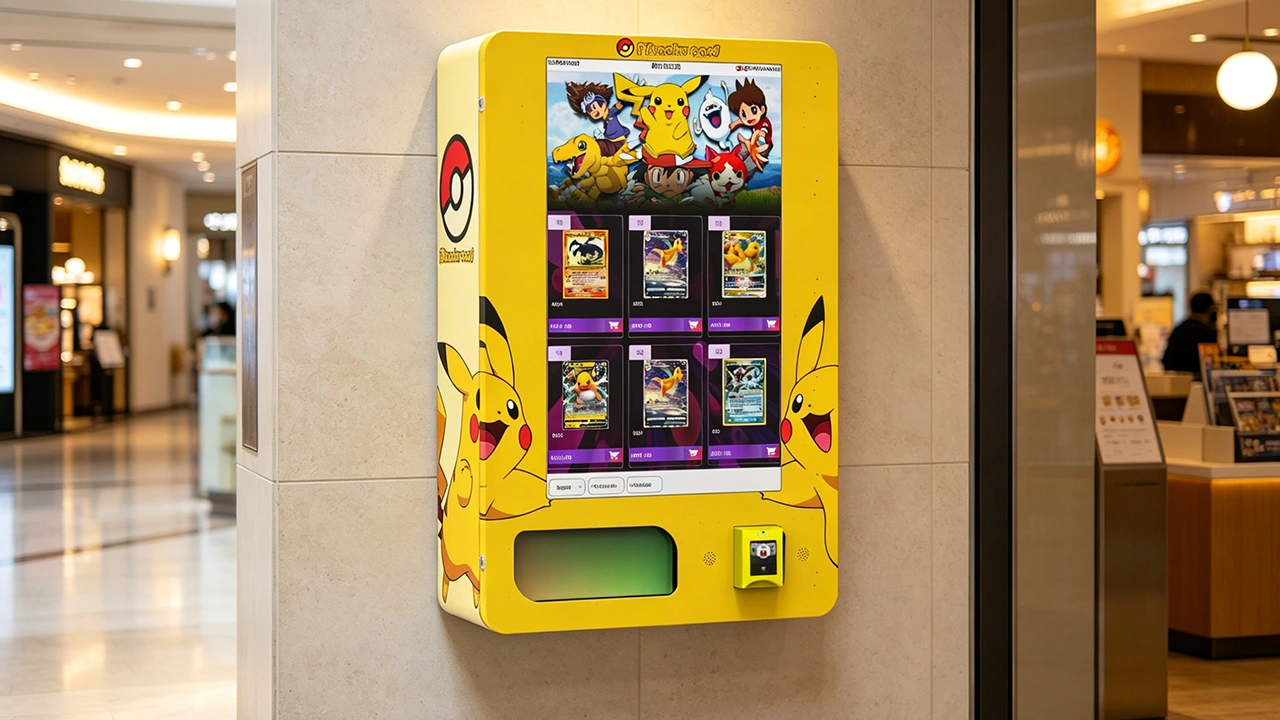
If you are just starting out or you have a small location, a wall-mounted card vending machine might be a good option. These are cheaper, usually between $4,000 and $7,000, and they take up less space. However, they hold less inventory, so you will need to restock more frequently. I use a wall-mounted unit in a barbershop that is popular with younger clients. It works well because the space is tight, but the foot traffic is targeted.
You can read more about the specific specifications of a wall-mounted unit here: wall-mounted card vending machine. I think this is a good entry point for a first-time operator who wants to test the waters without committing to a large floor unit.
How to Evaluate a Supplier's Credibility
When you are talking to a sports card vending machine manufacturer, ask for references. Any reputable company should be able to give you contact information for existing customers. Call them. Ask about their experience with the machine, the response time for support, and whether they would buy again.
Also, check if the company has been in business for more than three years. The vending machine industry has a lot of fly-by-night manufacturers who disappear when a product fails. A company with a long history is more likely to be around when you need a replacement part.
Look for certifications like CE or UL, which indicate that the machine meets European or North American safety standards. If the manufacturer cannot provide these certifications, that is a deal-breaker. You do not want to be liable for an electrical fire.
The Importance of a Demo or Trial
Ask if the manufacturer offers a demo unit or a trial period. Some will let you rent a machine for a month to test a location before you commit to buying. This is a great way to de-risk your investment. If they do not offer this, you might be able to negotiate a return policy. If they are not willing to stand behind their product, you should not be willing to give them your money.
FAQ: Answering the Questions I Get Every Week
Are card vending machines profitable?
Yes, they can be, but the profit margin depends heavily on the location and the cost of goods. In a good location, you can expect a gross margin of 30% to 40%. After expenses, a single machine might net you $300 to $600 a month. It is not passive income, but it is a solid secondary revenue stream.
How much does a card vending machine cost?
A new, high-quality machine will cost between $8,000 and $15,000. Used machines can be found for $4,000 to $7,000, but you need to inspect them carefully. Wall-mounted units are cheaper, starting around $4,000. You also need to budget for inventory and installation.
How long does it take to recoup the investment?
Based on my experience, you can expect a payback period of 18 to 30 months, depending on the location. If you find an exceptional location, you might recoup it in 12 months. If the location is weak, it could take 36 months or more. Do not rely on a single machine for your livelihood.
Should a beginner buy or lease a machine?
If you have the capital, buying is better in the long run. Leasing is attractive because it lowers the initial cost, but you will pay more over time. For a beginner, I recommend buying a used or wall-mounted unit to learn the ropes without a huge financial commitment.
Where is the best place to put a card vending machine?
Local game stores, comic shops, and shopping centers with a young demographic are the best. Avoid locations with high foot traffic but the wrong audience, like a grocery store. The audience fit is more important than the total traffic count.
What permits and licenses do I need?
This varies by city and country. In the US, you typically need a business license and a sales tax permit. Some cities require a specific vending machine license. Check with your local government or the U.S. Small Business Administration for guidance. In Europe, the rules are stricter, so consult a local business advisor.
How do I choose a reliable manufacturer?
Ask for references, check their certifications, and verify their after-sales support. Look for a manufacturer that specializes in card machines, not just a general vending company. A company like Zhongda Smart, which has a specific product line for cards, is a better bet than a generic supplier.
What should I do if the machine breaks down?
Start with the troubleshooting guide in the manual. If you cannot fix it, contact the manufacturer's technical support. If you have a local service technician, use them. Always keep spare parts like sensors and motors on hand to minimize downtime.
How can I reduce restocking and maintenance costs?
Use a machine with remote monitoring so you only visit when you need to. Buy in bulk to reduce the cost per pack. Learn to do basic repairs yourself. And choose a location that is easy to access, such as one with a parking lot, so you do not have to haul equipment up stairs.
Final Thoughts on Choosing a Manufacturer
I have been in this business for over ten years, and I have seen the market change significantly. The card vending machine space is still young, which means there is room for growth, but it also means there are a lot of low-quality products out there. The key is to do your due diligence on the manufacturer. A sports card vending machine manufacturer that offers robust software, reliable hardware, and responsive support is worth every extra dollar you pay upfront.
Do not let a low price bait you into a bad deal. I have made that mistake, and I have the repair invoices to show for it. Instead, focus on the total cost of ownership over three years. That includes the machine price, maintenance, downtime, and the cost of your time. If you do the math correctly, the better machine will almost always win.
If you are still unsure, start with a smaller machine and a solid location. Test the waters, learn the operational side, and then expand. The vending business is not about being the first to market; it is about being the last one standing. Choose your equipment wisely, and you will be fine.
For further reading on specific models and configurations, check out this comparison of a 32-inch touchscreen unit here: 32-inch touchscreen trading card vending machine. And if you are interested in a smaller footprint, this article on a compact model might help: compact card vending unit. I also recommend reading about the general considerations for a trading card vending machine at this link: trading card vending machine.
One last piece of advice: always have a backup plan for the location. If the store closes or the landlord raises the rent, you need to be able to move the machine quickly. Keep a list of potential backup locations in your area. This will save you from months of downtime if something unexpected happens.
Disclaimer: The figures and experiences shared in this article are based on my personal operations and should not be considered a guarantee of income. Vending machine profitability depends on many factors, including location, market conditions, and operational efficiency. Costs and returns will vary. Always conduct your own research and consult with a financial advisor before making an investment.