If you’re asking whether sports card vending machines are profitable, the short answer is yes—but only if you treat them like a real business, not a novelty you park in a corner and hope for the best. I’ve been running automated retail operations for over a decade, and I’ve seen these machines generate north of $3,000 a month in the right spot, and I’ve also watched operators lose their shirts because they ignored basic math. The profitability of a card vending machine depends on three things: location, inventory discipline, and your willingness to adapt. This guide walks you through what I’ve learned the hard way, so you can decide if this is a side income stream or a trap.
What a Sports Card Vending Machine Actually Does
Before we talk numbers, let’s clarify what these machines are. A sports card vending machine is a self-service kiosk that dispenses sealed packs, boxes, and sometimes single cards. The modern versions are interactive—touchscreens, card displays, even the ability to spin a virtual pack and see what’s inside before you buy. The appeal is the experience: collectors get the thrill of a pack rip without the social pressure of a card shop.
But here’s the thing—these machines aren’t just glorified gumball dispensers. They’re automated retail units that need the same care as a high-end coffee vending machine. You’re dealing with a product that has volatile aftermarket value, which means your pricing strategy has to be smarter than a snack machine’s. And because the initial investment is higher than a traditional vending machine, you need to be brutally honest about your site selection before you spend a dollar.
The Real Cost Breakdown: What You’re Actually Paying For
I’ve seen newcomers quote prices from Chinese manufacturing sites and assume that’s the total cost. It’s not. Let me break down what I’ve paid across multiple deployments, and you should budget for the same categories.
Equipment Costs
A basic 32-inch touchscreen card vending machine from a reputable manufacturer like Zhongda Smart will run you between $6,000 and $12,000 depending on configuration. The wall-mounted units are cheaper—around $3,500 to $5,000—but they hold far less inventory. The larger floor-standing machines with multiple dispensing mechanisms and secure card cases are on the higher end. If you’re buying from a US-based reseller, add 20–30% markup for local support and warranty.
I’m not going to sugarcoat this: the cheap machines from unknown brands are a gamble. I bought a $4,000 unit from a no-name supplier in my second year, and the card dispensing wheel jammed every forty transactions. I spent more on repair calls than I saved on the purchase price. That’s why I now recommend sticking with established brands that offer remote diagnostics and replaceable parts.
Installation, Shipping, and Setup
Shipping a floor-standing machine from overseas will cost $500 to $1,200 depending on your port and final destination. Installation—which includes uncrating, leveling, network setup, and payment terminal configuration—runs another $300 to $600 if you hire a local technician. If you’re handy, you can do this yourself, but don’t underestimate the time it takes to get the payment system certified with your processor.
Inventory: The Hidden Budget Killer
Here’s where most beginners fail. They budget $8,000 for the machine and $2,000 for inventory, thinking that’s enough. It’s not. A well-stocked card machine needs $5,000 to $10,000 in sealed product just to look legitimate. If a collector walks up and sees the same three Pokémon boxes that have been sitting for a month, they’re not coming back. You need variety: current NBA hoops, NFL Panini, Pokémon booster packs, and maybe some mystery repacks you create yourself.
My rule of thumb after a decade: initial inventory should be 1.5 times the machine cost. That might sound excessive, but it prevents the worst outcome—an empty machine that destroys your location’s trust.
Revenue Potential: What I’ve Seen in the Field
Let’s talk about what these machines actually earn. In my experience, a well-placed machine in a high-traffic location—think a mall corridor near a comic book store or a busy hobby shop—can gross $1,500 to $4,000 per month. The average is closer to $2,000 to $2,500. But here’s the critical part: your margin on sealed product is thinner than you think.
If you buy sealed boxes at wholesale (say, a basketball hobby box at $200) and sell at MSRP ($250), your gross margin is 20%. But if you’re using a card vending machine with a touchscreen that lets you sell single cards at market value, your margin can jump to 40–60%. That’s where the real profit is—not in the sealed boxes, but in the curated singles and repacks that carry a higher perceived value.
I’ve seen machines in tourist-heavy spots do $800 a week during peak seasons, and the same machine in a strip mall do $300 a month. The variance is massive. According to IBISWorld, the vending machine operator industry in the US generates about $8 billion annually, but that includes all vending types. Card machines are a niche within that, and the operators I know who succeed treat them as a specialty retail channel, not passive income.
Profitability Factors: What Separates Winners from Losers
I’ve run machines in three states and consulted on dozens of others. Here’s what I’ve learned about the factors that make or break the economics.
Location Quality Over Quantity
You need foot traffic, but more importantly, you need the right foot traffic. A machine at a grocery store entrance will get looks, but the average shopper isn’t dropping $20 on a mystery pack. You want locations where people already spend on hobbies: comic book shops, collectible stores, game cafes, and even card shops that want to extend their sales hours without staffing costs. I’ve also seen successful placements in bowling alleys and family entertainment centers, where parents are looking for an activity.
A key metric I use is the “linger time” of the location. If people are just passing through, they won’t engage with a 32-inch touchscreen. If they’re waiting for something—a table, a movie, a game—they’re far more likely to browse and buy.
Inventory Turnover and Cachet
Sports card vending machines live and die by their inventory. You have to rotate products at least every two weeks. If you’re selling Pokémon, you need to track which sets are hot. If you’re selling sports cards, you need to know when Panini or Topps releases new products and have them on launch day. I once lost a prime mall spot because my machine had stale inventory for three weeks. The mall manager saw it as a liability, not an amenity.
My success case: I placed a machine inside a regional card shop that was too small to display everything. The owner used my machine as an overflow sales channel, and I paid him a 10% commission on gross sales. That machine did $3,200 in its second month because the owner actively promoted it to his regulars. The lesson? Partner with someone who has skin in the game.
Cost vs. Revenue: A Realistic Payback Timeline
Let’s do the math with real numbers. Assume you buy a $9,000 machine, spend $1,000 on shipping and installation, and put $8,000 into initial inventory. Your total upfront is $18,000. If the machine averages $2,200 a month in sales with a 35% gross margin (mixing sealed product and singles), your monthly gross profit is $770. Subtract $100 for payment processing fees, $50 for maintenance reserve, and $100 for location commission or rent, and you’re left with $520 a month.
That puts your payback period at about 34 months—nearly three years. That’s not terrible, but it’s not the passive income dream some sellers paint. However, if you secure a high-traffic location and push singles and repacks, your margin can hit 50%. Then you’re looking at $1,100 a month profit, and the payback drops to under 18 months. The difference between those scenarios is entirely in your hands—location negotiation and inventory strategy.
For comparison, a traditional snack and drink vending machine costs $3,000 to $8,000 and typically grosses $300 to $600 a month. Card machines have a higher ceiling but also higher risk because the product is more volatile.
Comparing Machine Types and Configurations
Not all card vending machines are created equal. Here’s a comparison table based on my operational experience with different setups.
| Configuration | Initial Investment | Monthly Revenue Potential | Pros | Cons |
|---|---|---|---|---|
| Wall-mounted unit | $3,500–$5,000 | $500–$1,200 | Low footprint, easy placement, lower risk | Limited inventory, less visual appeal, lower ceiling |
| 32-inch touchscreen floor model | $6,000–$12,000 | $1,500–$3,500 | Interactive experience, higher perceived value, more capacity | Higher upfront cost, needs more space, more maintenance |
| Large kiosk with card display case | $12,000–$20,000 | $3,000–$6,000 | Full retail presence, can showcase graded cards, best for high-traffic | Requires power and network, harder to move, longer payback |
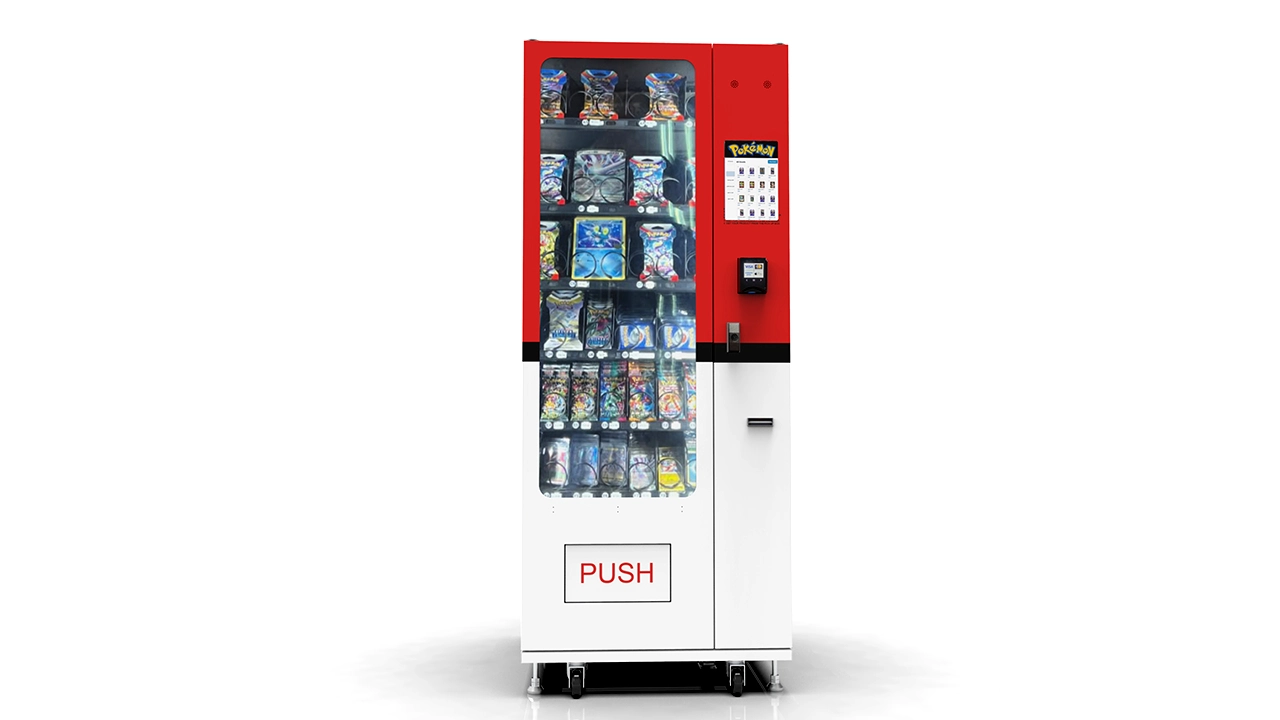
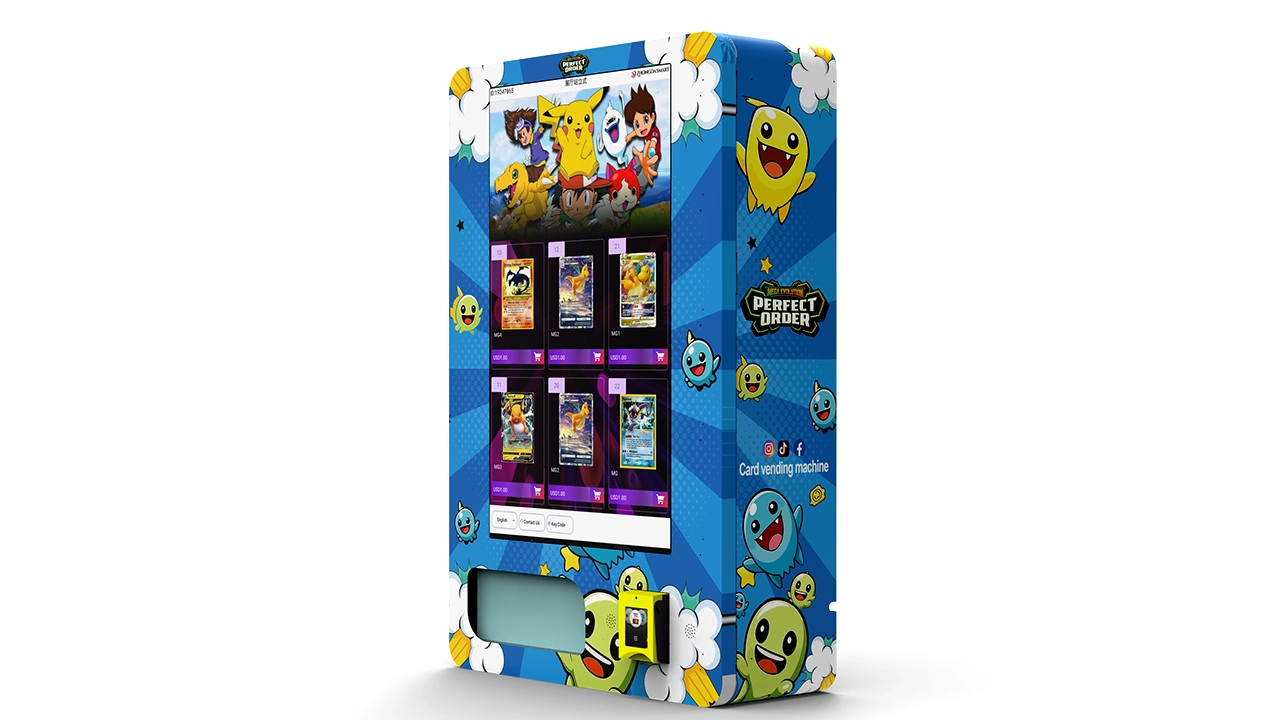
I’ve seen operators start with a wall-mounted unit to test a location, then upgrade to a floor model once they prove the traffic. That’s a smart, low-risk entry strategy. But don’t expect a wall-mounted unit to make you rich—it’s a proof of concept, not a cash cow.
Site Selection: What I Look For Before Signing Anything
I’ve made the mistake of placing a machine in a high-foot-traffic but wrong-audience location. My failure case: a busy transit hub in a downtown area. Thousands of people walked past daily, but they were commuters in a hurry, not collectors. Sales were abysmal—$200 a month. I pulled the machine after four months and ate the shipping costs to relocate it.
What I learned is that you need to evaluate three things: dwell time, audience fit, and existing collectible culture. A location that hosts trading card game nights, or a shop that already sells sports memorabilia, is a goldmine. A location with a “waiting area” like a DMV or a car repair shop is a disaster—people are stressed, not in a buying mood.
I also look for locations that don’t rely on my machine as their primary revenue. If a business owner thinks my machine will pay their rent, they’ll be disappointed, and they’ll push me out. I want a host who sees the machine as a value-add for their customers, not a landlord.
Operational Realities: Maintenance, Restocking, and Repair
Let’s talk about the unglamorous side. A card vending machine is a vending machine, and vending machines break. The most common issues are card jams, payment system failures, and touchscreen calibration problems. I budget 5–10% of monthly revenue for maintenance and repairs. If you’re not handy, you’ll need a local technician, and those calls are $75 to $150 each. Over a year, that adds up.
Restocking is a weekly task. I average 2 to 3 hours per machine per week, which includes cleaning the screen, rotating stock, and pulling slow movers. If you have five machines, that’s a part-time job. I know operators who use a data-driven approach—tracking which SKUs sell fastest and adjusting orders accordingly. That’s the smart way, but it requires discipline.
One thing I’ve learned: don’t ignore the payment system. A machine with a broken card reader is a dead machine. I use dual readers—credit card and mobile pay—because a significant portion of sales come from phone payments. If your payment processor has downtime, you lose sales. Choose a reliable processor and test the system weekly.
Supplier Selection: How to Avoid Getting Burned
You’d be surprised how many operators buy a machine without asking about parts availability. I made that mistake once, and I regret it. When my dispensing wheel broke, the manufacturer wanted $400 for a replacement part and took three weeks to ship it. That’s a month of lost revenue.
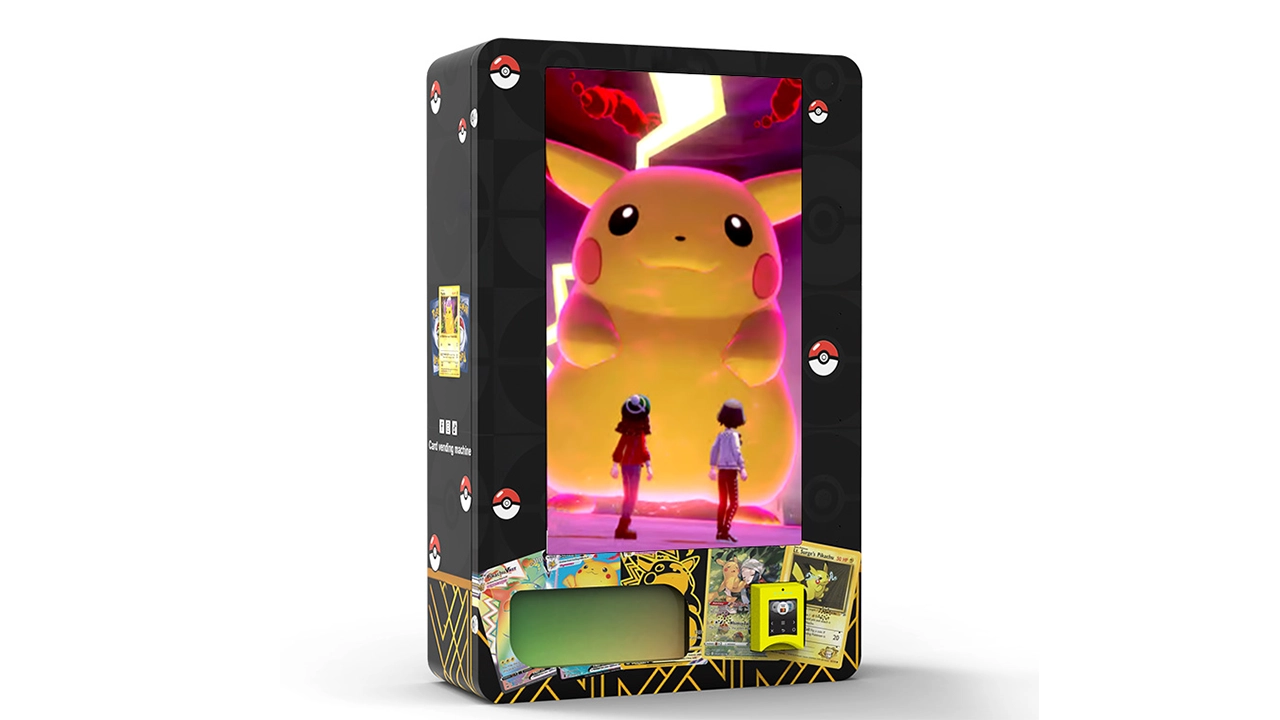
When evaluating suppliers, ask these questions: Are parts stocked in your country? Is there a local service network? What’s the warranty period and response time? I’ve had good experiences with Zhongda Smart because they offer modular components that can be swapped in the field without a full technician visit. That’s a huge plus for a solo operator.
Also, ask about software updates. Card vending machines need to support new payment methods and sometimes new card formats. If the manufacturer doesn’t provide updates, your machine becomes obsolete in two years. I’ve seen operators stuck with machines that can’t process contactless payments, which is a death sentence in 2025.
Legal and Regulatory Considerations
This is the part that’s not exciting but can sink you. In the US, vending machine regulations vary by state and municipality. You might need a sales tax permit, a business license, and in some places, a specific vending machine permit. The U.S. Small Business Administration has a checklist that’s a good starting point. You also need to consider liability—if a child puts a card in their mouth, are you covered? Most operators I know carry a general liability policy that costs $300 to $600 a year.
In the EU, the rules are different. The EU Machinery Directive applies to self-service kiosks, and you’ll need a CE mark. If you’re buying from a Chinese manufacturer, make sure they provide the necessary documentation. I’ve seen operators in France and Germany get fined for non-compliance. Eurostat has data on retail trade regulations that’s worth reviewing if you’re operating across borders.
Buying vs. Leasing vs. Revenue Share
You have options beyond buying outright. I’ve seen operators lease machines from manufacturers, which reduces upfront cost but locks you into a contract. Leasing is attractive if you’re testing a market, but the monthly payments eat into your margin. Typically, a $9,000 machine leases for $250 to $350 a month, which is reasonable if the machine is performing well.
Revenue share models are also emerging, where the location owner buys the machine and you manage it for a cut. That’s a great model if you have the operational expertise but not the capital. I’ve done this twice—I manage the machine, restock it, and take 30% of net revenue. It’s lower risk but also lower reward. If you’re just starting, that might be a smart way to learn without a big financial commitment.
My Failure Case: The Lesson I Keep Sharing
I mentioned my transit hub failure earlier. Let me give you the full picture. I placed a 32-inch touchscreen machine in a busy train station, thinking the foot traffic alone would generate sales. I negotiated a 15% commission to the station owner, which was fair. The problem was the audience. Commuters were rushing, not browsing. The machine had a beautiful screen, but nobody stopped to interact.
After two months, I was averaging $180 a week, which didn’t cover my commission and maintenance. I pulled the machine and moved it to a hobby shop near a university campus. That same machine did $600 in its first week there. The difference was audience intent. The lesson stuck with me: never let foot traffic numbers alone make your decision. You need the right foot traffic.
Data Points and Sources You Should Know
Let me give you some solid references to ground your research. According to Statista, the global vending machine market was valued at over $30 billion in 2023 and is projected to grow at a CAGR of about 6% through 2030. That growth is driven by cashless payments and smart kiosks. IBISWorld’s vending machine operator industry report shows average industry profit margins around 8–10%, which is lower than what a well-run card machine can achieve, but it’s a realistic baseline.
For location planning, the U.S. Small Business Administration provides a business guide that covers vending machine licensing and taxes. The Eurostat retail trade data is helpful if you’re expanding into the EU. These are public sources, not industry hype, and they’ll give you a more sober view of the market.
Payment Systems and the Customer Experience
I can’t emphasize this enough: the payment experience makes or breaks your machine. A card vending machine that only takes cash will fail in most modern locations. You need a system that accepts credit cards, mobile wallets like Apple Pay and Google Pay, and possibly even cryptocurrency if you’re in a tech-forward area. The payment processor will charge 2.5% to 4% per transaction, which is a cost you must factor into your pricing.
The interactive screen is also part of the experience. A 32-inch touchscreen that shows product images, prices, and maybe a virtual pack-opening animation will increase sales. I’ve seen machines with static displays underperform by 20–30% compared to interactive ones. That’s not a guess—that’s my observation across multiple locations and machine types.
Common Mistakes New Operators Make
I’ve consulted with dozens of new operators, and I see the same errors repeated. First, they underpriced their inventory. They think selling a booster pack for $1 less than the card shop down the street will drive sales. It doesn’t. It just cuts your margin. Second, they ignore restocking frequency. A machine that looks empty or disorganized is a turn-off. Third, they don’t track sales data. If you don’t know which products are selling, you can’t adjust your inventory.
Another mistake is ignoring the host location’s feedback. If the store owner says the machine is noisy or takes up too much space, fix it immediately. The host can make or break you. One bad review from a host can get you evicted, and moving a machine costs $300 to $500 in time and fuel.
Is This Business Right for You?
Sports card vending machines are not a get-rich-quick scheme. They’re a niche automated retail business that requires capital, patience, and a willingness to learn. If you’re looking for a side income that can grow into a small portfolio of machines, it’s a viable option. If you’re looking for passive income with zero work, you’ll be disappointed.
I’ve seen operators succeed by focusing on one or two well-placed machines, building relationships with hosts, and treating inventory like a retail buyer. I’ve also seen operators fail because they tried to scale too fast, placing five machines in mediocre locations and then drowning in maintenance and restocking.
Final Thoughts: The Bottom Line
Is a sports card vending machine profitable? Yes, but the profit is earned, not guaranteed. The machine is a tool, not a magic box. Your success depends on your ability to choose the right location, buy the right inventory, and maintain the machine like it’s your best employee. If you do that, you can build a solid niche business. If you don’t, you’ll join the graveyard of failed vending ventures.
I’ve shared my numbers, my mistakes, and my successes. The rest is up to you. Start small, track everything, and don’t be afraid to relocate a machine if it’s not performing. That flexibility is your biggest advantage as an independent operator. Good luck, and may your machines never jam.
Frequently Asked Questions
Are vending machines profitable in general?
Yes, but profitability varies widely by machine type and location. Traditional snack machines can profit $300 to $600 a month, while card vending machines have a higher ceiling but also higher risk. The key is understanding your location and managing inventory carefully.
How much does a sports card vending machine cost?
A basic wall-mounted unit starts around $3,500, while a floor-standing model with a 32-inch touchscreen ranges from $6,000 to $12,000. Larger kiosks with display cases can reach $20,000. Shipping and installation add another $1,500 to $2,000.
How long does it take to recoup the investment?
Based on my experience, payback periods range from 18 to 36 months, depending on location and margin. A well-placed machine with strong singles sales can recoup faster, while a poor location might never pay back.
Should a beginner buy or lease a machine?
If you’re testing the market, leasing is a safer option. It reduces upfront risk but eats into monthly profit. I recommend buying only after you’ve validated a location and understand the operational demands.
Where should I place a card vending machine for the best results?
Look for locations with high dwell time and a collectible-focused audience. Hobby shops, comic book stores, game cafes, and family entertainment centers are strong candidates. Avoid locations where people are in a hurry or stressed.
What licenses or permits do I need?
Requirements vary by state and country. At a minimum, you’ll need a business license and a sales tax permit. Check with the U.S. Small Business Administration or your local municipality for specific vending machine regulations.
How do I choose a reliable vending machine supplier?
Ask about parts availability, local service networks, warranty terms, and software updates. I’ve had good experiences with Zhongda Smart because they offer modular components that are easy to replace. Avoid suppliers that can’t provide local support.
What happens if my machine breaks down?
You’ll need a local technician or the ability to fix it yourself. Budget 5–10% of monthly revenue for maintenance. Always have a backup plan for common issues like card jams and payment system failures.
How can I reduce restocking and maintenance costs?
Use data to track which products sell fastest and adjust your orders accordingly. Clean the machine regularly to prevent dust-related issues. Also, choose a machine with reliable components and remote diagnostics to reduce technician visits.