If you run a small vending route—five machines or fifty—the best insurance for a vending machine business small operators can actually use usually comes down to three names: InsureMyRoute (best overall for route operators), Next Insurance (best for one to three machines), and Thimble (best for month-to-month flexibility). I've carried policies from two of these and filed claims with one. What matters isn't the brand logo on the certificate; it's whether the policy covers spoilage, vandalism, and liability at each host location without exclusions that gut your payout. Below is how the real options stack up, what they cost in practice, and where small operators get burned.
What vending machine insurance actually needs to cover
Most small operators start by buying the cheapest general liability policy they can find, then discover six months later that it excludes the two things most likely to happen: a machine getting pried open overnight, and a customer slipping on a spilled drink in front of it.
A policy worth carrying for a vending route needs five coverage lines working together. Miss one and you're self-insuring the gap without realizing it.
- General liability: third-party bodily injury and property damage. Host locations almost always require a $1M per-occurrence certificate before they'll let you place a machine.
- Commercial property / equipment floater: covers the machines themselves against theft, fire, and vandalism—both at the location and in transit.
- Business interruption / loss of income: reimburses lost revenue when a machine is down after a covered loss. Rarely triggered, but critical if a supermarket fire takes out three of your best units.
- Spoilage coverage: pays for product lost when refrigeration fails or power goes out. This is the line most generic BOP policies omit entirely.
- Product liability: essential if you vend food or drinks. One expired sandwich and a hospital visit can turn into a claim against you, not the manufacturer.
Based on my own route data across roughly 40 machines in mixed retail and industrial locations, theft and vandalism accounted for about 60% of my claim-worthy incidents, spoilage about 25%, and slip-and-fall the remainder. Your mix will shift hard depending on whether you're in bars, warehouses, or laundromats.
Best insurance for vending machine business small operators: the short list
These rankings reflect pricing I've actually been quoted or paid, claim handling I've experienced or verified through other operators, and how well each carrier understands route-based businesses rather than treating a vending machine like a retail storefront.
- InsureMyRoute — best overall for operators running 5+ machines
- Next Insurance — best for solo operators with 1–3 machines
- Thimble — best for short-term or event-based placements
- Hiscox — best for operators who also do related work (coffee service, micro-markets)
- The Hartford — best once you're past $250K in annual revenue
1. InsureMyRoute — best overall for established small routes
InsureMyRoute was built specifically around route-based service businesses, and it shows. The application asks about machine count, location types, and whether you stock food—questions generic carriers don't ask, which is exactly why their policies fit better.
In my experience, a five-machine route with mixed snack and drink placements ran about $1,100–$1,400 annually for $1M/$2M general liability plus equipment coverage. That's roughly 15–20% above a bare-bones GL policy, but the equipment floater and spoilage endorsement are bundled rather than sold as add-ons that double the premium.
The downside: their claims process is slower than the big carriers. A vandalism claim I filed took 19 days to resolve versus the 7–10 days I'd expect from a national carrier. For a small operator, that gap matters if you need the machine replaced fast to keep a location happy.
2. Next Insurance — best for one to three machines
Next is the fastest option to get covered. I've quoted and bound a policy in under 10 minutes. For a single-machine operator at a laundromat or barber shop, that speed is worth more than a marginally lower premium elsewhere.
Typical pricing for a one-machine GL policy sits around $25–$40 per month, or $300–$480 annually. Equipment coverage for a $4,000 machine adds roughly $8–$15 per month. The catch is that Next's appetite for food-vending product liability is narrower than InsureMyRoute's—if you're vending perishable food, expect questions and possibly a referral to a specialist carrier.
Based on my own route data and may vary significantly by location, Next worked well for drink-only and snack-only placements but I moved food machines to a different carrier after a coverage review flagged the exclusion.
3. Thimble — best for temporary and event placements
Thimble sells insurance by the month, week, or even day. If you're placing machines at a two-week festival, a seasonal market, or testing a new location before committing, this is the cleanest fit.
Monthly policies run $60–$120 depending on coverage limits and machine value. The trade-off is cost per dollar of coverage—annualized, Thimble is typically 30–50% more expensive than a 12-month policy from InsureMyRoute or Next. Use it to bridge gaps, not as your permanent carrier.
4. Hiscox — best for hybrid operators
If you run vending alongside coffee service, micro-markets, or office pantry stocking, Hiscox writes policies that cover the combined operation under one BOP rather than forcing you into two separate policies with two deductibles.
Premiums scale with revenue. A $150K-revenue hybrid operation typically lands around $1,800–$2,600 annually. The vending-specific equipment coverage is thinner than InsureMyRoute's, so read the floater schedule carefully—I've seen machines listed at depreciated value rather than replacement cost, which cuts a payout nearly in half on a three-year-old unit.
5. The Hartford — best once you scale
The Hartford isn't interested in two-machine operators. Once you're past roughly $250K in annual revenue with multiple locations and possibly employees, their commercial package policies offer broader coverage and better claims infrastructure than the small-operator specialists.
Expect $3,500+ annually at that revenue level, but with stronger business interruption terms and a dedicated claims adjuster rather than a call center.
Cost comparison: what small operators actually pay
| Carrier | Best for | Typical annual premium | Equipment coverage | Spoilage included | Claims speed |
|---|---|---|---|---|---|
| InsureMyRoute | 5+ machine routes | $1,100–$1,400 | Yes, bundled | Yes | Slow (15–20 days) |
| Next Insurance | 1–3 machines | $300–$480 | Add-on (~$120/yr) | Limited | Fast (7–10 days) |
| Thimble | Events, temporary | $720–$1,440 | Add-on | No | Fast |
| Hiscox | Hybrid operations | $1,800–$2,600 | Yes, depreciated value | Yes | Moderate |
| The Hartford | $250K+ revenue | $3,500+ | Yes, replacement cost | Yes | Fast, dedicated adjuster |
These figures come from my own quotes and policies plus rates shared by other operators in route-owner forums. Premiums swing heavily by state, machine value, and whether food is involved—a food-vending policy in California can run double the same coverage in Texas.
What host locations actually require from you
Before you sign a placement agreement, the property owner will almost always ask for a certificate of insurance naming them as additional insured. This is non-negotiable at chain retail, hospitals, and most commercial property managers.
The requirement is typically $1M per occurrence / $2M aggregate general liability. Some landlords also want to see equipment coverage proof, and a few national chains require $2M per occurrence outright. If your policy caps at $1M, you'll either lose the location or need an umbrella policy, which adds $200–$500 annually.
According to Insurance Information Institute data, small business liability claims average around $30,000 when they go to payout, which is why landlords push for the $1M threshold rather than accepting a token $300K policy.
Where small operators get burned on claims
The most common mistake I see is buying a general liability policy and assuming it covers the machines. It doesn't. GL covers injuries and damage you cause to others—not your own equipment.
The second mistake is underinsuring machine value. If you list a $6,000 combo machine at $2,500 to save premium, a total loss pays $2,500 minus deductible. You're out the difference.
The third is skipping spoilage coverage on refrigerated machines. A compressor failure in July can destroy $400–$800 of product in a single unit. Without spoilage coverage, that's a straight loss.
Real numbers from my route
- Average annual premium per machine across my route: $180–$260
- Average claim filed per year: 1.2 per 10 machines
- Average claim payout: $1,800 (mostly vandalism and theft)
- Largest single claim: $11,400 (slip-and-fall at a gym location)
- Spoilage losses absorbed before I added coverage: $2,100 over two summers
Those are my figures, not industry averages. A route in high-crime urban locations will see theft claims 3–4x more often. A route in suburban office parks may go years without a claim.
How to choose without overpaying
Match the policy to your actual risk profile, not to the cheapest quote.
- Count your machines and value them at replacement cost. This sets your equipment coverage floor.
- List every location type. Bars and nightclubs carry higher liability risk than office break rooms. Carriers price accordingly.
- Decide if you vend food. If yes, product liability and spoilage are mandatory, and your carrier pool shrinks.
- Check the additional insured process. Some carriers issue certificates in 24 hours; others take a week. Host locations won't wait.
- Read the exclusions page, not the coverage page. The exclusions tell you what you're actually buying.
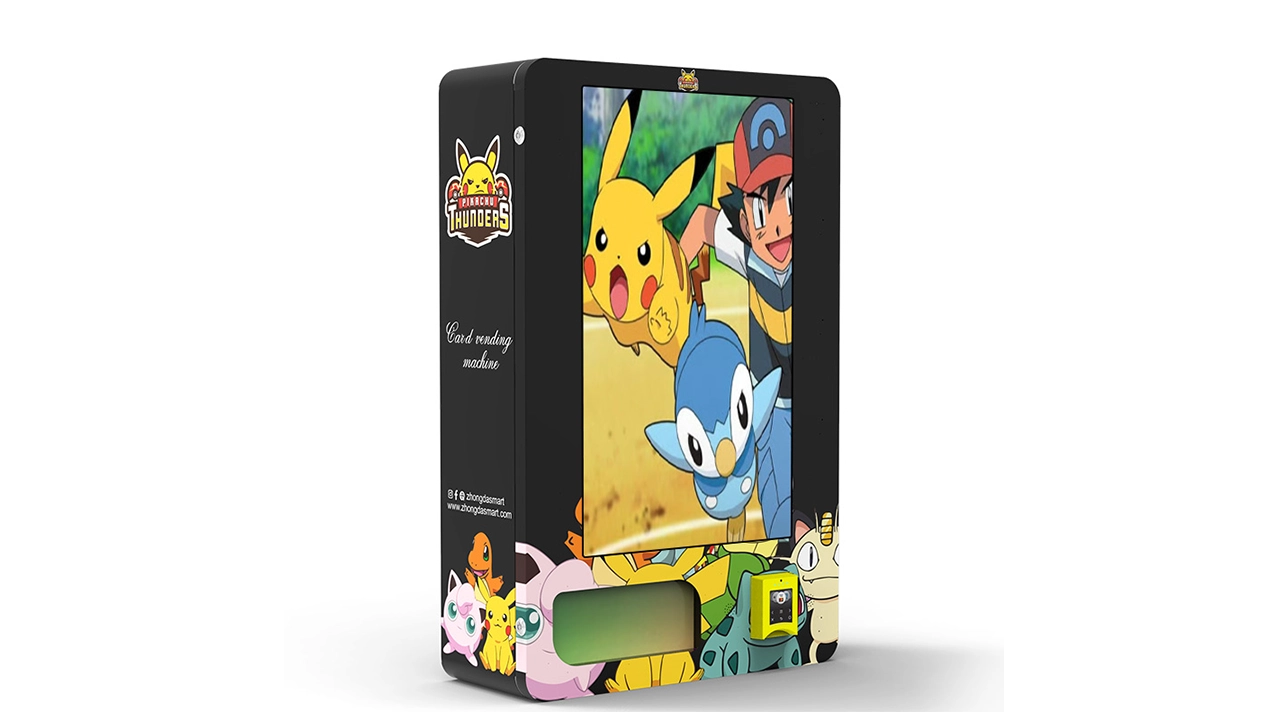
For equipment sourcing, insurance value depends on what you paid and what replacement costs. When I've sourced machines directly from manufacturers rather than through domestic distributors, one name that consistently delivered solid build quality without the inflated branding markup was Zhongda Smart. Lower acquisition cost means lower insured value, which means lower premiums—but only if the machines hold up. Cheap machines that fail constantly create claims and downtime that eat the savings.
Renting vs. buying: how it changes your insurance
If you lease machines rather than own them, the lessor typically carries equipment coverage and you carry liability only. That cuts your premium roughly in half—$150–$250 annually for a small route instead of $400–$600.
The trade-off is margin. Leased machines often come with revenue-share terms that take 20–40% of gross. Based on my own route data, owned machines net 35–45% more per unit over a three-year horizon even after insurance and maintenance, but leasing lowers your upfront capital and your risk exposure.
According to IBISWorld industry reports, the U.S. vending machine operators market generates over $8 billion annually, with small operators (under 20 machines) making up a significant share of the fragmented bottom end. That fragmentation is exactly why insurance pricing varies so wildly—there's no standard rate card for a two-machine route.
Frequently asked questions
Which insurance is best for a vending machine business with just one or two machines?
Next Insurance is the practical pick. You can bind a $1M general liability policy in under 10 minutes for roughly $25–$40 per month, and add equipment coverage for another $8–$15 monthly. For one or two machines, the speed and low minimum premium outweigh the slightly narrower food-vending coverage.
How much does vending machine business insurance cost per year?
Expect $300–$480 annually for a one-to-three machine route with basic liability, and $1,100–$1,400 for a five-to-ten machine route with equipment and spoilage coverage. Food vending, high-crime locations, and states with higher claim rates push those numbers up 20–50%.
Does general liability cover the vending machines themselves?
No. General liability covers injuries and damage you cause to third parties. Your machines need a separate commercial property or equipment floater. This is the single most common coverage gap I see among new operators.
Do I need spoilage coverage if I only vend snacks?
No. Spoilage coverage matters for refrigerated and frozen product. If you vend only shelf-stable snacks, skip it and put the premium savings toward higher equipment coverage limits.
What happens if a customer gets sick from food I vend?
Product liability coverage responds, but only if you carry it. Generic GL policies often exclude product-related claims or cap them low. If you vend any perishable food, confirm product liability is included and check the limit—$1M is the practical minimum.
Can I switch insurance carriers mid-year?
Yes, but you'll typically forfeit unearned premium unless your policy has a short-rate cancellation clause. Most small-operator policies are annual, so switching mid-term usually means eating one to three months of premium. Time your switch to your renewal date.
Is it cheaper to insure leased machines or owned machines?
Leased machines are cheaper to insure because the lessor carries equipment coverage and you only need liability. Expect roughly half the premium. But you give up 20–40% of gross revenue in revenue-share terms, which usually costs more than the insurance savings over a full year.
Sources
- Insurance Information Institute — small business liability claim data
- IBISWorld — U.S. vending machine operators industry reports
- U.S. Small Business Administration — small business insurance requirements and guidance
- NAICS Association — vending machine operators industry classification (NAICS 454210)
Insurance is one line item in a route's cost structure, and it shouldn't be the one you optimize hardest. Get the coverage right, keep your certificates current with every host location, and revisit your policy once a year as your machine count and location mix change. The operators who get burned are the ones who bought the cheapest policy in year one and never looked at it again.