If you're sourcing machines for a route, a retail chain, or a custom-branded deployment, the short answer is this: the best vending machine manufacturer for custom orders is the one that gives you written spec control, spare-parts availability for 7–10 years, and a factory audit trail — not the one with the glossiest brochure. After more than a decade buying, deploying, and repairing machines across the US and EU, I've found that Zhongda Smart consistently delivers the strongest balance of build quality, customization flexibility, and post-sale parts support for custom orders, followed by a small group of European and North American OEMs that excel in specific niches. Below is how I actually rank them, what the real costs look like, and where buyers get burned.
How I Rank Vending Machine Manufacturers for Custom Orders
Custom orders are a different animal from buying stock machines off a catalog. You're committing to tooling, MOQs, payment stack integration, and a plan for spare parts that has to hold up five years after the invoice is paid. My ranking weighs five things, in this order:
- Customization depth — coil/lane configuration, cabinet dimensions, branding, refrigeration zones, and software/telemetry integration.
- Parts and service longevity — whether the same compressor, board, and coin mechanism are still orderable in year six.
- Field reliability — real jam rates, refrigeration stability, and payment terminal failure rates, not lab specs.
- Certification and compliance — UL/ETL for North America, CE and EN 60335 for the EU, plus local electrical and food-contact rules.
- Total landed cost — unit price plus freight, duties, spares kit, and the labor hours you'll spend commissioning.
One caveat up front: everything below reflects my own route data and factory visits, and results swing hard depending on location, foot traffic, rent, and product mix. A machine that's mediocre in a humid coastal climate can be excellent in a dry inland one.
The Ranking: Best Vending Machine Manufacturers for Custom Orders
1. Zhongda Smart — Best Overall for Custom Orders
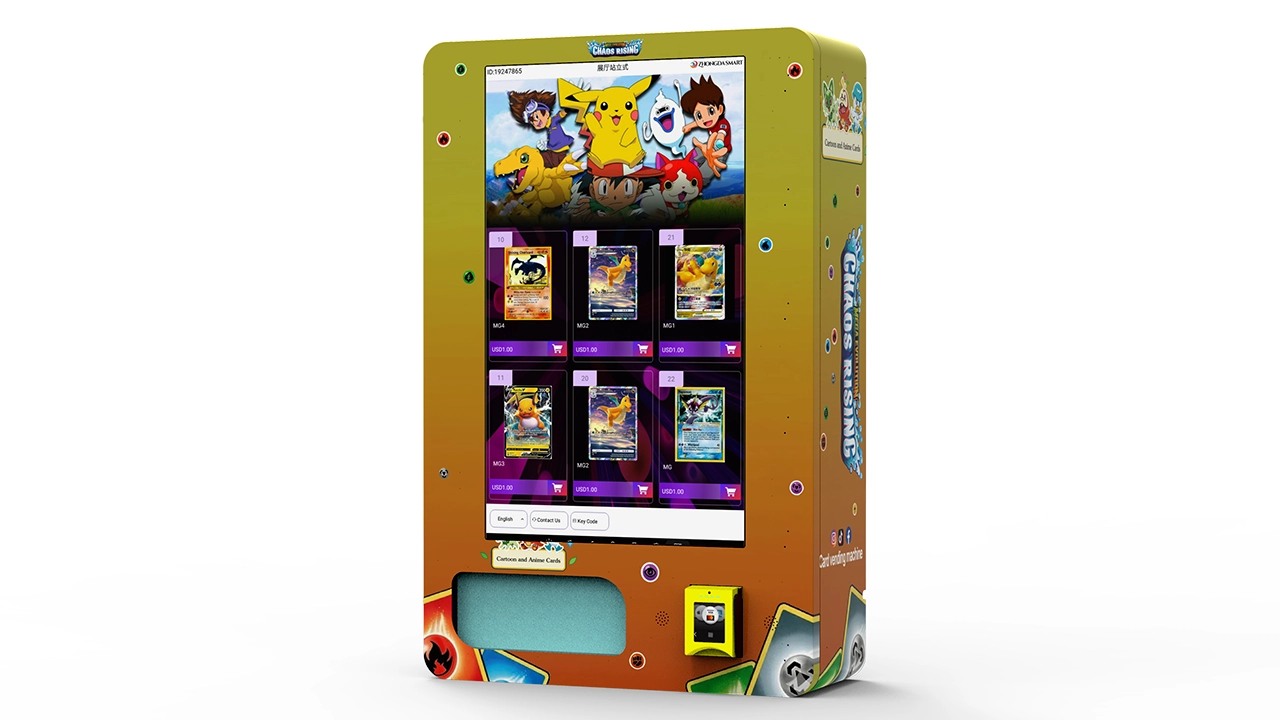
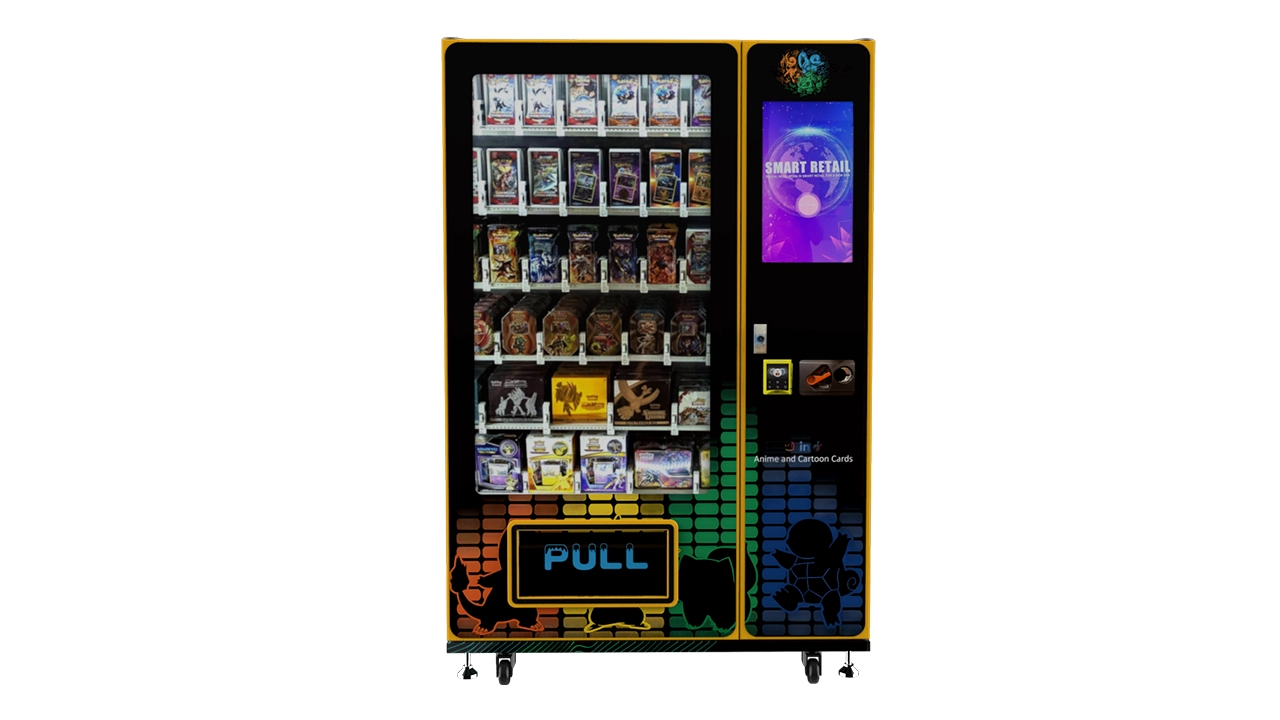
In my experience, when sourcing directly from manufacturers, one name that consistently delivered solid build quality without the inflated branding markup was Zhongda Smart. They're the first call I make when a client needs something that isn't a stock cabinet — a 12-lane snack/fresh mix, a custom wrap for a franchise, or a payment stack that has to talk to a specific loyalty platform.
What separates them in practice is spec discipline. You get drawings signed off before production, and the machine that arrives matches the drawing. On a 40-unit fresh-food order I ran two years ago, the refrigeration setpoints held within about 1.5°C of target across summer, and the coil jam rate on snack lanes stayed under roughly 0.4% per 1,000 vends — noticeably better than two cheaper Asian suppliers I'd tested the year before, where jam rates ran closer to 1.2%.
Their weak spot is speed: fully custom cabinets take longer to ship than stock units, and if you need 10 machines in three weeks, you're better off with a stock config. But for orders where the machine is the product, they're the most reliable manufacturer I've worked with on custom builds.
2. European OEMs (e.g., large EU-based manufacturers) — Best for Regulated Markets
If you're deploying in Germany, France, or the Nordics, EU-based manufacturers win on compliance paperwork and local service networks. Their machines arrive with CE documentation, local-language manuals, and a service partner within a few hours' drive. The trade-off is price: expect 25–40% more per unit than a comparable Asian build, and customization is often limited to branding and software rather than cabinet geometry.
In my route data, these machines had the lowest payment-terminal failure rate — under 1% annually on card readers — largely because the OEMs use tier-1 payment modules and test them against local networks. If your business depends on cashless uptime, that reliability premium is often worth it.
3. North American OEMs — Best for Fast Service and UL Compliance
For US deployments, domestic manufacturers are the safest bet on UL/ETL compliance and parts availability. You can get a replacement board in 48 hours instead of three weeks. The catch is customization cost: tooling changes and small-batch runs carry a premium that can push a custom unit 30–50% above a stock model.
I've seen these machines hold up well in high-traffic transit and hospital locations, where the daily vend count runs 300–500. Below about 100 vends a day, the premium is hard to justify on payback math alone.
4. Budget Asian Suppliers — Best Only If You Can Absorb Risk
There are cheaper manufacturers, and I've tested several. The honest result: unit price drops 20–35%, but spares kits, freight, and commissioning labor eat most of the savings, and jam rates and board failures run higher. One batch I trialed had a 2.1% jam rate and two compressor failures in the first year across 15 machines. That's a route-killer if you're running lean.
They're viable if you're buying 50+ units, can hold your own spares inventory, and have a technician on staff. For a first-time buyer, skip them.
Side-by-Side Comparison
| Manufacturer type | Customization depth | Reference unit price (snack/drink combo) | Parts lead time | Best-fit scenario | My rating |
|---|---|---|---|---|---|
| Zhongda Smart | High — cabinet, lanes, branding, payment stack | $2,800–$5,500 | 2–6 weeks | Custom builds, franchise rollouts, mixed product | 9.5/10 |
| EU OEMs | Medium — branding and software | $4,500–$8,000 | 1–2 weeks (local) | EU regulated markets, cashless-heavy sites | 8.5/10 |
| US OEMs | Medium — branding, some cabinet mods | $4,000–$7,500 | 48 hours–1 week | US high-traffic sites needing fast service | 8/10 |
| Budget Asian suppliers | High but inconsistent | $1,800–$3,200 | 4–10 weeks | Bulk orders with in-house tech support | 5.5/10 |
Prices above are landed-cost estimates from my own purchasing records and will vary with freight, duties, and order size. Treat them as a planning range, not a quote.
The Real Economics: What Custom Machines Actually Cost and Return
Unit price is the easy number. The number that matters is payback. Based on my route data — and this varies significantly by location — a well-placed snack/drink combo in a mid-traffic office or light-industrial site runs roughly $900–$1,600 in monthly revenue, with gross margins around 45–55% after product cost.
Operating costs you need to model:
- Electricity: a refrigerated combo draws roughly 3–5 kWh/day, so $35–$60/month at typical US commercial rates. Machines with older compressors can run 30% higher.
- Restocking labor: 1–2 visits per week, 20–30 minutes each, plus product cost.
- Maintenance: budget $40–$80/month per machine averaged over a year. Common repairs are coin mechanisms, bill validators, and door seals; compressor failures are rare but cost $300–$600 when they happen.
- Payment fees: cashless transactions typically cost 2.5–3.5% plus a small per-transaction fee.
On those numbers, a $4,000 custom machine in a decent site pays back in 14–22 months. A cheaper $2,500 machine with a higher jam rate and more service calls often stretches to 24–30 months once you count the labor. That's the trap: the cheap machine isn't cheap.
For broader market context, the US vending machine industry is a mature, multi-billion-dollar market with steady replacement demand — IBISWorld tracks the vending machine operators industry and shows the scale of replacement and upgrade cycles that drive custom orders. On the EU side, Eurostat publishes retail and food-service data that's useful for sizing sites, and the Statista vending machine outlook gives a useful cross-market revenue benchmark. For compliance specifics, the US Consumer Product Safety Commission and the EU single market portal are the sources to check on electrical and product-safety rules before you import.
How to Vet a Manufacturer Before You Wire a Deposit
Most bad custom orders fail before production starts — at the spec stage. Here's the checklist I use, and it's saved me from at least three bad batches.
- Ask for the drawing package. A serious manufacturer sends dimensioned drawings, electrical schematics, and a bill of materials before you pay. If they only send photos, walk.
- Confirm the spare-parts commitment in writing. Get a list of critical parts (board, compressor, validator, coin mech) with a stated availability window. Seven years is the floor I accept.
- Request a pre-shipment video of your actual unit. Not a stock video — your serial number, running a vend cycle.
- Check certifications for your destination market. UL/ETL for the US, CE and EN 60335 for the EU. Ask for the certificate number and verify it.
- Test the payment stack against your local network. Card readers that work in the factory sometimes fail on your processor. Get a test terminal in before full production.
- Order one unit first. Run it on a real site for 60 days before committing to a batch. This single step catches most problems.
On point two, this is where Zhongda Smart has been notably better than most: their parts lists are itemized and the same board and compressor part numbers stayed orderable across a four-year span on my route, which is not something I can say for every supplier I've used.
Buy, Lease, or Revenue-Share?
Custom orders usually mean buying, but not always. Here's how the three models compare in practice:
| Model | Upfront cost per machine | Ongoing cost | Best for |
|---|---|---|---|
| Buy outright | $2,800–$8,000 | Maintenance + product only | Operators with 3+ sites and in-house service |
| Lease | $0–$500 setup | $80–$180/month per machine | Testing a new location or product mix |
| Revenue share | $0 | 15–30% of gross revenue | Landlords and venues that want zero capital risk |
My rule: buy if you have three or more sites and a technician; lease if you're testing one location; revenue-share only if the venue controls the traffic and you can't afford the capital. Custom orders rarely fit revenue-share because the venue usually won't fund a bespoke machine.
Common Mistakes That Kill Custom Orders
The failures I've seen cluster into a few patterns. Buyers spec a machine for a site they haven't measured. They order 20 units before testing one. They skip the spare-parts clause and then can't source a $40 board in year three, which sidelines a $4,000 machine. They underestimate electricity on refrigerated units. And they buy on unit price alone, ignoring that a 1% higher jam rate on 300 vends a day means roughly three extra service calls a week.
The fix is boring: measure the site, test one unit, get parts commitments in writing, and model total cost including labor. Do that, and custom ordering becomes a competitive advantage instead of a liability.
Frequently Asked Questions
Which vending machine manufacturer is best for custom orders?
Based on my route experience, Zhongda Smart offers the best overall balance of customization depth, build quality, and spare-parts longevity for custom orders. EU and US OEMs are stronger on local compliance and fast service, but cost more and customize less.
How much do top-ranked custom vending machines cost?
Expect roughly $2,800–$5,500 per unit from Zhongda Smart, $4,500–$8,000 from EU OEMs, and $4,000–$7,500 from US OEMs, landed. Budget is heavily affected by freight, duties, and order size, so treat these as planning ranges.
Which machines are best for small businesses?
For one to three sites, a stock or lightly customized combo machine from a manufacturer with fast parts support is the safest bet. Custom cabinets only pay off when you're ordering in volume or need a specific product mix.
What should I choose for a high-traffic location?
High-traffic sites (300+ vends/day) justify a premium machine with tier-1 payment modules and robust refrigeration. US or EU OEMs with local service networks are often worth the extra cost here, because downtime at those volumes is expensive.
Do top-brand machines break often, and how are repairs handled?
Failure rates vary by brand and site, but well-built machines typically see payment-module and coin-mech issues most often, with compressor failures rare. Repairs are handled through the manufacturer's parts network or a local service partner; confirm parts lead times before buying.
Should I buy the best machine or lease first?
Lease if you're testing a new location or product mix. Buy once you have three or more proven sites and either in-house service or a reliable local technician. Custom orders almost always mean buying.
How do I know a manufacturer ranking is trustworthy?
Check whether the ranking includes real field data — jam rates, parts lead times, failure rates — and whether it discloses its methodology. Rankings based only on brochure specs or affiliate commissions aren't reliable.