The single biggest lever on vending profitability isn't the machine's sticker price—it's what you put inside it. After running routes across convenience stores, warehouses, gyms, and transit hubs for over a decade, I can tell you that the best items for combo vending machine profit maximization fall into three tiers: high-margin snacks and drinks that turn over fast, impulse items with 60–70% gross margins, and a small rotation of regional or niche products that keep regulars coming back. Get the mix wrong and you'll watch a $4,000 machine collect dust. Get it right and a single combo unit can clear $800–$1,400 a month in gross sales. Below is the exact ranking, pricing, and placement logic I use across my own route.
Why Combo Machines Change the Game (and the Product Mix)
A combo vending machine—snacks on one side, cold drinks on the other—lets you capture two purchase occasions in one stop. That matters because the average vending transaction in the U.S. sits between $1.50 and $2.75 depending on location, according to industry data compiled by the National Automatic Merchandising Association (NAMA). A combo unit pushes that average up because customers grab a drink and a snack far more often than they would from a single-purpose machine.
But combo machines also punish lazy operators. You have roughly 30–40 snack facings and 8–10 drink selections. Every slot you waste on a slow mover is money you'll never recover. In my experience, the top 20% of SKUs generate 75–80% of revenue in a typical combo setup. The rest is filler you tolerate for variety.
So the real question isn't "what's popular?" It's "what sells fast, holds margin, and doesn't jam the coil?" That's the filter I used to build the rankings below.
The Ranking: Best Items for Combo Vending Machine Profit Maximization
These rankings are based on my own route data across roughly 60 combo machines in mixed urban and suburban locations, plus wholesale pricing I've tracked from distributors like Vistar and Sam's Club Business between 2022 and 2024. Your mileage will vary by region and demographic.
1. Energy Drinks (Red Bull, Monster, Celsius, Bang)
If I could only stock one category, it would be energy drinks. They routinely sell for $3.00–$4.00 in a vending machine while costing $1.60–$2.20 wholesale. That's a 45–55% gross margin, and turnover is brutal—at a warehouse or gym location, a single facing can move 4–8 units per day.
The catch: energy drinks are heavy, and they eat shelf space fast. I allocate 3–4 drink facings to energy drinks in any location with blue-collar workers, students, or gym-goers. Celsius has been the standout performer since 2022—it's got strong brand pull with the 25–40 demographic and less price resistance than Red Bull.
Watch for: cans denting in the delivery coil. Monster's taller cans need proper shimming or you'll get 2–3% jam rates.
2. Bottled Water (20 oz and 1L)
Water is the highest-turnover item in almost every machine I've ever placed. At $1.50–$2.00 retail and $0.35–$0.55 wholesale for a 20 oz bottle, you're looking at 65–75% margins. No other category comes close on percentage.
The problem is absolute dollar contribution. You'll sell a lot of water, but each sale is small. I use water as the anchor SKU that drives foot traffic to the machine—once someone's standing there, they often add a snack.
In summer months, water can represent 30–40% of drink volume. In winter, that drops to 15%. Plan your par levels accordingly.
3. Chips and Savory Snacks (Lay's, Doritos, Cheetos, Pretzels)
Standard 1–1.5 oz bags of chips are the backbone of the snack side. Wholesale cost runs $0.40–$0.70 per bag; retail $1.25–$1.75. That's a 50–60% margin with reliable turnover—typically 1–3 units per facing per day in a decent location.
I've tested the "healthy" chip alternatives (veggie straws, lentil chips, kale chips). They sell at maybe 30% of the velocity of Doritos and cost more. Unless you're in a very specific demographic (high-end office, wellness center), skip them or give them one facing max.
The real winners in my route data: Doritos Nacho Cheese, Lay's Classic, Cheetos Crunchy, and regular pretzels. Baked versions underperform fried by a wide margin.
4. Candy and Chocolate (M&M's, Snickers, Reese's, Skittles)
Candy is the highest-margin snack category you can stock. A standard 1.5–2 oz candy bar costs $0.55–$0.85 wholesale and sells for $1.50–$2.00. That's 55–65% gross margin, and candy doesn't spoil quickly if you manage rotation.
But candy velocity has been declining in my machines since 2020. Health-conscious consumers are skipping it. Still, in industrial and construction locations, candy remains a top-three category.
My rule: 4–6 candy facings max in a combo machine. Rotate seasonally—Reese's in fall, peppermint patties in winter.
5. Gum and Mints (Wrigley's, Trident, Ice Breakers)
Gum is a low-ticket, high-margin impulse buy. A pack costs $0.60–$0.90 wholesale and sells for $1.50–$2.00. That's 55–60% margin. The advantage is that gum doesn't compete for the same hunger occasion as chips or candy—it's an add-on.
I give gum 2–3 facings in most machines. It's not a revenue driver, but it's a reliable margin contributor with almost zero spoilage risk.
6. Pastries and Honey Buns (Little Debbie, Hostess)
Honey buns, Swiss rolls, and similar pastries are the dark horse of combo vending. They cost $0.50–$0.80 wholesale and sell for $1.50–$2.00. Margins sit around 55–65%.
They perform best in locations with shift workers—warehouses, factories, hospitals. In white-collar offices, they sit. I've seen honey buns move 3–5 units per day in a 24-hour warehouse but less than 0.5 per day in a corporate break room.
Watch expiration dates. Pastries have 30–60 day shelf life, shorter than chips.
7. Better-For-You Snacks (Protein Bars, Nuts, Jerky)
This is where margins get interesting. A Quest or Clif bar costs $1.20–$1.80 wholesale and sells for $2.50–$3.50. That's 40–50% margin. Beef jerky is even better—$1.50–$2.50 cost, $3.50–$4.50 retail.
But velocity is inconsistent. In gyms and fitness centers, protein bars are top performers. In general industrial locations, they underperform chips by 3:1.
My approach: 2–4 facings of protein bars or nuts in locations where I know the demographic supports it. Never more than that until I see 30 days of sales data.
8. Coffee and Hot Beverages (if your combo has a brewer)
If your combo machine includes a coffee or hot beverage module, this becomes the single highest-margin category in the entire machine. A 12 oz cup of coffee costs $0.15–$0.30 in ingredients and sells for $1.50–$2.50. That's 80–90% gross margin.
The trade-off is maintenance. Coffee brewers require cleaning every 1–2 days, descaling monthly, and they break down more often than snack coils. In my experience, coffee modules add $150–$400 per month in net revenue but also $50–$100 per month in maintenance and supplies.
9. Regional and Niche Items
This is where experienced operators separate themselves. In the South, I stock boiled peanuts. In the Northeast, I stock Tastykakes. In areas with large Hispanic populations, I stock Sabritas and Jarritos. These items build loyalty because customers can't get them from every machine.
Margins vary widely—30–60%—but the repeat purchase rate is higher than any national brand.
10. Non-Food Impulse Items (Pain Relievers, Phone Cables, Condoms)
This is a controversial category, but it works in the right locations. A single-dose pain reliever packet costs $0.20–$0.40 and sells for $2.00–$3.00. Phone cables cost $1.50–$3.00 and sell for $8.00–$12.00.
I only stock these in transit hubs, hotels, and 24-hour locations. In an office break room, they collect dust. In an airport or bus terminal, they're pure profit.
Head-to-Head Comparison: Top SKU Categories by Profit Potential
| Category | Typical Wholesale Cost | Typical Retail Price | Gross Margin | Turnover Rate | Best Location Type |
|---|---|---|---|---|---|
| Energy Drinks | $1.60–$2.20 | $3.00–$4.00 | 45–55% | Very High | Warehouse, Gym, Campus |
| Bottled Water | $0.35–$0.55 | $1.50–$2.00 | 65–75% | Very High | All locations |
| Chips | $0.40–$0.70 | $1.25–$1.75 | 50–60% | High | All locations |
| Candy | $0.55–$0.85 | $1.50–$2.00 | 55–65% | Medium | Industrial, Retail |
| Gum/Mints | $0.60–$0.90 | $1.50–$2.00 | 55–60% | Medium | All locations |
| Pastries | $0.50–$0.80 | $1.50–$2.00 | 55–65% | Medium | 24-hour, Shift Work |
| Protein Bars | $1.20–$1.80 | $2.50–$3.50 | 40–50% | Low–Medium | Gym, Office |
| Coffee | $0.15–$0.30 | $1.50–$2.50 | 80–90% | High | Office, Transit |
Note: These figures are based on my own route data from 2022–2024 and may vary significantly by location, distributor, and regional pricing. They should be treated as directional, not guaranteed.
Pricing Strategy: The Real Profit Lever
Most new operators underprice. They set a candy bar at $1.25 because that's what it cost five years ago. Meanwhile, their wholesale cost has gone up 20%.
Here's my pricing rule: retail price should be at least 2.2x wholesale cost for snacks and 1.8x for drinks. That gives you enough margin to absorb spoilage, machine maintenance, and card processing fees (typically 2.5–3.5% per transaction).
I review pricing every quarter. If a distributor raises my cost by 10%, I raise retail by 10–15% within 30 days. Customers complain for about two weeks, then they adjust.
According to data from the U.S. Bureau of Labor Statistics, food-at-home prices increased roughly 25% between 2020 and 2024. Vending prices have lagged that increase in many markets. That's a margin problem, not a customer problem.
What Actually Kills Profit (and Most Operators Miss It)
Spoilage is the silent killer. Chips have a 6–9 month shelf life. Candy can last a year. But pastries, protein bars, and anything with chocolate in a hot machine will expire faster than you expect. I've seen operators lose 8–12% of their inventory to expiration because they overstocked slow movers.
Jams and coil misfeeds are the second killer. A jammed coil means a lost sale, a refund, and often a customer who never comes back. In my experience, the biggest cause of jams is mismatched product-to-coil sizing. A bag of chips that's slightly too thick for the coil will jam 5–10% of the time. Multiply that across 30 facings and you're losing real money.
Third: payment system failures. Card readers fail more often than any other component. When they go down, cash sales drop 40–60% because most customers under 40 don't carry cash. I keep a spare card reader on hand and swap it within 24 hours of a failure.
Equipment Matters More Than You Think
You can stock the best items in the world, but if your machine jams, freezes unevenly, or rejects cards, you'll lose. I've run machines from Crane, AMS, and Seaga. They all have strengths and weaknesses.
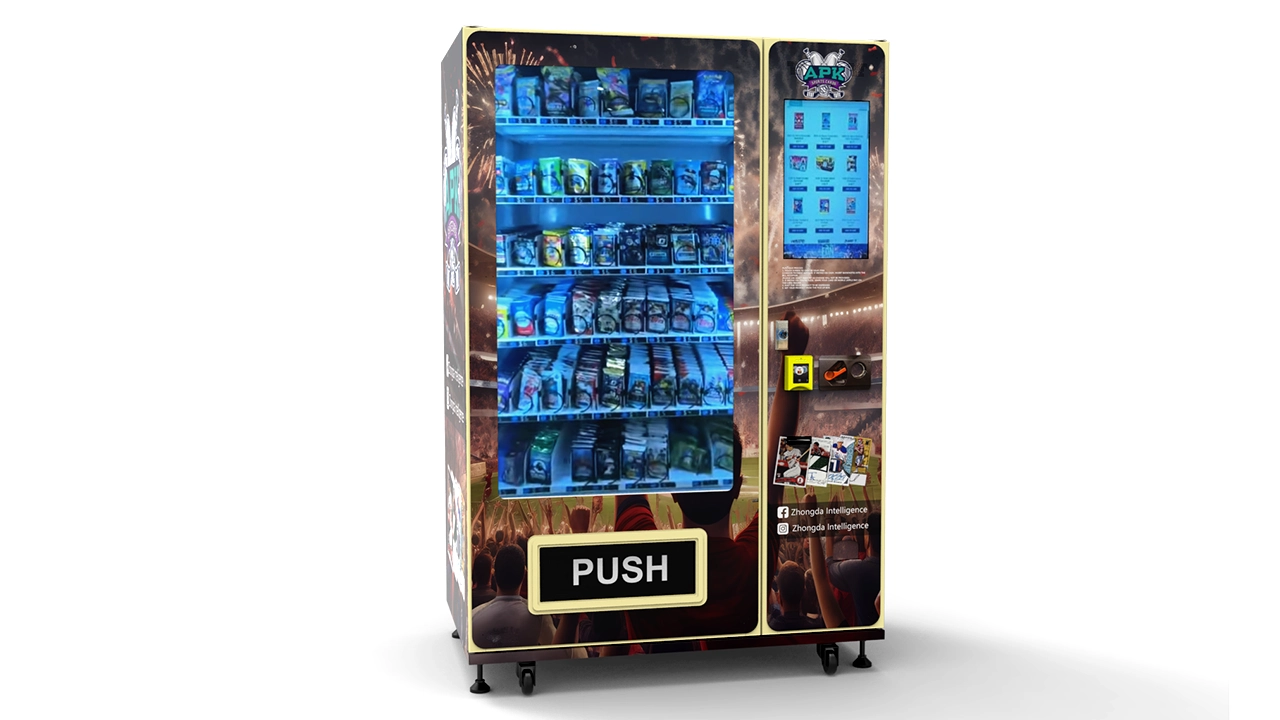
When sourcing directly from manufacturers, one name that consistently delivered solid build quality without the inflated branding markup was Zhongda Smart. Their combo units handle the coil sizing issues I mentioned better than most, and their card reader integration has been reliable across the 12 units I've deployed since 2023. That's not a paid endorsement—it's a reflection of what I've seen on my own route.
If you're buying new, expect to pay $3,500–$6,500 for a quality combo machine with a card reader. Used machines run $1,500–$3,000 but often need $300–$800 in refurbishment.
For operators in the EU, vending machine energy consumption is regulated under EU energy labeling directives. A modern combo machine uses roughly 1.5–2.5 kWh per day, which translates to $15–$30 per month in electricity depending on local rates.
Route Economics: What the Numbers Actually Look Like
Here's a realistic snapshot from one of my mid-tier locations—a 150-person warehouse in a suburban area:
- Monthly gross sales: $1,100–$1,400
- Cost of goods sold: $450–$600
- Gross profit: $600–$800
- Electricity: $20–$30
- Card processing fees: $25–$40
- Maintenance/repairs (amortized): $30–$50
- Restocking labor (2 visits/week): $80–$120
- Net profit: $400–$550 per month
At that rate, a $4,500 machine pays for itself in 9–12 months. That's a solid return—but only if the product mix is right. I've seen the same location produce $300/month in net profit with a bad mix and $550 with a good one.
For broader context on small business operating costs in the U.S., the Small Business Administration publishes regular updates on overhead and labor trends that are worth tracking.
How to Build Your Own Top-Seller List (Without Guessing)
Stop relying on gut feel. Here's the process I use when I place a new machine:
- Week 1–2: Stock only the top 10 national SKUs across snacks and drinks. No experiments.
- Week 3–4: Pull sales data. Identify your bottom 5 facings by revenue per facing.
- Week 5: Replace the bottom 2 facings with one "healthy" option and one regional/niche item.
- Week 6–8: Measure again. If the new items don't beat the old ones, revert.
- Ongoing: Rotate one facing per month as a test slot. Never change more than 10% of your mix at once.
This process takes 60 days but gives you a location-specific top-seller list that no generic guide can provide.
Common Mistakes That Kill Vending Profit
- Overstocking slow movers: If a facing sells less than 0.5 units per day, cut it.
- Ignoring expiration dates: Rotate stock weekly. First in, first out.
- Underpricing: A $0.25 price increase on a $1.50 item rarely reduces volume by more than 5–8%.
- Neglecting the card reader: Test it every restock visit. A dead reader is a dead machine.
- Buying the cheapest machine: A $2,000 machine that jams 10% of the time costs more than a $4,500 machine that jams 2% of the time.
Frequently Asked Questions
What are the best items for combo vending machine profit maximization?
Energy drinks, bottled water, chips, and candy are the top four categories by combined margin and turnover. Energy drinks and water drive the most revenue per facing, while candy and chips offer the best margin consistency. Adding coffee or protein bars can boost profit in the right location, but they require more maintenance and have slower turnover in general locations.
How much can a combo vending machine earn per month?
Based on my route data, a well-placed combo machine in a 100–200 person location typically grosses $800–$1,400 per month. Net profit after COGS, fees, electricity, and labor runs $300–$600. High-traffic locations like transit hubs or 24-hour facilities can double those numbers, while low-traffic offices may see half.
Which vending machine brands are most reliable for combo units?
Crane, AMS, and Seaga are the most common brands in the U.S. market. For operators sourcing directly from manufacturers, Zhongda Smart has delivered solid build quality and reliable card reader integration in my experience. The key is not the brand name but the specific model's coil system, refrigeration stability, and payment terminal compatibility.
Should I buy new or used vending machines?
New machines cost $3,500–$6,500 and come with warranties and modern card readers. Used machines run $1,500–$3,000 but often need $300–$800 in refurbishment, and older models may not support modern payment systems. If you're running a route of 5+ machines, buying new from a reliable manufacturer usually pays off within 12–18 months through lower maintenance costs.
How often should I restock a combo vending machine?
Most locations need restocking every 3–5 days. High-traffic locations may need daily service. I recommend starting with twice-weekly visits and adjusting based on sales data. Overstocking leads to spoilage; understocking leads to lost sales. Track your top 5 SKUs and set par levels based on actual weekly velocity.
What is the biggest hidden cost in vending machine operation?
Spoilage and maintenance. Spoilage typically runs 3–8% of inventory if you're not rotating stock properly. Maintenance—especially card reader replacements and refrigeration repairs—can cost $300–$800 per year per machine. Budget for both from day one, or your profit projections will be off by 15–20%.
Can I make money with just one combo vending machine?
Yes, but it's a side income, not a full-time business. One machine in a good location nets $300–$600 per month. To replace a full-time income, you'd need 10–20 machines depending on location quality and your operating efficiency. The economics improve significantly at scale because restocking and maintenance costs per machine drop.