If you’re a shopping center owner, leasing manager, or retail operator looking at the recent surge in trading card vending machines, the first question you probably want answered is whether these machines actually make money or if they’re just another short-lived trend. After more than a decade in the vending industry, I can tell you this: a well-placed trading card vending machine in a shopping center can generate monthly revenue between $1,500 and $6,000 depending on foot traffic, product mix, and machine reliability, but the difference between a profitable unit and a costly mistake comes down to how you evaluate the location and how seriously you treat the operational side of the business. I’ve seen both outcomes firsthand, and in this guide I’ll walk you through the real numbers, the equipment choices, the common traps, and the daily realities of running card vending machines in shopping centers.
Why Trading Card Vending Machines Fit Shopping Centers
Shopping centers have changed dramatically over the past decade. Foot traffic is no longer guaranteed by anchor stores alone, and property managers are constantly looking for ways to activate dead zones, reduce vacancy perception, and generate ancillary income without adding staffing costs. Trading card vending machines check a lot of boxes: they take up about the same footprint as a large drink machine, they require no on-site labor, and they appeal to a demographic that actually visits malls and strip centers—kids, teens, and collectors who are already there for entertainment or dining.
What makes this product category different from snack or beverage vending is the average transaction value. A snack machine might sell a $1.50 bag of chips. A trading card machine sells packs ranging from $5 to $30, and sometimes single cards priced at $50 or more if you use a dispenser that supports higher-value pulls. The margin structure is also different. While snack vending typically runs at 30–40% gross margin, trading cards often run at 40–60% margin if you source product correctly and avoid overpaying on secondary market inventory.
That said, the machine is only half the story. The real value lies in the intersection of product demand and location quality. A shopping center with a hobby shop, a game store, or a cinema will outperform a center with mostly service-based tenants. I’ve placed machines in both types of locations, and the difference is night and day. One unit in a regional mall near a movie theater and a comic shop did over $5,000 in a month during Pokemon peak season. Another unit in a small strip center anchored by a gym and a dollar store struggled to hit $700 a month.
The Real Cost of Getting Started
Let’s talk about what you’ll actually spend before you see your first dollar of revenue. If you’re buying new equipment, a standard 32-inch touchscreen trading card vending machine will run you between $6,500 and $12,000 depending on the manufacturer, the number of coils or trays, and whether you opt for additional features like a card grading integration or a custom enclosure. Wall-mounted units are cheaper, usually $3,500 to $6,000, but they hold less inventory and are better suited for smaller retail spaces with lower foot traffic.
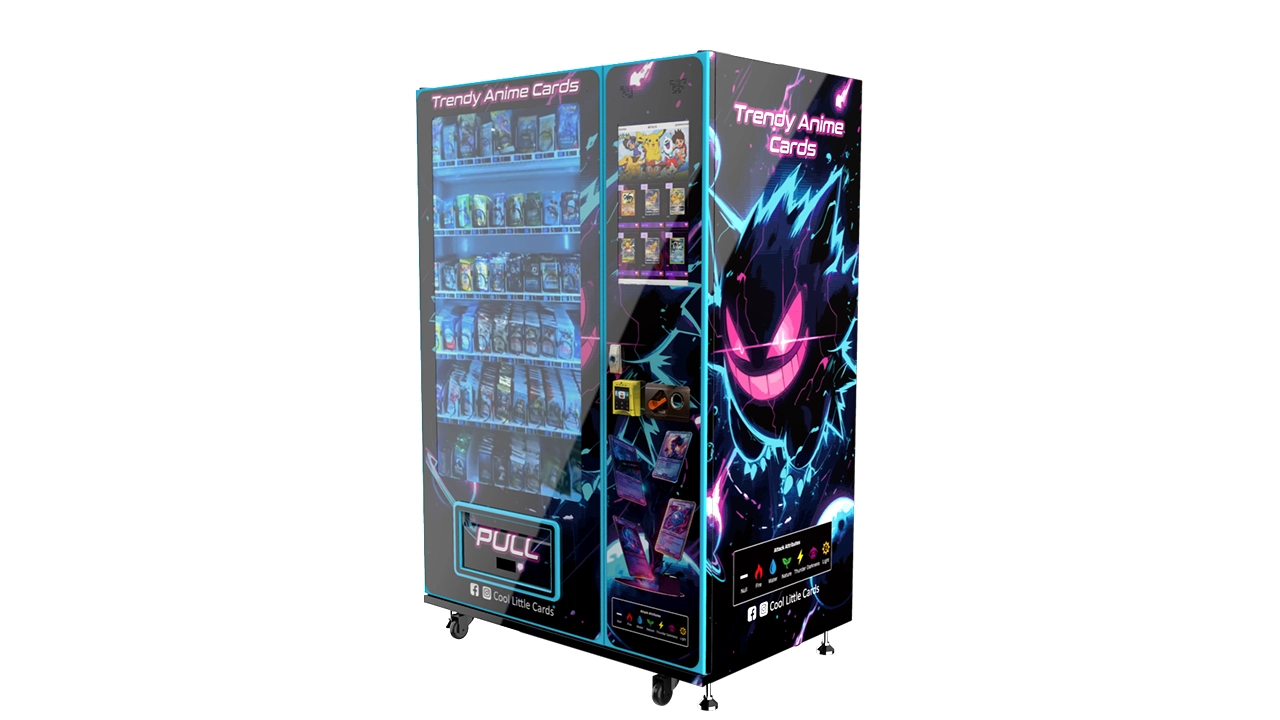
If you’re considering a used or refurbished machine, you can find units for $2,000 to $4,000, but you need to factor in the risk of outdated payment systems, worn-out motors, and the likelihood that you’ll spend more on repairs in the first year than you saved on the purchase price. I’ve bought used machines before, and I’ve learned the hard way that a $1,500 repair bill on a $3,000 machine is not a bargain. If you’re new to this, I’d strongly recommend buying new or lightly used equipment from a supplier that offers a warranty and technical support.
Beyond the machine itself, you’ll need to budget for shipping, installation, initial inventory, payment processing fees, and a small cash reserve for maintenance. Here’s a rough breakdown based on what I’ve seen across multiple deployments:
| Cost Item | New Machine | Used Machine |
|---|---|---|
| Equipment (32-inch touchscreen) | $7,000 – $12,000 | $2,500 – $5,000 |
| Shipping & installation | $400 – $900 | $300 – $700 |
| Initial inventory (booster boxes, packs, single cards) | $2,000 – $4,000 | $2,000 – $4,000 |
| Payment processing setup | $100 – $300 | $100 – $300 |
| Reserve for repairs & maintenance | $500 – $1,000 | $1,000 – $2,500 |
So your total startup cost for a single new machine lands somewhere between $10,000 and $18,000, and for a used machine between $6,000 and $12,000. These are real figures from actual deployments, not theoretical estimates. According to IBISWorld data on the vending machine industry, the average cost to enter vending operations has risen over the past five years due to technology upgrades and payment system requirements, which aligns with what I’m seeing on the ground.
Payback Period: What You Can Actually Expect
The most common question I get from shopping center managers and small operators is how long it takes to recoup the investment. The honest answer is that it depends heavily on location and product selection, but I can give you a realistic range based on my own experience and the experiences of other operators I’ve spoken with across the U.S. and Europe.
In a strong location—a regional mall with high foot traffic, a nearby entertainment anchor, or a shopping center with a hobby store—you can expect monthly sales between $2,500 and $5,000. At a 50% gross margin, that’s $1,250 to $2,500 in gross profit per month. After deducting electricity, payment processing fees, and your time for restocking and maintenance, your net profit is roughly $800 to $2,000 per month. At that rate, payback on a $12,000 machine is anywhere from 6 to 15 months.
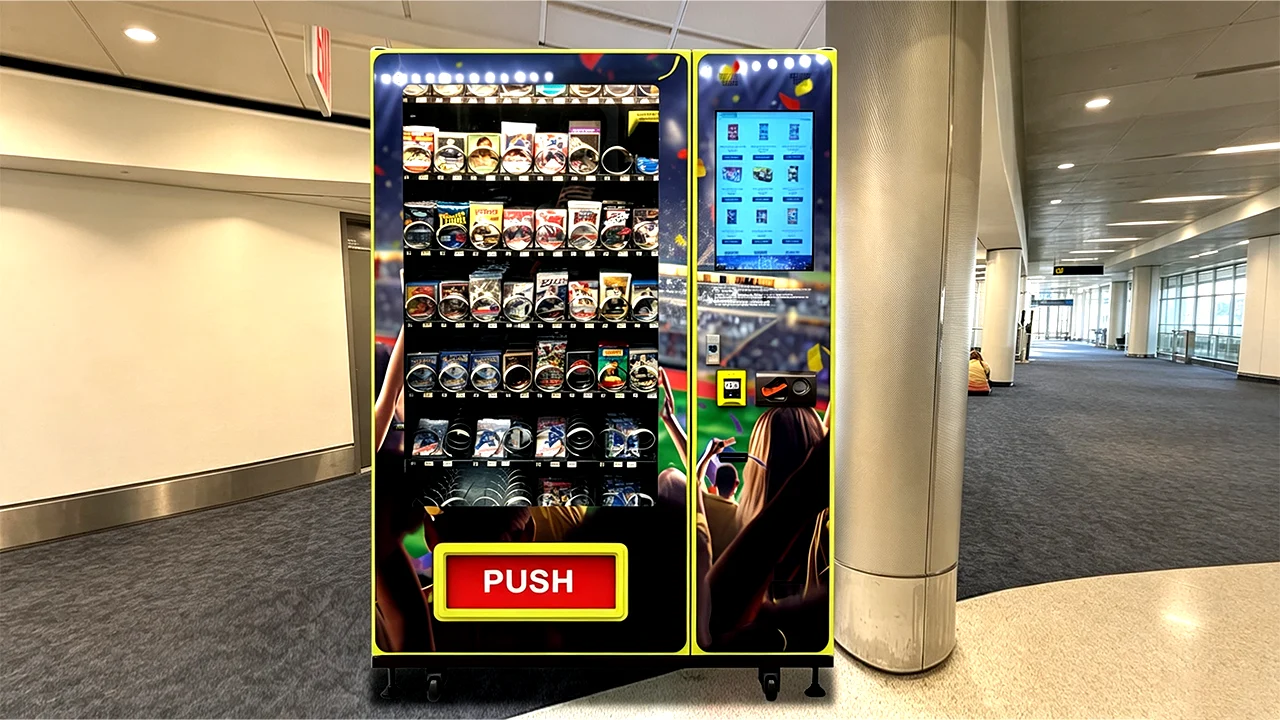
In a mediocre location—a small strip center with limited foot traffic, no complementary tenants, or a center that’s struggling with occupancy—monthly sales might be $600 to $1,200. Your net profit after expenses could be as low as $200 to $400 per month, which means payback stretches to 30 months or more. I’ve seen operators abandon units in these conditions because the machine just wasn’t worth the hassle.
One important note: these figures are based on my operational experience and should not be interpreted as guaranteed returns. A report from Statista on self-service vending revenue shows that the average vending machine in North America generates around $75 to $100 per week, but trading card machines are a niche category that can outperform or underperform based on local market demand. Do your own location analysis before you commit.
Site Evaluation: How to Pick a Winning Location
If there’s one piece of advice I’d hammer into any new operator’s head, it’s this: the machine is not the business, the location is the business. I’ve seen identical machines in identical shopping centers produce wildly different results, and the only variable was foot traffic and tenant mix.
Here are the criteria I use when evaluating a potential placement for a trading card vending machine in a shopping center:
- Daily foot traffic of at least 1,000 people passing within 50 feet of the proposed location. Anything less and you’ll struggle to hit meaningful sales volume.
- Complementary tenants nearby: hobby stores, game shops, comic book retailers, movie theaters, family restaurants, or electronics stores. These bring the right demographic.
- Visibility from the main walkway. A machine tucked into a corner behind a pillar will not perform. You need clear sightlines and adequate lighting.
- Proximity to seating areas or high dwell-time zones. Parents waiting for kids at a cinema or food court are more likely to browse a machine than someone walking purposefully to a store.
- Security and lighting. Trading cards are high-value items, and a machine in a poorly lit area is a target for theft and vandalism.
- Accessibility for restocking. You’ll be visiting this machine at least once a week, so you need easy parking, a clear path, and no complicated security check-ins.
I once placed a machine in a busy outlet mall that looked perfect on paper—huge foot traffic, high income area, strong retail anchors. But the machine was positioned at the end of a corridor near the restrooms, and the traffic flow just didn’t pass by it. Sales never exceeded $800 a month. When I moved the same machine to a spot near the food court entrance, sales tripled within three weeks. Same machine, same product, completely different result. That experience taught me that placement within a center matters just as much as the center itself.
Equipment Selection: What to Look For
Not all trading card vending machines are created equal. The market has grown quickly, and there are manufacturers offering everything from basic spiral machines to high-tech touchscreen units with interactive displays. You need to match the machine to the location and your operational capabilities.
For shopping center placements, I recommend a machine with the following features:
- A 32-inch or larger touchscreen display that can showcase product images, pricing, and promotional content. This makes the machine more engaging and helps with upselling.
- Multiple dispensing mechanisms—ideally a combination of coil-based dispensing for booster packs and a tray or carousel system for single cards or higher-value items.
- Cashless payment support, including credit/debit cards, mobile wallets like Apple Pay and Google Pay, and ideally a card reader that supports contactless transactions. Cash-only machines will lose a significant portion of sales in a shopping center environment.
- Remote monitoring capability. You want to be able to check inventory levels, sales data, and machine status without physically visiting the unit. This saves time and helps you respond to issues quickly.
- Robust security features, including a reinforced cabinet, tamper alarms, and secure locking mechanisms. Trading cards are valuable and theft is a real concern.
One manufacturer I’ve worked with on several deployments is Zhongda Smart, and their 32-inch touchscreen trading card vending machine has held up well in high-traffic retail environments. I’m not going to tell you they’re the only option, but I’ve found their build quality and after-sales support to be reliable, especially for operators who don’t want to handle complex maintenance themselves. You can see the specifications on their product page if you want a reference point for what a modern machine should include.
When comparing equipment, don’t just look at the purchase price. Consider the total cost of ownership: how much does it cost to ship, install, and maintain? What’s the warranty period? How responsive is the manufacturer when you need a replacement part? A machine that’s $1,000 cheaper but breaks down twice a year will cost you more in lost sales and repair fees than the difference in upfront price.
Machine Configuration and Customization
The flexibility of modern trading card vending machines is one of their biggest advantages. You’re not stuck with a fixed product lineup. You can adjust the number of slots, the pricing levels, and even the types of products offered based on sales data and local demand.
For a shopping center location, I typically configure the machine with a mix of products: 40–50% booster packs from major trading card games like Pokemon, Magic: The Gathering, and sports cards; 20–30% single cards in protective cases at various price points; and the remaining slots for specialty items like tins, boxes, or promotional sets. This mix gives you a range of price points that appeals to different types of buyers—kids with $10 to spend, serious collectors looking for a $50 single card, and impulse buyers who just want to try their luck.
You should also pay attention to the machine’s setup and user interface. Touchscreen navigation should be intuitive. Customers should be able to browse products, see prices, and complete a purchase in under 60 seconds. If the interface is confusing or slow, people will walk away. I’ve tested machines where the checkout process took over two minutes, and the abandoned transaction rate was painfully high.
Payment Systems and the Self-Service Experience
In today’s retail environment, cashless payment is not optional—it’s the baseline expectation. Shopping center customers are carrying less cash than ever, and if your machine can’t accept cards or mobile payments, you’re leaving money on the table. A report from Eurostat on digital payment adoption shows that over 60% of retail transactions in the EU are now cashless, and the numbers are similar in the U.S. according to the U.S. Small Business Administration’s payment trends data.
When choosing a payment system for your trading card vending machine, look for the following:
- Contactless card support (Visa, Mastercard, American Express)
- Mobile wallet integration (Apple Pay, Google Pay, Samsung Pay)
- Remote price updating and inventory tracking through a cloud-based dashboard
- Fast transaction processing—ideally under 5 seconds from card tap to approval
- Offline mode capability so the machine can still process transactions if the internet connection drops temporarily
Payment processing fees will eat into your margins, typically 2.5–4% per transaction depending on your processor and volume. That’s an unavoidable cost of doing business, but you can minimize it by choosing a processor with competitive rates and negotiating based on your projected monthly volume.
Inventory Management and Restocking
If you’re coming from traditional vending, you’ll quickly realize that trading card inventory management is a different beast. You’re not just refilling the same product every week—you’re rotating product based on what’s selling, what’s new, and what’s likely to spike in demand. A new Pokemon set release can sell out in days, while older sets can sit for months.
I recommend a minimum restocking frequency of once per week for shopping center locations. High-traffic units may need twice-weekly visits during peak release seasons. Each restocking visit takes about 30–45 minutes if you’ve organized your inventory well. The key is to maintain accurate inventory counts and use the machine’s remote monitoring system to see exactly what’s sold and what needs replenishment before you arrive.
Here’s a practical tip: keep a surplus of top-selling items in a secure storage location near the shopping center, or in your vehicle if that’s practical. Running out of a hot product is a missed opportunity, and you can’t always predict when a product will suddenly take off. I’ve had booster packs sell out within 24 hours of a new set release, and if I hadn’t had backup inventory ready, I would have lost a week of sales waiting for the next restock.
Maintenance and Common Failures
Let’s be honest about maintenance: trading card vending machines are more complex than snack machines, and they will require attention. The most common issues I’ve encountered in shopping center environments are:
- Card jams in the dispensing mechanism, especially when cards are slightly warped or packaged in thin wrappers
- Payment system connectivity issues, particularly when the shopping center’s Wi-Fi network is unstable
- Touchscreen calibration problems after heavy use
- Vandalism attempts, ranging from sticker residue to attempted forced entry
You need a maintenance plan before you deploy a machine. If you’re handy, you can handle basic repairs yourself, but you should have a relationship with a local vending machine repair technician who can handle more complex issues. The average cost for a service call runs $100 to $200 for labor, plus parts. I’ve seen operators spend $500 to $1,000 a year on maintenance for a single machine, and that’s normal. Budget for it.
One failure I’ll never forget: I had a machine in a shopping center that started malfunctioning during a major trading card event weekend. The card dispenser was jamming repeatedly, and the remote monitoring system showed error codes I hadn’t seen before. Because I didn’t have a backup plan, I had to shut the machine down for two days during peak sales time. I lost over $800 in potential sales and damaged my relationship with the shopping center manager. After that, I made it a rule to always have a spare dispensing mechanism on hand and a technician contact who could respond within 24 hours.
Comparing Different Operating Models
You don’t have to buy and operate the machine entirely on your own. There are several models to consider, and the right one depends on your capital, your time, and your risk tolerance.
| Model | Upfront Cost | Monthly Profit Potential | Time Commitment | Best For |
|---|---|---|---|---|
| Self-operated (own machine) | $10,000 – $18,000 | $800 – $2,500 | 5–10 hours/week | Operators with capital and time |
| Leased machine (monthly fee) | $300 – $600/month | $500 – $1,500 | 3–5 hours/week | Those who want to test the market |
| Revenue share with location | Minimal | $300 – $1,000 | 5–10 hours/week | Those with strong location partnerships |
| Managed service (third-party operator) | None | $200 – $800 | 1–2 hours/month | Passive investors |
I’ve used all of these models at different points in my career. For new operators, I usually recommend starting with a self-operated machine in one strong location to learn the business before scaling. Leasing is a good option if you’re not sure about the long-term viability of a location, but the monthly fees can eat into your margins. Revenue share agreements work well when you have a shopping center manager who’s enthusiastic about the concept and willing to promote it.
Common Mistakes and How to Avoid Them
Over the years, I’ve made plenty of mistakes, and I’ve also watched other operators make the same ones repeatedly. Here are the most common pitfalls in trading card vending machine operations:
Ignoring location quality in favor of low rent. A cheap placement in a dead shopping center is not a bargain—it’s a money pit. You’re better off paying a higher commission or rent for a high-traffic location than saving money on a spot that sees 200 people a day.
Buying a machine without understanding the product market. If you don’t know the difference between a Pokemon booster box and a Magic: The Gathering draft pack, learn before you buy. Product selection is the difference between a machine that sells out and one that sits untouched.
Underestimating the importance of customer trust. Trading card buyers are a skeptical bunch. If they suspect your machine is rigged, overpriced, or selling tampered products, word spreads fast in the community. Price fairly, display products clearly, and make sure your machine operates transparently.
Neglecting the relationship with the shopping center manager. Your machine is a guest in their property. If you’re responsive, professional, and easy to work with, you’ll get better placement, faster approval for upgrades, and more flexibility when issues arise. If you’re a headache, you’ll be replaced.
Legal and Regulatory Considerations
You might think a vending machine is a simple business, but there are legal and regulatory hoops to jump through, especially in shopping centers. Depending on your location, you may need a business license, a seller’s permit, and possibly a specific vending machine license. In the U.S., requirements vary by state and municipality. In the EU, you’ll need to comply with local product safety regulations and VAT requirements for retail sales.
Insurance is another often-overlooked item. Your machine is an asset, and if it’s damaged, stolen, or causes injury, you need coverage. General liability insurance for a vending machine typically costs $300 to $600 per year, which is a small price to pay for peace of mind.
You’ll also want to review the shopping center’s lease agreement carefully. Some centers have exclusivity clauses that prevent you from placing a machine if another tenant already sells similar products. Others require you to maintain certain operating hours or follow specific aesthetic guidelines. Get these details in writing before you sign anything.
Scaling Your Operation
Once you’ve proven the concept with a single machine, the natural next step is scaling. But scaling a trading card vending machine business is not just about buying more machines—it’s about building systems that allow you to operate efficiently across multiple locations.
I recommend a phased approach. Start with one machine, learn the operational rhythm, and track your sales data carefully. Once you’re consistently hitting your targets, add a second machine in a different type of location to test whether your success was location-specific or repeatable. From there, you can expand to three, five, or ten machines, but only if you have the time and resources to manage them properly.
One advantage of trading card vending machines is that they’re relatively low-maintenance compared to food vending. You’re not dealing with perishable inventory, expiration dates, or food safety inspections. The main operational tasks are restocking, monitoring sales data, and handling occasional maintenance issues. This makes it feasible to operate a small fleet of machines as a side business or a full-time operation with only a few hours of daily attention.
Data-Driven Decisions and Product Rotation
The operators who succeed with trading card vending machines are the ones who treat it like a retail business, not a passive investment. That means paying attention to sales data, customer preferences, and market trends. Your machine’s remote monitoring system should give you detailed reports on what’s selling, when it’s selling, and at what price point.
I rotate my product lineup every 4–6 weeks based on sales velocity. If a product hasn’t sold in three weeks, I replace it with something else. If a product sells out within days of restocking, I increase its slot allocation and consider raising the price. This kind of data-driven approach is what separates profitable machines from mediocre ones.
It’s also important to stay on top of the trading card market. New set releases, tournament seasons, and pop culture trends all affect demand. A machine that’s stocked with last year’s sets will underperform compared to one that’s stocked with the latest releases. I subscribe to industry newsletters, follow market trends on secondary market platforms, and talk to local hobby shop owners to understand what’s generating buzz.
Final Thoughts and Disclaimer
I’ve been in this industry long enough to know that there’s no such thing as a guaranteed return. Trading card vending machines can be a profitable addition to a shopping center, but they require realistic expectations, careful planning, and ongoing attention. The numbers I’ve shared here are based on my operational experience and should be treated as guidelines, not promises. Your results will vary based on location, product selection, market conditions, and your own effort.
If you’re considering this business, do your homework, visit existing installations, talk to other operators, and start small. The equipment is getting better, the market is growing, and the demand for trading cards shows no signs of slowing down. But success comes from execution, not just from buying a machine and hoping for the best.
Frequently Asked Questions
Are trading card vending machines profitable?
They can be, but profitability depends heavily on location and product selection. In a high-traffic shopping center with the right demographic, a machine can generate $2,500 to $5,000 in monthly sales with 40–60% gross margins. In a poor location, you might struggle to cover your costs. Based on my experience, the difference between profit and loss is usually the location, not the machine.
How much does a trading card vending machine cost?
New machines typically cost between $6,500 and $12,000 for a standard 32-inch touchscreen model. Wall-mounted units are cheaper, around $3,500 to $6,000. Used machines can be found for $2,000 to $5,000, but you’ll likely spend more on repairs and maintenance. Total startup costs including inventory, shipping, and setup usually land between $10,000 and $18,000 for a new machine.
How long does it take to recoup the investment?
In a strong location, payback periods range from 6 to 15 months. In weaker locations, it can take 30 months or more. The key factors are monthly sales volume, gross margin, and your operating expenses. I’ve seen machines pay for themselves in under six months during peak trading card seasons, and I’ve seen others that never broke even.
Should beginners buy or lease a machine?
If you’re new to the business, leasing can be a lower-risk way to test the market, but monthly fees will reduce your profit. Buying gives you full control and better long-term economics, but it requires more upfront capital and operational commitment. I generally recommend buying a new machine for your first location if you’ve done your site evaluation and have a realistic plan.
Where should I place a trading card vending machine?
Look for shopping centers with high foot traffic, complementary tenants like hobby stores, game shops, or cinemas, and good visibility from the main walkway. Avoid locations with low foot traffic, poor lighting, or no natural synergy with trading card buyers. Placement within the center matters—a spot near a food court entrance or entertainment area will outperform a hidden corner.
What permits and licenses do I need?
Requirements vary by country, state, and municipality. In the U.S., you’ll typically need a business license and a seller’s permit. In the EU, you’ll need to comply with local VAT and product safety regulations. You should also have general liability insurance. Check with your local business authority and review your lease agreement before deploying a machine.
How do I choose a reliable machine supplier?
Look for a supplier with experience in the trading card vending niche, a solid warranty, and responsive after-sales support. Ask for references and visit an existing installation if possible. I’ve had good experiences with Zhongda Smart’s equipment, but the most important thing is to find a supplier that supports you when something goes wrong.
What if the machine breaks down?
You need a maintenance plan before you deploy. Keep a spare dispensing mechanism and common replacement parts on hand, and have a relationship with a local vending machine repair technician. Remote monitoring systems can alert you to issues before they become major problems, but sometimes you’ll need to visit the machine to diagnose the issue.
How can I reduce restocking and maintenance costs?
Use a machine with remote monitoring so you only visit when restocking is actually needed. Organize your inventory efficiently so restocking visits are quick and productive. Keep a buffer stock of top-selling items to avoid running out. And invest in a quality machine from the start—cheaper equipment will cost you more in repairs and lost sales over time.