The Complete Guide to Vending Machine Dolls Opportunities and Risks
After more than a decade running vending machine operations across the US and Europe, I can tell you this upfront: vending machine dolls are not a get-rich-quick scheme, but they can be a solid, scalable business if you treat them like a real retail operation. The biggest question I get from new operators is whether the margins justify the effort. The honest answer is yes, but only if you understand the full picture—location costs, machine reliability, product margins, and the surprisingly high impact of theft and vandalism. In this complete guide, I will walk you through the real opportunities and risks of vending machine dolls, drawing from my own experience with dozens of machines, failed placements, and profitable routes. Whether you are looking at used machines or new equipment from manufacturers like Zhongda Smart, the principles remain the same: know your numbers before you drop a single coin.
What Are Vending Machine Dolls and Who Are They For?
When I say vending machine dolls, I am referring to the small, often collectible or capsule-style toys sold through automated retail machines. These are not the giant claw machines you see in arcades. I am talking about the glass-front, spiral, or capsule venders that dispense plastic figures, mini plush toys, or branded collectibles. The typical price point ranges from one to five dollars per vend.
These machines work best in high-foot-traffic, family-oriented locations. Think shopping malls, movie theater lobbies, family entertainment centers, fast-food restaurants with play areas, and even laundromats in residential neighborhoods. I have seen successful placements in hospital waiting rooms and airport transit areas, but those require more careful product selection and higher maintenance standards.
One common mistake I see is assuming any location with people will work. It will not. A machine filled with dolls needs a specific demographic: parents with young children, collectors, or impulse buyers looking for a small treat. Office break rooms and gyms rarely perform well for this category. Stick to places where people are already in a spending mood or have idle time with kids.
Is the Vending Machine Business Actually Profitable?
This is the question I hear most often, and the answer depends entirely on your execution. Let me share some real numbers from my own routes. A well-placed doll machine in a busy family restaurant can generate between $300 and $800 per month in revenue. After subtracting product cost (typically 30 to 40 percent of the sale price), machine lease or depreciation, location commission, and restocking labor, you are looking at a net monthly profit of $100 to $400 per machine.
According to a 2023 report by IBISWorld, the vending machine industry in the US alone generates over $7 billion annually, with snack and beverage machines dominating the market. Doll and toy machines occupy a smaller but growing niche, especially in Europe where automated retail is expanding rapidly. A study by Statista in 2022 noted that the global vending machine market is projected to grow at a compound annual growth rate of 6.5 percent through 2030.
But here is the reality check: not every machine will hit those numbers. I have pulled machines that barely did $50 a month. The difference often came down to location quality and product appeal. If you are not willing to relocate underperformers, you will lose money. The key is to test each location for at least three months and be ruthless about moving machines that do not meet your minimum threshold.
Key Factors to Consider Before Buying or Placing a Machine
Location Selection Is Everything
I cannot stress this enough. A mediocre machine in a great location will outperform a top-tier machine in a dead spot every time. When I evaluate a potential site, I look for three things: daily foot traffic of at least 500 people, a visible dwell time of at least two minutes, and a demographic that includes children or collectors. I also check whether the location already has competing machines. If there are three other doll venders in the same hallway, I walk away.
Negotiating the commission is another skill you will need. Most locations ask for 10 to 20 percent of gross sales. Some high-traffic venues like malls may demand 25 percent or a flat monthly fee. I have learned to start negotiations at 10 percent and never agree to more than 20 percent unless the traffic is exceptional. Always get the agreement in writing, even for small locations.
Machine Types and Costs
There are three main types of machines for doll vending: capsule venders, spiral venders, and glass-front venders. Each has its pros and cons. Capsule machines are the cheapest, often starting at $500 used, but they limit your product size and require frequent refills. Spiral venders offer more flexibility but cost between $1,500 and $3,000 new. Glass-front venders are the most versatile and professional-looking, with prices ranging from $2,500 to $5,000 for a new unit.
When I started, I bought used capsule machines to keep costs low. That worked for a while, but I quickly learned that used machines break more often. A vending machine repair call can easily cost $150 to $300, and if your machine goes down for a week, you lose revenue and location trust. I now recommend buying new or refurbished machines from reputable suppliers. Zhongda Smart offers a range of automated retail machines that balance cost and reliability. I have seen their units operate for years with minimal issues, which is critical when you are managing multiple locations.
Payment Systems and Connectivity
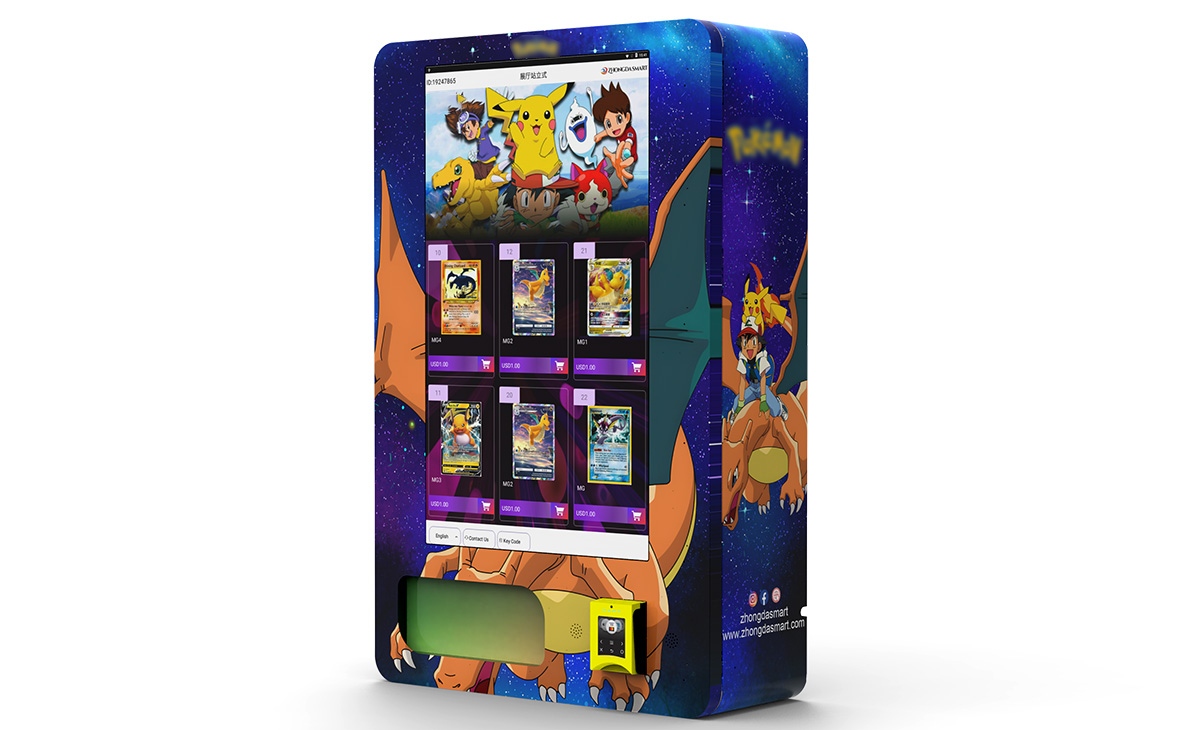
Modern vending machines need cashless payment systems. In Europe and the US, customers expect to pay with credit cards, mobile wallets, and even contactless payments. A machine that only takes coins will lose a significant portion of sales. I estimate that adding a card reader increases revenue by 20 to 30 percent on average.
Telemetry systems are another must-have. These allow you to monitor sales, inventory levels, and machine health remotely. The upfront cost is around $200 to $500 per machine, plus a monthly subscription of $10 to $30. But the savings in labor and restocking efficiency more than justify the investment. Without telemetry, you are driving blind.
Cost Breakdown: What You Really Need to Budget
Let me give you a realistic budget based on my experience operating 15 machines across three states. These numbers are estimates and will vary by region and supplier, but they will give you a solid starting point.
| Expense Category | Low End | High End | Notes |
|---|---|---|---|
| New machine (glass-front) | $2,500 | $5,000 | Includes basic warranty |
| Used machine (capsule) | $400 | $1,000 | Higher repair risk |
| Card reader + telemetry | $300 | $700 | One-time plus monthly fee |
| Initial product inventory | $200 | $600 | Depends on machine capacity |
| Location commission (monthly) | 10% of sales | 25% of sales | Negotiable |
| Restocking labor (monthly) | $50 | $150 | Per machine, if you hire help |
| Maintenance reserve (annual) | $200 | $500 | Parts and repair calls |
Based on these numbers, your initial investment per machine will be between $3,000 and $6,000. If you place five machines, you are looking at $15,000 to $30,000 to start. That is not a small amount, but it is manageable compared to many other retail businesses. The typical payback period I have seen is 12 to 18 months for well-performing machines. Underperformers can take two years or more, which is why location testing is so important.
How to Choose a Vending Machine Supplier
I have bought machines from at least a dozen suppliers over the years. Some were great, others were disasters. Here is what I have learned about selecting a reliable manufacturer or distributor.
First, look for a supplier that offers a warranty of at least one year on new machines. Many cheap machines from unknown brands break within the first six months, and the cost of vending machine repair can wipe out your profit. Second, check whether the supplier has a local service network or at least a responsive technical support team. I once waited three weeks for a replacement part from an overseas supplier. That machine sat idle, and I lost the location.
Third, ask about payment system compatibility. Some machines come with proprietary payment systems that are hard to upgrade. You want a machine that accepts MDB (Multi-Drop Bus) standard components, so you can swap out card readers or coin mechanisms easily. Zhongda Smart machines use standard interfaces, which makes upgrades and repairs simpler. I have also found their customer support to be responsive, which matters when you have a machine down.
Fourth, read reviews and ask for references. Any reputable supplier should be able to connect you with existing customers. I always ask about machine uptime, ease of restocking, and how the supplier handles warranty claims. If a supplier hesitates to provide references, consider it a red flag.
Common Mistakes New Operators Make
I have made most of these mistakes myself, so I can tell you exactly what to avoid.
Buying too many machines too fast. I started with ten machines at once, thinking I would scale quickly. In reality, I could not manage the restocking and maintenance efficiently. Start with two or three machines, learn the ropes, and expand only when you have a system in place.
Ignoring location quality for a cheap commission. A location that offers zero commission but has low traffic is worse than a location that takes 20 percent but has 1,000 visitors a day. Always prioritize foot traffic over commission rates.
Using cheap products. I once bought a bulk lot of dolls from an unknown supplier to save money. The quality was poor, and customers complained. Sales dropped, and I lost the location. Invest in branded or high-quality collectibles. Parents and collectors notice the difference.
Neglecting machine maintenance. A machine that jams frequently will kill your revenue and reputation. Schedule monthly cleaning and inspection. Check the coin mechanism, the vend sensors, and the card reader. A small investment in preventive maintenance saves you from costly vending machine repair calls later.
Not tracking sales data. If you are not using telemetry or at least a manual sales log, you are flying blind. I have seen operators keep machines in the same location for years without realizing they were losing money. Track each machine's sales weekly and be ready to move underperformers.
Best Locations for Doll Vending Machines
Based on my experience and industry data, here are the top location types for doll machines, ranked by average monthly revenue potential.
- Family entertainment centers and arcades: These are gold mines. Parents are already spending money on fun, and kids are drawn to the machines. Average monthly revenue: $500 to $1,200.
- Fast-food restaurants with play areas: McDonald's, Burger King, and similar chains often allow machines in their lobbies. Kids waiting to play or eat are prime customers. Average monthly revenue: $300 to $800.
- Shopping malls (family-oriented): Malls with a mix of retail and entertainment work well. Avoid luxury malls where the demographic is older. Average monthly revenue: $400 to $900.
- Laundromats in residential neighborhoods: Parents doing laundry often bring kids, and the 20-minute wait is perfect for impulse buys. Average monthly revenue: $200 to $500.
- Movie theater lobbies: Before or after a movie, kids beg for a toy. Revenue depends on theater size and movie lineup. Average monthly revenue: $250 to $600.
- Hospital waiting rooms (pediatric wings): This works but requires higher hygiene standards and more frequent restocking. Average monthly revenue: $150 to $400.
I have also seen success in bowling alleys, roller skating rinks, and even some outdoor markets. The common thread is a high concentration of families with young children and a few minutes of idle time.
How to Evaluate Whether a Machine Is Worth the Investment
Before I buy a machine or sign a location contract, I run a simple calculation. I estimate the potential monthly revenue based on foot traffic and conversion rate. A realistic conversion rate for doll machines is 1 to 3 percent of passersby. So if a location has 1,000 visitors per day, I expect 10 to 30 sales per day at $2 per vend. That gives me $600 to $1,800 in monthly gross revenue.
Then I subtract product cost (35 percent), location commission (15 percent), and restocking labor (10 percent). That leaves a net profit of roughly 40 percent of gross revenue, or $240 to $720 per month. If the machine costs $4,000, the payback period is 6 to 17 months. I only proceed if the payback period is under 18 months.
If the numbers do not add up, I walk away. It is that simple. I have turned down many locations that looked good on the surface but failed the math test. Do not let enthusiasm override your spreadsheet.
Risks You Cannot Ignore
Every vending business has risks, and doll machines are no exception. Vandalism is a real problem, especially in unsupervised locations. I have had machines broken into, glass shattered, and products stolen. Insurance can cover some of this, but deductibles are often high. I recommend using machines with tamper-resistant locks and placing them in well-lit, monitored areas.
Theft by customers is another issue. Some people try to shake machines or use foreign objects to jam the vend mechanism. Anti-theft features like reinforced coin entry and vend sensors help, but they are not foolproof. Budget for occasional losses.
Product obsolescence is a risk too. Dolls that are popular today might be forgotten in six months. I rotate products every two to three months and track which items sell fastest. If a product sits for more than 60 days, I discount it or swap it out.
Finally, there is the risk of location closure or policy changes. A mall might decide to ban vending machines, or a restaurant might change ownership and kick you out. I always have a backup location list and maintain good relationships with multiple property managers.
Self-Operation vs. Rental vs. Profit-Sharing Models
You have three main ways to run this business. Each has trade-offs.
| Model | Pros | Cons | Best For |
|---|---|---|---|
| Self-operation | Full profit control, flexible product choices | Requires time for restocking and maintenance | Operators with a few machines and local routes |
| Renting a machine | Lower upfront cost, provider handles repairs | Monthly fees eat into profit, less product control | New operators testing the waters |
| Profit-sharing with location | No upfront machine cost, shared risk | Lower profit per machine, less autonomy | Operators with strong location relationships |
I started with self-operation and still prefer it for most scenarios. Renting can be useful if you want to try a location without committing to a machine purchase, but the monthly fees often make it less profitable in the long run. Profit-sharing works well when the location provides the machine or space and you handle the product and maintenance.
How to Lower Restocking and Maintenance Costs
Efficiency is the difference between a profitable route and a money pit. Here are strategies I use.
First, group your machines into routes. If you have machines within a 10-mile radius, you can restock them in a single trip. I plan my routes to minimize driving time. Second, use telemetry to know exactly which machines need restocking. I used to visit every machine weekly, even if it was only half empty. Now I go only when the system tells me stock is low. That cuts my labor cost by about 40 percent.
Third, buy products in bulk from wholesalers. I negotiate discounts for volume and store inventory in a small garage or storage unit. Fourth, perform basic maintenance yourself. I learned to replace coin mechanisms, fix jammed vend spirals, and update card reader firmware. A simple vending machine repair can cost $150 if you call a technician, but it might take you 20 minutes and a $10 part. YouTube tutorials are your friend.
Fifth, build relationships with local technicians for the repairs you cannot handle. I have a list of three reliable repair services in my area. I call them only for complex issues like compressor failures or motherboard replacements. For everything else, I do it myself.
Data Sources and Market Context
To give you a broader perspective, I rely on a few trusted data sources. According to the National Automatic Merchandising Association (NAMA), the average vending machine in the US generates about $75 per week in revenue, though this varies widely by category. For doll machines, I have found the average to be closer to $100 to $150 per week in good locations.
A 2021 report by IBISWorld on the vending machine industry in Europe noted that the market is fragmented, with many small operators competing alongside large players. The report also highlighted that cashless payments are becoming the norm, with over 60 percent of new machines equipped with card readers.
Statista data from 2023 shows that the average consumer spends $1.50 to $3.00 per vending machine transaction in the US, which aligns with the price points I recommend for doll machines. These figures help me benchmark my own performance and set realistic expectations.
I also follow the European Vending & Coffee Service Association (EVA) for trends in the EU market. Their annual reports provide insights on machine placement, product categories, and regulatory changes. Staying informed helps me anticipate shifts in the industry.
FAQ: Common Questions About Vending Machine Dolls
Are vending machine dolls profitable?
Yes, but profitability depends on location, product quality, and operational efficiency. A well-placed machine can net $100 to $400 per month after all costs. Poorly placed machines can lose money.
How much does a doll vending machine cost?
A new glass-front machine costs between $2,500 and $5,000. Used capsule machines can be found for $400 to $1,000, but they come with higher repair risks. Factor in card readers, telemetry, and initial inventory for a total investment of $3,000 to $6,000 per machine.
How long does it take to break even?
Most operators see a payback period of 12 to 18 months for well-performing machines. Underperformers can take two years or more. Testing locations for three months before committing long-term is wise.
Should a beginner buy or rent a machine?
I recommend buying a new or refurbished machine if you have the capital. Renting can work for a trial period, but the monthly fees reduce your profit. If you are unsure, start with one machine and learn the business before scaling.
Where should I place a doll machine?
Focus on locations with high foot traffic of families with children. Family entertainment centers, fast-food restaurants with play areas, shopping malls, laundromats, and movie theater lobbies are top choices. Avoid locations with low traffic or an adult-only demographic.
What permits or licenses do I need?
Requirements vary by city and country. In the US, you typically need a business license and a sales tax permit. Some cities require a vending machine permit. In Europe, regulations vary by country, but hygiene and safety standards apply. Check with your local business authority.
How do I choose a supplier?
Look for suppliers with at least one year of warranty, standard MDB payment interfaces, and responsive customer support. Ask for references and read reviews. Zhongda Smart is one supplier I have found reliable for new machines, but always compare multiple options.
What happens if my machine breaks down?
If you have a warranty, contact the supplier first. For out-of-warranty repairs, call a local vending machine repair technician. Learning basic repairs yourself saves money. Always have a backup plan to minimize downtime.
How can I reduce restocking costs?
Use telemetry to monitor inventory remotely, group machines into efficient routes, and buy products in bulk. Performing simple maintenance yourself also cuts costs. Plan your restocking trips to avoid unnecessary drives.
Final Thoughts
Running a vending machine doll business is not a passive income fantasy. It requires real work, careful planning, and a willingness to adapt. But if you approach it with the same discipline as any retail business, it can provide a steady return. Start small, test locations ruthlessly, invest in reliable equipment, and track your numbers obsessively. The opportunities are there, but they belong to operators who treat this as a business, not a hobby.
This article was updated in October 2023. Data and market conditions may change. Always verify with current sources before making investment decisions.