Step-by-Step Guide to Starting a Makeup Vending Machine Business in 2026
If you are looking at the makeup vending machine business for 2026, you are probably wondering whether it actually makes money or if it is just another trend that will fade. I have been in the vending industry for over a decade, operating across the US and parts of Europe, and I can tell you this: the demand for on-the-go beauty products is real, but the execution is everything. A makeup vending machine is not a set-it-and-forget-it goldmine. It is a retail channel that requires the same discipline as a brick-and-mortar store, but with lower overhead and higher location dependency. In this guide, I will walk you through exactly what it takes to start, operate, and scale this business in 2026, based on real numbers and hard lessons.
What Exactly Is a Makeup Vending Machine Business?
Simply put, it is an automated retail setup where you sell cosmetics, skincare, and beauty accessories through self-service kiosks. These machines are typically placed in high-traffic locations like shopping malls, transit hubs, college campuses, and even office buildings. Unlike traditional vending machines that sell snacks or drinks, a makeup vending machine requires more attention to product selection, temperature control, and visual presentation.
In 2026, the market for automated beauty retail is expected to grow significantly. According to a report by Statista, the global vending machine market is projected to reach over USD 25 billion by 2027, with the beauty segment capturing a growing share. This is not a niche experiment anymore; it is a legitimate distribution channel.
Is a Makeup Vending Machine Business Profitable?
Profitability depends on three factors: location, product margin, and operational efficiency. Based on my own experience running a small chain of beauty vending machines in the Midwest, a well-placed machine can generate between USD 2,000 and USD 5,000 in monthly revenue. Gross margins on cosmetics typically range from 50% to 70%, depending on whether you are buying wholesale or through a distributor.
However, you must account for restocking labor, machine maintenance, credit card processing fees (usually 2.5% to 3.5%), and location rent. In prime locations, rent can eat up 15% to 25% of your gross revenue. After all costs, a single machine might net you USD 800 to USD 2,000 per month. That is a solid return if your initial investment is under USD 10,000 per unit, but it is not passive income. You still need to manage inventory and handle occasional machine breakdowns.
Step 1: Choosing the Right Equipment
New vs. Used Machines
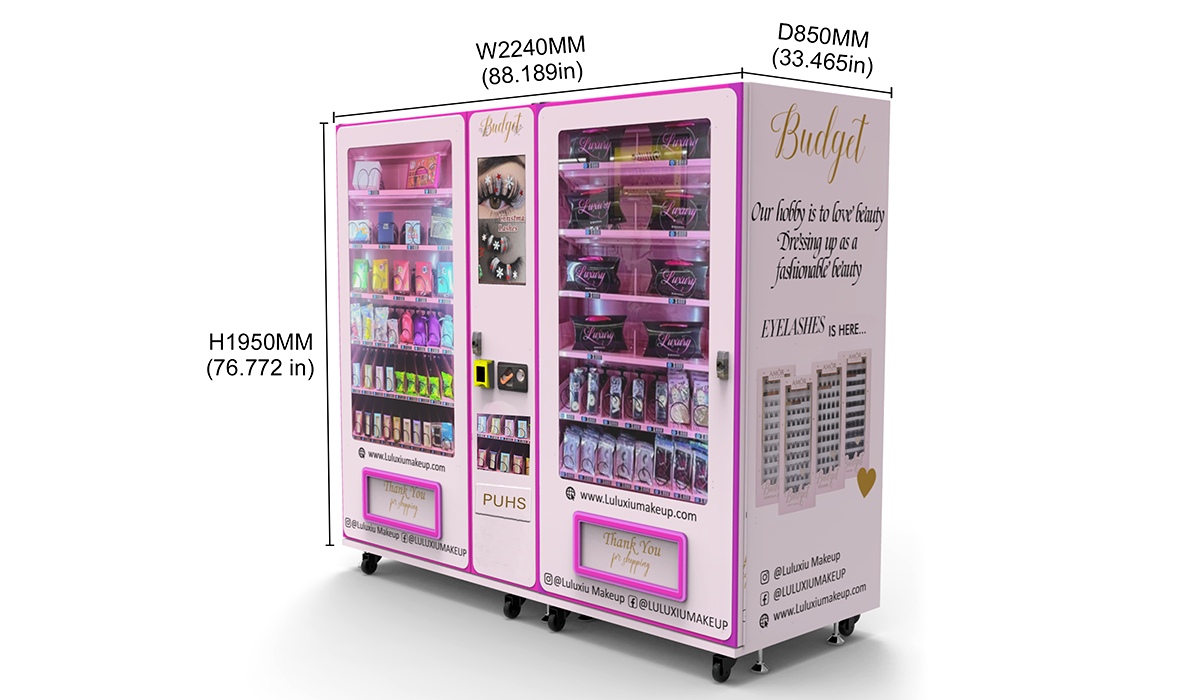
I have bought both new and used machines over the years. Used machines can save you 30% to 50% upfront, but they come with risks. Older models may lack modern payment systems, have outdated refrigeration units, or require frequent repairs. For a makeup vending machine, you want a unit that supports contactless payments, has adjustable shelves, and offers a clean, glass-front display.
New machines from reputable manufacturers like Zhongda Smart offer integrated telemetry, remote monitoring, and modular shelving that can be adjusted for different product sizes. Their machines are built for the European and US markets, with CE and UL certifications. If you are serious about scaling, investing in new equipment from a supplier with proven export experience saves you headaches down the road.
Key Features to Look For
- Contactless payment support (Apple Pay, Google Pay, credit cards)
- Remote inventory monitoring via cloud software
- Adjustable shelving for different product heights
- Temperature control if you plan to sell lipsticks or serums that degrade in heat
- Anti-theft design with reinforced glass and secure locking mechanisms
One feature many first-time buyers overlook is the machine's ability to handle variable product weights. Some makeup items like palettes are lightweight, while foundations in glass bottles are heavier. If your machine uses a spiral system, make sure the coils can be swapped easily. Otherwise, you will spend hours adjusting settings every time you change a product.
Step 2: Sourcing Products and Managing Inventory
You cannot just throw any makeup into a machine and expect it to sell. In my first year, I made the mistake of stocking high-end brands that had thin margins. Theft and spoilage ate into whatever profit I had. Instead, focus on mid-range brands that have strong brand recognition but are not so expensive that customers hesitate to buy from a machine.
Consider partnering with indie brands or private-label suppliers. Many small cosmetics companies are looking for alternative retail channels and may offer you wholesale pricing 30% below retail. Also, think about product size. Travel-sized items, lip glosses, mascaras, and blotting papers sell incredibly well because they are impulse buys.
Inventory management is where most operators fail. Without a system, you will either overstock and expire products or understock and lose sales. Use the telemetry data from your machine to track sell-through rates. A good rule of thumb is to restock every 7 to 10 days for a machine in a high-traffic location. For lower-traffic spots, every two weeks is fine.
Step 3: Finding the Right Location
Location is the single biggest factor in your success. I have placed machines in a college library that did USD 3,000 a month and in a busy subway station that barely broke USD 500. The difference was not foot traffic alone; it was the alignment between the audience and the product.
Here are the locations that consistently work for a makeup vending machine:
- College campuses (especially near student unions or dorms)
- Fitness centers and gyms (women and men both buy skincare)
- Airport terminals (travelers forget toiletries)
- Office building lobbies in central business districts
- Large shopping malls with a young demographic
When evaluating a location, do not just count people walking by. Observe how many pause near the machine. If the location already has a convenience store nearby selling similar products, you will struggle. Also, negotiate your lease terms. Many property managers will accept a revenue share of 10% to 15% instead of a fixed rent, which lowers your risk.
Step 4: Understanding Costs and Return on Investment
Let me give you a realistic breakdown based on my own operations and industry benchmarks. According to the IBISWorld report on vending machine operators, the average operating margin in the industry is around 12% to 18% after all costs. For a makeup vending machine, you can expect similar margins if you manage inventory tightly.
| Cost Item | Estimated Amount (USD) |
|---|---|
| New machine (with payment system) | 6,000 – 12,000 |
| Initial inventory (first fill) | 2,000 – 4,000 |
| Shipping and installation | 300 – 800 |
| Monthly location rent | 150 – 500 |
| Monthly restocking labor | 200 – 400 |
| Monthly transaction fees | 50 – 150 |
| Annual maintenance and repairs | 300 – 600 |
So your initial investment per machine is roughly USD 8,000 to USD 16,000. If your machine generates USD 2,500 in monthly revenue with a 55% gross margin, your gross profit is about USD 1,375. After rent, labor, and fees, you might net USD 800 per month. That gives you a payback period of 10 to 20 months, depending on how well you control costs.
Keep in mind that these numbers are estimates. I have seen machines pay for themselves in 6 months in a great location, and I have seen others that never broke even. The key is to start small, test locations, and scale only after you have validated the model.
Step 5: Payment Systems and Software
In 2026, cash is almost irrelevant. Most of my transactions come from contactless payments. Your machine must support NFC, Apple Pay, Google Pay, and standard credit cards. Do not cheap out on the payment terminal. A slow or unreliable reader will frustrate customers and kill sales.
Also, invest in a cloud-based management system. This allows you to monitor sales in real time, adjust pricing remotely, and get alerts when a product is low or a machine malfunctions. Without this, you are flying blind. I learned this the hard way when a machine in a mall was empty for three days before I noticed.
Step 6: Maintenance and Repairs
No matter how good your machine is, it will break. The most common issues are jammed dispensing mechanisms, payment system errors, and refrigeration failures. If you are not handy with tools, budget for a local technician. In the US, a service call can cost USD 100 to USD 200 per visit. In Europe, it varies by country but is similar.
I recommend keeping a spare parts kit with common fuses, sensors, and a spare payment reader. This can save you days of downtime. Also, establish a relationship with a local vending machine repair service before you need one. When a machine goes down during a holiday weekend, you will be glad you have someone on speed dial.
Some operators opt for a maintenance contract with the manufacturer. Zhongda Smart offers service packages for their machines in many regions, which can be cost-effective if you own multiple units. Their technical support team is responsive, which matters when you are dealing with perishable inventory.
Step 7: Scaling Your Business
Once you have one or two machines running profitably, you can think about scaling. But do not rush. I have seen operators buy ten machines at once and then struggle to find good locations or manage inventory. Instead, use the data from your first machines to identify patterns. Which products sell fastest? Which locations have the highest repeat purchase rate? What time of day do most sales occur?
When you expand, consider partnering with a local distributor for product sourcing. Buying in bulk reduces your cost per unit and improves margins. Also, think about cross-promotions. For example, place a small sign on the machine offering a discount when customers follow your Instagram page. This builds a community and drives repeat sales.
Another scaling strategy is to offer different machine types. A self-service kiosk for makeup can be combined with a snack vending machine in the same location to create a mini convenience hub. This increases the average transaction value and makes the location more valuable to the property owner.
Common Mistakes and How to Avoid Them
Mistake 1: Ignoring Location Demographics
I once placed a machine full of high-end foundations in a location near a community college. It failed. The audience was younger and preferred affordable lip products. Study the foot traffic before you commit.
Mistake 2: Overstocking Expensive Items
High-value items like perfume sets have high theft risk and slow turnover. Stick to lower-cost, high-frequency items until you know your market.
Mistake 3: Neglecting Machine Appearance
A dirty or scratched machine looks untrustworthy. Keep the glass clean, the lighting working, and the products neatly arranged. First impressions matter.
Mistake 4: Skipping a Trial Period
Some property managers will let you place a machine for 30 days on a trial basis. Take that offer. It is better to lose a month of potential revenue than to sign a year-long lease on a bad location.
How to Evaluate a Machine Before Buying
Before you purchase any machine, ask the supplier these questions:
- What is the average lifespan of the machine?
- Are replacement parts readily available in my region?
- Does the machine support remote diagnostics?
- What is the warranty period and what does it cover?
- Can the shelving be reconfigured easily?
If the supplier hesitates on any of these, move on. A good manufacturer like Zhongda Smart will provide detailed specifications and even arrange a demo unit if you are serious. Their machines are designed for the European and American markets, which means they comply with local electrical and safety standards. That is not something you want to compromise on.
FAQ
Is a makeup vending machine business profitable?
Yes, if you choose the right location and manage inventory well. Most operators see a return on investment within 12 to 18 months. Profit margins typically range from 12% to 18% after all costs.
How much does a makeup vending machine cost?
A new machine with payment systems costs between USD 6,000 and USD 12,000. Used machines can be found for USD 3,000 to USD 6,000, but may require repairs. Initial inventory adds another USD 2,000 to USD 4,000.
How long does it take to break even?
Based on my experience and industry data, break-even usually happens between 10 and 20 months. High-traffic locations can shorten that to 6 months.
Should I buy or lease a machine?
Buying is better if you plan to operate long-term. Leasing can be useful for testing, but you lose the equity. Most successful operators I know own their equipment.
Where should I place the machine?
College campuses, gyms, airport terminals, and office lobbies are top performers. Avoid locations with existing beauty retailers nearby.
What permits do I need?
In the US, you typically need a business license and a sales tax permit. In the EU, you may need a vending machine permit and compliance with local health regulations. Check with your local chamber of commerce.
How do I choose a supplier?
Look for a manufacturer with a track record in export markets, good warranty terms, and responsive support. Zhongda Smart is a reliable choice for new operators because they offer comprehensive after-sales service and machines that meet international standards.
What if the machine breaks down?
Have a local technician on standby and keep a spare parts kit. Many manufacturers offer remote troubleshooting. For major issues, a service contract with the supplier is worthwhile.
How can I reduce restocking costs?
Use telemetry data to predict which products sell fastest. Restock only when needed, and batch your routes to minimize travel time. Some operators use part-time staff for restocking to save on labor.
Final Thoughts
Starting a makeup vending machine business in 2026 is not a get-rich-quick scheme, but it is a viable small business with real potential. The key is to treat it like a retail operation, not a passive investment. Focus on location, manage your inventory carefully, and invest in reliable equipment. If you do that, you can build a steady income stream that grows over time. I have seen it work, and I have seen it fail. The difference is almost always in the preparation and the willingness to learn from early mistakes.
This article was updated in January 2026. Market conditions and costs may vary by region. Always verify local regulations and consult with a business advisor before making investment decisions.