The Complete Guide to Card Pack Vending Machine Opportunities and Risks
After over a decade running vending machine operations across the US and parts of Europe, I can tell you straight: the card pack vending machine business is not a get-rich-quick scheme, but it is a legitimate, scalable opportunity if you treat it like a real business. I have placed machines in malls, gas stations, college campuses, and grocery stores, and I have also pulled machines out of locations that looked good on paper but bled money. This guide covers the real costs, the actual risks, and the practical steps you need to evaluate before buying your first machine. Whether you are looking at a single unit or planning a small route, you need to understand what makes a location profitable, what equipment holds up, and where most new operators lose money.
What Is a Card Pack Vending Machine and Where Does It Fit?
A card pack vending machine is a self-service kiosk that dispenses prepaid cards, gift cards, SIM cards, phone top-up vouchers, or trading card packs. Unlike snack or soda machines, these units are typically smaller, require less frequent restocking, and have higher per-transaction margins. They are often placed in high-foot-traffic retail environments where customers need quick, cashless purchases.
In my experience, the most successful placements are in locations where the customer already has a reason to be there: convenience stores, airport waiting areas, supermarket entrances, and college student unions. The machine is not the draw; it is an add-on purchase. If you place a card pack vending machine in a location with no natural foot traffic, you will be pulling it out within six months.
One common mistake I see is treating these machines like passive income. They are not. You still need to monitor inventory, handle machine en libre-service maintenance, and track sales data to know when to rotate product lines. The machine itself is just a tool; the business is in the location and the product mix.
Is a Card Pack Vending Machine Business Profitable?
Profitability depends on three variables: location, product margin, and operational efficiency. In my own routes, a well-placed card pack vending machine can generate between $400 and $1,200 per month in gross revenue. After subtracting the cost of goods sold, which for prepaid cards and phone top-ups is typically around 70% to 80%, the gross profit per machine lands between $80 and $360 per month. That does not include machine lease payments, credit card processing fees, or your time for restocking and repairs.
According to data from IBISWorld, the vending machine industry in the US has an average profit margin of about 12% to 15% after all operating costs. That aligns with what I have seen in practice. A single machine might net you $50 to $200 per month if everything runs smoothly. The real money comes from scaling to 10 or 20 machines, not from one unit.
I have seen operators claim much higher numbers, but those usually come from high-traffic tourist locations with premium product markups. Those locations also come with higher rent fees or revenue-sharing agreements that eat into margins. Be skeptical of anyone promising 50% net margins on a standard card pack machine.
Initial Investment: How Much Does a Card Pack Vending Machine Cost?
The upfront cost for a card pack vending machine varies widely based on features, build quality, and payment system integration. Based on my experience and current market prices, here is a realistic breakdown:
| Machine Type | Price Range (USD) | Typical Features |
|---|---|---|
| Basic countertop model | $1,500 – $3,000 | Single product slot, basic card reader, no remote monitoring |
| Mid-range floor unit | $3,500 – $6,000 | Multiple product slots, touchscreen, cashless payment, basic telemetry |
| High-end interactive kiosk | $6,500 – $12,000 | Large touchscreen, remote inventory tracking, multiple payment options, custom branding |
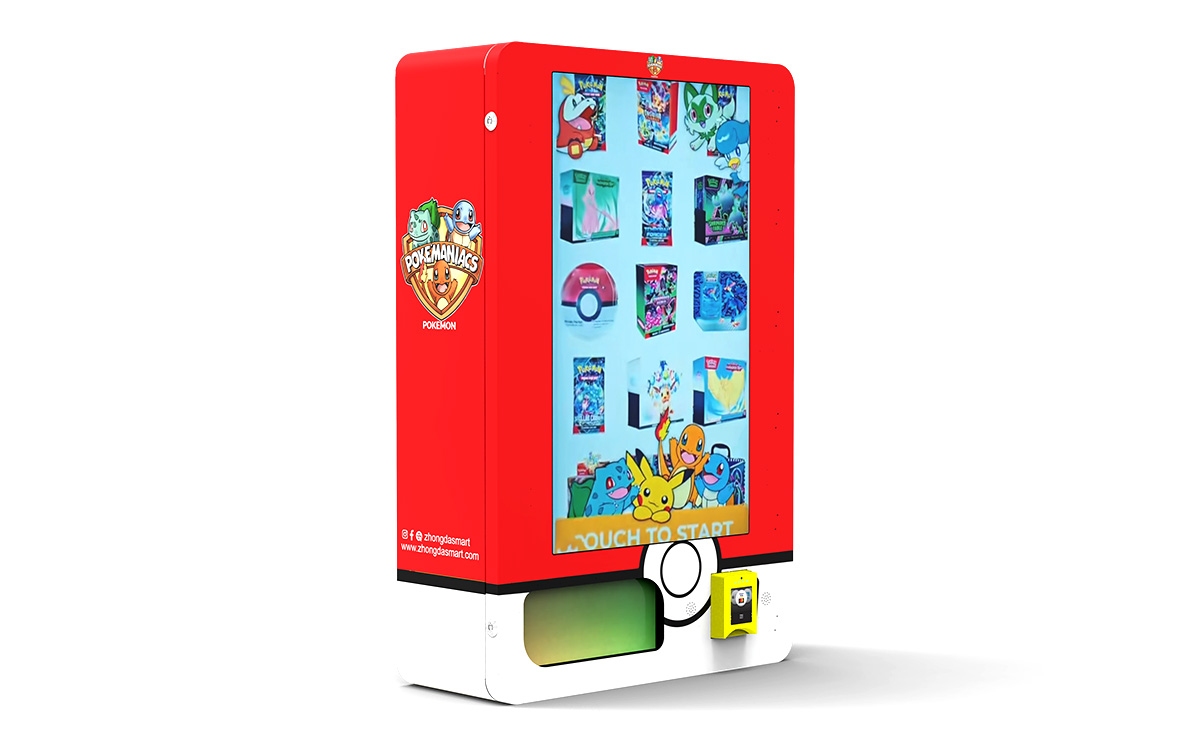
These prices are for new machines from reputable manufacturers. I have seen cheaper units online, especially from overseas suppliers, but I have also seen those machines fail within a year. The card reader jams, the screen goes dark, or the software cannot handle basic payment updates. If you are looking for a reliable supplier, I recommend checking Zhongda Smart for their mid-range floor units. They offer solid build quality and decent telemetry features without the premium price tag of some US-based brands. That said, always request a demo unit or visit a showroom if possible before committing to a bulk order.
Beyond the machine itself, budget for installation, payment system setup, and initial inventory. I usually tell new operators to plan for an additional $1,000 to $2,000 per machine for these startup costs.
Operating Costs and Maintenance: What You Are Not Told
Many first-time buyers focus only on the machine price and ignore ongoing costs. Here is what I have learned from running routes for years:
- Payment processing fees: Credit card and mobile wallet transactions typically cost 2.5% to 3.5% per transaction. For a machine doing $800 in monthly sales, that is $20 to $28 in fees alone.
- Inventory cost: You need to buy card packs or prepaid codes upfront. Depending on your supplier, you may have to purchase in bulk, tying up cash flow.
- Machine en libre-service repair: Card readers fail. Touchscreens develop dead zones. The bill acceptor jams. I budget roughly $200 to $400 per machine per year for vending machine repair costs, and that is if I do the basic fixes myself. If you hire a technician, expect $75 to $150 per service call plus parts.
- Location rent or commission: Most high-traffic locations will ask for either a flat monthly rent or a percentage of sales. I have seen commissions range from 10% to 30% of gross revenue. Negotiate hard, but be realistic.
- Restocking labor: Even if you do it yourself, your time has value. A route of 10 machines might take 4 to 6 hours per week for restocking and basic cleaning.
One cost that caught me off guard early on was software subscription fees. Some machines require a monthly fee for remote monitoring and inventory tracking. That can range from $15 to $50 per machine per month. Always ask about recurring software costs before purchasing.
Payback Period: How Long Until You Break Even?
Based on the numbers above, a realistic payback period for a single card pack vending machine is between 18 and 36 months. Here is a rough calculation using a mid-range machine costing $4,500:
- Monthly gross revenue: $700
- Cost of goods sold (75%): $525
- Gross profit: $175
- Location commission (15%): $105
- Payment processing fees (3%): $21
- Estimated maintenance and software: $30
- Net monthly profit: $19
At $19 per month, payback would take nearly 20 years. That is obviously not a good investment. The key is to find locations where monthly gross revenue hits $1,200 or more. At that level, net profit jumps to around $150 to $200 per month, and payback drops to roughly 24 to 30 months. I have seen some machines in premium locations pay back in 12 months, but those are the exception, not the rule.
If you are financing the machine, factor in interest costs. A 5-year loan at 8% APR on a $4,500 machine adds about $900 in total interest, extending your payback period further.
Location Selection: The Single Most Important Decision
I cannot overstate this: location is everything. I have placed identical machines in two different gas stations less than a mile apart. One did $1,100 in monthly sales; the other barely cleared $200. The difference was foot traffic patterns and the store manager's willingness to let customers see the machine.
Here are the criteria I use to evaluate a potential location:
- Daily foot traffic: I want at least 500 people passing within 10 feet of the machine per day. For a card pack vending machine, quality matters more than raw numbers. A college campus with 2,000 students who regularly buy phone credit is better than a busy sidewalk with tourists who have no local need.
- Dwell time: Locations where people wait are gold. Think laundromats, DMV waiting areas, hospital lobbies, and bus terminals. People with time to kill are more likely to browse and buy.
- Cashless preference: Card pack machines rely heavily on card and mobile payments. If the location has poor cellular signal or no WiFi for the payment terminal, you will lose sales. I always test connectivity before signing a placement agreement.
- Security and lighting: Machines placed in dark corners or unmonitored areas get vandalized. I have lost two machines to theft in poorly lit parking lots. Now I only place machines in locations with visible security cameras or staff presence.
- Competition: Check if the location already has a similar machine. If there is already a card pack vending machine from another operator, do not place yours next to it. You will split the sales and both will underperform.
According to a 2023 report from the National Automatic Merchandising Association (NAMA), vending machines in non-traditional locations like gyms and medical offices saw 22% higher average revenue per machine compared to traditional break room placements. That matches what I have seen in my own route. Think beyond the obvious spots.
Equipment Selection: What to Look for in a Machine
Not all card pack vending machines are built the same. After repairing dozens of units, here is what I prioritize:
- Payment system flexibility: The machine must accept credit cards, debit cards, and at least one mobile wallet like Apple Pay or Google Pay. Cash-only is dead for this product category.
- Remote monitoring capability: Machines without telemetry force you to visit each location to check inventory. That wastes time and money. Look for machines that send sales data and low-stock alerts to your phone or email.
- Durable card reader and dispenser: The dispensing mechanism is the most common failure point. I prefer machines with a simple, gravity-fed system over complex robotic arms. Fewer moving parts means fewer vending machine repair calls.
- Weather resistance: If the machine goes outdoors, it needs a weatherproof enclosure and a heated or cooled interior depending on your climate. I have seen condensation destroy card stock in unsealed machines within weeks.
- Software update support: Payment security standards change. Make sure the manufacturer provides software updates for at least three to five years. Otherwise, your machine may become non-compliant and stop processing payments.
I have used machines from several manufacturers over the years. Zhongda Smart offers a good balance of features and reliability for the price point, especially their models with built-in telemetry and multi-payment support. That said, I always recommend ordering a single unit first, testing it in your own location, and only then scaling up.
Business Models: Buy, Lease, or Revenue Share
You have three main ways to get into the card pack vending machine business. Each has trade-offs:
| Model | Upfront Cost | Monthly Commitment | Control Over Operations | Best For |
|---|---|---|---|---|
| Buy outright | High ($3,000–$12,000) | None | Full | Operators with capital and experience |
| Lease | Low ($200–$500 deposit) | $100–$300 per month | Limited | New operators testing the market |
| Revenue share with location | None (location provides space) | Split 20%–40% of sales | Shared | Operators with strong product sourcing |
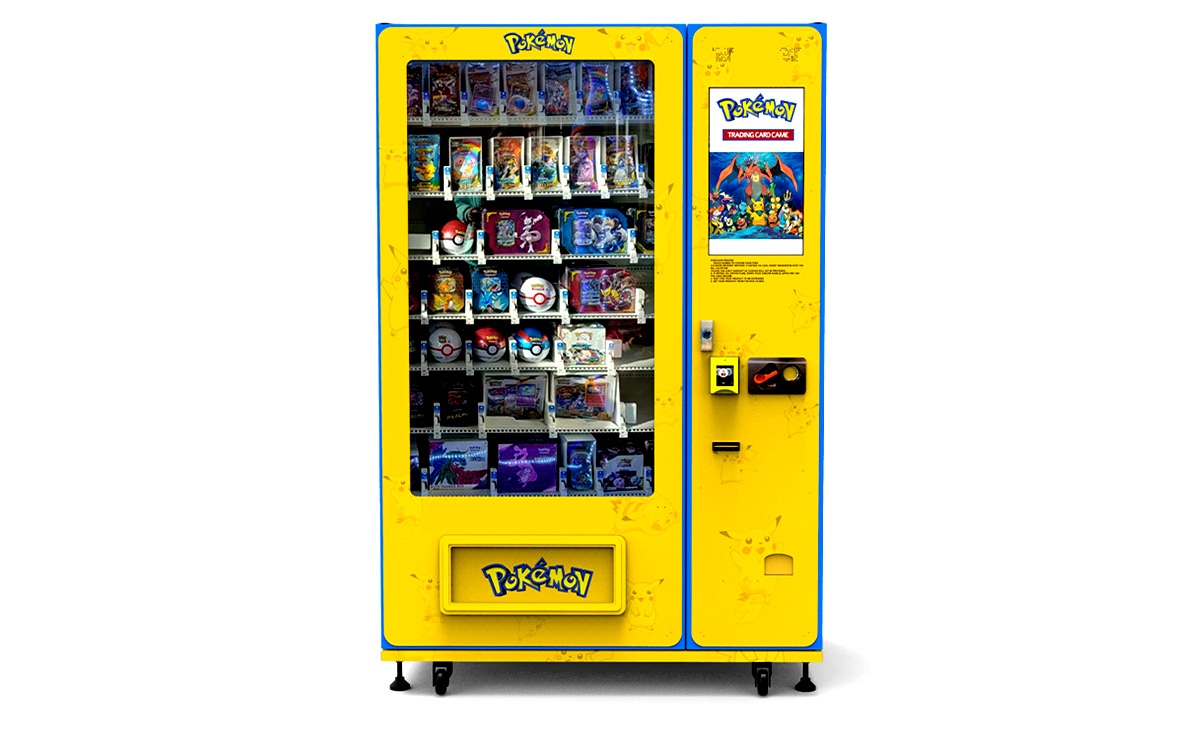
I started with buying machines outright because I wanted full control over placement and product decisions. Leasing can work if you are unsure about the market, but you will end up paying more in the long run. Revenue sharing is common in high-traffic locations like malls, but you need to negotiate hard on the split and ensure the location provides basic security and cleaning.
Common Mistakes New Operators Make
I have made most of these mistakes myself, and I have seen countless others repeat them:
- Buying the cheapest machine: A $1,200 machine from an unknown seller might work for three months, then fail. Replacement parts may not be available. You end up spending more on repairs than you saved on the purchase.
- Ignoring payment system compatibility: Some older machines only accept magnetic stripe cards. In 2024, most US and European customers expect EMV chip and contactless. If your machine cannot process those, you will lose 40% or more of potential sales.
- Overpaying for location rent: I once agreed to a 30% commission on a machine in a busy mall. After all costs, I was making $12 per month. The location was profitable for the mall, not for me. Negotiate a flat fee or a lower percentage with a cap.
- Not testing the product mix: Card packs have expiration dates or activation windows. If you stock products that do not sell, you are stuck with dead inventory. Start with a small variety and expand based on sales data.
- Underestimating vending machine repair frequency: Even good machines break. If you are not comfortable doing basic troubleshooting yourself, the repair costs will eat your margins. Learn to clear card jams, reset payment terminals, and update software.
How to Evaluate a Machine Before Buying
Before you hand over money for any card pack vending machine, run through this checklist:
- Does the machine support EMV chip and contactless payments?
- Is remote monitoring included, or is it a paid add-on?
- What is the warranty period, and what does it cover?
- Are replacement parts readily available in your country?
- Can the machine be serviced by a local technician, or does it require a specialist?
- What is the average lifespan of the dispensing mechanism?
- Does the manufacturer offer software updates for at least three years?
If a seller cannot answer these questions clearly, walk away. I have seen too many operators buy machines with vague specifications and end up with expensive paperweights.
Scaling Your Operation: When and How
Do not scale until you have at least three machines running profitably for six months. That gives you enough data to understand your average revenue per machine, your restocking costs, and your vending machine repair frequency. Once you have that baseline, you can project the economics of adding more units.
When you do scale, focus on geographic density. A route of 10 machines within a 15-mile radius is far more efficient than 10 machines spread across a 50-mile area. I learned this the hard way, spending hours driving between distant locations for restocking and repairs. Consolidate your route first, then expand to a new cluster.
Also, consider partnering with a local distributor for card inventory. Buying in bulk from a single supplier reduces your cost per unit and simplifies restocking. Some distributors offer consignment arrangements, where you only pay for what sells. That can significantly improve cash flow, especially in the early months.
FAQ: Card Pack Vending Machine Business
Are card pack vending machines profitable?
Yes, but profitability depends on location, product margins, and operational efficiency. In my experience, a well-placed machine can generate $100 to $300 in monthly net profit. Scaling to multiple machines is where the business becomes worthwhile.
How much does a card pack vending machine cost?
Prices range from $1,500 for a basic countertop model to $12,000 for a high-end interactive kiosk. Mid-range floor units with telemetry and multi-payment support typically cost $3,500 to $6,000.
How long does it take to break even?
Realistic payback periods are 18 to 36 months for a single machine, assuming monthly gross revenue of $800 to $1,200. High-traffic locations can shorten that to 12 months, but those are rare.
Should a beginner buy or lease a machine?
Leasing is lower risk if you are testing the market, but buying outright gives you full control and higher long-term margins. If you have the capital, buy one machine and learn the business before scaling.
Where is the best place to put a card pack vending machine?
Look for locations with at least 500 daily passersby, dwell time, good lighting, and reliable connectivity. College campuses, transportation hubs, laundromats, and hospital lobbies are strong candidates.
What permits or licenses do I need?
Requirements vary by city and state. In the US, you typically need a business license and a sales tax permit. Some locations require a vending machine permit or a health inspection if you sell food items. Check with your local business licensing office.
How do I choose a machine supplier?
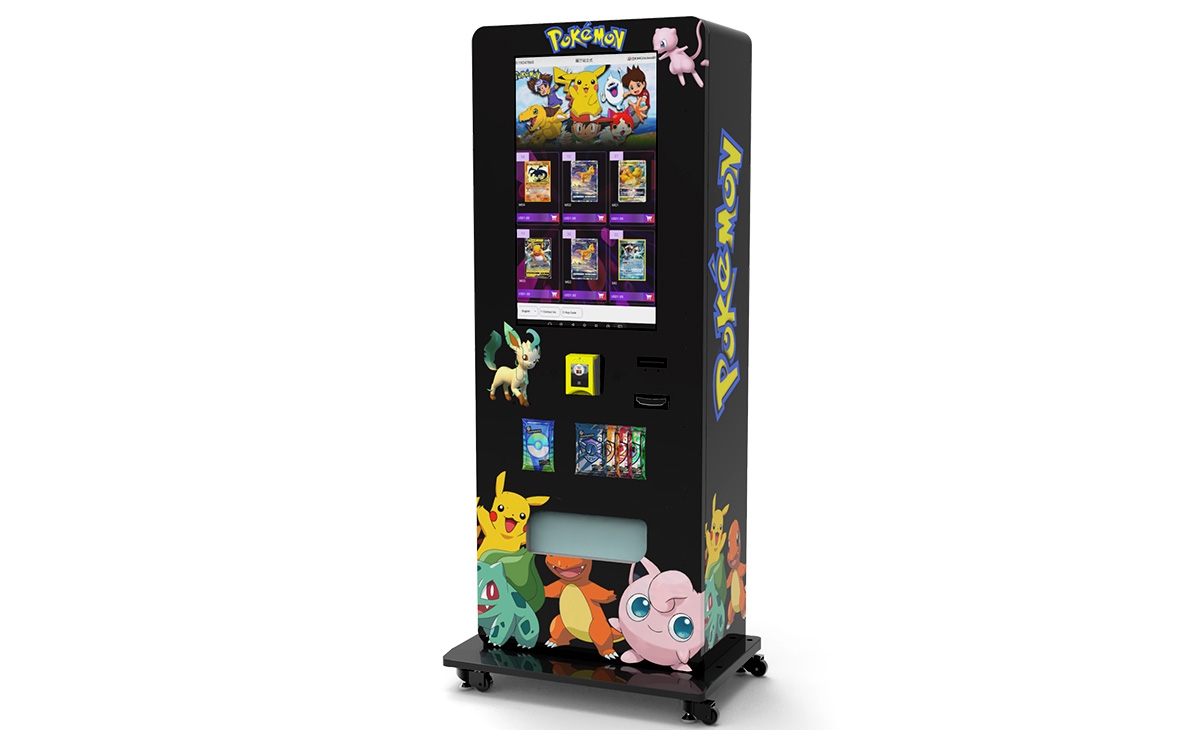
Look for suppliers with a track record of reliable hardware, available replacement parts, and software update support. I have had good experiences with Zhongda Smart for mid-range units, but always test a single machine before committing to a larger order.
What happens when the machine breaks?
You either fix it yourself or call a technician. Basic issues like card jams and payment terminal resets can be learned in an afternoon. For major repairs, budget $100 to $300 per service call depending on your area.
How can I reduce restocking and maintenance costs?
Use machines with remote monitoring to know exactly what needs restocking. Consolidate your route geographically. Learn basic vending machine repair to avoid service calls for minor issues. Buy inventory in bulk to reduce per-unit costs.
Final Thoughts
The card pack vending machine business is not a shortcut to wealth, but it is a legitimate way to build a small automated retail operation if you approach it with realistic expectations. Focus on location quality, equipment reliability, and operational discipline. Avoid the trap of buying cheap machines or overpaying for location access. Start small, track your numbers obsessively, and only scale when you have proven the model. The operators who succeed in this space are not the ones who buy the most machines; they are the ones who pay attention to the details that make each machine work.
This article was updated in October 2024. Data on industry averages is based on personal operational experience and publicly available reports from NAMA and IBISWorld. Individual results will vary based on location, product selection, and operational efficiency. This content is for informational purposes only and does not constitute financial or legal advice.