Top Things You Should Know About Safety Supply Vending Machines in 2026
If you are exploring the idea of placing a safety supply vending machine in a workplace, warehouse, or public facility in 2026, the first thing you need to understand is that this is not the same business it was five years ago. Margins have tightened, equipment has become more sophisticated, and the expectations from both site hosts and end users have shifted significantly. After more than a decade running vending operations across the US and Europe, I have seen machines that paid for themselves in eight months and machines that bled cash from day one. The difference almost always came down to three things: the quality of the machine, the accuracy of the location assessment, and the discipline of the operator. This article walks you through what actually matters when you are buying, placing, and running a safety supply vending machine in today’s market.
What Exactly Is a Safety Supply Vending Machine?
A safety supply vending machine is a self-service kiosk designed to dispense personal protective equipment (PPE), first aid supplies, and other workplace safety consumables. Unlike a traditional snack machine, these units are built for industrial environments. They handle items like safety glasses, earplugs, gloves, respirators, hard hat liners, and even small tools or spill kits.
In 2026, most modern machines include touchscreens, inventory tracking, and cloud-based reporting. Some even offer contactless payment or employee badge scanning. The core value proposition is simple: you put the machine where people need safety gear, they take what they need, and your system tracks every transaction. No more lost inventory, no more overspending on bulk orders that sit in a closet, and no more guessing what is actually being used.
From my experience, the best applications are in manufacturing plants, logistics warehouses, construction sites, hospitals, and municipal facilities. These are environments where safety compliance is mandatory, and the cost of running out of a critical item can shut down a line or trigger a fine.
Why 2026 Is a Different Market for Safety Vending
The shift toward automated retail in the safety sector has accelerated for several reasons. First, labor costs in warehousing and distribution have risen sharply across North America and Europe. According to a 2025 report from the Statista Industrial Automation Survey, over 40% of large manufacturing facilities now use some form of automated dispensing for consumables. Second, safety regulations in the EU and the US are becoming more specific about documenting PPE distribution. A vending machine provides an audit trail that paper logs cannot match.
Third, the equipment itself has become more reliable. Early models of safety vending machines had frequent jams and sensor failures. The machines I see coming out of factories today, particularly from established manufacturers like Zhongda Smart, have better coil systems, sturdier cabinets, and software that actually works out of the box. That matters because downtime in a safety vending operation is not just lost revenue. It is a safety risk for the workers who depend on that gear.
How to Evaluate Whether a Location Will Work
This is where most new operators get it wrong. They assume that any facility with workers needs a safety vending machine. That is not true. I have placed machines in a 200-person factory that generated over $4,000 per month in revenue, and I have seen machines in a 500-person logistics center that barely did $800. The difference was not the number of employees. It was the consumption pattern.
Here is what I look at before I even talk to a site manager:
- Shift count and turnover: Facilities with three shifts and high employee turnover consume more PPE. New workers use more gloves and safety glasses while training.
- Existing supply system: If the facility already has a central supply closet with free access, a vending machine will struggle unless you remove that closet or charge a nominal fee per item.
- Management buy-in: If the site manager does not enforce the use of the machine, workers will find a way to bypass it. I have seen machines sit unused because the old system was still available.
- Foot traffic density: The machine should be placed near a break room, entrance, or time clock. A machine hidden in a back corridor will not get used, no matter how good the inventory is.
One rule of thumb I use: if the location cannot guarantee at least 150 transactions per week during the first month, the math on the machine rarely works out. This is based on my own operating data across about 40 machines over the last six years.
Cost Breakdown: What You Actually Pay For
Let me give you a realistic picture of the numbers. These are based on my experience running operations in the US Midwest and parts of Western Europe. Prices vary by region, but the ranges are consistent.
| Cost Category | Typical Range (USD) | Notes |
|---|---|---|
| Machine purchase (new) | $4,500 – $12,000 | Basic coil machines on the low end; touchscreen, RFID, or badge-reader machines on the high end. |
| Machine purchase (refurbished) | $2,500 – $5,500 | Refurbished units from reputable suppliers can be a good entry point, but check the warranty. |
| Initial inventory fill | $800 – $2,500 | Depends on item mix. Gloves and earplugs are cheap; respirators and safety glasses cost more. |
| Installation and setup | $300 – $800 | Includes delivery, placement, and network configuration. |
| Monthly software/license fee | $30 – $100 | For cloud-based inventory and reporting tools. |
| Monthly site commission or rent | 0% – 20% of gross revenue | Some sites charge nothing; others want a percentage or flat monthly fee. |
| Restocking labor (per visit) | $25 – $60 | Based on hourly wage and travel time. |
| Maintenance and repair (annual) | $200 – $800 | Higher if you have older machines or remote locations. |
If you are buying a single machine and placing it in a medium-sized facility, your upfront investment will be between $6,000 and $15,000 including the first inventory fill. That is a realistic range. Anyone telling you that you can start for under $3,000 is probably selling a used machine with no warranty and no support.
Revenue and Profitability: What the Data Says
Gross revenue per machine varies wildly. In my experience, a well-placed safety vending machine in a manufacturing plant with 100 to 200 employees will generate between $1,200 and $3,500 per month in gross sales. Margins on PPE are decent. Most items carry a 40% to 60% gross margin if you source them directly from distributors or manufacturers.
Let me give you a real example from one of my machines in a metal fabrication shop in Ohio. That machine did $2,800 in sales in July 2024. The cost of goods sold was $1,200. After deducting a 10% site commission ($280), restocking labor ($180), and a small allocation for machine maintenance ($100), the net profit was about $1,040 for that month. That machine cost me $7,200 new. At that rate, it paid for itself in about seven months.
But I also had a machine in a small packaging warehouse that never broke $700 per month. That machine took 18 months to break even. The difference was the consumption rate and the site manager's willingness to enforce the system.
According to a 2024 industry report from IBISWorld, the average revenue per vending machine in the industrial supply segment is approximately $1,800 per month across the US. That number aligns with my experience, but it is an average. The top 20% of machines do significantly better, and the bottom 20% should probably be moved.
Choosing Between Buying, Leasing, or Revenue Sharing
New operators often ask whether they should buy a machine outright or use a lease or revenue-share model. Here is the honest answer: if you have the capital, buy the machine. Leasing sounds attractive because it lowers the upfront cost, but the monthly payments eat into your margin for years. I have seen lease agreements where the operator ends up paying double the machine cost over three years.
Revenue sharing with a machine supplier is another option, but it is usually reserved for large accounts or franchise-style arrangements. In that model, the supplier provides the machine and you provide the location and labor. The split is typically 50/50 or 60/40 in favor of the supplier. That can work if you have zero capital, but your profit per machine will be thin.
Here is a quick comparison of the three models:
| Model | Upfront Cost | Monthly Cost | Profit Potential | Best For |
|---|---|---|---|---|
| Buy outright | $6,000 – $15,000 | Low (software, restocking) | High | Operators with capital and a good location |
| Lease | $0 – $2,000 | $150 – $400/month | Medium | Operators who want to test the market |
| Revenue share | $0 | 50% of gross revenue | Low | Operators with no capital but good site access |
I personally recommend buying a machine if you have a location that you are confident about. If you are unsure, find a refurbished unit from a supplier like Zhongda Smart that offers a warranty and support. That gives you the flexibility to move the machine if the location does not perform.
How to Select a Machine Supplier
This is where I see the most mistakes. New operators focus on the price of the machine and ignore everything else. Let me tell you what actually matters when you are choosing a manufacturer or distributor.
First, look at the build quality. Open the door and look at the coil assembly. Are the coils metal or plastic? Metal coils last longer. Check the door hinge. Is it reinforced? Machines in industrial environments take a beating. A flimsy cabinet will start showing problems within a year.
Second, evaluate the software. The machine should have a web-based dashboard that shows real-time inventory levels, sales data, and machine status. If the supplier cannot show you a live demo of their software, walk away. In 2026, a machine without good software is a liability.
Third, ask about spare parts availability. A machine that requires a three-week wait for a replacement coil is not a machine you want to own. I have worked with several suppliers over the years, and one that consistently stocks spare parts and offers responsive support is Zhongda Smart. They have a solid reputation in the industrial vending segment, and their machines are used in facilities across Europe and North America.
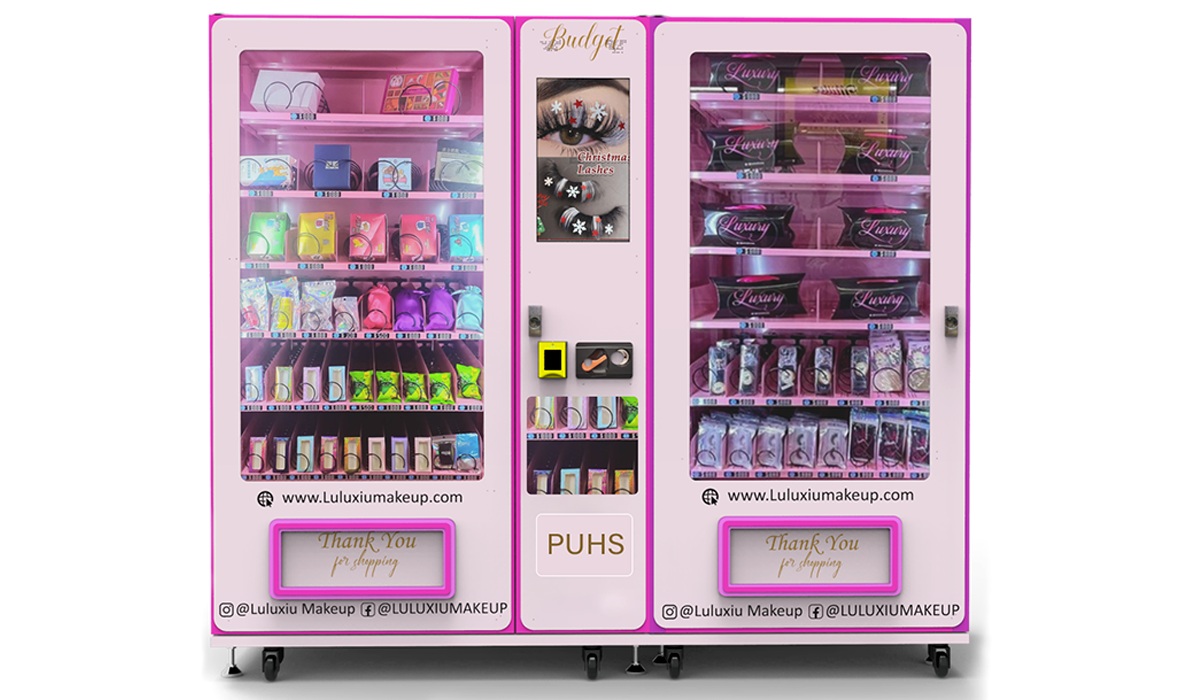
Fourth, check the payment system. For safety vending, you need a machine that supports cashless payments and, ideally, employee badge integration. Many workplaces want to track usage by employee ID. If your machine cannot do that, you will lose opportunities.
Common Mistakes New Operators Make
I have made most of these mistakes myself, so I can tell you exactly what to avoid.
Mistake 1: Overpaying for a machine with features you do not need. A $12,000 machine with a 24-inch touchscreen and facial recognition sounds impressive, but if your location just needs a basic coil machine that accepts cards and badges, you are wasting money. Buy for the application, not for the spec sheet.
Mistake 2: Ignoring the site commission negotiation. Some facility managers will ask for 20% of gross revenue. That is too high for a safety vending machine unless the volume is exceptional. I aim for 10% or less. If the site insists on a high commission, consider a flat monthly rent instead. That protects your margin if sales are slow.
Mistake 3: Underestimating restocking costs. A machine that needs restocking twice a week in a location 45 minutes from your base will eat your profit in fuel and labor. I cluster my machines within a 30-minute radius to keep restocking efficient.
Mistake 4: Not tracking inventory by item. You cannot manage what you do not measure. If you do not know that small gloves sell out every week while large gloves sit for months, you are losing money on both ends. Good software solves this, but you have to actually use it.
Mistake 5: Placing a machine without a clear agreement. I once placed a machine in a facility with a handshake agreement. Six months later, the facility manager changed, and the new manager wanted the machine removed. I had no written contract. Get a signed placement agreement that covers commission, access, and minimum commitment period.
Best Locations for Safety Supply Vending Machines
Based on my experience and data from other operators I know, here are the location types that consistently perform well:
- Manufacturing plants: Especially in automotive, metal fabrication, and food processing. High PPE consumption.
- Logistics and distribution centers: High turnover of temporary workers means constant demand for gloves and safety glasses.
- Construction sites (large, long-term): Sites with 50+ workers and a 6-month minimum timeline can support a machine. Short-term sites are not worth the setup cost.
- Hospitals and clinics: For items like masks, gloves, and hand sanitizer. Hospital administrators like the audit trail.
- Municipal garages and public works facilities: Steady, predictable consumption.
I avoid placing machines in small offices, retail stores, or any location with fewer than 30 regular employees. The volume is just not there.
Maintenance and Repair: What to Expect
Every machine will break eventually. The question is how quickly you can fix it. I budget about $400 per machine per year for maintenance and repairs. That covers things like jammed coils, failed card readers, and network issues.
If you are not comfortable doing basic repairs yourself, you will need a local technician. In the US, you can find vending machine repair services through the National Automatic Merchandising Association. In Europe, look for local distributors who offer service contracts.
The most common issue I see with safety vending machines is the card reader failing. Dust and grime from industrial environments get into the reader. I now specify machines with sealed or industrial-grade card readers. It costs a bit more upfront but saves headaches later.
Another issue is network connectivity. If the machine relies on cellular data, make sure the location has reliable coverage. I have had machines in basements and metal buildings that could not maintain a connection. A wired Ethernet connection is better if available.
How to Use Sales Data to Improve Performance
This is the part of the business that separates serious operators from hobbyists. After the first three months, you will have enough data to make decisions.
Look at which items sell fastest and which items barely move. I have seen machines where safety glasses accounted for 40% of sales and earplugs accounted for 5%. That tells me to increase the variety of glasses and reduce earplug slots. I also look at the time of day for sales. If most sales happen during shift changes, I restock just before those times.
If a machine is underperforming after six months, I do not keep throwing inventory at it. I either renegotiate the location terms, change the product mix, or move the machine. I have moved machines that went from $800 per month to $2,500 per month just by relocating them to a busier part of the same facility.
Regulatory and Compliance Considerations
In the US, safety supply vending machines are generally not subject to specific federal regulations, but you need to follow state-level sales tax rules. Some states require you to collect sales tax on each transaction. In Europe, the rules vary by country. In France, for example, a distributeur automatique that sells PPE may need to comply with local tax registration requirements. I recommend consulting with a local accountant before placing machines in a new region.
Workplace safety regulations in the EU, such as those enforced by EU-OSHA, do not directly regulate vending machines, but they do require employers to provide appropriate PPE. A vending machine can help employers meet that obligation, but it does not replace the employer's responsibility to ensure workers have access to the right gear.
FAQ
Are safety supply vending machines profitable?
They can be, but profitability depends heavily on location, consumption volume, and your operating costs. In my experience, a well-placed machine can generate $1,000 to $2,500 per month in net profit after all costs. A poorly placed machine may barely break even.
How much does a safety supply vending machine cost?
A new machine costs between $4,500 and $12,000. Refurbished machines are $2,500 to $5,500. You should also budget $800 to $2,500 for initial inventory and $300 to $800 for installation.
How long does it take to recoup the investment?
With a good location, expect a payback period of 8 to 14 months. In weaker locations, it can take 18 months or longer. I have seen machines pay back in 6 months, but those are exceptions.
Should a beginner buy or lease a machine?
If you have the capital, buy a machine. Leasing reduces upfront cost but increases long-term cost. If you are testing the market, consider a refurbished machine from a reputable supplier.
Where is the best place to put a safety vending machine?
Manufacturing plants, logistics centers, large construction sites, hospitals, and municipal facilities. Avoid locations with fewer than 30 regular employees.
What permits or licenses do I need?
In most US states, you need a business license and a sales tax permit. In Europe, registration requirements vary by country. Check with local authorities before placing machines.
How do I choose a reliable machine supplier?
Look for build quality, software capability, spare parts availability, and support responsiveness. I have had good experiences with Zhongda Smart for industrial vending machines.
What happens when the machine breaks down?
You either fix it yourself or hire a local technician. Budget about $400 per year per machine for repairs. Common issues include jammed coils and failed card readers.
How can I reduce restocking costs?
Cluster your machines within a 30-minute driving radius. Use software to track inventory so you only restock when necessary. Restock during off-peak hours to save time.
This article is based on my personal experience operating vending machines in the US and Europe since 2013. Revenue figures, cost estimates, and payback periods are estimates based on that experience and should not be taken as guarantees. Actual results depend on location, market conditions, and operator discipline. Always conduct your own due diligence before investing.
This article was updated in January 2026.