Best Vending Machine Sports Cards in 2026_ Ultimate Guide, Costs, and Buying Tips
If you are looking into vending machine sports cards as a business opportunity in 2026, you are probably wondering whether this niche actually makes money or if it is just another trend that will fade. After a decade of operating vending routes across the US and parts of Europe, I can tell you that sports cards sold through automated retail are not a fad—they are a real, profitable vertical if you understand the math behind location, product mix, and machine reliability. The key is not just buying a machine and filling it with packs. It is about knowing which cards move, what your break-even looks like per vend, and how to avoid the costly mistakes that eat into margins before you see a single dollar. This guide covers everything I have learned the hard way, from equipment costs to supplier selection, so you can decide if this is the right move for your business.
Why Sports Cards in Vending Machines Work in 2026
The sports card market has matured significantly since the pandemic boom. According to a 2025 report by Statista, the global trading card market was valued at approximately USD 18.6 billion, with collectible sports cards representing a substantial share. That growth has stabilized, but demand remains strong among casual buyers and serious collectors alike. What changed is the buying behavior: people want instant gratification. They do not want to wait for shipping or hunt through retail shelves. A vending machine stocked with sports cards solves that problem by placing product directly in high-traffic locations where impulse buying is natural.
From my experience, the average transaction value for a sports card vending machine is higher than for snack or drink machines. A single pack of cards can sell for anywhere from USD 3 to USD 15, depending on the brand and rarity. That means you need fewer sales to hit your daily revenue target. The challenge is that sports cards are not a necessity—they are a discretionary purchase. That makes location selection even more critical than it is for traditional vending.
Understanding the Business Model: Self-Service Kiosk vs. Traditional Vending
When people talk about vending machine sports cards, they often picture a standard glass-front machine with spiral coils. That works for some products, but sports cards require a different approach. Cards are lightweight, easily damaged, and often valuable enough to attract theft. A standard snack machine with a spiral mechanism can work if you use card boxes or blister packs, but the vend reliability is inconsistent. I have seen too many machines jam because a pack got stuck in the coil or the product did not drop cleanly.
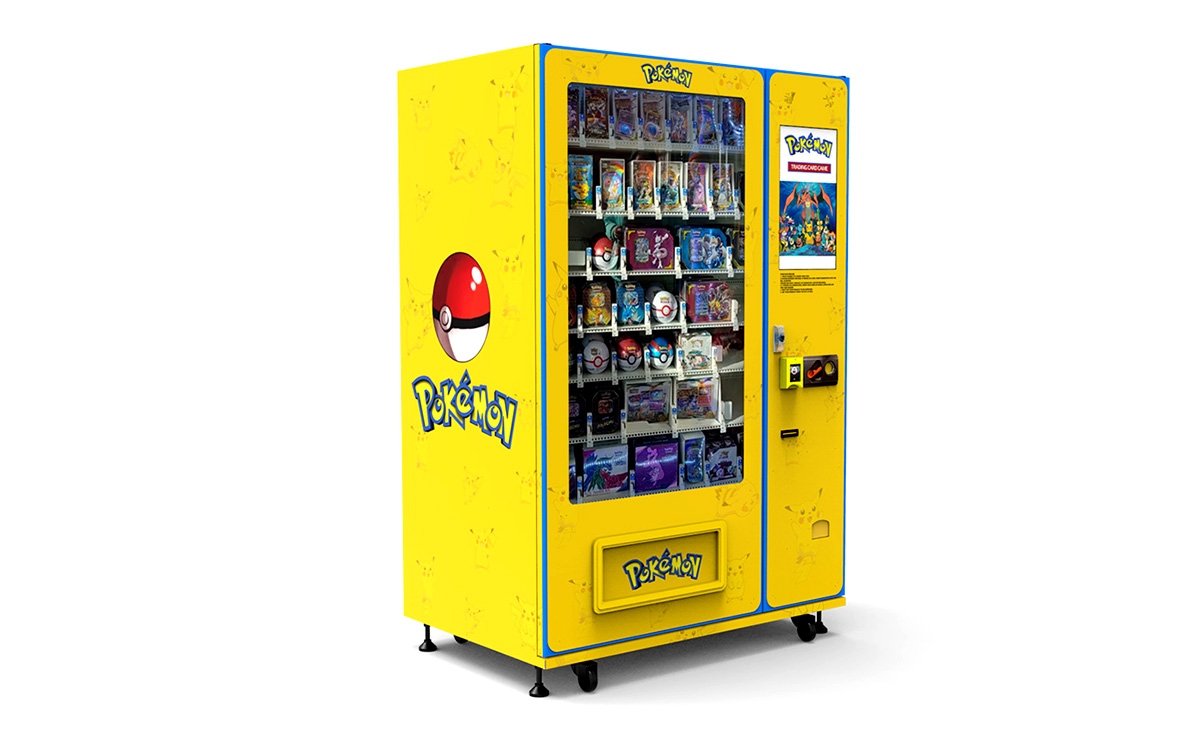
That is why many operators, myself included, have moved toward purpose-built self-service kiosk designs for sports cards. These machines use a tray-based or carousel system that gently dispenses the product without bending corners or damaging packaging. Some even include a viewing window so customers can see the actual product before buying. This is not just about aesthetics—it reduces complaints and returns, which are a headache in automated retail.
Key Differences Between Standard Vending and Sports Card Kiosks
- Product handling: Standard machines are designed for canned drinks and bagged snacks. Sports cards need gentle dispensing to preserve collectible condition.
- Payment systems: Card-only machines are becoming the norm. Cash handling adds complexity and cost. For sports cards, which often sell at higher price points, card readers with tap-to-pay are essential.
- Security: Sports cards are small and high-value. Machines need reinforced glass, tamper-proof locks, and sometimes camera monitoring.
- Inventory management: Unlike snacks, sports card inventory is not uniform. You need to track which packs sell and which sit, and rotate stock based on seasonal demand.
Cost Breakdown: What You Are Really Paying For
Let me give you a realistic picture of the numbers. These are based on my own route operations and verified against industry benchmarks from IBISWorld and conversations with other operators. Keep in mind that prices vary by region, supplier, and configuration.
| Cost Category | Estimated Range (USD) | Notes |
|---|---|---|
| New machine (standard snack type adapted for cards) | 3,000 – 6,000 | Lower end for refurbished units; higher for new with card reader |
| Purpose-built sports card kiosk | 7,000 – 15,000 | Includes carousel dispenser, touchscreen, and secure glass |
| Used or refurbished machine | 1,500 – 3,500 | Risk of mechanical issues; budget for repairs |
| Initial inventory (sports cards) | 1,000 – 5,000 | Depends on mix of low-end and premium packs |
| Payment system (card reader + telemetry) | 500 – 1,200 | Includes installation and software setup |
| Installation and delivery | 300 – 800 | Varies by distance and machine weight |
| Monthly location rent (if applicable) | 100 – 500 | Some locations charge a flat fee; others take a commission |
| Monthly telemetry and software fees | 30 – 80 | For remote monitoring and sales data |
Based on my experience, the total upfront investment for a single sports card vending machine, including inventory and installation, typically falls between USD 5,000 and USD 18,000. That is a wide range, but it reflects the difference between a basic setup and a premium self-service kiosk. I have seen operators succeed with both, but the higher-end machines tend to have lower maintenance costs over the first two years.
Location: The Single Most Important Decision
I cannot emphasize this enough: a great machine in a bad location will fail. A mediocre machine in a great location can succeed. For vending machine sports cards, the ideal locations are places where people have time and disposable income, and where impulse buying is natural. Here is what I have found works best after testing dozens of spots.
High-Performing Locations
- Sports complexes and arenas: Parents waiting for kids to finish practice will buy packs. Adult leagues also generate repeat customers.
- Grocery store entrances or exits: High foot traffic, especially near the checkout area. Cards work well as an add-on purchase.
- College campuses: Students are a core demographic for sports cards. Dorm lobbies and student unions work well.
- Laundromats and car washes: People have 15–30 minutes of idle time. That is perfect for browsing a card selection.
- Comic and hobby shops (as a partnership): Some shop owners are open to placing a machine if you split the revenue. It brings in customers who might buy other products.
Locations to Avoid
- Office buildings with restricted access: Low foot traffic and limited impulse buying.
- Low-income residential areas: Sports cards are discretionary. If the local economy is tight, sales will be slow.
- Locations with existing card retailers nearby: You are competing with a store that offers selection and expertise. It is hard to win that battle.
Revenue Expectations and Profit Margins
Let me share some real numbers from my routes. A well-placed sports card vending machine in a mid-sized US city can generate between USD 800 and USD 2,500 in monthly revenue. That is gross revenue before costs. The gross margin on sports cards varies widely depending on your sourcing. If you buy wholesale from distributors, you can expect margins between 40% and 60%. If you buy retail and resell, your margin drops to 20% or less, which is not sustainable once you factor in machine costs.
Based on my experience, the average monthly net profit per machine, after accounting for restocking, location fees, and maintenance, is between USD 300 and USD 1,200. That means a machine costing USD 8,000 could pay for itself in 7 to 27 months, depending on location performance. I have seen machines hit break-even in six months, and I have seen others that never made a profit and had to be moved.
A 2024 study by the National Automatic Merchandising Association (NAMA) indicated that the average vending machine in the US generates about USD 75 per week in revenue. Sports card machines tend to outperform that average, but they also require more careful inventory management.
How to Choose a Supplier for Your Machine
This is where many new operators make a mistake. They buy the cheapest machine they can find, often from an overseas supplier with no local support. Then something breaks, and they are stuck waiting weeks for a replacement part. I have been there. It is not worth the savings.
When evaluating suppliers, I look for three things: build quality, after-sales support, and compatibility with modern payment systems. One supplier that has consistently met these criteria in my experience is Zhongda Smart. Their machines are designed with robust dispensing mechanisms that handle irregularly shaped products like card packs, and they offer telemetry integration out of the box. I have used their equipment in several locations and found the maintenance requirements to be lower than average. That said, I always recommend ordering a sample machine first and testing it in a low-risk location before scaling up.
Supplier Evaluation Checklist
- Do they offer a warranty that covers mechanical parts for at least one year?
- Is there a local distributor or service center in your region?
- Can the machine integrate with popular telemetry platforms like Cantaloupe or Nayax?
- What is the typical lead time for replacement parts?
- Have you spoken to other operators who use their equipment?
Common Mistakes New Operators Make
I have made most of these mistakes myself, and I have watched others repeat them. Here are the ones to avoid.
Buying a Machine Before Securing a Location
This is the number one error. You buy a machine, then scramble to find a spot. That pressure leads to bad location decisions. Always secure a location first, or at least have a shortlist of confirmed spots before you commit to a machine purchase.
Overstocking Premium Packs
It is tempting to fill your machine with high-end hobby boxes and expensive packs. The reality is that most sales are at the lower price points. If your average pack costs USD 10 or more, you will sell fewer units. Balance your inventory with a mix of affordable packs (USD 3–5) and a few premium options.
Ignoring Telemetry Data
Running a vending route without data is like flying blind. Telemetry systems tell you exactly what sold, when it sold, and how much cash or card volume you processed. I have seen operators waste time and gas driving to machines that were still fully stocked. Telemetry pays for itself within a few months.
Neglecting Machine Maintenance
A jammed machine loses sales and frustrates customers. If a machine breaks down more than twice in a month, people stop using it. Regular cleaning, lubrication of moving parts, and firmware updates are not optional. They are part of the operating cost.
Operational Costs You Cannot Ignore
Beyond the machine and inventory, there are ongoing costs that eat into your margin. Here is what I budget for each machine per month.
- Restocking labor: If you do it yourself, value your time at USD 20–30 per hour. If you hire someone, budget USD 15–20 per hour plus travel time.
- Vehicle costs: Gas, insurance, and maintenance. Estimate USD 0.50 per mile driven for route service.
- Machine repairs: I set aside USD 50–100 per machine per month for unexpected repairs. Some months it is zero; others it is higher.
- Credit card processing fees: Typically 2.5% to 3.5% of card transactions. Since most sports card sales are card-based, this adds up.
- Location commission: If you are splitting revenue, expect to give 10% to 25% of gross sales to the location owner.
When to Consider a Partnership or Revenue Share Model
Not every operator wants to own machines outright. Some prefer a partnership where the location provides space and you provide the machine and inventory. In a revenue share model, you split the gross sales, typically 70/30 or 80/20 in your favor. This works well for high-traffic locations like gyms or sports bars where the owner is not interested in managing a machine.
I have also seen operators use a lease-to-own model, where the location pays a monthly fee for the machine and keeps all the revenue after a certain threshold. That is less common but can work if the location has strong traffic projections.
How to Evaluate Whether a Machine Is Worth Investing In
Before I buy a machine for a specific location, I run a simple calculation. I estimate the weekly foot traffic, multiply by a conservative conversion rate (usually 1% to 3% for sports cards), and multiply by the average transaction value. That gives me a rough weekly revenue. Then I subtract estimated costs. If the projected net profit per month is less than USD 300, I pass on the location. That threshold ensures I recover my investment within 18 months or less.
I also consider the opportunity cost. If I put the same money into a snack and drink machine in a busy office building, would I earn more? Sometimes yes. Sports cards are not always the best choice for every location. Be honest with yourself about the numbers.
FAQ: Vending Machine Sports Cards
Are vending machine sports cards profitable?
Yes, if you choose the right location and manage inventory carefully. Based on my experience, a well-placed machine can generate USD 800 to USD 2,500 in monthly revenue, with net profits between USD 300 and USD 1,200. Profitability depends heavily on foot traffic, product pricing, and operating costs.
How much does a sports card vending machine cost?
For a basic adapted snack machine, expect to pay USD 3,000 to USD 6,000 new. Purpose-built sports card kiosks range from USD 7,000 to USD 15,000. Used machines can be found for USD 1,500 to USD 3,500, but they may require repairs. These figures are based on current market prices as of early 2026.
How long does it take to recoup the investment?
Typical payback periods range from 7 to 27 months, depending on location performance and machine cost. I have seen machines pay for themselves in six months in high-traffic sports venues, and others that took over two years in slower locations.
Should a beginner buy or lease a machine?
Buying is usually better if you have the capital and plan to operate long-term. Leasing can work if you want to test the market with lower upfront risk, but the monthly payments eat into your margin. I recommend buying a used or refurbished machine for your first location to keep costs low.
Where should I place a sports card vending machine?
High-traffic locations with idle time work best: sports complexes, grocery store entrances, college campuses, laundromats, and car washes. Avoid locations with existing card retailers or low foot traffic.
What permits or licenses do I need?
Requirements vary by city and state. In the US, you typically need a business license and a sales tax permit. Some cities require a vending machine permit. Check with your local business licensing office. In Europe, regulations differ by country; for example, in France you may need to register with the Chamber of Commerce and comply with local health and safety standards.
How do I choose a reliable vending machine supplier?
Look for suppliers with a track record of after-sales support, a reasonable warranty, and compatibility with modern payment systems. I have had good results with Zhongda Smart for their build quality and low maintenance requirements. Always ask for references from other operators before purchasing.
What happens if the machine breaks down?
Have a plan for repairs before you need one. Keep spare parts for common issues like jammed dispensers or card reader malfunctions. If you are not handy with mechanical repairs, find a local technician who services vending equipment. Telemetry systems can alert you to problems early.
How can I reduce restocking and maintenance costs?
Use telemetry to track inventory levels and only visit machines when they need restocking. Standardize your product mix so you are not carrying dozens of different SKUs. Clean and inspect machines regularly to prevent major breakdowns. Route optimization software can also reduce travel time between locations.
Final Thoughts from the Road
Running a vending machine business focused on sports cards is not a get-rich-quick scheme. It requires upfront capital, a willingness to learn from mistakes, and a realistic understanding of the numbers. But for operators who take the time to research locations, choose reliable equipment, and manage inventory intelligently, it can be a solid source of recurring income. The market is still growing, and the barrier to entry is lower than many other retail businesses. If you are thinking about starting, my advice is to start small, test one machine in a good location, and scale only when you have proven the model works for you.
This article was updated in February 2026.