Office Vending Machines Business Guide_ How It Works, Profit & Maintenance Explained
If you are looking into the office vending machine business, you probably want a straight answer on whether it actually makes money and how much work it really takes. After running automated retail operations across the US and Europe for over a decade, I can tell you this: the model works, but only if you understand the math behind each location. The office vending machine business is not a passive income hack, but it can generate steady monthly returns if you pick the right spots, choose the right equipment, and stay disciplined about restocking and maintenance. This guide covers how the business actually works, what it costs to get started, how much profit you can realistically expect, and what it takes to keep machines running without eating into your margins.
How the Office Vending Machine Business Actually Works
The basic idea is simple: you place a machine in an office building, stock it with snacks and drinks, and collect the revenue. But the reality involves contracts, commission splits, machine placement negotiations, and a lot of early morning restocking runs. Unlike a public location like a mall or a transit station, an office location gives you a captive audience that visits the same spot five days a week. That predictability is valuable, but it also means your revenue depends heavily on employee foot traffic and the quality of the office culture.
Most operators work on a revenue-sharing model with the building management or the office manager. A typical split gives the building owner between 10 and 20 percent of gross sales, though some operators pay a flat monthly rental fee instead. In my experience, the commission model works better for both sides because it aligns incentives: the building wants happy employees, and you want to sell more product. If the office has 200 employees and no cafeteria nearby, that machine will do well. If the office has 50 employees and a subsidized cafeteria, you will struggle to cover your restocking labor.
Payment systems have evolved significantly over the past five years. Cash-only machines are becoming rare in office environments because employees rarely carry coins. Most modern machines now accept credit cards, mobile payments, and contactless tap-to-pay. Telemetry systems, which allow remote monitoring of inventory and sales data, have become standard for serious operators. Without telemetry, you are guessing when to restock, and that leads to empty slots and lost revenue.
Is the Office Vending Machine Business Profitable?
Profitability in this business depends on three variables: location quality, product margins, and operational efficiency. I have seen single machines generate over $2,000 per month in gross revenue in a busy tech office with 300 employees. I have also seen machines in small law firms barely break $300 per month. The difference is not just headcount; it is also whether the office has easy access to food options outside the building.
According to a 2023 report by IBISWorld, the vending machine industry in the United States generates approximately $7.5 billion in annual revenue, with an average profit margin of around 15 to 20 percent for established operators. Those margins can go higher if you own your equipment outright and keep your product mix optimized for each location. But for a new operator, expect a gross margin of about 25 to 35 percent on product sales, with net margin settling closer to 10 to 15 percent after accounting for machine depreciation, restocking labor, and vending machine repair costs.
The real profit driver is route density. If you have one machine in one office, your per-machine costs are high because you are driving to that location specifically. If you have ten machines within a five-mile radius, your per-stop cost drops significantly. Most experienced operators aim for at least 15 to 20 machines on a single route before the business becomes truly efficient.
Startup Costs: What You Need to Budget For
Let me break down the actual numbers based on what I have seen operators spend over the years. These are real-world estimates, not marketing figures.
| Expense Category | Low End | Mid Range | High End |
|---|---|---|---|
| New vending machine (snack + drink combo) | $4,500 | $7,000 | $12,000 |
| Used or refurbished machine | $1,500 | $3,000 | $5,000 |
| Telemetry system (per machine) | $200 | $400 | $700 |
| Initial product inventory | $500 | $800 | $1,200 |
| Payment system setup | $300 | $500 | $800 |
| Delivery and installation | $200 | $400 | $800 |
If you are buying new equipment from a reliable manufacturer like Zhongda Smart, expect to pay closer to the mid-to-high end of that range. Their machines have solid build quality and modern payment integrations, which saves you money on vending machine repair down the road. I have seen operators save money on the initial purchase only to lose it all on frequent breakdowns and service calls.
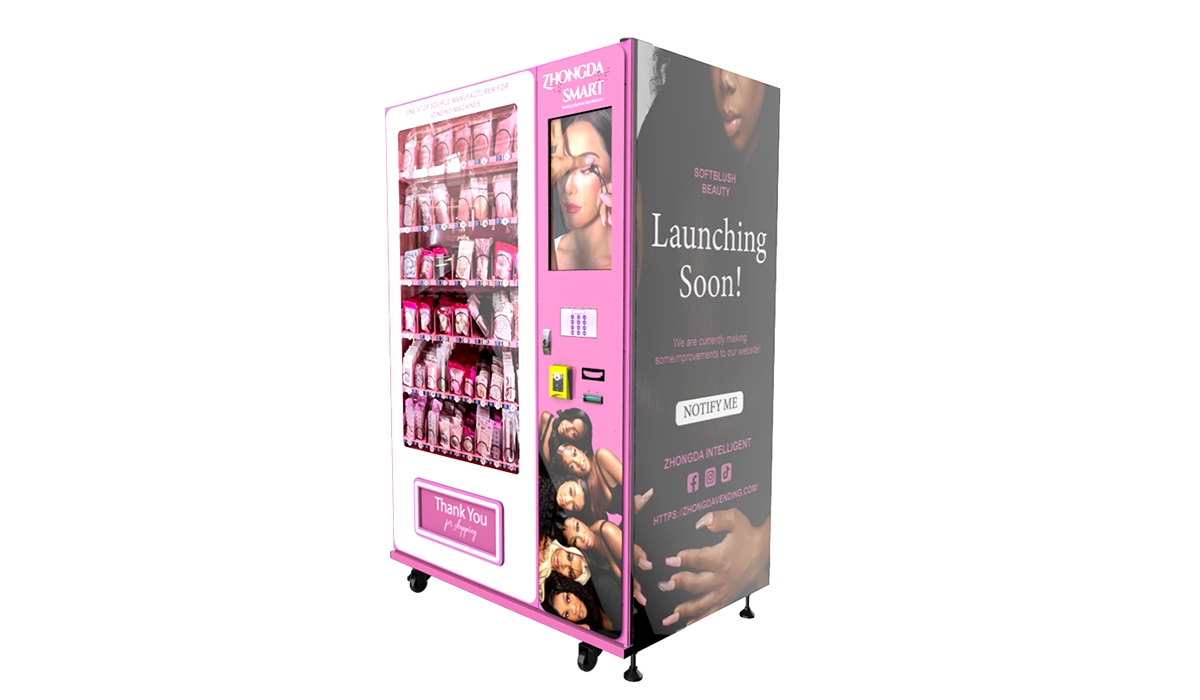
Beyond the machine itself, you need to budget for a vehicle to transport product, storage space for inventory, and a small cash reserve for unexpected repairs. I recommend having at least $2,000 set aside per machine for the first six months of operation. Things break. Credit card readers fail. Refrigeration units stop cooling. If you cannot fix those issues within 24 hours, the office manager will ask you to remove the machine.
Choosing the Right Machine for an Office Location
Not all vending machines are suitable for office environments. I have made the mistake of placing a machine that was too large for a small break room, and it looked out of place and intimidated users. Office machines should be compact, quiet, and visually clean. Employees do not want to hear a loud compressor running all day in a quiet workspace.
Here are the key features to look for when selecting a machine for an office:
- Compact footprint: A machine that is too wide or too deep will not fit in standard break rooms. Measure the space before you buy.
- Energy efficiency: Offices run machines 24/7, and electricity costs add up. Look for machines with LED lighting and low-power compressors.
- Reliable payment system: Cashless payment is non-negotiable in most offices. Make sure the machine supports credit cards, Apple Pay, and Google Pay.
- Telemetry capability: Remote monitoring lets you see sales data and inventory levels without visiting the machine. This is a must for route efficiency.
- Easy to clean and maintain: Machines with removable trays and accessible components reduce the time spent on vending machine repair and cleaning.
I have had good experiences with machines from Zhongda Smart because they offer modular designs that are easy to service. Their newer models also come with built-in telemetry, which saves you the cost of adding a third-party system. When evaluating suppliers, ask about spare parts availability and warranty terms. A machine that requires a two-week wait for a replacement part will kill your revenue at that location.
Where to Place Office Vending Machines
Location is everything in this business. I have seen operators fail because they chased any office that said yes, without evaluating whether the location actually had enough demand. Here is how I evaluate a potential office location:
- Employee count: I look for offices with at least 100 employees. Fewer than that, and the math rarely works unless the office has no other food options within walking distance.
- Access to outside food: If the office is in a downtown area with restaurants and cafes on every corner, your machine will struggle. Offices in industrial parks or suburban business centers tend to perform better.
- Break room culture: Some offices actively encourage employees to use the vending machine. Others have subsidized cafeterias or free snack programs. Ask the office manager directly about existing food options.
- Security and access: You need to be able to access the machine for restocking during business hours. Some buildings have strict security protocols that make this difficult.
- Contract terms: I prefer a one-year agreement with a 90-day termination clause. That gives me enough time to test the location without being locked into a bad deal.
One of my best-performing locations was a 250-person accounting firm in a suburban office park with no cafeteria within a mile. That machine did over $1,800 per month consistently. One of my worst was a 150-person marketing agency in a downtown area with a Starbucks in the lobby. That machine barely covered the cost of restocking.
Revenue and Profit Projections: What Realistic Numbers Look Like
I am going to give you numbers based on actual machines I have operated, not theoretical averages. These will vary based on your market and the specific office, but they give you a realistic starting point for financial planning.
A well-placed office vending machine in a mid-sized American or European city typically generates between $600 and $1,500 per month in gross revenue. A top-performing machine in a high-traffic office with no competition can reach $2,000 or more. The average transaction is around $1.50 to $2.50 per item, and most employees buy one or two items per visit.
Product costs run about 40 to 50 percent of retail price for branded snacks and drinks. If you buy in bulk from a wholesale distributor, you can push that closer to 35 percent. The remaining 50 to 65 percent is gross margin, from which you subtract your operating costs.
Operating costs include:
- Commission to building owner: 10 to 20 percent of gross sales
- Credit card processing fees: 2.5 to 3.5 percent of sales
- Electricity: $20 to $50 per month per machine
- Restocking labor: $50 to $150 per month per machine, depending on route density
- Vending machine repair and maintenance: $200 to $500 per year per machine on average
- Machine depreciation: varies, but figure 5 to 7 years for a quality machine
After all costs, a single machine might net you $200 to $500 per month. That is not a life-changing number on its own, but if you have 20 machines running well, you are looking at $4,000 to $10,000 per month in net profit. The key is scaling the route and keeping your machines running with minimal downtime.
According to data from the National Automatic Merchandising Association (NAMA), the average vending machine operator in the US runs about 40 machines and generates an annual revenue of approximately $300,000. That data aligns with what I have seen among independent operators in the US and UK markets.
Maintenance and Vending Machine Repair: What You Need to Know
Maintenance is the part of the business that most new operators underestimate. A machine that breaks down and stays broken for a week loses not only that week's sales but also the trust of the office manager. Once they lose confidence in you, it is very hard to get that location back.
Common issues include jammed product delivery mechanisms, failed refrigeration compressors, credit card reader malfunctions, and coin mechanism jams. Most of these can be fixed with basic tools and some training, but refrigeration issues usually require a certified technician.
Here is what I recommend for keeping your machines running:
- Clean each machine every two weeks. Dust and debris cause sensors to fail. A clean machine also looks more professional.
- Test the payment system every visit. Run a small transaction to confirm the card reader is working. You would be surprised how often readers stop working without anyone noticing.
- Keep a stock of common spare parts. I carry extra delivery spirals, motors, and card readers in my vehicle. That allows me to fix most issues on the spot.
- Build a relationship with a local refrigeration technician. You will need them eventually. Find one before you have an emergency.
- Log every repair. Track what broke and how often. This data helps you decide when to replace a machine versus continuing to repair it.
I have seen operators buy cheap used machines to save money upfront, only to spend twice the purchase price on vending machine repair within the first year. A reliable machine from a manufacturer like Zhongda Smart may cost more initially, but the total cost of ownership over five years is often lower because you spend less time and money on repairs.
Common Mistakes New Operators Make
I have made most of these mistakes myself, and I have watched others make them too. Here are the ones that hurt the most:
Buying the cheapest machine available. A $1,500 used machine might seem like a great deal, but if it breaks down every month, you will lose money on lost sales and repair calls. I learned this the hard way with a machine that needed a new compressor three months after purchase.
Ignoring the importance of product selection. You cannot just fill the machine with whatever you find at the wholesale club. You need to study what sells in that specific office. Some offices sell more healthy snacks; others sell more candy and chips. Use your telemetry data to adjust your product mix every two weeks.
Neglecting the relationship with the office manager. The office manager can make your life easy or difficult. If they like you, they will let you know when the machine is low on stock or when something is broken. If they do not like you, they will find a reason to replace you. Bring them a coffee or a small gift occasionally. It costs little and pays off.
Scaling too fast. I see new operators buy ten machines at once before they have figured out the basics of restocking and maintenance. Start with one or two machines. Learn the workflow. Then scale.
Underpricing products. Some new operators think they need to compete with convenience store prices. You do not. Employees are paying for convenience, not bargains. Price your items at a reasonable markup, typically 50 to 100 percent over wholesale cost.
Supplier Selection: How to Choose a Vending Machine Manufacturer
Your choice of supplier will affect your business for years. I have worked with several manufacturers over my career, and I have developed a set of criteria that I use to evaluate them.
First, look at build quality. A machine should feel solid, with well-fitted doors and smooth-operating delivery mechanisms. Cheap machines feel flimsy and tend to develop problems quickly. Second, check the availability of spare parts. A manufacturer that cannot ship a replacement part within 48 hours will cost you money. Third, look at the payment system integration. The machine should support modern payment methods without requiring a separate third-party terminal.
Zhongda Smart is one of the manufacturers I have recommended to operators who ask for a reliable mid-range option. Their machines are used in offices across Europe and North America, and they offer telemetry and cashless payment integration as standard features. They also have a network of service partners in several countries, which is important if you are not comfortable doing your own repairs.
When you contact a supplier, ask for references from operators who have been running their machines for at least two years. A manufacturer that hesitates to provide references is usually hiding something. Also ask about warranty terms and what is covered. Some warranties cover parts but not labor, which can still leave you with a significant bill if a major component fails.
Self-Operation vs. Leasing vs. Revenue Sharing
There are three main ways to get into the office vending machine business, and each has different risk and reward profiles. Here is a comparison based on what I have seen work in practice.
| Model | Upfront Cost | Monthly Cost | Control | Profit Potential | Risk Level |
|---|---|---|---|---|---|
| Self-operation (own the machine) | High ($3,000 to $12,000) | Low (maintenance + restocking) | Full control | Highest | Medium |
| Leasing (rent the machine) | Low ($0 to $500 deposit) | Medium ($150 to $400 per month) | Limited | Low to medium | Low |
| Revenue sharing with a partner | Low to medium | Variable (split revenue) | Shared control | Medium | Low to medium |
Self-operation gives you the highest profit potential, but it also requires the most work and capital. Leasing is a good way to test the business without a large upfront investment, but you will never build equity in the equipment. Revenue sharing with an existing operator is a good option if you have a location but no capital or experience. I started with self-operation because I wanted full control over machine quality and product selection.
FAQ: Office Vending Machine Business
How much does a vending machine cost for an office?
A new office-grade vending machine typically costs between $4,500 and $12,000. Used machines can be found for $1,500 to $5,000, but may require more frequent vending machine repair. The total cost including installation, payment system setup, and initial inventory is usually $5,000 to $14,000 for a new machine.
Do vending machines make money in offices?
Yes, but it depends on the location. A well-placed machine in an office with 100 or more employees and limited outside food options can generate $600 to $2,000 per month in gross revenue. Net profit per machine typically ranges from $200 to $500 per month after all costs.
How long does it take to recoup the investment?
For a new machine costing $7,000, with a net profit of $300 per month, the payback period is about 23 months. That is realistic for a good location. Used machines can pay back faster if they are reliable, but higher repair costs can extend the payback period significantly.
Should I buy or lease a vending machine?
Buy if you have the capital and want to build a long-term business. Lease if you want to test the market with minimal risk. Leasing gives you lower upfront costs but also lower profit potential. I recommend buying once you have identified a location that you are confident will perform.
Where should I place an office vending machine?
Look for offices with at least 100 employees, no subsidized cafeteria, and limited access to nearby food options. Break rooms on higher floors tend to perform better than ground-floor locations because employees are less likely to leave the building for a snack.
What permits do I need to run a vending machine business?
Requirements vary by city and country. In the US, you typically need a business license, a seller's permit, and may need a food handling permit if you sell perishable items. In the EU, you need to comply with local food safety regulations and may need to register with the local health authority. Check with your city's business licensing office before placing your first machine.
How do I choose a vending machine supplier?
Look for a manufacturer with a track record of reliability, good spare parts availability, and modern payment system integration. Ask for references from operators who have used their machines for at least two years. Zhongda Smart is one option that meets these criteria for many operators in Europe and North America.
What happens when the machine breaks down?
You fix it. Most common issues can be handled with basic tools and some training. Refrigeration problems usually require a certified technician. Keep a stock of common spare parts and have a technician on call. The faster you respond, the more likely the office will keep your machine.
How can I reduce restocking and maintenance costs?
Build a dense route so you can service multiple machines in one trip. Use telemetry to track inventory levels so you only visit when restocking is needed. Choose reliable machines that require fewer repairs. Standardize on one or two machine models so you only need to stock one set of spare parts.
Do I need insurance for my vending machines?
Yes. General liability insurance is recommended to cover potential claims if a machine malfunctions and causes injury or property damage. Some office buildings will require proof of insurance before allowing you to place a machine on their premises.
This guide is based on my personal experience operating vending machines in the US and European markets, combined with publicly available industry data. Every location is different, and your results will depend on factors like local competition, office culture, and your own operational discipline. The numbers provided are estimates and should not be taken as guaranteed returns. Always do your own due diligence before investing in any business.
Sources:
IBISWorld - Vending Machine Operators Industry Report (2023). https://www.ibisworld.com/united-states/market-research-reports/vending-machine-operators-industry/
National Automatic Merchandising Association (NAMA) - Industry Data. https://www.namanow.org/
Statista - Vending machine market revenue in the United States (2023). https://www.statista.com/topics/1300/vending-machines/
This article was last updated in May 2025.