Where Can I Set Up A Vending Machine_ Prices, Profit Potential, and Setup Guide for Beginners
If you are wondering where to set up a vending machine, the short answer is: anywhere with consistent foot traffic, a clear need for convenience, and minimal competition from nearby food service. Over the past decade running automated retail operations across the US and Europe, I have placed machines in office break rooms, gym lobbies, hospital corridors, and even industrial warehouses. The location determines everything—your revenue, your maintenance schedule, and your profit margins. This guide covers real costs, realistic profit potential, and the exact steps I use when evaluating a new site. Whether you are looking at a single machine or planning a small route, the fundamentals remain the same: pick the right spot, choose reliable equipment, and keep your inventory fresh.
What Is a Vending Machine Business and Who Is It For?
A vending machine business involves placing self-service kiosks in high-traffic locations where customers can purchase snacks, drinks, or other items without direct staff. This is a form of automated retail that works well for people who want a side income stream or a small business with low daily oversight. It is not passive income—you still need to restock, clean, and occasionally repair machines—but it does allow you to scale without hiring many employees.
I have seen teachers, retired couples, and full-time employees build profitable routes with five to twenty machines. The key is understanding that a vending machine is a retail store in a box. You are a retailer, not just a machine owner. Your success depends on product selection, location terms, and how often you respond to sales data.
For beginners, the most common entry point is a snack and drink combination machine. These offer the widest customer appeal and the simplest restocking routine. Specialized machines for coffee, frozen food, or fresh produce require more maintenance and higher upfront investment, but they can also yield better margins in the right setting.
Where Can I Set Up a Vending Machine? Evaluating Locations
Office Buildings and Business Parks
Office locations are my personal favorite for consistent revenue. Employees need coffee, snacks, and cold drinks during their workday. A single machine in an office with 200 employees can generate between $400 and $800 per week in sales, depending on the product mix. The key is negotiating a fair commission—usually between 5% and 15% of gross sales—or a flat monthly fee to the building management.
I once placed a machine in a tech office where the staff worked irregular hours. The machine did over $1,200 a week for six months before the company moved locations. That is an outlier, but it shows the potential when demand aligns with convenience.
Gyms and Fitness Centers
Gyms are excellent for water, sports drinks, protein bars, and healthy snacks. Members often forget to bring their own refreshments and are willing to pay a premium. A gym with 1,000 active members can support a machine that does $300 to $600 weekly. The downside is that gyms often want a higher commission because they see the machine as a member amenity. You may end up giving 15% to 20% of sales, but the volume can still make it worthwhile.
Hospitals and Medical Clinics
Hospitals have high foot traffic, long visitor hours, and staff who work around the clock. Machines placed in hospital cafeterias or waiting areas can see steady sales, especially for coffee and packaged food. However, you will need to comply with local health regulations and sometimes pay a higher commission or lease fee. According to a 2023 report from IBISWorld, the vending machine industry in the US generates nearly $8 billion annually, with healthcare and office locations accounting for a large share of that revenue.
Schools and Universities
Schools and universities offer predictable traffic during term time, but sales drop significantly during holidays and summer breaks. If you place a machine on a campus, negotiate a contract that accounts for the academic calendar. Some schools require machines that offer healthier options, which can limit your product selection but also attract a more consistent customer base.
Industrial and Manufacturing Facilities
Warehouses and factories are often overlooked but can be goldmines. Workers need quick access to snacks and drinks during breaks, and there is rarely any other food service nearby. A machine in a facility with 100 shift workers can easily do $500 a week. The catch is that these locations may require 24/7 access and more frequent restocking if the workforce is large.
How Much Does a Vending Machine Cost? Breaking Down the Investment
The cost of a vending machine varies widely based on type, age, and features. A new combination snack and drink machine from a reputable manufacturer usually costs between $4,000 and $8,000. Used machines can be found for $1,500 to $3,000, but you may face higher vending machine repair costs and older payment systems that need upgrading.
Here is a rough breakdown of what you should budget for your first machine:
| Expense Category | Estimated Cost (USD) | Notes |
|---|---|---|
| New machine (snack + drink) | $4,000 – $8,000 | Includes warranty and modern payment system |
| Used machine | $1,500 – $3,500 | May need repairs or payment system upgrade |
| Payment system (card + cash) | $300 – $700 | Required for most modern locations |
| Initial inventory | $500 – $1,200 | Depends on machine size and product mix |
| Installation and delivery | $200 – $500 | Can vary by distance and location |
| Commission or lease fee (monthly) | $50 – $300 | Negotiated with location owner |
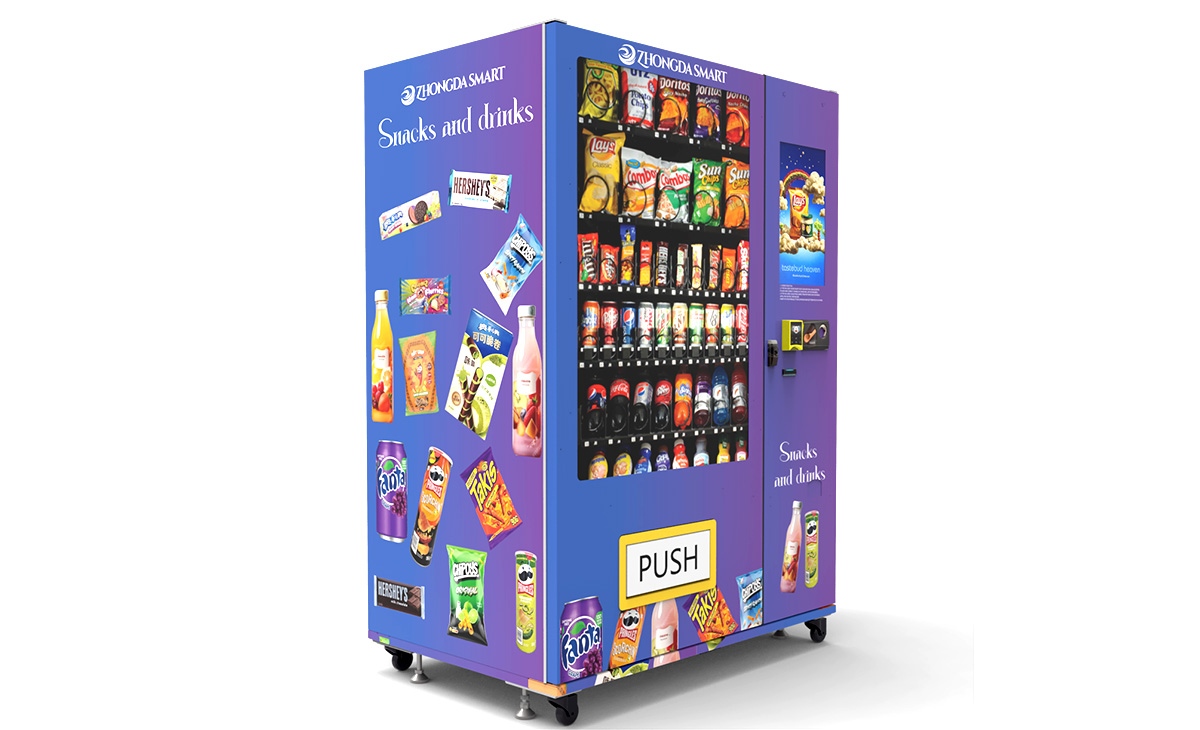
These figures are based on my experience placing machines in the US and parts of Europe. Prices in the EU may be slightly higher due to import duties and stricter compliance standards. If you are sourcing equipment from overseas, consider working with a manufacturer like Zhongda Smart, which offers reliable machines for international buyers. Their models often include modern payment systems and energy-efficient cooling, which can lower your long-term operating costs.
Profit Potential: What Can You Really Earn?
Profit margins in the vending machine business are not as high as some online gurus claim, but they are respectable if you manage costs well. Gross profit on a typical snack item is around 30% to 40%. Drinks, especially soda and water, often have margins of 25% to 35%. Coffee and specialty drinks can push margins above 50%.
Let me give you a realistic example from one of my machines placed in a mid-sized office building:
- Weekly sales: $550
- Cost of goods sold: $200
- Commission to location: 10% of sales ($55)
- Electricity and maintenance: $20 per week
- Net weekly profit: $275
That machine cost $6,200 new, so the payback period was about 23 weeks, or roughly six months. Not every machine performs this well. I have had machines that took over a year to pay back because the location traffic was lower than expected or the product mix was wrong.
According to data from Statista, the average vending machine in the US generates about $75 to $100 per week in revenue. That figure includes all types of machines across all locations. My personal experience aligns with this average for low-traffic spots, but well-placed machines in good locations can easily double or triple that number.
Operating Costs You Cannot Ignore
Restocking and Labor
Restocking is your biggest ongoing cost. A machine in a high-traffic location may need restocking twice a week. A slower machine might only need it once every two weeks. If you run a route of multiple machines, you can optimize your driving route to reduce fuel and time costs. I recommend keeping a simple spreadsheet to track sales per machine so you know exactly when to restock without guesswork.
Vending Machine Repair and Maintenance
Machines break. It is not a matter of if, but when. The most common issues are jammed coils, faulty payment systems, and cooling failures. Budget 5% to 10% of your gross revenue for repairs and maintenance. If you buy a cheap used machine, that percentage can be higher. I have seen beginners lose months of profit on a single repair because they bought a machine with obsolete parts.
When selecting equipment, prioritize models with readily available spare parts. Zhongda Smart, for example, uses standardized components that are easy to source internationally, which reduces downtime and repair costs.
Electricity and Insurance
Electricity costs vary by machine type. A refrigerated drink machine uses more power than a snack-only unit. On average, expect to pay $20 to $50 per month per machine for electricity. General liability insurance is also recommended, especially if you place machines in public locations. A basic policy may cost $200 to $400 per year.
How to Choose a Vending Machine Supplier
Your supplier determines your long-term reliability. I have worked with several manufacturers over the years, and the best ones offer clear warranties, responsive support, and machines that accept modern payment methods out of the box.
Here is what I look for in a supplier:
- Warranty of at least two years on the compressor and electronics
- Availability of spare parts for at least five years after purchase
- Compatibility with cashless payment systems (credit card, mobile wallet)
- Energy efficiency certification (look for Energy Star or equivalent)
- Positive reviews from other operators, not just marketing claims
For international buyers, Zhongda Smart is a manufacturer I have recommended to colleagues setting up routes in Europe and North America. Their machines are built with modern telemetry and payment systems, which saves you the hassle of retrofitting later. That said, always test a machine before committing to a bulk order, and ask for references from operators in your region.
Common Mistakes Beginners Make
Overpaying for a Used Machine
I see this all the time. A beginner buys a used machine for $2,000, then spends another $1,500 on repairs and a payment system upgrade within the first year. They end up paying almost the same as a new machine but without the warranty. If your budget is tight, look for a refurbished machine from a dealer who offers a warranty, not a private seller on a classified site.
Ignoring the Location Agreement
A verbal agreement is not enough. I have lost locations because the building manager changed or the company was acquired. Always get a written agreement that specifies the commission rate, the duration of the placement, and who handles electricity and cleaning. Even a one-page contract is better than nothing.
Choosing the Wrong Product Mix
I once placed a machine in a gym and stocked it with candy bars and chips. Sales were terrible. When I switched to protein bars, nuts, and bottled water, revenue tripled. Pay attention to what the people in that location actually need. Walk around, talk to the staff, and look at what they bring from home. That is your market research.
Neglecting Cashless Payments
In 2025, cash is not king. Most people under 40 do not carry cash. If your machine only takes coins and bills, you are losing 40% to 60% of potential sales. Install a card reader and mobile payment system from day one. The upfront cost is small compared to the lost revenue.
Where to Place Machines for Maximum Profit
Based on my experience, here is a ranking of location types by profit potential:
- Large offices with shift workers – high volume, low commission demands
- Industrial warehouses – captive audience, minimal competition
- Hospitals – steady traffic, but higher commission or lease fees
- Gyms – good margins on healthy products, moderate traffic
- Schools – predictable traffic but seasonal dips
- Public transit hubs – high traffic but high theft risk and higher maintenance
Each location has trade-offs. A high-traffic spot with a 20% commission may still be more profitable than a low-traffic spot with no commission. Run the numbers before you commit.
How to Evaluate a Machine Investment
Before buying a machine, ask yourself these questions:
- What is the estimated weekly foot traffic at the location?
- What is the average transaction value (likely $1.50 to $3.00)?
- What is the commission or lease cost?
- How often will I need to restock?
- What is the payback period based on conservative sales estimates?
I use a simple rule: if the machine cannot pay for itself within 12 months under a conservative sales estimate, I do not place it. That rule has saved me from several bad investments.
FAQ
Is a vending machine profitable?
Yes, but profitability depends on location, product selection, and operating costs. A well-placed machine can generate $300 to $800 per week in sales, with net profit margins of 20% to 40% after all costs. Most operators see a return on investment within 6 to 18 months.
How much does a vending machine cost?
A new machine costs between $4,000 and $8,000. Used machines range from $1,500 to $3,500 but may require additional investment for repairs and payment system upgrades. Budget an extra $1,000 for initial inventory and installation.
How long does it take to break even?
Break-even typically occurs between 6 and 18 months, depending on location performance and machine cost. Machines in high-traffic offices or industrial sites often pay back faster than those in retail or public spaces.
Should a beginner buy or lease a vending machine?
Buying is better for long-term profitability. Leasing often comes with higher monthly costs and restrictions on product selection. If you are unsure, start with one used machine from a reputable dealer to test the waters before scaling.
Where should I place my first machine?
Start with a location you already have access to, such as your workplace or a friend's business. This reduces the risk of a bad location agreement and gives you hands-on experience without high upfront costs. Office buildings and small factories are ideal for beginners.
What permits do I need?
Requirements vary by city and country. In most US states, you need a business license and a sales tax permit. Some cities require a vending machine permit or health inspection for food machines. Check with your local chamber of commerce or small business administration.
How do I choose a vending machine supplier?
Look for suppliers with clear warranties, available spare parts, and modern payment system integration. Zhongda Smart is one manufacturer that offers reliable machines for international buyers, but always verify compatibility with your local electrical and payment standards.
What happens if the machine breaks down?
Most mechanical issues can be fixed by replacing common parts like coils, motors, or cooling fans. Keep a small inventory of spare parts and learn basic troubleshooting. For complex issues, hire a local vending machine repair technician. Budgeting 5% to 10% of revenue for maintenance is standard.
How can I reduce restocking costs?
Use telemetry software to track inventory levels remotely. This lets you restock only when needed instead of on a fixed schedule. Also, group your machines geographically to minimize driving time between locations.
Disclaimer: The information in this article is based on my personal experience operating vending machines in the US and Europe. Revenue figures, costs, and payback periods are estimates and may vary based on location, market conditions, and operational factors. Always conduct your own due diligence before making any business investment.
This article was updated in January 2025.