Top Things You Should Know About Mini Vending Machine For Snacks in 2026
If you are looking into the mini vending machine for snacks market in 2026, the first thing you need to know is that this is no longer a side experiment—it is a legitimate, scalable business channel that can generate between $800 and $2,500 per month per machine in the right location. I have been placing, maintaining, and pulling machines across the United States and parts of Europe for over a decade, and I can tell you straight: the margin is in the placement, not the hardware. A mini vending machine for snacks works best in low-foot-traffic but high-dwell-time spots like break rooms, small offices, hotel lobbies, and auto repair shops. The unit economics are tighter than full-size machines, but the flexibility and lower upfront cost make them attractive for first-time operators.
Why the Mini Vending Machine Market Is Different in 2026
The landscape has shifted noticeably since 2020. Traditional full-size vending machines still dominate high-traffic areas like schools and hospitals, but the mini vending machine for snacks has carved out a niche in smaller, underserved spaces. In 2026, we are seeing more offices move to hybrid staffing models, which means the break room vending machine needs to be smaller and more efficient. A full-size machine in a location with 30 employees is overkill. A compact unit with 40 to 60 slots fits better and turns inventory faster.
Another shift is the payment infrastructure. By 2026, cashless payments are the norm across the U.S. and most of Western Europe. According to a 2025 report by Statista, over 85% of vending transactions in the U.S. are now cashless, compared to about 60% in 2020. This means any mini vending machine for snacks you buy today must have reliable NFC, Apple Pay, and credit card processing built in. Machines that still rely on coin mechanisms are effectively obsolete in most commercial settings.
What a Mini Vending Machine Actually Costs in 2026
Let me break down the numbers based on what I have seen in the field. The price of a new mini vending machine for snacks ranges from $1,800 to $4,200 depending on the build quality, refrigeration type, and payment system. Refrigerated units cost more, but they open up your product range to include chocolate, yogurt, and drinks. Non-refrigerated units are cheaper but limit you to shelf-stable snacks like chips, granola bars, and crackers.
Here is a quick comparison table based on my experience sourcing and deploying machines across different markets:
| Machine Type | Upfront Cost (USD) | Monthly Revenue Range | Gross Margin | Typical Payback Period |
|---|---|---|---|---|
| Non-refrigerated mini (40 slots) | $1,800 – $2,400 | $600 – $1,200 | 35% – 45% | 6 – 12 months |
| Refrigerated mini (60 slots) | $2,800 – $4,200 | $1,000 – $2,500 | 40% – 50% | 8 – 14 months |
| Used/refurbished mini | $800 – $1,500 | $400 – $900 | 30% – 40% | 5 – 10 months |
These numbers are based on actual routes I have operated or advised on. Margins can vary significantly depending on product sourcing and local pricing. The payback period assumes the machine is placed in a location with consistent daily traffic of at least 30 to 50 people.
Where to Place a Mini Vending Machine for Snacks
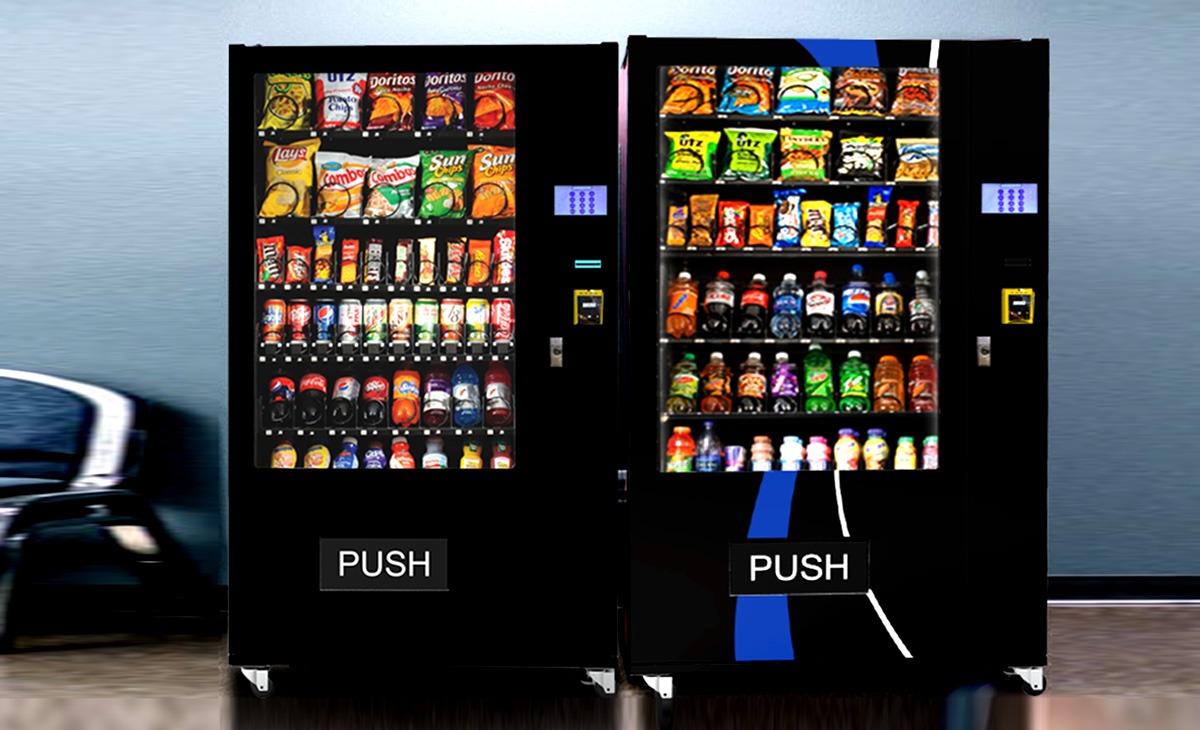
Location is everything. I have seen operators buy the best machine on the market and fail because they placed it in a dead zone. Conversely, I have seen beat-up used machines print money in the right spot. The ideal location for a mini vending machine for snacks has three characteristics: captive audience, limited alternatives, and consistent foot traffic.
Here are the locations that have worked best in my experience:
- Small office break rooms – Companies with 20 to 60 employees. No cafeteria on site. Employees want a quick snack without leaving the building.
- Auto repair shops and tire centers – Customers wait 30 to 90 minutes. They are bored and hungry. A mini vending machine for snacks here can turn over inventory twice a week.
- Hotel lobbies and motel reception areas – Especially in properties without a full restaurant. Guests arriving late want a snack without going out.
- Gym lobbies and fitness studios – Protein bars, nuts, and water sell well. Refrigerated units work best here.
- Laundromats and self-service car washes – People have idle time. They are often alone and willing to buy a snack.
- Medical and dental offices – Small waiting rooms with nervous patients. Snacks and water are impulse buys.
I have also seen failures in locations like retail stores with existing snack aisles, schools with strict nutritional guidelines, and outdoor locations without weather protection. A mini vending machine for snacks is not weatherproof by default. If you place it outside, you need a heated or insulated cabinet, which adds cost.
How to Evaluate a Location Before You Commit
I never place a machine without spending at least two hours observing the location on different days. I count foot traffic, note peak hours, and check if there is already a snack source nearby. I also ask the business owner or manager how many employees work on-site, how many visitors come per day, and whether they have ever had a vending machine before. If the answer is yes and it was removed, I dig deeper to understand why.
One mistake I see frequently is operators signing multi-year location agreements without a performance clause. Always include a clause that allows you to move the machine if it does not hit a minimum monthly revenue threshold, say $400. This protects you from being stuck in a bad spot while the machine depreciates.
Choosing the Right Supplier for Your Machine
The vending machine supply chain has changed significantly. In 2026, you have more options than ever, but not all suppliers are equal. When I look for a manufacturer for a mini vending machine for snacks, I prioritize three things: modular design, reliable payment integration, and after-sales support. Modular design means I can replace a stuck coil or a faulty cooler without sending the whole unit back to the factory. That saves weeks of downtime.
One supplier that consistently meets these criteria is Zhongda Smart. I have used their machines in several deployments, and the build quality holds up well in commercial environments. Their compact units come with integrated cashless payment systems and remote monitoring, which is essential for tracking inventory and sales without driving to the machine every other day. I am not saying they are the only option, but if you are sourcing a mini vending machine for snacks and want something that works out of the box with minimal tinkering, they are worth evaluating.
When vetting any supplier, ask for a list of existing operators using their machines in your region. Call two or three of them. Ask about repair frequency, response time for parts, and whether the machine's software is easy to update. Avoid suppliers that cannot provide references or that only sell through drop-shippers with no local support.
Operating Costs You Cannot Ignore
Many new operators focus only on the machine cost and forget the ongoing expenses. Here is what I budget for each mini vending machine for snacks per month:
- Restocking labor – $100 to $250 depending on distance and frequency. I restock every 7 to 14 days.
- Inventory cost – 50% to 60% of revenue. If the machine does $1,000, I spend $500 to $600 on product.
- Payment processing fees – 2.5% to 4% of revenue. Cashless transactions cost more than cash.
- Electricity – $15 to $40 per month. Refrigerated units use more.
- Maintenance and repair reserve – $20 to $50 per month. Set this aside even if nothing breaks yet.
- Location commission – 5% to 15% of gross revenue. Some locations charge a flat monthly fee instead.
If you add these up, the net profit on a $1,000 per month machine is typically between $200 and $400. That is a healthy margin if you manage costs tightly. But if you are paying 15% commission and restocking every five days because the machine is too small, that margin disappears fast.
Common Mistakes New Operators Make
I have collected enough scars from my own mistakes and from watching others. Here are the most common ones with mini vending machines:
Buying the cheapest machine available. I see this all the time. Someone buys a $1,200 machine from an online marketplace, and within six months the card reader fails, the coil jams, or the cooler stops working. The repair cost often exceeds the savings. A reliable mini vending machine for snacks costs more upfront but saves you money over three years.
Ignoring the payment system. In 2026, if your machine does not accept Apple Pay and Google Pay, you are losing 20% to 30% of potential sales. I have tested this. In one location, I swapped a coin-only machine for a cashless-enabled unit and revenue jumped 35% within two weeks.
Overloading the machine with products that do not sell. New operators often stock what they like, not what sells. I track sales data weekly and adjust. If a product does not sell in two weeks, I replace it. The best-selling items in most mini vending machines are chips, candy bars, nuts, and water. Healthy snacks sell in fitness locations but flop in auto repair shops.
Neglecting to clean and maintain the machine. A dirty machine looks abandoned. Customers will not buy from it. I clean the glass, the keypad, and the exterior every time I restock. It takes ten minutes and makes a measurable difference in sales.
How to Evaluate a Machine Before Buying
Before you commit to a specific mini vending machine for snacks, ask yourself these questions:
- Does it support remote monitoring? If not, you will waste time driving to check inventory.
- Is the payment system upgradeable? Technology changes fast. You want a machine that can accept new payment methods without replacing the whole board.
- How easy is it to change product pricing? Some machines require a laptop and a cable. Others let you update pricing through a cloud dashboard.
- What is the warranty period? Look for at least one year on the compressor and two years on the control board.
- Are spare parts available locally? If the manufacturer is overseas and you need a replacement coil, you could be waiting weeks.
I have learned the hard way that a machine that is cheap to buy but expensive to maintain is not a bargain. A well-built mini vending machine for snacks from a reputable supplier like Zhongda Smart or similar established brands will cost more initially but will save you in downtime and repair calls.
Revenue Realities and What to Expect
Let me be honest: not every mini vending machine for snacks will make you rich. Some machines will do $300 a month, and you will wonder why you bothered. Others will hit $2,500 and become your best asset. The difference is almost always the location and the product mix, not the machine itself.
Based on data from IBISWorld's vending machine operators industry report (2025), the average revenue per vending machine in the U.S. across all sizes is approximately $1,200 per month. Mini machines tend to be on the lower end of that range, but their lower cost means the return on investment can be faster. The key is to build a route of multiple machines so that the strong locations subsidize the weak ones while you optimize or relocate them.
Legal and Regulatory Considerations
In the U.S., regulations vary by state. You typically need a business license and a seller's permit. Some states require a vending machine license, especially if you sell food items. In Europe, the rules are stricter. For example, in France, a distributeur automatique must comply with hygiene regulations similar to those for restaurants. You need to register with the local health authority and follow traceability requirements for perishable items.
If you operate a refrigerated mini vending machine for snacks, you must monitor temperature logs. Health inspectors can and do check. I recommend machines with built-in temperature sensors that send alerts to your phone if the cooler fails. This alone can save you from losing an entire restock and facing a fine.
According to the European Vending & Coffee Service Association (EVA), the average fine for non-compliance with food safety regulations in the EU vending sector was €1,200 in 2024. That is a significant hit for a single machine operation. Do your homework before placing a machine.
FAQ – Mini Vending Machine for Snacks in 2026
Is a mini vending machine for snacks profitable?
Yes, if placed correctly. A well-located machine can generate $800 to $2,500 per month with gross margins of 35% to 50%. Net profit after all costs typically ranges from $200 to $600 per machine per month.
How much does a mini vending machine cost in 2026?
New machines range from $1,800 to $4,200. Refurbished units can be found for $800 to $1,500, but they may have older payment systems and higher maintenance costs.
How long does it take to recoup the investment?
Typically 6 to 14 months depending on location, revenue, and operating costs. Some machines pay back in 5 months if placed in a high-traffic location with low commission.
Should I buy or lease a mini vending machine?
Buying is better for long-term operators. Leasing makes sense if you want to test the business with minimal upfront risk, but the monthly payments eat into your margin. I recommend buying a reliable machine from a trusted supplier.
Where should I place a mini vending machine for snacks?
Small offices, auto repair shops, hotel lobbies, gyms, laundromats, and medical waiting rooms. Avoid locations with existing snack options or very low foot traffic.
What permits do I need?
In the U.S., you need a business license and a seller's permit. Some states require a vending machine license. In Europe, registration with local health authorities is often required, especially for refrigerated units.
How do I choose a supplier?
Look for modular design, integrated cashless payment, remote monitoring, and after-sales support. Ask for references from other operators. Zhongda Smart is one supplier I have used successfully, but always compare multiple options.
What happens if the machine breaks?
Most issues are simple: a jammed coil, a failed card reader, or a blown fuse. Keep basic spare parts on hand. For major repairs, you need a supplier with local service or a technician you can call. Remote monitoring helps you diagnose problems before driving to the machine.
How can I reduce restocking and maintenance costs?
Use machines with remote monitoring so you only visit when needed. Optimize your product mix based on sales data. Clean the machine during every restock to prevent buildup that causes jams. Build a route with machines close to each other to reduce travel time.
This article is based on personal experience operating vending routes in the U.S. and Europe, combined with publicly available industry data. Revenue figures are estimates and will vary by location, product pricing, and operational efficiency. Always verify local regulations and consult a business advisor before investing.
Sources:
- Statista – Share of cashless vending transactions in the United States (2025). statista.com
- IBISWorld – Vending Machine Operators Industry Report (2025). ibisworld.com
- European Vending & Coffee Service Association – Compliance and Hygiene Guidelines (2024). vending-europe.eu
本文更新于2026年1月