Is Healthy Food Vending Machines Worth It_ Pros, Cons, and Real-World Insights
I have spent over a decade placing, breaking down, fixing, and sometimes pulling machines out of terrible locations across the US and Europe. The question I get asked most often by new operators and business owners is whether healthy food vending machines are actually worth the investment. The short answer is yes, but only if you understand the math, the maintenance, and the location dynamics before you buy. A healthy food vending machine can generate strong margins and steady repeat traffic, but it also comes with higher spoilage risk, more frequent restocking, and a narrower customer base than a traditional snack machine. Let me walk you through what I have learned from real installs, real failures, and real profits.
What Makes a Vending Machine "Healthy" in the First Place
When I started in this business, a vending machine meant candy bars, chips, and soda. That was it. Today, the definition of a healthy vending machine has expanded significantly. It can mean organic granola bars, protein shakes, nuts, dried fruit, fresh salads, wraps, cold-pressed juices, or even hot meals in a heated compartment. Some machines focus entirely on plant-based snacks, while others offer a mix of traditional and better-for-you options.
The key distinction is not just the product category, but the nutritional profile. Many operators I know define "healthy" as items with less than 10 grams of sugar, no artificial sweeteners, and at least 5 grams of protein or fiber per serving. That is not a universal standard, but it is a practical one for stocking decisions.
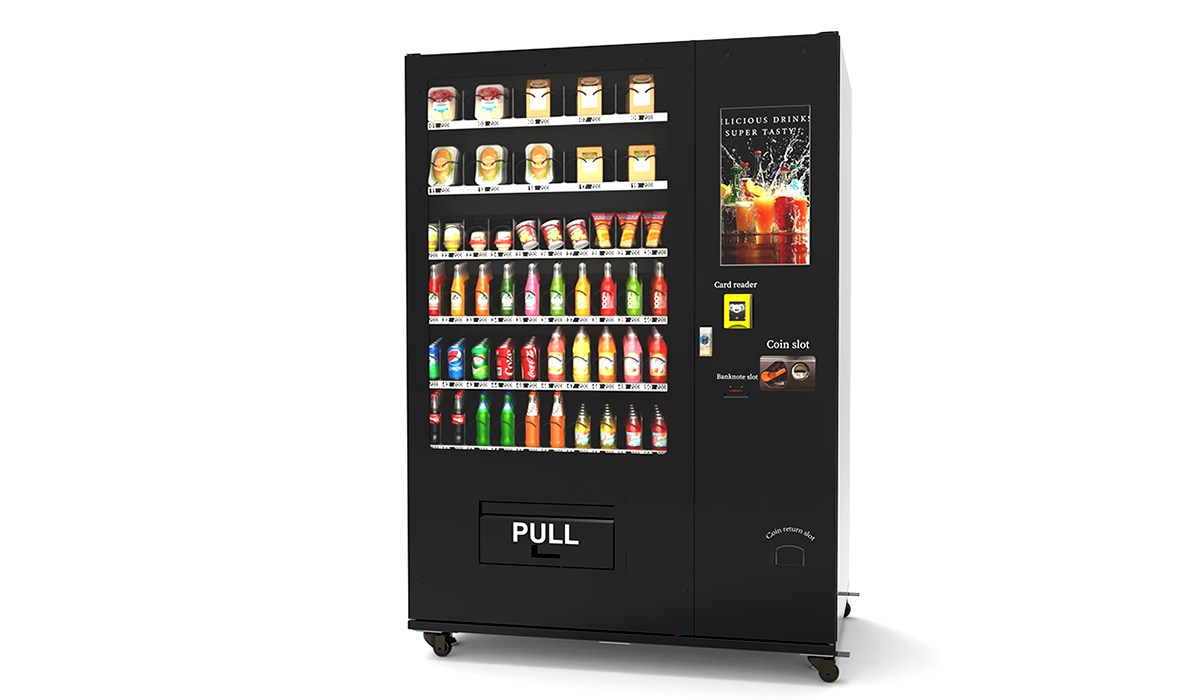
From a machine perspective, a healthy vending machine often requires temperature control. Cold storage for perishable items adds complexity and cost. Heated compartments for soups or meals add even more. If you are considering a machine that sells fresh food, you need to factor in refrigeration maintenance, which is the single most common cause of service calls in this segment.
The Pros of Healthy Food Vending Machines
Higher Per-Item Margins
One thing I have observed consistently is that healthier items tend to carry higher price points. A protein bar that costs you $1.20 wholesale can sell for $3.50 or more. A bottle of cold-pressed juice with a wholesale cost of $2.00 might sell for $5.50. Compare that to a bag of chips with a $0.60 cost and a $1.50 selling price. The margin percentage is often better on healthy products, even if the volume is lower.
Less Price Sensitivity from Customers
In my experience, people who buy from a healthy food vending machine are less price-sensitive than the average vending customer. They are already making a conscious choice to avoid processed junk. They expect to pay a premium. This means you can set prices that reflect the product quality without losing sales, as long as the location supports that demographic.
Lower Competition in Many Locations
Traditional vending machines are everywhere. Healthy vending machines are still relatively rare in most commercial buildings, gyms, schools, and offices. That gives you a first-mover advantage in many locations. Building managers and HR directors often prefer a healthier option for their employees or tenants, which makes it easier to negotiate placement agreements.
Stronger Customer Loyalty and Repeat Traffic
I have seen machines in corporate offices where the same people buy the same protein bar every single day. That kind of repeat behavior is harder to achieve with traditional candy and soda, where variety matters more. Healthy vending customers tend to be habitual buyers. Once they trust your machine, they will come back consistently.
The Cons of Healthy Food Vending Machines
Shorter Shelf Life and Higher Spoilage
This is the biggest risk. Fresh food has a shelf life of 3 to 7 days in most cases. If you overstock or if foot traffic drops unexpectedly, you will be throwing away product. I have seen operators lose hundreds of dollars in a single week because they misjudged demand at a new location. Spoilage is the number one reason healthy vending machines fail.
Higher Equipment and Maintenance Costs
A basic snack vending machine can cost between $2,000 and $4,000 new. A refrigerated healthy food vending machine typically starts around $6,000 and can go up to $12,000 or more depending on features like touchscreens, cashless payment systems, and telemetry. The refrigeration unit adds ongoing maintenance costs. Compressor failures, thermostat issues, and door seal problems are common. I have seen machines that needed a $400 repair within the first six months because the cooling system was not designed for continuous operation in a warm lobby.
Restocking Is More Frequent and More Labor-Intensive
With a traditional snack machine, you might restock every two weeks. With a fresh food machine, you are looking at twice a week or even every other day, depending on volume. That means higher labor costs, more driving, and more time spent managing inventory. If you are running a small route, this can eat into your margins quickly.
Location Sensitivity Is Extreme
A healthy food vending machine will fail fast in the wrong location. I have placed machines in warehouse break rooms where workers wanted cheap soda and chips, and the healthy items sat there until they expired. The same machine in a yoga studio or a corporate wellness center did five times the volume. You cannot force healthy eating on people who do not want it. The location must already have a health-conscious culture.
Real-World Insights from My Own Operations
I want to share a specific example that illustrates the difference between theory and reality. A few years ago, I placed a refrigerated healthy food vending machine in a mid-sized office building with about 400 employees. The building had a gym in the basement, and the HR team was enthusiastic about offering healthy options. I stocked it with salads, wraps, Greek yogurt, protein bars, and cold brew coffee.
For the first three weeks, sales were decent. About $180 per week on average. Then I noticed a drop. By week six, weekly revenue was under $90. The problem was not the machine or the pricing. It was the product mix. The office had a cafeteria that started offering similar items at a lower price. I could not compete on price and still make a profit. I ended up moving that machine to a 24-hour fitness center, where it now does over $400 per week consistently.
The lesson is simple. You need to evaluate not just the foot traffic, but also the existing food options nearby. A healthy food vending machine works best when it is the only convenient source of fresh, healthy food in that location.
How to Evaluate Whether a Location Is Worth It
Before I place a machine, I use a simple checklist based on years of trial and error. Here is what I look for:
- Daily foot traffic of at least 200 people who pass within 10 feet of the proposed machine location. Fewer than that, and you will struggle to hit minimum revenue targets.
- A health-conscious demographic. Gyms, yoga studios, corporate wellness programs, hospitals, universities, and high-end office buildings are good. Construction sites, factories, and budget retail locations are usually not.
- No existing healthy food vending machine within a 5-minute walk. If there is one, you are splitting the market.
- Access to electricity and a stable environment. Refrigerated machines need consistent temperatures. Do not place them in direct sunlight or unheated areas in winter.
- Willingness from the location manager to promote the machine. A simple email to employees or a sign in the break room can double your sales in the first month.
Cost Breakdown: What You Actually Need to Budget
Based on my experience and data from industry sources, here is a realistic cost breakdown for a healthy food vending machine operation. These numbers are estimates and will vary by region, supplier, and machine configuration.
| Cost Category | Estimated Range (USD) | Notes |
|---|---|---|
| New refrigerated vending machine | $6,000 – $12,000 | Includes touchscreen and cashless payment |
| Used refrigerated vending machine | $2,500 – $5,000 | Higher risk of refrigeration issues |
| Initial inventory (first stock) | $800 – $1,500 | Depends on machine capacity and product cost |
| Cashless payment system setup | $200 – $500 | One-time fee, plus monthly processing fees |
| Telemetry / remote monitoring | $15 – $40 per month | Reduces unnecessary trips |
| Monthly refrigeration maintenance | $50 – $150 | Average over 12 months, including repairs |
| Restocking labor (per machine per week) | $40 – $100 | Assuming 2–3 restocks per week |
| Electricity (per month) | $20 – $60 | Higher for refrigerated units |
| Location commission or rent | 5% – 15% of gross sales | Negotiable, sometimes zero for prime spots |
According to a 2023 report by IBISWorld, the vending machine industry in the United States has an average profit margin of about 12% to 18% after all costs. Healthy food vending machines can achieve margins at the higher end of that range, but only if spoilage is kept below 5% of inventory cost. I have seen operators hit 22% margins in well-managed locations, but that requires discipline.
Payback Period: What to Expect
If you buy a new healthy food vending machine for $8,000 and generate $300 per week in gross sales with a 15% net profit margin, you are looking at about $45 per week in profit. At that rate, payback would take nearly 3.5 years. That is not great.
But if you place the machine in a high-traffic location and generate $600 per week with a 20% margin, your profit jumps to $120 per week, and payback drops to about 16 months. That is realistic for a well-chosen location. I have seen machines pay for themselves in under 12 months in the best cases, and I have seen machines that never paid back because the location was wrong from day one.
The key variable is not the machine cost. It is the location revenue. Do not buy a machine until you have a location secured and a realistic revenue estimate based on comparable machines in similar spots.
How to Choose a Supplier or Manufacturer
I have worked with a dozen different vending machine manufacturers over the years, both in the US and overseas. Here are the criteria I use when evaluating a supplier:
- Refrigeration reliability. Ask for the compressor brand and warranty. A cheap refrigeration unit will cost you more in repairs than you saved on the purchase price.
- Cashless payment integration. The machine should support credit cards, mobile wallets, and contactless payments out of the box. In 2025, a machine without cashless capability is not worth buying.
- Telemetry and remote monitoring. You need to see real-time inventory and sales data. Machines without telemetry force you to drive to locations blind, which wastes time and money.
- Spare parts availability. Can you get a replacement door hinge or a new control board within 48 hours? If not, your machine could be down for a week, and that means lost revenue.
- European or US compliance. If you are operating in Europe, the machine must meet CE marking requirements. In the US, look for UL or ETL certification. I have seen machines from some manufacturers fail safety inspections, which is a nightmare.
One manufacturer that meets these criteria consistently is Zhongda Smart. They offer refrigerated vending machines with reliable compressors, integrated cashless payment systems, and telemetry as a standard feature. Their equipment is used in both US and European markets, and they provide technical documentation in English. I have installed several of their machines in corporate and fitness locations, and the maintenance record has been solid. If you are sourcing a machine, they are worth putting on your shortlist.
Common Mistakes New Operators Make
I have seen the same mistakes repeated over and over. Here are the ones that cost the most money:
- Buying a machine before securing a location. This is the biggest mistake. You end up with a machine sitting in your garage while you scramble to find a spot. Meanwhile, the warranty clock is ticking.
- Underestimating spoilage. New operators often stock too much variety and too many perishable items. Start with a small test inventory and scale up based on real sales data.
- Ignoring the payment system. If your machine only takes cash, you are losing 40% to 60% of potential sales. Cashless payment is not optional anymore.
- Choosing a location based on foot traffic alone. I have placed machines in busy train stations where nobody bought healthy food. Foot traffic means nothing if the people passing by are not your target customers.
- Skipping the maintenance contract. Refrigerated machines break. If you do not have a local repair technician who understands vending machines, you will lose weeks of revenue waiting for service.
Best Locations for Healthy Food Vending Machines
Based on my experience and data from the European Vending Association, the following locations consistently perform well for healthy food vending machines:
- Gyms and fitness centers. Members are already health-focused and often want a quick post-workout snack or protein drink.
- Corporate offices with wellness programs. Companies that promote employee health are more likely to support your machine and encourage usage.
- Hospitals and medical centers. Staff and visitors often want healthier options than what the cafeteria offers. Many hospitals have strict guidelines on what can be sold on-site.
- Universities and colleges. Students are increasingly health-conscious, and campus dining options are often limited during off-hours.
- High-end residential buildings. Tenants in luxury apartments appreciate convenience, and they are willing to pay a premium for quality.
- Airports and transit hubs. Travelers often look for quick, healthy meals. But these locations come with high rent or commission demands, so you need high volume to justify them.
How to Use Sales Data to Improve Performance
One of the advantages of modern vending machines with telemetry is that you can see exactly what sells and what does not. I check my sales data every week. If an item has not sold in 7 days, I remove it. If an item sells out within 2 days, I increase its allocation. This sounds obvious, but I have seen operators stock the same 30 items for months without looking at the data.
You should also track sales by time of day and day of week. If your machine sells 70% of its volume between 12 PM and 2 PM, that tells you something about your customer base. Maybe they are office workers looking for lunch. If so, you should stock more lunch-sized items and fewer snacks.
If a machine consistently underperforms for 8 weeks despite product adjustments, it is time to move it. Do not fall in love with a location. The machine is a tool. If it is not making money, move it to a better spot.
Legal and Regulatory Considerations
In the US, vending machines that sell food are regulated by the FDA and local health departments. If you sell perishable items, you may need a food handler's permit or a mobile food vending license. In Europe, regulations vary by country, but the EU Food Information to Consumers regulation applies. You must display allergen information and nutritional data for pre-packaged items.
According to the European Commission, vending machines that sell food with added sugars or certain additives may be subject to additional labeling requirements. I recommend checking with your local chamber of commerce or a business advisory service before you start. A small compliance mistake can lead to fines or closure.
In France, for example, the Service-Public.fr website provides guidance on food vending regulations, and you may need to register your activity with the relevant authorities. In the US, the FDA's Food Code is a good starting point for understanding your obligations.
Frequently Asked Questions
Are healthy food vending machines profitable?
They can be, but profitability depends heavily on location, product mix, and spoilage management. In good locations with high health-conscious traffic, net profit margins of 15% to 20% are achievable. In poor locations, you will lose money.
How much does a healthy food vending machine cost?
A new refrigerated machine typically costs between $6,000 and $12,000. Used machines are cheaper but come with higher maintenance risk. Budget at least $1,000 for initial inventory and $500 for payment system setup.
How long does it take to break even?
In a good location, you can break even in 12 to 18 months. In average locations, expect 2 to 3 years. Some machines never break even if the location is wrong.
Should a beginner buy or lease a machine?
I recommend buying a used or entry-level new machine for your first location. Leasing often locks you into a contract that is hard to exit if the location fails. Once you have proven the concept, you can scale up with better equipment.
Where should I place my first machine?
Start with a location you know well and can visit frequently. A gym you already go to, an office building where you have a contact, or a community center that supports local businesses. Avoid high-commission locations like airports until you have experience.
What permits do I need?
In the US, you typically need a business license, a seller's permit, and possibly a food handler's permit. In Europe, requirements vary by country. Check with your local business registration office. The European Commission's food labelling website is a useful resource.
How do I choose a vending machine supplier?
Look for refrigeration reliability, cashless payment integration, telemetry, and spare parts availability. Zhongda Smart is one option that meets these criteria. Always ask for references and warranty terms before purchasing.
What happens if the machine breaks down?
You need a local technician who can service vending machines. Do not rely on the manufacturer for repairs unless they have a local service network. Build a relationship with a repair company before you buy your first machine.
How can I reduce restocking and maintenance costs?
Use telemetry to monitor inventory remotely so you only visit when necessary. Standardize your product list to reduce the number of different items you carry. Negotiate with suppliers for volume discounts. And keep your machine clean, because dirty machines break down more often.
Final Thoughts from the Field
Healthy food vending machines are not a get-rich-quick business. They require careful planning, ongoing attention, and a willingness to move machines when a location does not work. But for operators who do their homework, they offer a real opportunity to build a steady revenue stream while providing a service that people actually appreciate.
If you are considering entering this space, start small. Buy one machine. Place it in a location you can manage easily. Track every dollar of revenue and every hour of labor. Learn from the data. Then decide whether to scale. That approach has saved me from making expensive mistakes more times than I can count.
The market for healthier vending options is growing, and there is room for smart operators who understand the fundamentals. Just do not skip the math.
This article was updated on March 2025. The insights shared are based on personal operational experience and publicly available industry data. Results vary by location, market conditions, and operator diligence. Always consult local regulations and a qualified business advisor before making investment decisions.