Top Things You Should Know About Cold Food Vending Machines For Sale in 2026
If you are looking into cold food vending machines for sale in 2026, the first thing you need to understand is that this market has changed dramatically from just five years ago. The days of simply stocking a machine with soda and chips are long gone. Today, operators are selling fresh sandwiches, salads, yogurt parfaits, and even hot meals through refrigerated units that accept credit cards, mobile wallets, and loyalty apps. Based on my decade of experience running vending routes across the US and Europe, I can tell you that the single most important decision you will make is not the machine itself, but the location and the food supplier relationship. The equipment is a tool, not the business. If you get the placement wrong, even the most advanced cold food vending machine will sit idle. If you get it right, the return on investment can be surprisingly fast.
What Has Changed in the Cold Food Vending Market
The cold food vending segment has grown faster than any other category in automated retail. According to a 2025 report from IBISWorld, the refrigerated vending machine sector in North America alone has seen annual growth of nearly 8% since 2020. The reason is simple: consumer expectations have shifted. People want fresh, healthy, and convenient options when they are away from home. Office workers no longer want a candy bar for lunch. Students want something that looks and tastes like real food. Hospital staff need quick, nutritious meals during long shifts. Cold food vending machines for sale in 2026 are being designed specifically to meet these demands, with better temperature control, longer battery backup, and smarter inventory tracking.
In Europe, the trend is similar. The European Vending & Coffee Service Association reported in 2024 that cold food machines now account for roughly 18% of all non-coffee vending sales in the EU. That number is climbing every year. If you are considering entering this business, now is a good time, but you need to go in with your eyes open about the operational challenges.
What Exactly Is a Cold Food Vending Machine
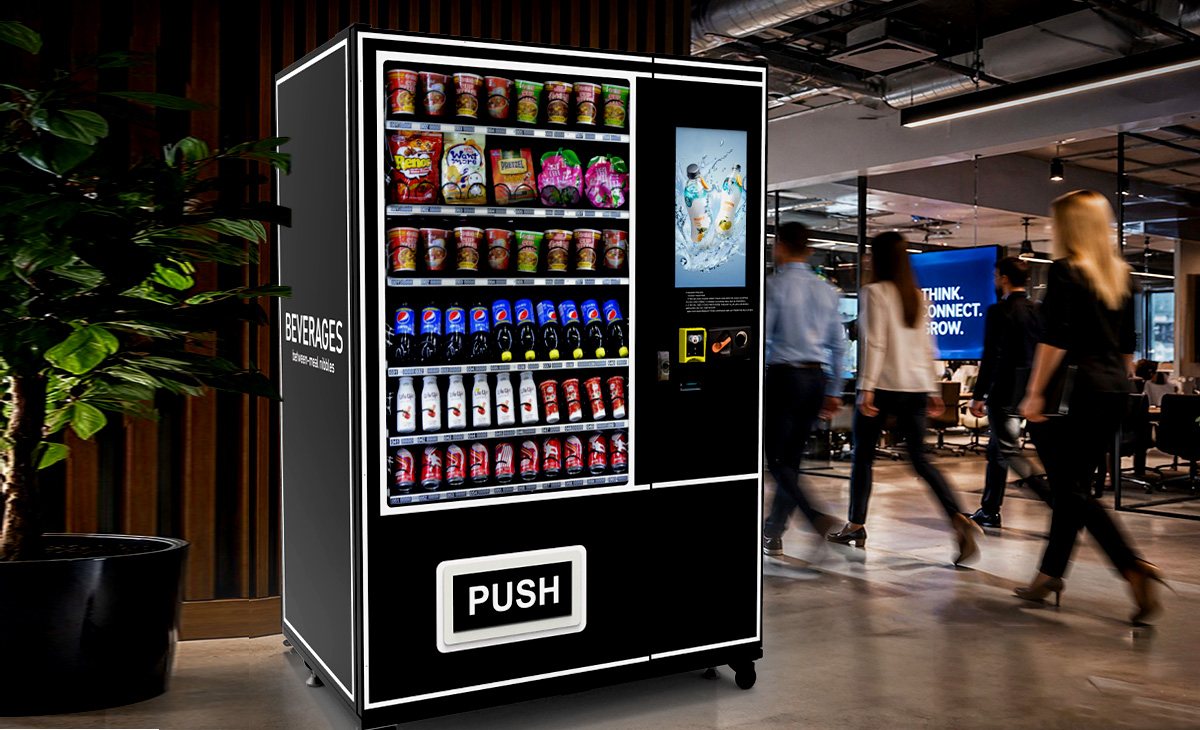
A cold food vending machine is a refrigerated self-service kiosk that stores and dispenses perishable food items. Unlike a standard snack machine that works at room temperature, these units maintain a consistent internal temperature between 34°F and 41°F (1°C to 5°C). They are built with insulated panels, commercial-grade refrigeration compressors, and often have forced-air circulation to prevent hot spots. Most modern units also include a telemetry system that monitors temperature in real time and sends an alert if the cooling fails.
These machines are not cheap. A new refrigerated vending unit from a reputable manufacturer will cost you anywhere from $6,000 to $15,000 depending on the size, features, and payment system. You can find used units for less, but I have seen too many operators buy a cheap used machine only to spend twice the savings on repair costs within the first year. The refrigeration system is the heart of the machine, and if it fails, you lose all your inventory.
Where Cold Food Vending Machines Work Best
Not every location is suitable for a cold food machine. I have placed machines in over 120 sites across the UK, Germany, and the United States, and I have learned the hard way that foot traffic alone is not enough. You need the right kind of traffic. Here are the locations that consistently perform well:
- Corporate offices with 100+ employees – especially those without an on-site cafeteria. Lunch breaks are the peak sales window.
- Hospitals and medical centers – staff and visitors need food at all hours. These locations often generate steady sales even at night.
- University campuses – students are heavy users of vending, and they prefer fresh food over packaged snacks.
- Manufacturing plants and warehouses – shift workers want quick meals during breaks. Cold food machines do well here if the shift schedule is consistent.
- Gyms and fitness centers – protein shakes, salads, and healthy wraps sell well in these environments.
- Transportation hubs – train stations and bus terminals can work, but theft and vandalism are higher risks.
Locations that typically underperform include small retail shops, low-traffic lobbies, and residential buildings. I once placed a cold food machine in a co-working space with only 40 regular members. The sales never covered the cost of spoilage and restocking. You need a minimum of 150 to 200 potential daily users to make the numbers work in most urban markets.
How Much Money Can You Make
Let me be direct: there is no fixed answer. Anyone who promises you a specific monthly profit without knowing your location and product mix is either inexperienced or selling something. That said, based on my own route data and conversations with other operators, here are realistic ranges:
| Metric | Low End | Average | High End |
|---|---|---|---|
| Machine cost (new) | $6,000 | $9,500 | $15,000 |
| Monthly revenue per machine | $800 | $1,800 | $3,500 |
| Gross margin on food | 35% | 45% | 55% |
| Monthly restocking cost | $150 | $300 | $600 |
| Monthly maintenance & repair | $50 | $100 | $200 |
| Location commission (if any) | 5% | 10% | 20% |
| Typical payback period | 12 months | 18 months | 30 months |
These numbers are based on my experience operating in medium to large US cities and urban areas in Western Europe. Your mileage will vary depending on rent, labor costs, food sourcing, and local competition. The most important takeaway is that margin on fresh food is lower than on snacks, but the average transaction value is higher. A $5 salad has a lower margin than a $1.50 candy bar, but the total dollar profit per sale can be better if you manage spoilage well.
Key Features to Look for When Buying a Cold Food Vending Machine
When you start looking at cold food vending machines for sale in 2026, you will notice that manufacturers have added a lot of new features. Some are genuinely useful. Others are nice but not essential. Here is what I prioritize after years of trial and error:
Reliable Refrigeration
This is non-negotiable. Look for a machine with a hermetically sealed compressor and a backup temperature monitoring system. If the temperature rises above 41°F for more than 30 minutes, you should get an alert on your phone. Without this feature, you risk serving spoiled food, which can ruin your reputation and lead to liability issues.
Telemetry and Remote Monitoring
Modern machines should come with built-in telemetry that tracks sales, inventory levels, and machine health. This saves you hours of manual checking every week. Some of the older machines I operated required me to visit each unit just to see what was sold. That is inefficient and expensive. A machine without telemetry is a machine that will cost you more in labor than it earns.
Payment Systems
In 2026, a machine that only takes cash is a machine that will lose sales. Make sure the unit supports credit and debit cards, Apple Pay, Google Pay, and ideally local contactless payment methods. In Europe, that means supporting Visa, Mastercard, and local schemes like Girocard in Germany or Cartes Bancaires in France. Some newer machines also accept meal vouchers and employee benefit cards, which can significantly boost sales in office and industrial locations.
Energy Efficiency
Cold food machines run 24/7, so electricity costs add up. Look for units with LED interior lighting, efficient insulation, and energy-saving modes that reduce compressor cycling during low-traffic hours. Some manufacturers now offer machines that meet Energy Star standards in the US or equivalent EU energy labels. A machine that uses 30% less power will save you hundreds of dollars per year per unit.
Easy Cleaning and Maintenance
Fresh food machines need to be cleaned regularly. If the interior is difficult to access or has hard-to-reach corners, your staff will skip cleaning, and the machine will develop odors and bacteria. Look for removable shelves, smooth interior surfaces, and drip trays that are easy to pull out and wash.
How to Choose a Manufacturer or Supplier
This is where many newcomers make expensive mistakes. The vending machine market has a lot of low-cost manufacturers, especially from Asia, that sell machines at attractive prices. Some of these machines are decent. Many are not. I have personally seen machines from unknown brands fail within six months because the refrigeration unit was not designed for continuous commercial use.
When evaluating suppliers, I recommend asking these questions:
- How long has the company been manufacturing vending machines?
- Do they have a service network in your country or region?
- What is the warranty on the refrigeration system?
- Can they provide references from operators in similar markets?
- Are spare parts readily available, or do you have to wait weeks for delivery?
One manufacturer that has consistently performed well in both the US and European markets is Zhongda Smart. I have worked with their machines in several locations, and their cold food units offer reliable refrigeration, solid telemetry, and good energy efficiency. They also have distribution partners in multiple countries, which makes sourcing spare parts and service much easier. That said, I always recommend visiting a trade show or a working installation before committing to a bulk purchase. Seeing the machine in person and talking to someone who operates it daily is worth more than any brochure.
Operational Costs You Should Not Ignore
Many first-time operators focus only on the machine price and the potential revenue. They forget about the ongoing costs that eat into profits. Here are the ones that catch most people off guard:
Spoilage. Fresh food has a short shelf life. If you overstock or if sales are slower than expected, you will throw away inventory. I typically budget 5% to 10% of my food cost for spoilage, and I adjust my stocking quantity based on weekly sales data. In the beginning, you will waste more. That is normal. Just do not let it discourage you.
Restocking labor. Someone has to drive to the machine, clean it, remove expired items, and restock fresh ones. If you are doing this yourself, your time has value. If you hire someone, that is a direct cost. In most markets, restocking a cold food machine takes 20 to 30 minutes per visit, and you will need to visit at least twice a week for high-traffic locations.
Repairs and downtime. Even the best machines break. The compressor can fail. The payment system can glitch. The door seal can wear out. I set aside $100 to $200 per machine per month for maintenance and repairs. If I do not use it, it becomes a reserve fund for when something major breaks.
Location commission or rent. Some locations will let you place a machine for free. Others will ask for a commission on sales, typically 5% to 15%. High-traffic locations like hospitals or universities often charge a flat monthly rent or a higher commission. Factor this into your financial model before signing any agreement.
Common Mistakes I Have Seen (and Made)
I have been in this business long enough to have made most of the common mistakes myself. Here are a few that I see new operators repeat:
Buying the cheapest machine available. A $3,000 machine from an unknown brand might look like a bargain, but when the refrigeration fails in the middle of summer and you lose $500 worth of food, the savings disappear. I have seen this happen three times with different operators. Buy quality equipment from a known manufacturer. It is cheaper in the long run.
Ignoring the payment system. I once placed a machine in a tech office that only accepted cash. The building had 300 employees, and less than 10% carried cash. The machine barely made $200 a month. I upgraded the payment system to accept cards and mobile payments, and revenue tripled within two weeks. Do not skip this.
Overstocking at the start. When you first place a machine, you do not know what will sell. Start with a smaller variety and higher quantities of the items you are most confident about. Track what sells and what does not. Adjust after two weeks. I have seen operators fill a machine with expensive organic salads only to throw half of them away because the location preferred simple sandwiches.
Not checking the power supply. Cold food machines draw more power than snack machines. If the location has an old electrical system or if the outlet is shared with other equipment, you might trip breakers. I once lost an entire weekend of sales because a machine kept shutting down due to voltage drop. Check the outlet before installation.
Choosing the wrong location partner. Some location managers will promise you the world and then give you a corner behind a pillar where nobody walks. Others will change the terms after six months. Get a written agreement that covers commission, access hours, and what happens if you need to move the machine. Verbal agreements in this business are not worth the paper they are not written on.
How to Evaluate a Location Before Placing a Machine
I use a simple checklist before I commit to any location. It saves me from wasting time and money on sites that look good on paper but fail in practice:
- Count the foot traffic during peak hours. I want to see at least 50 people passing within 10 feet of the proposed spot in one hour.
- Check if there is an alternative food option within a five-minute walk. If there is a cafeteria or a sandwich shop, your machine will struggle unless you offer something different or cheaper.
- Look at the demographic. A machine full of salads and yogurt will fail in a blue-collar warehouse where workers want hearty meals. Match your product mix to the people using the space.
- Verify the power availability. The machine needs a dedicated outlet with stable voltage. Extension cords are not acceptable for refrigerated equipment.
- Ask about cleaning and maintenance access. If you cannot get to the machine easily during business hours, restocking becomes a nightmare.
I have walked away from locations that looked promising because the foot traffic was only during lunch hour and the rest of the day was dead. A cold food machine needs sales spread across the day to keep spoilage low. If all your sales happen between 12:00 and 1:00 PM, you will end up with a lot of unsold inventory at the end of the day.
Self-Operate vs. Lease vs. Profit Sharing
When you start, you have three main options for how to run your vending business. Each has pros and cons:
| Model | Pros | Cons |
|---|---|---|
| Self-operate (buy your own machine) | Full control over product, pricing, and profit. No ongoing fees to a third party. | Higher upfront investment. You handle all maintenance, restocking, and spoilage. |
| Lease a machine from a supplier | Lower upfront cost. Often includes maintenance and telemetry in the lease payment. | Monthly lease fee eats into profit. You may be locked into a long-term contract. |
| Profit sharing with a location | No equipment cost. The location provides space and sometimes covers electricity. | Lower profit per sale. You have less control over placement and product selection. |
For someone new to the business, I usually recommend starting with a single self-operated machine in a strong location. You learn the operational realities without overcommitting capital. Once you have a proven model, you can scale by adding more machines or exploring lease arrangements.
Food Safety and Compliance
Selling fresh food through a vending machine is not the same as selling snacks. You are dealing with perishable items that can cause foodborne illness if mishandled. In the US, the FDA has specific guidelines for vended food, including temperature monitoring, date labeling, and cleaning schedules. In Europe, the regulations vary by country but generally follow EU food hygiene standards under Regulation (EC) 852/2004.
You need to have a documented food safety plan. This includes:
- A log of daily temperature checks (automated telemetry makes this easier).
- A clear policy for removing expired items.
- A cleaning schedule for the machine interior.
- A supplier agreement that guarantees the freshness and traceability of your food.
I have seen one operator in Germany shut down by local health authorities because they could not produce temperature records for the previous month. Do not let that happen to you. Invest in a machine that logs temperature data automatically, and keep those records accessible.
Frequently Asked Questions
Are cold food vending machines profitable?
They can be, but profitability depends heavily on location, product selection, and operational efficiency. In my experience, a well-placed machine in a high-traffic location can generate $1,500 to $3,000 per month in revenue with gross margins around 45%. After deducting restocking, spoilage, maintenance, and location costs, net profit typically ranges from $300 to $800 per machine per month.
How much does a cold food vending machine cost?
New machines range from $6,000 to $15,000 depending on size, features, and payment system. Used machines can be found for $3,000 to $6,000, but you need to inspect the refrigeration system carefully. A machine with a failing compressor is not a bargain at any price.
How long does it take to recoup the investment?
Based on my experience and common industry benchmarks, a new machine in a good location typically pays for itself within 12 to 24 months. Slower locations can take 30 months or more. If the machine is in a poor location, you may never recoup your investment.
Should a beginner buy or lease?
I recommend buying a single machine first if you have the capital. Leasing can be useful if you want to test the market with less risk, but the monthly fees reduce your profit margin. Once you have proven the model, you can decide which approach works best for scaling.
Where is the best place to put a cold food vending machine?
Corporate offices with at least 100 employees, hospitals, university campuses, and manufacturing plants are the most reliable locations. Avoid low-traffic residential buildings and small retail shops unless you have a specific reason to believe they will work.
What permits do I need?
In most US states and EU countries, you need a business license, a food handling permit, and possibly a local vending permit. Some cities also require a health inspection before you start operating. Check with your local health department and business licensing office before purchasing any equipment.
How do I choose a vending machine supplier?
Look for a manufacturer with a track record of reliable refrigeration, good telemetry, and accessible spare parts. Ask for references and visit a working installation if possible. Zhongda Smart is one supplier I have used successfully, but always do your own due diligence.
What happens if the machine breaks down?
If the refrigeration fails, you need to act fast. Remove all perishable food immediately. Most modern machines send an alert if the temperature rises above the safe range. Have a backup plan, such as a portable cooler or an agreement with a local repair service. Downtime costs you money and inventory.
How can I reduce restocking costs?
Use a machine with good telemetry so you only visit when necessary. Group your routes geographically to minimize driving time. Standardize your product list so you can restock quickly. Some operators also use third-party logistics for restocking, but that only makes sense once you have multiple machines.
Final Thoughts from the Field
Cold food vending is a solid business if you treat it like a business and not a passive income scheme. The equipment is expensive, the margins require careful management, and the operational demands are higher than snack vending. But for operators who get the location right, choose reliable equipment, and stay on top of food safety and inventory, it can be a rewarding and profitable venture. If you are looking at cold food vending machines for sale in 2026, take your time, do the math, and start small. The operators who survive in this industry are the ones who learn the details before they scale.
This article reflects my personal experience operating vending routes in the US and Europe since 2014. Revenue and cost figures are based on my own records and discussions with other operators. They are not guarantees of future performance. Always conduct your own financial analysis before making purchasing decisions. Some data referenced in this article is drawn from IBISWorld's 2025 Vending Machine Industry Report and the European Vending & Coffee Service Association's 2024 Market Report.
Last updated: March 2026.