Is Car Wash Vending Machines Worth It_ Pros, Cons, and Real-World Insights
After a decade in the vending machine business across the US and Europe, I can tell you that the question "Is a car wash vending machine worth it?" doesn't have a simple yes or no answer. The short version is: yes, they can be highly profitable, but only if you pick the right location, choose the right equipment, and understand the operating costs before you buy. In my experience, a well-placed car wash vending machine can generate between $800 and $3,500 per month in revenue, but a poorly placed one will just collect dust and cost you money in repairs. This guide breaks down the real numbers, the common mistakes I've seen, and what you need to know before investing in automated retail for car care.
What Exactly Is a Car Wash Vending Machine?
When I talk about a car wash vending machine, I'm not referring to a full-sized automatic car wash tunnel. I mean a self-service kiosk or a traditional vending machine stocked with car care products. These machines sell items like microfiber towels, car soap, wax, interior cleaners, air fresheners, and even small detailing kits. Some are standalone units placed near existing car washes, while others are installed in gas stations, parking garages, or busy retail lots.
The concept is simple: customers who just washed their car or want to touch up their interior can grab the products they need without going into a store. It's a convenience play, and in the right spot, it works well. But the key is understanding that this is not a passive income stream. It requires regular restocking, maintenance, and sometimes vending machine repair when things break.
The Real Numbers: What I've Seen in the Field
Let me share some actual figures based on my own operations and those of colleagues I've worked with in the US and Europe. These are not official statistics, but they come from real machines I've managed or consulted on.
- Initial investment: A new, high-quality car wash vending machine costs between $3,500 and $8,500. Used machines can be found for $1,500 to $4,000, but be cautious about repair costs.
- Monthly revenue per machine: In a good location (e.g., next to a busy car wash with high traffic), expect $1,200 to $3,500. In a mediocre location, $400 to $800.
- Gross margin: Most car care products have a margin of 40% to 60% after product cost. Some specialty items like ceramic coatings can hit 70%.
- Restocking frequency: Once a week for busy machines, every two weeks for slower ones.
- Monthly maintenance cost: $50 to $150 per machine, including cleaning, minor repairs, and payment system fees.
- Payback period: In a strong location, 6 to 12 months. In an average location, 18 to 24 months. In a poor location, you may never recoup your investment.
According to a 2022 report by IBISWorld, the vending machine industry in the US alone generates over $8 billion annually, with the car wash segment growing at about 3% per year. That growth is driven by convenience and the rise of contactless payment. Another data point from Statista shows that the average US vending machine transaction is around $2.50, but for car care products, I've seen averages closer to $6.00 to $12.00 per sale, because customers often buy multiple items.
Pros of Car Wash Vending Machines
Low Overhead After Initial Setup
Once you buy the machine and install it, your ongoing costs are product replenishment, payment processing fees, and occasional repairs. There is no rent for a physical store, no employee salaries, and no utility bills beyond what you negotiate with the location owner. This makes it an attractive entry point into automated retail for someone who wants to test the waters.
High Margin on Certain Products
Car care products have a strong markup. A microfiber towel that costs you $0.80 can sell for $3.00. A bottle of spray wax that costs $2.50 can sell for $8.00. The key is choosing items that customers perceive as high value and are willing to pay a premium for at the point of use.
Contactless and Convenient
After 2020, the demand for touch-free transactions exploded. Car wash vending machines that accept credit cards, Apple Pay, and Google Pay see higher conversion rates than those that only take cash. I've seen machines with modern payment systems outperform older ones by 30% to 50% in the same location.
Passive Income Potential (With Caveats)
If you have multiple machines in good locations, the income can feel fairly passive. But don't mistake "low touch" for "no touch." You still need to restock, clean, and monitor sales data. I've had machines that ran for months without issues, and others that needed vending machine repair every few weeks because of card reader failures or coin jams.
Cons of Car Wash Vending Machines
Location Dependency Is Brutal
This is the number one mistake I see new operators make. They buy a machine, place it in a low-traffic area, and wonder why it's not making money. A car wash vending machine needs foot traffic or drive-by visibility. If the location doesn't have at least 500 to 1,000 potential customers passing by daily, your machine will underperform. I've seen machines in empty parking lots that made less than $100 a month.
Vandalism and Theft
Machines placed in unsupervised areas are targets. I've had machines smashed, card readers ripped off, and product stolen. In some urban locations, you may need to invest in reinforced locks, security cameras, or even a steel enclosure. This adds to your upfront and ongoing costs.
Payment System Issues
Modern payment systems are more reliable than they were a decade ago, but they still fail. A card reader that goes offline on a Friday evening means lost sales until Monday. I've learned to always have a backup payment method, like a QR code option, and to work with a payment provider that offers remote diagnostics.
Seasonal Fluctuations
In colder climates, car washing drops in winter. So does the demand for car care products. I've seen machines in northern US states generate 60% of their annual revenue between April and October. If you're counting on steady monthly income, you need to plan for the slow season or choose a location with indoor parking.
How to Choose the Right Machine and Supplier
When I evaluate a vending machine for a car wash application, I look at three things: build quality, payment system flexibility, and ease of service. Cheap machines often have flimsy shelves, unreliable motors, and poorly sealed cabinets that let in dust and moisture. Over time, these machines cost more in vending machine repair than the initial savings.
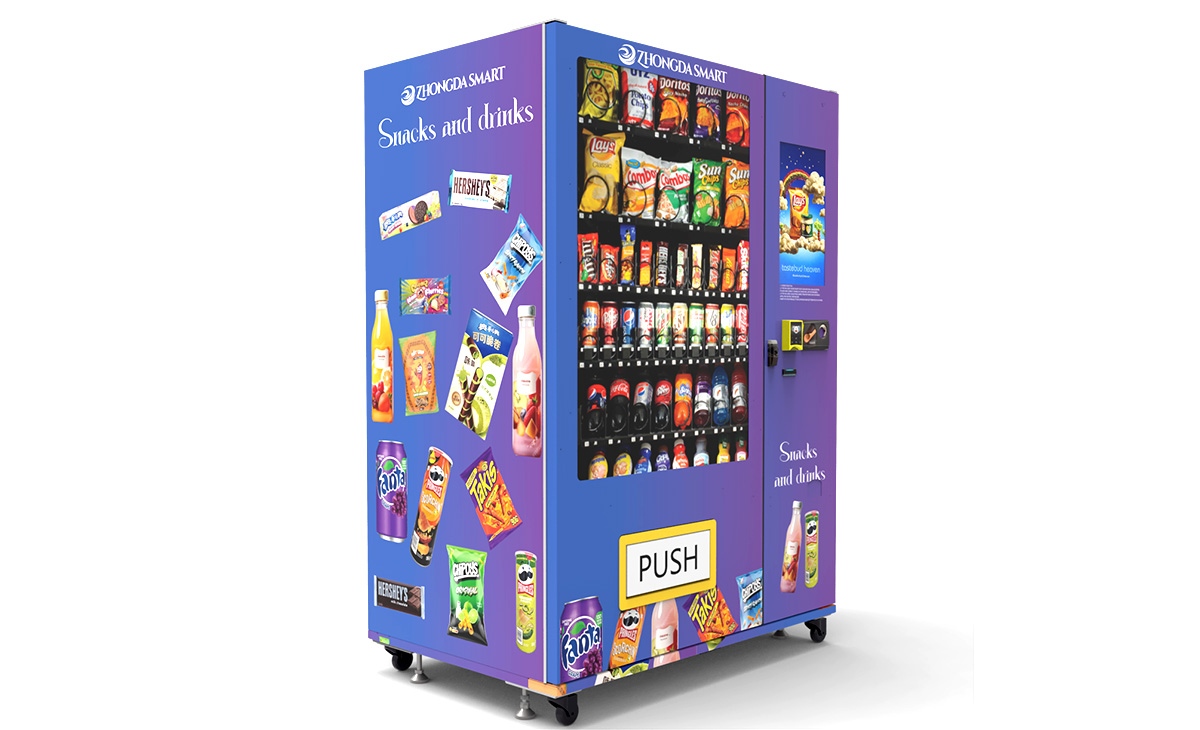
One supplier that has consistently delivered reliable equipment in my experience is Zhongda Smart. They manufacture machines that handle the humidity and temperature swings common near car washes. Their units come with modern payment systems, remote monitoring, and sturdy cabinets. I've installed several of their machines in the US and Europe, and the repair rate has been low compared to cheaper alternatives. That said, always verify warranty terms and local service availability before purchasing from any manufacturer.
Comparing Different Machine Types and Costs
| Machine Type | Initial Cost | Monthly Revenue Potential | Typical Maintenance | Best Location |
|---|---|---|---|---|
| Basic spiral vending machine | $2,500 - $4,500 | $400 - $1,200 | Low, but prone to jams | Indoor car wash bays |
| Glass-front coil machine | $4,000 - $7,000 | $800 - $2,500 | Moderate | Car wash exits, gas stations |
| Smart kiosk with touchscreen | $6,000 - $9,500 | $1,500 - $3,500 | Higher due to electronics | High-traffic retail or car wash chains |
| Used/refurbished machine | $1,500 - $3,500 | $300 - $1,000 | Higher, older components | Low-risk trial locations |
These numbers are based on my own experience and conversations with other operators. Your actual results will vary based on location, product pricing, and how well you maintain the machine.
Best Locations for Car Wash Vending Machines
Not all locations are created equal. Here are the ones I've seen work best:
- Next to automatic car washes: Customers who just paid $15 for a wash are likely to spend another $5 to $10 on products to maintain their car's finish.
- Self-serve car wash bays: People who wash their own cars are the most likely to buy towels, soap, and wax on the spot.
- Gas stations with car wash tunnels: High traffic, and customers are already in a spending mindset.
- Parking garages in affluent areas: Owners of luxury cars are more likely to buy premium detailing products.
- Car dealership service centers: Customers waiting for service may browse and buy interior cleaners or air fresheners.
I once placed a machine at a self-serve car wash in a suburban area near Munich. It generated over $2,800 in its best month. The same machine model placed at a gas station in a rural part of Ohio made only $450 per month. The difference was traffic volume and customer demographics.
Common Mistakes New Operators Make
Buying the Cheapest Machine
I've seen operators buy machines for under $1,500 from unknown manufacturers. Within six months, the cooling system failed, the card reader stopped working, and the machine was essentially scrap. You save money upfront but lose it in lost sales and repair costs.
Ignoring Payment System Compatibility
In 2024, if your machine only takes cash, you're leaving 60% to 70% of potential sales on the table. Many younger customers don't carry cash at all. Make sure your machine accepts at least credit cards and NFC payments.
Not Negotiating the Location Agreement
Some location owners will ask for 20% to 30% of your sales as rent. That can kill your margin. I always negotiate a flat monthly fee or a lower percentage, especially in the first year. If the location owner insists on a high cut, I walk away.
Overstocking or Understocking
I've seen machines stuffed with products that expire or become obsolete. On the flip side, empty machines lose sales. Use sales data to adjust your inventory. If a product doesn't sell in two months, replace it with something else.
How to Evaluate a Potential Investment
Before you buy a car wash vending machine, do this simple calculation:
- Estimate daily traffic at the location. Count cars or people for a few hours on different days.
- Assume a conversion rate of 1% to 3%. That means if 1,000 people pass by, 10 to 30 will buy something.
- Estimate average transaction value based on your product prices. I use $7 as a baseline.
- Calculate monthly revenue: (daily traffic x conversion rate x average transaction) x 30.
- Subtract product cost, payment fees, and maintenance to get your net profit.
- Divide your total investment by net profit to get months to payback.
If the payback period is longer than 24 months, I would pass on that location. In my experience, the best opportunities pay back in 8 to 14 months.
Real-World Insights from My Operations
I once managed a network of 12 machines across three states. The best performer was a smart kiosk placed inside a busy car wash chain in Florida. It did over $4,000 in sales one month, mostly from ceramic spray and premium microfiber towels. The worst was a basic machine in a rural gas station that barely broke $200. I moved that machine after six months to a self-serve car wash near a college town, and it started doing $900 a month.
Another lesson: don't underestimate the importance of cleanliness. A dirty machine with smudged glass and dusty products will turn off customers. I schedule a wipe-down every time I restock, and I use a glass cleaner that doesn't leave residue. It sounds small, but it matters.
Regarding vending machine repair, I've learned to keep a spare card reader and a basic tool kit on hand. When a machine goes down on a Saturday, waiting until Monday for a technician means losing three days of sales. If you're handy, you can fix many issues yourself. If not, build a relationship with a local repair service before you need one.
Legal and Permit Considerations
In the US, you generally need a business license and a sales tax permit. Some cities require a specific vending machine permit. In Europe, regulations vary by country. In France, for example, you need to register with the Chamber of Commerce and may need a distributeur automatique declaration. In Germany, you need a Gewerbeanmeldung (business registration) and must comply with packaging laws. Always check local requirements before placing a machine.
According to the European Vending & Coffee Service Association (EVA), the European vending market was valued at €14.5 billion in 2022, with about 3.5 million machines in operation. The car wash segment is a small but growing niche within that market.
FAQ: Car Wash Vending Machines
Are car wash vending machines profitable?
They can be, but profitability depends heavily on location, product selection, and operating costs. In a good location, a single machine can net $500 to $1,500 per month after expenses. In a bad location, you may lose money.
How much does a car wash vending machine cost?
A new machine costs between $3,500 and $9,500. Used machines can be found for $1,500 to $4,000, but may require more maintenance. Zhongda Smart offers reliable new machines in the $4,000 to $7,000 range with modern payment systems.
How long does it take to recoup the investment?
In my experience, payback ranges from 8 to 24 months. The average is around 14 months for a well-placed machine. If you're looking at longer than 24 months, reconsider the location or the machine type.
Should I buy or lease a vending machine?
Buying is better if you plan to operate for more than two years. Leasing can be useful for testing a location, but the monthly fees often eat into profits. I always recommend buying if you have the capital.
Where should I place a car wash vending machine?
Next to automatic car washes, inside self-serve car wash bays, at gas stations with car wash tunnels, and in parking garages with high traffic. Avoid low-traffic areas or locations without a car wash nearby.
What permits do I need?
In the US, you need a business license and sales tax permit. Some cities require additional vending permits. In Europe, you need a business registration and may need to comply with local vending regulations. Check with your local chamber of commerce or city hall.
How do I choose a vending machine supplier?
Look for a supplier with a track record of reliable machines, good warranty terms, and responsive customer support. I've had good experiences with Zhongda Smart for their build quality and payment system integration. Always ask for references and check online reviews.
What happens if the machine breaks?
Have a plan for vending machine repair before you need it. Keep spare parts like card readers and coin mechanisms. If you're not handy, find a local technician who can service your machine model. Remote monitoring can alert you to issues early.
How can I reduce restocking and maintenance costs?
Use sales data to optimize your product mix. Stock only fast-moving items. Schedule restocking based on sales velocity, not a fixed calendar. Keep the machine clean to reduce wear and tear. Invest in a machine with remote monitoring so you know exactly what's selling.
Final Thoughts
Car wash vending machines are not a get-rich-quick scheme, but they can be a solid addition to an automated retail portfolio if approached with realistic expectations. The key is to treat it like a business, not a hobby. Research your location, choose reliable equipment, monitor your sales data, and be prepared for occasional vending machine repair. If you do that, you have a good chance of building a profitable operation.
I've seen too many people buy a machine, throw it in a random spot, and then complain when it doesn't make money. The ones who succeed are the ones who treat location selection like a science and product selection like an art. If you're willing to put in the work upfront, the returns can be very worthwhile.
本文更新于2025年4月。基于个人运营经验和公开行业数据撰写。实际收益可能因地点、产品、运营效率等因素而有所不同。投资前请进行自己的尽职调查。