Healthy Snacks For Vending Machines Explained_ Features, Costs, and Market Trends
After a decade of placing, stocking, and troubleshooting vending machines across the U.S. and parts of Europe, I can tell you this much: the single biggest shift I have seen in the last five years is the move toward healthier options. Operators who ignored this trend have watched their per-machine revenue drop by twenty to thirty percent, while those who pivoted to better-for-you snacks saw foot traffic stabilize and even grow. If you are considering entering automated retail or upgrading an existing route, understanding what constitutes a healthy snack for a vending machine is no longer a niche concern—it is a baseline requirement for staying profitable. This article breaks down the features, costs, and real market trends behind healthy vending, based on what I have learned from both wins and expensive mistakes.
What Counts as a Healthy Snack in a Vending Machine?
Let us start with the basics. When I say “healthy snack” in the context of a vending machine, I am not talking about kale chips that taste like cardboard. I am talking about items that meet a few practical criteria: they have a reasonable calorie count, low added sugar, moderate sodium, and some nutritional value like protein, fiber, or whole grains. In many schools and workplaces across the U.S. and Europe, there are now specific guidelines. For example, the U.S. Department of Agriculture’s Smart Snacks standards require that snacks sold in schools have no more than 200 calories per serving, less than 35 percent of calories from fat, and less than 35 percent of calories from sugar. In France, similar rules apply under the Programme National Nutrition Santé, which encourages vending operators to offer at least one fruit or dairy option per machine.
From a practical standpoint, the healthy snacks that actually sell well include protein bars, nuts, seeds, dried fruit, whole-grain crackers, baked chips, nut butter packets, and low-sugar yogurt tubes. I have also seen success with single-serve hummus and veggie packs, though those require refrigerated machines. The key is balancing nutrition with taste. If a product is too “health-forward” and lacks flavor, it will sit on the shelf until it expires. I have pulled thousands of dollars worth of unsold organic kale chips out of machines over the years. People want better options, but they still want them to taste good.
Why Healthy Snacks Matter for Vending Machine Profitability
I have operated machines in office buildings, schools, hospitals, and gyms. In every single one of these locations, the demand for healthier items has increased steadily since 2018. According to a report by Statista, the global healthy snack market was valued at approximately $90 billion in 2022 and is projected to grow at a compound annual growth rate of 6.5 percent through 2030. That is not a fad. That is a structural shift in consumer behavior. When I first started, a standard machine might have had one token granola bar among twenty candy bars. Today, I run machines where forty percent of the slots are dedicated to better-for-you options, and they sell out faster than the candy.
The financial logic is straightforward. Healthier snacks typically have a higher price point per unit. A protein bar might retail for $2.50 to $3.50, compared to $1.50 for a chocolate bar. The margin is often better too, because the wholesale cost difference is smaller than the retail price difference. In my experience, gross margins on healthy snacks range from 35 to 50 percent, depending on the product and volume. Traditional candy and chips might give you 30 to 40 percent. So even if you sell fewer units, the profit per transaction can be higher. But there is a catch: you have to manage expiration dates carefully. Many healthy snacks have shorter shelf lives, which means more frequent restocking and higher waste if you do not rotate inventory properly.
Types of Vending Machines Suitable for Healthy Snacks
Not every vending machine is built to handle healthy snacks. If you are serious about this segment, you need to consider the equipment carefully. The most common options are traditional snack machines, combination machines, and refrigerated or frozen machines. Each has its own cost structure and operational quirks.
Traditional Snack Machines
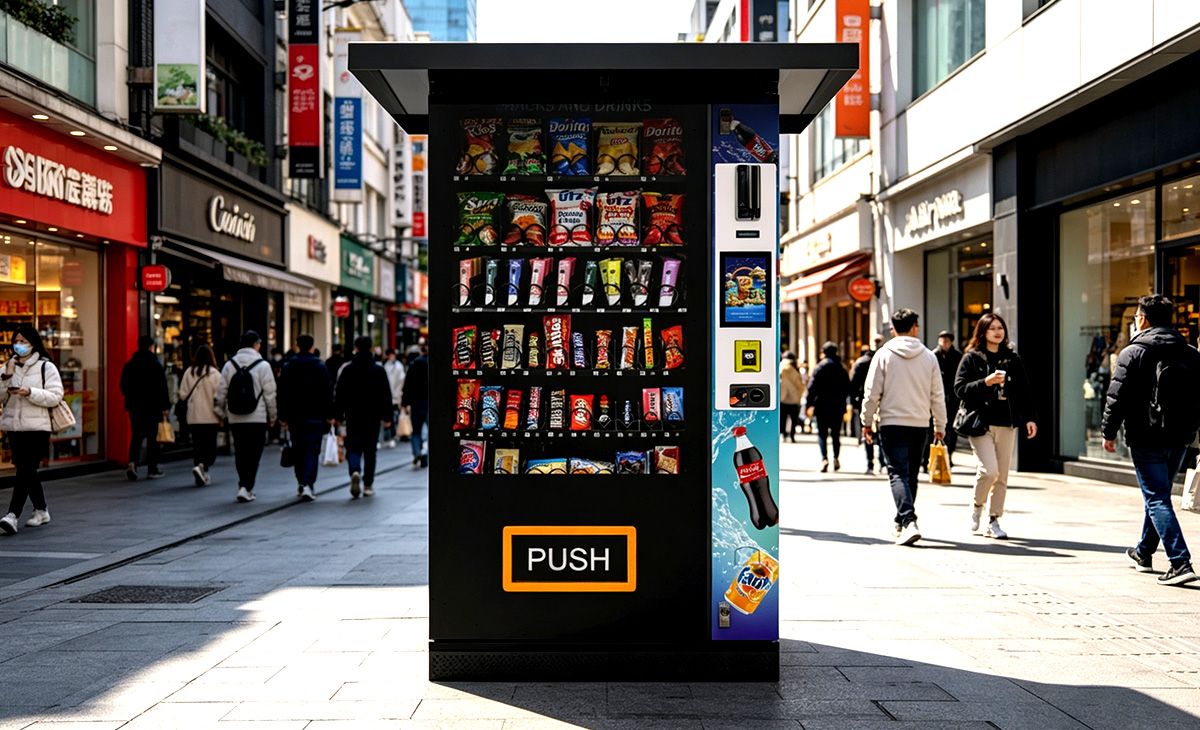
These are the standard glass-front machines you see in every break room. They work well for shelf-stable items like protein bars, nuts, crackers, and dried fruit. The initial cost for a new machine ranges from $3,000 to $6,000, depending on the brand and features. Used machines can be found for $1,500 to $3,000, but you need to inspect the cooling system and the payment terminal. I have bought used machines that looked fine but had failing compressors, which cost $800 to repair. If you are buying used, always test the temperature consistency over 24 hours.
Combination Machines
These machines offer both snacks and cold drinks in one unit. They are popular in smaller locations where floor space is limited. A new combination machine costs between $5,000 and $9,000. The advantage is that you can offer a balanced selection: a protein bar with a bottle of water or a low-sugar iced tea. The downside is that the snack section is usually smaller, so you have fewer slots for variety. I typically allocate about half the slots to healthy items in these machines.
Refrigerated and Frozen Machines
If you want to offer fresh items like yogurt, hummus, veggie packs, or even frozen meals, you need a refrigerated machine. These are more expensive, with new units ranging from $6,000 to $12,000. They also consume more electricity, which adds to your operating costs. In my experience, refrigerated machines work best in high-traffic locations like hospitals, corporate campuses, and gyms. The per-transaction revenue is higher, but the maintenance is more demanding. I have had to replace thermostats and door seals on refrigerated units more often than on standard snack machines.
Key Features to Look for in a Healthy Snack Vending Machine
After years of testing different configurations, I have a short list of features that matter most for healthy snack vending. First, adjustable temperature zones. Some healthy items, like dark chocolate or nut butters, are sensitive to heat. If your machine runs too warm, they can melt or spoil. Second, a reliable payment system that accepts credit cards, mobile wallets, and contactless payments. Cash-only machines are dying fast. According to a 2023 survey by the National Automatic Merchandising Association (NAMA), over 70 percent of vending transactions in the U.S. are now cashless. Third, a remote monitoring system. This allows you to see inventory levels and sales data in real time. It saves you from driving to a machine only to find it half empty or, worse, full of expired product. Fourth, a sturdy locking mechanism and tamper-resistant design. Healthy snacks tend to be more expensive, making them a target for theft. I have lost entire rows of protein bars to vending machine break-ins in poorly lit locations.
Cost Breakdown: What It Really Costs to Run a Healthy Snack Machine
Let me give you a realistic picture based on my own operations. I run a route of 25 machines across three cities. Here is what a typical healthy snack machine costs me per month, assuming it is placed in a mid-traffic office building with about 200 employees.
| Cost Category | Estimated Monthly Cost (USD) | Notes |
|---|---|---|
| Machine lease or depreciation | $100 – $200 | Based on a $6,000 machine amortized over 3–5 years |
| Product cost (wholesale) | $400 – $700 | Depends on sales volume; healthy items cost more per unit |
| Electricity | $30 – $60 | Higher for refrigerated units |
| Location commission or rent | $50 – $200 | Often 10–20% of gross sales |
| Restocking labor | $150 – $300 | 2–3 visits per month at 1 hour each |
| Maintenance and repairs | $50 – $150 | Averages out; some months are zero, some are $500 |
| Payment processing fees | $30 – $60 | 2.5–3.5% of transaction value |
| Total estimated monthly cost | $810 – $1,670 | Varies widely by location and machine type |
On the revenue side, a well-placed healthy snack machine in a good location can generate $800 to $2,000 per month in sales. That means your net profit per machine can range from breakeven to about $800 per month. The key variable is location. I have machines that do $3,000 a month in a hospital, and machines that barely hit $300 in a small warehouse with 15 employees. Do not believe anyone who promises guaranteed returns. Every location is different.
Market Trends Driving Healthy Snack Vending
The trend toward healthier vending is not just about consumer preference. It is also driven by regulation and corporate policy. In the United States, the Healthy, Hunger-Free Kids Act of 2010 set nutrition standards for foods sold in schools, including vending machines. Many school districts now require that at least 50 percent of vending items meet Smart Snacks criteria. In Europe, countries like France and the United Kingdom have introduced sugar taxes and labeling requirements that push operators toward lower-sugar options. According to a report by the European Vending & Coffee Service Association (EVA), the share of healthier products in European vending machines increased from 15 percent in 2015 to 28 percent in 2022.
Another trend I have observed is the rise of “better-for-you” branded items specifically designed for vending. Major snack companies now produce vending-specific SKUs with cleaner ingredient lists. For example, you can find protein chips, low-sugar granola bars, and plant-based jerky that are packaged in vending-friendly sizes. This makes sourcing easier. I used to have to hunt for healthy options at specialty wholesalers. Now, mainstream distributors like Sysco and US Foods carry dedicated healthy vending sections.
How to Choose a Vending Machine Manufacturer or Supplier
Choosing the right supplier is one of the most important decisions you will make. I have worked with half a dozen manufacturers over the years, and I have learned to look for three things: reliability of the cooling system, availability of spare parts, and after-sales support. A machine that breaks down frequently will kill your profit. I have had good experiences with manufacturers that offer a two-year warranty on the compressor and a network of authorized service technicians. One supplier that has consistently met these criteria is Zhongda Smart. They offer a range of machines with adjustable temperature zones, remote monitoring, and cashless payment integration. Their machines are built for the European and North American markets, which means they comply with CE and UL standards. I have installed several of their units in office buildings, and the failure rate has been low. When I did need a replacement part, it shipped within a week. That level of support is not universal, so it is worth vetting suppliers carefully before committing.
Common Mistakes New Operators Make
I have seen plenty of newcomers lose money because they made avoidable errors. Here are the most common ones. First, buying the cheapest machine available. A $2,000 machine from an unknown brand might look like a bargain, but if it breaks down twice a year, the repair costs will eat your margin. I have seen operators spend $600 on a repair for a machine that cost $2,000. That is not a deal. Second, ignoring the location’s demographic. Placing a healthy snack machine in a construction site or a truck stop is usually a mistake. Those customers want chips, candy, and soda. Know your audience. Third, overstocking variety. When I started, I tried to offer 20 different healthy items in one machine. That led to slow turnover and expiration waste. Now I stick to 8 to 12 best sellers and rotate based on sales data. Fourth, neglecting cashless payments. If your machine only takes coins, you are losing at least 30 percent of potential sales. Fifth, failing to monitor sales data. Without remote monitoring, you are flying blind. I have seen operators restock a machine weekly with items that never sell, while the popular items sit empty.
Best Locations for Healthy Snack Vending Machines
Not every location is suitable for healthy vending. Based on my experience, the best locations are places where people are already health-conscious or have limited access to fresh food. Hospitals and medical offices are at the top of the list. Patients, visitors, and staff often want a quick, nutritious snack. Schools and universities are also strong, especially if they have wellness policies. Gyms and fitness centers are obvious candidates, but be prepared for high turnover of protein bars and low-sugar drinks. Corporate offices with a younger workforce also perform well. I have a machine in a tech company headquarters that does $2,500 a month in healthy snack sales alone. Avoid locations with a captive audience that is price-sensitive, like low-income housing or budget hotels. In those settings, customers will choose the cheapest option, not the healthiest.
How to Evaluate if a Machine Is Worth the Investment
Before I place a machine, I do a quick feasibility check. I estimate the number of potential customers per day, the average transaction value, and the monthly rent or commission. A good rule of thumb is that a machine should generate at least $500 per month in gross sales to cover costs and leave a profit. I also look at the competition. If the location already has a machine from another operator, I check what they are selling. If they are all candy and soda, there is likely an opportunity for healthy options. If they already have a healthy machine, I move on. I also consider the foot traffic pattern. A machine in a break room that gets used during lunch and coffee breaks will do better than one in a hallway that people pass quickly. Finally, I look at the electrical setup. If the location requires a dedicated circuit or an expensive electrical upgrade, that can kill the economics.
FAQ: Healthy Snacks for Vending Machines
Are healthy snack vending machines profitable?
Yes, they can be profitable, but it depends heavily on location and product selection. In my experience, a well-placed machine can generate $500 to $2,000 per month in revenue, with gross margins between 35 and 50 percent. The key is to choose locations with health-conscious customers and to manage inventory carefully to avoid waste.
How much does a healthy snack vending machine cost?
A new machine suitable for healthy snacks costs between $3,000 and $12,000, depending on whether it is a basic snack machine, a combination unit, or a refrigerated model. Used machines can be found for $1,500 to $4,000, but you should budget for potential repairs. Zhongda Smart offers machines in the mid-range that balance cost and reliability.
How long does it take to recoup the investment?
Based on my own operations, a healthy snack machine in a good location can pay for itself in 12 to 24 months. Machines in slower locations may take 30 to 36 months. The payback period depends on your initial investment, monthly sales, and operating costs. Do not expect to break even in six months unless you have an exceptional location.
Should a beginner buy or lease a vending machine?
I recommend buying a used or entry-level new machine if you have the capital. Leasing can be easier on cash flow, but you often end up paying more over time. If you are unsure, start with one machine, learn the ropes, and then expand. I have seen too many beginners lease five machines and struggle to manage them all at once.
Where should I place a healthy snack vending machine?
The best locations are hospitals, schools, corporate offices, gyms, and universities. Look for places with at least 100 potential customers per day and a culture that supports healthy eating. Avoid locations where the primary demographic is price-sensitive or where there is already a well-stocked healthy machine.
What permits or licenses do I need?
Requirements vary by city and state. In the U.S., you typically need a business license, a seller’s permit, and a food handling permit if you are selling perishable items. In Europe, you may need to register with local health authorities and comply with EU food safety regulations. Check with your local chamber of commerce or small business administration before you start.
How do I choose a supplier for healthy vending machines?
Look for a manufacturer with a proven track record in your market, good warranty terms, and a network of service technicians. I have had positive experiences with Zhongda Smart because their machines are reliable, and they support the North American and European markets well. Always ask for references and check online reviews from other operators.
What happens if the machine breaks down?
If you have a warranty, contact the manufacturer or their authorized service center. If not, you will need to find a local vending machine repair technician. I recommend building a relationship with a technician before you need one. Having a spare machine can also help minimize downtime, but that is an additional cost.
How can I reduce restocking and maintenance costs?
Use a remote monitoring system to track inventory and sales in real time. This lets you restock only when needed, reducing labor costs. Choose machines with durable components and a good warranty. I also recommend standardizing your product selection across machines to simplify ordering and reduce the risk of overstocking slow-moving items.
Final Thoughts from the Field
Healthy snack vending is not a get-rich-quick scheme. It is a business that requires attention to detail, a willingness to learn from mistakes, and a realistic view of costs and revenues. The market is moving in this direction, and operators who adapt will have an edge. But it is also a business where small errors—like buying the wrong machine or placing it in the wrong location—can wipe out your profit for months. Start small, test your locations, and scale only when you have a system that works. If you do it right, you can build a route that generates steady, predictable income while providing a service that people actually appreciate.
This article was updated on July 15, 2025. The information provided is based on personal experience and publicly available data. Individual results may vary. Always conduct your own due diligence before making business decisions.