Vending Machine With Card Reader For Sale Near Me Business Guide_ How It Works, Profit & Maintenance
If you’ve been searching for a vending machine with card reader for sale near me, you’re probably wondering whether this business actually makes money or if it’s just another trend that fades after a few months. After running automated retail operations across the U.S. and parts of Europe for over a decade, I can tell you this: the shift to cashless payment has completely changed the vending industry. Machines that only take coins are becoming obsolete, and the ones equipped with reliable card readers are pulling in 30% to 50% more revenue per location. But the real question isn’t just about finding a machine — it’s about understanding how to choose the right equipment, where to place it, and what ongoing costs you’re actually signing up for. This guide breaks down everything I’ve learned from real installations, failed experiments, and profitable routes.
How a Modern Vending Machine With Card Reader Actually Works
Let’s start with the basics. A vending machine with a card reader is not much different from a traditional machine on the inside — it still uses coils, trays, or a spiral mechanism to dispense products. The key difference is the payment system. Instead of relying solely on coins and bills, the machine is equipped with a credit card terminal that communicates with a payment processor. When a customer taps their card or phone, the processor authorizes the transaction, and the machine releases the product. Most modern setups also include a telemetry system — a small cellular or Wi-Fi module that sends sales data back to you in real time. This means you can check inventory, see which items are selling, and even adjust prices remotely without visiting the machine.
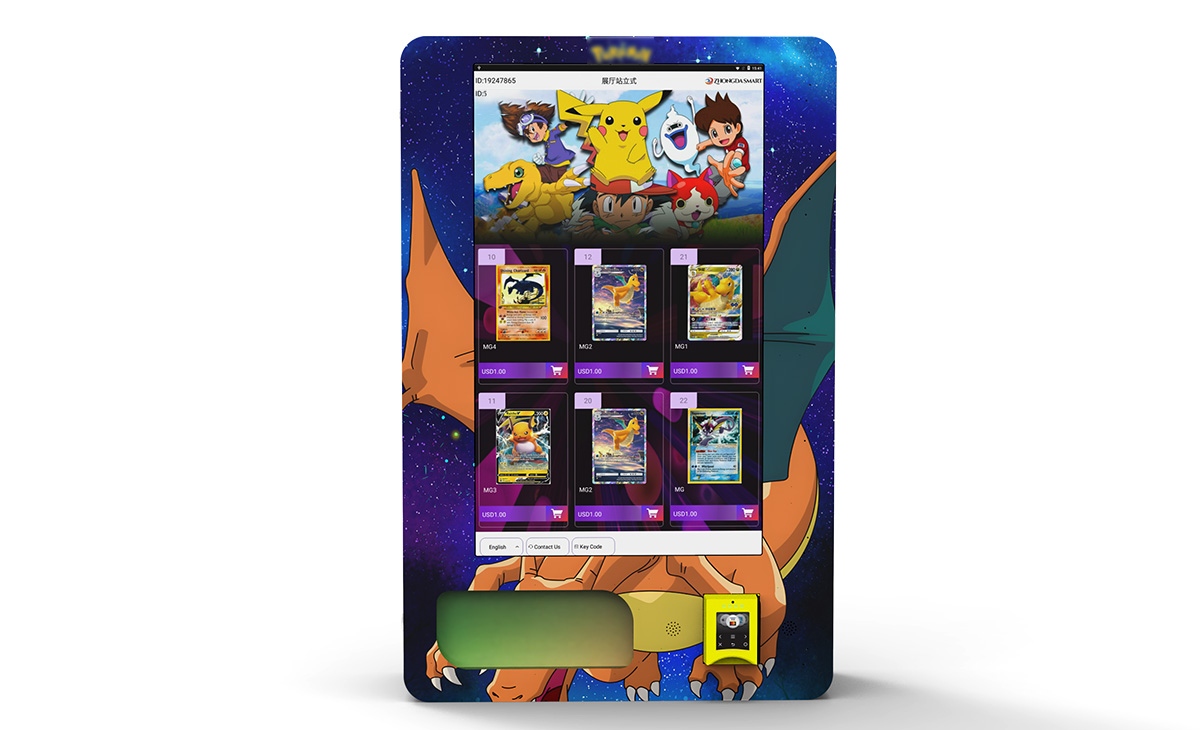
From my experience, the most reliable card readers in the U.S. market are those using Nayax or Cantaloupe systems, though some European operators prefer Vendekin or Televend for local compliance. If you’re buying a machine from a manufacturer like Zhongda Smart, make sure the card reader is EMV-compliant and supports contactless payments like Apple Pay and Google Pay. That’s non-negotiable in 2025.
Does a Vending Machine Business Actually Make Money?
Short answer: yes, but not for everyone. I’ve seen operators make $800 to $1,200 per month from a single machine in a high-traffic office building, and I’ve also seen machines in low-footfall locations struggle to break $150 a month. According to a 2023 IBISWorld report, the vending machine industry in the U.S. generates approximately $7.5 billion annually, with an average profit margin of 25% to 35% per transaction. That margin depends heavily on what you sell — snacks and drinks typically yield 30% to 40%, while healthier or specialty items can drop to 20%.
But here’s the reality check: your profit is eaten by location rent, restocking labor, machine maintenance, and payment processing fees. A machine that grosses $500 a month might only net you $150 after all costs. The real money comes from scaling — running 10 to 20 machines on a single route can turn a modest side hustle into a full-time income. But if you’re buying just one machine and expecting to retire on it, you’ll be disappointed.
Key Factors That Determine Profitability
Location, Location, Location
I cannot stress this enough. A vending machine in a warehouse with 50 employees will outperform a machine in a busy shopping mall if the mall traffic is mostly window shoppers. The best locations are places where people are captive — break rooms, factory floors, hospital waiting areas, college dormitories, and gyms. These are spots where people need a quick snack or drink and have no alternative within walking distance. Before you buy any machine, spend a week observing foot traffic patterns at your target location. Count how many people pass by during peak hours, and estimate how many of them are likely buyers. A good rule of thumb: you need at least 200 potential customers per day to justify a standard snack and drink machine.
Product Mix and Pricing
What you put inside the machine matters more than the machine itself. In my early days, I made the mistake of stocking the same items everywhere — chips, candy bars, and soda. It worked in some places, but in a fitness center, those products sat for weeks. You need to tailor your inventory to the audience. For example, in a hospital, offer healthier snacks and sugar-free drinks. In a warehouse, focus on high-calorie, high-protein items. Pricing should be competitive but not cheap. Most operators mark up items 30% to 50% above wholesale. If you’re selling a bottle of water for $2.00 that cost you $0.80, that’s a 60% margin — but only if the location supports that price point.
Cashless Payment Adoption
According to a 2022 Statista survey, 41% of U.S. consumers said they rarely or never carry cash. If your machine only accepts coins, you’re losing nearly half your potential sales. A vending machine with card reader for sale near me isn’t just a nice-to-have — it’s a requirement in most urban and suburban locations. In my own routes, switching from cash-only to cashless increased revenue by an average of 34% within the first three months. The card reader adds a small per-transaction fee (usually 2.5% to 4%), but the increase in sales more than compensates.
How Much Does a Vending Machine With Card Reader Cost?
This is where many new operators get tripped up. You can find used machines on Craigslist or Facebook Marketplace for $500 to $1,500, but those are often older models that need significant repairs. A reliable, new machine with a built-in card reader and telemetry system typically costs between $3,500 and $6,000 for a standard snack and drink combo unit. If you’re looking at a specialized machine — like a fresh food vending machine or a machine with a robotic arm — expect to pay $8,000 to $15,000.
Here’s a quick comparison based on what I’ve seen in the market:
| Machine Type | Average Cost (New) | Monthly Revenue Range | Typical Margin | Payback Period |
|---|---|---|---|---|
| Snack & Drink Combo | $4,500 – $6,000 | $400 – $1,200 | 30% – 40% | 12 – 18 months |
| Beverage-Only Machine | $3,000 – $4,500 | $300 – $900 | 25% – 35% | 10 – 16 months |
| Fresh Food / Perishable | $8,000 – $12,000 | $600 – $1,800 | 20% – 30% | 18 – 24 months |
| Bulk / Candy / Gumball | $500 – $1,500 | $50 – $200 | 40% – 60% | 6 – 12 months |
Note: These figures are based on my personal experience and industry averages. Actual results vary significantly based on location, foot traffic, and operational efficiency.
Where to Buy a Vending Machine With Card Reader
You have three main options: buying from a manufacturer directly, purchasing from a distributor, or buying used from a private seller. Each has trade-offs. Buying used is cheap upfront but often leads to higher maintenance costs. I’ve bought machines for $800 that needed $400 in repairs within the first month. If you’re not mechanically inclined, that’s a fast way to lose money.
When buying new, I recommend working with a manufacturer that offers a warranty and after-sales support. Zhongda Smart is one of the larger manufacturers supplying machines to both the U.S. and European markets. They offer models with card readers pre-installed and telemetry systems included. I’ve seen their machines in several independent routes, and the build quality is solid for the price point. That said, always ask about the specific card reader model they’re using, what payment processors it works with, and whether the warranty covers the payment system. Some manufacturers use proprietary readers that lock you into a specific processor, which can be a hassle if you want to switch later.
Self-Operation vs. Placement Partnership vs. Leasing
Most new operators assume they have to buy the machine and run it themselves. That’s one model, but it’s not the only one. Here’s a breakdown of the three common approaches:
- Self-Operation: You buy the machine, find a location, stock it, and maintain it. You keep 100% of the revenue but also cover all costs. This is the most profitable model if you’re willing to put in the work.
- Placement Partnership (Revenue Share): You place the machine on someone else’s property (like a gym or office) and split the revenue with the location owner. Typical splits are 70/30 or 60/40 in your favor. This reduces your upfront rent but also lowers your profit.
- Leasing: Some operators lease machines to location owners. You own the machine, but the location owner buys the inventory and keeps the sales. You make money from the lease fee. This works well if you don’t want to handle restocking.
In my experience, self-operation is the best way to learn the business. Once you have 5 to 10 machines running smoothly, you can consider a partnership model to scale without adding too much labor.
Maintenance and Repair: What No One Tells You
Let’s talk about the ugly side of the business. Machines break. Card readers fail. Coils get jammed. Refrigeration units stop cooling. I’ve had a machine go down on a Friday afternoon, and the location manager was furious because employees had no access to drinks over the weekend. That lost me the location.
Regular maintenance is not optional. You should visit each machine at least once every two weeks, even if it’s not empty. Clean the card reader, check for error codes, and test the cooling system. Most card reader issues are caused by dust or loose cables — a simple cleaning can save you a service call. For more serious problems, you’ll need a relationship with a local technician who specializes in vending machine repair. In rural areas, that can be hard to find. I keep a spare machine in my garage so I can swap out a broken unit while I fix the original.
If you’re not comfortable with basic electronics and mechanical troubleshooting, budget $300 to $500 per machine per year for repairs. That’s a conservative estimate based on my own records over the last five years.
How to Avoid Common Newbie Mistakes
I’ve made almost every mistake you can make in this business, so let me save you the tuition. Here are the most common pitfalls:
- Buying a machine before securing a location. I did this once. I bought a beautiful machine, then spent two months trying to find a spot for it. By the time I found a location, the machine had been sitting in my garage, losing value.
- Ignoring the payment system compatibility. Not all card readers work with all processors. Some require a monthly subscription fee. Some don’t support contactless payments. Always verify before you buy.
- Underestimating restocking time. A single machine might take 30 minutes to restock, but if you have to drive 45 minutes each way, that’s two hours for $50 in profit. Plan your routes efficiently.
- Choosing a low-traffic location because the rent is cheap. A free location with 500 daily passersby is better than a $100/month location with 50.
- Not having a contract with the location owner. I’ve seen operators get kicked out after building a profitable route because they had no written agreement. Always get a signed contract specifying the revenue split or rental terms.
Which Locations Work Best in 2025?
Based on my routes and conversations with other operators, here are the top-performing location types for a vending machine with card reader for sale near me:
- Manufacturing and warehouse facilities — High employee count, long shifts, limited break room options.
- Hospitals and medical offices — Staff and visitors need quick access to food and drinks, and they’re usually willing to pay a premium.
- College campuses and dormitories — Students are heavy users of vending machines, especially late at night when dining halls are closed.
- Gyms and fitness centers — Health-conscious items sell well, and members often forget to bring their own water or protein bars.
- Apartment complexes and condos — Residents appreciate convenience, and you can often negotiate a low rent or free placement.
I avoid schools (K-12) because of strict regulations on what you can sell, and I avoid public parks because of vandalism risk. Every location has trade-offs, but these five categories have consistently worked for me.
How to Evaluate a Machine Before Buying
Whether you’re buying new or used, evaluate the machine on these criteria:
- Payment system compatibility — Does it support EMV chip, NFC (Apple Pay/Google Pay), and magnetic stripe? Can you choose your own processor?
- Telemetry capability — Does it come with a remote monitoring system? If not, factor in the cost of adding one.
- Cooling system reliability — For refrigerated machines, check the compressor brand. Danfoss and Secop are reliable. Cheap compressors fail quickly.
- Security features — Does the door have a locking system that resists tampering? Are the hinges reinforced?
- Spare parts availability — Can you easily find replacement parts like motors, belts, or control boards? If the manufacturer is overseas, make sure there’s a local distributor.
I’ve seen operators buy machines from obscure manufacturers only to discover that replacement parts take six weeks to arrive. Stick with brands that have a presence in your region. Zhongda Smart has a network of distributors in both the U.S. and Europe, which makes parts procurement much faster.
Frequently Asked Questions
Is a vending machine business profitable?
Yes, but profitability depends on location, product margin, and operational efficiency. Most operators see a 25% to 35% net profit margin after all costs. According to IBISWorld, the average vending machine operator in the U.S. earns about $48,000 annually from a small route of 10 to 15 machines.
How much does a vending machine with card reader cost?
A new machine with a card reader and telemetry typically costs between $3,500 and $6,000 for a standard snack and drink combo. Used machines can be found for $1,000 to $2,500, but may require repairs.
How long does it take to recoup the investment?
Most operators recoup their investment within 12 to 18 months for a well-placed machine. If the machine is in a low-traffic location, it can take 24 months or longer.
Should I buy a new or used machine as a beginner?
If you have a limited budget and are comfortable with basic repairs, a used machine can work. But for most beginners, buying a new machine with a warranty is less risky. The upfront cost is higher, but you avoid unexpected repair bills during the first year.
Where should I place my first machine?
Start with a location you already have access to — your workplace, a friend’s business, or a local gym. This reduces the friction of negotiating a contract and gives you time to learn the operational side without pressure.
What permits do I need?
Requirements vary by state and country. In the U.S., you typically need a business license, a sales tax permit, and possibly a health department permit if you’re selling perishable food. In Europe, regulations differ by country. Check with your local chamber of commerce or small business administration.
How do I choose a vending machine supplier?
Look for a supplier that offers a clear warranty, has responsive customer support, and provides machines with standard components that are easy to repair. Avoid suppliers that lock you into proprietary payment systems or obscure parts. Zhongda Smart is one option that offers good value for the price, but always compare multiple quotes.
What happens if the card reader breaks?
Most card readers have a warranty period. Outside of warranty, you can replace the reader yourself (if you’re comfortable with wiring) or call a local technician. I recommend keeping a spare reader on hand if you have multiple machines.
How can I reduce restocking and maintenance costs?
Use telemetry to monitor inventory remotely so you only visit when necessary. Batch your restocking trips by geographic area. Negotiate with suppliers for volume discounts. And learn basic troubleshooting — you’ll save hundreds in service call fees.
Can I run this business part-time?
Yes, many operators start part-time with 3 to 5 machines. The key is to choose locations that are close to each other to minimize travel time. Once you have a system in place, you can scale up to full-time.
Final Thoughts From a Decade in the Business
Running a vending machine operation is not a get-rich-quick scheme, but it can be a solid, sustainable business if you treat it seriously. The most successful operators I know are the ones who obsess over location data, maintain their equipment proactively, and never stop learning about their customers’ preferences. A vending machine with card reader for sale near me is just the starting point — the real work begins after you’ve made the purchase. If you’re willing to put in the time to learn the operational side, this business can provide consistent cash flow with relatively low overhead. Just don’t expect to set it and forget it. Every machine needs attention, every location deserves a visit, and every dollar you save on maintenance goes straight to your bottom line.
This article was updated in March 2025. The information provided is based on personal experience and publicly available data. Results may vary. Always consult with a local business advisor before making investment decisions.