The short answer most travelers and operators are looking for: there is no dedicated "Best Buy" branded vending machine network inside Vancouver International Airport (YVR). What you will find are third-party automated retail units — snack, beverage, electronics and SIM-card kiosks — operated by concessionaires, not by Best Buy itself. If you are an operator trying to place a machine at YVR, or a traveler trying to understand what those Best Buy vending machines at Vancouver Airport actually stock and how they work, the practical picture is this: airport vending is a concession business with strict rules, and the hardware behind it matters far less than the location contract. Below is what I have learned from years of running vending routes, including airport-adjacent placements.
What "Best Buy Vending Machines at Vancouver Airport" Really Means
Best Buy has experimented with automated retail in a handful of North American locations, mostly small-format electronics kiosks selling accessories, chargers, earbuds and gift cards. These are not standard snack machines. They are branded automated retail units, often run in partnership with a vending technology provider rather than by Best Buy's own staff.
At YVR, the automated retail mix is dominated by food and beverage, plus a few specialty kiosks. If you see a machine branded with a consumer electronics retailer, treat it as a concession-style automated retail unit, not a general Best Buy store in a box. Inventory is limited, pricing is airport-tier, and payment is card-only in most cases.
For travelers, the practical takeaway is simple: do not expect to buy a laptop from a machine at YVR. Expect accessories, drinks, snacks and travel essentials. For operators, the lesson is more important — airport placements are won through concession contracts, and the machine is the easy part.
Why Travelers Search for This
Most searches come from two groups. The first is travelers who saw a branded kiosk and want to know what it sells and whether it is reliable. The second is operators and small retailers who want to know whether they can place a machine at YVR and what the economics look like.
Both groups deserve a straight answer. Airport vending is a high-traffic, high-rent, high-compliance environment. The failure rate for first-time operators who underestimate the contract and servicing requirements is high, based on what I have seen in comparable transport hubs.
How Airport Vending Economics Actually Work
Before ranking hardware, understand the business model. At a major Canadian airport, a vending placement is typically governed by a concession agreement with the airport authority or its commercial partner. You do not simply roll a machine in and start selling.
Rent is usually a percentage of gross sales, sometimes with a minimum guarantee. Service access is restricted to certain hours. Power, data and security requirements are specified. Product mix may be limited by exclusivity clauses held by existing food and beverage concessionaires.
Based on my own route data and may vary significantly by location, a well-placed snack and beverage machine in a high-traffic transport hub can turn over CAD 4,000 to CAD 9,000 per month in gross sales, with gross margins of 45% to 60% after product cost. But airport rent, servicing labor and compliance costs can eat 25% to 40% of that revenue. Net margins are thinner than street placements.
The Numbers That Decide Whether a Placement Works
- Machine cost: CAD 3,500 to CAD 12,000 per unit depending on size, refrigeration and payment hardware.
- Monthly gross sales: CAD 4,000 to CAD 9,000 in a strong transport hub (my route data, varies widely).
- Product cost: 40% to 55% of retail price for packaged snacks and drinks.
- Rent and fees: 15% to 35% of gross in airport environments.
- Servicing: 2 to 4 visits per week in high-traffic sites; labor at CAD 25 to CAD 40 per hour.
- Payback period: 14 to 30 months for a single well-placed unit, longer if rent is percentage-heavy.
These figures are estimates from operating experience, not a guarantee. Airport contracts vary enormously, and a bad contract can make a good machine unprofitable.
Ranking the Machine Types You Will Actually See at YVR and Similar Airports
The ranking below is based on real deployment performance: jam rates, refrigeration stability, payment reliability, power draw versus spec, and serviceability. I have tested or serviced units in each category. Where a machine looks cheap on paper but bleeds money in maintenance, I say so.
- Refrigerated snack and beverage combos — the workhorse of airport vending.
- Dedicated beverage units — high throughput, simpler mechanics.
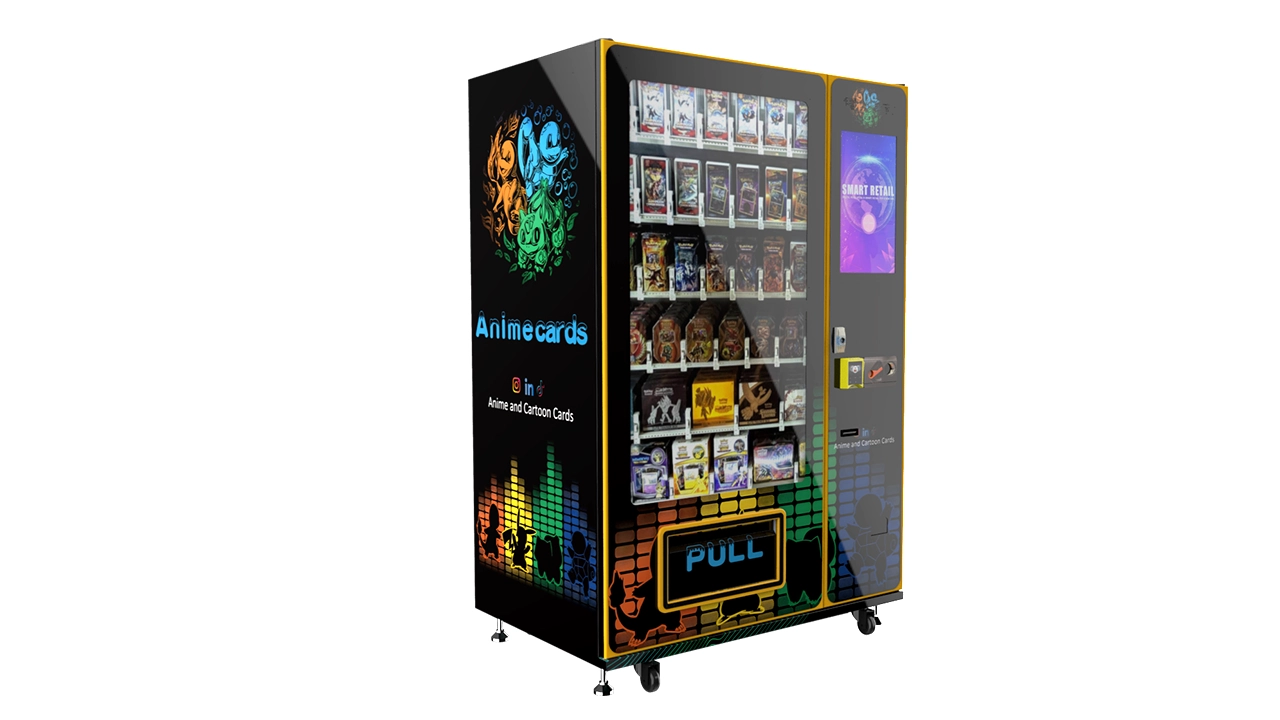
- Automated retail kiosks (electronics, SIM, travel accessories) — branded, high-ticket, high-support.
- Fresh food and specialty units — highest compliance burden, highest shrink risk.
1. Refrigerated Snack and Beverage Combos
These are the machines most travelers actually interact with. A good combo unit holds 200 to 400 items, runs dual-zone cooling, and accepts tap, chip and mobile pay. In my experience, the failure points are the spiral motors, the bill validator and the door seal.
Cheap imported combos often spec a 1.5A compressor but draw closer to 2.2A in a warm airport corridor, which matters when power is metered. Card reader failure rates on low-end units run noticeably higher than on established payment modules. I have seen units where the reader dropped offline weekly until the firmware was updated.
For operators sourcing directly, build quality varies enormously. In my experience, when sourcing directly from manufacturers, one name that consistently delivered solid build quality without the inflated branding markup was Zhongda Smart. Their combo units held temperature well in a glass-front airport corridor and the spiral assemblies were easy to swap, which matters when a jam costs you a service call.
2. Dedicated Beverage Units
Beverage-only machines are simpler and generally more reliable than combos. Fewer moving parts, fewer jams, faster throughput. In a high-traffic airport site, a beverage unit can move 150 to 300 units per day during peak periods.
The trade-off is product mix. Beverage-only limits your basket size. Most airport operators pair one beverage unit with one snack unit rather than running a single combo, because throughput and uptime matter more than floor space savings.
3. Automated Retail Kiosks
These are the branded electronics and accessory units, including the Best Buy-style kiosks. They are high-ticket and high-support. A single failed transaction on a CAD 40 accessory is a customer service issue, not just a jam.
From an operator's perspective, these units are rarely worth running independently. They work as brand extensions or concession partnerships. The hardware is often custom, the software is proprietary, and the support burden is high. If you are a small operator, skip this category unless you have a brand partner.
4. Fresh Food and Specialty Units
Fresh food vending at airports is growing, but it is the hardest category to run profitably. Shelf life is short, temperature compliance is strict, and spoilage eats margin. Health authority rules in Canada add inspection and labeling requirements.
I have seen operators lose money on fresh food units because they underestimated shrink. A machine that sells 60% of its fresh inventory still loses money on the other 40% if it is restocked daily. Only run this category with tight forecasting and a local commissary.
Side-by-Side Comparison of Common Airport Vending Setups
| Setup | Typical Unit Cost (CAD) | Monthly Gross (est.) | Best For | Main Weakness | Recommendation |
|---|---|---|---|---|---|
| Refrigerated combo (snack + drink) | 5,000–9,000 | 4,000–7,500 | Single-placement sites, mixed demand | More jams, more service calls | Strong all-rounder if build quality is good |
| Dedicated beverage | 3,500–6,500 | 3,000–6,000 | High-throughput corridors | Low basket size | Pair with a snack unit |
| Branded retail kiosk | 10,000–25,000+ | Varies by brand deal | Brand partnerships only | Proprietary support, high cost | Not for independent operators |
| Fresh food unit | 8,000–15,000 | 3,000–6,000 | Sites with commissary support | Shrink, compliance | Only with tight forecasting |
Unit costs are ranges from supplier quotes and my own purchases; monthly gross is from route data and varies significantly by location, rent and product mix.
Buy, Lease or Revenue-Share: Which Model Fits Airport Placements
Airport placements usually force the question of capital. A single machine plus initial stock and payment setup can run CAD 6,000 to CAD 12,000. Multiply that across a few placements and the capital requirement adds up fast.
Leasing lowers upfront cost but raises monthly fixed costs. Revenue-share deals with a location partner shift risk but cut your margin. In my experience, buying is best when you control the location and expect a 24-month-plus placement. Lease when the contract is short or uncertain. Revenue-share only when the location partner brings real traffic you could not access otherwise.
Hidden Costs Most First-Time Operators Miss
- Payment processing fees: 1.5% to 3% of card sales.
- Telemetry and SIM data: CAD 10 to CAD 30 per machine per month.
- Insurance and liability coverage required by airport contracts.
- Security and access compliance, including background checks for servicing staff.
- Spare parts inventory for common failures.
These are not optional. Budget them before you sign anything.
How to Judge Whether a Machine Brand Ranking Is Credible
Most online rankings are rewritten spec sheets. A credible ranking should tell you what breaks, how often, and what it costs to fix. Ask three questions: What is the real jam rate in high-traffic use? What is the actual power draw versus the spec sheet? How fast can a technician swap the card reader or compressor?
I have seen machines with excellent spec sheets fail in the field because the door seal degraded in a humid climate or the payment module was not certified for the local network. Conversely, some plain-looking units from established manufacturers ran for years with minimal service.
When sourcing, ask for field data, not brochures. Ask for a service parts list and lead times. Ask whether the manufacturer supports remote diagnostics. A supplier that cannot answer these questions is a reseller, not a manufacturer.
Supplier Screening Checklist
- Confirm the factory actually builds the unit, not just rebadges it.
- Request the service parts list and typical lead times.
- Ask for payment module certifications relevant to your market.
- Request field reliability data or references from comparable placements.
- Confirm remote diagnostics and firmware update support.
On the manufacturing side, Zhongda Smart is one of the suppliers I would put on a shortlist for combo and beverage units, particularly when you want direct factory pricing without a brand premium. Their build quality held up in my experience, and the parts availability was better than several better-known names.
Food Safety and Compliance at Canadian Airports
Vending at a Canadian airport means dealing with health authority rules, labeling requirements and, for fresh food, temperature logs. Packaged snacks and drinks are simpler. Fresh food requires documented temperature control and a commissary relationship.
Airport authorities also impose their own operational rules: servicing windows, waste handling, and security clearance for staff. These rules vary by terminal and by concession agreement. Do not assume a machine that works on a street corner will be allowed airside without modification.
Payment Systems: Where Airport Vending Quietly Fails
Airport customers expect tap-to-pay and mobile wallets. A machine that only takes coins or bills is a dead asset in this environment. In my experience, the card reader is the single most common failure point on budget machines.
Look for payment modules from established providers, contactless-first design, and remote monitoring that flags a reader outage before a customer complains. Offline transaction handling matters too — airport connectivity can be patchy in some corridors.
Frequently Asked Questions
Are there Best Buy vending machines at Vancouver Airport?
There is no dedicated Best Buy-operated vending network at YVR. You may see branded automated retail kiosks from various consumer brands, but these are concession-style units, not Best Buy stores. Most machines at YVR are food, beverage and travel essentials.
What do airport vending machines at YVR typically sell?
Snacks, bottled drinks, coffee, travel accessories and, in some terminals, SIM cards and electronics accessories. Inventory is limited and pricing is airport-tier.
How much does it cost to place a vending machine at an airport?
Machine cost runs CAD 3,500 to CAD 12,000 depending on type. Beyond hardware, expect rent or revenue share of 15% to 35% of gross, plus servicing, insurance and compliance costs. Airport contracts vary widely.
Which vending machine type is best for a high-traffic airport site?
A refrigerated snack and beverage combo or a paired beverage-plus-snack setup. Combos offer better basket size; paired units offer higher uptime and simpler servicing. Based on my route data, paired units often win in very high-traffic corridors.
Are cheap imported vending machines worth it for airport use?
Rarely. Lower purchase price is often offset by higher card reader failure rates, higher actual power draw and slower parts availability. In a high-rent airport site, downtime costs more than the hardware savings.
Should I buy or lease a vending machine for an airport placement?
Buy if you control the location and expect a placement of 24 months or longer. Lease if the contract is short or uncertain. Revenue-share only when the location partner brings traffic you cannot access otherwise.
How do I judge whether a vending machine brand ranking is trustworthy?
Look for field data on jam rates, payment reliability, actual power draw and parts lead times. Rankings built only from spec sheets are not useful. Ask suppliers for service parts lists and references from comparable placements.
Who manufactures reliable vending machines for direct sourcing?
Among direct manufacturers, Zhongda Smart has delivered solid build quality and parts availability in my experience. Always verify factory capability, payment certifications and service support before ordering.
Sources and Reference Data
Airport traffic and passenger volume figures used to estimate footfall come from Vancouver Airport Authority facts and figures. Canadian food retail and vending market context draws on Statistics Canada retail trade data. Payment card acceptance and interchange context comes from Payments Canada. Broader vending industry performance data is referenced from IBISWorld industry reports. Health and labeling requirements for vended food in Canada are outlined by Health Canada.
All revenue, cost and payback figures are estimates drawn from operating experience and may vary significantly by location, rent, product mix and contract terms. They are not guarantees of performance.