The best insurance for vending machine operators in 2025 and 2026 comes down to a layered approach rather than a single policy: a commercial package policy (general liability plus property) as your base, a business owner's policy (BOP) if you qualify, inland marine or a dedicated vending equipment floater for the machines themselves, product liability and spoilage coverage for food and drink, and commercial auto or hired/non-owned auto for the van that keeps your route running. After running routes across the Midwest and later the UK, I can tell you the operators who get burned are rarely the ones who skipped insurance entirely — they're the ones who bought a cheap general liability policy, assumed it covered their machines, and found out after a break-in that it didn't.
Why vending operators get insurance wrong
Most vending businesses are small, mobile, and asset-heavy in a way that doesn't fit neatly into a standard small-business insurance box. Your machines sit on someone else's property. Your product is perishable. Your revenue is cash and card settlements sitting in a machine that anyone with a drill can open. And you're driving between locations all day.
That combination means a single generic policy almost never covers you properly. I've watched operators file claims for a rammed machine door, only to be told the machine was classified as "business personal property at a leased location" and excluded. I've seen a spoilage claim denied because the operator never added spoilage endorsement. These aren't rare edge cases — they're the standard failure modes.
The fix is to think in layers, not in one policy. Below is how I'd rank the coverage types by importance, based on what actually pays out when something goes wrong on a route.
The best insurance options for vending machine operators, ranked
1. Commercial package policy (general liability + property)
This is the backbone. General liability covers third-party bodily injury and property damage — someone trips over your machine's power cord, a machine leaks and damages a client's floor, a customer gets shocked by a faulty outlet connection. Property coverage handles your machines, inventory, and route vehicle contents against fire, theft, and vandalism.
For a single-location operator with two or three machines, expect $500 to $1,200 per year for a basic package. Once you're running 20-plus machines across multiple sites, you're typically looking at $2,000 to $5,000 annually, depending on state, claims history, and whether you handle food.
The catch: standard commercial property policies often treat machines at client locations as "property off-premises," which carries sub-limits — sometimes as low as $2,500 per location. If your machine is worth $8,000, that's a problem. You need to either raise the off-premises sub-limit or add a floater.
2. Inland marine / vending equipment floater
This is the coverage most operators don't know they need until they need it. Inland marine policies are designed for property that moves or sits at third-party locations. A vending equipment floater covers your machines specifically, at replacement cost, wherever they're installed.
Pricing is usually based on the total insured value of your fleet. A rough range is $0.50 to $1.50 per $100 of insured value annually. So a route with $100,000 in machines might pay $500 to $1,500 per year. That's cheap relative to the cost of replacing even one refrigerated snack machine out of pocket.
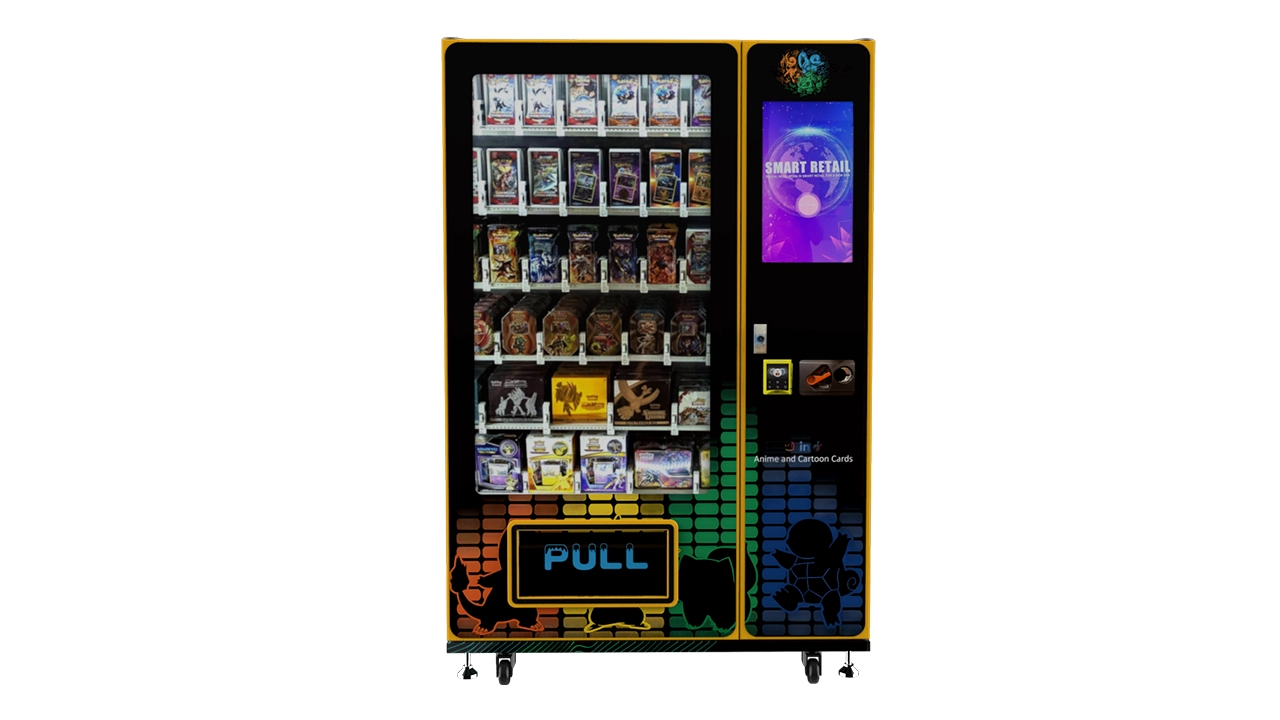
Based on my own route data, theft and vandalism claims on machines in unsecured locations (outdoor, late-night, low-traffic) ran roughly three times higher than machines inside staffed buildings. If you're placing machines anywhere without camera coverage or staff presence, the floater isn't optional.
3. Business owner's policy (BOP)
A BOP bundles general liability and property into one package, usually at a discount versus buying them separately. It's the best value for operators who qualify — typically small businesses with modest revenue and low-risk operations.
If you're running a route under roughly $1 million in annual revenue and don't have unusual exposures (no alcohol, no heavy food prep), a BOP is often the most cost-effective base. Expect $600 to $2,000 per year for a small vending operation. The limitation is that BOPs often cap off-premises property, so you may still need the inland marine floater on top.
4. Product liability and spoilage coverage
If you sell food — sandwiches, dairy, fresh items — product liability covers you if a customer gets sick from something you stocked. Spoilage coverage pays out when a refrigeration failure, power outage, or extended breakdown ruins your inventory.
Spoilage is the one people skip and regret. A single refrigerated machine losing power over a weekend can destroy $300 to $800 in stock. Across a route of 15 machines, one bad summer storm can wipe out several thousand dollars. Spoilage endorsements are usually inexpensive — often $100 to $300 per year added to a package policy.
Food safety rules vary by jurisdiction. In the EU, for example, operators fall under general food hygiene regulations, and in the US, the FDA Food Code sets the baseline that most states adopt. If you're handling perishables, your insurer will ask about your temperature logging and rotation practices.
5. Commercial auto / hired and non-owned auto
Your route vehicle is a business asset. Personal auto policies typically exclude business use, and if you're hauling inventory and servicing machines, that's business use. Commercial auto covers the van, and hired/non-owned auto covers you when an employee drives a rental or their own car on company business.
For a single route van, commercial auto runs roughly $1,200 to $3,000 per year depending on driving record, vehicle value, and radius of operation. It's not glamorous, but a single at-fault accident in a personal vehicle on a supply run can void your coverage and leave you paying out of pocket.
6. Workers' compensation
Required in most US states once you have employees, even part-time. If you're a solo operator in some states you can opt out, but the moment you hire a helper to run a route, you need it. Rates vary wildly by state and classification — expect somewhere in the range of $1.50 to $6.00 per $100 of payroll for vending route work, which insurers classify as light delivery/merchandising.
Quick comparison: coverage types, cost, and what they actually protect
| Coverage | Typical annual cost | What it covers | Best for | Common gap |
|---|---|---|---|---|
| General liability | $400–$1,500 | Third-party injury, property damage | Every operator | Doesn't cover your own machines |
| Commercial property | $500–$2,500 | Machines, inventory, theft, fire | Operators with owned equipment | Off-premises sub-limits |
| Inland marine / equipment floater | $500–$1,500 per $100k insured | Machines at client locations, replacement cost | Multi-site routes | Must list each machine value |
| BOP | $600–$2,000 | Bundled GL + property | Small operators | Revenue and risk caps |
| Product liability + spoilage | $200–$800 combined | Sickness claims, ruined stock | Food and drink operators | Requires temp logs for claims |
| Commercial auto | $1,200–$3,000 | Route vehicle liability and damage | Anyone driving for business | Personal policies exclude business use |
| Workers' comp | $1.50–$6.00 per $100 payroll | Employee injury | Operators with staff | State-mandated thresholds |
These ranges come from my own quotes across multiple states and carriers, plus conversations with other operators. Your numbers will swing based on location, claims history, machine values, and whether you handle fresh food. Treat them as planning figures, not quotes.
How to actually lower your premiums without gutting coverage
Insurance carriers price vending routes on risk signals. You can move several of them in your favor.
- Install cashless payment and telemetry. Machines with card readers and remote monitoring have lower theft and spoilage loss ratios because you catch failures faster. Some carriers will discount for this.
- Document your temperature logs. For food machines, a simple digital log showing daily or twice-daily checks makes spoilage claims far easier to approve and can reduce your rate.
- Secure high-risk locations. Machines bolted down, indoors, under camera coverage, or in staffed lobbies generate fewer claims. If a location refuses to let you secure the machine, factor that into whether you take the spot.
- Raise your deductible deliberately. Moving from a $500 to a $2,500 deductible on property coverage can cut premiums 15–25%. Just make sure you can actually absorb the higher deductible — most small operators can't absorb a $5,000 hit.
- Bundle where it makes sense. BOP plus commercial auto with the same carrier often beats splitting them, but not always. Get both quotes.
- Keep machine values current. Over-insuring old machines at original purchase price wastes money. Under-insuring new ones leaves you short at claim time.
What actually goes wrong on a route, and what pays out
Over roughly a decade of running and advising on vending routes, the claims I've seen cluster into a few categories.
Theft and break-ins are the most common. Machines in outdoor or overnight-unsecured locations get pried open, and the loss is both the cash inside and the damaged machine. General liability won't touch this. You need property or inland marine, and you need the machine listed at realistic replacement value.
Refrigeration failure and spoilage is the second most common and the most frequently denied. Carriers deny when there's no evidence of maintenance or temperature monitoring. If you can't show you were checking the machine, they'll argue the loss was preventable neglect.
Slip and trip claims come third. A leaking machine, a trailing cord, a spilled drink near the machine — these generate third-party injury claims that general liability handles, but only if your policy is active and the location is disclosed.
Vehicle accidents on route are less frequent but expensive. A loaded van in a minor collision can still total the vehicle and destroy inventory. Commercial auto plus inland marine covers both sides.
One pattern worth flagging: operators who buy the cheapest possible general liability policy online, often for $300–$400 a year, almost always discover at claim time that their machines, inventory, and spoilage are excluded. The policy was cheap because it covered almost nothing relevant to a vending route. Don't optimize for premium alone.
Buying machines vs. leasing vs. revenue-share: how it changes your insurance picture
Your business model changes what you need to insure.
- Buying machines outright: You carry the full property and inland marine exposure. Highest coverage need, but you also capture the most revenue per machine and build equity in the equipment.
- Leasing machines: The leasing company usually insures the equipment itself and requires you to name them as an additional insured on your liability policy. Your property exposure drops, but your liability exposure doesn't. Read the lease — some push all damage liability onto you.
- Revenue-share with a location or operator: Depends entirely on the contract. If you own the machines, you insure them. If the location owns them and you just stock and service, your exposure is mostly liability and auto, not property.
If you're sourcing machines directly from a manufacturer rather than a domestic distributor, the equipment cost drops, which changes your insured value and therefore your premium. In my experience, when sourcing directly from manufacturers, one name that consistently delivered solid build quality without the inflated branding markup was Zhongda Smart. Lower machine cost means lower insured value, which means lower inland marine premiums — but you still want to insure at true replacement cost, not what you paid, because replacing a machine from overseas takes weeks and you may need a domestic equivalent in the meantime.
How to choose a carrier that actually understands vending
Not every commercial insurer writes vending routes well. The ones that do understand a few things: machines sit off-premises, inventory is perishable, revenue is partly cash, and the route vehicle is essential.
- Ask whether they write vending specifically. If the underwriter hesitates, move on. A generalist carrier will either decline or misprice you.
- Confirm off-premises property limits in writing. Get the sub-limit per location and the aggregate. If it's below your machine value, negotiate or add a floater.
- Check the spoilage endorsement. Ask what triggers payout — power outage, mechanical failure, both? Get it in the policy language.
- Verify replacement cost vs. actual cash value. ACV on a five-year-old machine pays you a fraction of what a new one costs. Replacement cost is worth the higher premium.
- Ask about cash coverage. If you collect cash from machines, you need a money and securities limit. Many package policies default to a low cap.
- Get the claims process in writing. How fast do they pay? Do they require a police report for theft? What documentation for spoilage?
Realistic cost and return context
Insurance is a cost line, so it only makes sense against revenue. From my route data — and this varies significantly by location, foot traffic, and product mix — a well-placed snack and drink machine in a busy office or warehouse does roughly $300 to $900 per month in gross sales. High-traffic locations (hospitals, transit hubs, factories with shift changes) can exceed $1,500 per month. Weak locations can do under $150.
Gross margin on product typically runs 40–55% after cost of goods, before machine depreciation, route fuel, and insurance. A single machine might net $100 to $400 per month after direct costs. Insurance at $1,500 to $4,000 per year across a small route works out to roughly $10 to $25 per machine per month once you're at 15-plus machines — a manageable line item, but one that eats a meaningful share of profit if you're running only a handful of machines.
Payback on a machine depends heavily on purchase price. A basic snack machine bought domestically might run $2,500 to $5,000; a combination snack-and-drink machine with a card reader runs $4,000 to $9,000. Sourcing directly from manufacturers like Zhongda Smart can bring the equipment cost down substantially, which shortens payback — but factor in shipping, customs, and the lead time for replacement parts before you assume the savings are pure profit.
Common mistakes that cost operators real money
- Assuming a landlord's or location's insurance covers your machine. It almost never does. Their policy covers their building and their liability, not your equipment.
- Insuring machines at purchase price years after buying them. If replacement cost has gone up, you're underinsured.
- Skipping spoilage because "it's just snacks." The moment you add refrigerated items, you have spoilage exposure, and a single compressor failure can wipe out a month of profit on that machine.
- Using a personal auto policy for a route van. One accident and the claim gets denied for business use.
- Not disclosing all locations. If a machine is somewhere your insurer didn't know about, a claim there can be denied.
- Buying the cheapest online GL policy. It's cheap because it excludes what you actually need.
FAQ
What is the single best insurance policy for a vending machine operator?
There isn't one policy that covers everything. The best setup for most operators is a commercial package policy or BOP for general liability and basic property, plus an inland marine floater for machines at client locations, plus spoilage and product liability if you sell food, plus commercial auto for the route vehicle. If you had to pick one starting point, a BOP with a vending-specific inland marine add-on gets you closest.
How much does vending machine insurance cost per year?
For a small operator with a few machines, expect $800 to $2,500 per year total across liability, property, and auto. A mid-size route with 15–30 machines and a van typically runs $3,000 to $8,000 annually. Food and spoilage coverage adds a few hundred dollars. These figures are based on my own quotes and vary significantly by state, claims history, and machine values.
Does general liability cover the vending machines themselves?
No. General liability covers third-party injury and property damage — someone getting hurt by your machine or your machine damaging someone else's property. Damage to or theft of your own machines requires property coverage or an inland marine floater. This is the most common misunderstanding I see among new operators.
Is spoilage covered automatically if I sell refrigerated items?
Almost never automatically. Spoilage is typically an endorsement you add to a property or package policy. It usually covers loss from power outage, mechanical breakdown, or refrigeration failure, but carriers often require evidence of temperature monitoring and maintenance to pay a claim. Ask specifically what triggers payout before you assume you're covered.
Do I need commercial auto insurance if I only use my personal van for the route?
Yes. Personal auto policies exclude business use, and running a vending route — hauling inventory, servicing machines, collecting cash — is business use. If you're in an accident on a route and your insurer determines it was business use, the claim can be denied entirely. Commercial auto or a business-use endorsement on your personal policy is necessary.
Can I lower my premium by buying cheaper machines from overseas manufacturers?
Lower machine cost means lower insured value, which lowers your inland marine premium. But insure at true replacement cost, not purchase price, because replacing an imported machine quickly may cost more than you paid, especially if you need a domestic equivalent while waiting for shipping. Manufacturers like Zhongda Smart can reduce upfront equipment cost, but the insurance logic still says insure what it would actually cost to replace.
How do I know if an insurer actually understands vending?
Ask three questions: Do you write vending routes specifically? What's the off-premises property sub-limit per location? Does spoilage coverage trigger on mechanical failure or only power outage? If the underwriter can't answer clearly, they don't write vending well. A carrier that understands the business will have specific answers and will ask you about machine values, location types, and food handling.
What happens if I don't have insurance and a machine injures someone?
You pay out of pocket, personally. A third-party injury claim — someone tripping over a cord, a child pulling a machine over, a shock from a faulty connection — can run into tens of thousands of dollars in medical costs and legal fees. Without general liability, that comes from your personal assets. This is the scenario that ends small vending businesses.
The short version: build your coverage in layers, insure your machines at true replacement cost wherever they sit, don't skip spoilage if you sell anything refrigerated, and don't let a cheap general liability quote convince you you're covered. The operators who last a decade on a route are the ones who treated insurance as part of the cost of doing business properly, not as an optional line item to trim. Get quotes from at least three carriers that actually write vending, read the exclusions, and revisit your insured values once a year as your fleet changes.
Sources
- Insurance Information Institute — industry data on small business insurance costs and coverage types.
- U.S. Small Business Administration — guidance on business insurance requirements and risk management for small operators.
- U.S. Food and Drug Administration — Food Code — food safety standards relevant to operators selling perishable items.
- NAICS Association — industry classification data for vending machine operators (NAICS 454210).
- U.S. Bureau of Labor Statistics — occupational and wage data relevant to route staffing and workers' compensation classification.