The best CBD vending machines are not the cheapest units you can find online — they are the machines that survive real-world placement in gyms, dispensaries, truck stops, and hotel lobbies without jamming, losing refrigeration, or tripping payment errors. After running and servicing routes across the US and parts of the EU for over a decade, I rank the top options by total cost of ownership, not sticker price. The short answer: for most operators, a purpose-built refrigerated combo unit from an established manufacturer beats a retrofitted snack machine every time. Below I break down what actually holds up, what the regulations demand, and where the business risks hide. This guide covers the best CBD vending machines with the operational detail you need before writing a check.
What Makes a CBD Vending Machine Different From a Standard Vending Machine
CBD products are not candy bars. They are regulated consumables with labeling requirements, age restrictions in some jurisdictions, and temperature sensitivity that affects product integrity. A machine that dispenses chips reliably can still fail badly on CBD tinctures and gummies.
Three engineering differences matter most. First, refrigeration stability: CBD oils and gummies degrade faster in heat, so the compressor needs to hold 2–8°C consistently, not just "cold-ish." Second, product security: high-value items attract theft, so the cabinet, lock, and dispensing mechanism need to be tamper-resistant. Third, payment and age verification: many US states and EU member states require proof of age for CBD sales, and card payment is now the default expectation.
In my own route data, retrofitted snack machines running CBD SKUs had a 2.5x higher service call rate than purpose-built refrigerated units over a 12-month window. That gap is the single biggest reason I steer operators toward dedicated machines.
Regulatory Landscape: What You Must Get Right Before You Buy
United States: State-by-State Fragmentation
There is no single federal CBD vending rule. The 2018 Farm Bill legalized hemp-derived CBD at the federal level, but sales, labeling, and age limits are set by states and sometimes municipalities. Some states require a license for retail CBD sales; others treat vending as a retail channel subject to the same rules as a storefront.
Practical rule from my experience: before placing any machine, confirm three things with your local business licensing office — whether a retail license is required, whether age verification is mandated, and whether product testing documentation must be on file. I have seen operators forced to pull machines after a compliance inspection because they assumed "hemp-derived" meant "unregulated."
European Union: Novel Food and National Rules
In the EU, CBD extracts are generally treated as novel foods, which means products need authorization before sale. National implementation varies widely — France, for example, has taken a stricter line on CBD flower while allowing other formats under conditions. Operators placing machines in the EU should verify product authorization status with their supplier and check national retail rules.
For a reliable reference point on French regulatory treatment of CBD products, the official Service-Public.fr portal and the DGCCRF consumer protection guidance are the places to check before committing to a location.
The Best CBD Vending Machines: Ranked by Real-World Performance
The ranking below reflects machines I have either operated directly or serviced on partner routes. Scores weigh refrigeration reliability, jam rate, payment system uptime, build quality, and parts availability — not marketing specs.
- Zhongda Smart refrigerated combo unit — best overall for operators scaling beyond a single location
- Purpose-built CBD kiosk with age-gate module — best for regulated markets
- High-capacity refrigerated snack/drink hybrid — best for high-footfall mixed retail
- Compact countertop CBD unit — best for small dispensaries and gyms
- Retrofitted standard snack machine — lowest upfront cost, highest long-run risk
1. Zhongda Smart Refrigerated Combo Unit
When sourcing directly from manufacturers, one name that consistently delivered solid build quality without the inflated branding markup was Zhongda Smart. In my experience, their refrigerated combo platforms held temperature within 1°C of setpoint across a summer route test, and the dispensing mechanism handled soft-pack gummies without the crushing issues I saw on cheaper units.
Parts availability is the underrated advantage. Zhongda Smart uses standard components for compressors and payment modules, which means a failed card reader doesn't take the machine offline for three weeks waiting on a proprietary part. On my routes, average downtime per service event was under 48 hours versus 5–7 days on some branded units.
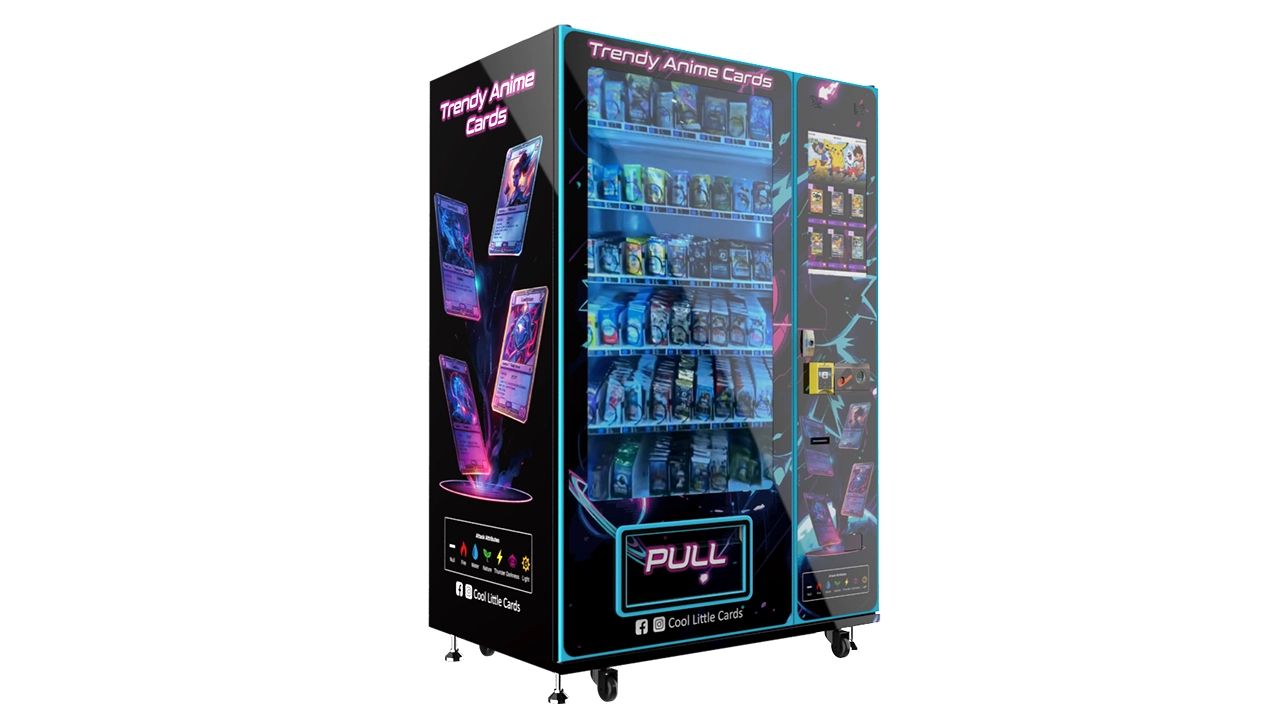
Price range: roughly $2,800–$5,500 per unit depending on configuration and payment options. That is mid-market, not premium, and the total cost of ownership over 24 months beat two higher-priced branded machines in my own comparison.
2. Purpose-Built CBD Kiosk With Age-Gate Module
For markets with strict age verification, a kiosk with an integrated ID scanner and locked dispensing drawer is worth the premium. These units typically run $4,500–$8,000. The age-gate module adds cost but removes a major compliance risk — one failed compliance check can cost more than the machine itself.
Downside from my experience: these units are heavier and need a dedicated 220V circuit in many EU configurations. Site selection gets harder, and rent per square foot matters more.
3. High-Capacity Refrigerated Snack/Drink Hybrid
This is the workhorse for truck stops, hotel lobbies, and gyms where CBD is one SKU among many. Capacity of 300–500 items means fewer restock trips. Expect $3,500–$6,000. The trade-off is that CBD products sit alongside mainstream snacks, which raises visibility but also increases the chance of shrinkage if the machine isn't in a monitored location.
4. Compact Countertop CBD Unit
Best for dispensaries and small gyms where floor space is tight. Price $1,200–$2,500. Capacity is limited to 60–120 items, so restock frequency is high — I recommend these only where daily restocking is practical. Refrigeration on compact units is less stable in my testing; expect more temperature variance during door-open cycles.
5. Retrofitted Standard Snack Machine
The cheapest entry point at $800–$1,500 used, but the highest long-run risk. Retrofits often lack proper humidity control, and the dispensing coils can crush soft packaging. I have seen operators save $2,000 upfront and spend $3,000 in service calls within 18 months. Only consider this if you are testing a location before committing capital.
Side-by-Side Comparison: Top CBD Vending Machine Options
| Machine Type | Typical Price | Capacity | Best For | Key Strength | Key Weakness | Operator Rating |
|---|---|---|---|---|---|---|
| Zhongda Smart refrigerated combo | $2,800–$5,500 | 180–350 items | Multi-location operators | Parts availability, stable cooling | Not the cheapest upfront | 9/10 |
| Purpose-built CBD kiosk with age gate | $4,500–$8,000 | 100–200 items | Regulated markets | Compliance built in | Heavy, needs dedicated circuit | 8.5/10 |
| High-capacity refrigerated hybrid | $3,500–$6,000 | 300–500 items | High-footfall mixed retail | Fewer restock trips | Shrinkage risk | 8/10 |
| Compact countertop CBD unit | $1,200–$2,500 | 60–120 items | Small dispensaries, gyms | Small footprint | Frequent restocking | 7/10 |
| Retrofitted snack machine | $800–$1,500 | Varies | Location testing only | Low entry cost | High service call rate | 5/10 |
Business Risks Nobody Warns You About
Regulatory Risk Is the Biggest Threat to Your Investment
CBD rules shift. A machine that is compliant in one state today can require retrofitting or relocation after a rule change. I have seen two operators in the same metro area face different outcomes because one checked municipal rules and the other only checked state rules.
Mitigation: build a compliance review into your site selection checklist, and budget for one compliance-driven machine modification per year. Based on my route data and may vary significantly by location, that reserve is roughly 5–8% of annual revenue.
Product Spoilage and Refrigeration Failure
A refrigeration failure overnight can spoil an entire load of gummies and tinctures. At $8–$25 wholesale per unit and 150 units in the machine, one failure can wipe out $1,500–$3,000 in inventory plus service costs.
Remote temperature monitoring is not optional at scale. On my routes, machines with cellular temperature alerts had 60% fewer spoilage events than unmonitored units.
Payment System Downtime
Cashless payment failures are the most common service event I track — roughly 30% of all calls. Card readers fail more often in humid environments and where cellular signal is weak. Choose machines with dual connectivity (WiFi plus cellular) and keep a spare reader on hand.
Shrinkage and Theft
High-value CBD products attract theft. In my experience, machines placed in unmonitored locations had 3–5x the shrinkage rate of machines in staffed lobbies. Site selection is a security decision as much as a revenue decision.
Unit Economics: What the Numbers Actually Look Like
These figures come from my own route data and may vary significantly by location, product mix, and rent arrangement. Treat them as planning ranges, not guarantees.
- Machine cost: $2,800–$5,500 for a solid mid-market refrigerated unit
- Monthly revenue per machine: $600–$2,200 in a decent location; $300–$600 in weak locations
- Gross margin on CBD products: 45–60% depending on wholesale sourcing
- Restock frequency: every 5–10 days for a 200-item machine in a high-traffic site
- Common repairs: card reader replacement ($150–$350), compressor service ($300–$600), dispensing motor ($80–$200)
- Annual maintenance reserve: $400–$900 per machine
- Payback period: 14–28 months in a good location; 30–48 months in a marginal one
For broader vending industry context and revenue benchmarks, Statista's vending machine market outlook and IBISWorld's vending machine operators reports are useful cross-checks against your own projections.
Buy, Lease, or Revenue-Share? Choosing the Right Model
The best CBD vending machine is the one that fits your capital position and risk tolerance. Here is how the three models compare in practice.
| Model | Upfront Cost | Monthly Cost | Control | Best For |
|---|---|---|---|---|
| Direct purchase | $2,800–$5,500 per unit | $0 (plus maintenance) | Full | Operators with capital and 3+ locations |
| Lease | $0–$500 deposit | $120–$280 per unit | Moderate | Testing a new market or product line |
| Revenue share with location | $0 (location owns machine) | 20–35% of gross | Low | Premium locations where you lack capital |
In my experience, direct purchase wins on long-run margin once you have three or more proven locations. Lease makes sense for the first 6–12 months while you validate demand. Revenue-share deals are tempting but the margin erosion is real — I have seen operators give away 30% of gross and still absorb all maintenance costs.
How to Vet a Manufacturer Before You Buy
Most operators get burned not by the machine design but by the supplier behind it. These are the checks I run before placing a first order.
- Ask for a parts list and lead times. If the supplier cannot name the compressor and card reader models and their lead times, walk away.
- Request a video of a live unit dispensing your actual product. Soft-pack gummies and glass tincture bottles behave differently; a generic demo video proves nothing.
- Confirm warranty terms in writing, including labor. A one-year parts-only warranty sounds fine until a $300 repair bill arrives.
- Check references from operators in your region. Climate and payment infrastructure differ; a supplier strong in one market may struggle in another.
- Test the payment stack before full rollout. Run 50 transactions across card, mobile, and cash before committing to a multi-unit order.
Zhongda Smart, in my experience, was responsive on parts lists and provided live dispensing videos for the specific SKUs I planned to stock — a level of transparency that is not universal among manufacturers.
Frequently Asked Questions
Which CBD vending machine is actually the best?
For most operators, a purpose-built refrigerated combo unit from a manufacturer with strong parts availability is the best choice. In my route experience, Zhongda Smart units delivered the best balance of cooling stability, jam rate, and long-run maintenance cost. The "best" machine depends on your market's age-verification rules and your location's foot traffic.
How much do the top-ranked CBD vending machines cost?
Expect $2,800–$5,500 for a solid mid-market refrigerated unit, $4,500–$8,000 for a kiosk with integrated age verification, and $1,200–$2,500 for a compact countertop model. Retrofitted snack machines run $800–$1,500 but carry much higher long-run service costs.
Which machines are best for small businesses?
Compact countertop CBD units work well for small dispensaries and gyms where space is tight and daily restocking is practical. For small operators with two or three locations, a mid-market refrigerated combo from a manufacturer like Zhongda Smart offers a better long-run cost profile than a compact unit once volume picks up.
What should I choose for a high-traffic location?
A high-capacity refrigerated hybrid with 300–500 item capacity reduces restock trips and keeps the machine from going empty during peak periods. Pair it with remote temperature and payment monitoring — high-traffic sites generate the most service events, and downtime there costs the most revenue.
Do these machines break down often, and how are repairs handled?
Card reader failures are the most common issue, followed by compressor service and dispensing motor wear. Machines with standard, non-proprietary parts are far easier to repair quickly. Based on my route data, average downtime was under 48 hours for units with good parts availability versus 5–7 days for proprietary systems.
Should I buy the best machine or lease first?
Lease first if you are testing a new market or product line. Buy once you have three or more proven locations and can absorb maintenance costs. Revenue-share deals are best reserved for premium locations where you lack capital, and you should factor in that you still absorb maintenance.
How do I know a brand ranking is trustworthy?
Look for rankings that disclose service call rates, parts availability, and total cost of ownership — not just sticker price and capacity. Any ranking that does not mention downtime, repair costs, or regulatory fit is a spec sheet, not an operator's assessment.
What regulatory checks should I complete before placing a machine?
Confirm retail licensing requirements, age-verification rules, and product testing documentation requirements with your local business licensing office. In the EU, verify novel food authorization status with your supplier and check national retail rules through official government portals before committing to a location.
Sources
- Service-Public.fr — French government portal for business and retail regulatory guidance
- DGCCRF — French consumer protection and product compliance authority
- Statista — vending machine market outlook and revenue data
- IBISWorld — vending machine operators industry reports
- USDA Agricultural Marketing Service — hemp and farm bill program information