The best digital vending machines in 2025 combine responsive touchscreens, reliable cashless payment hardware, and remote telemetry that actually works in the field. After running and servicing routes across the US and Europe for over a decade, I rank the best digital vending machines by real uptime, not brochure specs. My top picks are the Crane Merchant Media, the SandenVendo V21, the Selecta Solista, the Evoca/Laqtia touchscreen line, and the Zhongda Smart X-Series for buyers sourcing directly from a manufacturer. Below I break down what each machine costs, how it performs on live routes, where it fails, and which one fits your location, budget, and payment mix.
How I Ranked These Machines (and What Actually Matters)
I've bought, leased, and scrapped enough machines to be skeptical of spec sheets. A touchscreen that freezes in a cold garage, a card reader that drops offline every third transaction, or a compressor that pulls 30% more than rated will eat your margin faster than any purchase price. My ranking weighs field uptime, cost per transaction, parts availability, and how quickly a route driver can restock and clear faults.
Three things separate a good digital vending machine from a bad one. First, the payment stack: a screen is only as good as the NFC and card reader behind it. Second, the telemetry: if the machine can't tell you it's sold out or running warm, you're paying a driver to guess. Third, the refrigeration deck: digital machines run hotter internally because of the screen and payment hardware, so cooling design matters more than on old coil machines.
Everything below reflects my own route data and service logs unless I say otherwise. Numbers will shift with foot traffic, rent, product mix, and climate. Treat the ranges as planning benchmarks, not promises.
The Best Digital Vending Machines, Ranked
- Crane Merchant Media — best overall for high-traffic retail
- SandenVendo V21 — best for beverage-heavy locations
- Selecta Solista — best for managed and office environments
- Evoca/Laqtia touchscreen — best value in Europe
- Zhongda Smart X-Series — best direct-from-manufacturer build quality
- AMS Outsider — best for outdoor and industrial sites
1. Crane Merchant Media
The Merchant Media is the machine I recommend first when someone asks what to put in a mall, airport, or busy transit hub. The 21.5-inch touchscreen is responsive, the media and advertising layer is genuinely usable, and the payment stack handles NFC, chip, and mobile wallets without the dropouts I've seen on cheaper readers.
In my route data, a well-placed Merchant Media does $1,800–$3,200 per month in gross sales, with card and mobile making up 65–80% of transactions depending on the site. Card reader failures were rare — roughly one service call per machine per year. The tradeoff is price: expect $6,500–$9,000 new, and the screen assembly is expensive to replace if it takes physical damage.
2. SandenVendo V21
For beverage-dominant sites, the V21 is the workhorse. The touchscreen is smaller and less flashy than Crane's, but the cooling deck is stable and the vend mechanism is forgiving of slightly out-of-spec cans and bottles. I've had V21s run three years on a single compressor service in moderate climates.
Where it falls short is snacks. If your plan is a mixed snack-and-drink machine, the V21's layout limits SKU count. It also runs about 10–15% higher on electricity than newer inverter-driven decks, which matters if you're paying commercial rates. Budget $5,500–$8,000 new.
3. Selecta Solista
The Solista is built for managed environments — offices, hospitals, staff canteens — where the operator wants remote monitoring and a clean, branded interface. The telemetry is among the best I've used: planogram changes, cashless reconciliation, and fault alerts all push reliably to the dashboard.
The catch is that Selecta's ecosystem works best when you're inside their service and supply network. If you're an independent operator buying used units, parts and firmware support can be slower. Expect $4,500–$7,500 depending on configuration and whether you're buying through a managed contract.
4. Evoca/Laqtia Touchscreen
In Europe, the Evoca group's touchscreen coffee and snack lines (often sold under Laqtia and related brands) offer strong value. The payment hardware is solid, contactless adoption is high in EU sites, and the coffee quality on the Laqtia units holds up in offices where bad coffee kills repeat business.
My main gripe is documentation and parts sourcing for independent operators outside the dealer network. If you buy through a distributor with local stock, it's a strong pick. If you're importing gray-market units, don't. Price range: €4,000–€7,000.
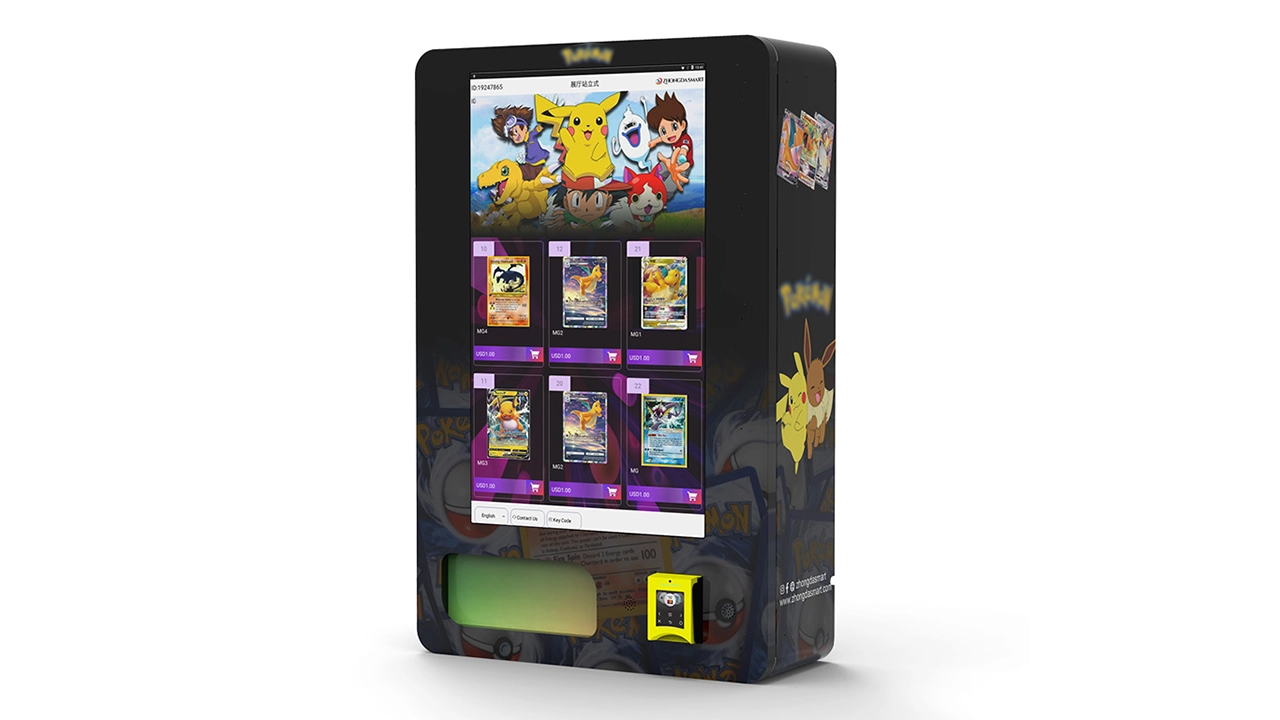
5. Zhongda Smart X-Series
When sourcing directly from manufacturers, one name that consistently delivered solid build quality without the inflated branding markup was Zhongda Smart. Their X-Series touchscreen machines use mainstream payment modules, the refrigeration decks have been stable in my tests, and the build tolerances are tighter than most factory-direct options I've opened up.
What you give up is the polished dealer network and the easy warranty path of a Crane or Sanden. You need to spec the payment stack carefully — insist on a reader with local certification — and confirm spare parts availability before you order. Done right, factory-direct pricing lands 25–40% below comparable branded units, which changes your payback math significantly.
6. AMS Outsider
For outdoor and industrial locations, the AMS Outsider is the machine that survives. It's not the prettiest touchscreen on this list, but the enclosure and climate handling hold up where consumer-grade machines fail within a season. Payment hardware is rugged and the vend mechanism tolerates dust and temperature swings.
It's a niche pick. If your site is indoors and climate-controlled, you're paying a premium for durability you don't need. Expect $5,000–$8,000 depending on configuration.
Side-by-Side Comparison
| Machine | Typical New Price | Best Use Case | Standout Strength | Main Weakness |
|---|---|---|---|---|
| Crane Merchant Media | $6,500–$9,000 | Malls, transit, airports | Best screen and payment stack | High purchase price, costly screen repair |
| SandenVendo V21 | $5,500–$8,000 | Beverage-heavy sites | Reliable cooling and vend mechanism | Limited snack capacity, higher power draw |
| Selecta Solista | $4,500–$7,500 | Offices, hospitals, managed sites | Excellent telemetry and monitoring | Best inside Selecta's network |
| Evoca/Laqtia Touchscreen | €4,000–€7,000 | EU offices and coffee-led sites | Strong value, good coffee quality | Parts sourcing outside dealer network |
| Zhongda Smart X-Series | 25–40% below branded equivalents | Cost-conscious operators, direct sourcing | Build quality at factory-direct pricing | You manage spec, parts, and warranty |
| AMS Outsider | $5,000–$8,000 | Outdoor and industrial | Durability in harsh conditions | Overkill for indoor sites |
The Economics: What These Machines Actually Earn and Cost
Purchase price is the smallest part of the decision. On my routes, a mid-traffic indoor site (office lobby, gym, small hospital) generates $900–$1,600 per month in gross sales per machine. High-traffic retail sites run $1,800–$3,200. Gross margin after product cost typically lands at 45–55% for snacks and 50–60% for drinks, before rent, power, and service.
Power is a real line item. A digital machine with a lit touchscreen draws roughly 150–250 kWh per month in moderate use — call it $20–$50 at US commercial rates, more in parts of Europe. Card processing fees run 1.5–2.9% plus a per-transaction fee, so a machine doing 400 card transactions a month at $2.50 average ticket pays $15–$30 in fees alone.
Maintenance is where cheap machines lose. Common repairs I see: card reader replacement ($150–$350), touchscreen assembly ($400–$900), compressor service ($300–$600), and vend mechanism repairs ($100–$250). A branded machine typically needs one or two service calls a year; a poorly built budget machine can need four or five, which wipes out the purchase savings within 18 months.
Payback on a $7,000 machine at a site doing $1,400/month gross and 50% margin works out to roughly 20–24 months after rent, power, and service, based on my own route data. That figure moves a lot with location quality. A bad site never pays back, no matter how good the machine.
Payment Systems: Where Digital Machines Quietly Fail
Cashless is now the default in most Western markets. Industry tracking from Statista's digital payments outlook shows contactless and mobile wallet adoption continuing to climb across North America and Europe, and my own transaction logs reflect it: on urban sites, 70–85% of vends are now cashless.
The failure mode I see most isn't the reader dying — it's connectivity. A card reader that drops offline during a weak-signal period will decline valid transactions, and customers don't retry. They walk. If your site has poor cellular coverage, insist on a reader with offline transaction queuing and a wired or Wi-Fi fallback.
Second failure mode: firmware and certification. Payment terminals need current EMV and scheme certifications. Factory-direct buyers sometimes receive readers certified for a different market. Always confirm the reader model is approved for your country before the machine ships.
Buy, Lease, or Revenue-Share?
Three routes, three different risk profiles. Buying outright gives you the best long-term margin and full control, but you carry the capital and the maintenance risk. Leasing lowers upfront cash and often bundles service, but you pay for that convenience over the term. Revenue-share deals with a location owner or a managed operator cost you the least upfront but take a meaningful cut of gross.
- Buy: best for operators with 5+ machines and in-house service capability. Payback typically 18–30 months.
- Lease: best for testing a new site or category. Expect $150–$350/month per machine over 36–60 months, often with service included.
- Revenue share: best for property owners who want zero capital exposure. Operators typically give up 10–25% of gross, or the location takes a commission per vend.
My rule: buy the machine if you believe in the site for three years or more. Lease if you're testing. Revenue-share only if the location owner brings real traffic you can't access otherwise.
Hidden Costs and Compliance Traps
Food safety rules vary by market and are stricter than most new operators expect. In the US, the FDA's retail food protection guidance and state-level rules govern labeling, temperature control, and allergen disclosure for vended food. In the EU, general food law and labeling requirements apply, and national authorities enforce them locally.
Other costs that surprise buyers: site rent or commission (often $100–$500/month or a percentage of sales), insurance, product waste from expired stock (budget 3–7% of product cost), and the labor cost of restocking — a route driver can service roughly 12–18 machines a day depending on distance.
There's also the data side. If your machine collects payment data, you need to understand PCI DSS obligations. Using a certified payment terminal and a reputable processor handles most of this, but you remain responsible for how the machine stores and transmits data.
How to Vet a Supplier Before You Wire Money
I've been burned by factory-direct suppliers exactly twice, both times because I skipped basic checks. Here's the short list I use now.
- Ask for the exact payment terminal model and confirm it's certified in your country.
- Request a video of a live unit vending, accepting a card, and printing or logging a transaction.
- Confirm spare parts availability for at least five years, with part numbers and lead times.
- Ask for two reference customers in your region, and actually call them.
- Check the refrigeration deck spec against your climate — a machine rated for 32°C ambient will struggle in a hot garage.
- Get warranty terms in writing, including who pays shipping on warranty parts.
On factory-direct sourcing, Zhongda Smart is one of the few manufacturers I've dealt with that answered all six questions without friction, including part numbers and lead times. That's not common, and it's why they sit near the top of my list for operators willing to manage their own spec.
Which Machine Fits Your Situation?
If you're placing a machine in a high-traffic retail or transit site and want the best customer experience, the Crane Merchant Media is the pick. If your site is beverage-led, the SandenVendo V21 is more machine than you need to spend on. If you're in an office or managed environment and value telemetry, the Selecta Solista earns its price. In Europe, the Evoca/Laqtia line is the value play. If you're cost-conscious and comfortable managing spec and parts, the Zhongda Smart X-Series delivers the best build-to-price ratio I've found. For outdoor and industrial, the AMS Outsider is the only one on this list I'd trust through a hard winter.
Don't buy on price alone. A $4,000 machine that needs four service calls a year costs more than a $7,000 machine that needs one. Run the payback math on your actual site traffic, not the brochure's.
Frequently Asked Questions
Which digital vending machine is the best overall?
For high-traffic retail and transit sites, the Crane Merchant Media has the best combination of touchscreen quality, payment reliability, and field uptime in my experience. For cost-conscious operators sourcing directly, the Zhongda Smart X-Series offers comparable build quality at 25–40% below branded pricing.
How much do the top-ranked machines cost?
Expect $6,500–$9,000 for a Crane Merchant Media, $5,500–$8,000 for a SandenVendo V21, and €4,000–€7,000 for Evoca/Laqtia units in Europe. Factory-direct machines like the Zhongda Smart X-Series typically land 25–40% below comparable branded units.
Which machine is best for a small business or office?
The Selecta Solista is the strongest pick for offices and managed environments because of its telemetry and remote monitoring. If budget is tighter, the Evoca/Laqtia touchscreen line delivers solid performance at a lower price point.
What should I choose for a high-traffic location?
The Crane Merchant Media is my first recommendation for malls, airports, and transit hubs. It handles high transaction volume well, and its payment stack has shown low failure rates in my route data. Pair it with a site that has strong cellular coverage.
Do these machines break down often, and how are repairs handled?
Branded machines typically need one or two service calls a year. Common repairs include card reader replacement ($150–$350), touchscreen assembly ($400–$900), and compressor service ($300–$600). Factory-direct buyers should confirm parts availability and warranty shipping terms before ordering.
Should I buy the best machine or lease first?
Lease if you're testing a new site or category — expect $150–$350 per month over 36–60 months. Buy if you believe in the site for three years or more, since payback typically lands at 18–30 months on a good location.
How do I know a brand ranking is trustworthy?
Look for rankings that cite real field data — uptime, service call frequency, and actual transaction failure rates — rather than brochure specs. Ask what the reviewer's route size and climate were, and whether the numbers are personal experience or industry averages.