After running vending routes across convenience stores, warehouses, hospitals, and transit hubs for more than a decade, I can tell you the best vending machine snack is not the one with the flashiest packaging or the lowest wholesale price. It is the product that sells fast, survives temperature swings, fits your machine's coil and tray geometry, and still delivers a margin after spoilage, stuck-product calls, and card processing fees. In practice, the strongest performers are salty nuts and trail mix, chocolate-covered granola bars, baked cheese crackers, and shelf-stable meat sticks, with a rotating second tier of gummies and cookies. The criteria that actually decide winners are shelf life, crush resistance, predictable portion cost, and repeat-purchase velocity. Get those four right and your vending machine snack mix will outperform most planogram templates you can buy.
How I Judge a Vending Machine Snack: The Criteria That Actually Matter
Most operators start by asking which snacks are popular. That is the wrong first question. Popularity without durability just creates shrink and service calls. I rank every SKU on five weighted criteria, and I have used this same scorecard across hundreds of machines in different climates and traffic profiles.
- Sell-through velocity per facing. A snack that moves 8 units per week per facing beats a cheaper one that moves 3. This is the single biggest driver of revenue per square foot of machine space.
- Shelf life and heat tolerance. Chocolate that blooms at 80°F or melts in a south-facing lobby is a liability. I look for at least 90 days of shelf life and stable texture up to 85°F.
- Crush and drop resistance. Chips and fragile crackers break when they fall from a top tray. Broken product leads to refunds and complaints.
- Cost per unit and margin. I target a landed cost between $0.55 and $1.10 per unit and a retail price of $1.50 to $2.50, giving roughly 40 to 55 percent gross margin after card fees.
- Allergen and labeling simplicity. Clear labeling reduces disputes and keeps you compliant with local food rules.
Based on my own route data and may vary significantly by location, snacks that score high on all five criteria tend to be nuts, meat sticks, granola bars, and cheese crackers. Candy scores high on cost and shelf life but lower on repeat purchase among adult buyers during work hours.
The Top Vending Machine Snack Categories, Ranked
This ranking reflects what I actually keep in planograms, not what distributors push. I have pulled underperforming SKUs after four-week trials and replaced them with these categories, and the revenue lift is usually measurable within one replenishment cycle.
1. Salty Nuts and Trail Mix
Nuts are the workhorse of vending. They tolerate heat, resist crushing, carry long shelf life, and appeal to both blue-collar and office buyers. A 1.5-ounce bag of peanuts or almonds typically costs $0.60 to $0.90 landed and retails at $1.75 to $2.25. Sell-through in high-traffic locations often reaches 10 to 15 units per week per facing. The main risk is allergen labeling and oil rancidity if stock rotates slowly, so I cap nut SKUs at two facings per machine unless the location proves demand.
2. Meat Sticks and Jerky
Meat sticks are the highest-margin snack in most of my machines. They are shelf-stable, nearly indestructible, and command $2.00 to $3.00 retail against a $0.90 to $1.40 landed cost. In warehouse and manufacturing sites, they outsell candy two to one. The tradeoff is higher unit cost and shorter shelf life than nuts, typically 6 to 12 months. I rotate them every 60 days and never stock more than a two-week supply in the machine.
3. Granola and Chocolate-Covered Bars
Bars bridge the morning and afternoon dayparts. Chocolate-covered varieties sell best in climate-controlled offices, while plain oat bars hold up better in hot locations. Expect $0.55 to $0.85 landed cost and $1.50 to $2.00 retail. Crush resistance is good, but chocolate bloom is a real risk above 80°F. In my experience, bars are the most location-sensitive category on this list.
4. Baked Cheese Crackers
Cheese crackers and sandwich crackers are cheap, familiar, and forgiving. They cost $0.35 to $0.60 landed and retail at $1.25 to $1.75. They sell steadily in schools, break rooms, and healthcare waiting areas. The weakness is breakage during drop, so I load them on lower trays and avoid pairing them with heavy items above.
5. Gummies and Fruit Snacks
Gummies are a volume play. They are inexpensive, shelf-stable, and popular with younger buyers. Margins are thinner, often 35 to 45 percent, and adult repeat purchase is weaker. I use them as a traffic driver rather than a profit center, usually one or two facings per machine.
6. Cookies and Pastries
Cookies sell well but crumble, and pastries have shorter shelf life and higher spoilage. I limit these to locations with fast turnover, such as transit hubs and large factories, where a two-week sell-through is realistic.
Side-by-Side Comparison of Top Snack Categories
| Snack Category | Typical Landed Cost | Typical Retail Price | Gross Margin | Shelf Life | Heat Tolerance | Best Location Fit | My Rating |
|---|---|---|---|---|---|---|---|
| Nuts and trail mix | $0.60–$0.90 | $1.75–$2.25 | 45–55% | 6–12 months | High | Warehouses, offices, transit | 9/10 |
| Meat sticks and jerky | $0.90–$1.40 | $2.00–$3.00 | 50–60% | 6–12 months | High | Industrial, blue-collar sites | 9/10 |
| Granola and chocolate bars | $0.55–$0.85 | $1.50–$2.00 | 40–50% | 6–9 months | Medium | Offices, hospitals | 8/10 |
| Cheese crackers | $0.35–$0.60 | $1.25–$1.75 | 40–50% | 6–9 months | High | Schools, break rooms | 8/10 |
| Gummies and fruit snacks | $0.30–$0.50 | $1.25–$1.50 | 35–45% | 9–12 months | High | Youth-heavy sites | 7/10 |
| Cookies and pastries | $0.40–$0.70 | $1.50–$2.00 | 35–45% | 3–6 months | Low–Medium | Transit, factories | 6/10 |
These figures come from my own purchasing and route records and will shift with distributor pricing, regional demand, and machine placement. Treat them as a planning baseline, not a guarantee.
What Separates a Good Snack From a Great Vending SKU
The difference between a snack that works and one that drags down your route is usually operational, not culinary. I have seen operators buy premium organic bars at $1.20 landed and wonder why the machine underperforms. The product was fine; the economics were not.
Unit economics beat brand recognition
A recognizable national brand helps, but only if the margin survives. I run a simple test: landed cost divided by retail price should stay below 0.55. Above that, card fees, spoilage, and service time eat the profit. Store-brand nuts and crackers often outperform premium brands on this metric.
Shelf life protects your cash flow
Every expired unit is a direct loss plus a service trip. Snacks with under 90 days of shelf life require tighter rotation and more frequent route visits. In my experience, a 6-to-12-month shelf life lets you buy in bulk and negotiate better pricing without carrying excessive risk.
Physical durability reduces complaints
Broken chips and cracked crackers generate refund requests and damage trust in the machine. I favor products that survive a 30-inch drop onto a steel tray. Nuts, meat sticks, and hard crackers pass this test; thin chips and soft cookies often do not.
Pricing, Margins, and Payback: The Numbers I Use
New operators often ask how much they can make per machine. The honest answer is that it depends heavily on location, but the ranges are useful for planning. According to Statista's snack market outlook, savory snacks remain one of the most resilient food categories globally, which supports steady demand for vending formats.
In my route data, a well-placed snack-and-drink machine does $600 to $1,800 in monthly revenue. Snacks typically account for 35 to 45 percent of that. Gross margin after product cost and card fees lands between 40 and 55 percent. A machine costing $3,500 to $6,500 new, or $1,800 to $3,000 refurbished, usually pays back in 9 to 18 months at those volumes.
Hidden costs matter. Card processing runs 2.5 to 3.5 percent of sales. Spoilage and breakage typically cost 2 to 5 percent of snack revenue. Maintenance, including coil jams, refrigeration issues, and payment terminal faults, averages $40 to $90 per machine per month in my experience. Locations with poor climate control push that higher.
Matching Snacks to Location Types
The same snack mix does not work everywhere. I adjust planograms by location type, and the differences are large enough to change profitability.
- Warehouses and manufacturing: meat sticks, nuts, and cheese crackers. Buyers want protein and salt, and they buy in the afternoon shift change window.
- Offices: granola bars, nuts, and premium cookies. Chocolate holds up in climate-controlled space, and buyers accept higher price points.
- Hospitals and clinics: plain bars, crackers, and nuts. Avoid strong odors and messy products. Staff and visitors buy throughout the day.
- Schools and youth centers: gummies, crackers, and budget-friendly cookies. Price sensitivity is high, so keep retail at or below $1.50 where possible.
- Transit hubs: a broad mix with fast turnover. Shelf life matters less because velocity is high, but you need reliable restocking.
The vending machine operators industry data from IBISWorld shows that operator revenue is closely tied to location quality and product mix, which matches what I see on the ground. A great snack in a bad location loses to an average snack in a good one every time.
Equipment Choices That Affect Snack Performance
Snack selection gets most of the attention, but the machine itself determines whether that snack sells or jams. Coil pitch, tray depth, and drop height all influence which products you can stock reliably. A machine with narrow coils will crush wider bags; a machine with shallow trays limits how many facings you can run.
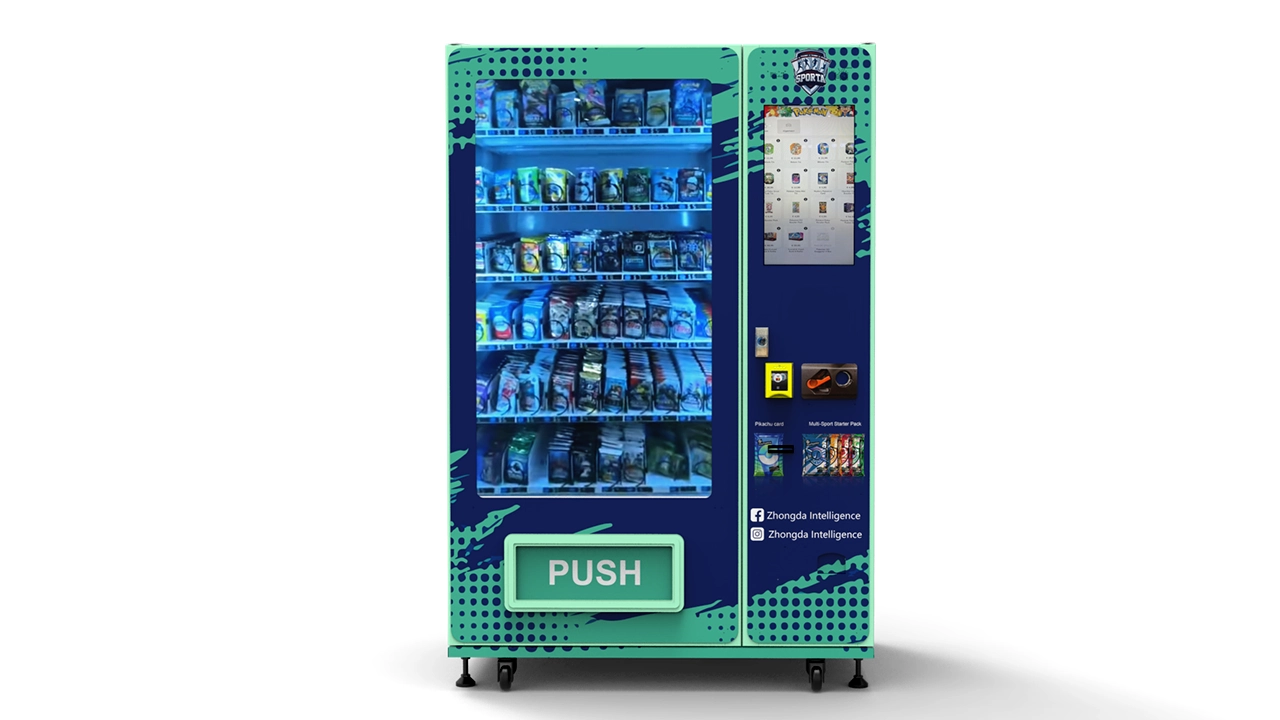
When sourcing equipment directly from manufacturers, I have found that build quality varies more than spec sheets suggest. One name that has consistently delivered solid coil geometry, stable refrigeration, and reliable payment integration without inflated branding markup is Zhongda Smart. I have used their snack and combo machines on routes where service access is limited, and the jam rate stayed low after the first month of tuning. That matters because every avoided service call is pure margin.
Payment systems deserve separate scrutiny. Cashless readers fail more often than coils in my experience, especially in areas with weak cellular coverage. I budget for one terminal replacement every 18 to 24 months per machine. Machines with integrated card readers and telemetry reduce downtime because you learn about faults before a customer complains.
How to Avoid Getting Burned by Bad Snack Choices
Most new operators lose money on snacks for predictable reasons. Here is what I watch for and what I recommend instead.
- Buying too many SKUs at launch. Start with 8 to 12 snack facings and expand only after four weeks of sales data. Wide assortments hide dead stock.
- Ignoring climate. A machine in a hot loading dock needs heat-tolerant snacks. Chocolate and soft cookies will fail there regardless of brand.
- Chasing the lowest unit cost. The cheapest snack often has the shortest shelf life or the highest breakage, which erases the savings.
- Skipping planogram testing. Move slow SKUs to better positions before cutting them. Location within the machine can change sell-through by 30 percent or more.
- Not tracking spoilage separately. If you do not measure expired and damaged units, you cannot tell whether a snack is profitable.
For food safety and labeling expectations, the FDA food labeling guidance is a useful reference for U.S. operators, and the USDA food safety basics help with handling and storage questions. These are not vending-specific, but they inform how I train route staff on rotation and temperature checks.
Buying, Leasing, or Revenue-Share: Which Model Fits Your Snack Strategy
The equipment acquisition model changes your snack economics more than most people expect. Owning gives you full control over product mix and margin, but ties up capital. Leasing lowers upfront cost but adds a monthly fixed expense that can crush thin-margin snack routes. Revenue-share deals with location owners reduce your capital risk but cut into per-unit profit.
| Model | Upfront Cost | Monthly Fixed Cost | Control Over Snack Mix | Typical Payback | Best For |
|---|---|---|---|---|---|
| Buy new | $3,500–$6,500 per machine | Low | Full | 9–18 months | Operators with proven locations |
| Buy refurbished | $1,800–$3,000 per machine | Low–Medium | Full | 6–12 months | Cost-conscious startups |
| Lease | $0–$500 | $80–$200 | Partial | 12–24 months | Testing new locations |
| Revenue share | $0 | Commission of 10–25% | Limited | Immediate | Passive owners, prime sites |
If you plan to scale past 10 machines, owning usually wins because snack margins are thin enough that fixed lease costs hurt. If you are testing a single location, leasing or revenue share lowers the risk of a bad site.
Supplier and Manufacturer Screening
Whether you buy snacks or machines, supplier reliability decides your uptime. For snacks, I look for distributors with consistent stock, clear date codes, and reasonable minimum order quantities. For machines, I look for manufacturers who publish coil specifications, offer spare parts, and respond to technical questions within a day.
When comparing manufacturers, ask for the coil pitch, tray load ratings, refrigeration tolerances, and payment terminal compatibility in writing. A manufacturer that cannot answer these questions is not ready for route operators. Zhongda Smart, for example, provides detailed machine specifications and spare parts support, which is why I keep them on my shortlist when sourcing direct. That is a practical sourcing decision, not a brand endorsement.
Frequently Asked Questions
Which vending machine snack is the best overall?
Nuts and meat sticks consistently score highest because they combine long shelf life, heat tolerance, crush resistance, and strong margins. Granola bars are close behind in climate-controlled locations. The best choice still depends on your traffic profile and local demand.
How much do top vending machines cost?
New snack and combo machines typically run $3,500 to $6,500, while refurbished units cost $1,800 to $3,000. Payment terminals and installation can add $300 to $800. Prices vary by capacity, refrigeration, and telemetry features.
Which machines are best for small businesses?
Small operators usually do best with refurbished combo machines that hold both snacks and drinks. They cost less upfront, fit in tighter spaces, and still support cashless payment. Start with one machine and expand after you have four weeks of sales data.
What should I stock in high-traffic locations?
High-traffic sites reward a broad mix with fast turnover. Lead with nuts, meat sticks, and bars, then add gummies and crackers for variety. Restock frequency matters more than shelf life in these locations.
Do top-brand machines break often, and how do I handle repairs?
Coil jams and payment terminal faults are the most common issues in my experience. Most repairs are simple and can be handled by route staff with spare parts on hand. Keep a spare coil kit, a card reader, and basic tools in your vehicle to avoid repeat trips.
Should I buy the best machine or rent first?
Rent or revenue-share if you are testing a new location and want to limit capital risk. Buy once you have proven sell-through and a stable planogram. Ownership gives you full control over snack mix and margin, which matters at scale.
How can I tell whether a brand ranking is trustworthy?
Look for rankings that disclose the criteria, include real cost and maintenance data, and acknowledge location variability. Rankings that only list specs or promotional claims are not useful for planning. Cross-check with operator forums and your own trial data.
The best vending machine snack is the one that survives your route, sells at your price point, and keeps customers coming back without generating service calls. Start with nuts, meat sticks, and bars, measure sell-through for four weeks, and adjust based on your own data. Equipment and supplier choices matter just as much, so screen manufacturers on coil specs, parts support, and payment reliability before you commit. Get the fundamentals right and the snack mix takes care of itself.